State of Decay 2 Review: Who Do You Risk on the Next Run?
A supply run matters more when the person carrying the food is someone your community cannot easily replace.
Zombie Defence Editorial Team ·
Based on official PC documentation and gameplay imagery.
The food is running low. Your best fighter is also the mechanic who keeps the community mobile. Sending them out sounds sensible, right up until a routine shopping trip threatens to become a recruitment problem.
That is State of Decay 2 at its most compelling. You control one survivor at a time, but every trip belongs to a larger community. The real loadout is the person you are willing to put in danger.
Its open-world survival works because combat, supplies and people keep interfering with each other. Expect absorbing decisions and useful improvisation, alongside repeated errands and a fair amount of administration. The apocalypse still wants its paperwork.
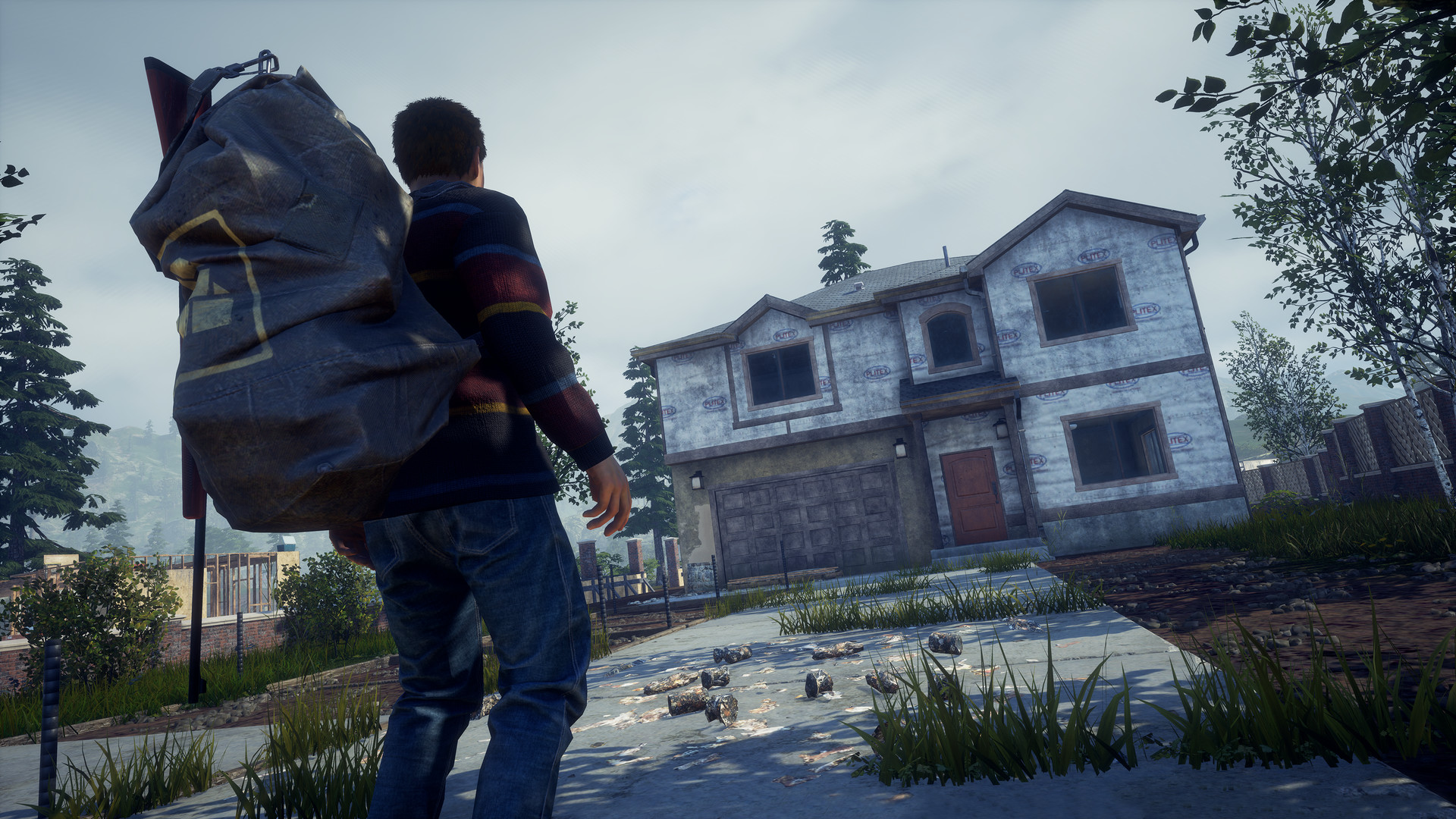
The strongest survivor is not always the safest choice
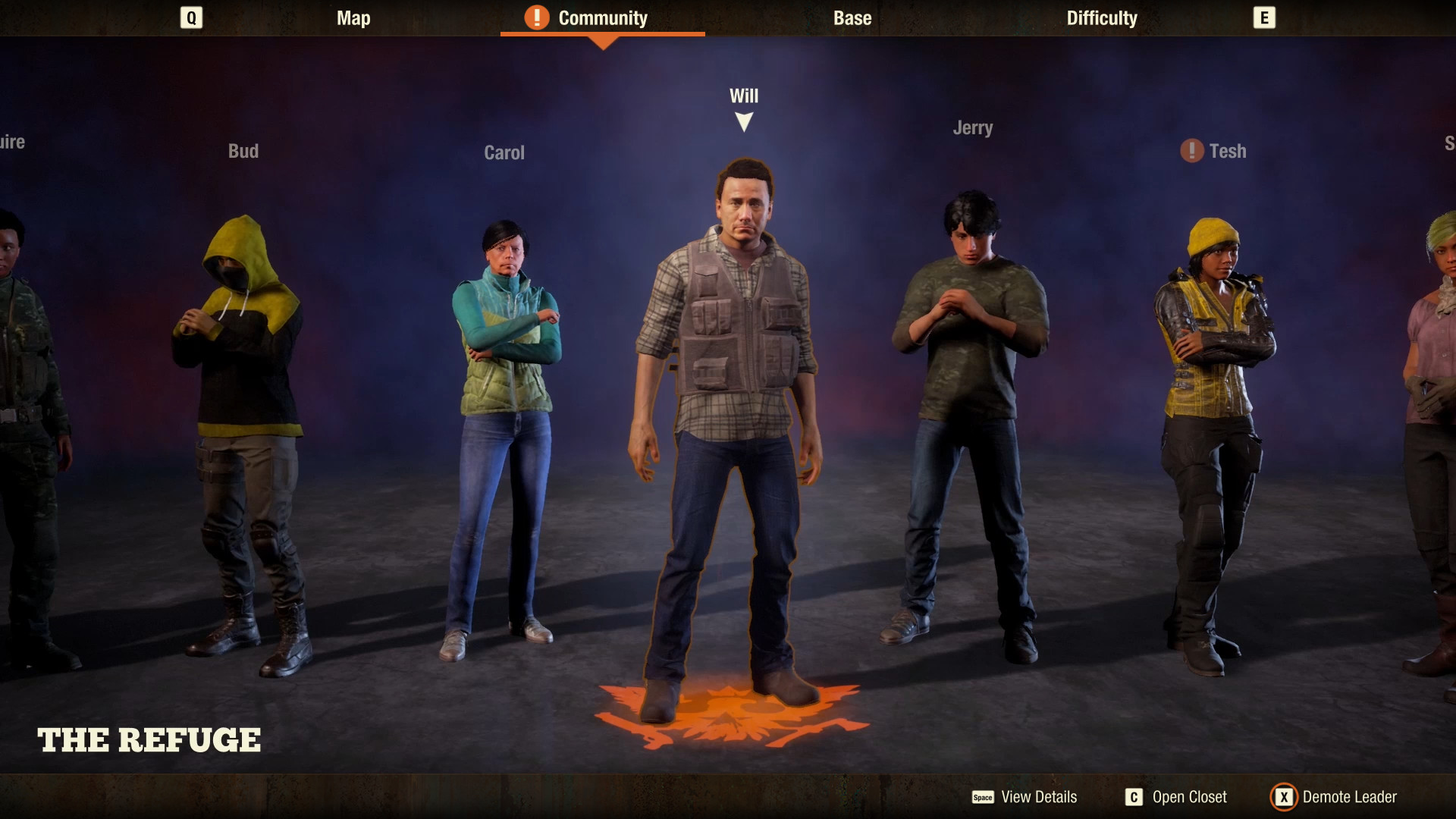
A survivor brings skills and traits that matter beyond the weapon in their hands. Automechanics can improve fuel efficiency for the entire community; Pathology can increase its infection resistance. Losing a specialist therefore changes what everyone else can comfortably attempt.
Death is permanent. A replacement recruit can fill a space in the roster, but that does not give you back the same person or their developed abilities. Sending a valued survivor outside means putting part of your community’s future on the line.
This gives recruitment an unusually practical appeal. You are assembling people whose strengths cover one another, then deciding which of those strengths to risk. A glamorous gun is nice; someone who makes the whole group harder to infect has a persuasive CV.
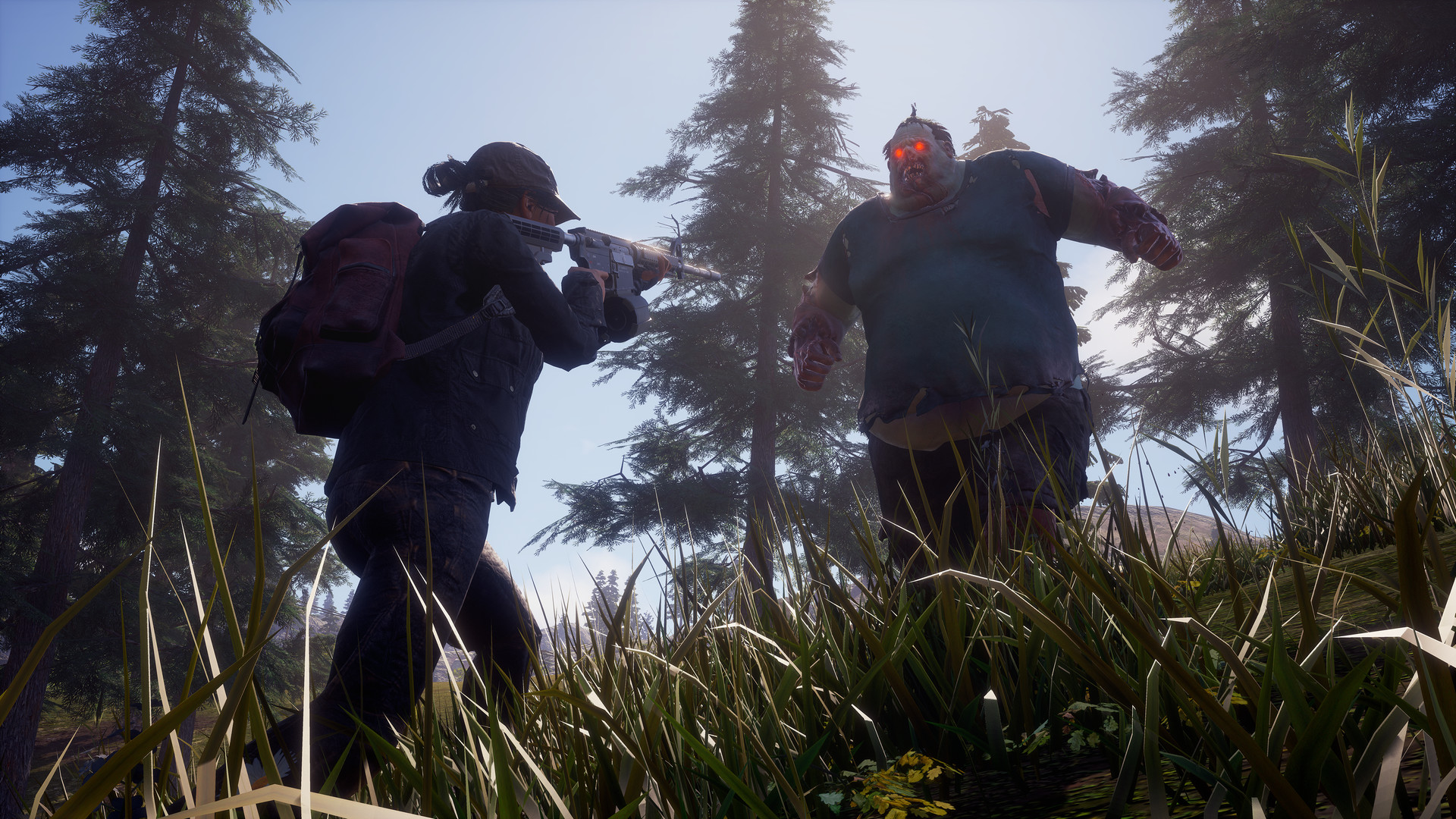
Winning the fight can still be a bad decision
Melee, firearms and stealth give you different ways through a dangerous street. The worthwhile question is whether the encounter helps your trip. Spending ammunition to clear a route makes sense; spending it to prove a juggernaut cannot intimidate you is less convincing.
Stamina makes close combat a resource decision of its own. A tired swing, a dodge and a retreat compete for the same limited margin. Carrying a primary weapon and sidearm broadens your answers, but preparation matters more than collecting weapons you never bring outside.
The strongest part of combat is this connection to everything at home. A messy victory can consume supplies and leave a useful survivor infected. Getting away with the rucksack and everyone intact is often the more satisfying result, even without an impressive body count.
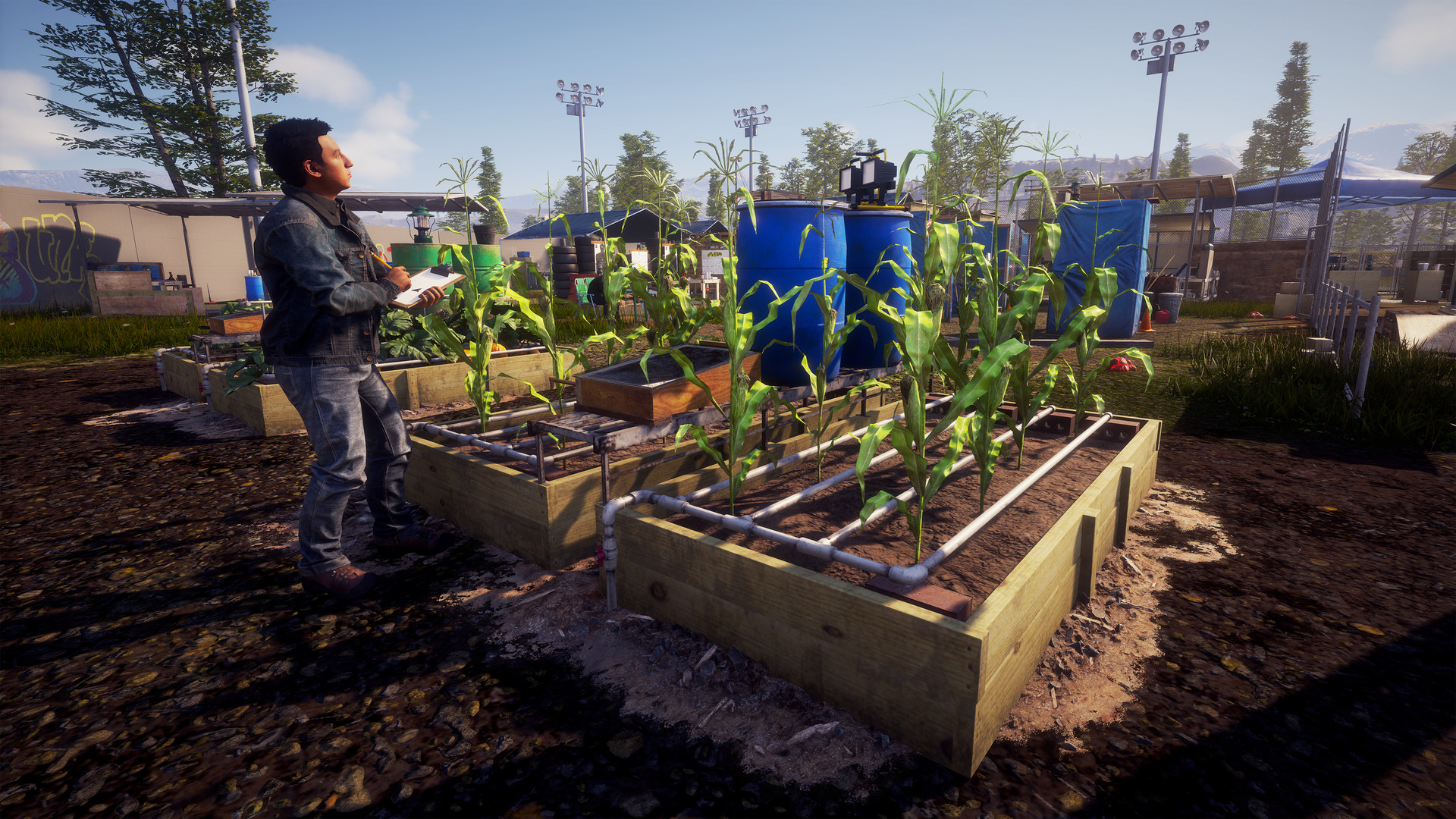
Build a home that makes tomorrow easier
Base management gives scavenging a purpose. Facilities, supplies and survivor expertise determine what the community can support. A workshop that helps keep vehicles running changes your reach; food production reduces the pressure to turn every outing into an emergency grocery trip.
Outposts extend that planning across the map. Resource outposts provide recurring supplies and can be upgraded for stronger benefits and skill training. Spending influence on reliable income can be more useful than bringing home another exciting object with nowhere urgent to use it.
That is the appeal of the management layer: improvements change the next trip. The catch is that needs keep returning. If stocking cupboards, maintaining equipment and dealing with neighboring enclaves sounds like unpaid work, the zombies will not make those chores disappear.
Your escape plan has a fuel gauge
A car turns a supply run into a much larger opportunity, with trunk space for the haul and a faster route home. It also creates another dependency. Fuel and a repair toolkit are considerably more useful before the vehicle becomes a roadside landmark.
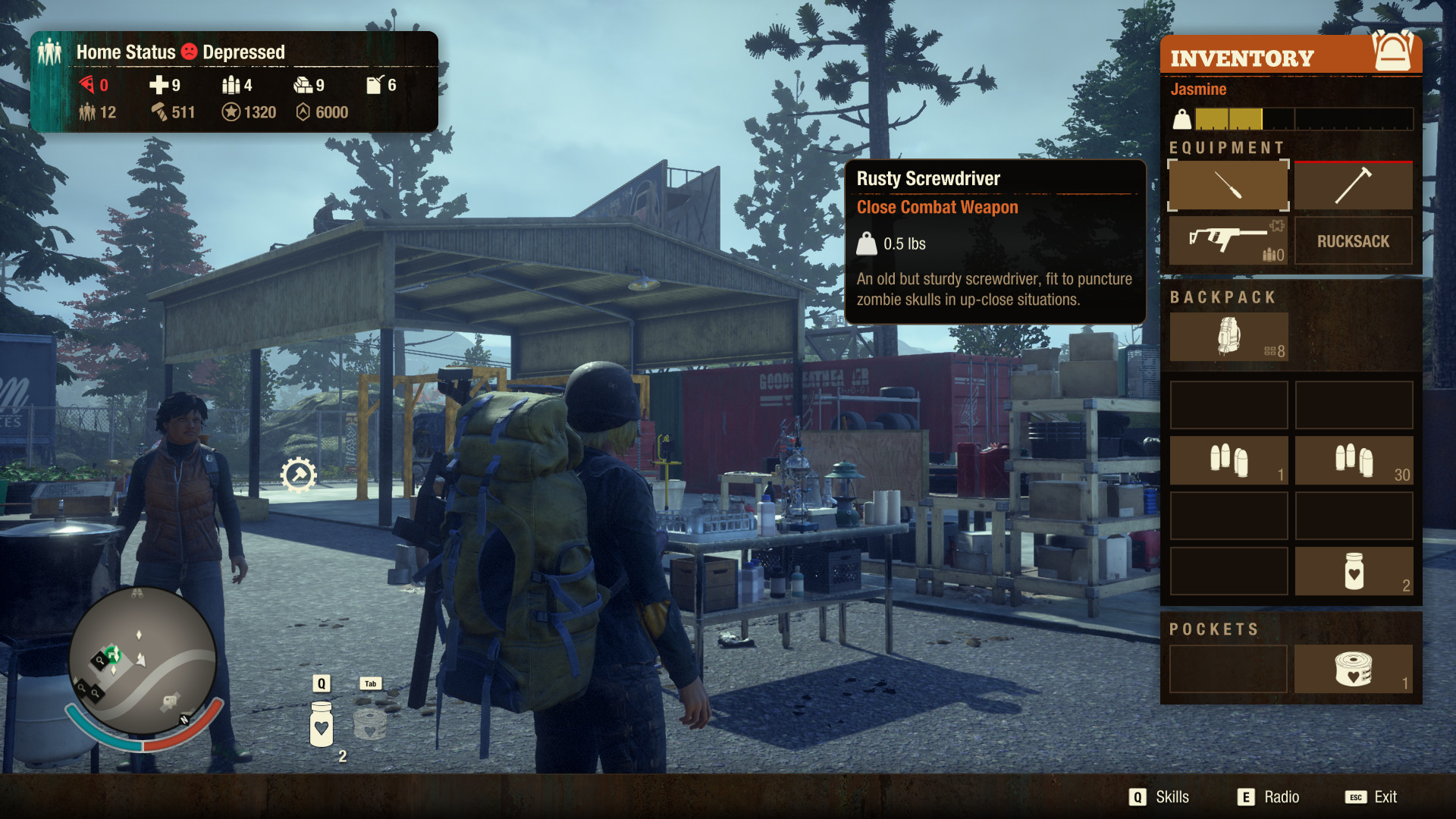
Packing asks you to balance preparedness against room for discoveries. More ammunition and consumables mean fewer decisions can catch you unprepared, but the point of going out is to bring something back. A full inventory is only a success if its contents solve a problem.
This is why the ordinary journey carries the game. You can leave with one clear task and return with a different priority, a damaged vehicle or a new recruit. The best stories emerge from plans that almost worked.
The map remembers what you wake up
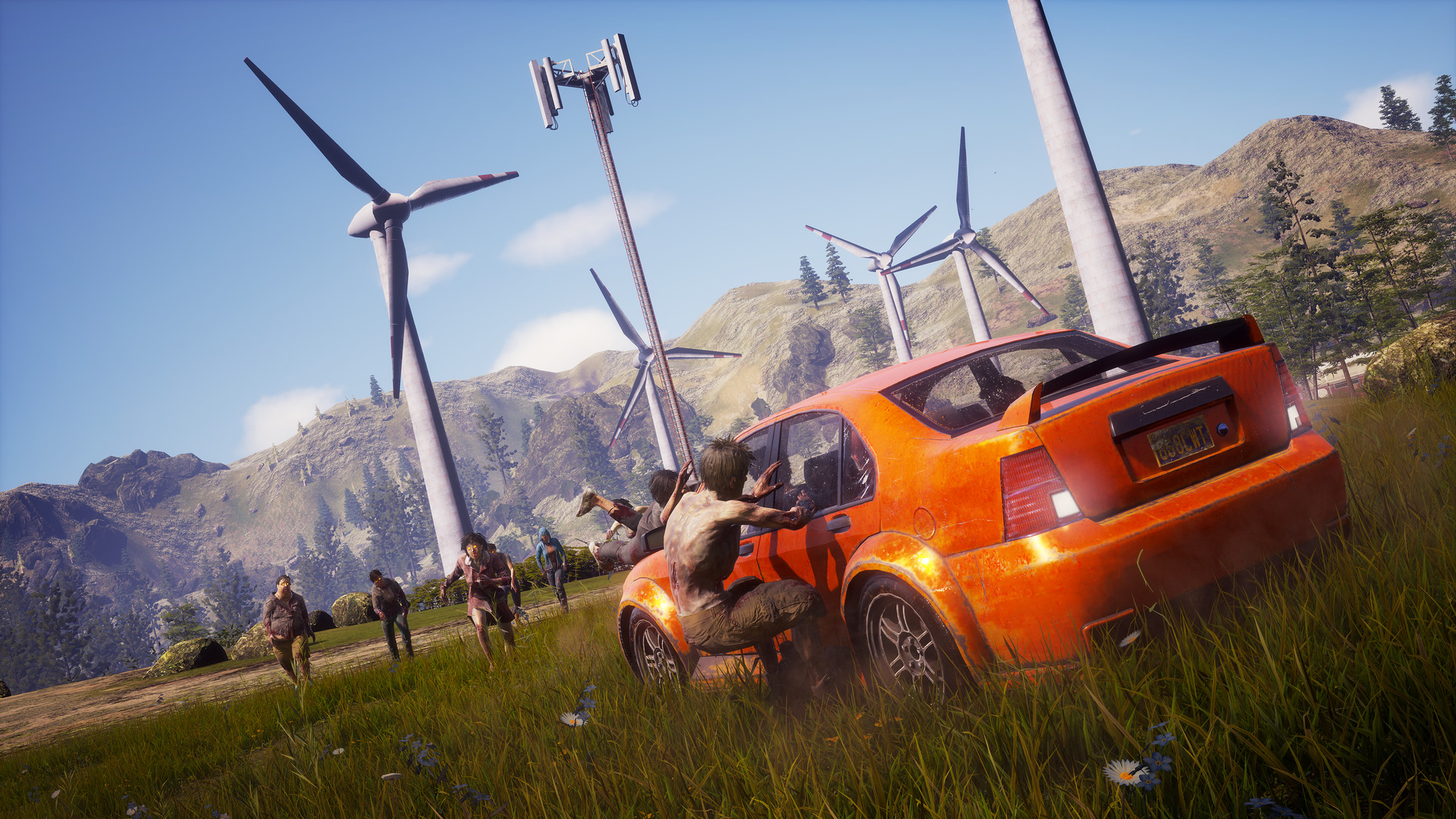
Plague Hearts give expansion teeth. Their territory blocks nearby base and outpost claims, so a useful location may require an assault before it can serve the community. Choosing a target becomes part of your supply plan rather than a separate combat checklist.
Hearts begin dormant. Once awakened, they send infesting hordes toward your base; destroying the source lets its infestations wither. That makes caution useful even before the shooting starts. Waking trouble without the resources to finish it can create work you were not ready to do.
Keep the people, change the problem
Completing a Legacy does not force you to discard the community. You can continue with the same group and supply locker, or send survivors to the Legacy Pool. Recruiting those veterans into another community gives their history a practical afterlife.
Difficulty settings also shape the long game. Action, Community and Map can be adjusted separately, while Curveball controls tune unusual events. That flexibility matters: you can seek harder fights without assuming every other part of running a household must become equally miserable.
Friends can help, but it is still someone’s world
Up to four players can cooperate across supported platforms and storefronts. Visiting another community is a good way to share the scavenging and fighting while earning rewards for your own. There is a natural satisfaction in helping somebody get their people home.
The boundaries matter, though. Guests visit the host’s world, and a tether limits how far they can wander. Plan to travel and tackle trouble together; this is a poor fit for friends who want to split across the map and independently run one shared settlement.
A generous package with a demanding routine
Inventory work is easier than it used to be. At base, Update 38 lets you access other survivors’ equipment from the Community screen; locker sorting also helps. These changes reduce housekeeping without removing the need to understand several connected systems.
Juggernaut Edition includes Heartland’s more directed story, Daybreak’s siege defense and the Independence Pack alongside the sandbox. Those extras add variety, but the main value remains a community you want to keep developing. Repeating supply runs is the bargain, not incidental padding.
Content updates ended in October 2024, followed by hotfix 38.2 that November. Support ticket intake is closed. Buy for the game already here: its flexible survival systems are substantial, but they should not be weighed against an imagined future rescue patch.
Strengths
- Permanent loss connects individual fights to the community’s future.
- Survivor expertise, facilities and outposts make supplies strategically useful.
- Adjustable difficulty supports different appetites for danger.
- Continuing communities and included modes give long-term play room to grow.
Tradeoffs
- Supply runs and neighboring enclaves can become a repetitive chore list.
- Several interlocking systems demand patience and attention.
- Co-op uses a host-centered world and distance tether.
- Content development and direct support ticket intake have ended.
Who it suits
- Best for players who want action to support a persistent survivor community.
- A good fit if deciding when to retreat is as interesting as winning a fight.
- Less suitable for freeform construction, short self-contained runs or fully shared co-op management.
Verdict
State of Decay 2 makes ordinary supplies matter by attaching them to people you can lose. Its strongest decisions happen where combat meets community management: who goes, what they carry and when the haul is enough to justify going home.
The chores and co-op restrictions keep it from being an effortless recommendation. For players who enjoy making a fragile group more capable, however, Juggernaut Edition offers a compelling reason to care about one more run and a very good reason to survive it.
PC base game (Juggernaut Edition)
Review score: 8.3 / 10
- Combat
- 9.2 / 10
- Progression
- 8.8 / 10
- Usability
- 7.2 / 10
- Value
- 8.1 / 10
Windows PC / Steam; single-player and online co-op for up to four players.
Includes Heartland, Daybreak and the Independence Pack; Homecoming content is included.
Assessed through hotfix 38.2, November 26, 2024. Content updates and support ticket intake have ended.
This rating covers the PC edition; Xbox console performance is not assessed.
The review score averages the applicable Combat, Progression, Usability and Value scores, rounded once to one decimal. Fit is specific to each comparison and is excluded.
Can a dead survivor come back?
Survivor death is permanent in normal play. You continue through the remaining community rather than respawning that person. The Legacy Pool preserves living survivors for later recruitment; it does not resurrect the dead.
Is the whole campaign a shared co-op save?
No. Players visit a host’s community and bring their own survivors. Cross-play supports up to four people, but guests remain tethered to the host rather than independently managing a jointly owned world.
What does Juggernaut Edition include?
The PC package includes the main survival sandbox, Heartland’s story campaign, Daybreak’s siege-defense mode and the Independence Pack. Homecoming content is included too; you do not need to buy those add-ons separately.
Can I make survival less punishing?
Yes. Green Zone provides a gentler starting point, and separate Action, Community and Map settings let you adjust the pressure. Curveball settings also control event frequency, balance and impact.
Does resting cure full blood plague?
No. Rest can clear partial infection, but full blood plague requires plague cure made with meds and plague samples. Checking a survivor into the Infirmary can stabilize them while you arrange treatment.
Sources
- Official PC edition, included content and gameplay gallery ·
- Undead Labs overview: community, combat and additional modes ·
- Current official FAQ: blood plague, vehicles, co-op and support status ·
- Xbox announcement: permanent survivor death and community survival ·
- Update 25: plague territory, resource outposts and community skills ·
- Update 30: continuing communities, Legacy Pool and locker sorting ·
- Update 33: dormant hearts, infestations and sieges ·
- Update 37: adjustable Curveballs, lighting and inventory recovery ·
- Update 38: final content update and community inventory improvements ·
- Hotfix 38.2: November 26, 2024 crash fixes ·
- Green Zone: more forgiving combat, scavenging and resource costs ·
- Zedhunter update: infirmary recovery, workshop skills and enclave requests ·