7 Best Survival Games With Relationships and Companions
Someone to trust, someone to argue with, and someone worth getting home to.

For survival games with relationships and companions, start with the connection you want to build. Fallout 4 combines named traveling companions, personal stories and romance with an optional demanding Survival mode. Survivalist: Invisible Strain makes friendship, attraction and remembered behavior part of running a zombie settlement. The Alters is the standout for difficult conversations with a crew whose cooperation you need. Zombie Defence brings authored relationship choices into the rhythm of returning from active zombie combat.
A follower who carries logs, a resident who remembers what you said and a lover whose breakup destabilizes the colony provide very different experiences. These seven games earn their places through meaningful NPC company. Some offer romance; others build attachment through trust, shared work or the possibility of losing someone. Human co-op partners are a useful extra, but they are not the reason a game qualifies.
Six selections are released desktop games. Zombie Defence is a single-player browser Alpha in development, with a waitlist for news and playtest availability. The current demo exposes Mara’s relationship content; its wider authored roster remains locked there. Our scores are editorial judgments of documented design. Fit measures how well people and relationships enrich survival, while Combat is marked not applicable for The Alters, whose danger comes from its environment.
The quick comparison
7 games, different reasons to give the next run a chance.
Choose a game to jump to its overview. Platform lists are summaries; check the linked official edition.
The games
Zombie Defence
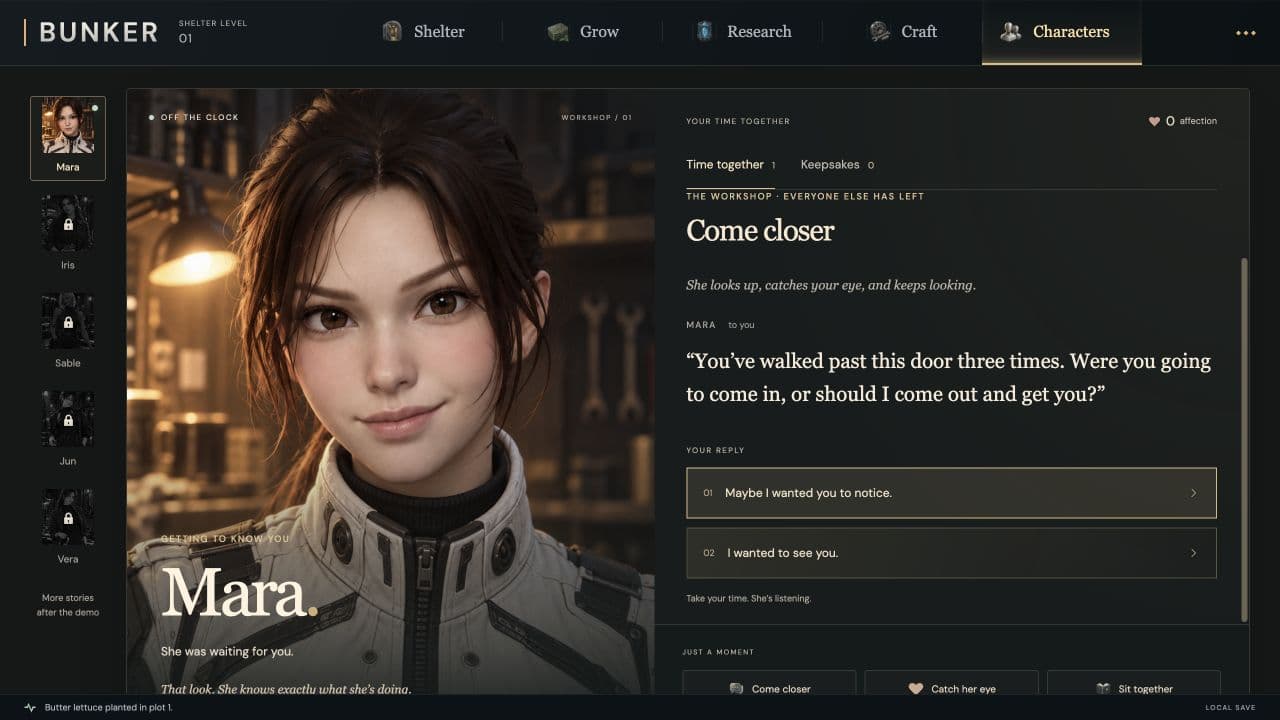
Mara gives the shelter a personal center: eight branching episodes, remembered answers and a relationship you can develop at your own pace alongside permanent survival projects.
- Shelter building
- Permanent progress
- Farming
- Crafting
- Manual aim (desktop)
- Platforms
- Single-player browser Alpha in development; waitlist for Alpha news and playtest availability.
- Price model
- Public launch pricing and monetization terms have not been announced.
Returning home can mean more than opening a crafting menu. Mara’s eight authored episodes offer branching replies, keepsakes and choices that support friendship, romance or a slower pace. Earlier answers are remembered, so a conversation has continuity beyond the current screen. That makes this a particularly appealing direction if you want a familiar person to come back to after the noise and movement of fighting outside.
The story advances through narrative prerequisites. Winning another battle, buying something or reaching an affection threshold is not what unlocks the next conversation. You can resume or replay moments, with affection awarded for a first completion rather than repeatedly farmed from the same scene. Gifts add another small connection to shelter life: roses are grown for affection, while care packages provide another gift option. An affectionate garden therefore serves a different purpose from lettuce and tomatoes reserved for provisions.
There is a practical relationship effect too. Completed relationship scenes contribute to a resident’s station output alongside level and specialty matching. Mara’s specialty is Salvage. Spending time with her belongs to the same home you improve through production, research and weapon projects, while keeping its own authored pace. The wider campaign roster also contains Iris, Sable, Jun and Vera, but those four are demo-locked. The concrete recommendation here rests on Mara’s existing path, not on five currently accessible romances.
Outside, you handle the combat yourself: movement, desktop cursor aim, ammunition and reloads, with touch fire assisting toward the nearest hostile. Mara’s conversations take place at home; this is not an AI-follower squad system. That separation is the attraction for someone who enjoys both active shooting and quieter character scenes. Choose it for a compact action-and-relationship rhythm; choose Fallout 4 if the person you grow close to must also accompany your travels.
The verdict
Choose Zombie Defence for an action-and-relationship loop that ends with a conversation that matters as well as a better-equipped shelter.
Fallout 4
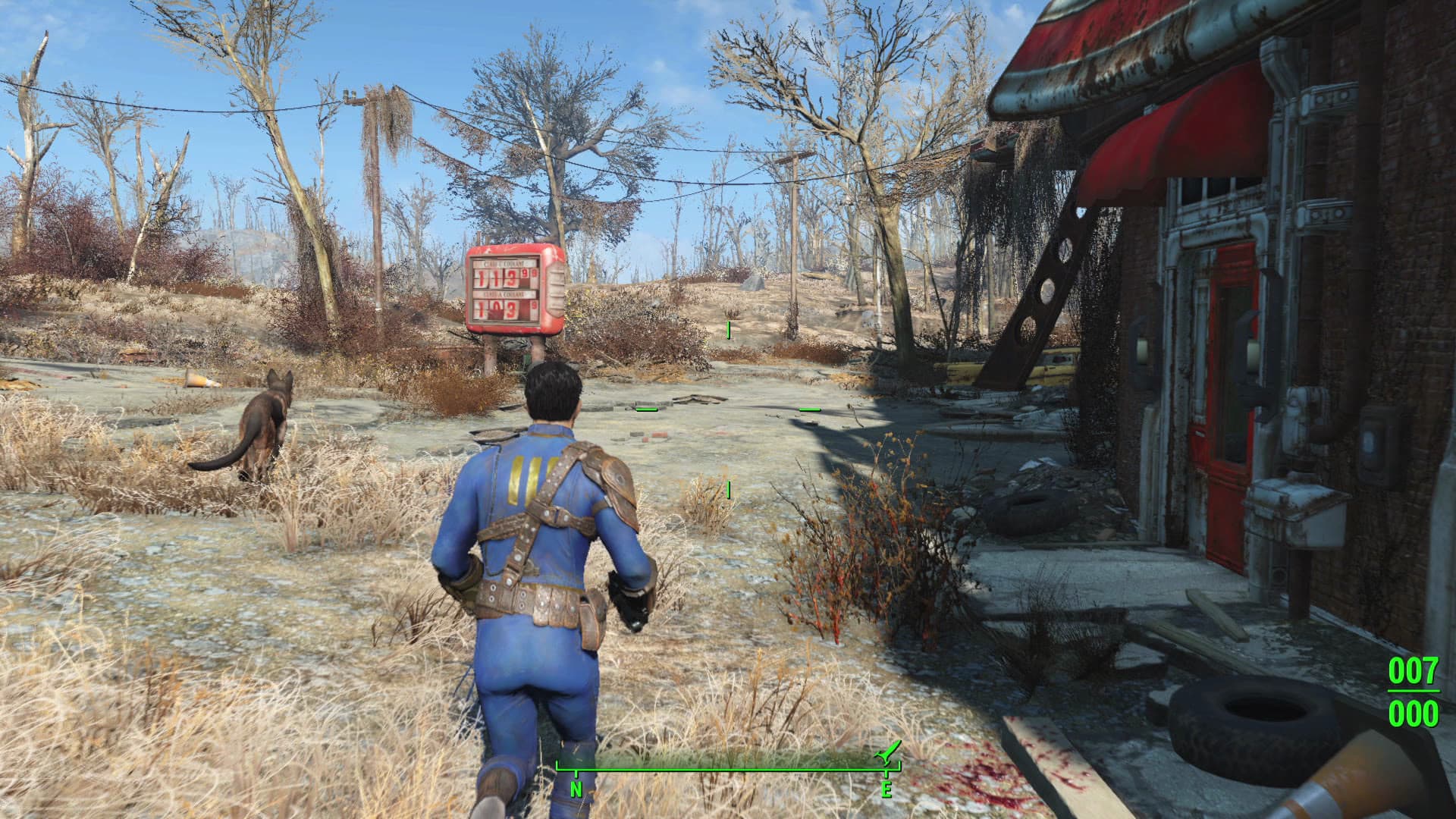
Fallout 4 is the clearest all-round choice when you want a companion who travels, fights and talks with you, with romance available for selected characters.
- Exploration
- Crafting
- Shelter building
- Loot builds
- Platforms
- Windows via Steam; single-player base game with the optional Survival difficulty.
- Price model
- Paid base game. Expansions, Creations and larger edition bundles cost extra; the base companion system and Survival mode do not require them.
Choose a companion because you want to spend the journey with them. Piper brings a reporter’s perspective, Preston carries the concerns of a community defender, and Nick Valentine makes room for a very different kind of detective story. Their personalities give wandering a social texture: the road to the next objective becomes time spent with someone who has a history and an opinion about the world. Dogmeat is the simple, lovable option when canine company is what you want.
Relationships develop through affinity: companions react to actions they approve or dislike, and a stronger bond opens more personal conversations. Some have individual quests, and eligible companions can become romantic partners through dialogue. These are authored character arcs inside an open-world RPG, so the pleasure lies in learning a particular person’s story while making choices they respond to. It is a stronger recommendation for voiced, named relationships than for a whole settlement’s emergent social life.
Select Survival difficulty to make the survival half equally consequential. Hunger, thirst and fatigue need attention, ordinary fast travel is disabled, and sleeping in a bed anchors saving. A companion still helps, but reduced carrying capacity prevents them from solving every packing decision. Downed companions need healing; abandon them without it and they return home. Medical supplies become something to share, giving a practical edge to the idea of looking after your traveling partner.
That mode can be a demanding way to reach the next conversation. A long trip involves provisions, safe resting places and the possibility of losing progress before another sleep save. If relationship scenes are your main priority, the same companion stories are available at easier difficulties. Start with the base game for this recommendation. Buy the larger editions because you want their extra adventures, rather than assuming romance or Survival requires an expansion.
The verdict
Pick Fallout 4 for the strongest blend here of companion travel, authored character development and optional romance.
Survivalist: Invisible Strain
Here, meeting a useful stranger means dealing with a person’s opinions, memories and social ties. Building the settlement and building relationships are parts of the same problem.
- Shelter building
- Squad builds
- Farming
- Co-op
- Platforms
- Windows via Steam; single-player and online co-op for up to four players.
- Price model
- Paid full-release game; a free Steam demo is available.
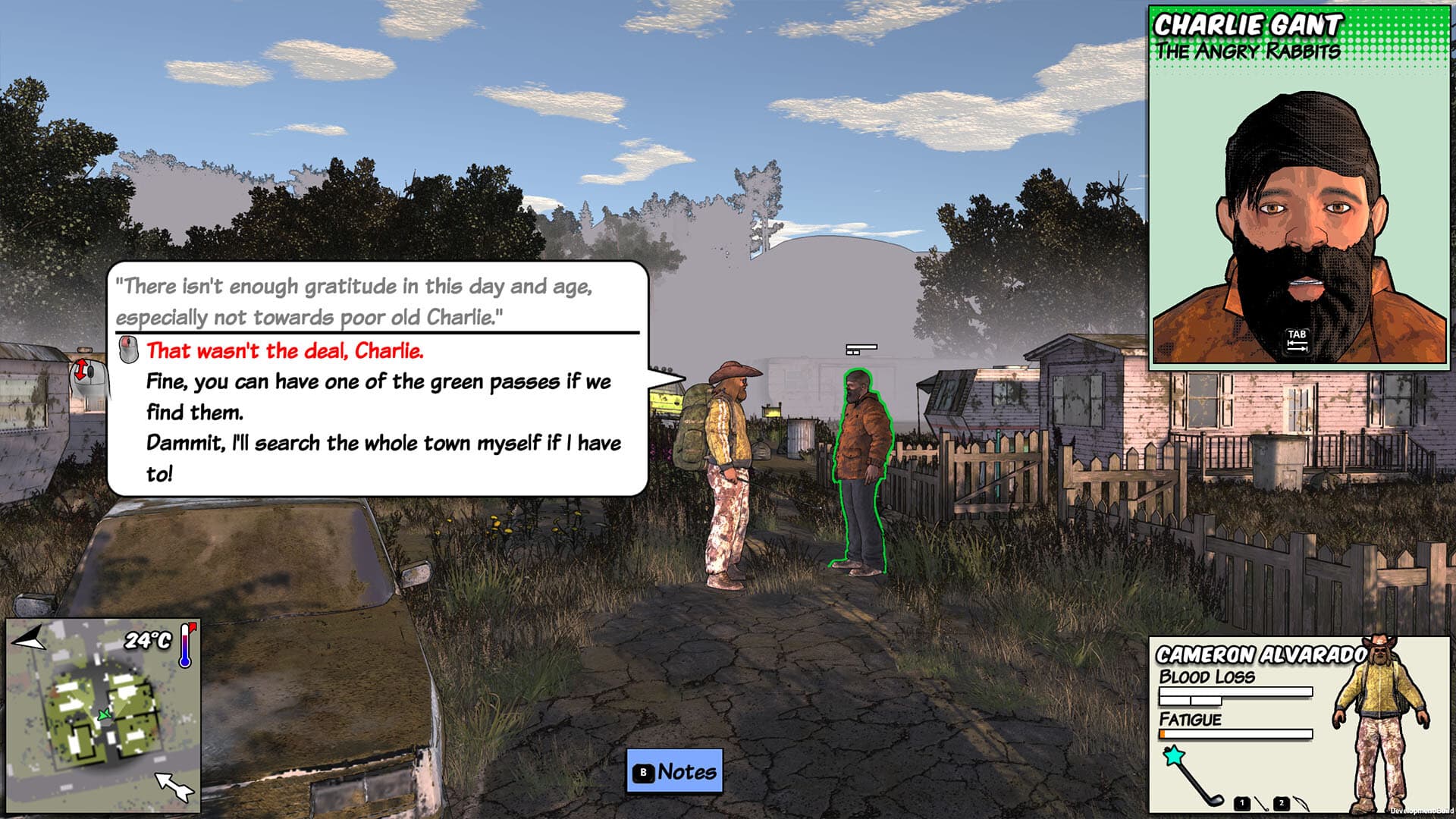
The strongest reason to choose Invisible Strain is that conversation feeds a living social system. People remember your behavior, and those memories influence their mood and opinion of you. Your own personality also changes which dialogue options are available. Recruitment can grow from liking, respect or fear, so persuading someone to join is more interesting than locating an unclaimed worker and pressing a button. The method you use belongs to the character you are creating.
Existing relationships complicate the apparent perfect recruit. In ordinary recruitment, friends, lovers and family can matter as a group: a person may need the people close to them to come too. That turns a social discovery into a survival decision. Do you have enough beds and provisions for the group you are actually inviting? Character Notes reveal known personalities, skills, memories and relationships as conversations uncover them, giving you useful information to work with instead of asking you to remember every introduction.
Once people live together, friendship and romance keep developing. Community members can form relationships with one another, and the player can build friendships or romantic connections too. Their lives continue through work, meals, arguments and time spent together. A good camp therefore needs more than strong walls. Understanding who gets on with whom becomes part of maintaining a place where people can keep functioning. The hidden-infection premise adds a sharp twist: familiarity does not eliminate every reason for suspicion.
These recruits also work and fight. Switch between direct third-person control and overhead orders, assign practical roles and bring people into the wider survival plan. The cost is complexity: personal needs, labor, relationships and threats all compete for your attention. This is our first recommendation if you want a zombie sandbox with people who keep a social history. Fallout 4 offers more polished individual character presentation; Invisible Strain gives the whole settlement more ways to surprise you.
The verdict
Choose Invisible Strain when the community’s friendships, grudges and romances should shape the survival sandbox itself.
The Alters
Your crew are alternate versions of the same man, but shared features do not produce shared priorities. Listening, negotiating and making hard choices are essential parts of keeping the expedition alive.
- Shelter building
- Crafting
- Exploration
- Platforms
- Windows via Steam; single-player base campaign.
- Price model
- Paid base game, with optional paid expansion and Deluxe upgrade content.
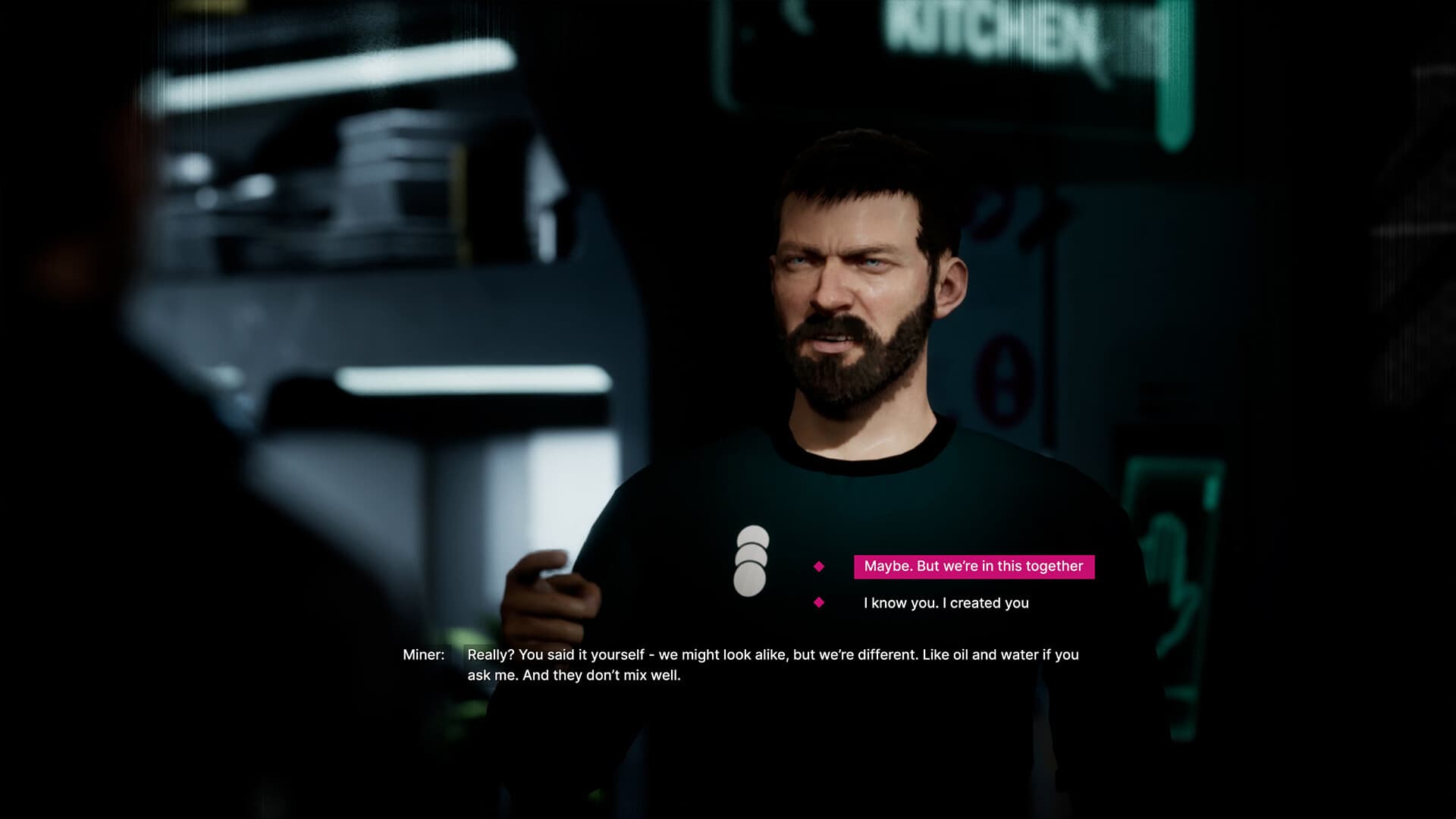
Jan Dolski needs help operating a mobile base on a hostile planet. Rapidium lets him create alternate versions of himself, shaped by lives in which he made different decisions. A useful specialist arrives with a different history, outlook and emotional baggage. Choosing whom to create therefore also chooses which personalities will inhabit the base. This gives the familiar survival task of adding a worker an unusually personal consequence.
Each Alter has a storyline with needs and decisions that can change his outcome. Conversations are part of managing cooperation, and the crew’s demands can conflict with one another or with the mission. A room that improves their well-being uses resources you might have spent on essential infrastructure. Treating everyone as a production bonus misses the central challenge: keeping people willing to share the future you are trying to secure for them.
The game also makes room for ordinary company. The Gamer’s Den, added in a free update, lets you play a card game and lift the crew’s spirits, alongside a new side story. That matters for this particular search because bonding is more satisfying when it includes time together as well as resolving a crisis. The same update introduced Relax Mode for players who want more emphasis on story and exploration, plus more flexible saving. You can ease the economic pressure without abandoning the relationships that drew you in.
Survival outside centers on radiation, gathering and understanding dangerous anomalies. It is not a combat-follower adventure, and the Alters are not a roster of romance partners. The reward is a narrative about cooperation, identity and responsibility, shaped by conversations with people whose faces you recognize too well. Choose this for the strongest focused crew drama on the list; choose RimWorld when you want a less authored society to generate its own tangles.
The verdict
Pick The Alters when the most important survival question is how to keep a complicated crew working with you.
RimWorld
RimWorld makes relationships part of the colony’s machinery. The same people growing dinner and defending the walls can fall in love, start a feud or struggle after a loss.
- Shelter building
- Crafting
- Farming
- Tactical combat
- Platforms
- Windows, macOS and Linux; single-player desktop base game.
- Price model
- Paid base game with optional paid expansions. Core social relationships and marriage are included in the base game.
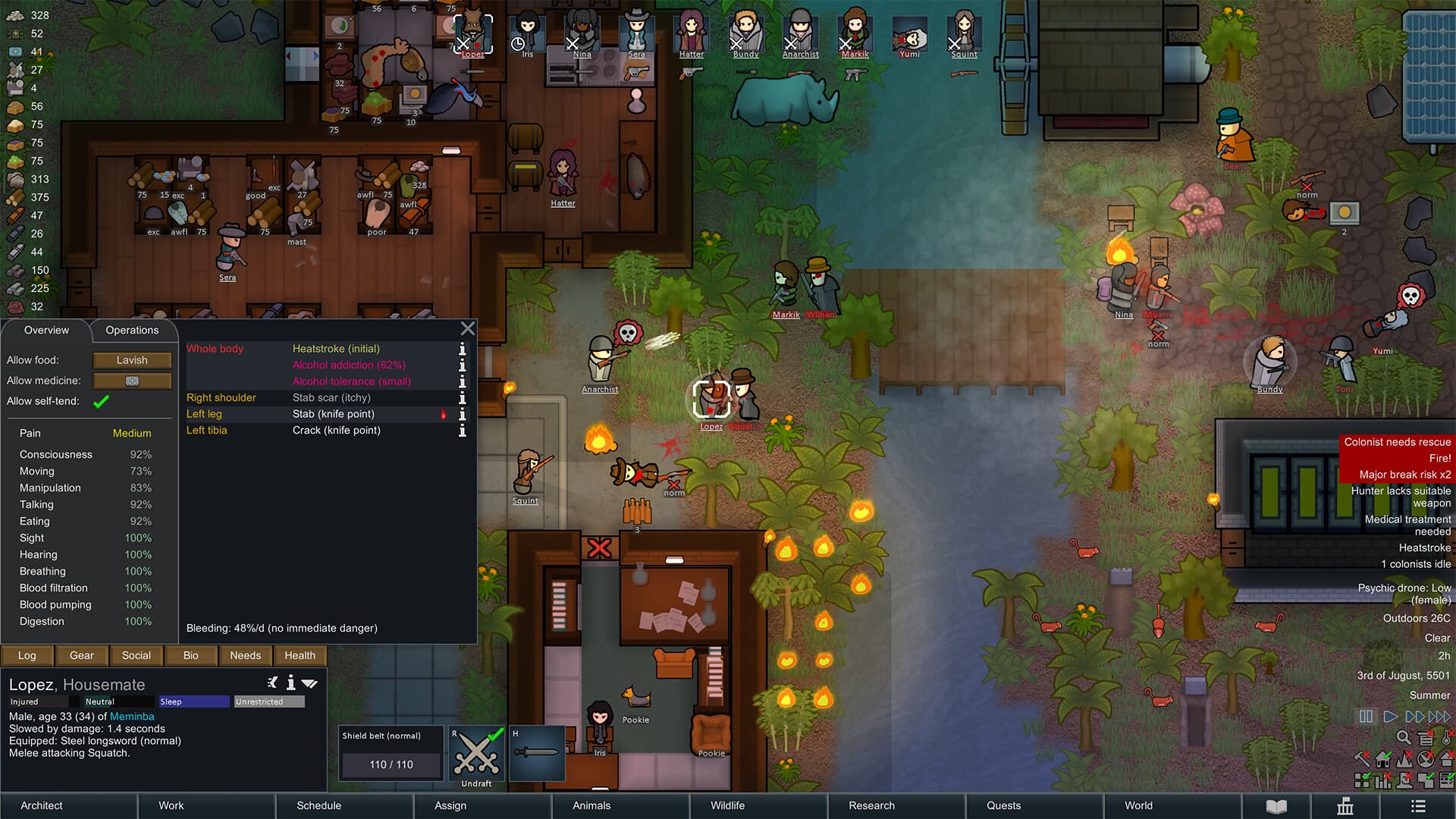
RimWorld is the pick for watching a social web develop rather than personally selecting every reply. Colonists hold opinions of one another based on memories and circumstances. Friendship, rivalry, romance, marriage and breakups emerge inside the working settlement. A pair of productive colonists can become lovers; two people who dislike each other can start a fight. The people are already important to your survival plan, so their private lives have a ready-made audience: you.
Your influence is practical and indirect. Build decent living conditions, make room for rest and recreation, and pay attention to the moods of people who must work together. Couples can share a bed, while illnesses, injuries and stress keep personal relationships entangled with the colony’s needs. There is a satisfying difference between wanting a room because its statistics are efficient and wanting it because two particular residents should finally have somewhere comfortable to live.
Companionship extends to animals. Colonists can bond with them, pets can improve moods, and trained animals have useful roles alongside the people. Meanwhile, the colony still faces raids, wounds and environmental hardship. Losing an important individual is both a practical problem and a change to the social story. This is why the game fits even without a central protagonist: attachment grows through the accumulated history of the community you have kept alive.
The base game already includes lovers, spouses, family ties and social conflict. Biotech is an optional expansion that adds raising children and further family systems; it is not a prerequisite for ordinary romance. Be prepared for a substantial interface and management workload, and for residents to make choices you would not have written for them. If you want guaranteed chemistry with a chosen favorite, Fallout 4 or Mara’s authored path in Zombie Defence offers a more directed connection.
The verdict
Choose RimWorld for a survival community whose love lives, rivalries and unlikely bonds become stories of their own.
State of Decay 2: Juggernaut Edition
State of Decay 2 builds attachment through responsibility. The person accompanying you is also someone with useful skills, personal goals and a place in a community that can lose them permanently.
- Squad builds
- Shelter building
- Exploration
- Co-op
- Platforms
- Windows via Steam; single-player community survival with optional online co-op.
- Price model
- Paid Juggernaut Edition includes the main community campaign, Heartland and Daybreak.
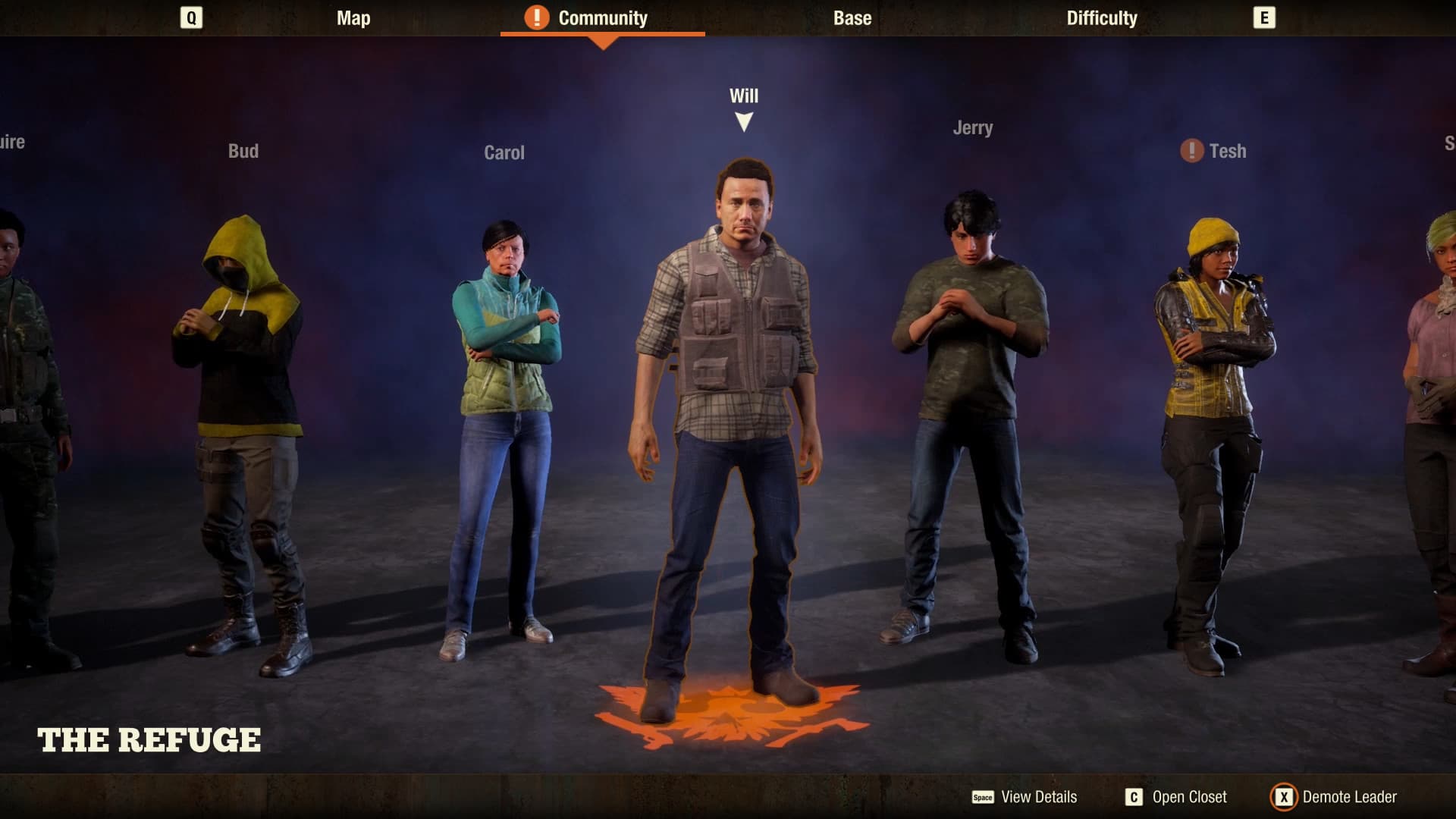
You control a community rather than a single irreplaceable hero. Survivors have individual skills, traits and personalities, and you switch between them as injuries, fatigue or personal goals change the day’s priorities. A follower can accompany an outing, making another familiar member part of the immediate danger. The person beside you is more than an extra weapon: they belong to the same limited pool of people who keep the base working.
Progression strengthens that attachment. Using a survivor improves practical skills, while helpful actions raise their standing from Recruit toward Citizen and Hero. Reaching Hero unlocks a community benefit and makes that character eligible for leadership. This is standing within the group, rather than a romance meter. It gives you a reason to invest in someone over time, while their personal community goals reveal priorities beyond the supplies you happen to need today.
Social decisions also reach neighboring enclaves. Helping them can open recruitment opportunities or build alliances with useful benefits. Back at home, morale and basic living conditions matter: enough beds and a dependable food plan support the people you are asking to stay. The social structure is broad and practical. You are deciding whom to trust, help, recruit and take outside, with action supplying the memorable moments between those decisions.
Permanent death is the decisive tradeoff. A bad fight can remove a survivor whose skills and history have made them a favorite, so bringing company deserves thought. Do not choose this expecting a Fallout-style courtship system or lengthy companion conversation trees. Choose it for vulnerable comrades, emergent attachment and the satisfaction of bringing everyone back. Heartland adds a more authored story within the included package, while the main campaign keeps the community itself in the starring role.
The verdict
Pick State of Decay 2 when companionship should be earned through shared danger and the work of keeping a community alive.
Sons Of The Forest
Kelvin’s help with the camp and Virginia’s growing familiarity give solo survival a shared daily rhythm. Their company is expressed through behavior and useful actions more than conversation trees.
- Shelter building
- Crafting
- Exploration
- Co-op
- Platforms
- Windows via Steam; single-player and online co-op.
- Price model
- Paid full-release game.
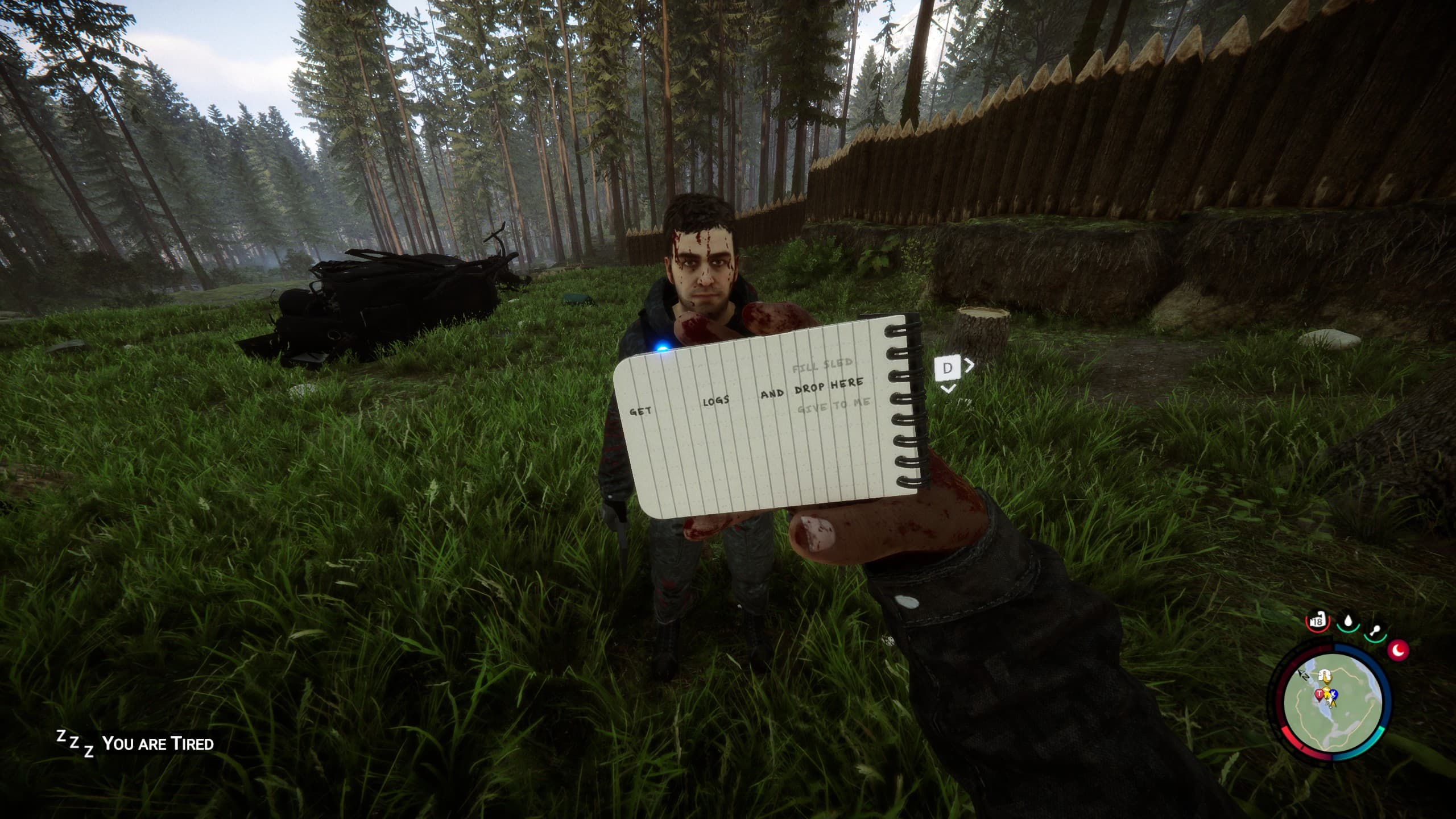
Kelvin changes the mood of a lonely camp simply by having a job to do there. You give instructions through a notepad, asking him to collect materials or help with construction. His available work extends to repairing structures, sharpening defensive walls and maintaining the base. Delegating those jobs lets you spend more attention on the next building decision or expedition, while another recognizable person remains part of the home you are making.
Virginia offers a different relationship. Her sentiment toward the player affects how often she visits, and she can bring gifts or lead you toward points of interest. Give her a weapon and she can use it in combat. That is a distinct role from Kelvin’s practical camp assistance. The pair are most appealing if you enjoy noticing behavior over time: a familiar arrival, a useful delivery or a companion returning to the space you have built.
The interaction is deliberately lighter on words than the RPGs above. Kelvin responds with gestures, and updates added more reactions for both companions. You are building familiarity while cutting timber, arranging defenses and preparing supplies for changing seasons. Human friends can join online too, but the NPCs are why this belongs in a list for people who also want company during a solo survival game.
Expect survival horror, including violent encounters and threatening cave exploration. Useful camp helpers do not replace your own preparation or turn the whole island into a safe social retreat. There is no selectable romance route comparable to Fallout 4’s. Pick this when a companion making themselves useful nearby is more important than a long personal dialogue sequence. For conversation-led bonds, The Alters or Zombie Defence will place more of the relationship directly in your hands.
The verdict
Choose Sons Of The Forest for a wilderness home that feels shared through practical help and familiar companion behavior.
How we compare
A good recommendation explains who a game suits and where it falls short. Our editorial scores use the same five criteria, each rated out of ten.
- 01
Combat
Controls, aiming, enemy readability, and the decisions you make under pressure.
- 02
Progression
Build choices during a run and meaningful progress between attempts.
- 03
Usability
Control demands, platform access, interface options, and documented device requirements.
- 04
Value
What the asking price includes, optional purchases, and the scope of the free version.
- 05
Fit
How well the game answers the specific question in this article.
Which one should you try?
Choose Fallout 4 for a named traveling companion whose story can grow into romance. Survivalist: Invisible Strain is the richest zombie-community choice for memories and social ties, while RimWorld lets an entire colony’s relationships develop into an unpredictable history. The Alters puts difficult conversations at the center of a focused survival drama. State of Decay 2 builds bonds through dangerous shared work, and Sons Of The Forest makes a wilderness camp feel less lonely through practical help. Zombie Defence offers its own intimate rhythm: survive an active outing, invest in the shelter and return to Mara for a conversation that remembers where you left things.
Your questions, answered.
Want to see what we’re building?
Zombie Defence is in Alpha. Join the waitlist.
More games to explore
- 4 Survival Games With Real Pause Controls
Looking for survival games you can pause anytime? Compare four choices, with clear solo and host rules, save limits and shelter-timer differences.
- 7 Best Zombie Games With Food and Water Management
Compare seven zombie games where food and water shape your plans, from Project Zomboid and DayZ to Zombie Defence’s irrigation and colony nutrition.
- 9 Best Zombie Games With Base Building in 2026
Compare nine zombie games with base building, from freeform forts and colony defense to adapted city blocks and persistent shelter upgrades.