Survivor relationships & shelter life
Meet five survivors, share branching conversations, and build friendship or romance through quiet moments between Zombie Defence expeditions.
- 5
- authored women in the resident roster
- 8
- connected Mara story episodes
- 3
- relationship choices in the finale



The shelter is more than a place to reload. Between expeditions, Zombie Defence makes room for people who remember your choices, share the work of keeping everyone alive, and imagine a future beyond the next breach. Its five-woman survivor roster spans mechanics, gardening, logistics, power, and radio research. Mara is the relationship story available in the current demo; Iris, Sable, Jun, and Vera are part of the wider authored cast, with their character arcs still to come.
Five women. Five reasons to come home.
Mara, Iris, Sable, Jun and Vera: the shelter’s current character roster. Mara’s route is playable in the Alpha; the other four remain demo-locked.

Current Alpha · relationship route playable
Mara
Mechanic · The Approach
Keeps the generator alive. Her eight episodes follow teasing, trust, a first dance, a reunion, and a defining conversation.

Roster · demo locked
Iris
Botanist · Flooded Depot
Carried seedlings through quarantine; her scenes imagine harvests, tea breaks, and an orchard.

Roster · demo locked
Sable
Quartermaster · Rail Yard
Makes every round count. Her scenes move from inventory humor to a shared watch and the idea of enough.

Roster · demo locked
Jun
Electrical engineer · Hospital Road
Kept a market lit with scavenged batteries; her scenes bring improvised lights and a ninety-second dance.

Roster · demo locked
Vera
Radio researcher · Blackwater
Followed the shelter’s signal across dead districts; her scenes look toward ordinary days and an open channel.
A survivor cast with lives beyond combat
Zombie Defence’s character writing starts with the work that keeps a shelter running. Mara is a mechanic who coaxes a generator back to life; Iris is a botanist who carried seedlings through quarantine; Sable is a quartermaster who makes every round count; Jun is an electrical engineer who kept a market lit; Vera is a radio researcher who followed the shelter signal home. Their specialties connect them to the base, while their stories make space for small, human details that survive alongside it.
The five residents bring different skills and temperaments to the same hard question: what would make this place feel like home? Coffee beside a repaired engine, a first harvest, a night watch, a string of hallway lights, and a radio signal from beyond the walls give the cast room to become more than names on a roster.
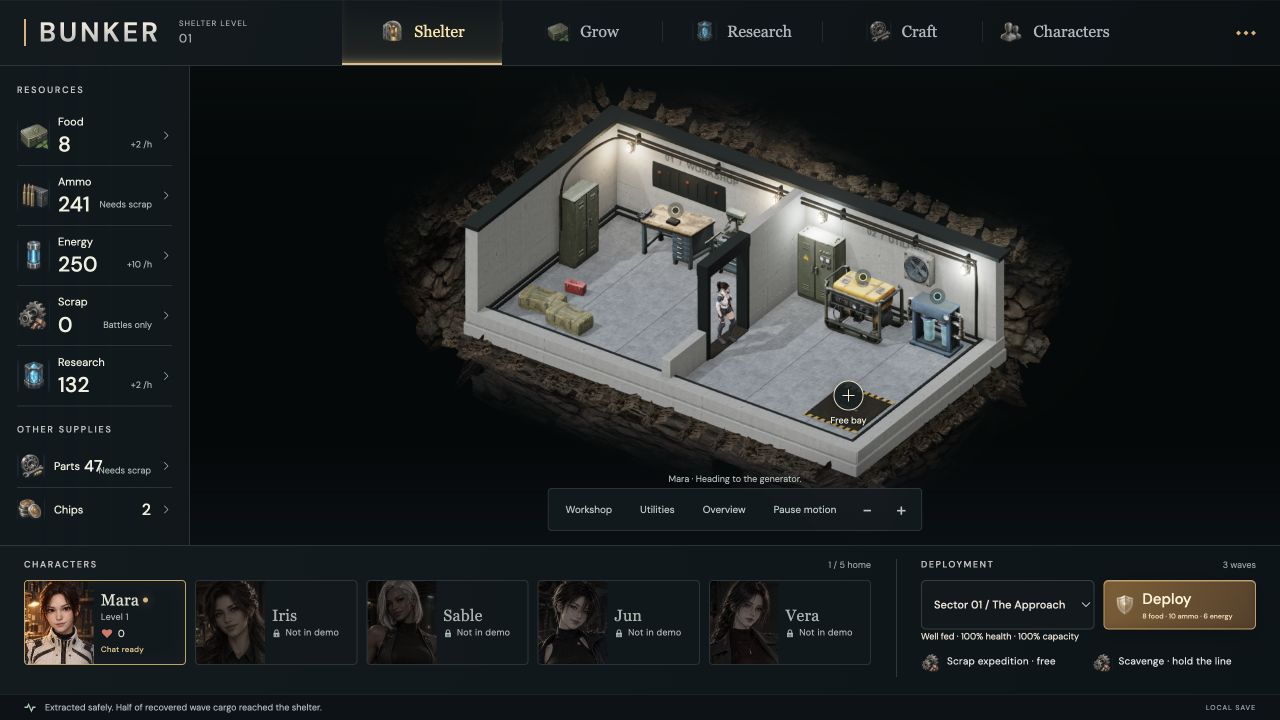
Mara’s playable story: trust built in ordinary moments
Mara’s story unfolds across eight linked episodes: “Come closer,” “One more song,” “Don’t look away,” “When you let me in,” “I missed you,” “Almost a kiss,” “Stay like this,” and “Say you want me.” The scenes move through a late workshop, a dance in the lounge, a rain-dark window seat, the hallway after an expedition, and finally the sheltered rooftop. Their intimacy grows through teasing, trust, worry, and direct conversation.
You can revisit finished moments and resume a conversation where you left it. Earlier choices shape later lines: Mara remembers what makes you feel wanted, whether you enjoy playful teasing, and how you describe the relationship. In the final episode, you can choose romance, close friendship, or a slower pace. Each answer is accepted warmly, so closeness does not depend on picking romance.
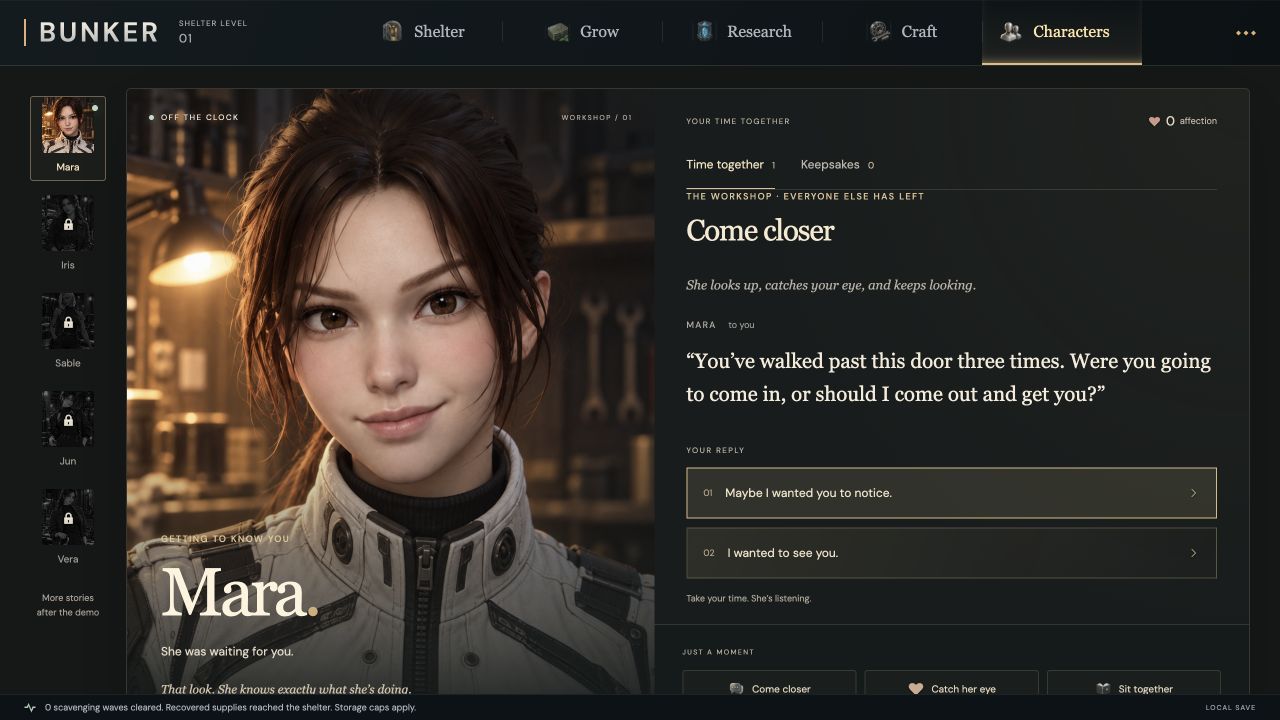
A relationship system woven into shelter life
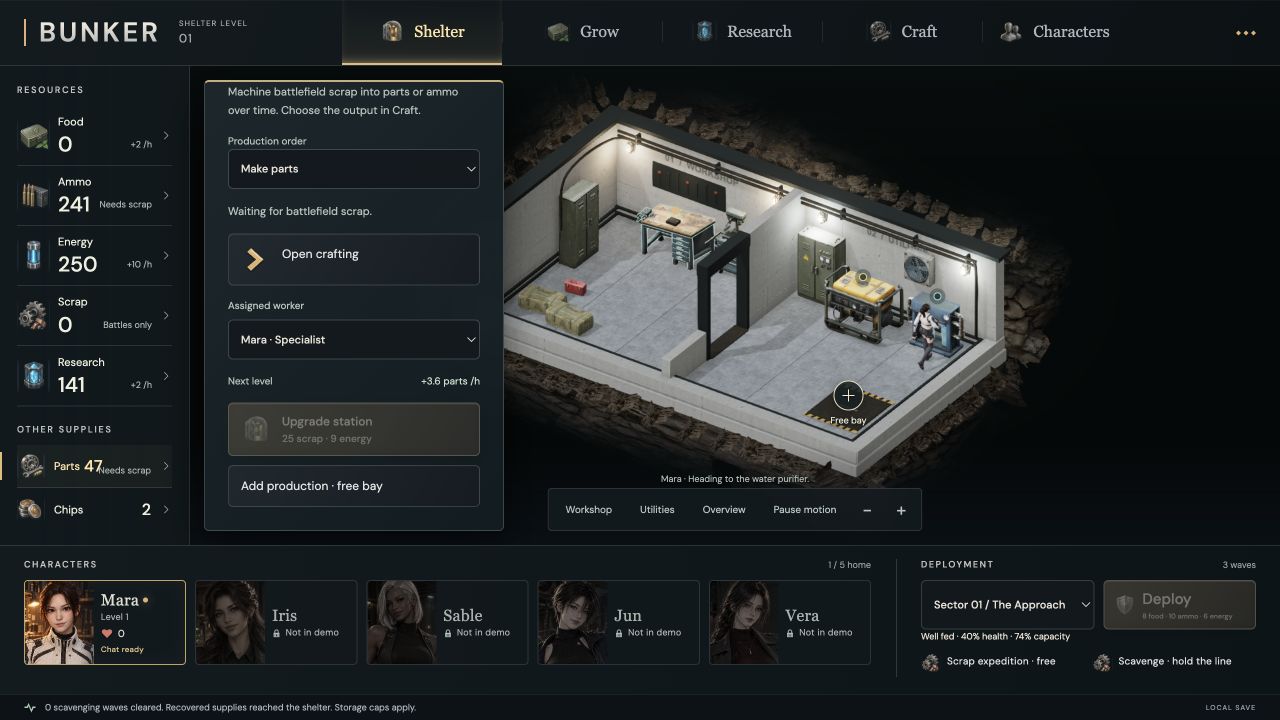
Residents are part of the campaign loop, not a separate dating screen. Bring a survivor home after a secured sector and they can contribute to shelter work in their specialty. Conversations build affection, while common room research improves the affection gained from each conversation. Crops and care packages offer other ways to show attention. The same place where you assign work and plan expeditions becomes a home people have reasons to care about.
Mara’s episodes unlock through story prerequisites. “Come closer” begins the chain. “One more song” and “Don’t look away” both open after it; “When you let me in” follows the dance, and “I missed you” follows the more personal window-seat conversation. The rooftop requires both branches, then “Stay like this” and “Say you want me” follow in order. No affection score or training level gates these conversations: complete the earlier moments and the next part of the story opens.
- Assign a resident to a matching shelter room to support its production.
- Build affection through conversations, care packages, and selected crops.
- Finish earlier Mara episodes to open the next required moment.
Five distinct voices in the authored roster
The wider resident cast carries the same character-led approach into different corners of shelter life. Iris’s story grows around seedlings, a tiny first strawberry, and a future orchard. Sable’s dry inventory humor gives way to a shared watch and an honest pause from counting exits. Jun turns a power-budget argument into hallway lights and a ninety-second dance. Vera’s map notes and radio broadcasts move from a found signal toward the hope of ordinary Tuesdays.
Their authored scene summaries include invitations, care, and choices about closeness, giving each specialist a distinct voice and set of concerns. The five portraits show the people whose work and stories shape the shelter.
Character-driven survival with room to choose
Zombie Defence pairs wave-based zombie combat and shelter management with a quieter question: what are you trying to keep alive? A worker assignment can improve production; a remembered answer can shape a conversation; the next expedition can secure a sector and bring someone home. Those systems give character scenes a concrete place in the survival campaign.
Mara’s story makes friendship, romance, and ordinary shelter routines part of the stakes. The relationship grows beside the work of keeping the settlement running, and the branching dialogue gives you room to decide what kind of closeness feels right.
How will you show up for the people at home?
Mara’s story makes room for different kinds of closeness. Your responses help define what the relationship means.
Make it romantic
Choose mutual romantic interest when the story offers that step, then continue building the relationship through later scenes.
Choose a close friendship
Tell Mara friendship feels right and keep sharing the quiet moments, trust, and care in her story.
Take your time
Say you want to get closer without rushing; the dialogue remembers that pace and reflects your earlier answers.
Before you head out.
Questions about Relationships in the current Alpha.
The five women are Mara, Iris, Sable, Jun, and Vera, each with a distinct shelter specialty and portrait. Mara is available in the current demo; Iris, Sable, Jun, and Vera remain later-sector roster characters.
Yes. In the final episode, choose a close friendship, mutual romantic interest, or a slower pace. Mara responds warmly to each answer.
It is PG, focused on conversation, mutual affection, dates, shared routines, and emotional closeness.
Complete its prerequisite episode or episodes. The first moment is open at the start, two early conversations branch from it, and they later come together at the rooftop. Affection and character training do not gate the eight episodes.
Residents can be assigned to shelter rooms connected to their specialties, and affection can grow through conversations and gifts. That connects character progression with the wider base-building loop.
Resident conversations and gifts can build affection. Common room research improves conversation gains; affection is also tracked as part of the shelter relationship system.
Connected systems
Follow the supplies, the people and the next decision.
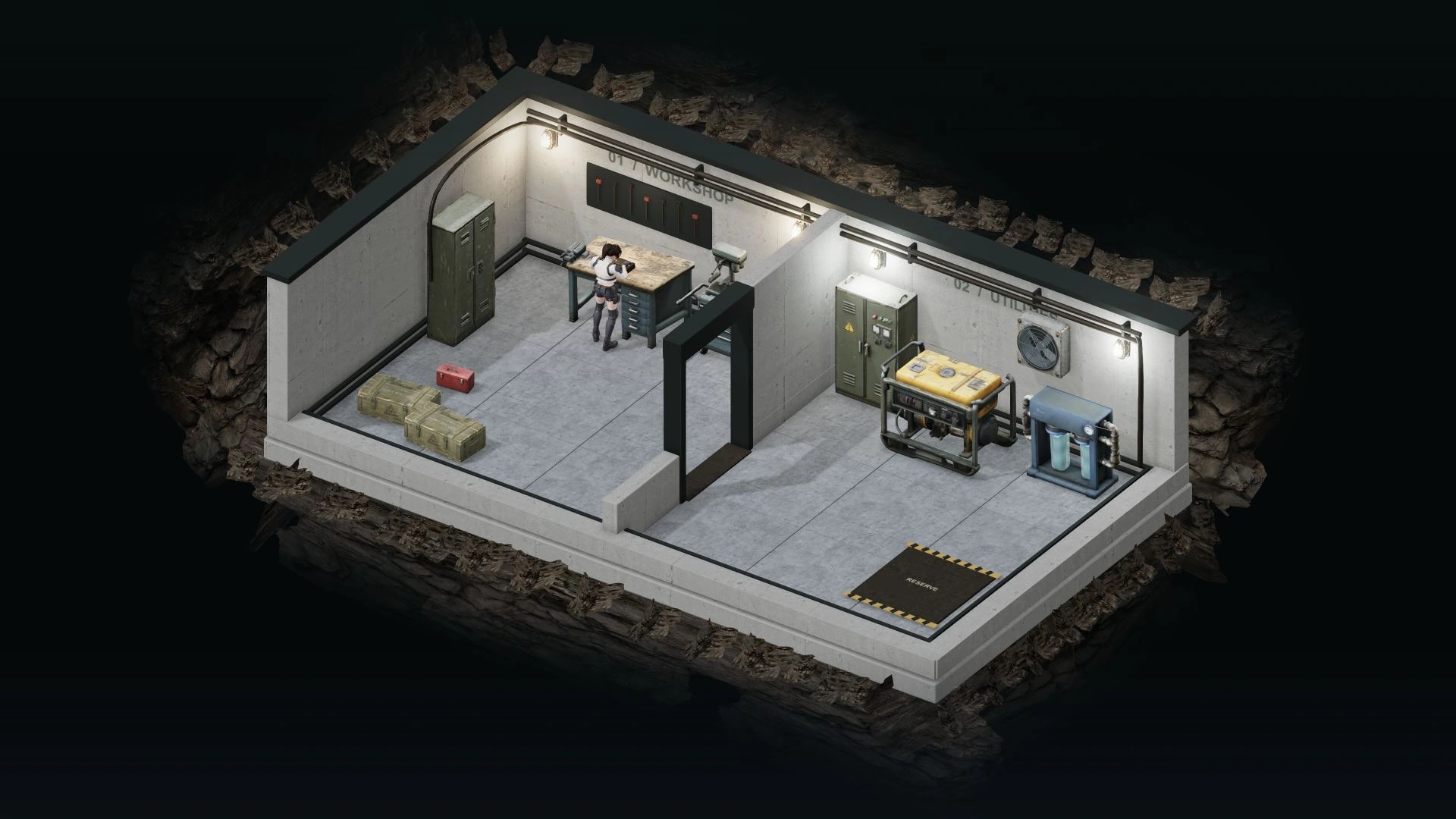
Shelter
Manage an underground zombie shelter, upgrade production rooms, assign specialist residents, grow food and choose lasting research paths between active survival runs.
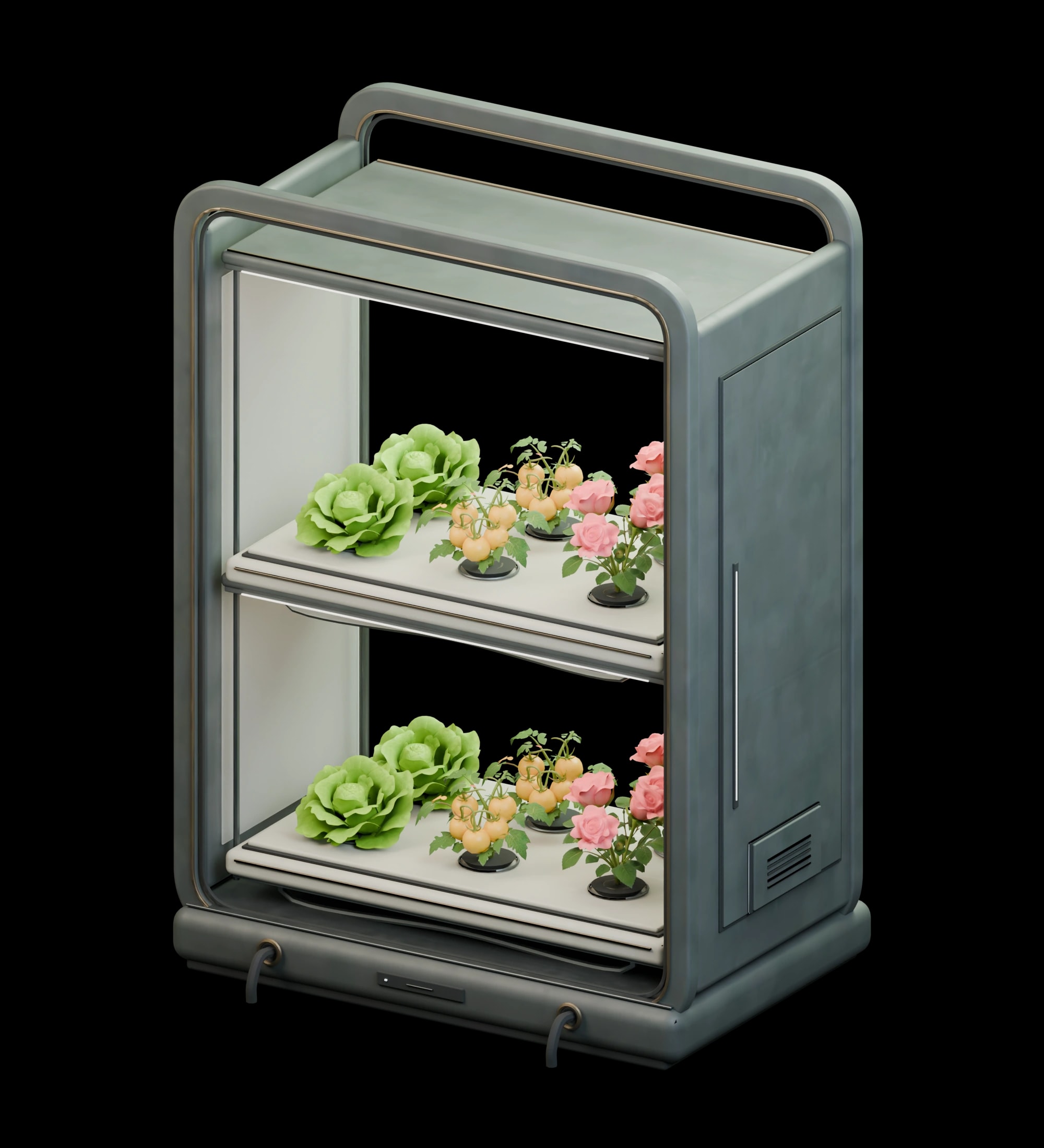
Growing
Plant lettuce, tomatoes, or roses in an underground hydroponic shelter. Manage water, harvest crops, stock the pantry, and prepare food for zombie expeditions.
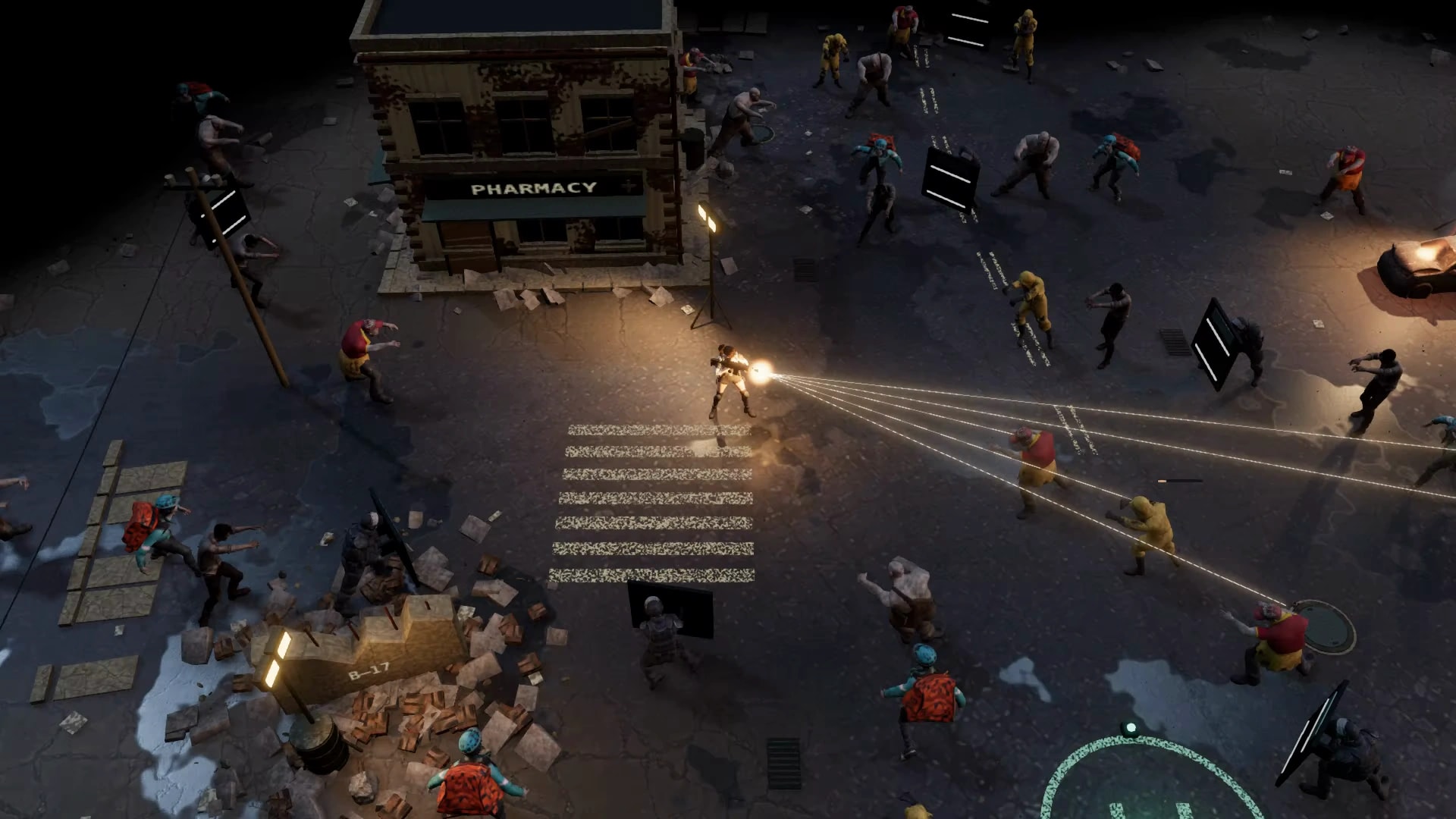
Extraction
Enter a ruined city alone, recover scrap from salvage containers, and reach the extraction pad while zombies close in. Your haul feeds a persistent shelter campaign.
More on this kind of game
A place on the list. A way back home.
Get Alpha news and playtest updates.