Survival crafting & weapon builds
Recover weapon schematics, machine the right parts and assemble a persistent arsenal in a zombie survival game where scrap, energy and research all have competing jobs.

- 8
- fixed weapon recipes to discover and build
- 3 parts
- frame, barrel and feed in each assembly
- 6 modules
- equipment effects to craft and rank up
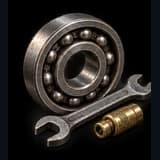
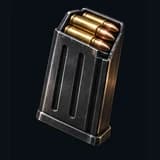

The workbench turns a supply run into a plan. Recover a schematic, research its route or discover a valid assembly, then spend parts and energy on the frame, barrel and feed. Weapons stay in your shelter arsenal; battle upgrades are temporary choices made in the field.
Find a schematic or work out the recipe
The issued AR-07 starts a campaign; eight other weapons are built at the shelter workbench. Plans come from battlefield schematics, required research or a correct three-part assembly that reveals and saves its recipe. A recovered schematic is kept if you retreat, so one run can advance a weapon project without a victory.
Research and sector progress shape what becomes practical. Early plans lead from the Pipe Carbine toward compact automatics, a marksman rifle, a belt-fed LMG and electrical builds. Research is a lasting investment with other costs and benefits, so weigh a weapon recipe against another need in the base.
- Recover field schematics during sector expeditions.
- Unlock recipes through their required research combination.
- Discover a plan by matching its valid components at the bench.
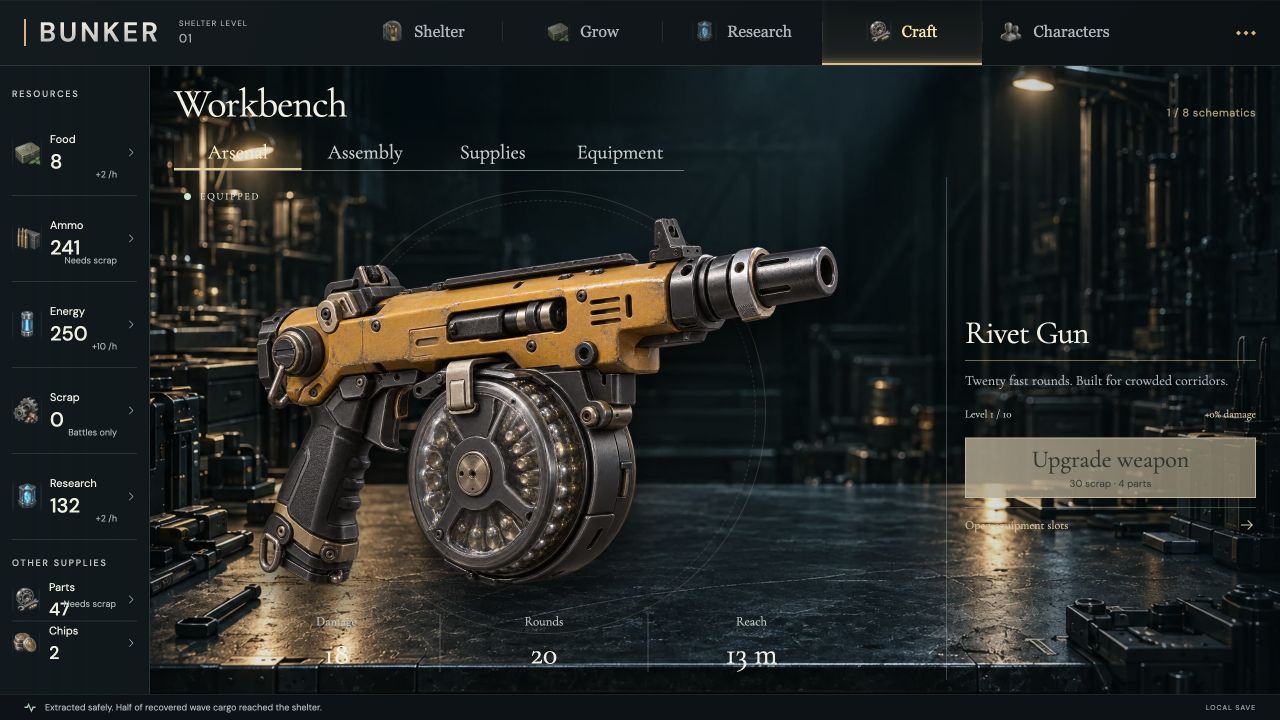
Choose a frame, barrel and feed that make a weapon
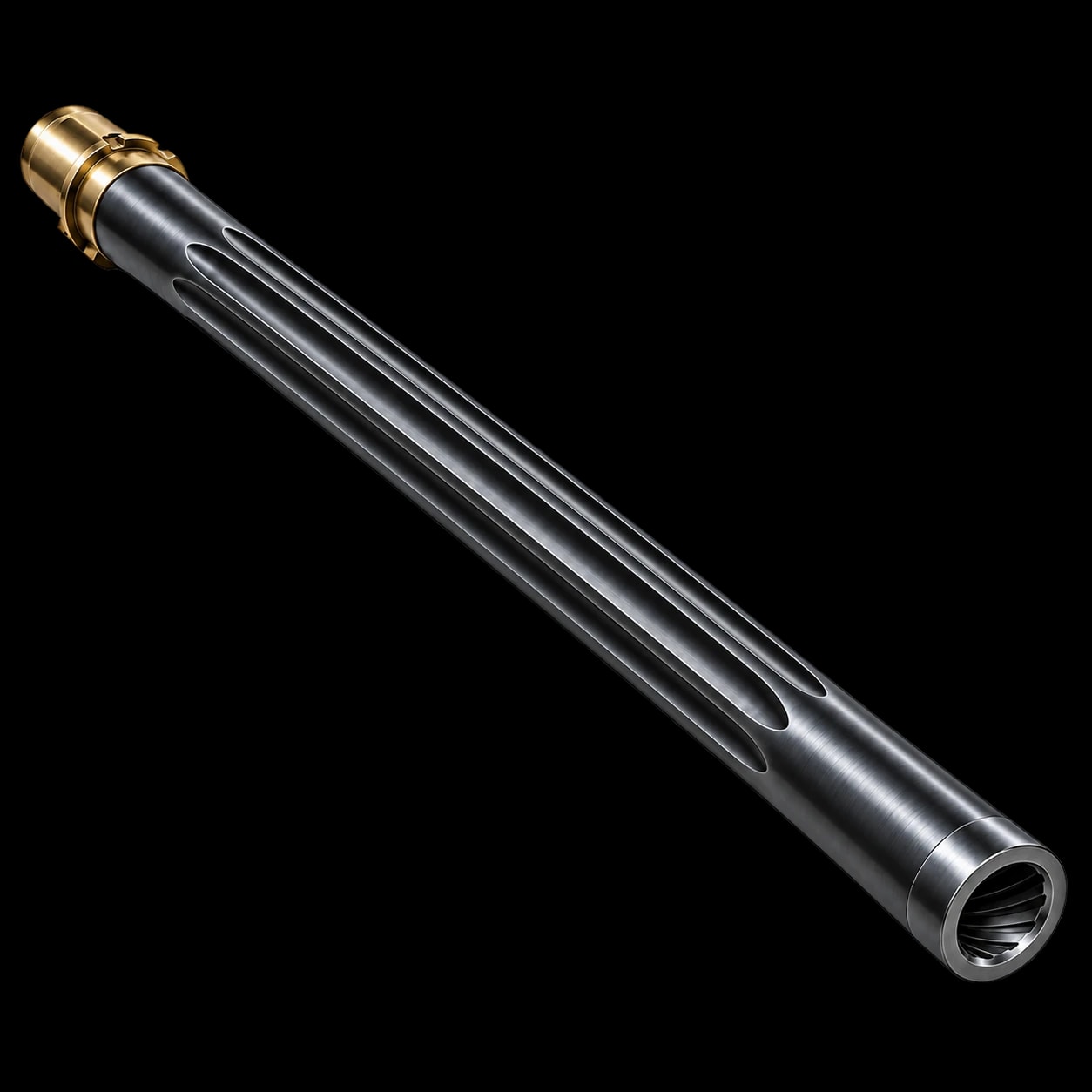
Assembly follows fixed recipes: one receiver or frame, one barrel and one feed. A light receiver, short barrel and spring feed make the Pipe Carbine; a heavy frame, rifled barrel and drum feed make the LMG. Arbitrary mixes do not make a working gun, and the tray shows whether parts match before you spend them.
Components use machine parts and energy, and the completed weapon also costs energy. Advanced electrical components require Machine shop research. Choose a target, check its recipe and gather those materials instead of waiting for a random gear drop.
Keep enough scrap for the rest of the shelter
The Salvage Bench processes battlefield scrap into parts or ammunition; the Ammo Press also makes ammunition. Pause either line to keep scrap for shelter upgrades, weapon levels or other crafting. Processing stops when scrap runs out or output storage fills, so capacity is not a free supply of parts.
After a deployment, choose parts for a planned build, ammunition for the next trip, or scrap for a room or weapon upgrade. Higher weapon levels cost more scrap and parts. Storage limits also affect production and recovered supplies, so leave room for immediate shelter needs.
- Set the Salvage Bench to parts when a component build is close.
- Pause processing to reserve scrap for construction or upgrades.
- Check parts, energy and storage before committing to a weapon recipe.
Prepare permanent equipment, then adapt during battle
Built weapons join the persistent arsenal and can be upgraded at the shelter for increasing scrap and parts costs. Six modules affect fire rate, reach, health, damage, magazine size or passive production. Craft them, rank them with spare copies and scrap, then equip one at a time.
Run level-ups offer temporary combat effects for that deployment. A shelter-built weapon or equipped module shapes your long-term loadout; a battle card responds to the threats right now.
Give the next zombie run a concrete crafting target
A supply run can target a missing component, energy for assembly, or research and scrap for Machine shop. Alpha crafting connects weapons, supplies and modules through fixed recipes; it does not offer random loot tiers or unrestricted building. Decide which lasting project the recovered supplies should support.
Your target changes with the shelter. If ammunition is low, process rounds; if a research prerequisite is missing, invest in the lab; if a weapon needs improvement, save for its next level. The workbench connects each return to the next zombie run.
Three choices before you craft
A little planning helps each recovered supply move a weapon project or shelter need forward.
Pick the weapon before processing parts
Check the frame, barrel and feed, then set the Salvage Bench to parts if needed. Some recipes also require research or Machine shop.
Choose what your scrap line should make
Ammo, machine parts and construction compete for scrap. Pause processing when you need it for a room, weapon level or recipe.
Separate the loadout plan from the run plan
Build and upgrade weapons at the shelter; use level-up cards for pressure during the current deployment. Cards end with that run.
Before you head out.
Questions about Crafting in the current Alpha.
The AR-07 is issued at the start. Eight fixed recipes include the Pipe Carbine, Breach Shotgun, Compact SMG, Watchman Rifle, Belt-fed LMG, Coil Carbine and Rail Lance. Research and sector progress affect availability.
Recover one during a sector expedition, unlock a recipe through research, or discover it by assembling its exact frame, barrel and feed.
No. Each weapon has a defined receiver, barrel and feed recipe. The workbench checks whether a combination works before you spend its components.
It is Industry research that opens crafting options and is required for advanced electrical components in coil-based weapons.
Process recovered battlefield scrap at the Salvage Bench into parts or ammunition. Choose the output that fits your current plan.
Yes. Built weapons and levels persist. Craft and rank modules at home, then equip one at a time.
No. Level-up cards are temporary choices for the active deployment. Weapon builds, shelter research and weapon levels are persistent campaign investments.
Alpha crafting uses named weapon recipes and defined components, unlocked through schematics, research or assembly. It has no randomized loot tiers or unrestricted structure placement.
Connected systems
Follow the supplies, the people and the next decision.
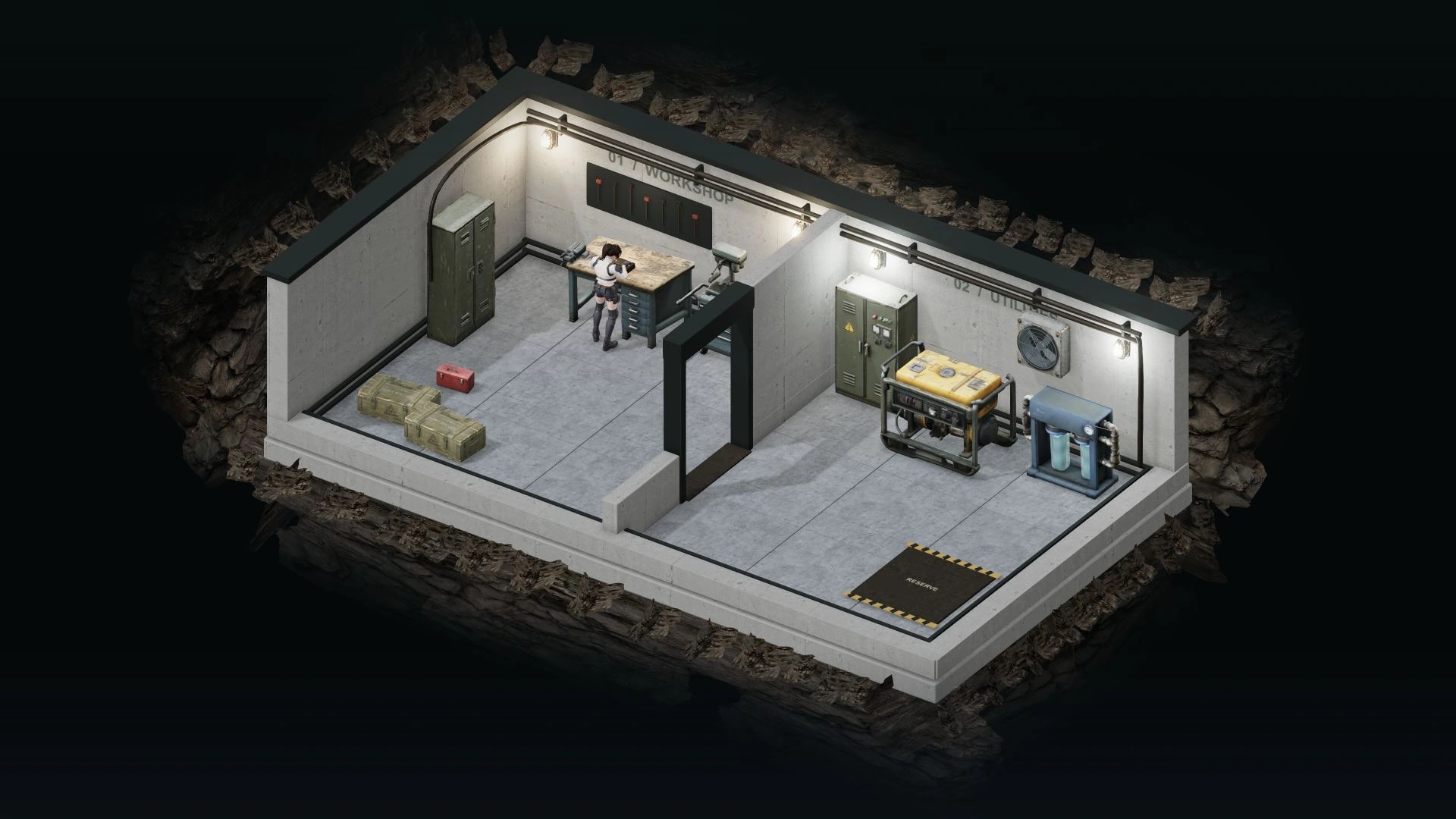
Shelter
Manage an underground zombie shelter, upgrade production rooms, assign specialist residents, grow food and choose lasting research paths between active survival runs.
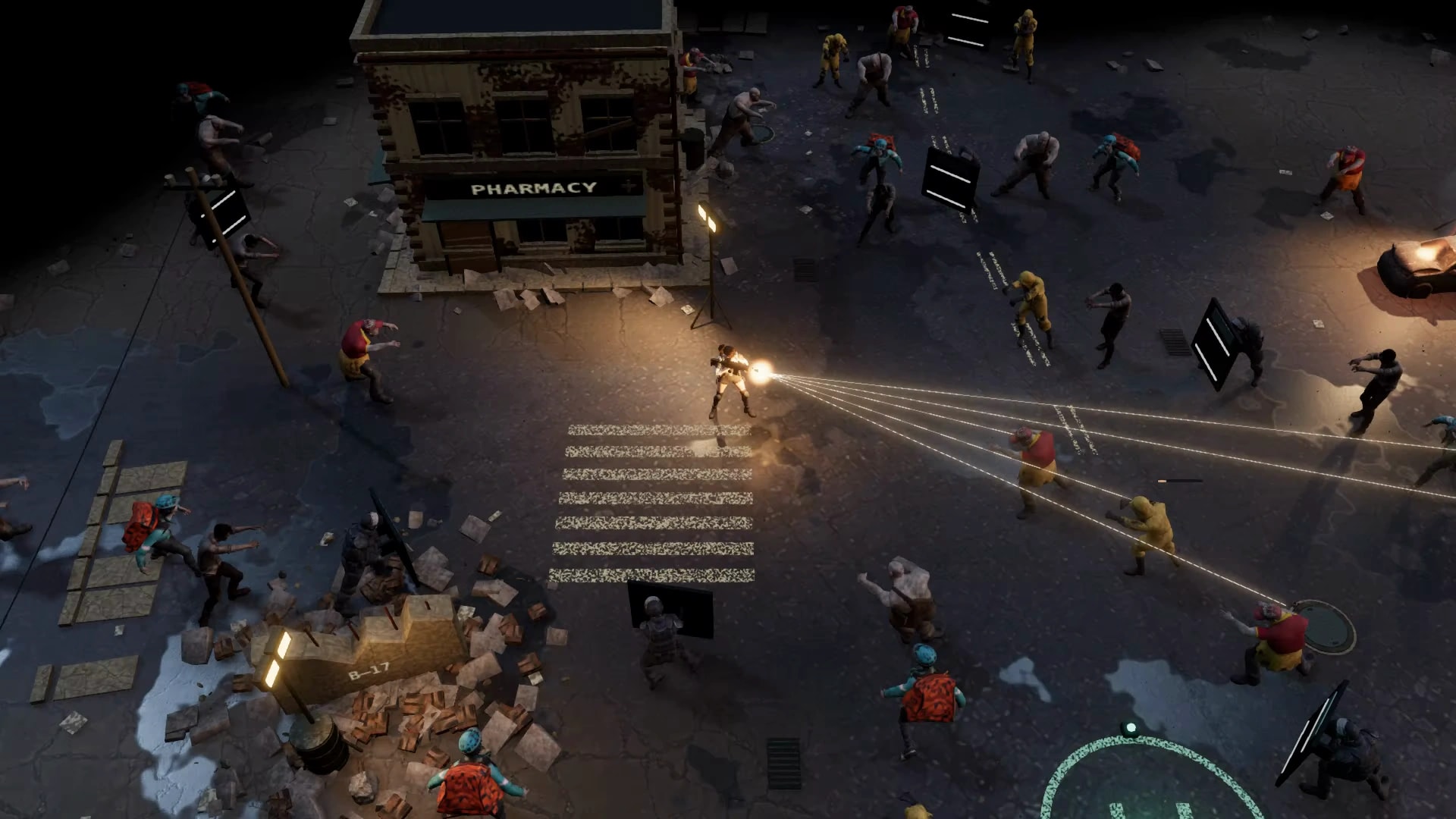
Extraction
Enter a ruined city alone, recover scrap from salvage containers, and reach the extraction pad while zombies close in. Your haul feeds a persistent shelter campaign.
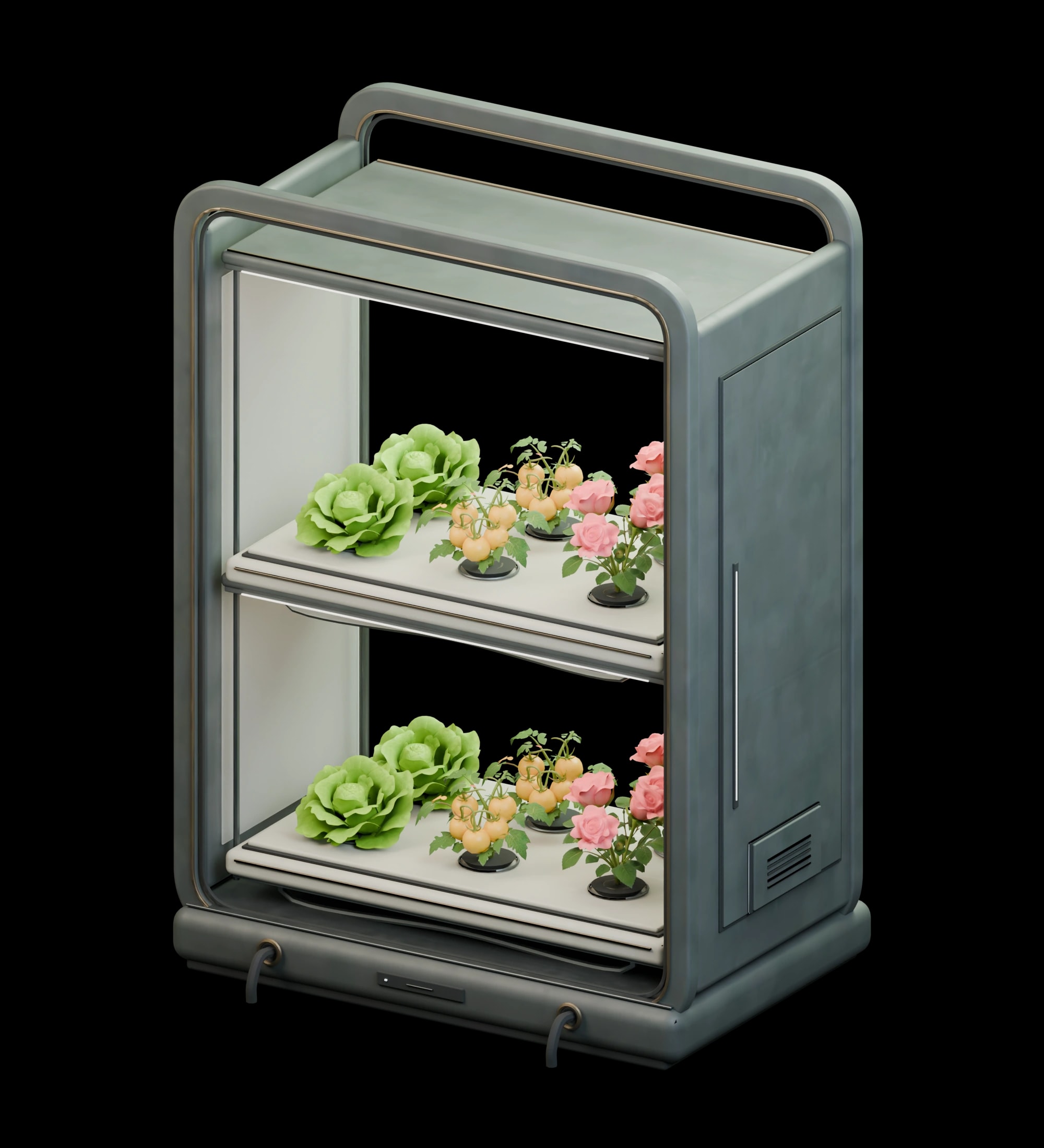
Growing
Plant lettuce, tomatoes, or roses in an underground hydroponic shelter. Manage water, harvest crops, stock the pantry, and prepare food for zombie expeditions.
More on this kind of game
A place on the list. A way back home.
Get Alpha news and playtest updates.