Survival farming, underground
Plant lettuce, tomatoes, or roses in an underground hydroponic shelter. Manage water, harvest crops, stock the pantry, and prepare food for zombie expeditions.
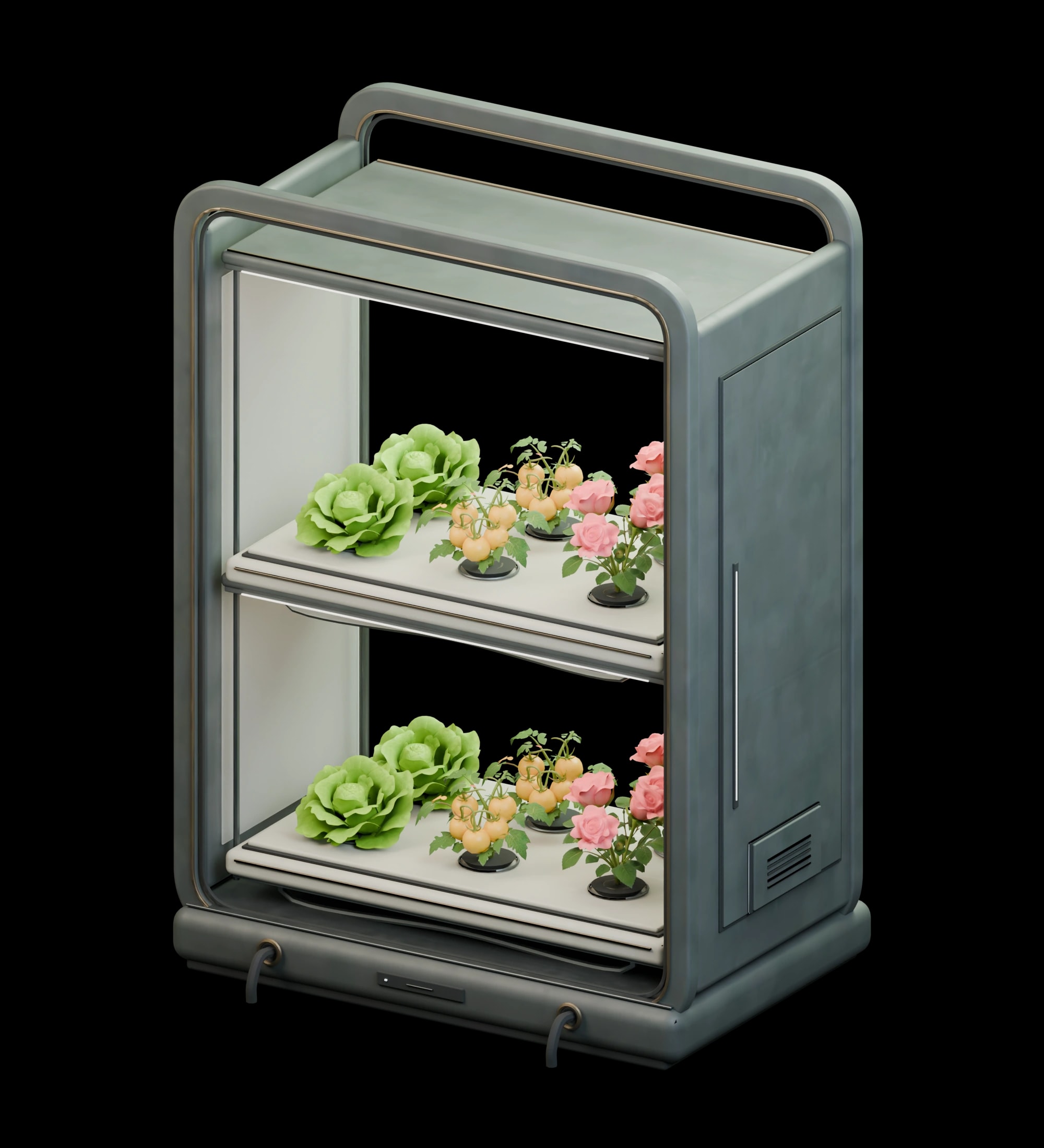
- 3 crops
- Greens, tomatoes, and roses serve different needs
- 3 plots
- Each growing rack adds three planting slots
- Water-led
- Irrigation supply affects crop growth speed



A few lit racks can turn a sealed room into a working garden. In Zombie Defence, plant lettuce, tomatoes, or roses in the shelter’s hydroponics system, keep irrigation supplied, and decide whether each harvest belongs in the colony pantry, an expedition meal, or a gift for someone at home.
Build a small farm inside the shelter
Survival farming in Zombie Defence takes place underground, inside a hydroponic grow cabinet. It is part of the persistent shelter campaign: select a plot, choose a crop, and let it develop while you manage the rest of the base or head out on a run. The cabinet is divided into racks and growing bays, so expanding the farm gives you more room to plan several harvests at once.
Every rack adds three plots, up to twelve racks. The second rack unlocks roses; additional racks and purifiers cost shelter resources, so expanding the garden competes with other improvements. This is a focused indoor growing system with a visible cabinet and plot choices, rather than a free-placement farm across an outdoor map.
- Select an open plot and plant one of three available crops.
- Build a rack to add three plots; rack two unlocks roses.
- Use the shared shelter resources to expand racks and irrigation capacity.
Plant for the need you have, then keep water moving
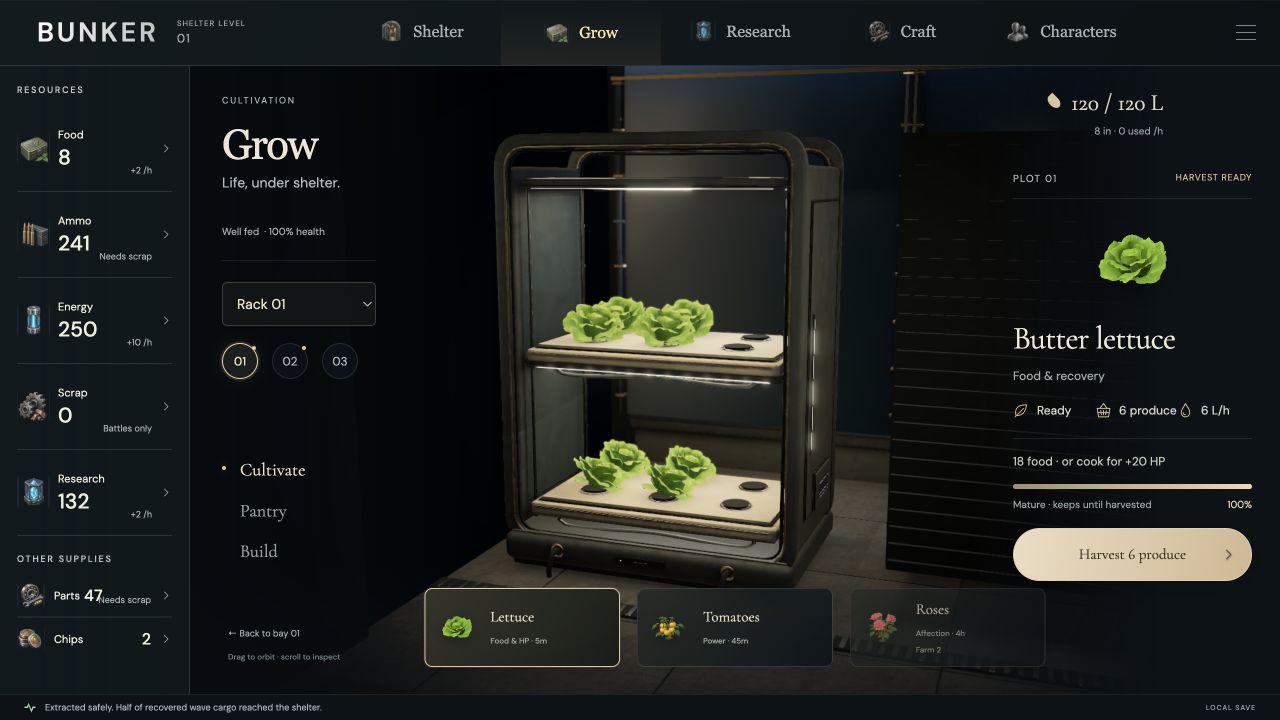
Butter lettuce is the quick food crop: it matures in a base five minutes and yields six heads, or more when tended. Golden tomatoes take a base 45 minutes and yield eight. Shelter roses take four hours, occupy two farm units, and yield eight blooms. Actual growth speed also responds to irrigation and shelter bonuses, so the listed crop time is a starting point rather than a promise under every farm condition.
Water is the central growing constraint. The shelter’s Water & Hydroponics room, installed purifiers, and a garden expansion bay contribute irrigation. When demand exceeds supply, crops grow more slowly; stored water can cover a shortfall until the tank runs down. You can tend an unfinished plot by spending five litres, which raises that crop’s harvest by 25%. Ripe crops wait safely on their plots until you harvest them, giving you time to make pantry space.
- Lettuce supports food and recovery; tomatoes support expedition power; roses are for affection.
- Tending costs 5 L and adds 25% to the harvest.
- More irrigation and shelter growth bonuses can improve crop progress.
Choose where each harvest helps most
Harvested produce goes into the crop pantry, where each type has its own capacity. Lettuce and tomatoes can be served to add food to the colony’s shared supplies. Colony food is consumed over time, so harvests supplement the shelter’s food production and help keep residents fed. The pantry is a buffer for your choices; it is not an unlimited warehouse, and a full crop store must be used before you can harvest more of that plant.
Produce can also become a meal for the next expedition. Five lettuce make a Garden Bowl that adds 20 maximum health, while three tomatoes make Sunset Soup for a 12% power bonus. Only one meal can be packed at once, and its effect lasts for that fight. Roses take a different route: give one to a resident who is home to add three affection, subject to a half-hour wait between gifts to the same person. They do not count as food.
- Serve edible crops to add their food value to shelter stock.
- Pack one Garden Bowl or Sunset Soup for the next expedition.
- Keep roses for resident gifts; they provide no food.
Let the garden grow with the campaign
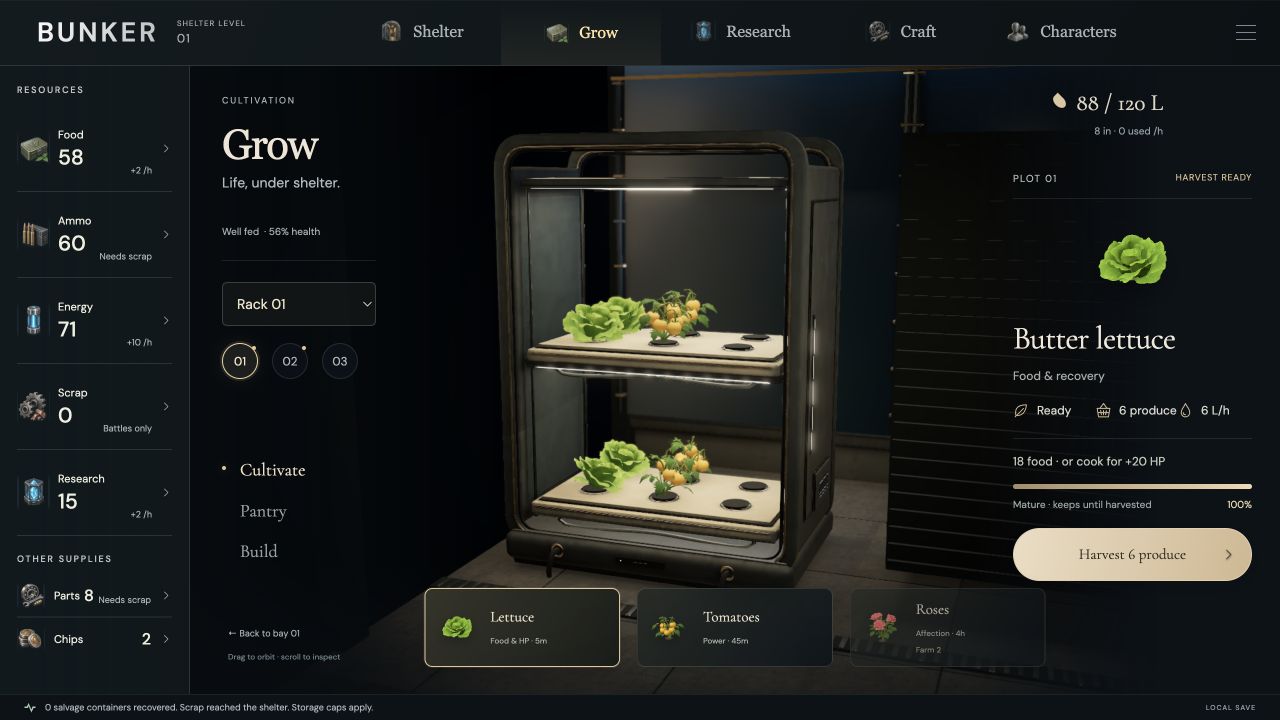
Farming connects directly to shelter planning. The garden room produces food and contributes irrigation; a worker assigned to the garden can improve crop growth, and a matching specialist provides a further boost when available. Generator levels and Shelter research also affect growing conditions. Upgrading racks adds capacity, while purifiers add water supply, so the useful investment depends on whether you need more plots or more reliable irrigation.
The shelter advances with elapsed time while you are away, within its offline production limit, and crops can progress during that period. Harvesting remains a deliberate action: the system does not automatically pick ripe produce or claim it into the pantry for you. A garden therefore rewards returning to check on the plots, use ripe crops, and line the next planting up with the food or combat supplies your campaign needs.
Iris is the campaign’s botanist, but her rescue is tied to later sector progress and the current demo roster makes only Mara available. The farming system is usable as a shelter feature without presenting Iris as an immediately playable gardener.
Three choices shape a shelter harvest
Your best crop plan depends on water, pantry space, and what the next expedition or the colony needs.
Prioritize quick food or a slower bonus crop
Plant lettuce for a short growing cycle and colony food, tomatoes when you want a power meal, or roses for affection. The crop’s growing time, water demand, rack requirement, and harvest purpose all differ.
Expand the rack or strengthen irrigation
More racks create three plots each, but planted crops compete for water. Add capacity when you have room to plant; improve the purifier supply when irrigation is already slowing those crops down.
Serve, cook, or gift the produce
A harvest can replenish food stock, become one expedition meal, or build affection with a rose. Check pantry capacity and the next run’s needs before deciding what to take out of storage.
Before you head out.
Questions about Growing in the current Alpha.
Plant crops in plots inside the shelter’s hydroponic cabinet, manage the water supply as they grow, and harvest them into the crop pantry. Produce can support colony food, expedition meals, or resident gifts.
The current Grow system has butter lettuce, golden tomatoes, and shelter roses. Lettuce adds food and can support a health meal, tomatoes can make a power meal, and roses are affection gifts rather than food.
Base times are five minutes for lettuce, 45 minutes for tomatoes, and four hours for roses. Water availability and shelter bonuses affect actual progress, and ripe crops remain safe until you harvest them.
Yes. Spend five litres of stored water to tend an unfinished crop and increase its eventual yield by 25%. You can tend each crop once.
Serve lettuce or tomatoes to add food to the colony supply. Pack five lettuce into a Garden Bowl for +20 maximum HP, or three tomatoes into Sunset Soup for +12% power on the next expedition. One meal can be packed at a time.
The current feature is an indoor hydroponic cabinet with racks and plots. It does not include open-world fields, seasons, livestock, or animal husbandry.
Crop progress can advance with elapsed shelter time up to the campaign’s offline limit. Ripe crops are not automatically harvested, so return to collect them and manage pantry capacity.
Iris is a botanist in the campaign roster whose rescue is tied to later sector progress. The current demo availability gate exposes Mara, so Iris should not be treated as playable in the demo.
Connected systems
Follow the supplies, the people and the next decision.
Shelter
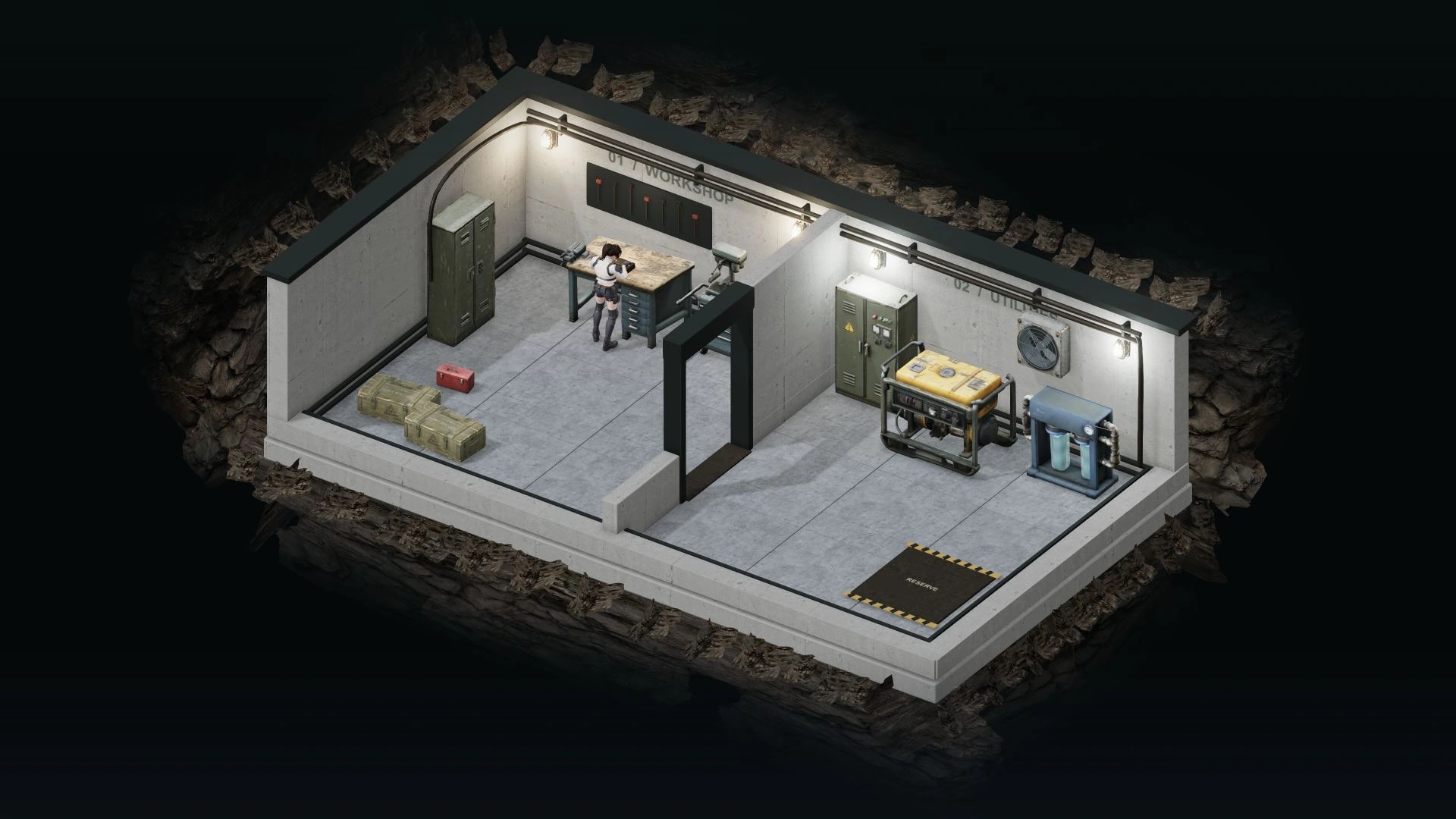
Manage an underground zombie shelter, upgrade production rooms, assign specialist residents, grow food and choose lasting research paths between active survival runs.





Relationships
Meet five survivors, share branching conversations, and build friendship or romance through quiet moments between Zombie Defence expeditions.

Crafting
Recover weapon schematics, machine the right parts and assemble a persistent arsenal in a zombie survival game where scrap, energy and research all have competing jobs.
More on this kind of game
A place on the list. A way back home.
Get Alpha news and playtest updates.