7 Games Like Last Day on Earth With Crafting and Combat
Build weapons and shelters, then choose between zone runs, settlement life and full survival sandboxes.
For the closest mobile take on Last Day on Earth’s scavenging-and-shelter rhythm, start with Dawn of Zombies: Survival or Days After: Zombie Survival. Both pair trips for supplies with equipment crafting and a home base. DYSMANTLE is a crafting-focused island detour, while Undawn, State of Decay 2 and 7 Days to Die stretch the idea into larger worlds. Zombie Defence is the pick here for active browser combat that feeds lasting crafting and shelter projects.
Those games do not all ask for the same kind of survival. Last Day on Earth keeps its main journey single-player and separates clans, trading and PvP into the Crater. It requires an internet connection, and death can cost carried items while base upgrades survive; the exact recovery depends on the location. The choices below range from distinct resource locations to shared open worlds and wide crafting sandboxes, so the best match depends on whether you want a compact return-to-base loop or room to roam.
The quick comparison
7 games, different reasons to give the next run a chance.
Choose a game to jump to its overview. Platform lists are summaries; check the linked official edition.
The games
Dawn of Zombies: Survival
Travel between dangerous territories, then use what you recover to make better gear and shelter upgrades.
- Exploration
- Crafting
- Shelter building
- Permanent progress
- Platforms
- Android and iOS; regional storefront availability may vary.
- Price model
- Free download with ads and in-app purchases; Google Play discloses randomized items.
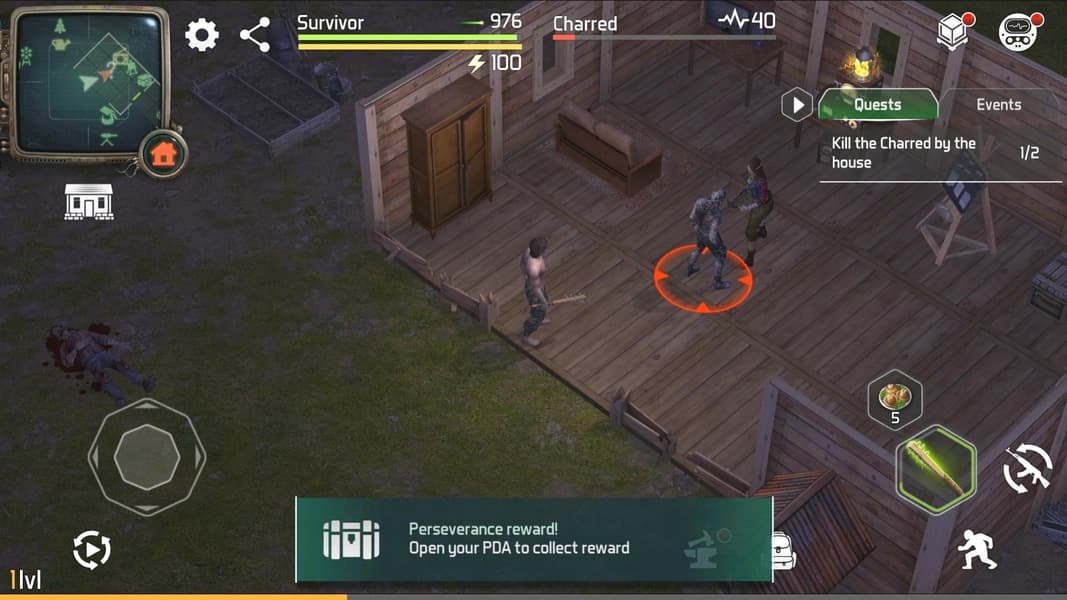
Of the released mobile options here, Dawn of Zombies comes closest to Last Day on Earth’s scavenging-and-shelter rhythm. Its story sends you through distinct territories, forests, military zones and underground areas; the trip can put zombies, bandits and radiation between you and the supplies you need. Hunger, thirst and disease also matter, so preparing for a location is part of the combat loop rather than a separate menu chore.
Blueprints cover weapons, armor, vehicles and shelter buildings, while repair and skill systems give recovered materials several uses. Stealth lets you slip past enemies when a fight would cost too much, and elemental weapons add options when you are equipped to take on tougher threats. The game also advertises online co-op, but its store listing marks larger features such as clan bases and shared PvE quests as coming soon; check the current mode details if playing with friends is essential.
The verdict
Choose it when you want another mobile wasteland built around resource runs, blueprints and survival preparation.
Zombie Defence
Fight through sectors or extract Scrap, then turn each haul into lasting shelter progress.
- Farming
- Extraction
- Shelter building
- Crafting
- Permanent progress
- Platforms
- Browser Alpha (development build); native mobile stores are planned.
- Price model
- Freemium planned; launch pricing and monetization terms are unconfirmed.
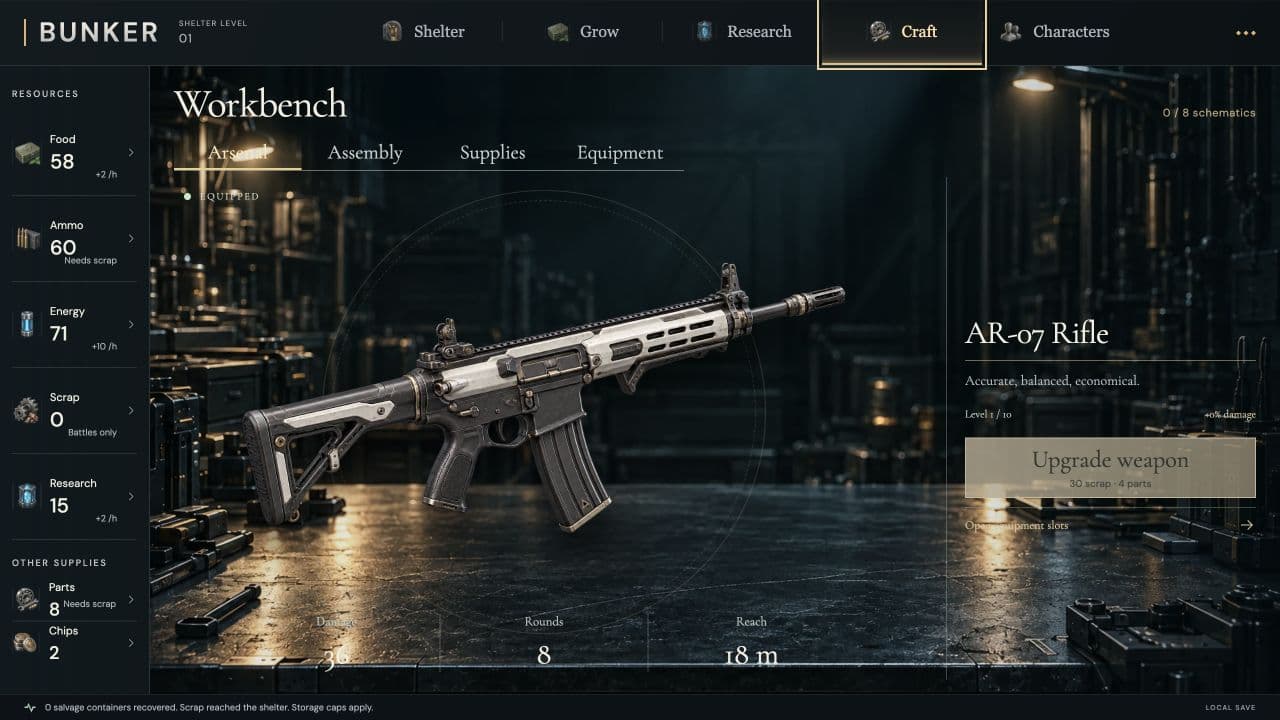
On desktop, Zombie Defence puts the combat up front: move, manually aim, fire and reload through three-wave sectors or take a Scrap expedition into the city. In that expedition mode, you decide how far to push before extracting; picked-up Scrap is retained after extraction or defeat, within shelter storage limits. The lower loss stakes make an outing a resource decision without making one failed fight erase your shelter growth.
Back at the shelter, Scrap can support weapon crafting, ammunition and parts production, room upgrades or research. The Water & hydroponics station also feeds crops that can become colony food or a meal bonus for a later deployment. Its long-term loop is unusually connected, but the shelter is built from station and room upgrades rather than unrestricted wall placement. The current playable roster is Mara, so the progression is about improving one survivor and the home around her, not collecting a released hero lineup.
The verdict
A strong fit if you want hands-on zombie fights whose rewards build a lasting crafting and production shelter.
Days After: Zombie Survival
Explore a map of distinct locations, fight infected enemies and craft the gear your next trip needs.
- Exploration
- Crafting
- Shelter building
- Permanent progress
- Platforms
- Android and iOS; regional storefront availability may vary.
- Price model
- Free download with ads and in-app purchases; Google Play discloses randomized items.
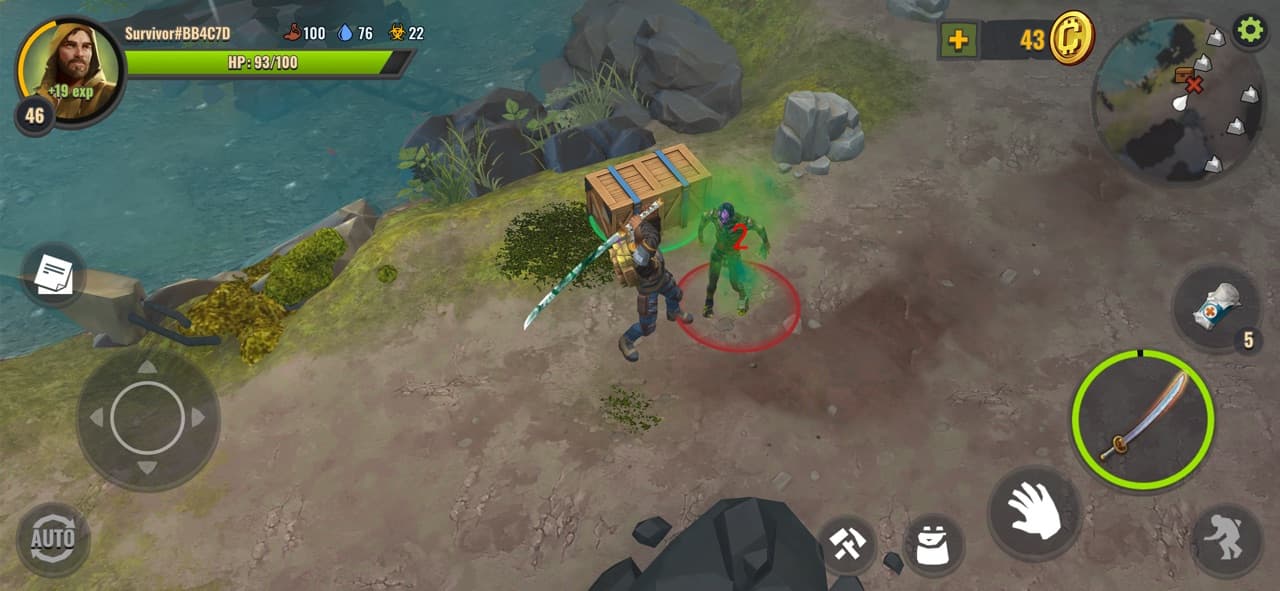
Days After follows a familiar mobile survival route: collect resources, craft tools and weapons, build a base, then head through separate locations for more supplies. The official listing calls out survivor diaries and dozens of places to explore, giving its PvE scavenging a quest trail. Hunger, thirst and infection affect the journey, while both zombies and wild animals can turn a resource stop into a fight.
The attraction is how many of the familiar pieces sit together: shelter construction, equipment recipes, skill growth and companions all support the next trip. Store listings also show that purchases go beyond costumes, including currency, gear, backpacks, vehicle supplies and timed Premium access. That makes it easy to try for free, but the full value depends on how much of that progression you want to accelerate.
The verdict
Pick it for a direct mobile survival loop with location-based scavenging and a broad set of crafting goals.
Undawn
Trade compact supply trips for a seamless world of infected, weather, vehicles and player-built homes.
- Exploration
- Crafting
- Shelter building
- Co-op
- Platforms
- Android, iOS and Windows PC on Steam; regional mobile availability may vary.
- Price model
- Free to play with in-app purchases; the iOS listing discloses loot boxes.
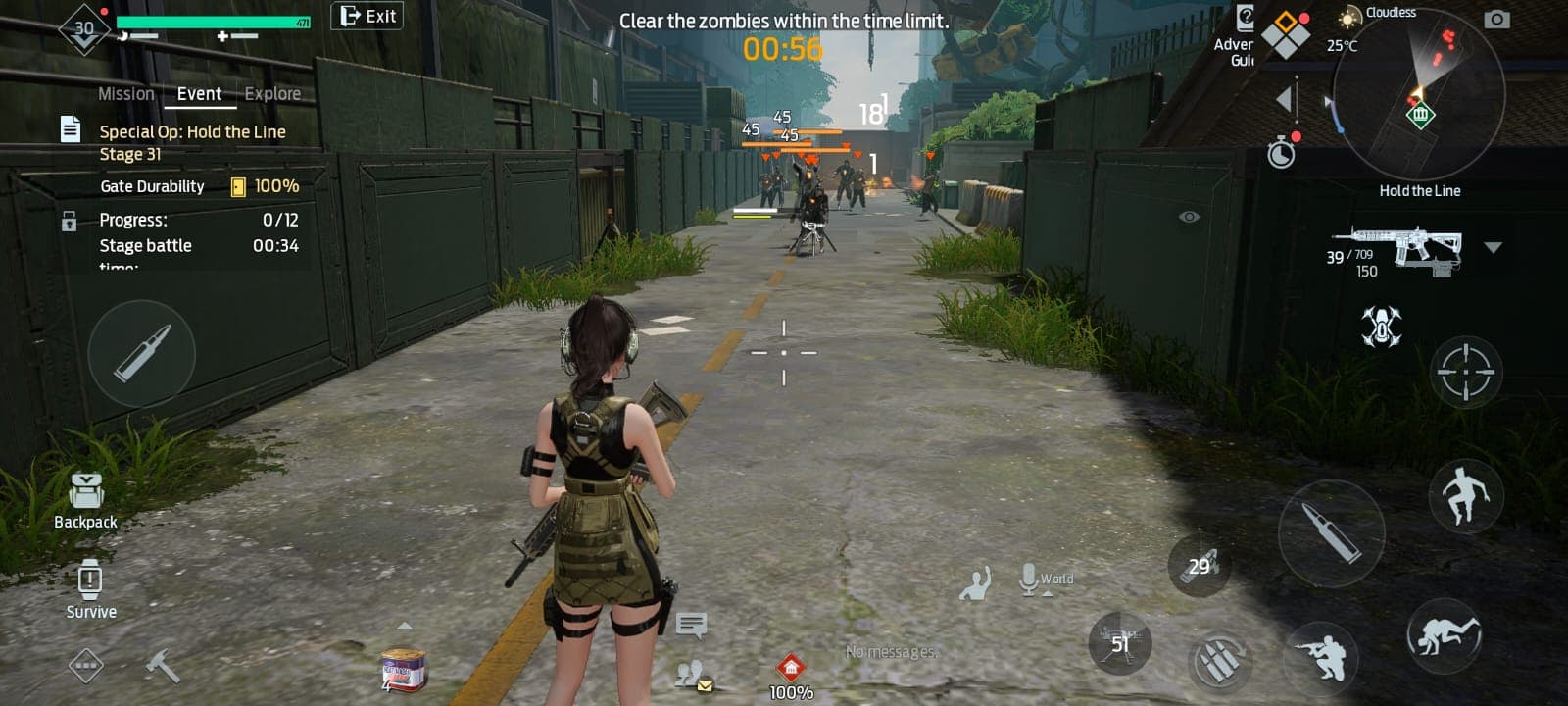
Undawn expands the same broad ingredients into a seamless open world. You cross plains, deserts, swamps and abandoned cities, craft tools and weapons, and track needs such as hunger, hydration and health as weather shifts. Its official mobile listing describes both PvE and PvP, so other survivors can be allies or rivals; that is a very different social assumption from Last Day on Earth’s solo core journey.
The manor system is the reason to choose it over a tighter scavenging game: Undawn lets you build and furnish a home with a large set of structures, then add vehicles, side quests and weekly events around it. The scale brings more variety, but it also asks you to live in an online world with more systems and player activity. If you mainly want a quick zone run followed by a workbench choice, this can feel like a much larger commitment.
The verdict
Choose Undawn if you want the survival and crafting mix to grow into a large shared world and a home-building project.
DYSMANTLE
Break down the old world, improve your tools and take on stronger creatures as you reclaim an island.
- Exploration
- Crafting
- Permanent progress
- Platforms
- Windows and macOS on Steam, including local split-screen co-op; Android and iOS editions are also available.
- Price model
- Premium purchase; optional expansions are sold separately, with edition terms varying by platform.
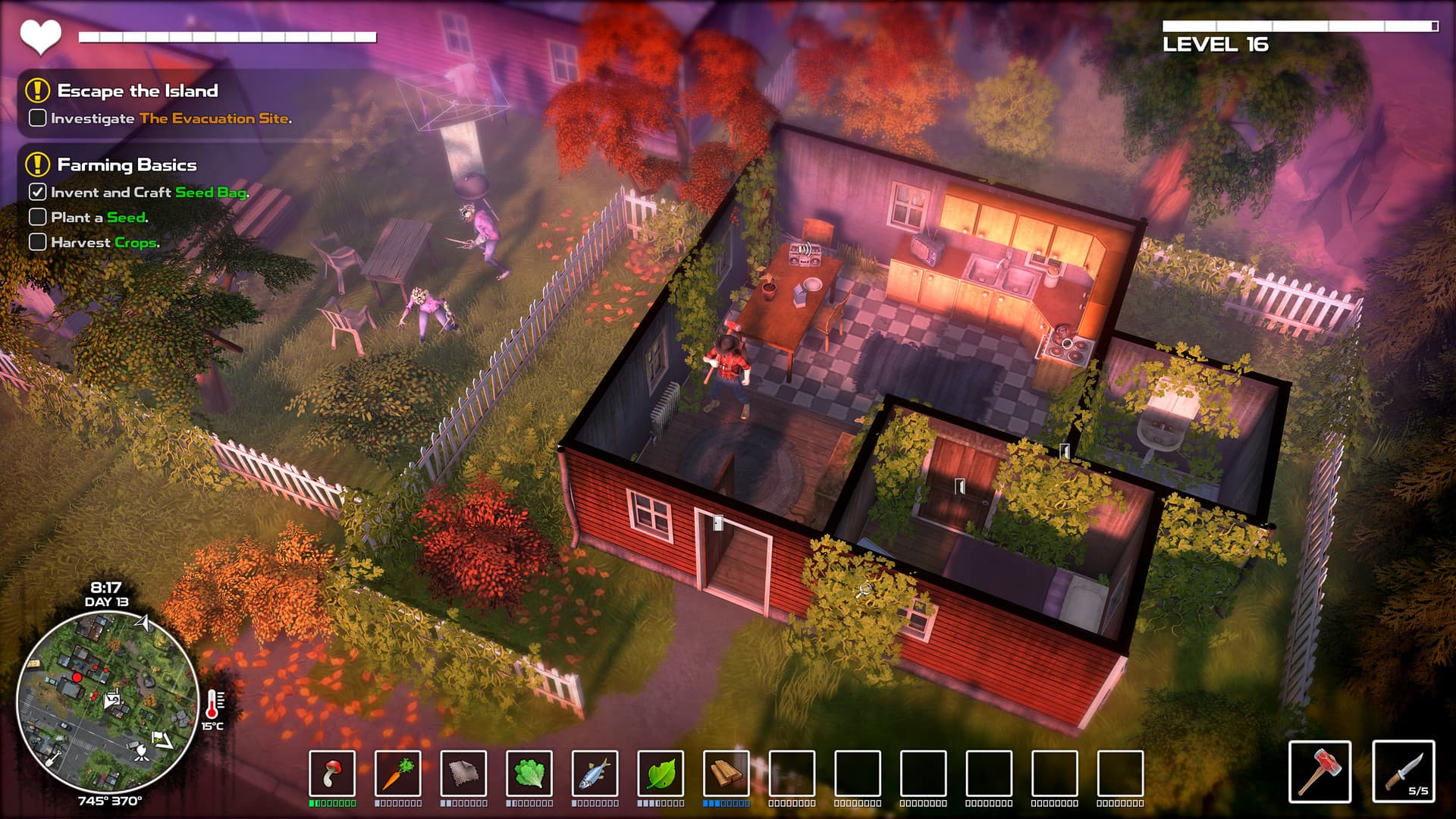
DYSMANTLE is a top-down action RPG that turns exploration itself into a crafting loop. On its handcrafted island, stronger tools let you dismantle more objects for materials, so an abandoned house becomes a cache of metal, plastic and parts instead of scenery. Those resources feed permanent weapons, tools and upgrades, and outposts give you places to establish yourself as you clear the map area by area.
Combat uses melee and ranged weapons, traps and the option to retreat until you have better equipment. Farming and cooking add permanent stat or ability upgrades, but the game explicitly avoids lethal hunger and is not built around the same survival-meter pressure as Last Day on Earth. Choose it for satisfying material collection and solo action; skip it if you specifically want repeated zombie firefights or a shelter economy with several production stations.
The verdict
A strong choice when the satisfying part is scavenging materials and crafting permanent upgrades, not managing a survival clock.
State of Decay 2: Juggernaut Edition
Choose a survivor for each supply run, then use the haul to maintain a growing community.
- Exploration
- Crafting
- Shelter building
- Co-op
- Platforms
- Windows PC, Xbox One and Xbox Series X|S; Xbox Cloud Gaming is also listed.
- Price model
- Premium purchase; Game Pass access varies by subscription plan and region.
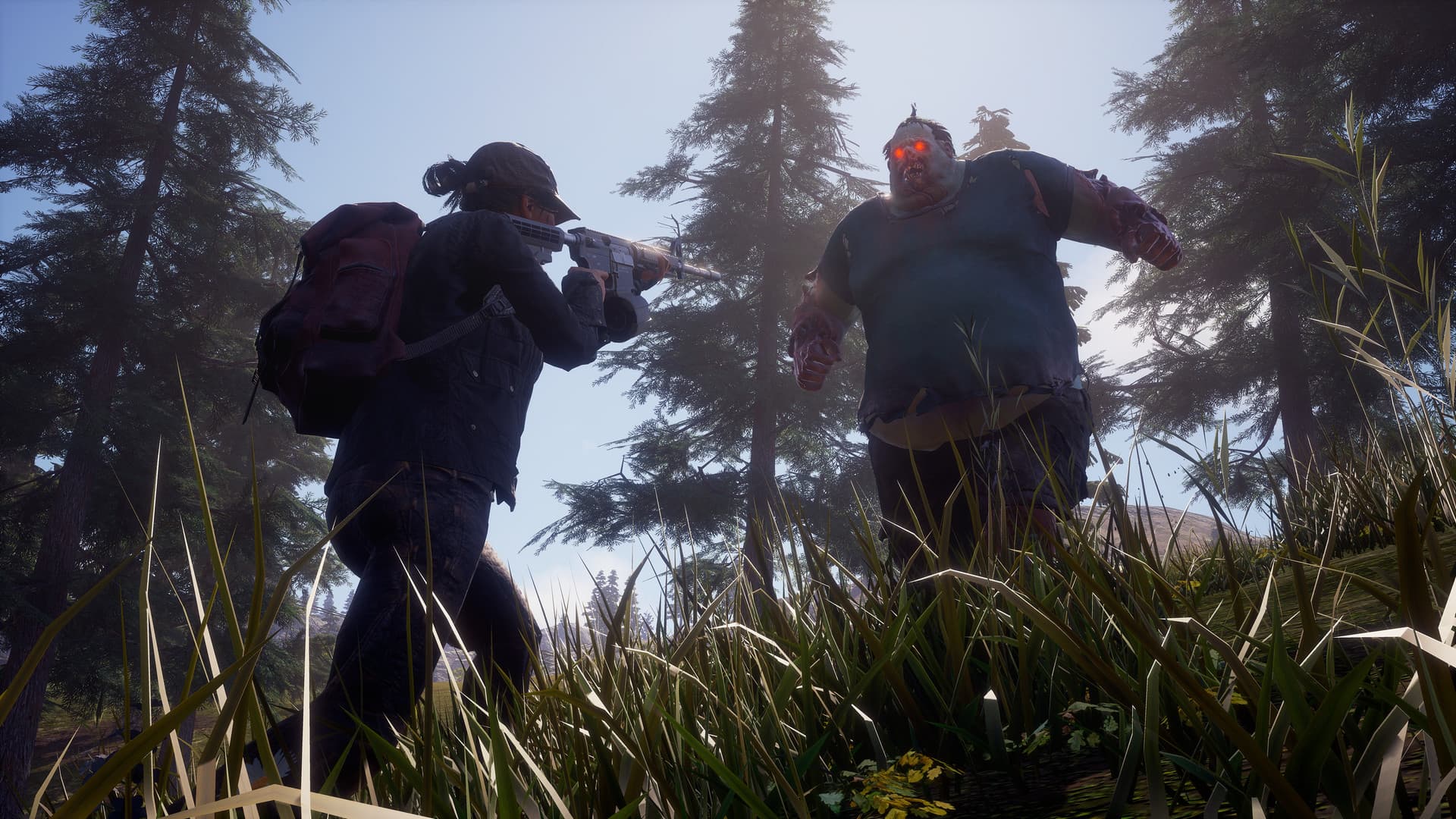
State of Decay 2 widens the loop from one survivor and one shelter to a community spread across an open map. You choose which survivor to take on a supply run, search buildings for food and ammunition, and fight through the infected on the way home. Skills and traits make those characters feel different, while the group’s needs give every return trip a reason beyond filling a backpack.
Base choices are about function: recruit people, choose where the community settles, and fortify or upgrade facilities that keep survivors going. The tradeoff is that you are managing a roster and logistics rather than freely placing every wall or station. It offers co-op, a narrative campaign and a separate siege mode, but the open-world community is the main reason to pick it over a compact mobile survival loop.
The verdict
Choose it if you want the loot-and-fight routine to support a group of survivors rather than one lone character.
7 Days to Die
Scavenge a huge sandbox, craft the tools you need and design the fort you want to defend.
- Exploration
- Crafting
- Shelter building
- Co-op
- Platforms
- Windows, macOS and Linux on Steam; solo and multiplayer modes are available.
- Price model
- Premium purchase on Steam.
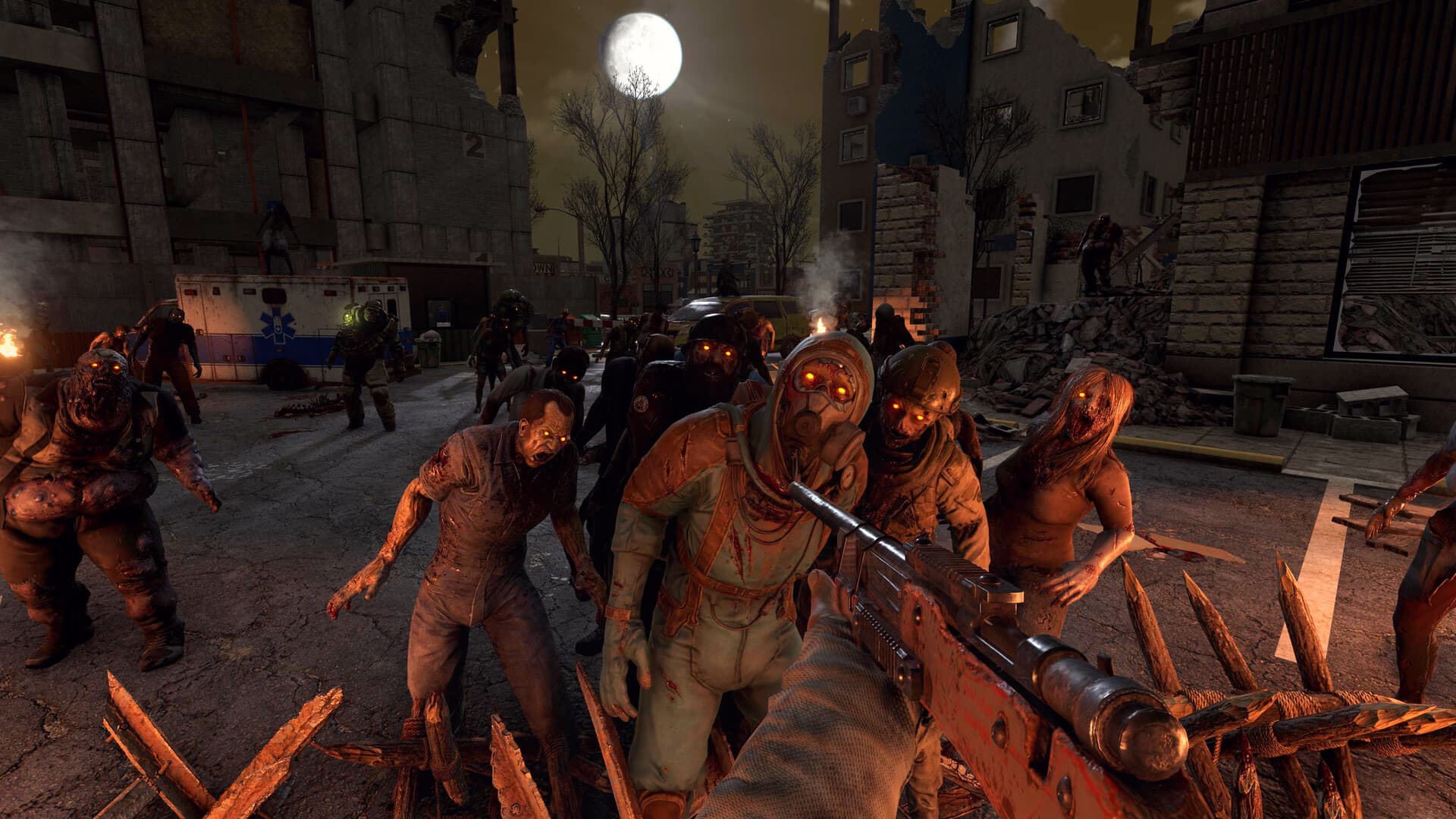
7 Days to Die is the broadest sandbox on this list. The Steam release offers a huge open world, quests and more than 500 crafting recipes for weapons, clothes, tools and vehicles. You search for materials and schematics, improve skills and decide what kind of shelter to build, so crafting is not limited to upgrading one workbench or following a short recipe tree.
The combat and construction meet at the fort. Traps, power, turrets and defensive positions can be built into a destructible environment, and poor structural support can bring a plan down. Solo and multiplayer modes let you take that project on alone or with others. This is a major step up in systems and freedom from Last Day on Earth; choose it if building and defending a custom base is as important as scavenging, and expect a steeper learning curve than the mobile zone-run format.
The verdict
Pick it when you want to design the fort, craft the defense and fight the resulting siege yourself.
How we compare
A good recommendation explains who a game suits and where it falls short. Our editorial scores use the same five criteria, each rated out of ten.
- 01
Combat
Controls, aiming, enemy readability, and the decisions you make under pressure.
- 02
Progression
Build choices during a run and meaningful progress between attempts.
- 03
Usability
Control demands, platform access, interface options, and documented device requirements.
- 04
Value
What the asking price includes, optional purchases, and the scope of the free version.
- 05
Fit
How well the game answers the specific question in this article.
Which one should you try?
For the nearest mobile match, begin with Dawn of Zombies; Days After is another location-based option if quests and shelter crafting are what you want. Choose Undawn for a shared open world and a home you can shape, or DYSMANTLE for a crafting adventure built around a destructible island. State of Decay 2 and 7 Days to Die trade compact runs for community or sandbox management. Zombie Defence connects hands-on fights to persistent production, weapon crafting, research and crops.
Your questions, answered.
Want to see what we’re building?
Zombie Defence is in Alpha. Join the waitlist.
More games to explore
- 7 Games Like State of Survival With More Direct Combat
Compare seven State of Survival alternatives that put you in the fight, from mobile shooters to zombie survival games with lasting shelters.
- 7 Games Like The Last Stand: Aftermath
Find zombie roguelites and extraction games built around scavenging, risky returns, and progress that survives a failed run.
- 7 Games Like The Last Stand: Dead Zone for Bases and Missions
The Last Stand: Dead Zone is offline. Compare seven survival games built around shelters, supply runs, and lasting progression, with current platforms and price models.