5 Games Like HumanitZ for Scavenging, Farming and a Home Worth Keeping
Five ways to grow dinner, improve the house and find another excuse to risk your neck.

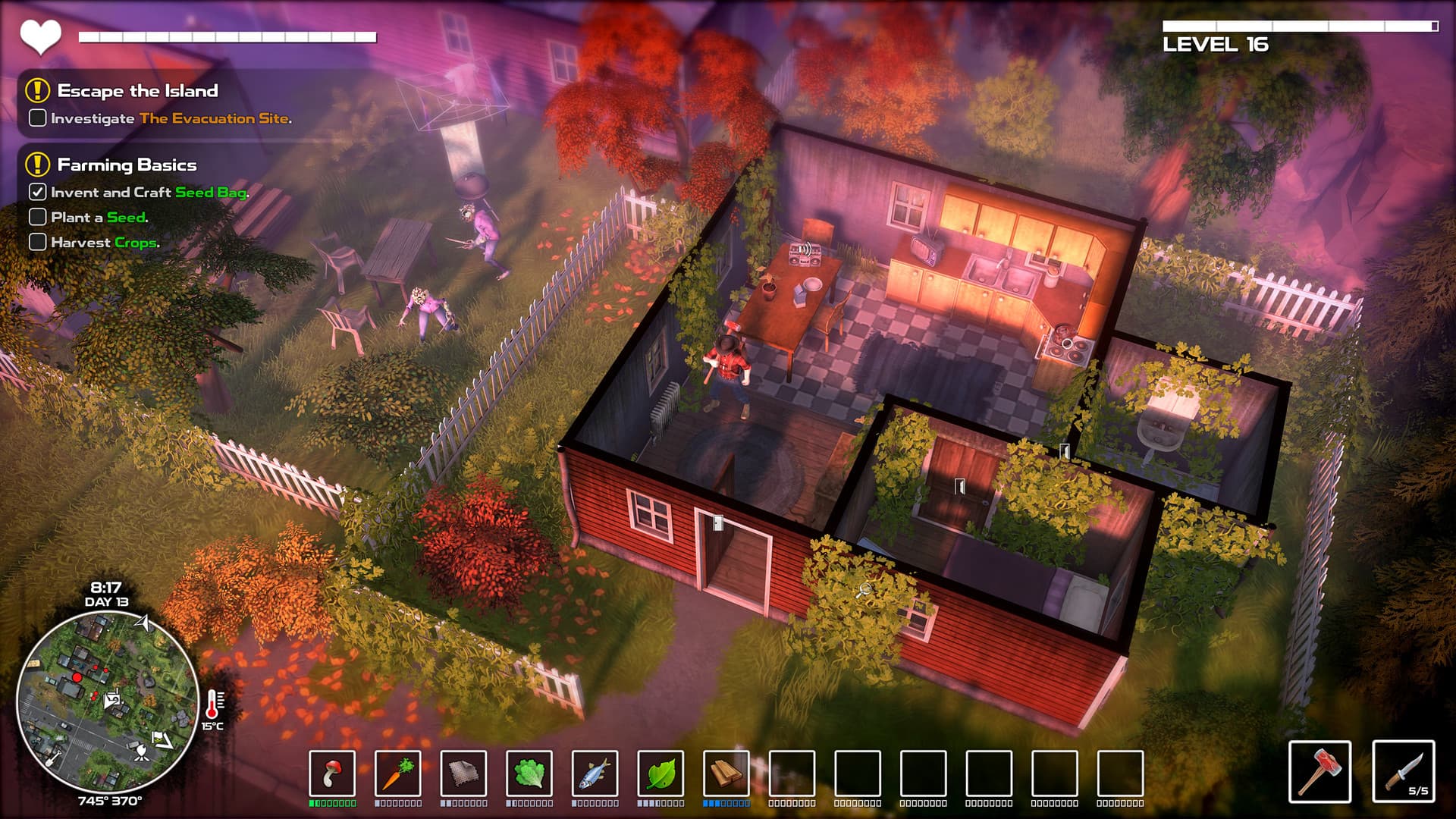
A good garden means fewer trips into town. Unfortunately, town still has the tools, spare parts and other things you forgot. HumanitZ makes that tug between a useful home and an irresistible supply run a fine way to lose an evening.
Project Zomboid is the closest match among these games like HumanitZ. The others give self-sufficiency a different payoff: better defenses, a growing community, permanent strength or a well-prepared fight. What should your hard-earned harvest buy you besides another dinner?
The quick comparison
5 games, different reasons to give the next run a chance.
Choose a game to jump to its overview. Platform lists are summaries; check the linked official edition.
The games
Project Zomboid
Location, location, infestation.
- Exploration
- Farming
- Crafting
- Co-op
- Platforms
- Windows, macOS and Linux; solo and multiplayer
- Price model
- Paid game; Early Access
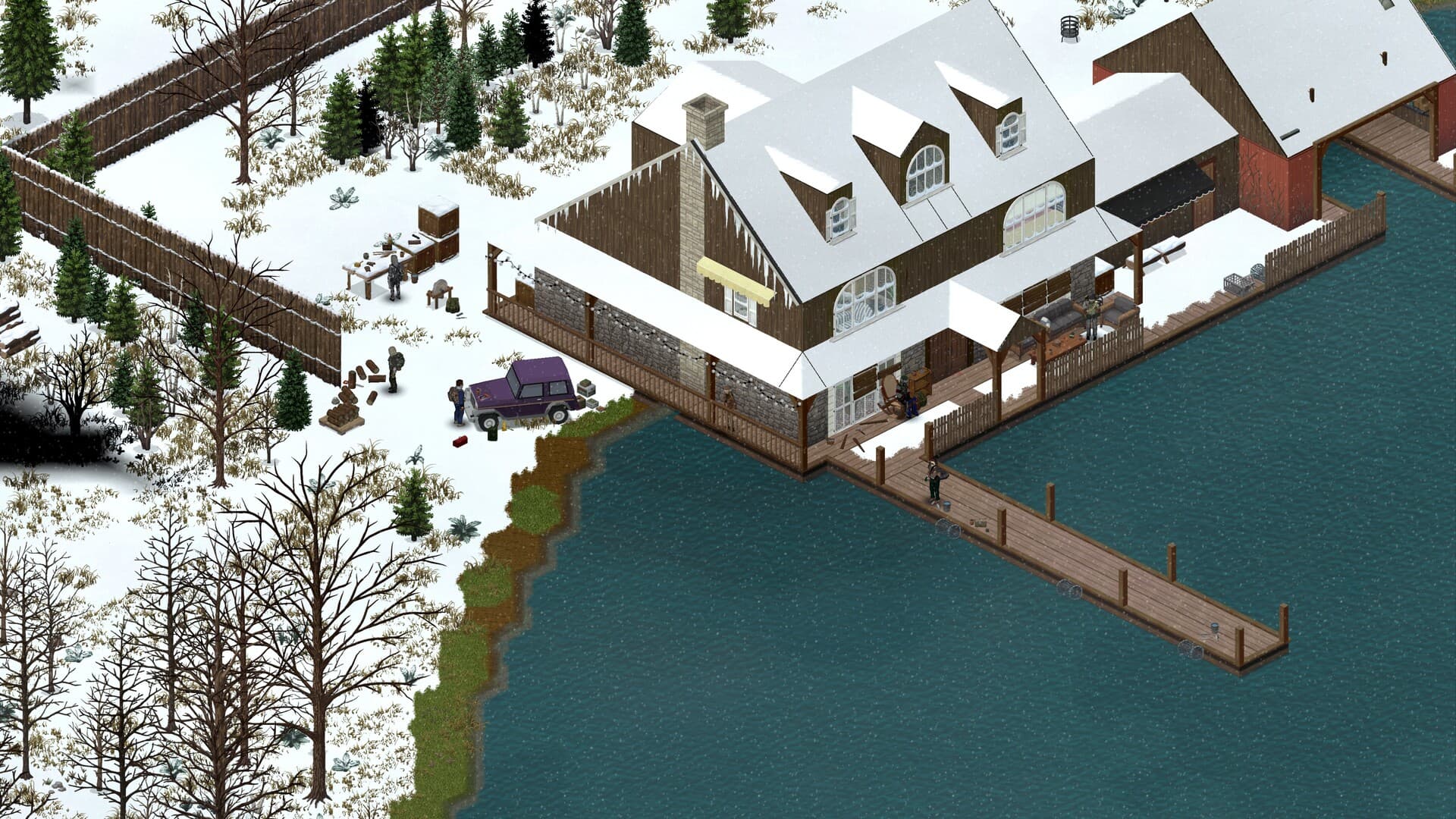
Project Zomboid makes house-hunting a proper survival decision. Stay near shops for convenient supplies, or move towards water and open land for fishing and farming? Every postcode solves one problem while putting something else farther away.
Carpentry, cooking and food skills gradually turn a borrowed house into a working home. Once dinner comes from nearby, your next urban trip can target tools or building materials. Self-sufficiency gives those dangerous errands a sharper purpose.
The person doing the work still needs care. Hunger, thirst, illness and mood can derail a perfectly sensible plan; a stocked kitchen helps little if its owner is in no shape to leave it.
Co-op lets friends build a routine together, while sandbox settings tune the pressure. Expect inventory work and a steep learning curve. This is the richest choice here for players who enjoy making ordinary domestic decisions feel consequential.
The verdict
The closest fit for settling into a whole new way of life.
Zombie Defence
Grow dinner. Pack a meal. Make the neighbourhood regret interrupting lunch.
- Manual aim (desktop)
- Extraction
- Shelter building
- Crafting
- Farming
- Platforms
- Single-player browser; desktop and touch controls
- Price model
- Launch pricing unannounced
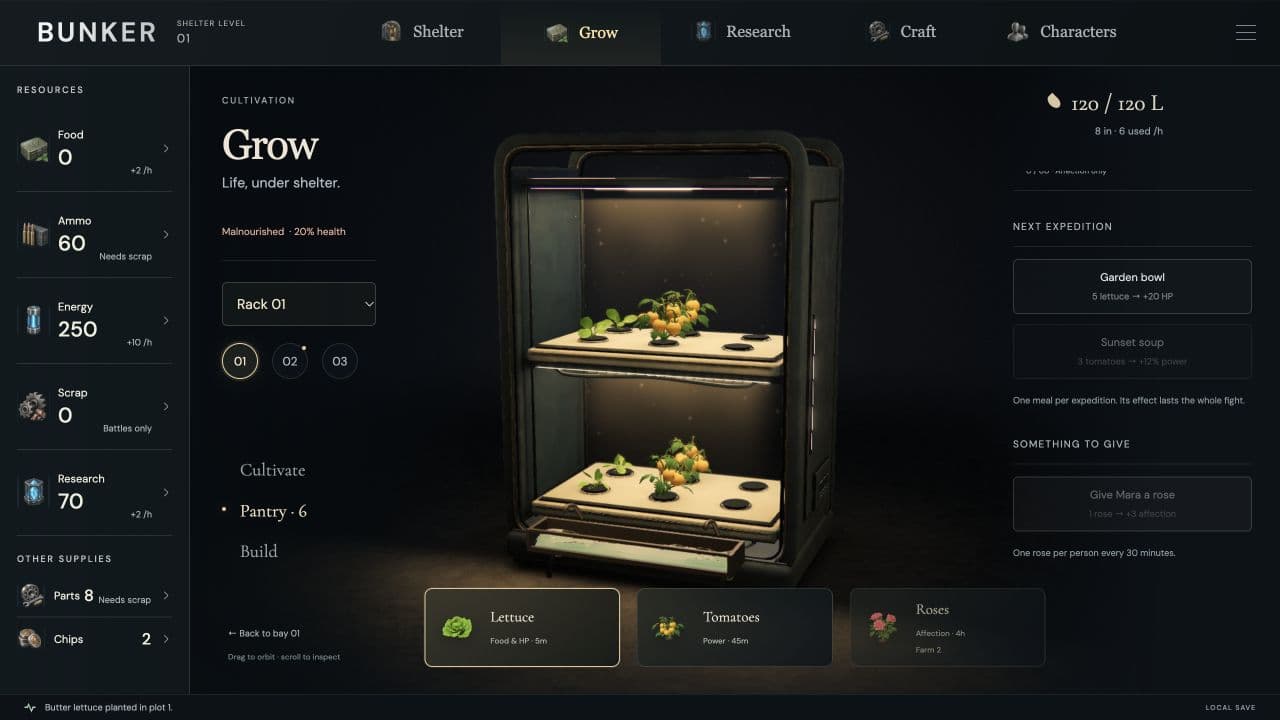
Zombie Defence gives the garden a wonderfully direct payoff. Manually harvest lettuce and tomatoes from shelter racks, then feed the household or cook for the next deployment. Garden Bowl boosts maximum health; Sunset Soup boosts attack for that battle.
More racks sound tempting, but can your irrigation and pantry keep up? Purifiers support the water supply, and storage limits give you a reason to use what you grow. The best upgrade fixes the bottleneck before adding more hungry plants.
The shelter uses fixed rooms and stations, keeping preparation focused on production, weapons and research. Roses serve a different purpose: gifts in Mara's branching relationship story, where replies are remembered. Save the tomatoes for lunch.
Outside, you move, aim, fire and reload on desktop; touch controls assist fire towards the nearest living enemy. Separate Scrap expeditions retain collected Scrap even after defeat, within storage capacity, so a scrappy outing can still fund the next improvement.
The verdict
For players who want home-grown preparation to pay off in active combat.
7 Days to Die
The vegetable patch deserves a heavily fortified neighbourhood.
- Base defense
- Crafting
- Farming
- Co-op
- Platforms
- Windows, macOS and Linux; solo and multiplayer. Separate Console Edition for PS5 and Xbox Series X|S.
- Price model
- Paid game; optional cosmetics sold separately
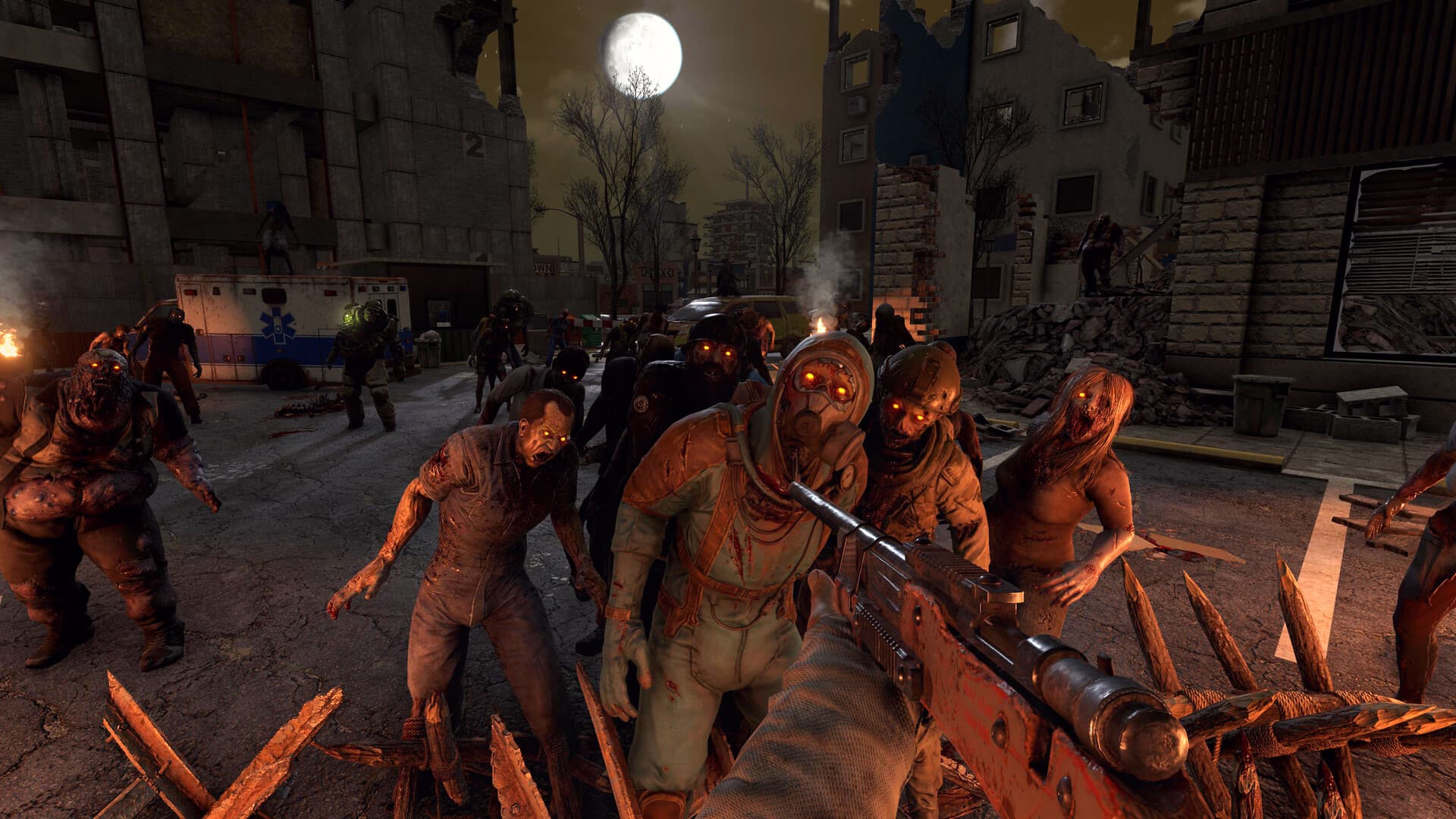
7 Days to Die puts you inside the house you build, then gives you reasons to worry about its structural integrity. Gardens and hunting supply the household; traps, electrical equipment and defensive positions help protect the investment.
A supply run becomes a shopping list for your next project. Materials, equipment and crafting knowledge all matter, with trader jobs and commerce adding another route forward. Crafted vehicles help you reach farther when the local area stops delivering.
Construction is physical and destructible. A useful firing position needs a sound structure beneath it, and damage can lead to collapse. That makes defensive design as important as accumulating enough resources to finish the place.
Friends can divide gathering and building duties, but the combined workload stays substantial. Pick this for the pleasure of inhabiting your own engineering project. First-person fighting and a sprawling maintenance list make it a bigger shift from HumanitZ.
The verdict
For players who enjoy protecting the home as much as supplying it.
Survivalist: Invisible Strain
A full pantry is only the beginning of good leadership.
- Shelter building
- Farming
- Crafting
- Co-op
- Platforms
- Windows PC and Xbox Series X|S; solo and up to four-player online co-op
- Price model
- Paid game; Steam demo available
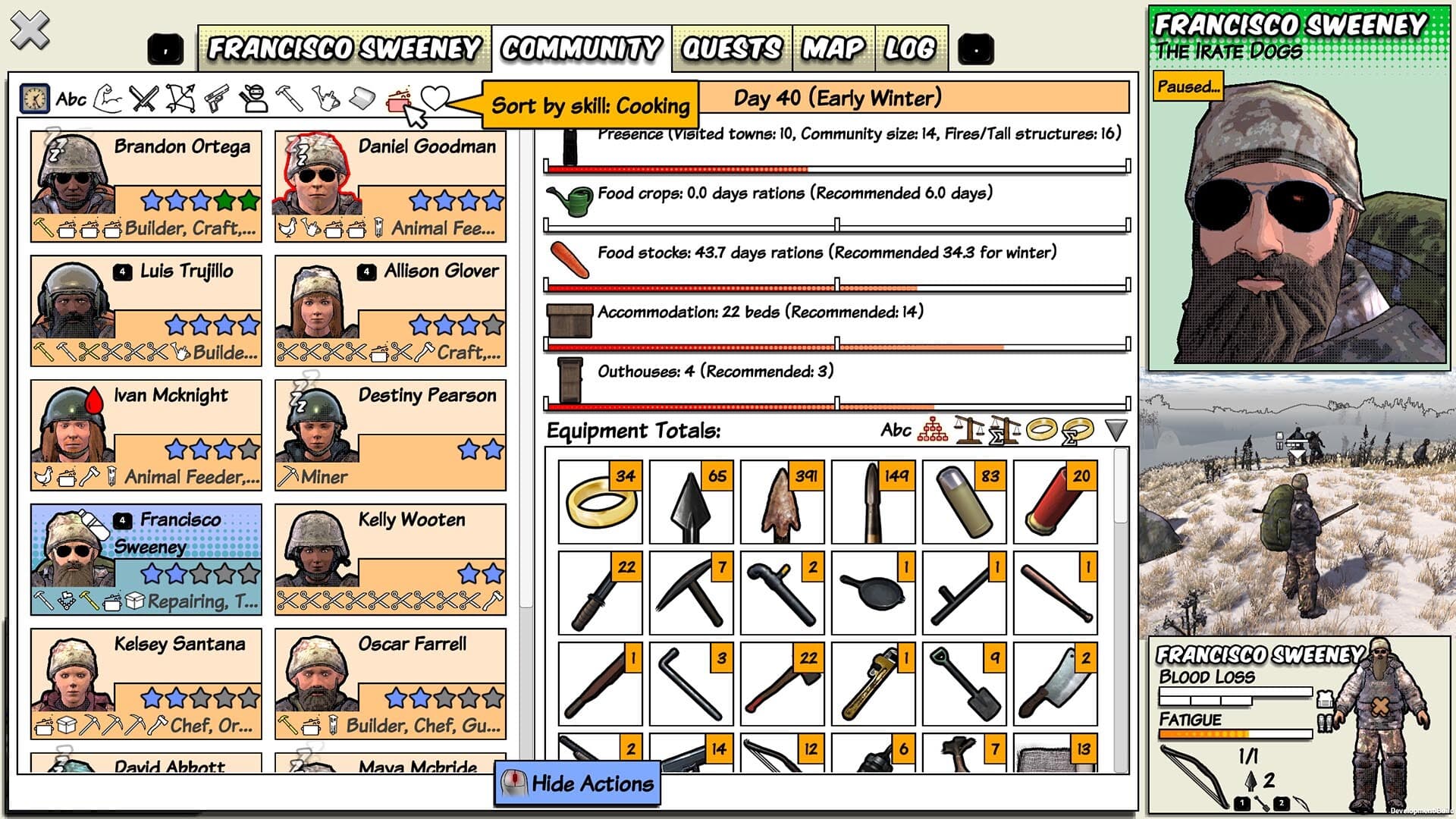
Survivalist: Invisible Strain gives a successful harvest more mouths to feed. Recruitment brings useful workers, but also demands for food, warmth, beds and protection. Can the settlement support another person before their contribution starts paying off?
Assign farmers, chefs and arrow crafters to turn household chores into shared work. Crops, hunting and chickens help provision the group, while abandoned towns still hold useful resources. A reliable food supply frees people for other jobs.
Those people remember your actions. Relationships and morale can cause trouble even with full stores, while the Invisible Strain makes trust uncomfortable. Feeding everyone is measurable; keeping the household together takes a more personal kind of attention.
Direct third-person combat and overhead orders let you fight or lead from above. Start with the authored story for direction or the generated sandbox for a different settlement. Social needs, jobs and tactical control make a rewarding but busy combination.
The verdict
For the homesteader who wants neighbours worth caring about.
DYSMANTLE
Dinner can be an upgrade you keep.
- Exploration
- Crafting
- Farming
- Permanent progress
- Platforms
- Windows and macOS; solo and local shared-screen co-op
- Price model
- Paid base game; expansions sold separately
DYSMANTLE offers a welcome change for anyone tired of rescuing the same hunger meter. Cooking recipes grant permanent improvements to stats and abilities. Grow crops, fish and hunt to gather ingredients, then make a meal that outlasts the outing.
Town supplies are equally tempting. Suitable tools let you break most objects into crafting materials, and better equipment expands what you can dismantle. A return visit can be a calculated resource trip instead of another hopeful rummage through cupboards.
Your projects serve an escape across a handcrafted island. Fighting, puzzles and outposts give the journey direction, with each improvement helping you tackle another obstacle. The garden supports an adventure that keeps moving beyond the front gate.
Repeated dismantling is a big part of the rhythm, so you need to enjoy harvesting the furniture as much as the crops. Expect a brighter progression-driven journey, with less of HumanitZ's precarious attempt to live off the land.
The verdict
For useful farming with an island-sized adventure beyond the fence.
How we compare
A good recommendation explains who a game suits and where it falls short. Our editorial scores use the same five criteria, each rated out of ten.
- 01
Combat
Controls, aiming, enemy readability, and the decisions you make under pressure.
- 02
Progression
Build choices during a run and meaningful progress between attempts.
- 03
Usability
Control demands, platform access, interface options, and documented device requirements.
- 04
Value
What the asking price includes, optional purchases, and the scope of the free version.
- 05
Fit
How well the game answers the specific question in this article.
Which one should you try?
Start with Project Zomboid for the closest homesteading match, then follow the payoff you want: 7 Days to Die's defenses, Survivalist's community, DYSMANTLE's permanent gains or Zombie Defence's prepared deployments. A home is more satisfying when you know what all that work is buying.
Your questions, answered.
Want to see what we’re building?
Zombie Defence is in Alpha. Join the waitlist.
More games to explore
- 7 Games Like Last Day on Earth With Crafting and Combat
Looking for games like Last Day on Earth? These seven survival picks connect zombie combat with crafting and scavenging, from focused mobile expeditions to open worlds.
- 5 Games Like Decision: Red Daze for Action, Settlements, and Scavenging
Compare five zombie games by direct combat, survivor management, scavenging, and what each trip builds back at home.
- 5 Best Games Like Escape from Duckov
Find your next game after Escape from Duckov: five PvE alternatives compared for scavenging, home upgrades, combat, quests and what you lose when you die.