4 Zombie Games With Skill-Based Combat and Lasting Base Upgrades
Choose by the decisions you make in a fight, then by what those decisions let you improve at home.

The best zombie games with skill-based combat and base upgrades make the two halves pay each other back. In Zombie Defence, staying in control of a horde can let you choose shelter investment over another immediate weapon boost. State of Decay 2 turns careful supply runs and territory-clearing fights into a more capable community. Decision: Red Daze makes captured locations productive settlements, while 7 Days to Die lets you rebuild the firing position that failed you.
This guide starts with the fight. Skill-based means that your aiming, movement, evasion, target choice or ammunition decisions change the outcome while you directly control a survivor. Base upgrades mean lasting rooms, facilities, production or defenses that remain useful beyond the current encounter. A permanent damage bonus alone does not meet that second test, and a settlement that commands armies without letting you personally fight does not meet the first.
The four picks cover different amounts of responsibility: one survivor and a compact shelter, a vulnerable community, a squad-backed settlement network, or a first-person fortress. The three released games below are covered in their desktop editions. Zombie Defence is a browser Alpha in development, with waitlist signup for news and playtest availability rather than immediate access. Choose the combat you want to get better at, then the home you want that improvement to sustain.
The quick comparison
4 games, different reasons to give the next run a chance.
Choose a game to jump to its overview. Platform lists are summaries; check the linked official edition.
The games
Zombie Defence
Keep the crowd off your escape route, then decide how much of the next upgrade should go home instead of into your gun.
- Manual aim (desktop)
- Shelter building
- Crafting
- Permanent progress
- Extraction
- Platforms
- Browser Alpha in development; single-player PvE. Join the waitlist for Alpha news and playtest availability.
- Price model
- Public launch pricing and monetization are not confirmed.
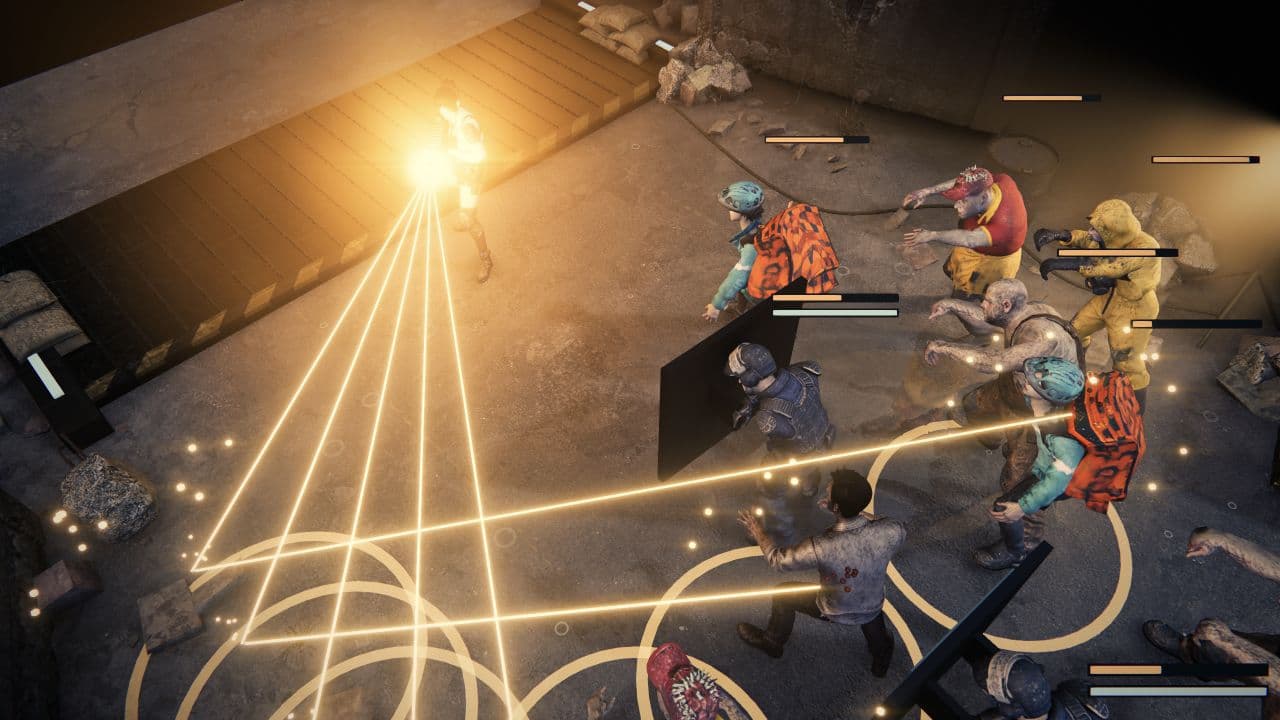
Zombie Defence makes the combat-to-base connection unusually immediate. In campaign combat, a level-up offers two battle cards and one shelter investment. The tempting weapon upgrade could solve a problem right now: a larger magazine when reloading keeps leaving you exposed, extra rays when a crowd spreads out, or heavier hits when you need more stopping power. Choosing the shelter card instead can bank resources or temporarily accelerate production. The interesting skill question is whether your movement and shooting can carry the fight without that next combat boost.
On desktop, movement and cursor aim are independent, so you can change your escape route while keeping fire on the threat that matters. Ammunition and reloads give that movement a rhythm. Sprinting couriers, shield-bearing officers and tougher heavies ask different questions of your firing angle and target selection. Ricochet cards also give nearby solid surfaces a combat role. A useful approach is to protect room to maneuver before committing to a long burst; more damage is less helpful when the crowd has closed every exit. Touch uses nearest-hostile assisted aiming while you control movement, firing and reloads.
Those fights feed a real shelter economy. The Ammo Press, Salvage Bench and Research Lab are lasting facilities, with room upgrades and competing demands on Scrap. Treat the next improvement as a named project: reserve material for a room or a permanent weapon instead of processing the whole stockpile automatically. Research can then shape the style you are practicing, including stronger, slower fire or faster, lighter shooting through rival Arsenal doctrines. This is where cleaner combat earns a lasting payoff: supplies can support a different loadout and a more capable home across later deployments.
The boundaries matter when choosing it. Temporary weapon cards reset after deployment; rooms, research and the persistent arsenal remain. Separate city Scrap expeditions let you collect material under increasing pressure, and gathered Scrap survives extraction, defeat or an interrupted browser-page reload up to storage capacity. Sector defeats have their own supply-levy rules. The shelter uses fixed stations and an expansion choice rather than custom walls, so choose it for focused combat preparation and resource decisions, especially if designing an entire fortress would distract you from the next fight.
The verdict
Choose Zombie Defence for a tight connection between how confidently you fight and how much you can invest in the shelter behind you.
State of Decay 2: Juggernaut Edition
A good supply run is one that brings both the materials and the survivor home.
- Manual aim
- Shelter building
- Permanent progress
- Co-op
- Platforms
- Windows via Steam; PC edition covered here. A free Xbox Live account and initial internet sign-in are required.
- Price model
- Paid Juggernaut Edition, including Heartland, Daybreak and the Independence Pack.
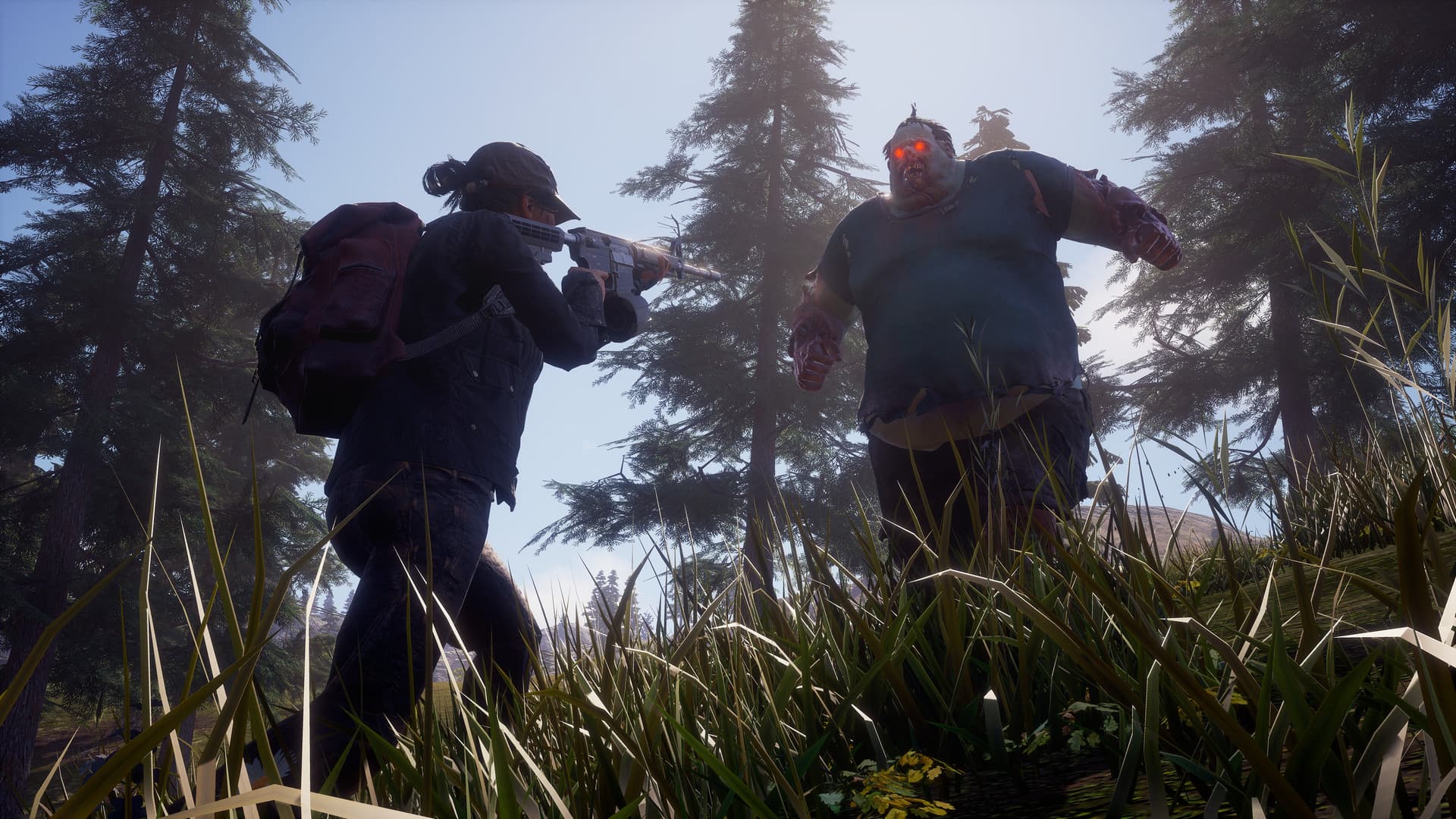
State of Decay 2 rewards restraint as much as shooting. You control a survivor in third person, deciding when to use stealth, commit to melee or spend ammunition to make space. Dodging can interrupt aiming, and stamina is part of the cost of handling a fight. Gunfire also creates noise that can attract more trouble. The practical challenge is recognizing when the useful fight has ended: clearing a route to supplies can help the community, while pursuing every nearby zombie may leave you with fewer rounds and a worse way out.
The facilities at home answer specific problems from those outings. A Workshop supports weapon repair; an Infirmary handles infection treatment and recovery. A level-two Workshop combined with a survivor who knows mechanics can produce vehicle toolkits, while an Auto Shop opens vehicle upgrade kits. Those are tangible changes to the community’s capabilities. If damaged transport keeps cutting supply trips short, a workshop improvement can be more useful than chasing another weapon. If blood plague is the recurring threat, medical readiness belongs in the plan before the next excursion.
The feedback loop extends beyond hauling material back. Plague Hearts control territory, and destroying the relevant heart is necessary before you can claim affected bases and outposts. Resource outposts can then be upgraded for better benefits. That gives a difficult combat objective a concrete management payoff: a successful assault can open a useful site. It also gives you a reason to prepare the correct survivor, equipment and escape route rather than treating every encounter as an interchangeable shooting gallery. The stronger community is built partly through the fights you choose.
There is a serious price for mistakes: survivors can die permanently. Facilities improve readiness, but they do not make a developed character expendable. Start with the Action difficulty that lets you learn the combat, then tune Community and Map settings separately if you want more or less logistical pressure. Aim assistance is also adjustable, including an option to turn it off. Choose the main campaign for this facility loop; Daybreak is a separate siege mode. Friends can help a host’s community, but visiting co-op is not one jointly owned settlement campaign.
The verdict
Pick State of Decay 2 when you want better combat decisions to protect people, preserve supplies and unlock practical community improvements.
Decision: Red Daze
Your field team captures the places that become your economy, then helps defend what you have won.
- Squad builds
- Shelter building
- Base defense
- Exploration
- Platforms
- Windows via Steam; single-player PC edition covered here.
- Price model
- Paid base game; an optional Supporter Bundle is listed separately.
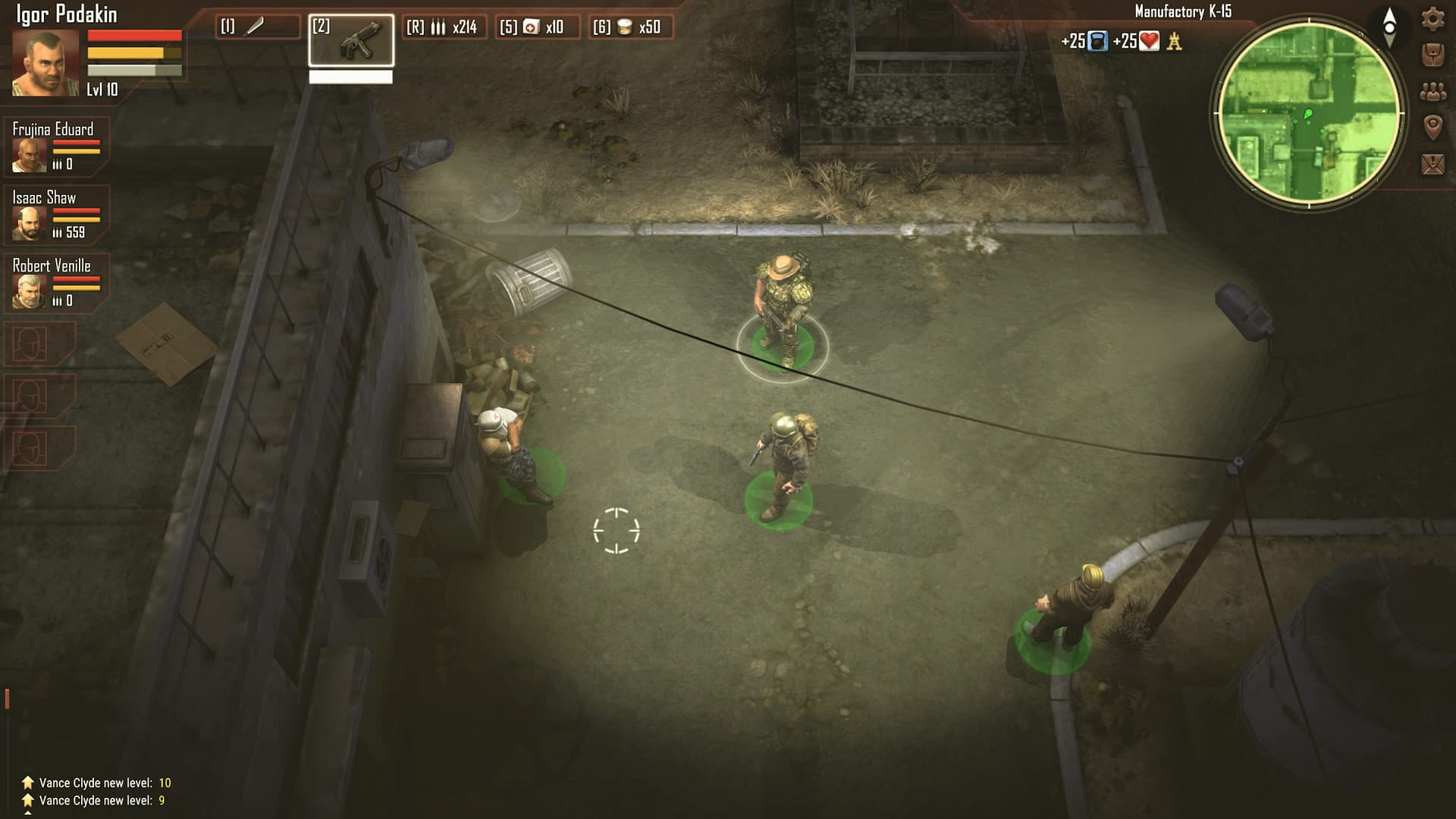
Decision: Red Daze is the choice for players who want personal action to sit inside a larger territorial plan. You control a survivor on the ground while a squad of specialists supports the expedition. Positioning still matters even with allies beside you: ranged support needs a usable line of fire, bosses turn toward their target, and heavy thrown objects must be avoided. Ammunition is a field resource rather than an abstract squad rating; survivors switch to melee when their ammunition runs out. Watch what the team can actually do before pushing farther into a dangerous site.
The long-term reward for exploration is more than a stronger character sheet. Farmsteads, factories and military installations can become settlements. You populate and develop those places, assigning residents to food, resource or trade production and strengthening defenses. Turrets and Repellers support the captured ground. A useful way to choose an expedition is to ask which site would improve your current position, then assemble a team capable of taking it. The encounter has a second purpose when its location can become a productive foothold.
After capture, the combat problem changes from gaining ground to keeping it. Strong soldiers can defend a settlement while you are away, or you can join the battle yourself. Scouting reveals enemy activity, and eliminating a group’s boss can stop its attacks. That creates a worthwhile choice between further defensive spending and an offensive expedition against the source of the pressure. The skill element is broader than a clean shot: read the attack, keep your controlled survivor alive, and put the squad where its equipment can contribute.
Expect to spend time organizing the campaign as well as fighting. Recruiting, specializing survivors and managing several settlements all ask for attention. Turret upgrades persist as part of the settlement, but a fortification can be destroyed and need repair; permanent development does not mean an invulnerable home. The overhead perspective and supporting AI make this a good fit for an action player who also enjoys commanding a small force. If you want the outcome to depend almost entirely on your own aim, Zombie Defence or a solo State of Decay 2 outing is a closer match.
The verdict
Choose Decision: Red Daze when taking and securing territory is the lasting reward you want from personally controlled zombie fights.
7 Days to Die
The firing lane, fallback route and defensive structure are all part of the same combat loadout.
- Manual aim
- Shelter building
- Crafting
- Base defense
- Platforms
- Windows, macOS and Linux via Steam; current desktop edition with solo and multiplayer play.
- Price model
- Paid base game with optional cosmetic DLC.
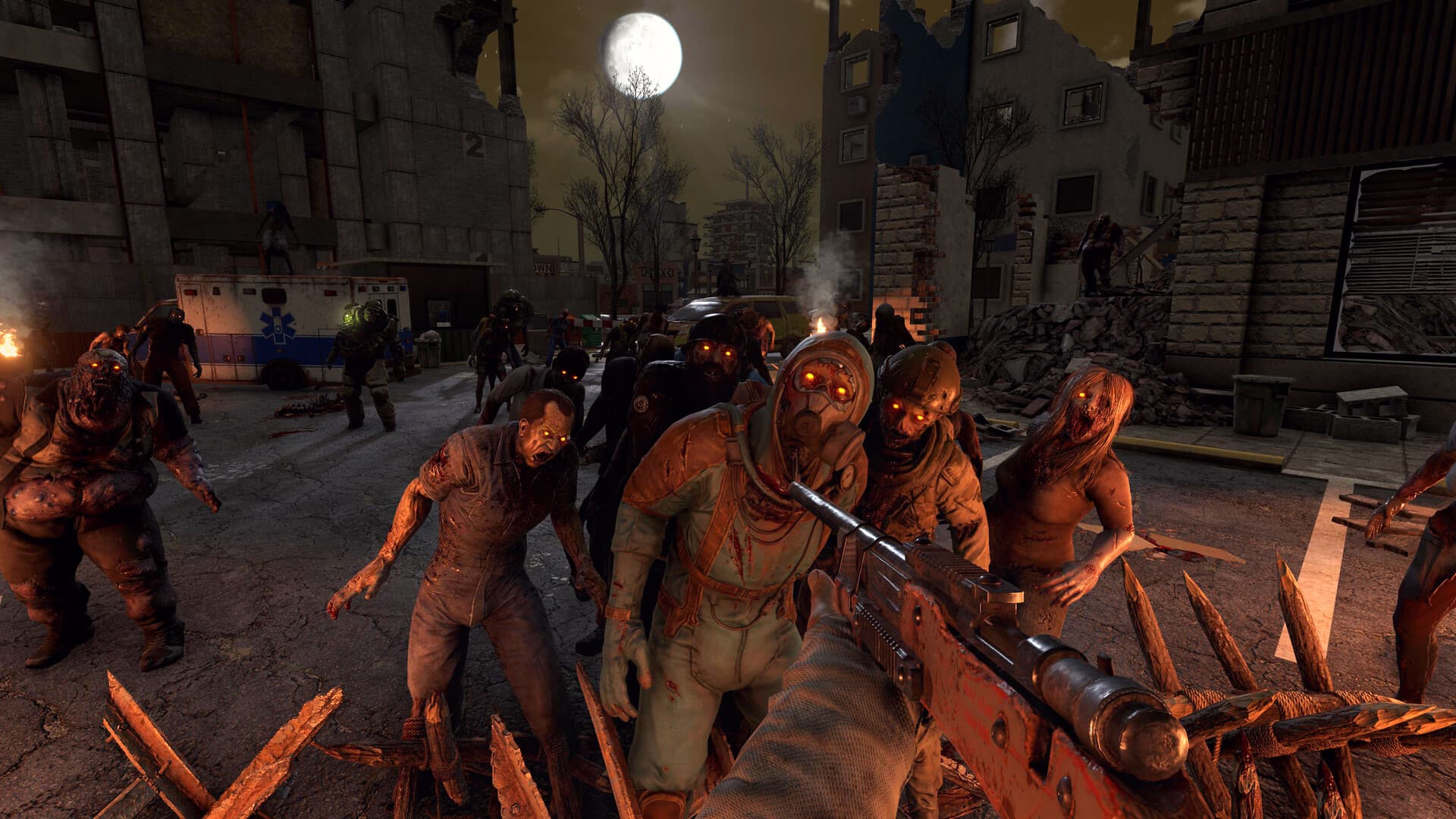
7 Days to Die gives aiming and positioning a physical home. You fight in first person inside a destructible world, with a fort you can shape around your weapons and preferred engagement distance. A trap line can buy room to fire, while an awkward defensive position can make the next reload much more dangerous. Think about where you will stand, what you can see from there and where you can move when that position fails. The building becomes useful because it supports decisions you still have to make under pressure.
The lasting upgrades include stronger construction, electrical defenses, automatic turrets and the crafting equipment that supports your survival economy. Scavenged gear, recipes and building materials can all change what you bring to the next horde. The important distinction is that a better weapon and a better position solve different problems. If enemies keep reaching you from an exposed side, another gun may be a less useful investment than repairing the route or improving its defenses. If the position holds but your equipment is inadequate, the next outing can target gear and crafting progression instead.
The current sandbox settings let you shape how much of the challenge comes from execution versus preparation. You can alter zombie speed, Blood Moon behavior, ammunition loot, crafting and other survival rules. The official Undead Matinee preset even emphasizes slower swarms and scarce ammunition, giving careful shot selection a different role from a fast-zombie setup. Choose the rules before judging whether the game’s fighting suits you: an ammunition-rich world and a scarce-supply melee-heavy world ask for very different habits, even though both can feed the same long-term base project.
The tradeoff is the work around the action. Gathering and repairs take time, and structural damage or poor support can bring construction down. Your base is persistent in the world, not protected from the consequences of a failed defense. This is the best fit here if you enjoy looking at a troublesome encounter afterward and physically rebuilding the solution. It is a weaker choice when you want a neat mission-to-upgrade rhythm with little maintenance between fights. Set an achievable first defensive goal rather than treating a huge compound as a prerequisite for enjoying the combat.
The verdict
Pick 7 Days to Die when improving your fighting position should mean rebuilding the world around it.
How we compare
A good recommendation explains who a game suits and where it falls short. Our editorial scores use the same five criteria, each rated out of ten.
- 01
Combat
Controls, aiming, enemy readability, and the decisions you make under pressure.
- 02
Progression
Build choices during a run and meaningful progress between attempts.
- 03
Usability
Control demands, platform access, interface options, and documented device requirements.
- 04
Value
What the asking price includes, optional purchases, and the scope of the free version.
- 05
Fit
How well the game answers the specific question in this article.
Which one should you try?
Start with the problem you want to solve after a bad fight. If you want to improve your control of a crowd while developing a focused production base, Zombie Defence gives both your shots and your shelter spending a purpose. If you want better judgment to keep trained people alive, choose State of Decay 2. Decision: Red Daze rewards thinking about the squad and the territory behind each encounter; 7 Days to Die lets you turn a combat lesson into a rebuilt defensive position. None of these homes replaces the need to fight well. The satisfying choice is the one whose upgrades help you practice the combat you enjoy.
Your questions, answered.
Want to see what we’re building?
Zombie Defence is in Alpha. Join the waitlist.
More games to explore
- 7 Best Base-Building Games With Direct Combat
Build the defenses and fight for them yourself. Compare seven games by construction freedom, personal combat, progression and the role your base plays.
- 7 Best Zombie Games With Food and Water Management
Compare seven zombie games where food and water shape your plans, from Project Zomboid and DayZ to Zombie Defence’s irrigation and colony nutrition.
- 7 Best Zombie Games With Scavenging Missions
Compare seven zombie games built around supply runs, route planning and useful loot, from community survival and tactical parties to mobile gunship missions.