7 Best Zombie Games With Resource Management
A bigger stockpile is only useful if it solves the right shortage.

The best zombie games with resource management make you choose between two things you genuinely need. They Are Billions is the strongest pick for a colony economy that has to support its own defenses. State of Decay 2 ties recurring community costs to hands-on supply runs. Zombie Defence connects a shared Scrap budget to ammunition, crafted weapons and shelter development, making each production order part of your next fight.
This list looks beyond how much loot you can collect or how many recipes you can unlock. The deciding questions are where resources go, what consumes them over time, and what you give up by spending them now. Some games make labor the bottleneck. Others make storage, fuel, equipment condition or defensive upkeep the problem. Those different pressures produce very different kinds of satisfying planning.
The seven picks include six games available to buy and Zombie Defence’s single-player browser Alpha in development, with a waitlist for news and playtest availability. Each entry names its edition and access model. Our five editorial scores cover Combat, Progression, Usability, Value and Fit; Fit here rewards meaningful allocation, connected production and scarcity you can respond to with a better plan.
The quick comparison
7 games, different reasons to give the next run a chance.
Choose a game to jump to its overview. Platform lists are summaries; check the linked official edition.
The games
Zombie Defence
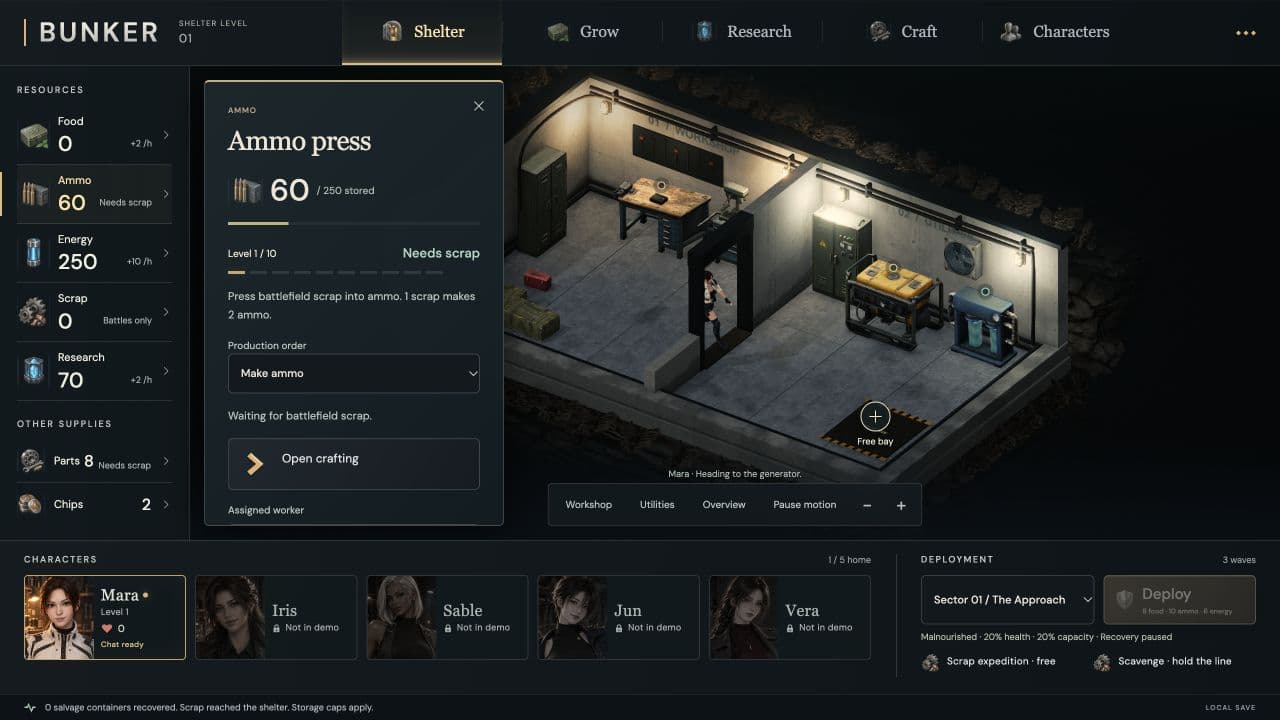
Recovered Scrap has several useful destinations, and your production orders decide which plans get funded first.
- Manual aim (desktop)
- Extraction
- Shelter building
- Crafting
- Permanent progress
- Platforms
- Single-player browser Alpha in development; waitlist for Alpha news and playtest availability.
- Price model
- Public launch pricing and monetization have not been announced.
Zombie Defence makes a small pile of Scrap surprisingly interesting. The Ammo Press can turn it into rounds, the Salvage Bench can process it into parts, and weapon projects, room upgrades and research also compete for your supplies. More shooting capacity is useful right now; a new gun or a stronger production setup can be the better investment over several deployments. The clever part is that these are connected demands on the same shelter economy, rather than separate upgrade currencies that never meet.
Take a weapon project as an example. If you want to assemble a Breach Shotgun, leave room in the budget for its components instead of feeding every recovered unit straight into ammunition. Production consumes real inputs, pauses when they run out and stops when output storage fills. You can change the Salvage Bench’s output or pause a line yourself. That makes “stop making things” a sensible management decision: a full ammunition store is not progress if the conversion has swallowed the Scrap needed for your next project.
The action reinforces those decisions. Desktop combat asks you to aim, fire and reload, while sector level-ups can put an immediate weapon card against a shelter investment. The former helps this battle; the latter improves what you return to. Scrap expeditions offer a separate supply route through the ruined city, and collected cargo is retained even after defeat, within storage limits. You are managing allocation and capacity rather than betting the entire haul on a flawless extraction.
This is a compact, fixed-station shelter, so the satisfaction comes from choosing outputs, reserving supplies and developing a production direction. The Artisan and Assembly Line research doctrines sharpen that choice by favoring crafting efficiency or faster processing on mutually exclusive routes. It is especially appealing if a management screen feels more rewarding when you can take its results into a fight yourself. A sprawling transport network or freely laid-out factory belongs elsewhere on this list.
The verdict
Choose Zombie Defence for a tightly connected action-and-management loop where deciding what to manufacture is as important as bringing supplies home.
They Are Billions
Every extra house, production building and defensive position feeds into an economy that must keep expanding without exposing its weak points.
- Shelter building
- Base defense
- Tactical combat
- Platforms
- Windows via Steam; this comparison covers the PC edition.
- Price model
- Paid game with the campaign and Survival mode; optional soundtrack and art-book DLC.
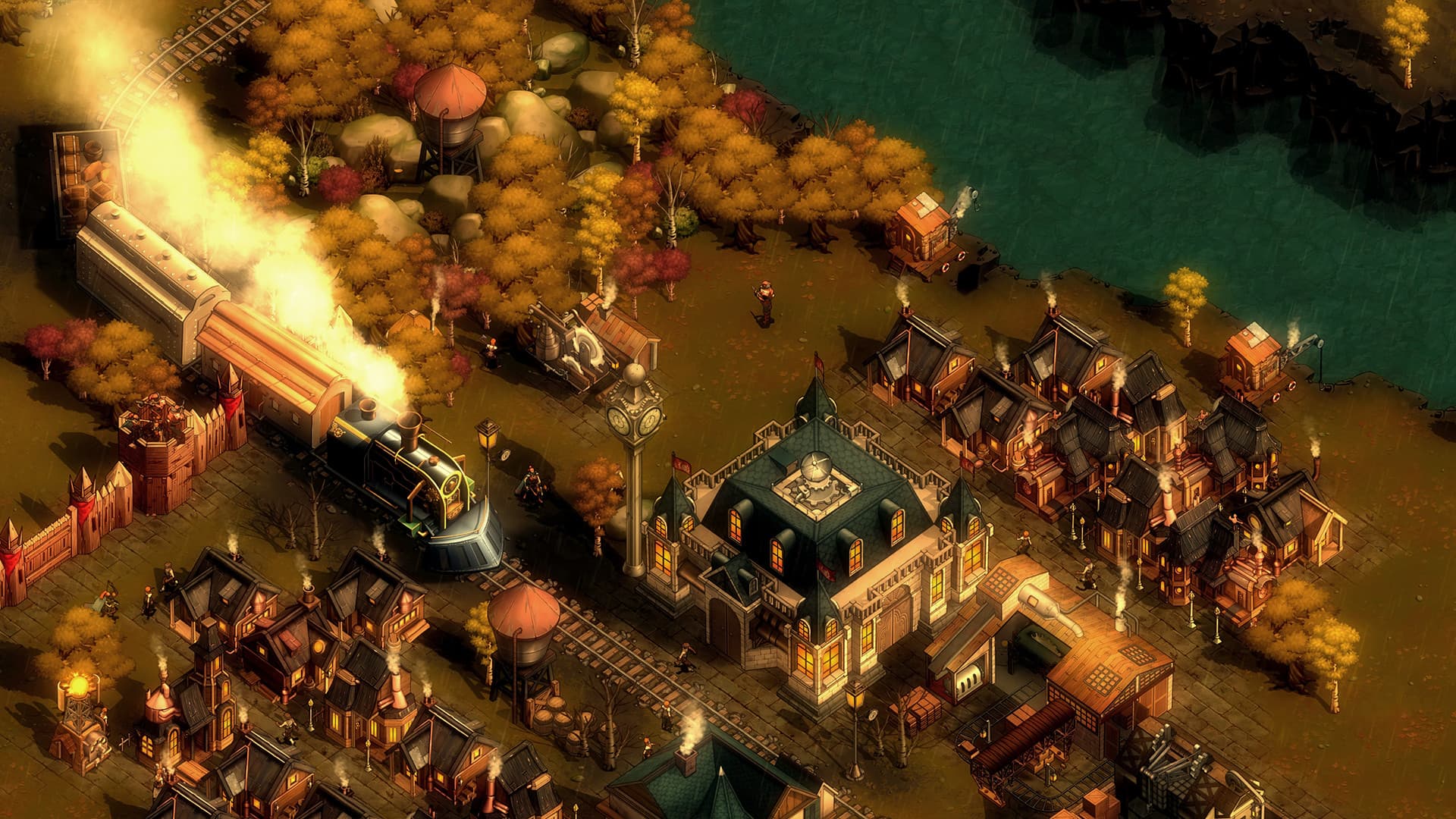
They Are Billions is the strongest choice here for watching several resource constraints collide at once. Houses bring workers and gold, but the people need food. Industry needs labor, power and upkeep; the army draws from that same supporting economy. A healthy wood stockpile does not help if you lack the available workers to use it. The useful question is rarely just “Can I afford this building?” It is “Can I support everything this building makes possible?”
Placement makes those calculations tangible. Sawmills and quarries draw from nearby terrain, so a better production site may sit beyond your comfortable perimeter. Tesla Towers extend the area in which you can build, while mills and power plants supply the electricity. Pushing out for a rich deposit can improve your economy and create another approach that needs defending. Research, walls and soldiers all want investment before the next swarm, giving you a constant choice between earning more later and surviving what arrives sooner.
Storage is another useful pressure valve. Warehouses increase capacity and improve nearby resource production; a Market can sell excess stored materials. That means an economy needs room to receive its output, not just more extractors. Pause lets you inspect those links and issue orders without racing the clock, but it cannot save a badly supported expansion once you resume. A single infected colonist building can start a chain reaction, so the spectacular endgame defenses are only as dependable as the quieter economy behind them.
The verdict
Pick They Are Billions for the richest colony-scale balancing act here, especially if you enjoy deciding how much growth your defenses can safely support.
State of Decay 2: Juggernaut Edition
Community stockpiles, recurring upkeep and limited base slots turn each supply run into a response to a specific budget problem.
- Shelter building
- Exploration
- Co-op
- Permanent progress
- Platforms
- Windows, Xbox One and Xbox Series X|S; the Steam edition requires a free Xbox account.
- Price model
- Paid Juggernaut Edition; also listed with Xbox Game Pass, subject to plan and region.
State of Decay 2 makes the difference between a full storeroom and a sustainable community painfully clear. Food, medicine, ammunition, materials and fuel support different parts of daily life. Survivors eat, and facilities or outposts can bring recurring resource costs. A generous haul can hide a deficit for a while, but it does not remove it. Checking what your community spends each day is often more valuable than grabbing another rucksack simply because you know where one is.
The satisfying next step is changing that balance. Resource outposts provide recurring income and can be upgraded with influence for better benefits. Inside the base, limited facility slots make production, recovery and other services compete for space. More people bring skills and labor, but also more mouths and beds to account for. You can chase immediate supplies, spend influence to improve future income, or reshape the base around a different need. Those choices give community growth a cost beyond the materials used to construct a room.
You still have to live inside the plan. Take a survivor out, choose what the vehicle can carry, conserve useful equipment and bring the missing resource home. Tired or injured characters can be rotated out, so the community is also your reserve of usable people. The three difficulty sliders are particularly helpful: Action changes danger, Community changes management pressures, and Map affects scarcity. You can make resources matter without automatically selecting the harshest fights. Choose this if you want a balance sheet that regularly turns into a third-person rescue operation.

The verdict
Choose State of Decay 2 when you want the economic decisions of running a community and the personal responsibility of carrying out its next supply run.
Dead State: Reanimated
A school full of survivors needs food, working defenses and a reason to keep cooperating, so your resource plan is also a leadership plan.
- Tactical combat
- Shelter building
- Squad builds
- Platforms
- Windows via Steam; single-player Reanimated edition.
- Price model
- Paid game; Steam also offers a demo and an optional soundtrack.
Dead State puts faces next to its shortages. You are organizing a shelter full of people with their own skills, expectations and reactions, then taking a party into turn-based encounters to obtain what they need. Bringing back useful supplies is only half the job. You must decide who leaves, who works at home and which improvements deserve the available parts. A capable survivor in your expedition party is unavailable for shelter work while away.
Fuel offers a particularly clean example of competing demand: the vehicle uses it for travel, while the shelter generator uses it to maintain electricity and morale. A longer trip therefore has a cost back home even before anyone fires a shot. Parts support repairs and improvements, infected allies need ongoing antibiotics, and luxury supplies help the group’s morale. These are reasons to revise the day’s priorities rather than simply sweep every location clean. The end-of-day report shows how your decisions affected the shelter’s supplies and mood.
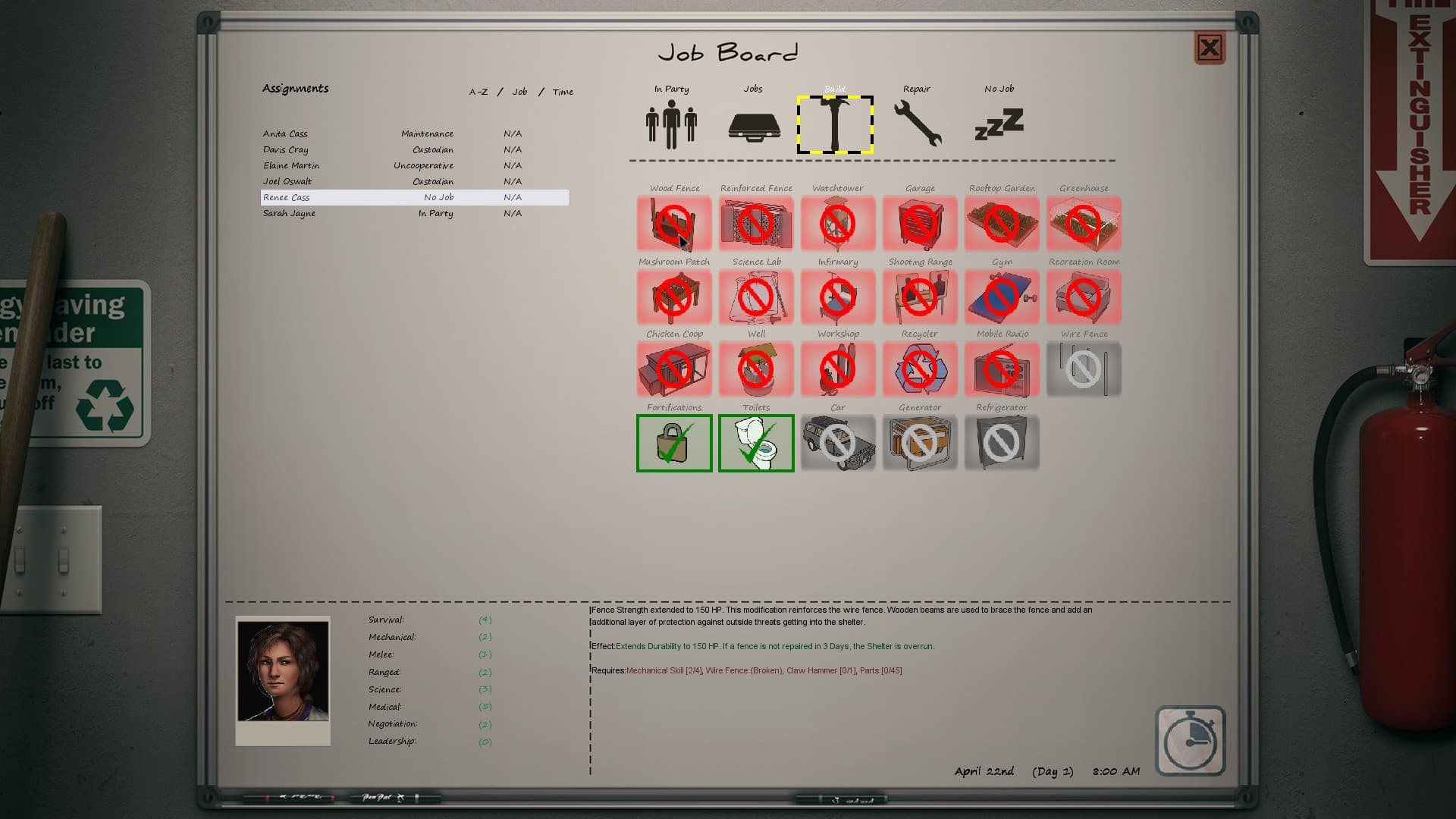
The Job Board turns that daily planning into concrete assignments. Fixing the fence, improving the infirmary or working toward a rooftop garden each answers a different problem, with skills and tools as well as materials gating the work. This is the choice for players who like a hard decision to spark a conversation, a complaint or a change in who is available tomorrow. Its deliberate battles and extensive dialogue make the rhythm slower than a city-builder’s continuous production, but give the shortage a human scale.
The verdict
Pick Dead State: Reanimated when you want resource shortages to create leadership dilemmas involving people you have actually come to know.
Infection Free Zone
Adapt existing buildings, set work priorities and decide whether scarce inputs belong in production or immediate defense.
- Shelter building
- Base defense
- Tactical combat
- Farming
- Platforms
- Windows via Steam; current Early Access edition.
- Price model
- Paid Early Access game; optional cosmetic and out-of-game Supporter Pack.
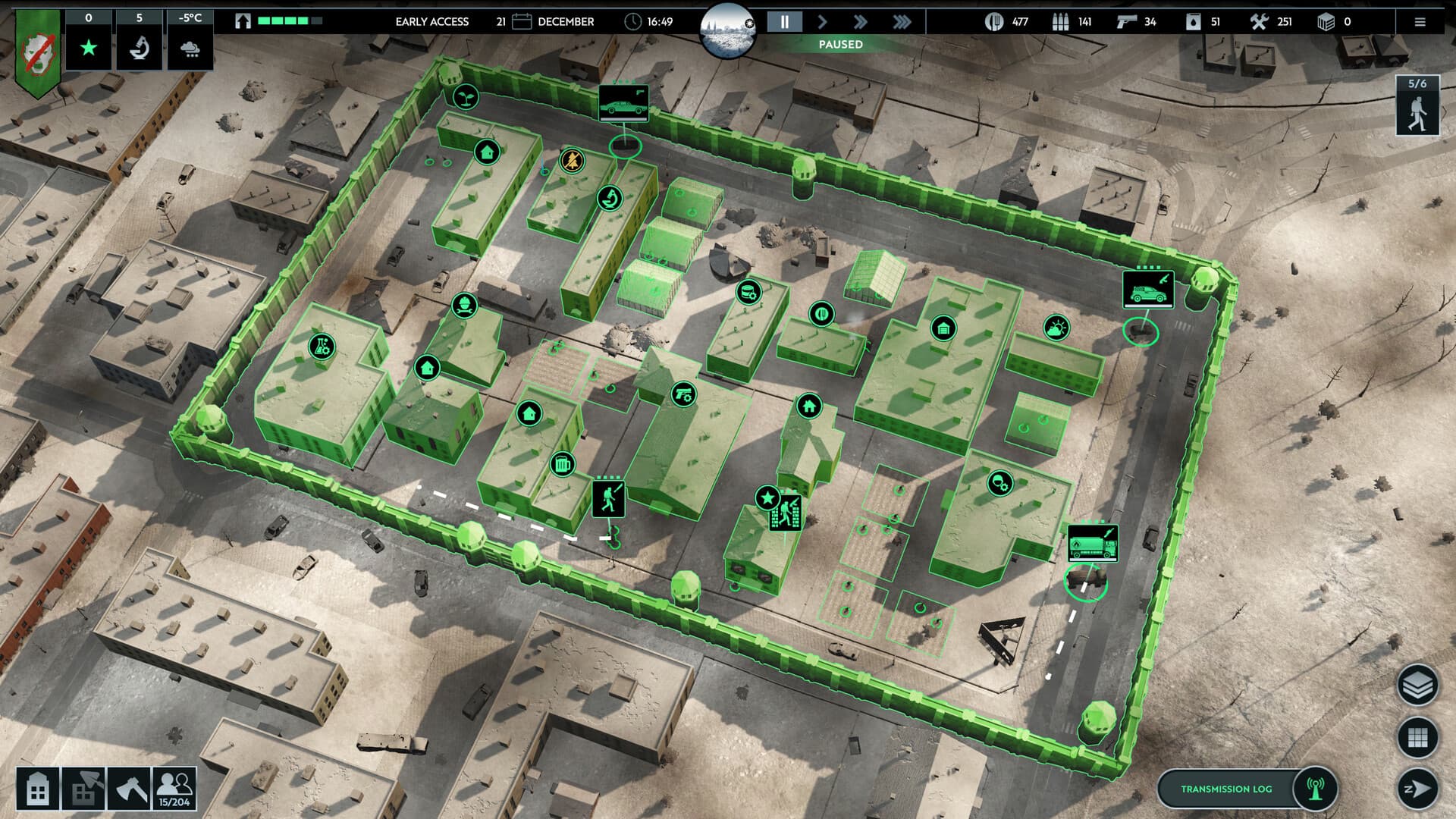
Infection Free Zone begins with a wonderfully practical question: what could you do with the buildings already around you? Its maps use OpenStreetMap data, allowing you to establish a settlement in a real town or city. Existing structures can become shelters and production facilities, with farms and fortifications supporting the growing zone. Geography gives the economy its personality. A compact cluster is easier to think through than a district whose useful spaces pull your attention in several directions.
The current worker-priority system is a major reason it belongs in a resource-management list. You assign importance to jobs and buildings, and workers fill the highest-priority needs first. Recruiting a squad can pull people from lower-priority work, so a stronger field presence has a civilian production cost. The older manual assignment option remains available. Either way, the interesting decision is what deserves the next pair of hands when everything would be useful. Adding buildings alone does not answer that question.
Production choices can be just as concrete. The Bloomery introduced in Major Update 6 offers wood- and fuel-based metal production, trading a more affordable input for a higher-output option. An emergency alarm can move citizens into defensive positions when you use the priority system, but the tired defenders need rest afterward. That creates a satisfying two-part problem: survive tonight, then account for what the emergency did to tomorrow’s work. The game suits players who enjoy changing priorities as conditions move, rather than setting a production line once and forgetting about it.
The verdict
Choose Infection Free Zone for a district-sized economy where staffing priorities, industrial inputs and nightly defense keep changing one another.
Rebuild 3: Gangs of Deadsville
Choose how reclaimed city blocks and skilled survivors will support the fort, then deal with the social and strategic consequences.
- Shelter building
- Tactical combat
- Permanent progress
- Platforms
- Windows and macOS via Steam; this comparison covers the desktop game.
- Price model
- Paid game with an optional Deluxe Edition or Deluxe upgrade.
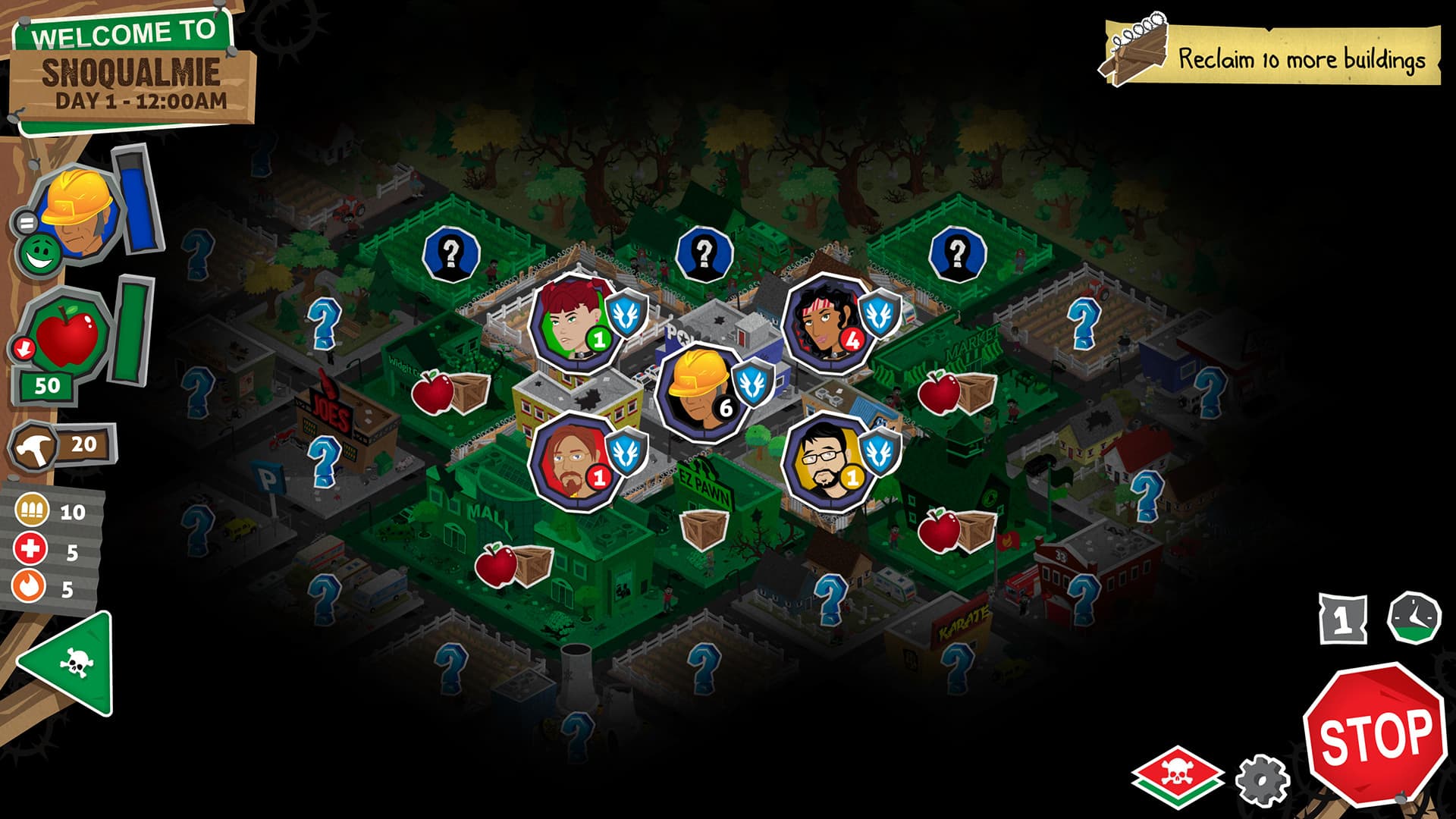
Rebuild 3 is a good starting point if you want serious allocation decisions without managing a complex physical production chain. The map breaks the city into useful spaces, and your survivors become the people who reclaim, defend and repurpose them. Choosing between a farm, housing or a hospital is really a choice between different kinds of capacity. Expansion is satisfying because the new block can solve a problem you already have, not merely make the border look larger.
The supply model encourages you to think past the next scavenging assignment. Grocery stores and gas stations can lose their original usefulness after you remove their goods; farms provide a recurring source instead. Builders can replace certain buildings with more useful ones, and assigning survivors to farming increases its yield. Someone working on food is unavailable for research, recovery of another block or other missions. The map stays easy to read, but there is rarely enough labor to pursue every attractive option at the same time.
Individual skills, equipment and perks stop those workers from being interchangeable. Meanwhile, other factions, illness and personal disputes can change what the fort needs most. You can play in real time or turn-based mode, which makes the latter especially appealing for comparing priorities at your own pace. Choose it for the broad decisions of rebuilding a city and keeping its people functioning. Choose They Are Billions instead if the appeal is detailed power coverage, industrial upkeep and the precise placement of economic buildings.
The verdict
Pick Rebuild 3 for approachable city-scale planning with meaningful worker allocation, recurring supply decisions and plenty of personality.
Project Zomboid
Storage, fuel, working equipment and sustainable production all matter when you personally have to keep the system running.
- Crafting
- Farming
- Exploration
- Co-op
- Platforms
- Windows, macOS and Linux via Steam; current Build 42 desktop systems.
- Price model
- Paid Early Access game; optional four-copy purchase for a group.
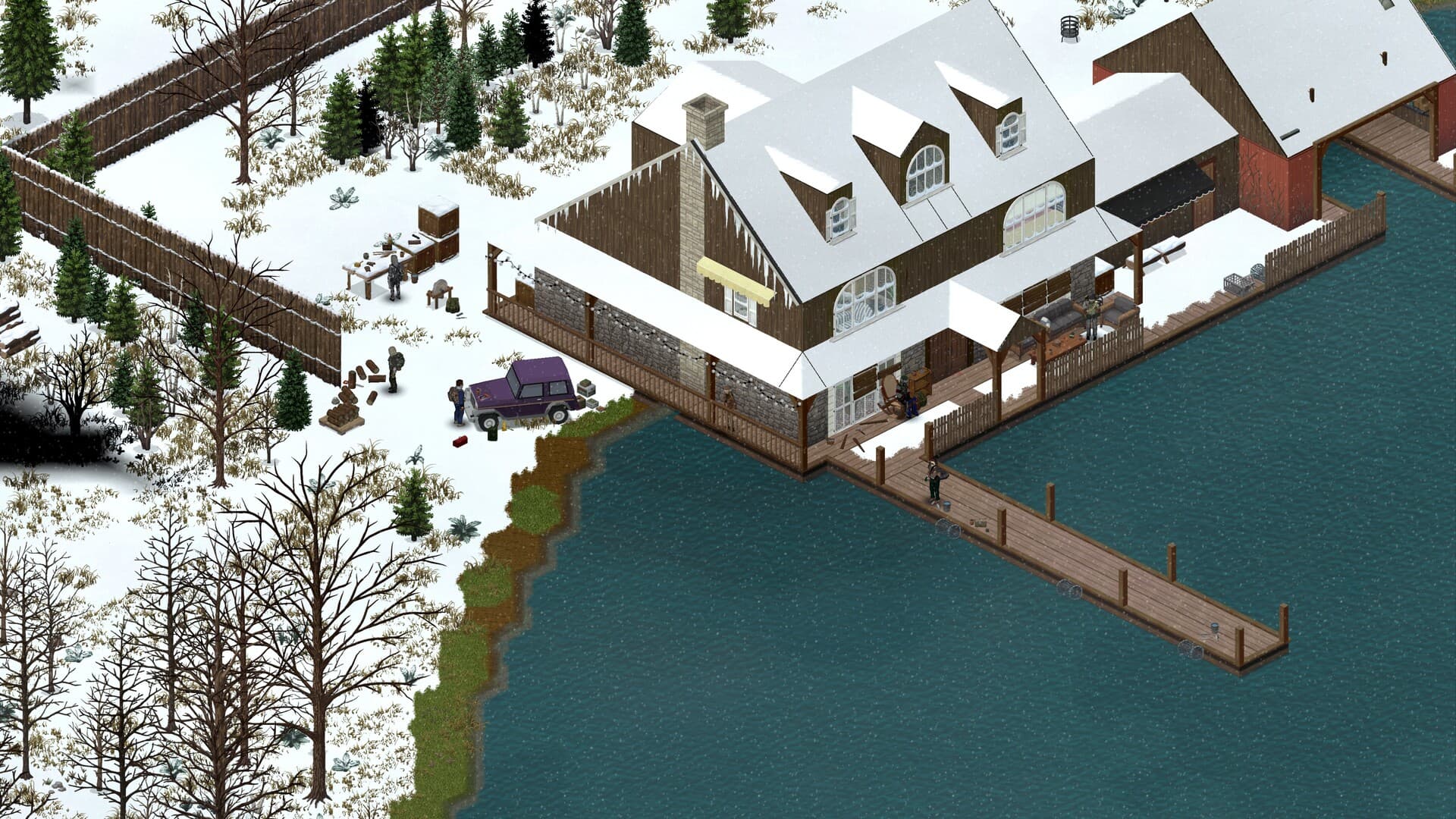
Project Zomboid brings resource management down from the city map to the cupboard, workbench and fuel can. The important achievement is not owning a huge pile of items; it is assembling a survival setup whose parts keep supporting each other. As utilities fail and seasons change, a comfortable house can become a demanding maintenance project. Fuel runs, repairs, stock organization and the time needed to produce replacements all compete with the ordinary business of staying alive.
Power is an especially useful example. Generators consume fuel and deteriorate, so having electricity creates a continuing supply and maintenance obligation. The same fuel economy supports vehicles, while powered gas pumps become important after the grid fails. You can invest in keeping conveniences running or reduce your dependence on them. That is a different kind of resource choice from deciding which warehouse gets another stack: it changes what your character needs to do on the next day, and how far from home you can comfortably commit.
Build 42 expands the alternatives with animal husbandry, seasonal farming, preservation methods and workstations. Crafting lets you select ingredients where recipes allow it, making it easier to protect a material earmarked for something else. But more self-sufficiency also means more systems to learn and maintain. The ideal project is therefore manageable, not simply enormous. This is the pick for players who enjoy noticing a dependency, solving it and then discovering the next one, with a vulnerable character rather than an automated workforce carrying out the plan.
The verdict
Choose Project Zomboid when you want resource management to feel like personally maintaining a fragile, hard-won way of life.
How we compare
A good recommendation explains who a game suits and where it falls short. Our editorial scores use the same five criteria, each rated out of ten.
- 01
Combat
Controls, aiming, enemy readability, and the decisions you make under pressure.
- 02
Progression
Build choices during a run and meaningful progress between attempts.
- 03
Usability
Control demands, platform access, interface options, and documented device requirements.
- 04
Value
What the asking price includes, optional purchases, and the scope of the free version.
- 05
Fit
How well the game answers the specific question in this article.
Which one should you try?
Choose the scale of the problem you want to solve. They Are Billions turns an entire colony into an economic balancing act; Infection Free Zone adds real-world districts and workforce priorities. State of Decay 2 makes you carry out the community’s response to a shortage, while Dead State makes you explain that shortage to the people living with it. Rebuild 3 offers readable city-wide decisions, and Project Zomboid puts the maintenance work in your own hands. Zombie Defence is the focused choice when you want every Scrap allocation to connect the shelter to active combat: reserve inputs, set production priorities and take the results into the next deployment.
Your questions, answered.
Want to see what we’re building?
Zombie Defence is in Alpha. Join the waitlist.
More games to explore
- 9 Best Zombie Games With Base Building in 2026
Compare nine zombie games with base building, from freeform forts and colony defense to adapted city blocks and persistent shelter upgrades.
- 7 Best Zombie Defense Games in 2026
Find your kind of zombie defense: active shooting, plant-and-unit lane tactics, or fortified settlements. Seven picks with clear controls, costs and tradeoffs.
- 7 Best Zombie Games With Food and Water Management
Compare seven zombie games where food and water shape your plans, from Project Zomboid and DayZ to Zombie Defence’s irrigation and colony nutrition.