They Are Billions review: growth is a perimeter problem
A magnificent zombie siege starts with a much smaller question: can you afford to defend that new patch of grass?
Zombie Games Editorial ·
Based on official documentation and gameplay imagery.
They Are Billions can make an empty patch of grass look more tempting than a treasure chest. There is room for food production, more homes and a healthier income. There is also an extra entrance to defend. The zombies have noticed the investment opportunity.
Numantian’s steampunk strategy game turns expansion into a wonderfully uncomfortable bargain. You need a larger economy to survive the coming swarms, but every step outward creates fresh obligations. The richest colony is the one whose perimeter can actually support its ambition.
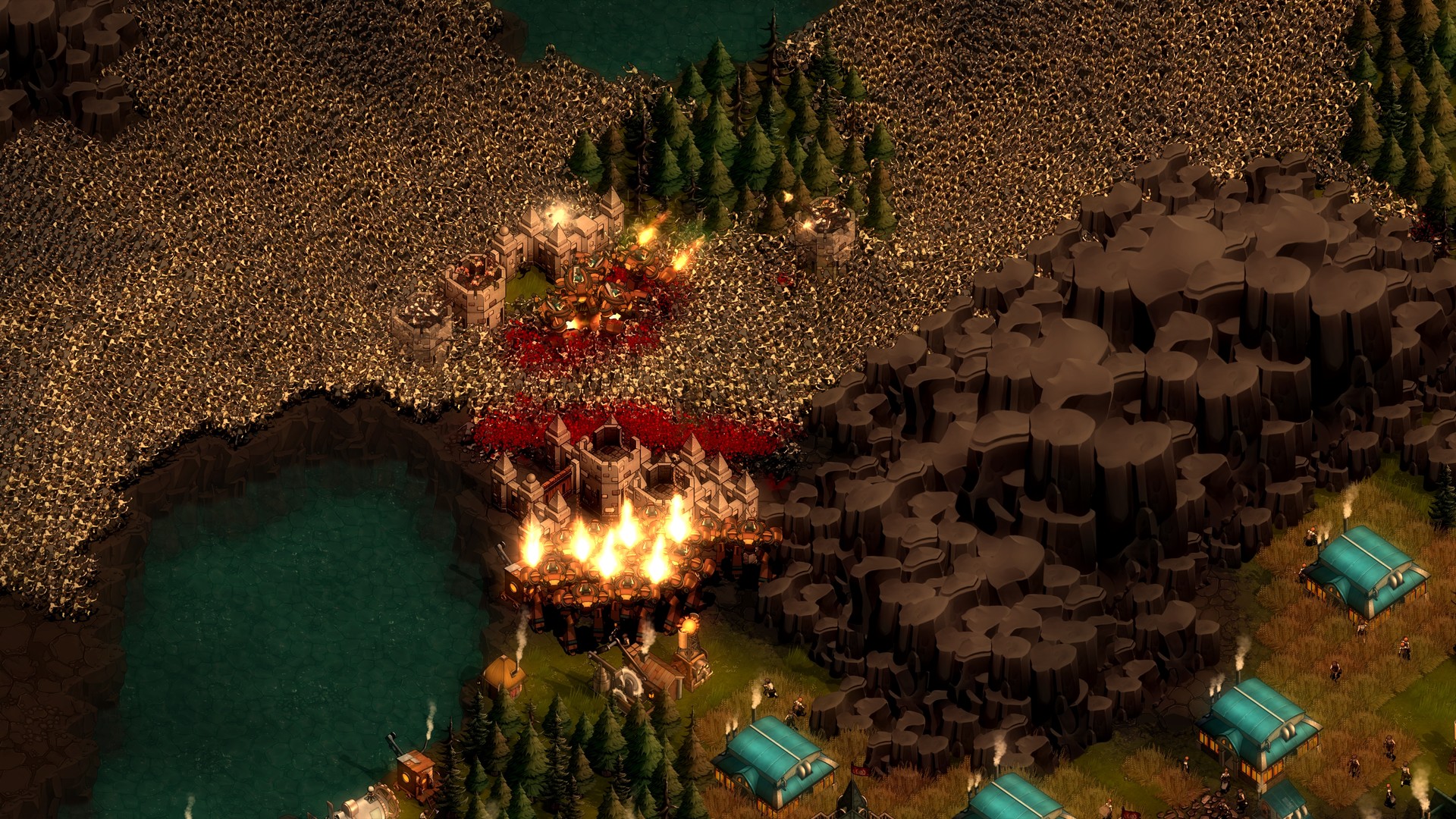
The next house needs a whole support network
Homes supply workers and income, but food limits how many people you can support. Power supplies another constraint. A promising growth spurt can stall because you spent everything on housing while overlooking the less glamorous buildings that make a larger population useful.
Look at the next bottleneck before adding another row. If food is tight, secure productive terrain. If power is short, budget for generation. Tesla Towers extend energy coverage; mills and power plants supply the energy. Confusing those jobs is an expensive way to discover electricity.
This interdependence is the game’s best economic trick. Military strength starts with a functioning settlement, while improving that settlement demands military protection. A new resource deposit becomes attractive only when you can cover the route to it and keep the supporting infrastructure safe.
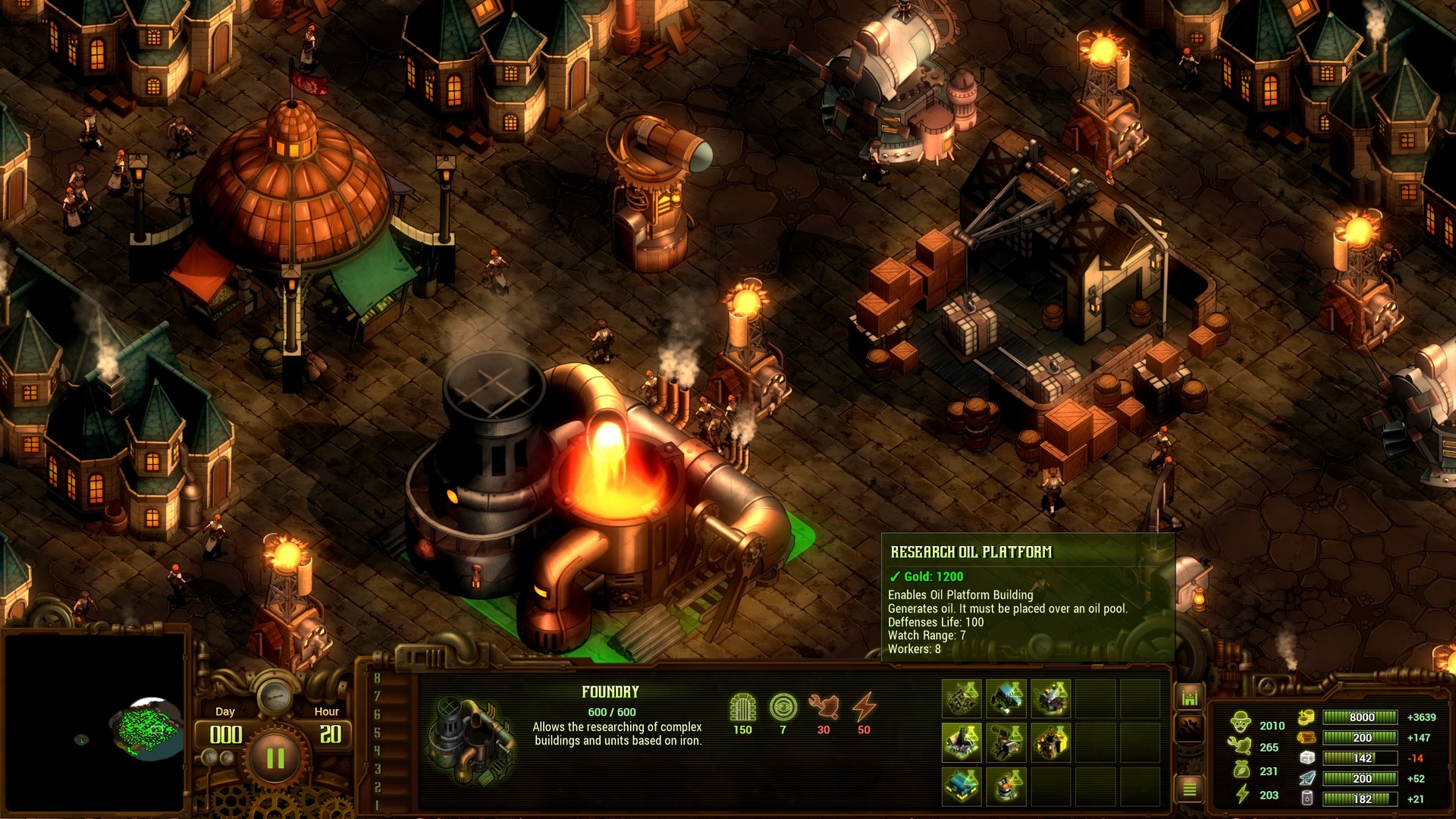
Buy useful land, then count the entrances
Placement is more interesting than filling a grid. Food and resource buildings care about their surroundings, and their working areas restrict crowding. Housing districts compete with larger structures, while narrow gaps can turn a tidy neighborhood into an irritating detour for your reinforcements.
Plan the defensive boundary before stretching power into new territory. Lakes, cliffs and forests can shorten the line you must protect. A modest extension with a clear bottleneck may be worth more than a sprawling estate that needs guards on three extra sides.
The late-game Wonders provide appropriately extravagant targets, from the Crystal Palace’s food supply to the Lightning Spire’s energy. Their cost makes choosing one part of the strategy. Solve a real shortage before commissioning a monument to how rich you briefly felt.
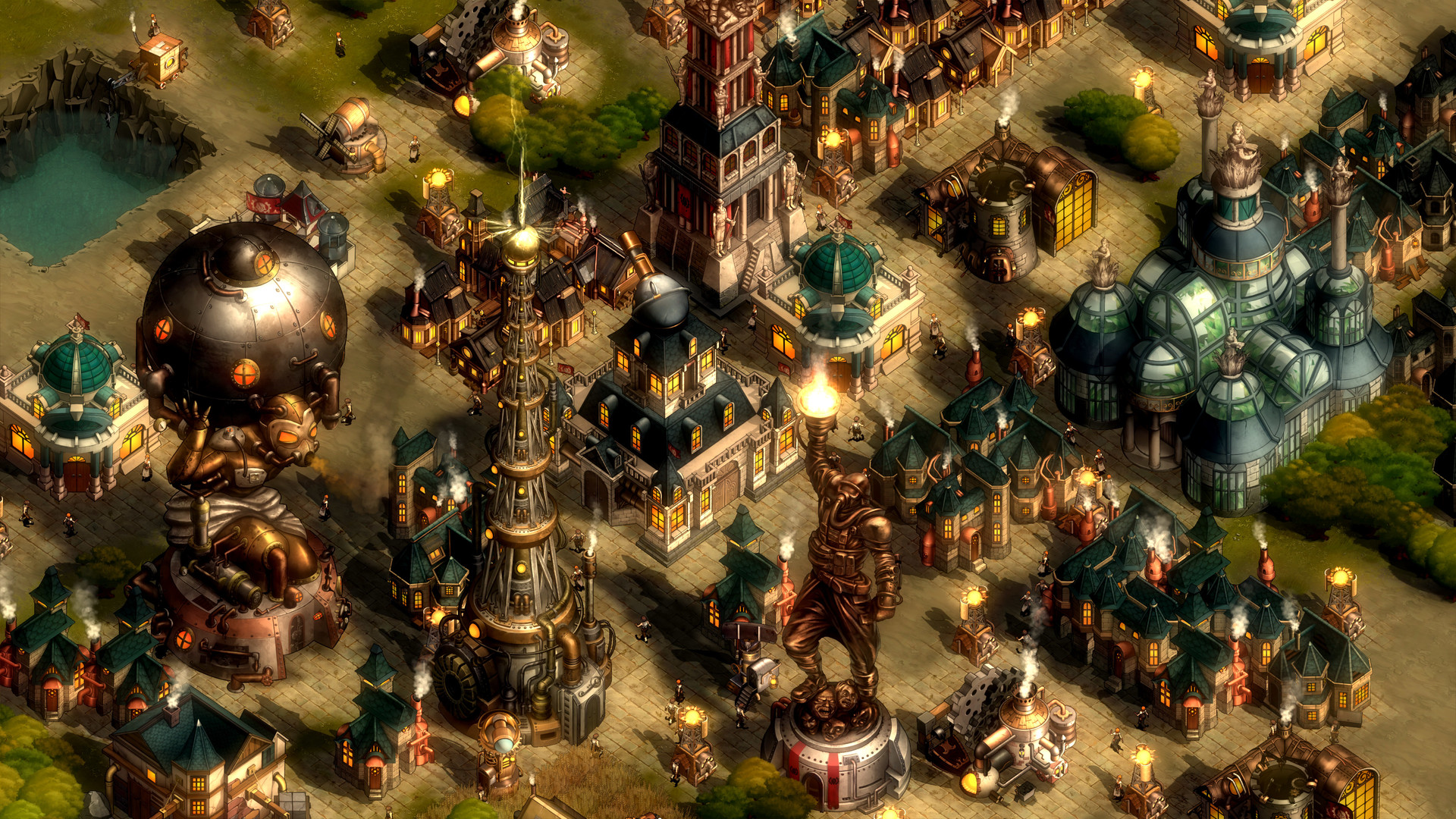
A gunshot is also an invitation
Your army has two jobs: hold the settlement and make the next expansion possible. Rangers offer relatively quiet scouting and small-scale clearing. Soldiers bring tougher, noisier firepower, while Snipers trade mobility and firing speed for reach and powerful shots. These differences give deployment real texture.
Noise makes aggression a commitment. Clearing a few infected can attract more, so pushing forward without a withdrawal route risks turning an economic expedition into an emergency. Keep defenders where they are needed rather than sending every available weapon toward the exciting part of the map.
Walls buy time; they still need something behind them that kills. Towers, traps and mobile units work best as a coordinated defense. Layering protection around vulnerable approaches gives you another decision after the first line fails, which is much preferable to having only regrets.
One breach can change the entire balance sheet
An infected building produces more enemies from the people inside. That gives a tiny incursion the potential to become a colony-wide disaster. The chilling part is the change of ownership: the population that paid for your expansion suddenly helps dismantle it.
Protect the power network as carefully as the front wall. Losing a critical Tesla Tower can cut off buildings beyond it, including powered defenses. A glamorous gun emplacement is a poor investment when its electricity depends on the most exposed structure in the neighborhood.
This is exhilarating pressure, but it makes the game a demanding companion. A long period of careful development can unravel quickly, and decorative prosperity offers no consolation. Choose it if reviewing a failed layout sounds interesting; skip it if rebuilding mainly feels like punishment.
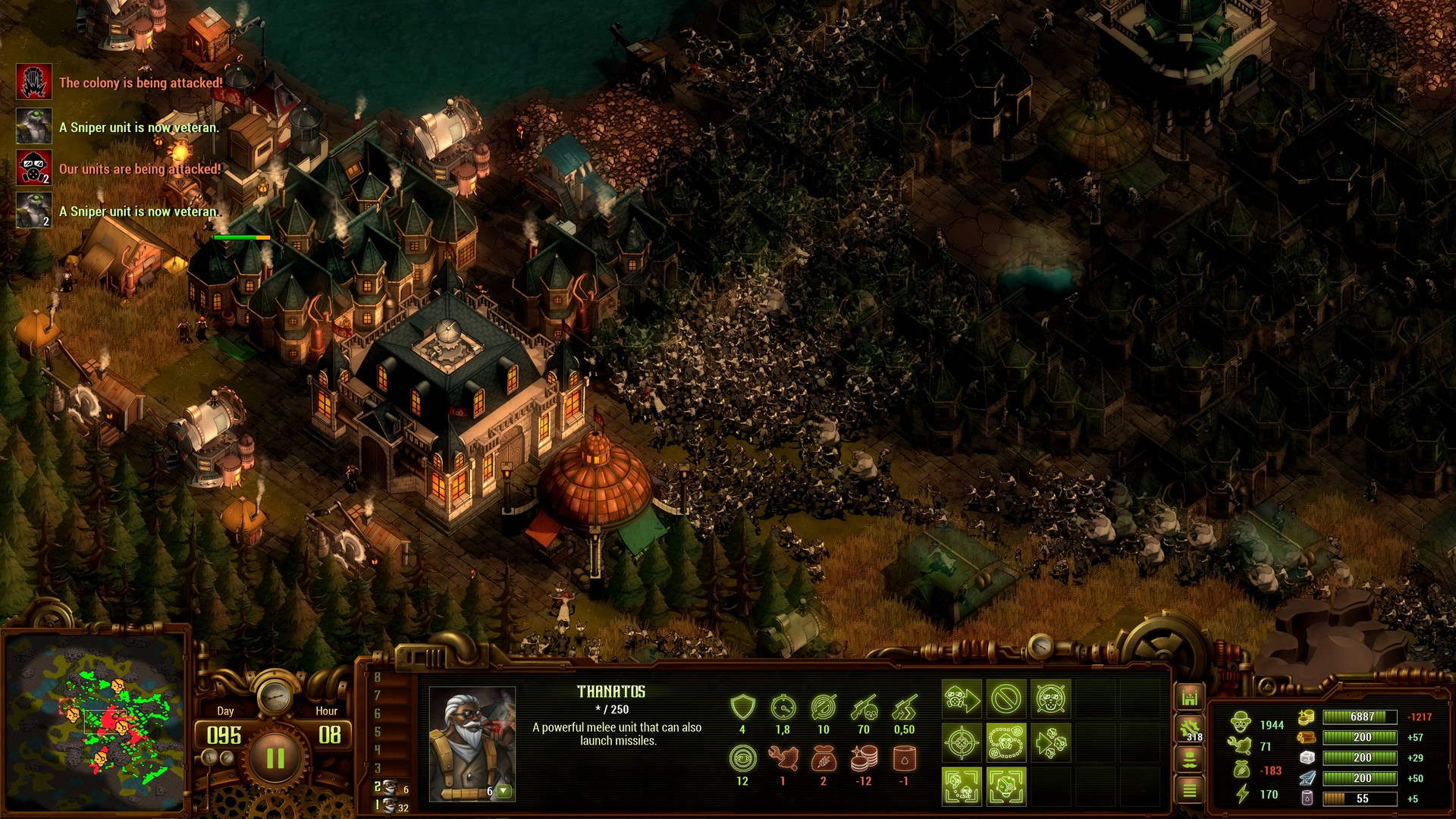
Survival supplies the puzzle; the campaign supplies the journey
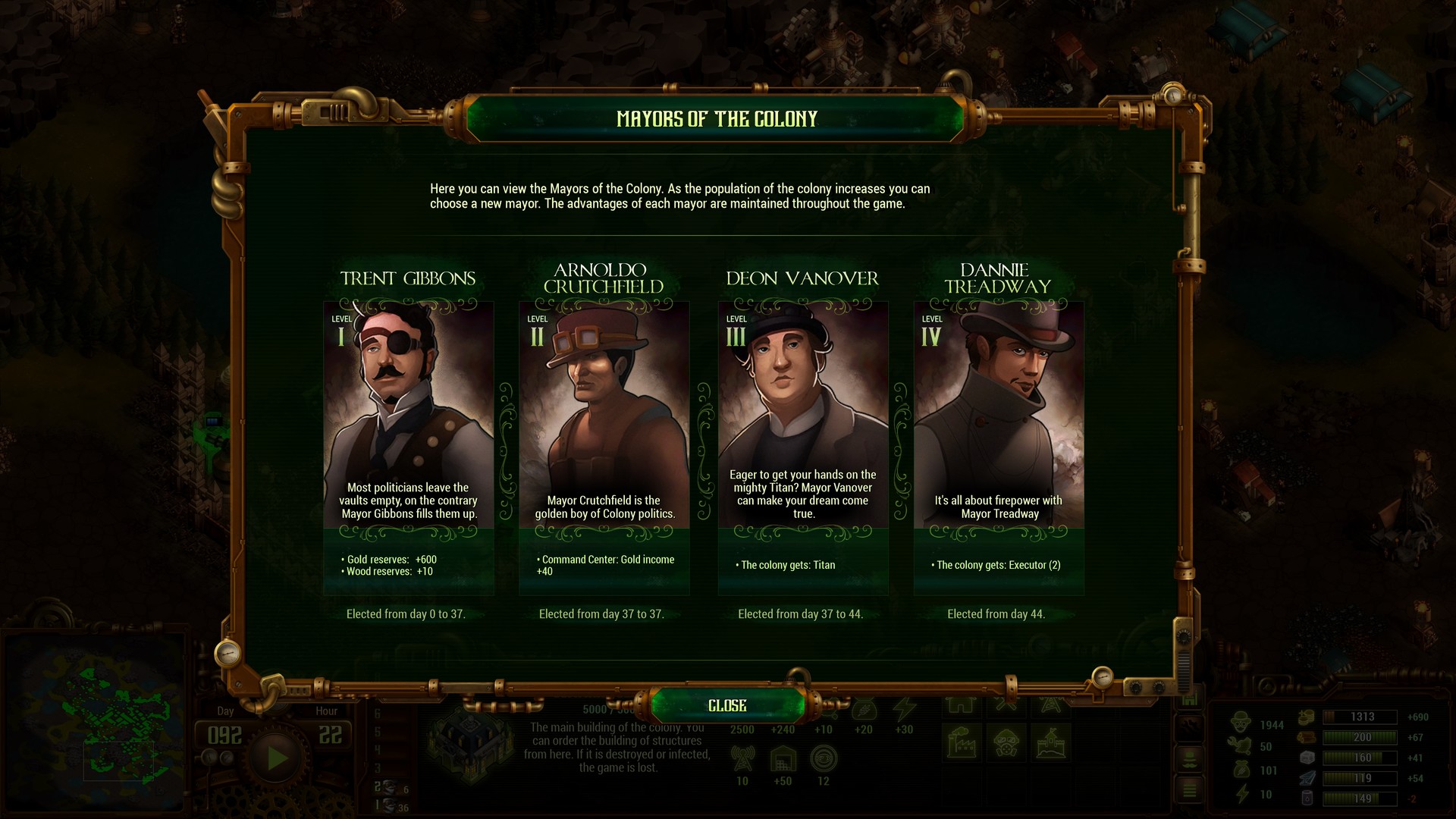
Survival generates a new map and asks you to hold out against its infected population and incoming swarms. The appeal is learning to read unfamiliar terrain. Growing towns also choose mayors with bonuses, adding another reason to adapt instead of treating every run as the same blueprint.
The New Empire campaign adds 48 missions and a research tree with more than 90 technologies. Colony building shares the itinerary with swarm battles and hero-led exploration. Research choices connect missions, so progress stretches beyond simply getting better at the opening minutes.
Pick Survival when you want the colony-defense loop with fewer narrative detours. Choose the campaign for a longer sequence of objectives and unlocks. Neither choice removes the need to understand food, power and safe expansion; the campaign simply gives that education a broader destination.
The campaign changes the rhythm, sometimes sharply
Campaign colonies receive settlers by train, making arrival timing and railway approaches part of the planning. Research between missions opens capabilities and improvements. The important choice is what helps your next objective, rather than which distant upgrade looks most impressive in the tree.
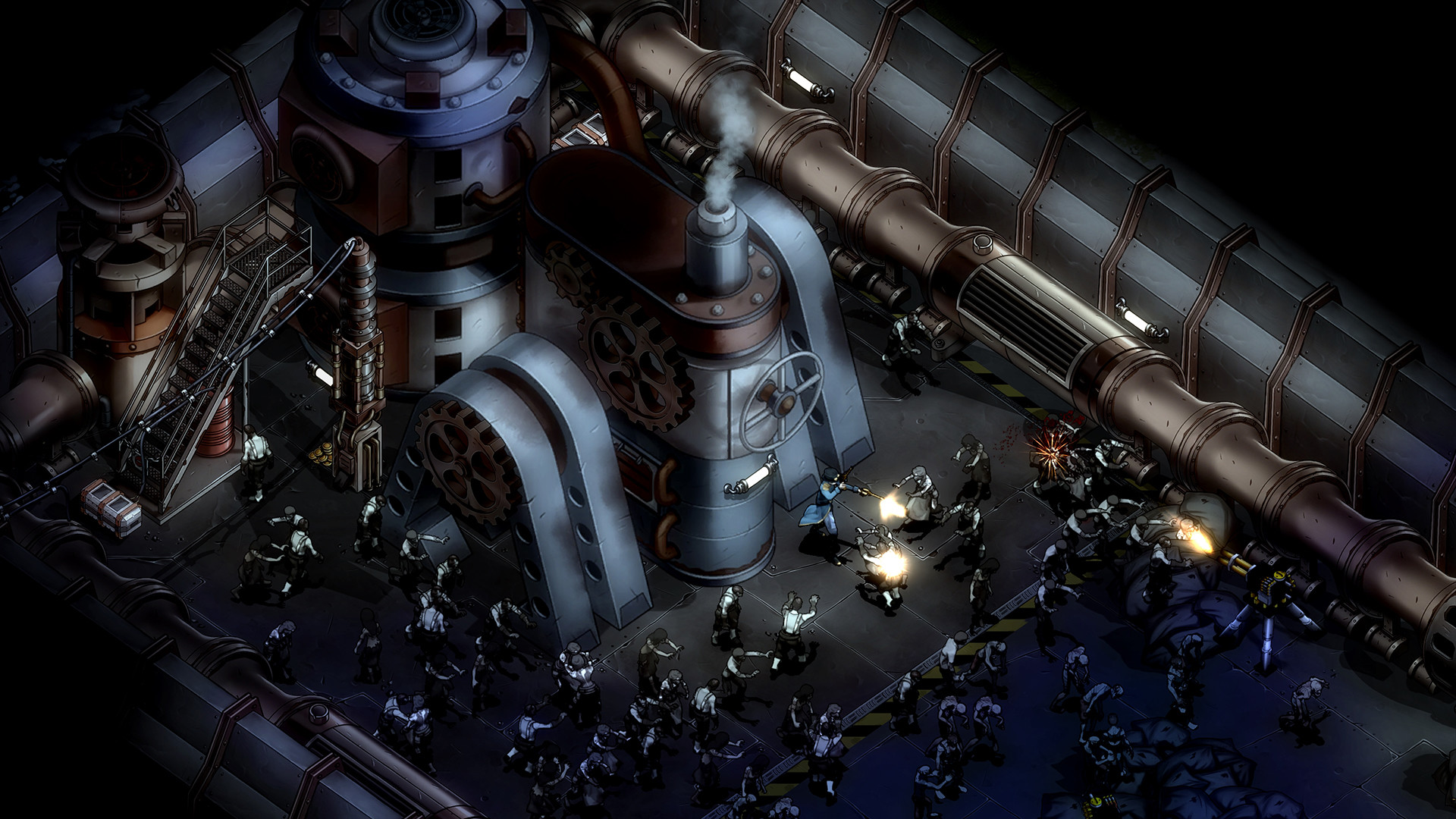
Tactical missions put a hero inside old facilities to recover technology and valuables. These excursions trade the colony’s expanding footprint for careful exploration and smaller encounters. They bring variety and context, although players chiefly interested in building defenses may find the change of pace less compelling.
The Steam edition also supports Workshop levels and a level editor. Custom scenarios can alter unit, building and enemy rules, extending the possibilities beyond the official missions. Treat community content as an additional playground rather than assuming every creation has the campaign’s structure or balance.
Pause is your most reliable officer
You can pause to place construction orders, direct troops and inspect information. Use it before committing to an expansion or responding to an attack. This makes the game approachable for thoughtful planners who dislike frantic clicking, even while the strategic consequences remain thoroughly unforgiving.
The elaborate Victorian buildings give the colony character, but packed districts can obscure the practical grid beneath them. Flat view helps inspect the layout. Keep movement routes readable and check approaches deliberately; the prettiest arrangement is not necessarily the easiest one to defend.
A substantial PC package with a particular appetite
The PC base game includes both Survival and The New Empire. The separately listed soundtrack and art book are extras, not a required campaign purchase. Its strongest value comes from enjoying repeated strategic problems: changing terrain, different research priorities and the desire to build a safer colony.
PS4 and Xbox One also received the campaign, and Switch 2 joined the platform list in January 2026 with Joy-Con 2 mouse support. Those are separate purchases and control contexts. This assessment covers Windows PC; its Workshop offering should not be assumed for the console editions.
Strengths
- Food, power and defense form an absorbing expansion puzzle.
- Pause supports deliberate tactics without removing the tension.
- Survival, campaign research and Steam custom levels offer substantial variety.
Tradeoffs
- A small breach can undo a long stretch of colony building.
- Dense buildings and placement restrictions demand careful inspection.
- Hero exploration interrupts the rhythm for dedicated base-defense players.
Who it suits
- Strategy players who enjoy optimizing layouts under pressure.
- Colony builders who want meaningful military consequences.
- Patient planners comfortable learning from expensive mistakes.
Verdict
They Are Billions excels at making economic confidence feel dangerous. Food, energy, territory and firepower keep pulling against one another, while infection gives a neglected corner enormous significance. Few colony-defense premises make the cost of overexpansion this easy to understand and this hard to resist.
Its demanding recovery curve and campaign detours narrow the audience, but the central bargain is excellent. Build enough to survive, defend enough to keep building, and remember that an impressive skyline is worth very little when your taxpayers have developed a taste for brains.
PC base game
Review score: 8.1 / 10
- Combat
- 8.0 / 10
- Progression
- 9.1 / 10
- Usability
- 7.1 / 10
- Value
- 8.2 / 10
Windows Steam edition, app 644930, with Survival and The New Empire campaign.
Soundtrack and art book are separate optional extras.
PS4, Xbox One and Switch 2 are separate editions; PC ratings and Workshop features are not transferred to them.
The review score averages the applicable Combat, Progression, Usability and Value scores, rounded once to one decimal. Fit is specific to each comparison and is excluded.
Is The New Empire campaign included?
Yes. The PC base game includes the 48-mission New Empire campaign alongside Survival. The separately sold soundtrack and art book are optional extras.
Does They Are Billions have multiplayer or co-op?
The Steam game is listed as single-player. Workshop support and leaderboards do not turn its colony-defense modes into cooperative or competitive multiplayer.
Should a new player start with Survival or the campaign?
Choose the campaign for a structured sequence of objectives and research unlocks. Choose Survival if you want to concentrate on building and defending a colony on randomized terrain.
Do Tesla Towers generate electricity?
They extend the colony’s energy coverage. Mills and power plants provide energy. You need both sufficient supply and coverage to support expansion.
Can you play on consoles?
Yes. PS4 and Xbox One have the campaign as well as Survival, and Switch 2 launched in January 2026 with Joy-Con 2 mouse support. This review rates the Windows PC edition.
Sources
- Steam: PC product, modes and extras ·
- Numantian Games: official game overview ·
- Numantian Games: colony economy and placement ·
- Numantian Games: terrain, walls and defenses ·
- Numantian Games: Rangers, Soldiers and Snipers ·
- Numantian Games: campaign launch and included content ·
- Numantian Games: campaign research and train ·
- Numantian Games: heroes and tactical missions ·
- Numantian Games: Wonders and flat view ·
- Numantian Games: custom-level rules ·
- Numantian Games: console campaign update ·
- PlayStation Store: PS4 features and compatibility ·
- Numantian Games: Switch 2 release and version 1.0.14 ·