7 Best Horde-Survival Games With Base Building
Make the next horde easier to survive by deciding what to build, what to upgrade and what you can afford to lose.

Zombie Defence connects active zombie shooting to a permanent shelter economy. The Riftbreaker puts your factories, defensive towers and fighting mech on the same battlefield. FatalZone is the close match for players who prefer automatic attacks and a camp full of useful upgrades. Those are three different answers to the same question: what should surviving the horde let you build?
This list includes both bases you defend and homes that prepare you for the next outing. Every pick has recurring horde pressure and meaningful construction or facility decisions. We distinguish free-placement defenses from fixed building upgrades, and a persistent home from a camp rebuilt for a new run. A lone damage-upgrade menu would not be enough.
The seven selections cover six released games, assessed here in their desktop editions, plus Zombie Defence’s browser Alpha in development. Combat ranges from personally aimed shooting to auto-shooting, squad direction and real-time strategy. Our five scores are editorial judgments of Combat, Progression, Usability, Value and fit for this particular combination of hordes and building.
The quick comparison
7 games, different reasons to give the next run a chance.
Choose a game to jump to its overview. Platform lists are summaries; check the linked official edition.
The games
Zombie Defence
Fight through waves, turn supplies into a working shelter and choose between power for this deployment and progress that lasts.
- Manual aim (desktop)
- Shelter building
- Crafting
- Permanent progress
- Extraction
- Platforms
- Browser Alpha in development; current single-player PvE. Join the waitlist for Alpha news and playtest availability.
- Price model
- Public launch pricing and monetization are not confirmed.
Zombie Defence makes the base matter while the horde is still closing in. A campaign level-up offers two temporary battle cards and one shelter investment. Split Shot can widen the current rifle volley; a shelter choice can bank resources or boost production back home. When a fight is under control, investing in the shelter has an obvious attraction. When your escape lane is narrowing, immediate firepower becomes harder to pass up.
The shelter is a fixed-layout 3D home with functional stations and an expansion bay. The Ammo Press, Salvage Bench, Generator, Research Lab and Water & Hydroponics support different needs. Scrap spent on a weapon project cannot also feed every production line. You can change processing priorities, reserve materials for crafting or improve the base’s ability to support repeated deployments. This is building through capabilities and resource allocation, with less architectural freedom than placing a fortress piece by piece.
Its lasting research goes beyond filling a bar. Rival doctrines include Deadeye and Suppression, trading stronger, slower fire against faster, lighter shots. Weapon crafting and upgrades sit alongside those decisions, while crops and meals prepare future outings. Shelter structures, weapons and research survive defeat, so the home remains a continuing project even as battle-card builds start over.
The action stays in your hands: desktop movement and cursor aim are independent, and you handle firing, ammunition and reloads. Touch fire assists aim toward the nearest living enemy. Choose three-wave sectors to advance the campaign, open-ended Scavenge for escalating holdouts or separate city Scrap expeditions to feed the shelter through looting and extraction. That range gives a practical purpose to home improvements without requiring the shelter itself to be a turret-defense map.

The verdict
Choose Zombie Defence for the back-and-forth between personally controlled horde fights and a shelter whose next improvement changes your preparation.
The Riftbreaker
Build the economy behind a wall of automated weapons, then use an armed mech to reinforce the defense when alien hordes arrive.
- Shelter building
- Base defense
- Crafting
- Co-op
- Platforms
- Windows PC edition via Steam; solo or up to four-player co-op.
- Price model
- Paid base game with optional expansions; a separate free demo is available.
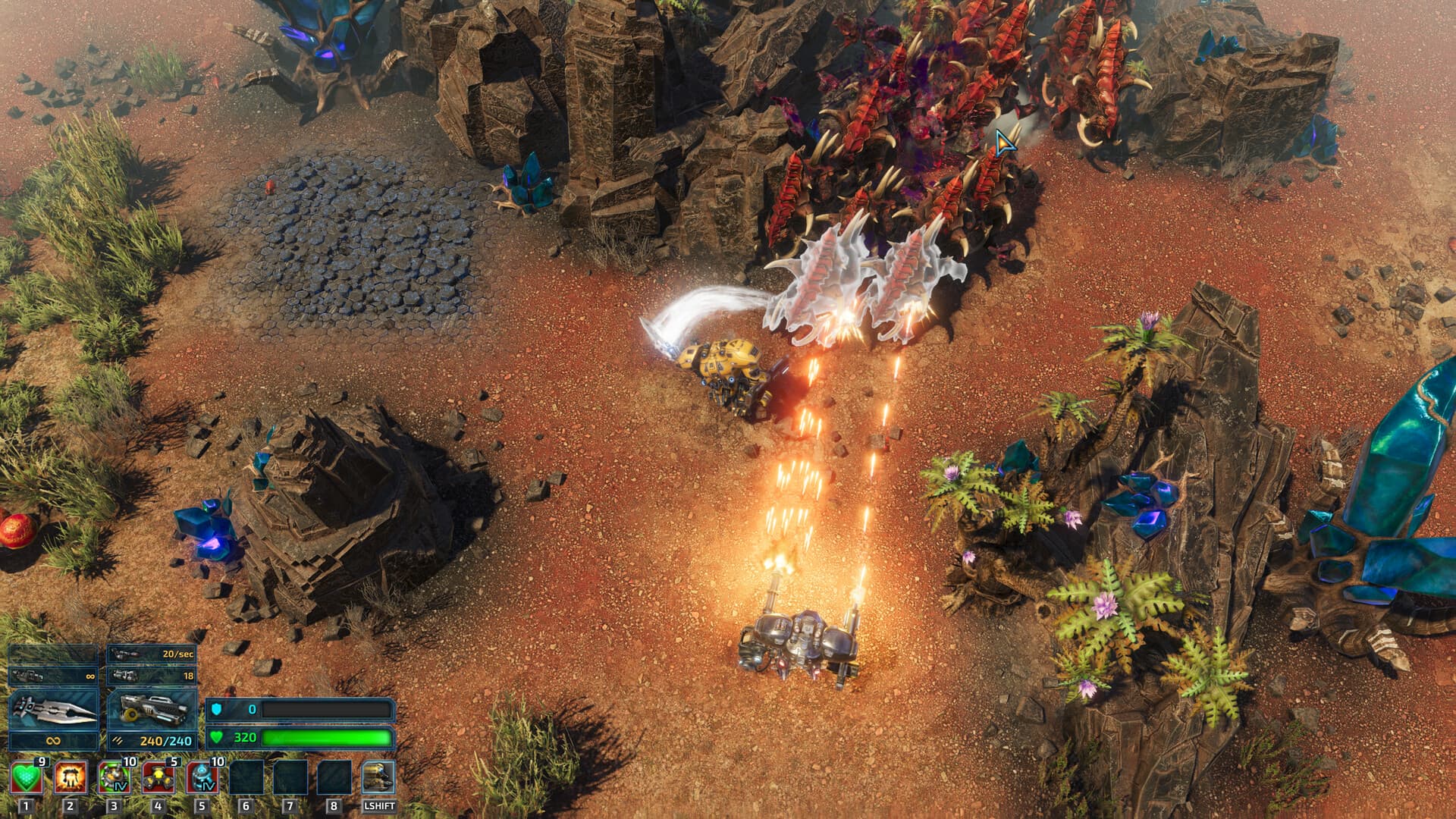
The Riftbreaker is the strongest all-in-one choice here for battlefield construction. The same map holds your resource extraction, power generation, factories and defenses. Expanding output means occupying more territory, and occupying more territory means keeping more of the alien world outside your perimeter. The next building is consequently both an economic opportunity and another thing the horde can threaten.
You control Ashley’s mech directly while towers contribute their own fire. This makes a breach a playable emergency: move to the threatened side, attack the creatures yourself and give the constructed defenses time to do their work. Research and equipment development improve the mech alongside the base. The payoff is a battle where your personal positioning and earlier building decisions remain relevant at the same time.
Choose the mode deliberately. Campaign gives you persistent bases and outposts across different biomes. Survival compresses the idea into a fresh randomized mission with accelerated technology and increasingly dangerous waves. Its current standard objective is to survive the final wave at 90 minutes. That is a full defensive project, so players looking for a brief arena run should allow for a larger commitment.
Up to four players can share the current PC campaign or Survival mode, and attack settings let you adjust the pressure. The workload is the attraction and the cost: factories need resources, defensive structures need support and your own mech still needs steering. If you enjoy solving a failing production line as much as cutting through the creatures it failed to stop, this is the richest construction-and-action pairing on the list.
The verdict
Pick The Riftbreaker when you want the horde to test the base you designed, with your own weapons as part of the answer.
FatalZone
Develop seven functional camp buildings, improve equipment and train mercenaries whose next run may be their last.
- Roguelite
- Shelter building
- Permanent progress
- Loot builds
- Platforms
- Windows PC edition via Steam; single-player.
- Price model
- Paid full-release game.
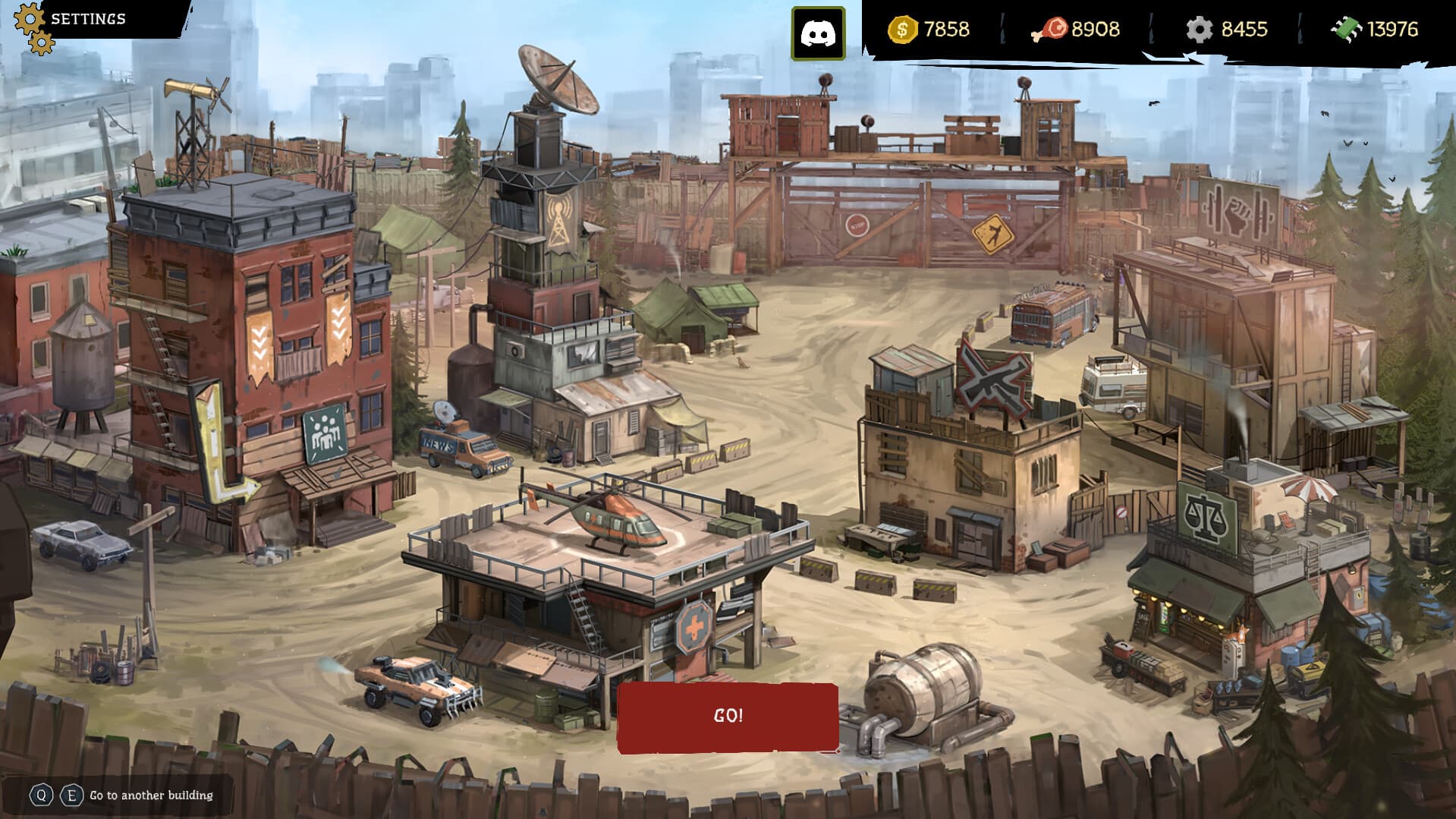
FatalZone gives the familiar auto-shooter run a camp-sized reason to continue. Its seven buildings each have a role and multiple upgrade levels. The Training Hall improves mercenary skills, the Mercenary Base handles recruitment and the workshop develops weapons and armor. Choosing the next upgrade is about strengthening a part of your operation, rather than arranging walls to change enemy movement.
The important distinction is that the camp lasts longer than every fighter in it. Mercenaries gain experience, carry equipment and acquire skills, but a veteran can be killed permanently. Investment therefore has two scales: the surviving support system and the individual you are risking outside it. Improving recruitment or training has a different appeal from pouring everything into one increasingly capable mercenary.
In the field, automatic attacks put the emphasis on movement, skill combinations and surviving the growing crowd. Viral exposure can produce helpful or harmful mutations, adding another reason to reconsider how far to push a particular fighter. The evacuation helicopter offers a way to end an expedition early. A promising build is valuable, but so is bringing home the mercenary who can use it again.
This is a particularly good fit if you want management around a bullet-heaven loop without learning an industrial supply network. The fixed camp keeps construction compact. The cost is attachment: losing a developed mercenary can remove work invested in that person even while the wider operation continues. Players who want a permanent fortress layout should choose The Riftbreaker or They Are Billions instead.
The verdict
Choose FatalZone for automatic horde combat with a compact, lasting camp and meaningful decisions about who to risk on the next expedition.
Cast Out Colony
Turn horde-run rewards into a growing insect colony, where buildings and enrichment strengthen your characters.
- Roguelite
- Shelter building
- Permanent progress
- Loot builds
- Platforms
- Windows PC via Steam; single-player. Steam lists an English-only interface.
- Price model
- Paid full-release game.
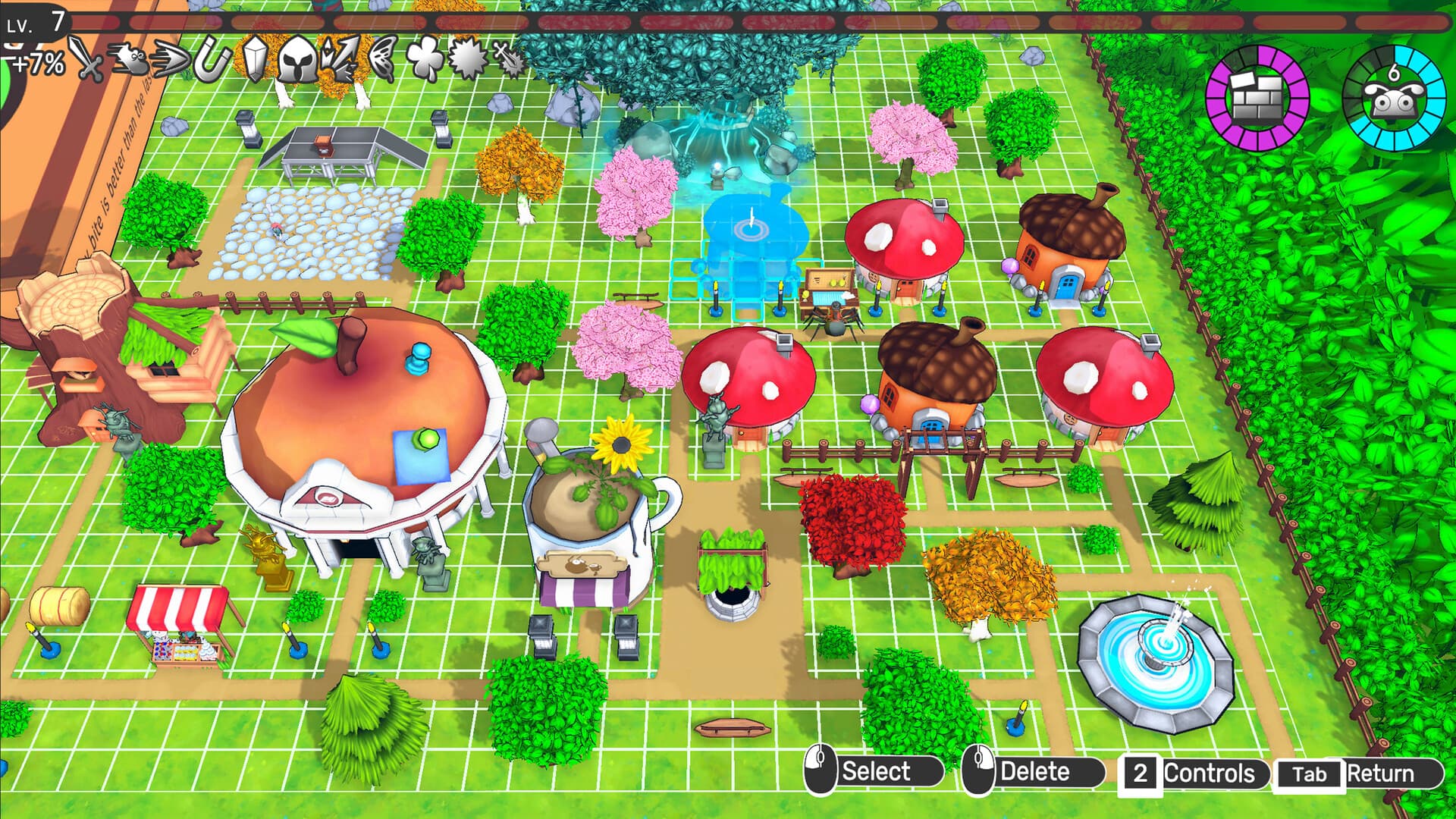
Cast Out Colony is the most literal survivors-like town builder in this selection. Its horde arenas and colony are separate spaces: first survive waves as one of its insect characters, then return to a place you can develop and rearrange. Homes, facilities, paths and decorative objects occupy an editable grid, giving your accumulated progress a visible shape.
The construction has mechanical value. Colony enrichment provides lasting stat improvements as the settlement develops, and individual structures can also strengthen the character. Facilities such as the Gym support permanent upgrades, while the Skill Tree connects home development to special skill combinations. Deciding what to establish next gives the quieter half of the game a purpose beyond decorating a menu.
Arena combat supplies the other half. Active and passive skill choices assemble a build as the crowd grows, and the game offers optional auto-aim. You still direct movement and can dash, with character-specific Banishing Blow abilities adding another decision under pressure. The colony keeps developing across attempts, so a failed arena does not mean discarding the entire home project.
The appeal depends on wanting both tempos. Building a cheerful settlement of mushroom houses is a substantial change of mood after a screen full of enemies. You are improving a support town rather than constructing defensive choke points inside the arena. Choose it if a home that visibly grows makes repeated runs more satisfying; choose a battlefield builder if you want every wall to affect the next attack.
The verdict
Pick Cast Out Colony when you want a genuine town-building interlude attached to a survivors-like, especially if shaping the home is part of the reward.
Yet Another Zombie Defense HD
Spend cash on barricades, traps and turret-mounted guns, then fight beside those purchases when the next night begins.
- Manual aim
- Base defense
- Co-op
- Shelter building
- Platforms
- Windows PC edition via Steam; solo or up to four-player local and online co-op.
- Price model
- Paid game.
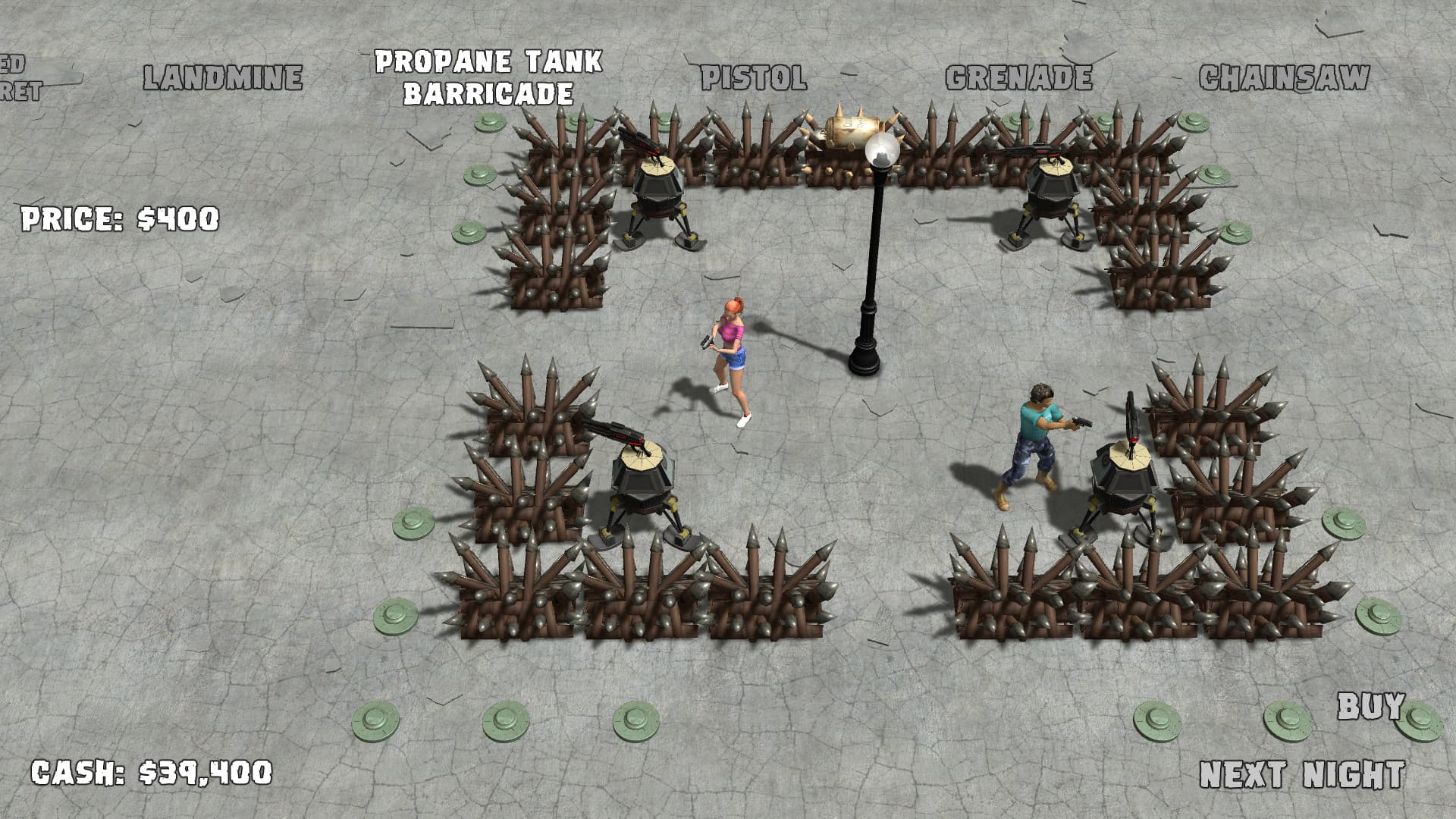
Select Defense mode for this particular combination. Yet Another Zombie Defense HD also has an Endless mode, but the daytime buying-and-building rhythm is the reason to choose it here. Cash collected from defeated enemies funds the next preparation phase. Better weapons are tempting, yet the same budget can buy the structures that keep enemies away long enough to use them.
Construction is deliberately compact and readable. Place barricades, set traps and mount firearms on automated turrets around your position. This turns the shopping phase into a layout decision: where should the strongest defensive fire sit, and how much money should remain for the gun in your own hands? The base changes the fight instead of merely supplying a percentage bonus before it.
You continue to move and shoot directly during the night while turrets add automated support. Up to four players can share that responsibility locally or online. The distinction is useful for a group: everyone participates in the same defense attempt, rather than each person disappearing into a separate mission and returning with upgrades for an unrelated hub.
The structure belongs to that survival attempt, growing between nights rather than becoming a permanent settlement across new games. Eventually overwhelming waves are the premise. That makes the loss easier to understand but limits the long-term home-building fantasy. The satisfaction comes from finding a more effective arrangement and surviving another night with it, with very little colony housekeeping in the way.
The verdict
Choose Yet Another Zombie Defense HD for a clear, concentrated defense loop where last night’s cash becomes the layout for tonight’s fight.
Deadly Days
Scavenge with a survivor group, decide when to leave before night hordes become overwhelming and invest scarce tools in camp rooms or crafted weapons.
- Roguelite
- Squad builds
- Shelter building
- Crafting
- Platforms
- Windows, macOS and Linux edition via Steam; single-player.
- Price model
- Paid full-release game.
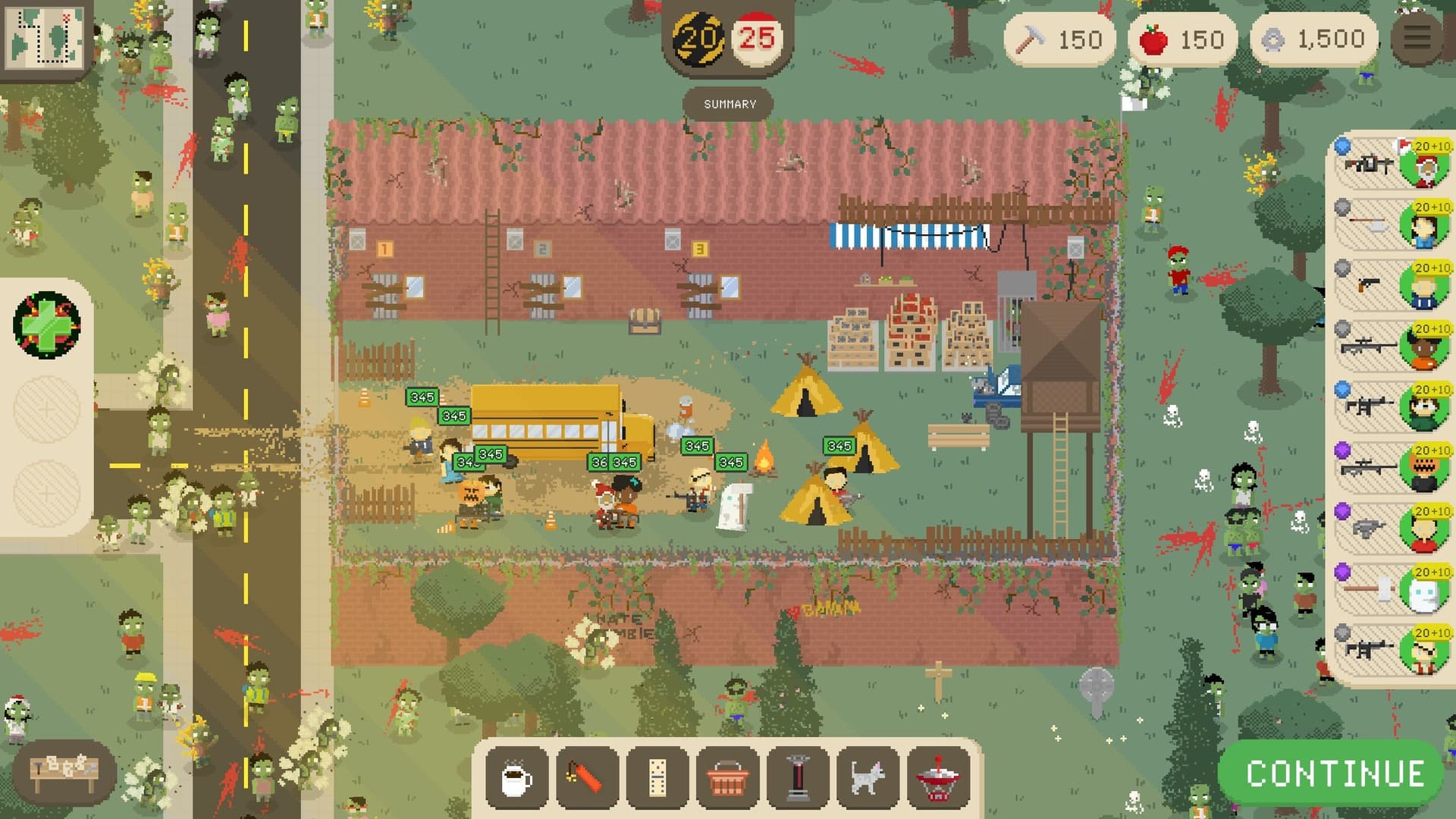
The original Deadly Days builds its horde-survival loop around keeping a whole group alive. Survivors search procedural locations for food, equipment and other resources while the day runs down. Staying later exposes them to dangerous night crowds. The useful question is not simply how many zombies you can kill, but whether the next pickup helps the group more than a safe return would.
Its base rooms make that calculation more interesting. A greenhouse supplies apples, a mechanic room repairs some weapons and a satellite uplink changes an airstrike into an orbital laser. Construction uses tools found during outings, particularly at hardware stores. Those tools also build and improve custom weapons, so committing them to a room means delaying another kind of power.
You direct a squad rather than steering one auto-shooter hero. Ground commands set the group’s position, holding the mouse directs movement and the Control modifier can order shooters to stop and aim at a target. Special abilities add intervention when the crowd becomes dangerous. Planning the route and choosing when to use support matter as much as each survivor’s weapon.
Treat the camp as part of the current roguelite attempt. Rooms and supplies support successive days within that run; specialization unlocks provide the broader progression between attempts. That is a different pleasure from preserving one elaborate home indefinitely. The small number of room choices also makes it more about solving the group’s immediate needs than designing architecture. It earns its place through those functional tradeoffs, especially the competition between a useful room and a stronger crafted weapon.
The verdict
Choose the original Deadly Days for a run-shaped camp economy and squad decisions, particularly when scavenging priorities are as interesting to you as shooting.
They Are Billions
Build a productive colony, train defenders and prevent one broken perimeter from turning the settlement into part of the horde.
- Shelter building
- Base defense
- Tactical combat
- Platforms
- Windows PC edition via Steam; single-player.
- Price model
- Paid game; optional soundtrack and art book sold separately.
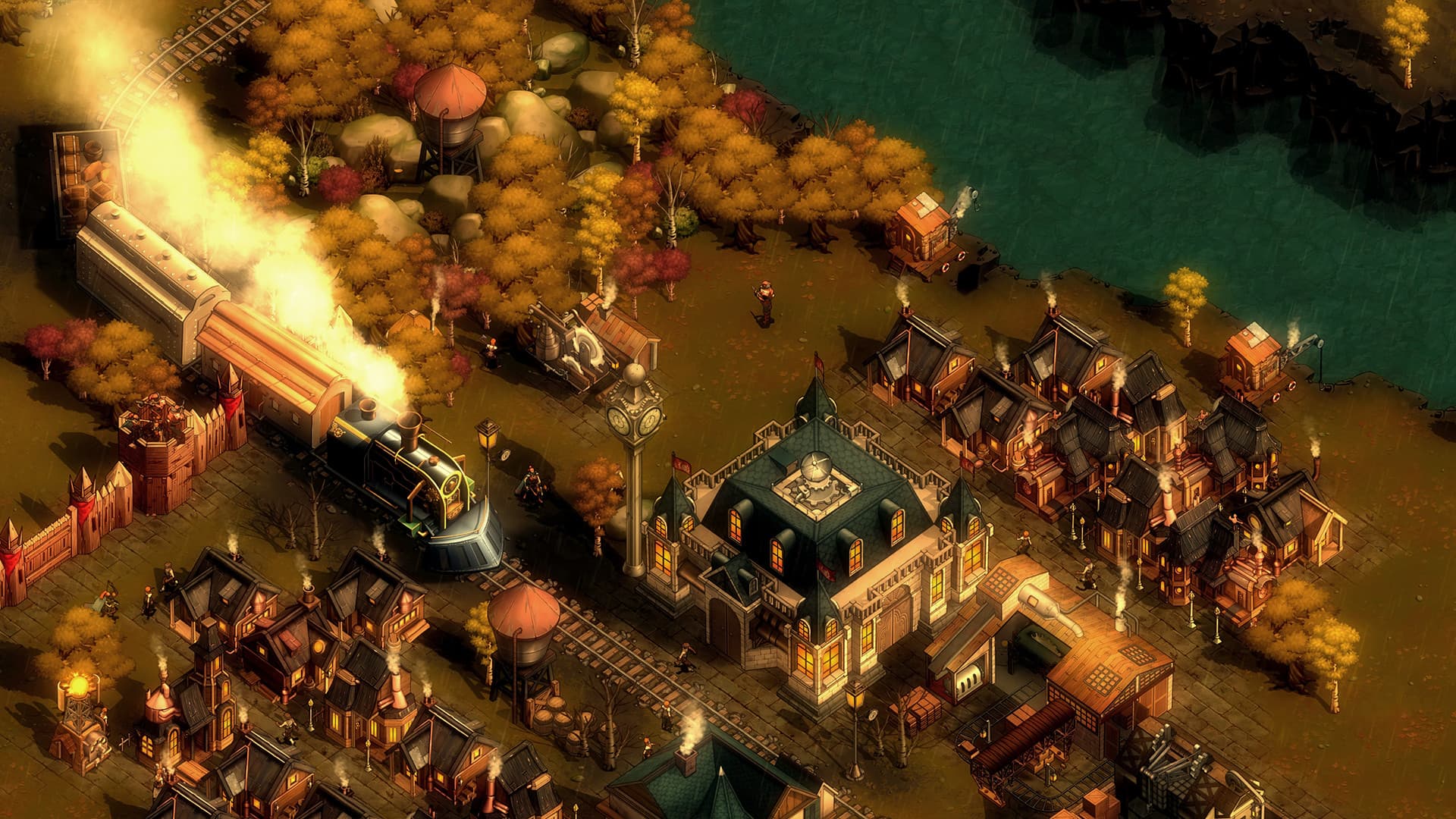
They Are Billions is the strategy pick, and Survival mode is the clearest place to start for this query. Each randomized map asks you to grow a colony that can last through its scheduled swarms. You place the housing, resource buildings, power infrastructure, walls and towers that make survival possible. The base is both your means of winning and the thing the infected are trying to destroy.
Its distinctive pressure comes from infection spreading inside the colony. A single infected reaching an occupied building can turn its inhabitants, creating more attackers behind your defenses. That makes a minor gap dangerous in a way a simple health bar does not capture. Expanding housing and industry brings more output, but also more interior space to protect if the boundary fails.
You command units and defensive positions rather than personally aiming a survivor’s gun. Pause is part of the design: stop time to examine an approach, issue orders and plan construction, then watch the result unfold. This is useful if you want the sight of a vast horde without relying on constant reflex shooting. Planning gets the spotlight, but the consequences of a poor plan remain severe.
A Survival colony belongs to its map and challenge, rather than accumulating as a permanent hub across fresh attempts. The separate campaign adds its own sequence of missions and technology development. Choose Survival for the repeated exercise of turning unfamiliar terrain into a defensible economy. It is the furthest pick here from a short bullet-heaven run, but one of the strongest matches when the part you most want to build is the defense itself.
The verdict
Choose They Are Billions when you want to survive the horde through a carefully planned colony, and you are happy for strategy to replace personal gunplay.
How we compare
A good recommendation explains who a game suits and where it falls short. Our editorial scores use the same five criteria, each rated out of ten.
- 01
Combat
Controls, aiming, enemy readability, and the decisions you make under pressure.
- 02
Progression
Build choices during a run and meaningful progress between attempts.
- 03
Usability
Control demands, platform access, interface options, and documented device requirements.
- 04
Value
What the asking price includes, optional purchases, and the scope of the free version.
- 05
Fit
How well the game answers the specific question in this article.
Which one should you try?
Choose where you want the building decisions to happen. The Riftbreaker and Yet Another Zombie Defense HD put your construction directly in the horde’s path; They Are Billions expands that idea to an entire vulnerable colony. FatalZone develops a permanent support camp, Cast Out Colony adds a town you can arrange, and Deadly Days makes room choices part of a squad’s current survival attempt. Zombie Defence is the choice for a persistent underground home that turns horde rewards into production, research and personally wielded equipment. Start with the relationship between home and fighting that you find most satisfying, then decide how much of that home you want to keep when the run ends.
Your questions, answered.
Want to see what we’re building?
Zombie Defence is in Alpha. Join the waitlist.
More games to explore
- 7 Best Zombie Defense Games in 2026
Find your kind of zombie defense: active shooting, plant-and-unit lane tactics, or fortified settlements. Seven picks with clear controls, costs and tradeoffs.
- 5 Best Zombie Wave Survival Games (Plus Zombie Defence in Alpha)
Compare zombie wave survival games by what happens between attacks: shop, fortify, choose upgrades, or build a colony before the next horde.
- 7 Best Base-Building Games With Direct Combat
Build the defenses and fight for them yourself. Compare seven games by construction freedom, personal combat, progression and the role your base plays.