FatalZone review: bring the mercenary home
A zombie auto-shooter with something worth bringing home: resources, a better-equipped camp and a mercenary you would rather keep alive. Its strongest hook is what happens between the massacres.
Zombie Defence Editorial ·
Based on official PC documentation and gameplay imagery.
FatalZone gives the familiar zombie lawnmower a personnel problem. The mercenary circling that horde has a career, your camp needs the supplies, and an evacuation helicopter offers a respectable alternative to becoming tomorrow’s recruitment vacancy.
That changes the appeal of a run. A successful outing can mean returning with enough resources for a useful upgrade, even before you can finish a location. For players who enjoy building something between battles, that is a compelling reason to head back out.
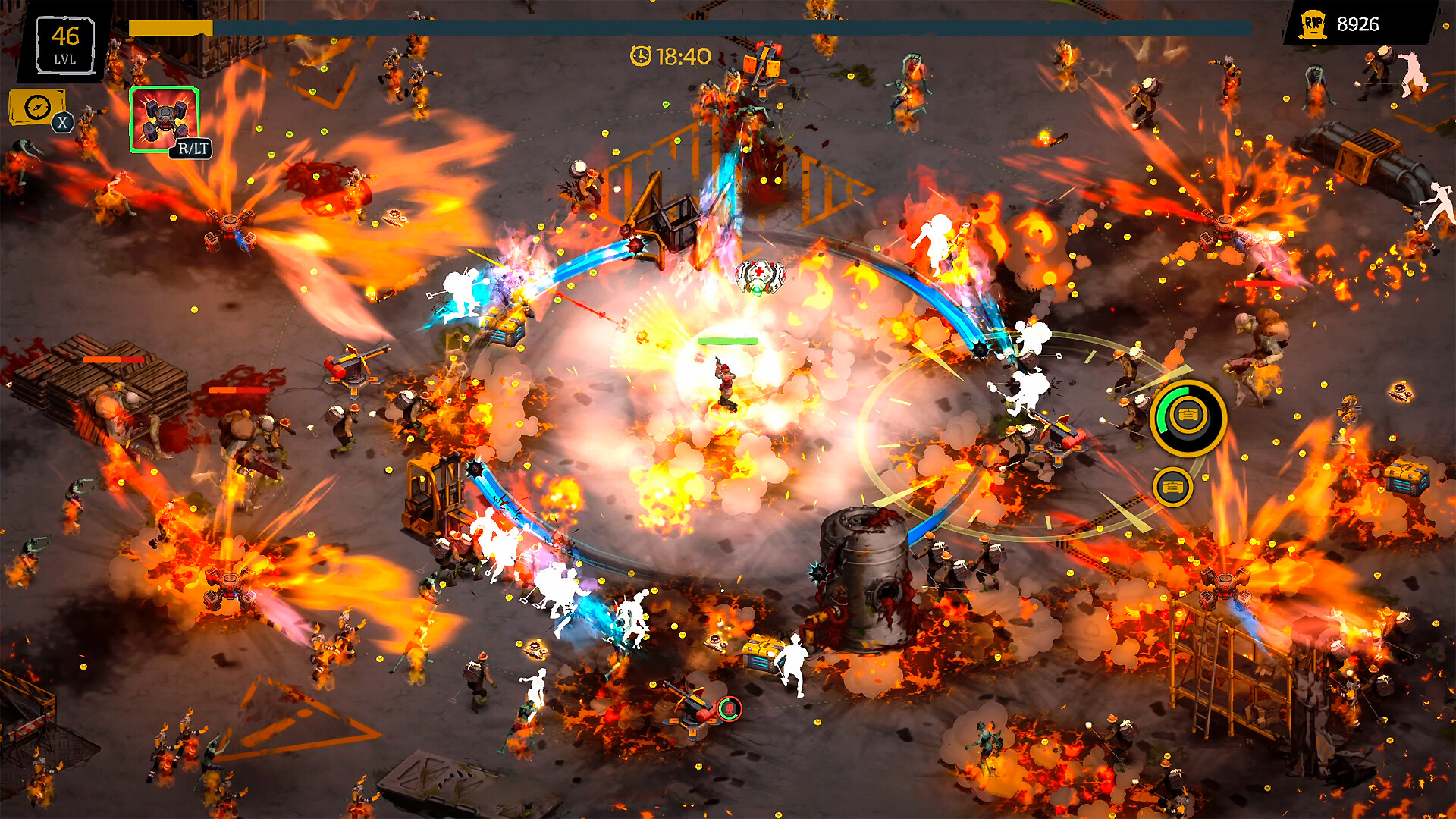
Shoot automatically, choose deliberately
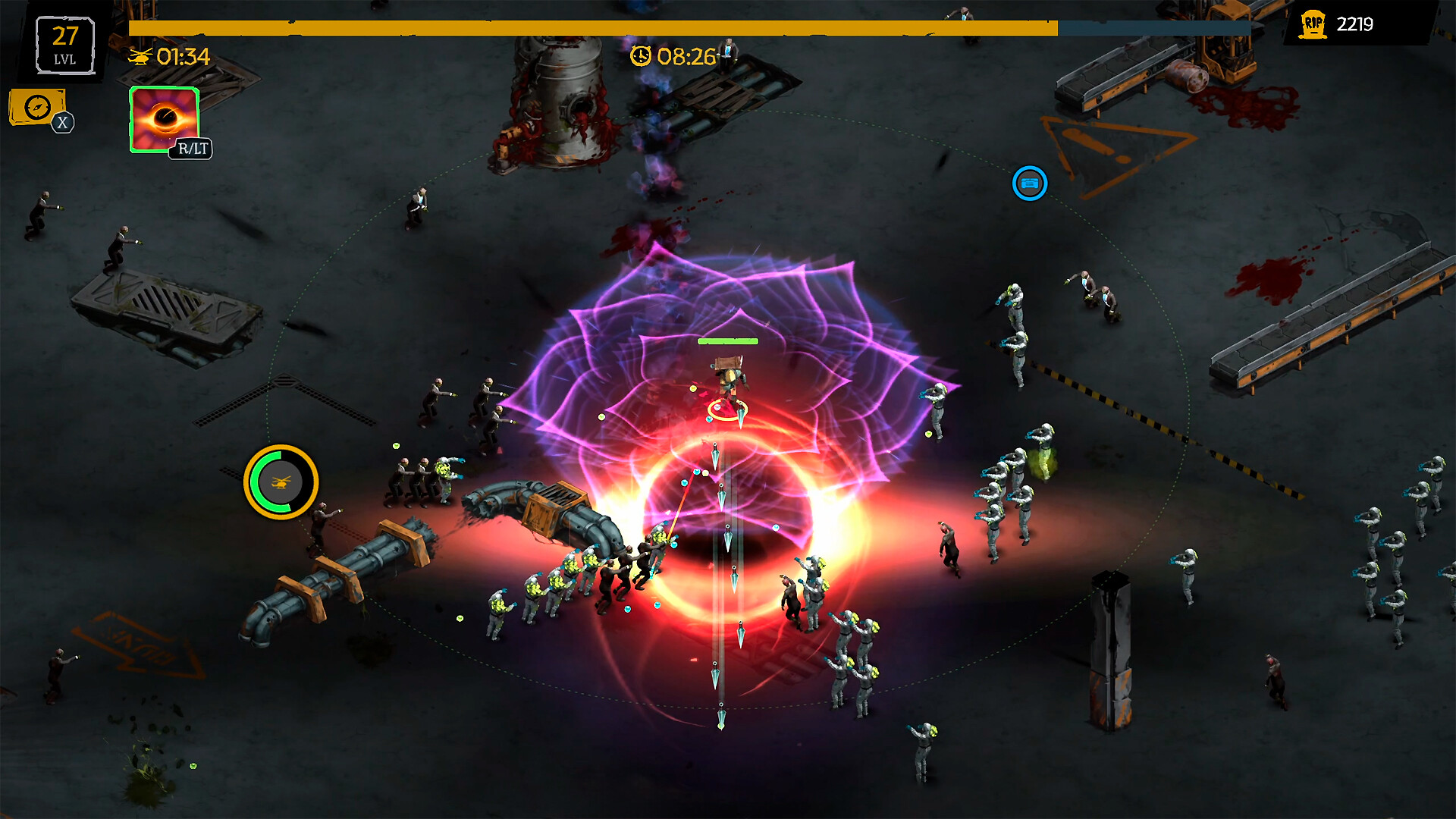
Your weapons handle the shooting while you steer through the horde, collect experience and choose upgrades. Positioning carries the action: a route toward supplies can also pull you into trouble, and a growing damage number does little for a mercenary surrounded on every side.
The battlefield has destinations beyond the nearest experience pickup. Resource containers reward exploration, while interactive points bring extra enemies. Radar icons help you judge nearby opportunities, including how far away they are and how long they remain available. Wandering without a plan leaves useful supplies behind.
Enemy behavior gives that movement some texture. Ghost Riders cut straight paths through the screen and leave fire trails; Electro Zombies form stationary rings. Read the space those threats claim before chasing a crate. The crate has no strong feelings about your survival.
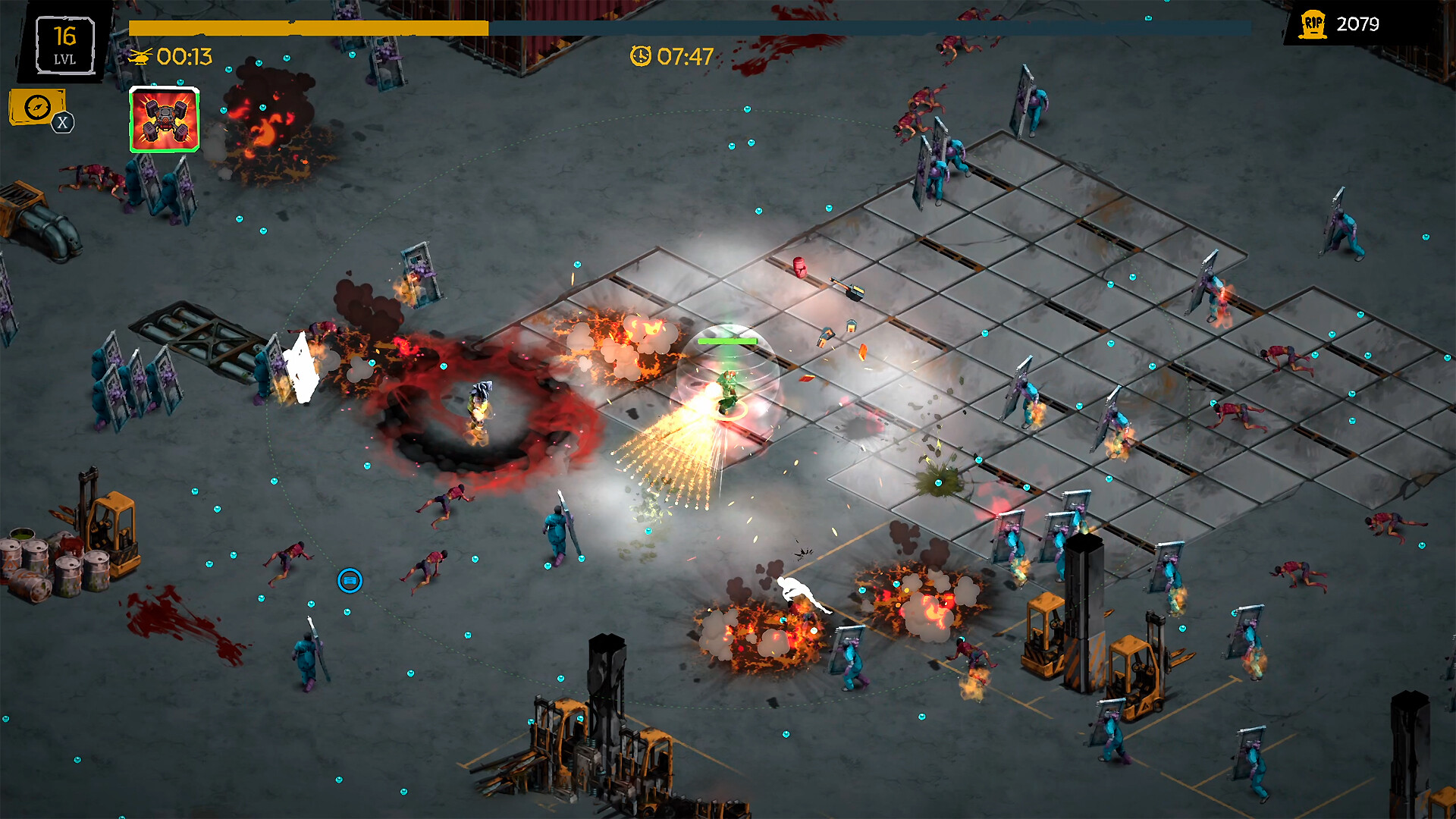
Give the fireworks a job
The full release includes nine weapon types and fifteen weapon or offensive-skill evolutions. The interesting question is what an upgrade adds to your current toolkit: another damage source, better control of nearby enemies, or help against something your existing attacks struggle to reach.
The Guan Dao offers a concrete example. Its ordinary attacks apply Weakening; the Dragon’s Will evolution adds a dragon on every sixth hit, dealing toxic area damage and spreading that effect. An evolution can change the reach and purpose of an attack, rather than simply enlarging its number.
Class ultimates add a deliberate button press to the automatic barrage. Killing zombies charges them, with charge rates varying by class. Treat that power as part of your survival plan: knowing you have an answer to pressure is more useful than admiring a permanently full meter.
The camp is the reason to come back
Resources feed a camp with seven functional buildings. Training develops mercenaries, recruitment replenishes the roster, and the Workshop improves equipment. This is where FatalZone’s progression earns its appeal: an outing can advance several longer-term goals instead of ending with only a higher kill count.
The Market adds a practical answer to uneven stockpiles by exchanging one resource type for another, with better rates as it improves. Check what your next useful upgrade actually needs before trading. Spending everything just because a button lights up is still spending everything.
Camp development improves your starting position, but the run still demands a workable build and sensible movement. Keep those layers separate in your planning. Better equipment supports an expedition; it does not make every upgrade choice equally useful or turn a closed escape route into an open one.
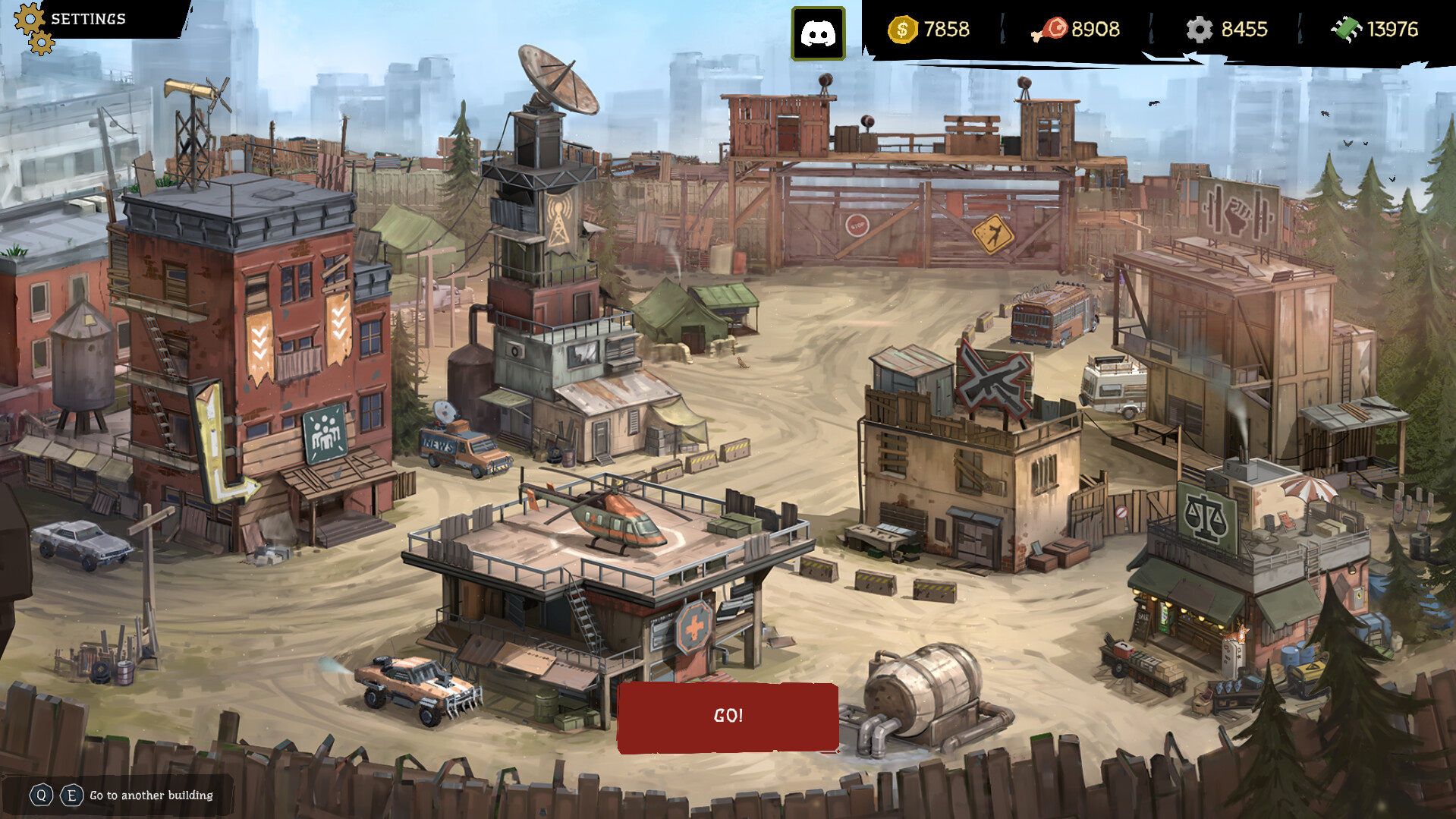
Veterans come with baggage
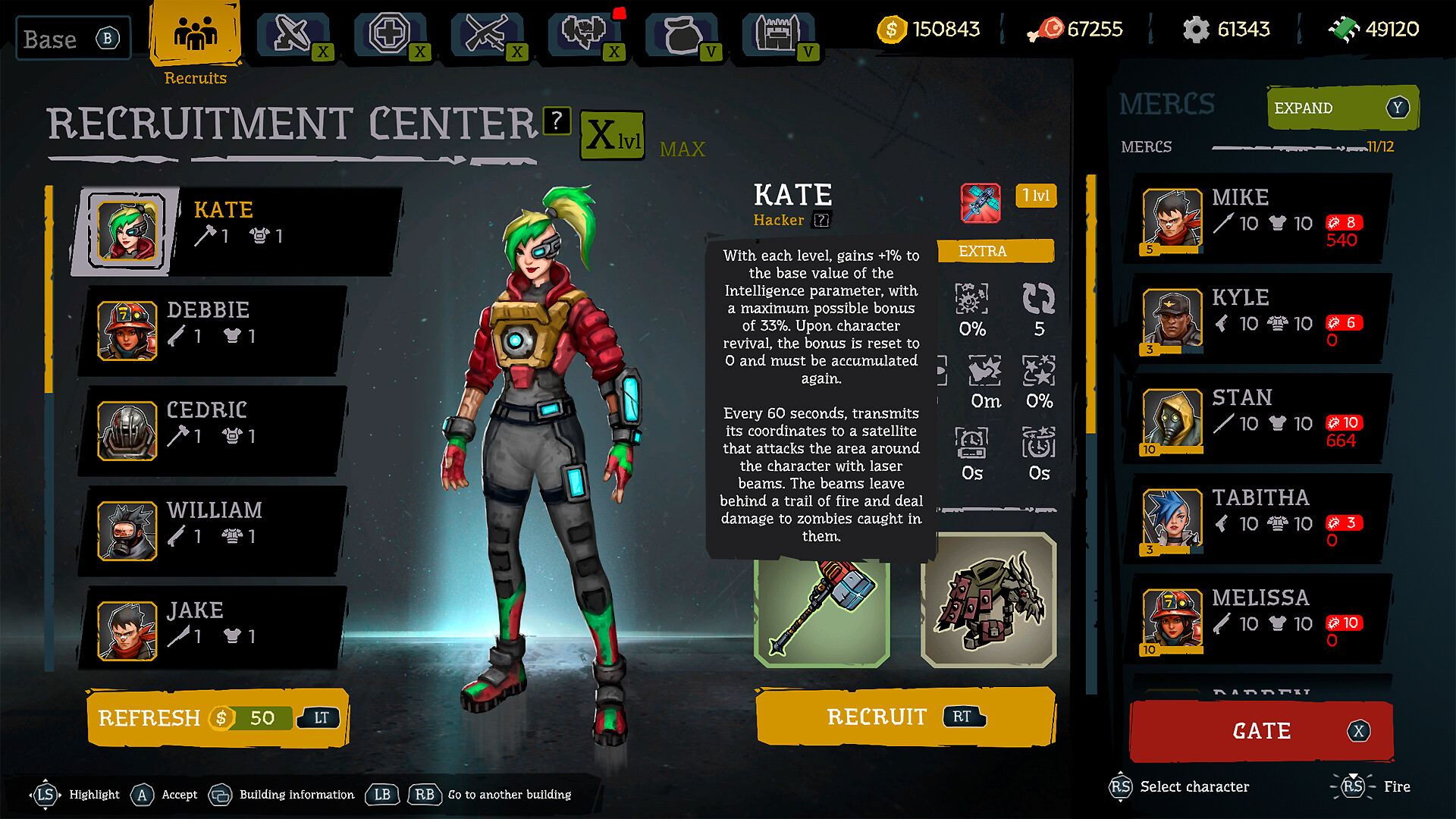
Your mercenaries develop across outings, and losing one can remove someone you have invested in. Recruitment therefore matters beyond collecting portraits. FatalZone asks whether you want to risk an experienced fighter now or spend time preparing someone else for the job.
Viral exposure complicates that career. A larger viral load weakens the mercenary’s physical condition and increases the chance of mutations, which can help or hinder. Read the resulting changes instead of treating infection as a reliable upgrade machine. Even the apocalypse has questionable employee benefits.
Equipment is more flexible than those personal risks suggest. The Workshop lets you change a mercenary’s loadout, so a new recruit’s starting weapon need not determine every future outing. Match the equipment and class to a purpose before asking the next run to solve everything.
Leaving early can be good management
Evacuation is the pressure-release valve that makes the persistent roster workable. You can end an expedition early by reaching the helicopter. Watch for the evacuation opportunity and keep a route toward it; this is an extraction to reach, rather than an instant escape menu.
Infirmary upgrades also improve the evacuation zone, including a healing dome and later defensive benefits. That connects a camp purchase directly to a dangerous moment outside the walls. A modest-looking building upgrade can matter when another handful of supplies suddenly looks much less attractive.
The sensible decision depends on what you stand to lose. If a useful veteran is struggling and you already have resources for the next camp improvement, leaving is easy to justify. Players who prefer to push every run until death may find that caution restrictive.
A longer campaign built from repeated raids
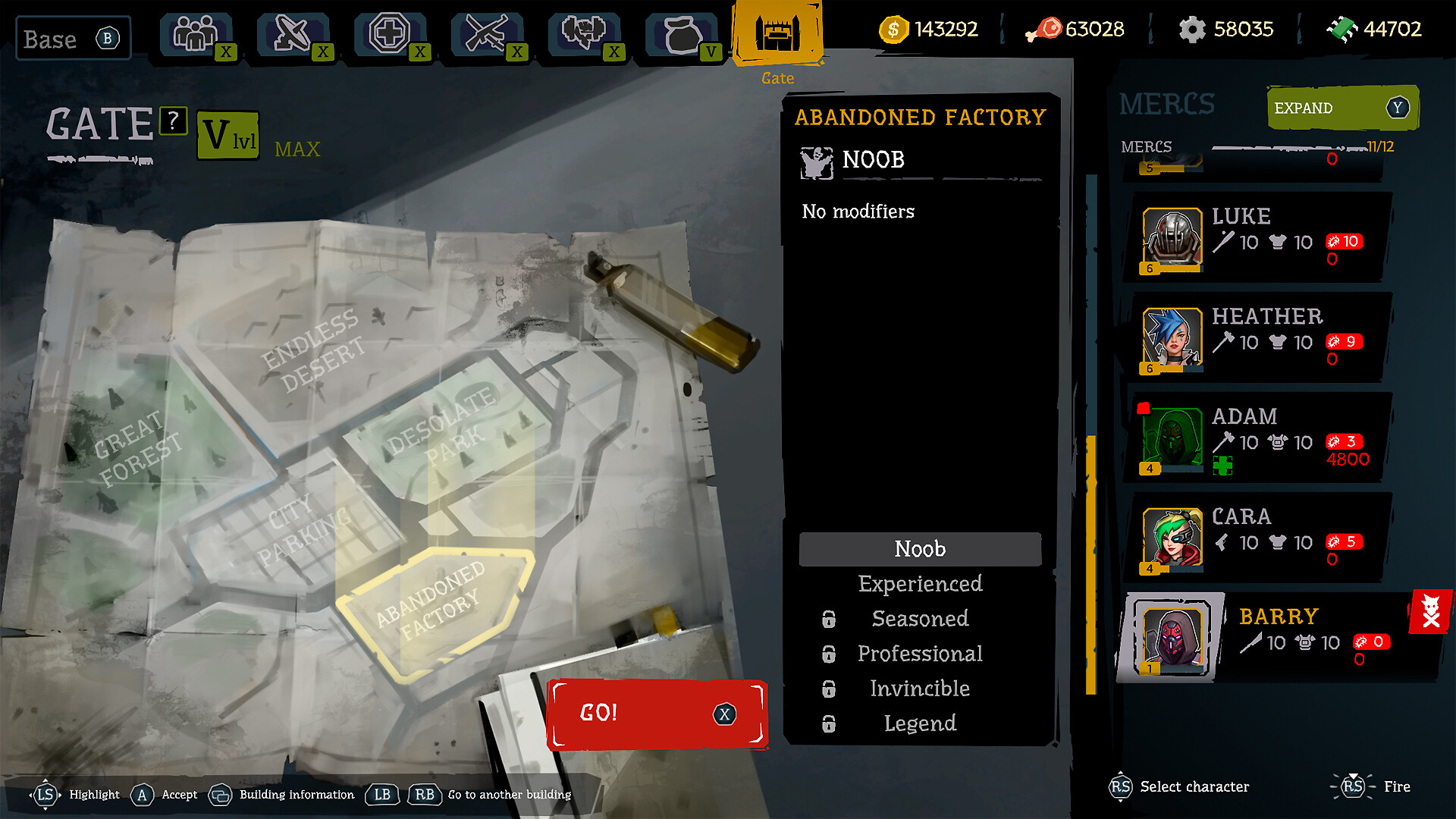
Five locations and six difficulty levels give the roster a series of tests. Choose the next challenge around the mercenary you are deploying, rather than assuming a previous character’s success transfers automatically. Camp strength helps, but different equipment and personal development still change the starting point.
The tradeoff is repetition. Growing the camp means returning to the same central rhythm of movement, pickups and upgrades. If improving the home base is your reward, that repetition has direction. If you want substantially different activities every session, the progression layers will not manufacture them.
The PC game is single-player, and its paid base package is the edition assessed here. Its value rests on enjoying that repeated preparation-and-raid cycle. The number of classes or achievements matters less than whether you actually want to send another mercenary through the gate.
Read the aftermath as well as the battle
Full controller support arrived with the September 2024 full release. The March 2025 update added end-of-raid damage statistics for weapons and skills, giving build experimentation a useful feedback step. Check what contributed before repeating a loadout just because its effects looked impressive.
Those effects can become visually crowded, as the official battle images demonstrate. Alongside several camp systems and a detailed mercenary sheet, that creates a learning burden beyond moving a character around. Automatic fire lowers the input demand; understanding your fighter still takes attention.
Strengths
- Camp upgrades connect individual raids to useful long-term goals.
- Extraction gives protecting an experienced mercenary practical weight.
- Changeable equipment, class abilities and evolutions support build planning.
Tradeoffs
- Mercenary losses can undo personal development.
- Resource collection keeps returning to the same combat rhythm.
- Dense battle effects and layered statistics demand attention.
Who it suits
- Best for solo horde-shooter fans who like a persistent camp and roster.
- Less suited to players seeking co-op or consequence-free character experiments.
Verdict
FatalZone’s strongest idea is making survival valuable after the timer stops. Equipment, recruitment, mutations and camp development give each raid consequences beyond its temporary build. The helicopter matters because someone useful is standing beneath all those explosions, and keeping them employed is part of the game.
It is a good match for players who enjoy horde combat as the engine of a longer progression project. Come for the camp and the decisions around your roster. Be more cautious if losing a developed character or repeating resource runs sounds like work you already have enough of.
Windows PC base game
Review score: 8.4 / 10
- Combat
- 7.8 / 10
- Progression
- 9.1 / 10
- Usability
- 7.9 / 10
- Value
- 8.6 / 10
Covers the Steam Windows base game and its documented full-release systems.
Console editions are outside this PC assessment.
The review score averages the applicable Combat, Progression, Usability and Value scores, rounded once to one decimal. Fit is specific to each comparison and is excluded.
Is FatalZone still in Early Access?
No. FatalZone reached its full PC release on September 17, 2024. The latest gameplay announcement found in the checked official news history is the March 13, 2025 update.
Does FatalZone have co-op?
The reviewed Steam PC edition is single-player. Its mercenary roster belongs to your ongoing campaign; it does not indicate a multiplayer squad. Steam also lists controller support and cloud saves.
What carries between runs?
Camp development and mercenary development provide persistent progress, while each raid builds its own combat loadout through upgrades. Individual mercenaries remain vulnerable to death, so their development is not guaranteed to survive every expedition.
Can you leave a raid early?
Yes. Reach the evacuation helicopter to finish early rather than forcing a full clear. Watch the evacuation markers and timing, and leave yourself a route to reach the extraction zone alive.
How much content is in the full release?
The official PC listing specifies five locations, nine playable classes and six difficulty levels, alongside equipment, skills and camp upgrades. Those systems offer replay choices within the same central horde-survival loop.