9 Best Roguelites With Permanent Progression
The best roguelites make a failed run count. Here is what each game actually carries forward—and what starts over.
Permanent progression can mean a stronger character, a wider unlock pool, a new route through the map, or a base that improves between expeditions. The key distinction is what persists after a death: most roguelites reset the build you assembled during that run, even when they preserve upgrades or story.
For a complete mix of combat, story, and lasting upgrades, start with Hades. Rogue Legacy 2 makes each successor inherit a growing family estate, while Zombie Defence connects zombie scavenging and extraction to an evolving shelter. The nine picks below spell out the lasting layer and the temporary one, so you can choose the kind of forward motion you want.
The quick comparison
9 games, different reasons to give the next run a chance.
Choose a game to jump to its overview. Platform lists are summaries; check the linked official edition.
The games
Hades
Zagreus's escapes pair responsive action with story and permanent Mirror upgrades.
- Roguelite
- Fast-paced
- Permanent progress
- Loot builds
- Platforms
- Windows, macOS, Nintendo Switch, PlayStation, and Xbox
- Price model
- Paid game
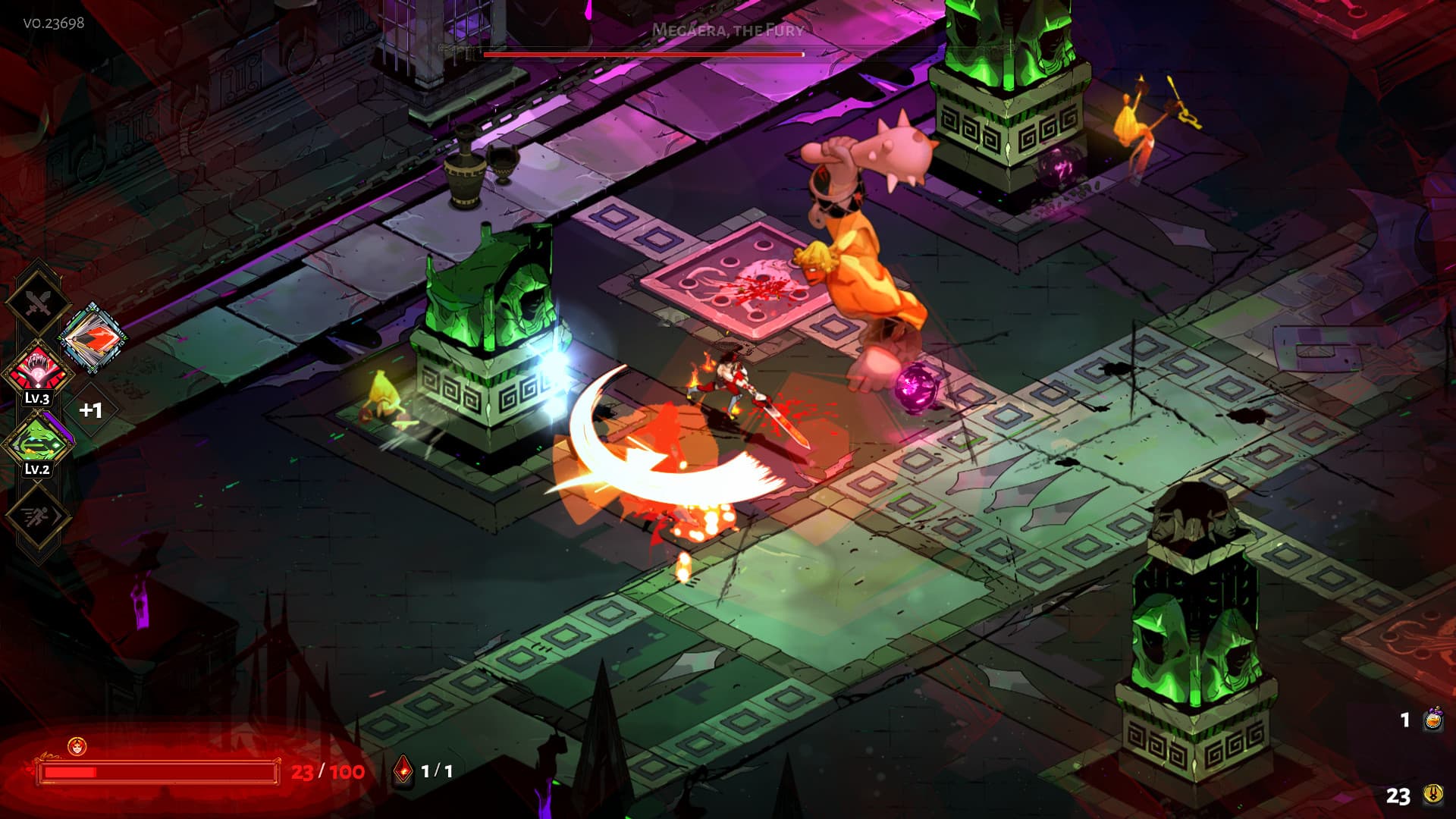
A death wipes away that run's Olympian Boons and chamber build, but Darkness buys lasting Mirror of Night bonuses. Keys unlock more Mirror talents and weapons, expanding your options as you learn. Each new escape still asks you to assemble fresh attacks, casts, and divine Boons rather than carry over the finished build from a previous escape.
Your return to the House of Hades brings new conversations, relationship events, and story. God Mode can add damage resistance that grows with deaths, easing the action without removing its bosses. Hades is a strong all-round choice if you want failure to move character, combat, and story forward.
The verdict
Choose Hades for permanent power and a story that advances on failure.
Rogue Legacy 2
Each death hands an expanding castle to a new heir.
- Roguelite
- Permanent progress
- Fast-paced
- Short runs
- Platforms
- Windows, macOS, and Linux (Steam); Epic; Nintendo Switch; PlayStation 4/5; Xbox One/Series X|S
- Price model
- Paid game
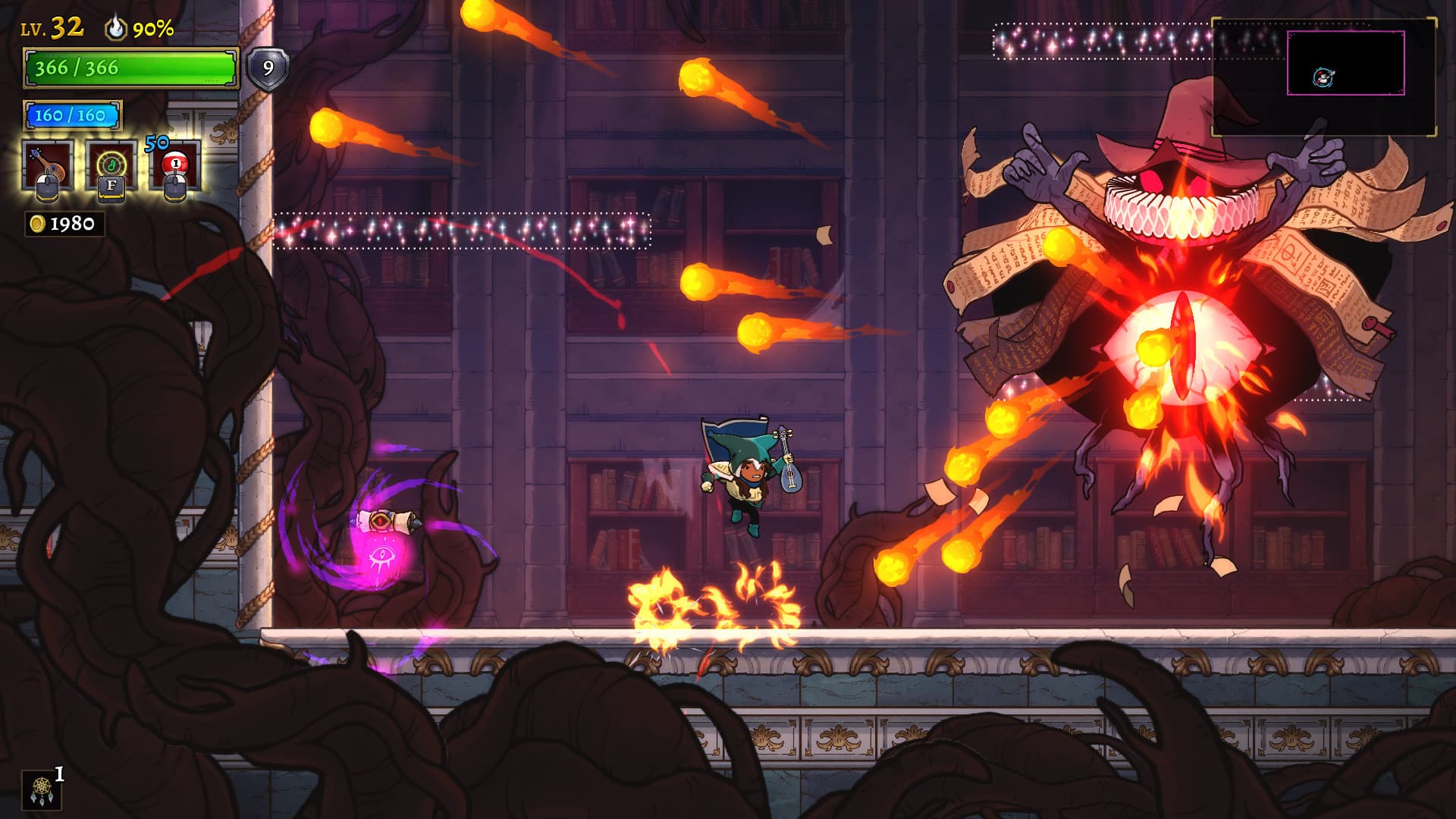
Gold from expeditions funds the Manor: rooms raise family stats and open facilities for future heirs. Each heir rolls a class and traits, so a Knight, Chef, or quirky heir changes how you approach the same castle. Heirlooms add permanent movement abilities that reveal new routes through biomes.
Relics and Resolve belong to one attempt, while Manor growth and Heirlooms persist across the family line. House Rules let you adjust contact damage, health, and damage, or enable flight for difficult platform sections. Each heir's class and traits change your tools, and precise jumps keep traversal active.
The verdict
Choose it for a growing family estate and permanent movement skills.
Zombie Defence
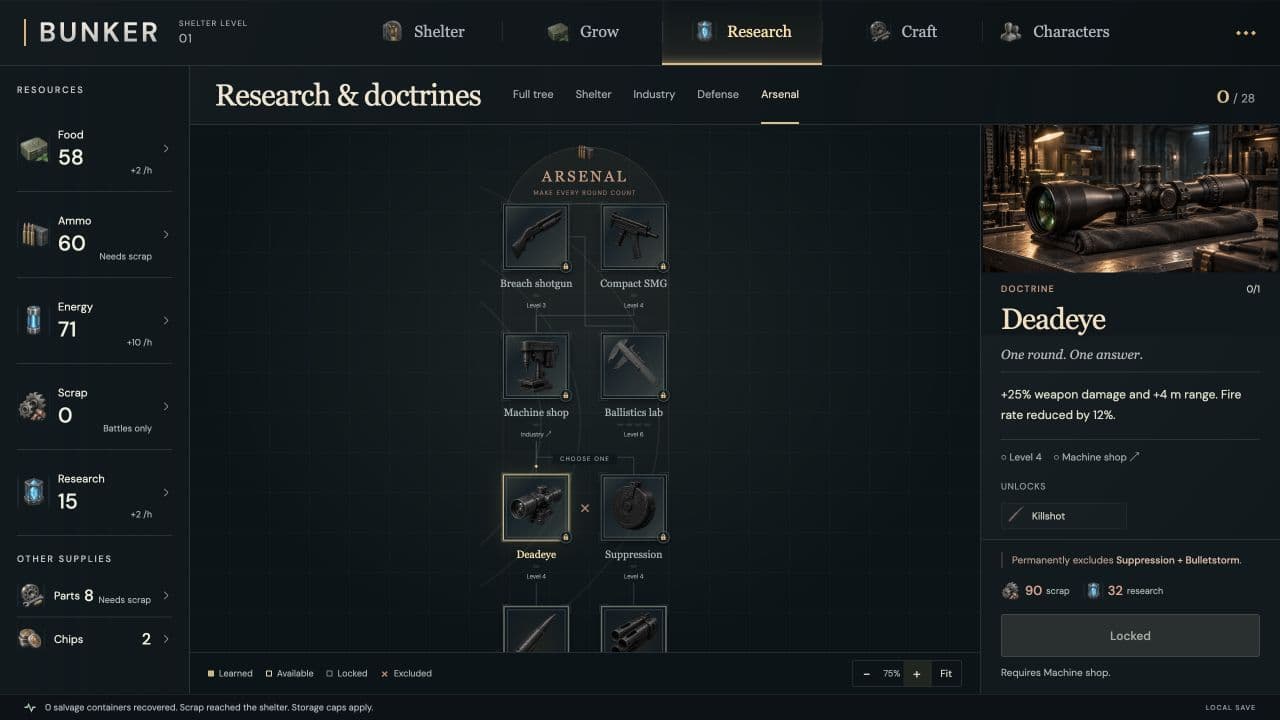
Manual zombie shooting and extraction fund a shelter of lasting upgrades.
- Manual aim (desktop)
- Extraction
- Shelter building
- Crafting
- Permanent progress
- Platforms
- Browser Alpha (development build); native mobile stores are planned.
- Price model
- Freemium planned; launch pricing and monetization terms are unconfirmed.
A Scrap expedition gives movement a clear extraction goal. Desktop uses cursor aim and held fire, with ammunition and reloads to manage; touch pairs a movement joystick with a fire control targeting the nearest living enemy. Scrap collected specifically in Scrap expeditions survives extraction or defeat, subject to storage capacity, and shelter upgrades persist.
Stored Scrap can become parts or ammo at the salvage bench, or fund permanent room and research upgrades. Water grows lettuce or tomatoes: a lettuce meal adds 20 maximum HP, while tomato soup adds 12% power on the next expedition. Three-card picks can favor the current fight or shelter growth. Fixed stations keep management directed rather than freeform.
The verdict
The closest fit when extraction loot should build a working shelter.
Dead Cells
A branching action-platformer with several lasting upgrades.
- Roguelite
- Fast-paced
- Permanent progress
- Loot builds
- Platforms
- PC (Windows, macOS, Linux); Nintendo Switch; PS4/PS5; Xbox One/Series X|S; iOS and Android
- Price model
- Paid game; optional expansions and mobile in-app purchases vary by edition
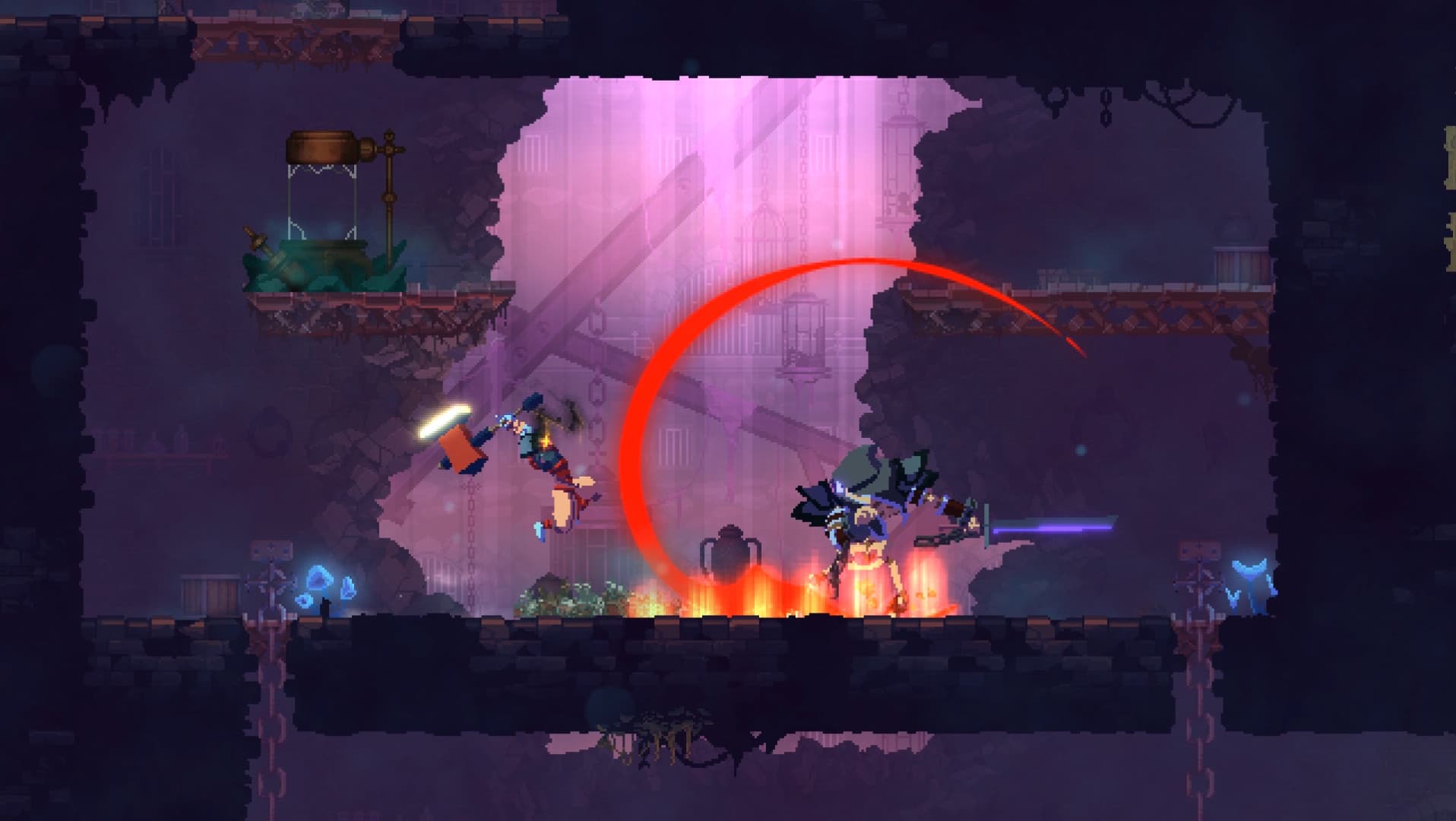
Cells spent at the Collector unlock weapons, skills, and mutations; permanent traversal runes open new routes. Other permanent upgrades add Health Flask charges, Gold Reserves that retain a capped amount after death, and Recycling skills; Legendary Forge investments improve the quality of future gear drops. After your first Hand of the King win on Boss Cell 1, Recycling Tubes let you choose one of four starting gear sets. Your weapon, scroll-stat path, and mutations are rebuilt each run.
That layers healing, retained currency, gear quality, and a chosen starting kit onto Dead Cells’ branching world. Scroll colors reward committing to one stat, but random drops can disrupt that plan. Parrying, rolling, and reading enemies stay demanding; each biome route asks you to judge how the current build fits.
The verdict
Choose it for lasting survival, economy, gear-quality, and starting-kit upgrades alongside new routes.
Vampire Survivors
Automatic attacks, persistent gold upgrades, and a growing cast.
- Roguelite
- Short runs
- Permanent progress
- Loot builds
- Platforms
- Windows and macOS via Steam; Android and iOS editions are also available
- Price model
- Paid on Steam; free mobile editions include ads and in-app purchases
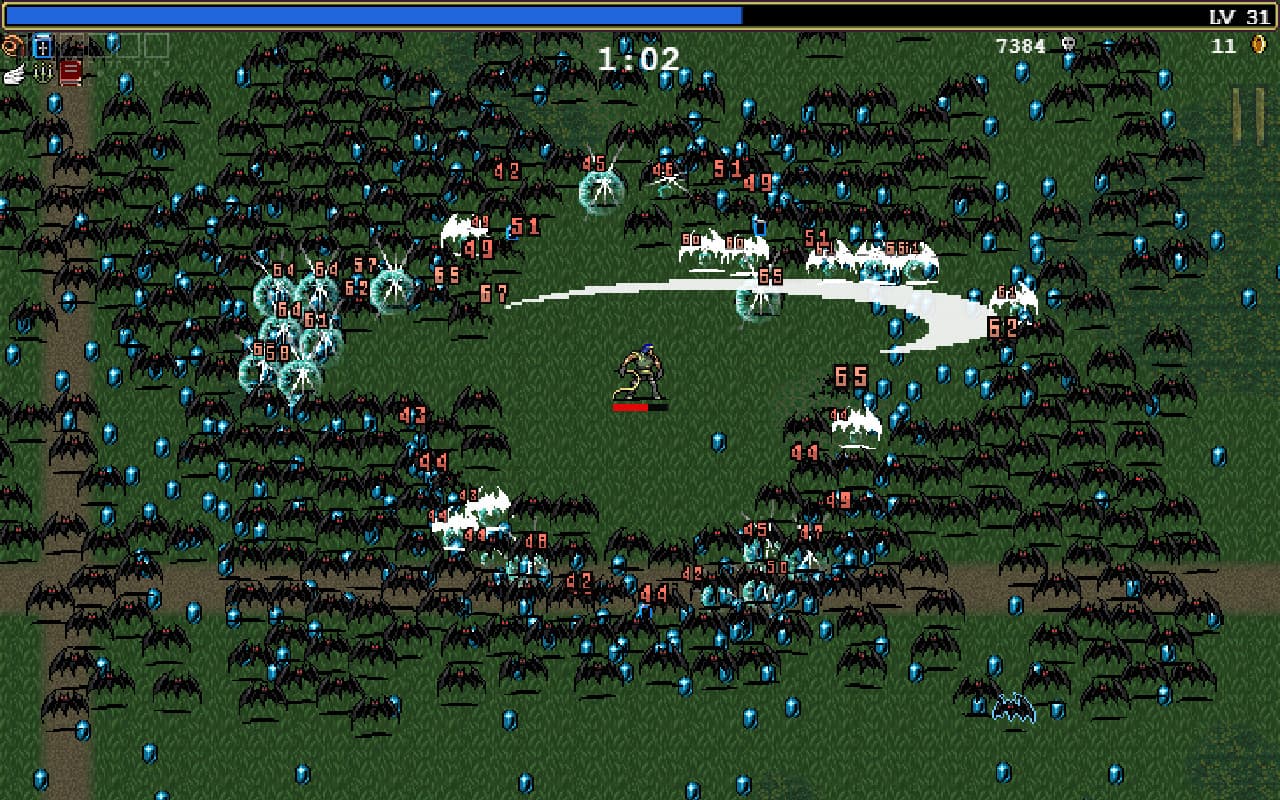
Gold earned during a run buys power-ups for future survivors, while characters, weapons, and other unlocks expand the starting pool. The weapons, passive items, levels, and evolutions assembled during one stage are temporary and disappear when it ends. You gain a visible upward curve without managing a town or a long menu.
Combat centers on movement and positioning because attacks mostly trigger automatically. That keeps crowds readable but is a poor fit if manual aiming is your goal. Its character roster, stages, and unlock checklist suit players who like turning repeated runs into permanent power and new experiments. Mobile purchase terms differ from Steam.
The verdict
Pick it for permanent power-ups and approachable crowd survival.
Soulstone Survivors
A skill-rich arena roguelite with a persistent tree and unlockable characters.
- Roguelite
- Loot builds
- Crafting
- Permanent progress
- Platforms
- Windows, macOS, and Linux via Steam
- Price model
- Paid game; optional soundtrack and Supporter Pack
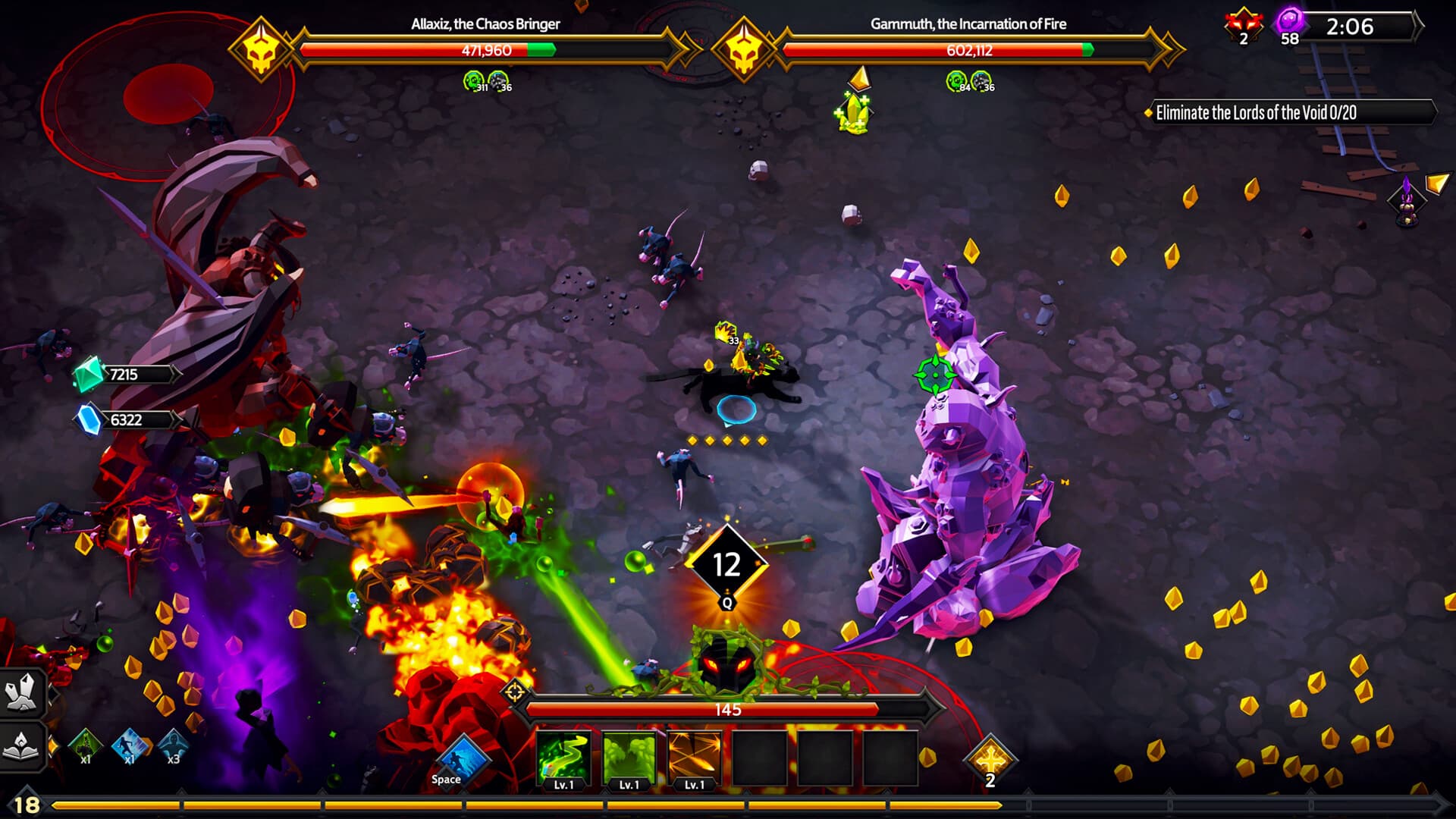
Characters and branches of the skill tree persist; selected skills, upgrades, and boss fights are part of each attempt. Steam lists more than 350 skills and over 100 craftable weapons, giving the long-term tree a direction for a huge pool of possible builds.
The cost is choice density: a run offers many skills and combinations, while the between-run tree asks what to open next. That planning rewards build tinkerers but has more menu load than Hades's smaller set of weapon and Boon options. It is a strong middle ground between content unlocks alone and a simple stat ladder.
The verdict
Choose it for long-term progression through a huge skill tree.
Brotato
Short arena waves and shop choices, with unlocks broadening later runs.
- Fast-paced
- Short runs
- Roguelite
- Loot builds
- Platforms
- Windows, macOS, and Linux via Steam
- Price model
- Paid game; optional DLC is sold separately
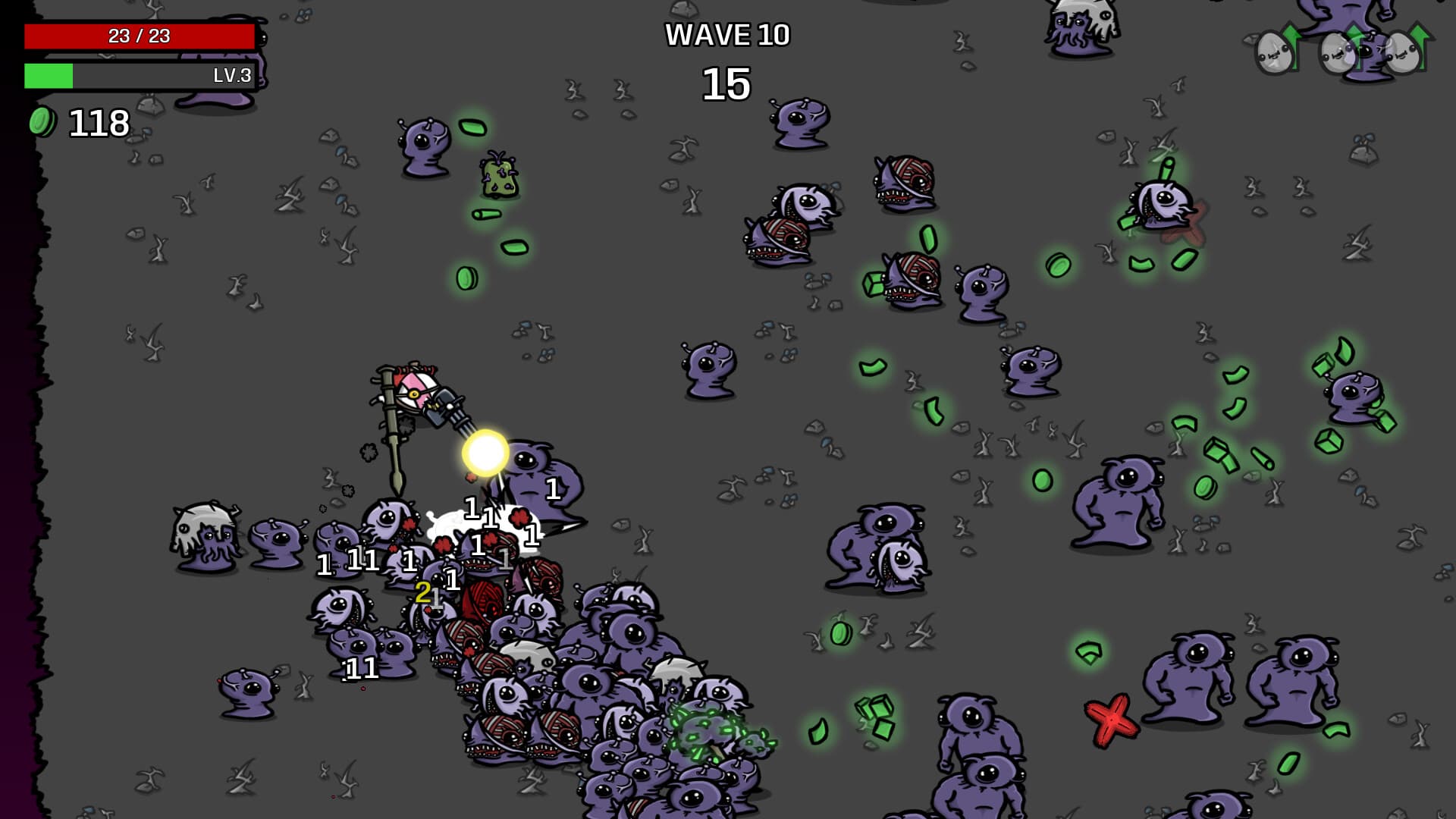
Brotato's lasting progress adds choices rather than permanent stats. Character and item unlocks expand later runs; challenges reveal more starting conditions and shop options. Most power comes from temporary waves, collected materials, and purchases, so you build a fresh setup each time.
Timed waves feed materials and experience into a shop between fights; six weapon slots make each character a compact build puzzle. Auto-fire is the default, with manual aim available, and local co-op supports up to four players. The standard twenty-wave sequence is compact, while optional Endless mode can extend a run.
The verdict
Pick it for new unlocks and quick shop-based build puzzles.
FatalZone
Zombie auto-shooting paired with a recruit-and-upgrade survivor camp.
- Roguelite
- Squad builds
- Shelter building
- Permanent progress
- Platforms
- Windows via Steam
- Price model
- Paid game
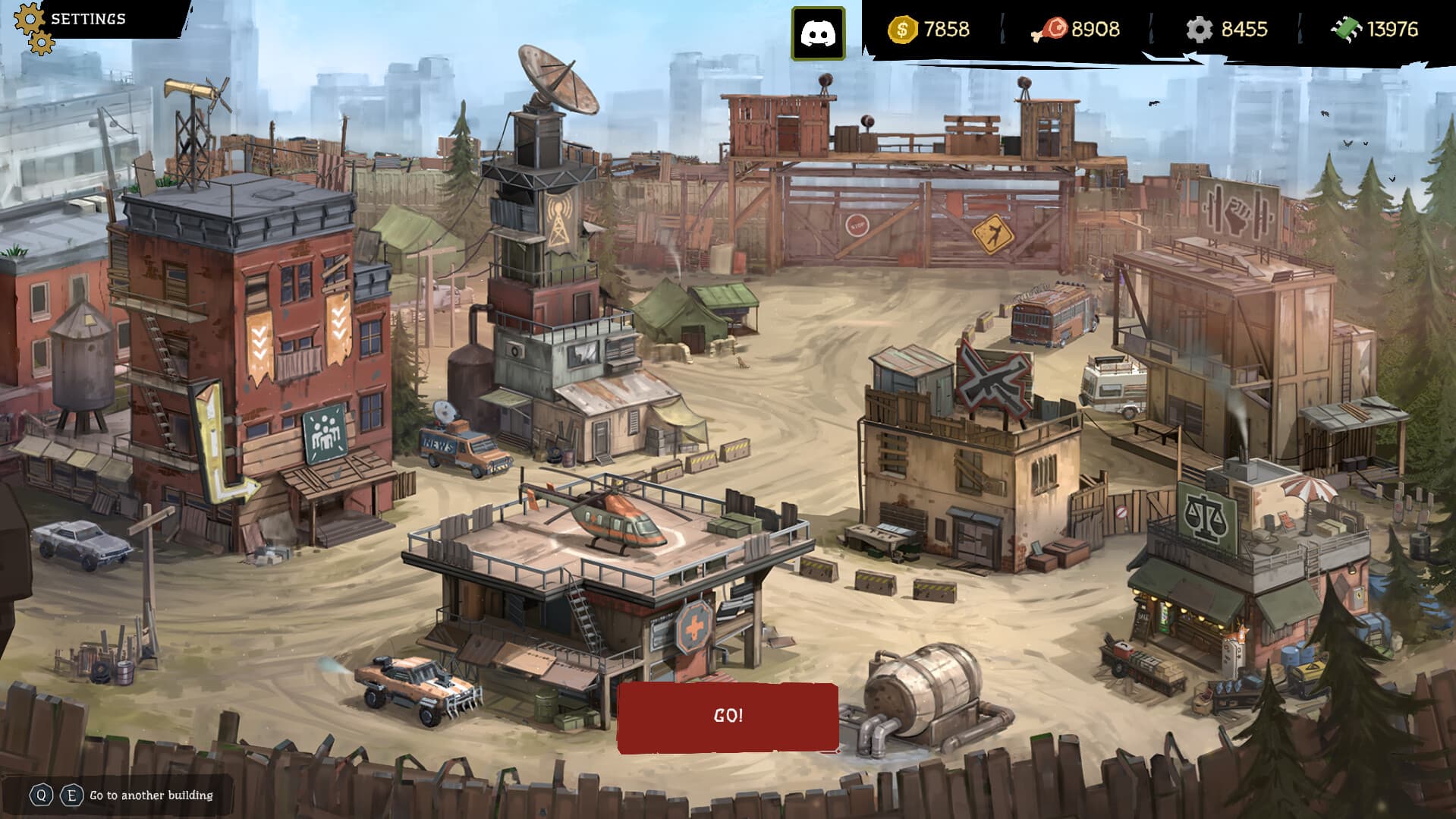
Camp buildings persist and unlock buffs, training, recruits, and equipment. Surviving mercenaries become more seasoned, while each mission builds a temporary weapon-and-skill setup. Virus exposure can produce helpful or harmful mutations; a killed mercenary can be lost permanently, so camp growth and personal risk coexist.
The evacuation copter lets a merc end a mission before a swarm overwhelms them. Auto-shooting makes positioning, skills, and extraction timing more important than aiming. Seven upgradeable buildings give the camp real weight; losing a veteran makes each mission risky even after the camp has grown. Choose it when survivor mortality is part of the appeal.
The verdict
A fit for camp management and high-stakes mercenary runs.
The Last Stand: Aftermath
A zombie adventure that hands accumulated perks to the next survivor.
- Roguelite
- Permanent progress
- Crafting
- Platforms
- PC (Steam, Epic, GOG); PS4/PS5; Xbox One/Series X|S
- Price model
- Paid game
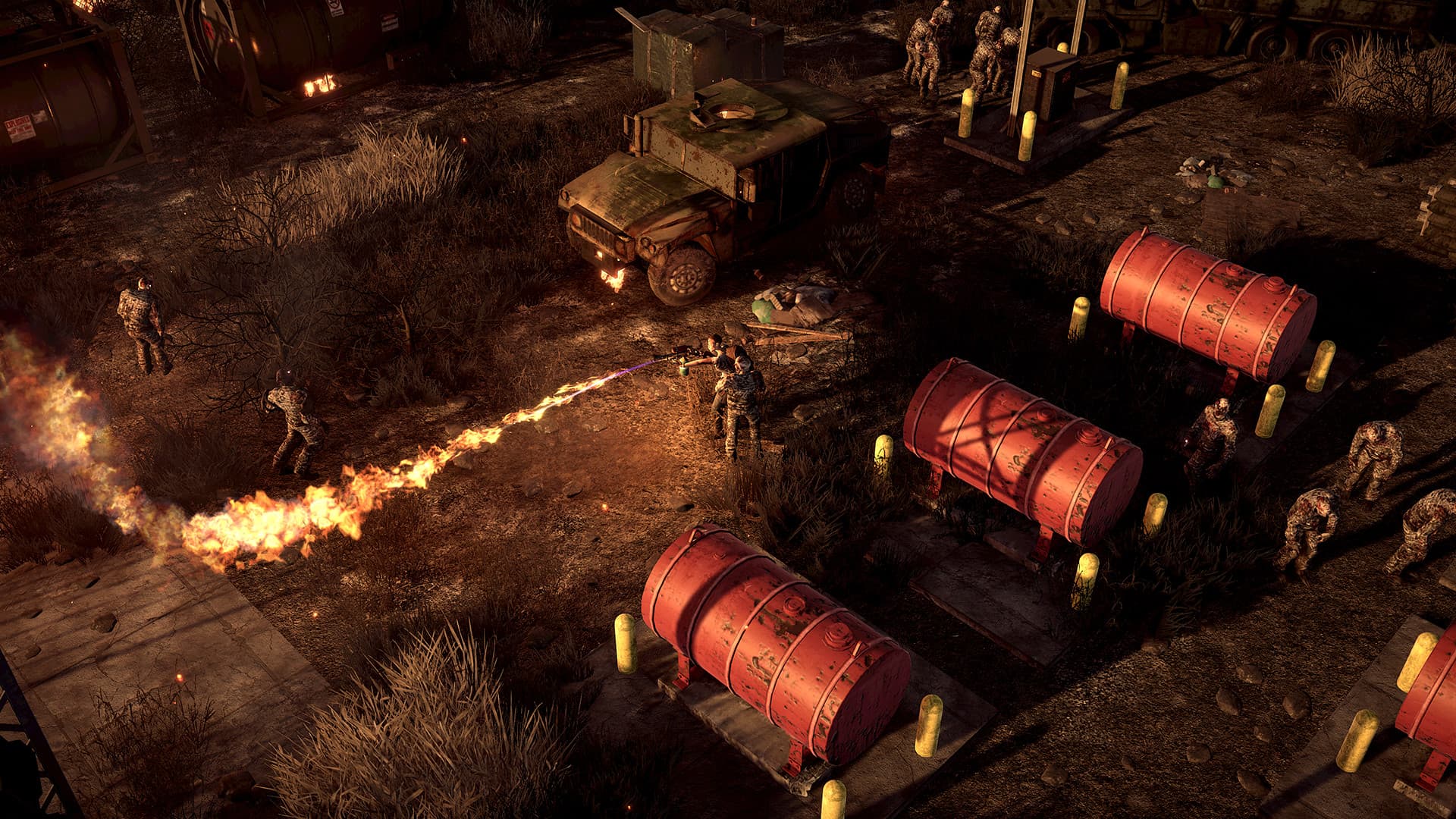
A run is built from scavenged supplies, crafted weapons, ammunition, and mutations. Infection drives the survivor toward death, while mutations grant new strengths along the way. When a survivor dies, a new one continues with perks and upgrades earned from earlier progress: the person resets, the campaign keeps moving.
Fuel shapes the route between locations, and you weigh how long to scavenge before pressing onward. Mutation bonuses can help an infected survivor push farther, but they do not remove the pressure to finish an outing before the virus wins. The handoff makes each attempt matter through perks and unlocks. Choose it for a deliberate zombie adventure rather than a pure arena-horde loop.
The verdict
Pick it for a zombie campaign where progress outlives each survivor.
How we compare
A good recommendation explains who a game suits and where it falls short. Our editorial scores use the same five criteria, each rated out of ten.
- 01
Combat
Controls, aiming, enemy readability, and the decisions you make under pressure.
- 02
Progression
Build choices during a run and meaningful progress between attempts.
- 03
Usability
Control demands, platform access, interface options, and documented device requirements.
- 04
Value
What the asking price includes, optional purchases, and the scope of the free version.
- 05
Fit
How well the game answers the specific question in this article.
Which one should you try?
Pick Hades for lasting power and story, Rogue Legacy 2 for family inheritance, or Dead Cells for several kinds of durable action-platformer upgrades. Vampire Survivors and Soulstone Survivors turn repeated arena fights into account power or a huge skill tree; Brotato expands the build menu through character unlocks. FatalZone develops a camp and mercenaries, while The Last Stand: Aftermath passes perks between survivors. Zombie Defence fits best when Scrap expeditions, a working shelter, production, research, crafting, and crops should form one connected loop.
Your questions, answered.
Want to see what we’re building?
Zombie Defence is in Alpha. Join the waitlist.
More games to explore
- 5 Games Like Deadly Days: Roadtrip
Find five zombie and horde games that echo Deadly Days: Roadtrip through backpack puzzles, extraction choices, dangerous runs, or lasting camp growth.
- 7 Games Like Deep Rock Galactic: Survivor for Mining and Swarm Runs
Compare seven Deep Rock Galactic: Survivor alternatives for mining under pressure, dodging hordes, shaping run builds, and carrying progress forward.
- 7 Games Like Megabonk for Horde-Survival Fans
Compare seven games like Megabonk, from Risk of Rain 2's third-person horde runs to top-down build-focused survivors and Zombie Defence's extraction shelter loop.