7 Best Games Like Vampire Survivors With Base Building
Horde runs feel different when the reward becomes a workshop, a stronger camp or a town you can actually arrange.

If you want Vampire Survivors with somewhere meaningful to spend the spoils, start with Crafty Survivors for a village full of character upgrades, Cast Out Colony for a town you can arrange, or FatalZone for a mercenary camp behind familiar auto-shooter runs. BALL x PIT gives that same run-to-home appetite a ricocheting twist. Zombie Defence connects a persistent shelter to more hands-on zombie shooting.
The test for this list is what a home investment changes next. Does a facility unlock a new character, improve a starting loadout, support resource production or open a different fighting plan? Decoration alone is not enough. We also separate a permanent home from a camp that lasts only through one multi-day attempt: Deadly Days belongs to the latter group, while Necrosmith mixes between-attempt hub improvements with temporary battlefield development.
All six competitors are considered in their released desktop editions. Zombie Defence is a browser Alpha in development. The selections range from close survivors-likes to clearly identified strategic variations, with five editorial scores based on documented design rather than claimed hands-on testing. Start with the kind of building you want, then choose the combat rhythm you enjoy.
The quick comparison
7 games, different reasons to give the next run a chance.
Choose a game to jump to its overview. Platform lists are summaries; check the linked official edition.
The games
Zombie Defence
Spend the same run on immediate weapon power and lasting shelter investment, then return with a different weapon, doctrine or packed meal.
- Manual aim (desktop)
- Shelter building
- Crafting
- Permanent progress
- Extraction
- Platforms
- Browser Alpha in development; native mobile releases are planned. Waitlist signup does not grant immediate access.
- Price model
- Public launch pricing and monetization are not confirmed.
Zombie Defence makes the home-versus-run decision arrive while the zombies are still coming. A campaign level-up offers two battle cards and a shelter investment. Another weapon upgrade could rescue the current fight; banking supplies or boosting shelter production could make the next one easier. You are choosing when the run should pay its own way, rather than waiting for a results screen to spend everything.
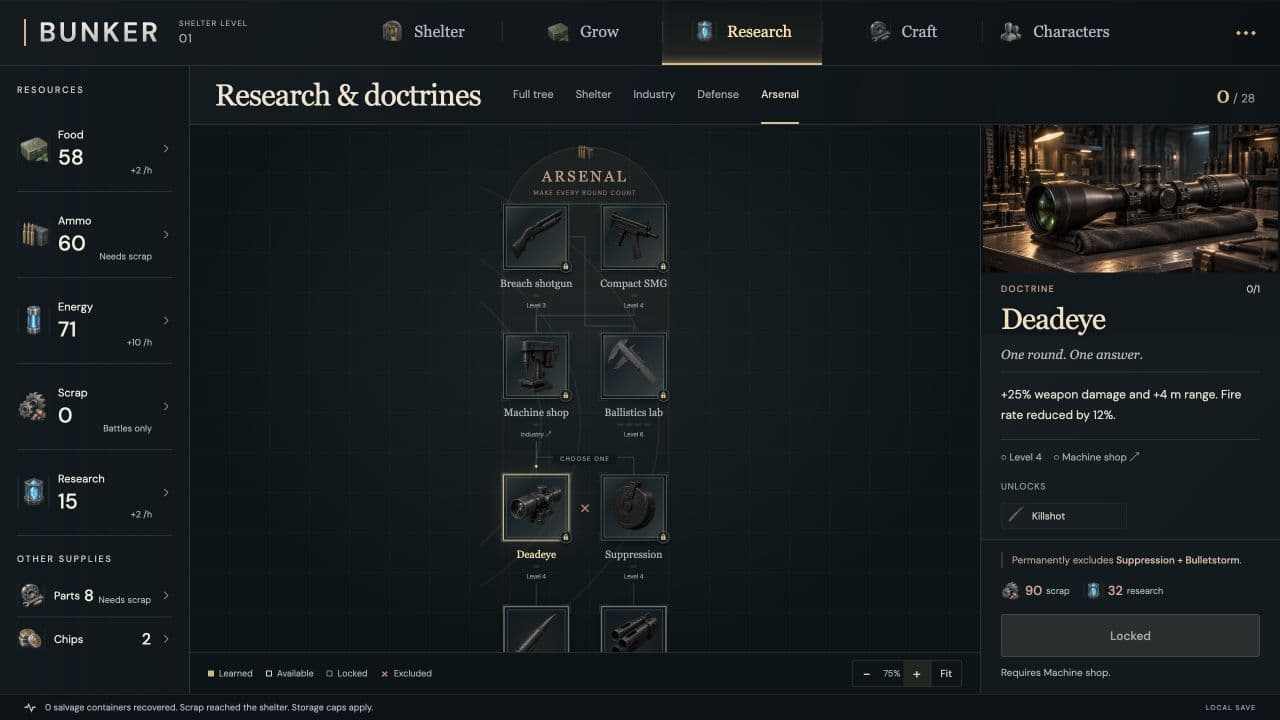
The shelter then gives those resources competing jobs. Scrap can go toward room and station upgrades, a crafted weapon, research or production inputs. Consider the Arsenal’s Deadeye and Suppression doctrines: one favors heavier, slower shots, while the other leans toward faster, lighter fire. Choosing a doctrine closes its rival route. That is a change to how you intend to fight, not merely a larger number attached to the same starting rifle.
Preparation also reaches beyond the workbench. Grow edible crops and turn them into a meal for the next deployment, or invest in water and production capacity first. A separate Scrap expedition lets you search a ruined city for shelter materials; collected Scrap survives its end, including defeat, up to storage limits. Permanent shelter development also survives failed battles, although a sector defeat can levy some stored supplies.
The tradeoff is a more hands-on rhythm than Vampire Survivors. Desktop play separates movement from cursor aiming, with firing and ammunition management to handle; touch fire targets the nearest living enemy. At home, this is fixed-layout room and station management with expansion choices. Pick it for purposeful preparation and active horde combat, rather than for laying out a freeform town.
The verdict
Zombie Defence is the strongest fit here for players who want to personally fight for a shelter project and feel that project in the next deployment.
Crafty Survivors
Rebuild a village whose Forge, Tailor Shop and other facilities unlock new ways to shape your crafters before another horde stage.
- Roguelite
- Shelter building
- Crafting
- Permanent progress
- Platforms
- Windows and macOS via Steam; single-player.
- Price model
- Paid full-release base game; optional Wicked Winter expansion sold separately.
Crafty Survivors is an easy starting point if you want to keep the familiar horde-and-level-up structure. Its heroes are artisans with distinct fighting ideas: a chef prepares enemies, a seamstress weaponizes her trade, and a sculptor makes destructive statues. Materials gathered from enemies return to a village that unlocks more characters, buffs and preparation systems. The building project and the next character experiment naturally pull in the same direction.
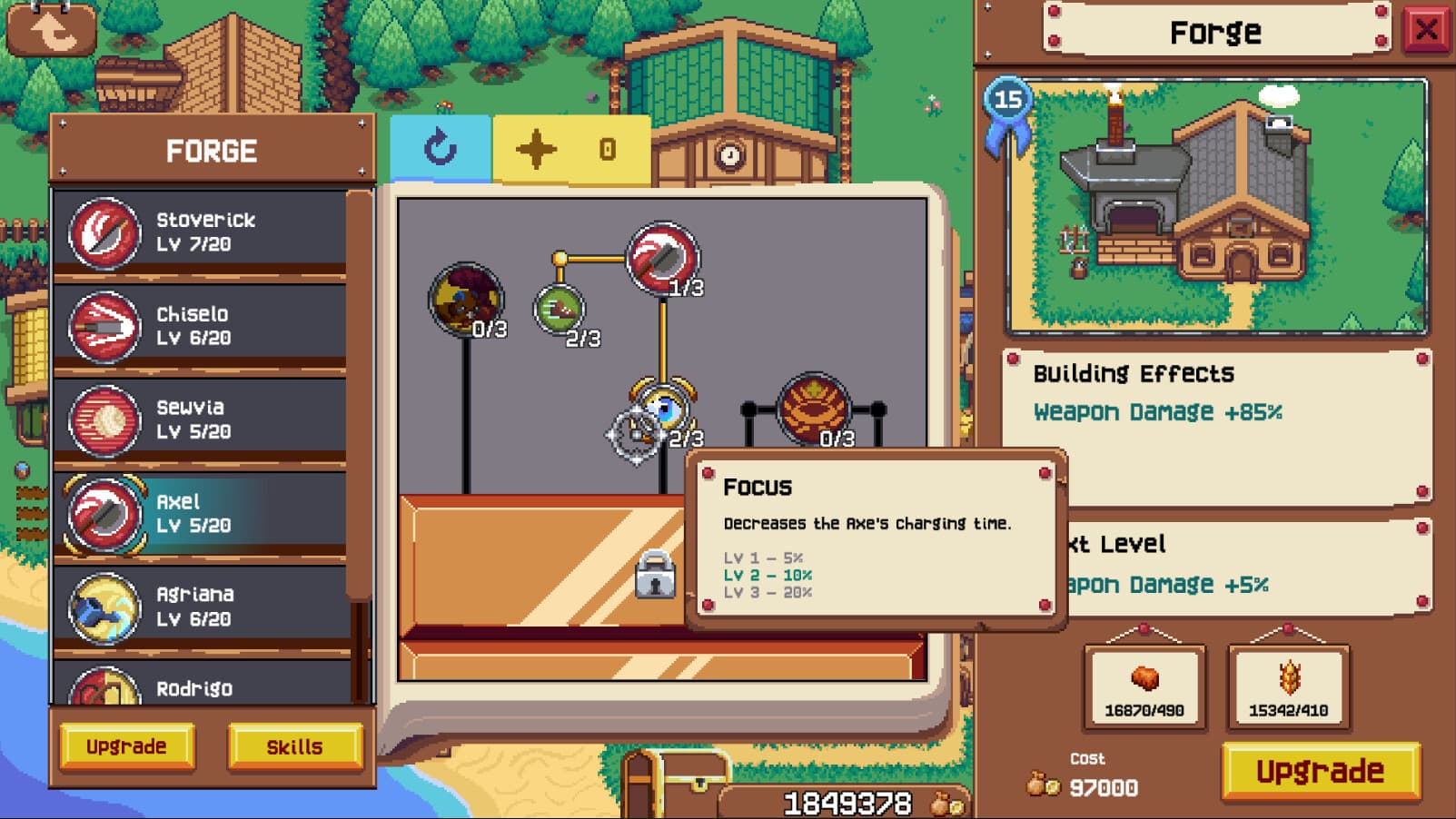
The Forge and Tailor Shop are the important examples. Upgrading them opens Smithing and Weaving, which improve individual characters through offensive and defensive skill trees. You can concentrate resources on a favorite crafter and alter their passive effects, rather than buying one universal upgrade and forgetting the village. Allocated points can be refunded without an extra gold or material charge, making the system useful for trying a different approach.
Control is unusually flexible, too. Skills can be set to manual or automatic casting individually. Automate the abilities that work well on their own and keep direct control over the ones whose timing matters to your build. That makes the jump from Vampire Survivors gentler than a game that suddenly expects you to manually operate an entire action bar.
The village is chiefly a collection of functional upgrades and character systems, not a town-layout challenge. There is also more preparation to consider as those systems open, and new characters bring their own learning curve. Choose it when the appeal of home is tuning the next run in detail, especially if you like developing several very different heroes.
The verdict
Choose Crafty Survivors for the closest familiar horde-run structure with a village that keeps opening new build choices.
Cast Out Colony
Place a colony around your long-term progression, with enrichment, functional buildings and inhabitants feeding back into arena survival.
- Roguelite
- Shelter building
- Permanent progress
- Loot builds
- Platforms
- Windows via Steam; single-player. The listed interface language is English.
- Price model
- Paid full-release game.
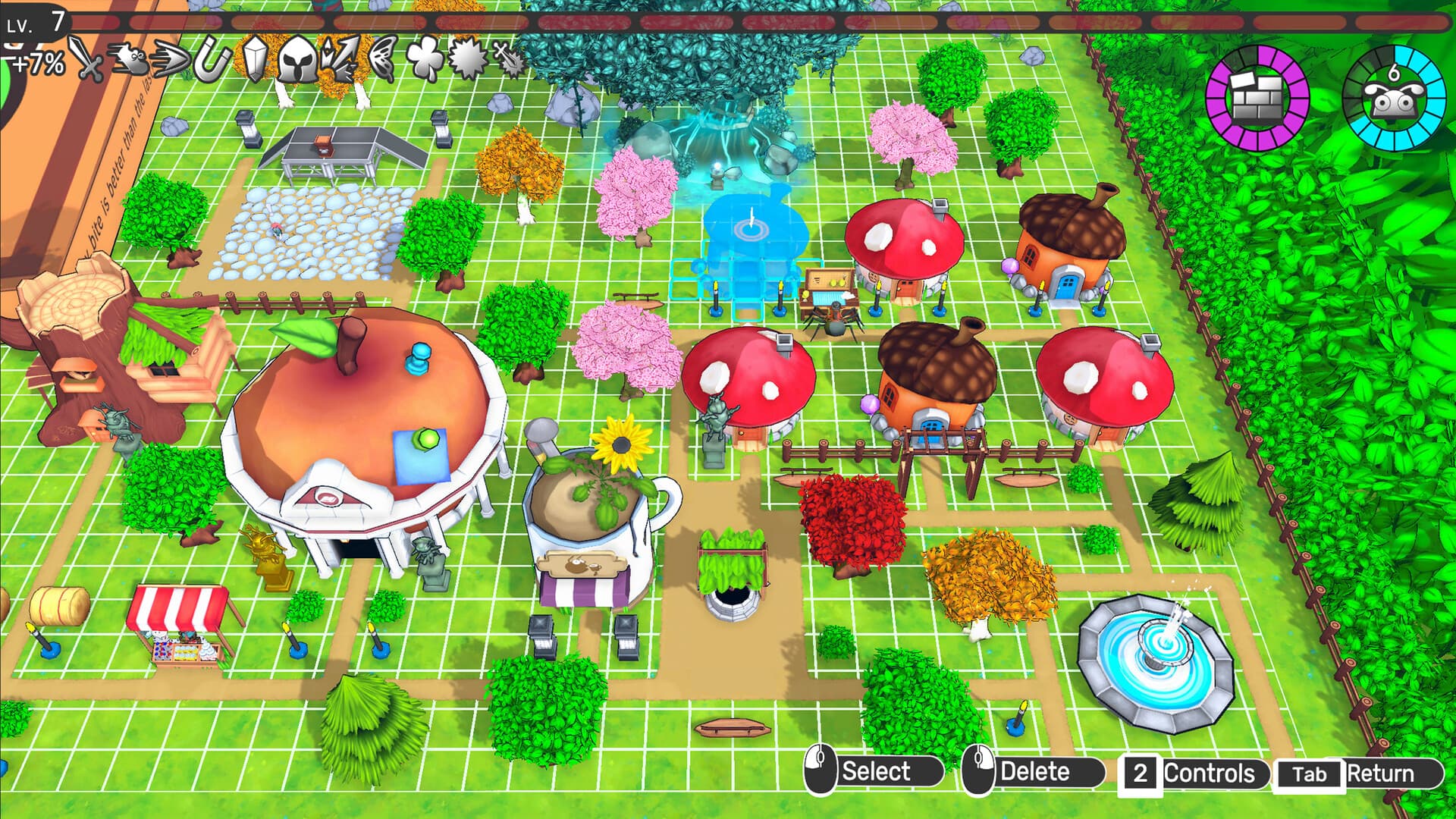
Cast Out Colony puts the answer to “what did that run build?” directly on a grid. Between horde arenas, you develop a colorful settlement of homes, facilities, paths and other objects. Its insect heroes return to a town that looks increasingly like something you made. That visible ownership is the main reason to choose it over a survivors-like whose entire permanent progression fits in a shop window.
Building is also a source of power. Colony enrichment grants permanent stat bonuses, while structures can contribute their own boosts. The Skill Tree has a practical link to arena decisions: once built, it provides information about the paired skills used to obtain Mystic combinations. Some inhabitants can assist your survival, connecting the colony’s population to the action rather than leaving everyone as scenery.
The arenas retain active and passive skill choices, increasingly busy crowds and character-specific abilities. Optional auto-aim lets you concentrate on movement if that is the part of Vampire Survivors you most enjoy. The useful contrast with Crafty Survivors is emphasis: Crafty goes deeper into individual craftsperson systems, while Cast Out Colony makes the settlement’s arrangement and growth a more visible part of the reward.
You do need to want the quiet half. Placement and colony visits interrupt the rapid restart rhythm, and the town supports battles fought elsewhere instead of functioning as a defensive maze. If your ideal break between runs is moving a house, fitting in another facility and seeing the settlement improve, that interruption is the point.
The verdict
Cast Out Colony is the pick for players who mean placing and arranging buildings when they ask for base building.
BALL x PIT
Fuse balls into escalating combat combinations, then rebuild New Ballbylon to unlock heroes, bonuses and a more productive support town.
- Roguelite
- Shelter building
- Permanent progress
- Loot builds
- Platforms
- Windows and macOS edition via Steam; single-player.
- Price model
- Paid base game with released free content updates; the announced Risen Ballbylon expansion is separate and not yet released at this review date.
BALL x PIT keeps the pleasure of watching a small build become an unreasonable amount of damage, then changes how that damage travels. Your weapons are magical balls that ricochet through advancing enemies. Fusion turns the available balls into new combinations, so a run is both a survival problem and an experiment in what can bounce, split or interact next.
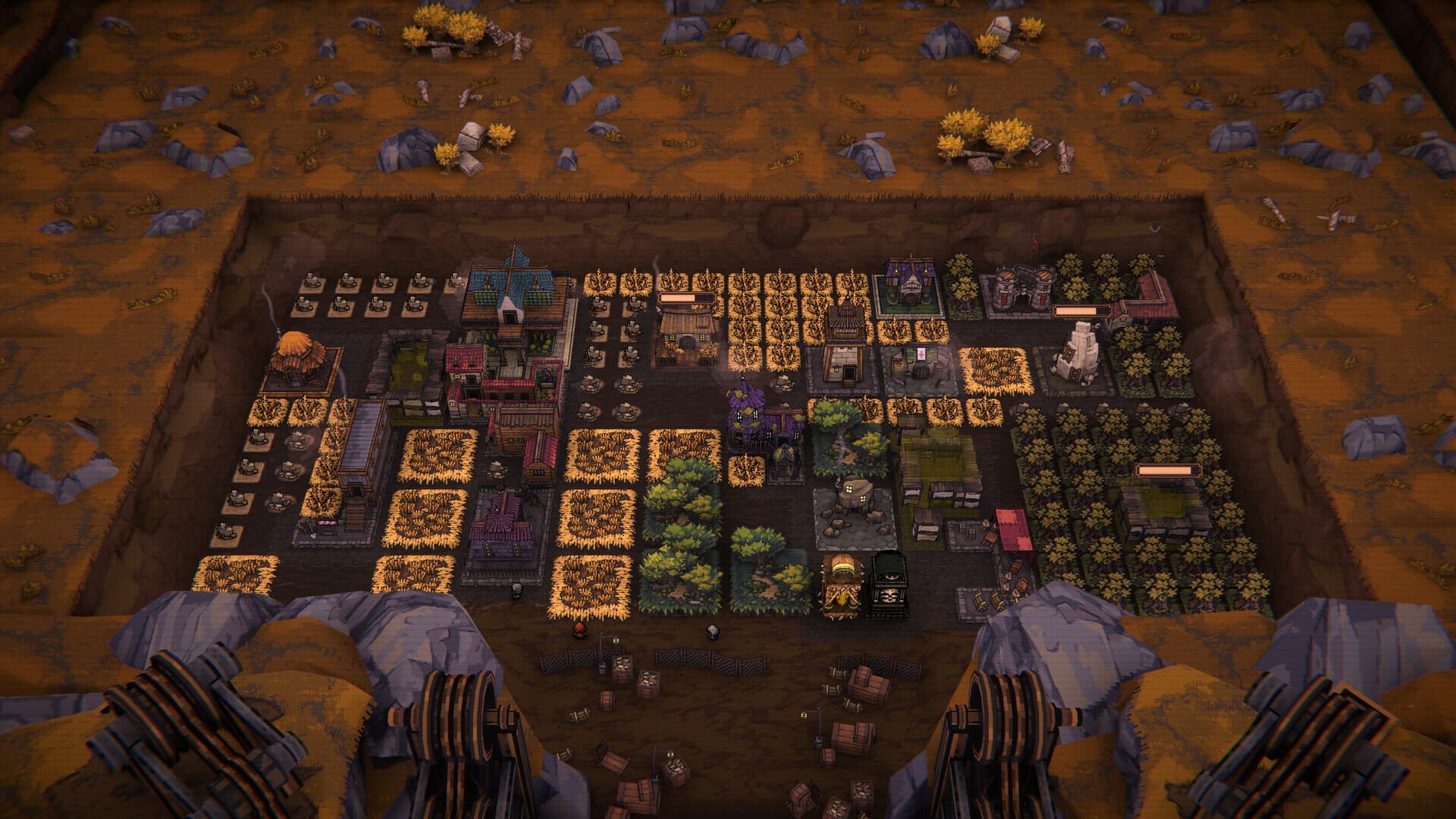
Its home half is substantial. New Ballbylon has a broad range of buildings that grant bonuses, unlock characters and open further upgrades. Heroes you leave at home can take automated jobs to maintain resource production while another ventures into the pit. A new recruit can therefore matter twice: as a different combat style to try and as another contributor to the settlement.
The Guildhall is a useful example of construction changing future decisions. Added in the released Shadow Update, it lets you reroll previously chosen character upgrades. The reward for building it is flexibility, rather than only raw strength. That gives returning to town a practical purpose when you want to revise the character behind your next ball-fusion experiment.
The catch is that this is a brick-breaking survival hybrid. Fighting an approaching formation with ricochets feels different from circling enemies in an open survivors arena. Town growth and resource work also take a share of your attention. If you welcome that change, it offers a particularly satisfying pairing of outrageous run builds and a home whose expanding functions make the next attempt more interesting.
The verdict
Choose BALL x PIT when you want base building to be a major part of the loop and are happy to trade arena circling for ball-fusion chaos.
FatalZone
Upgrade the camp that equips and trains your mercenaries, while deciding how much of its strength to invest in a fighter who can die permanently.
- Roguelite
- Shelter building
- Permanent progress
- Loot builds
- Platforms
- Windows via Steam; single-player.
- Price model
- Paid full-release game.
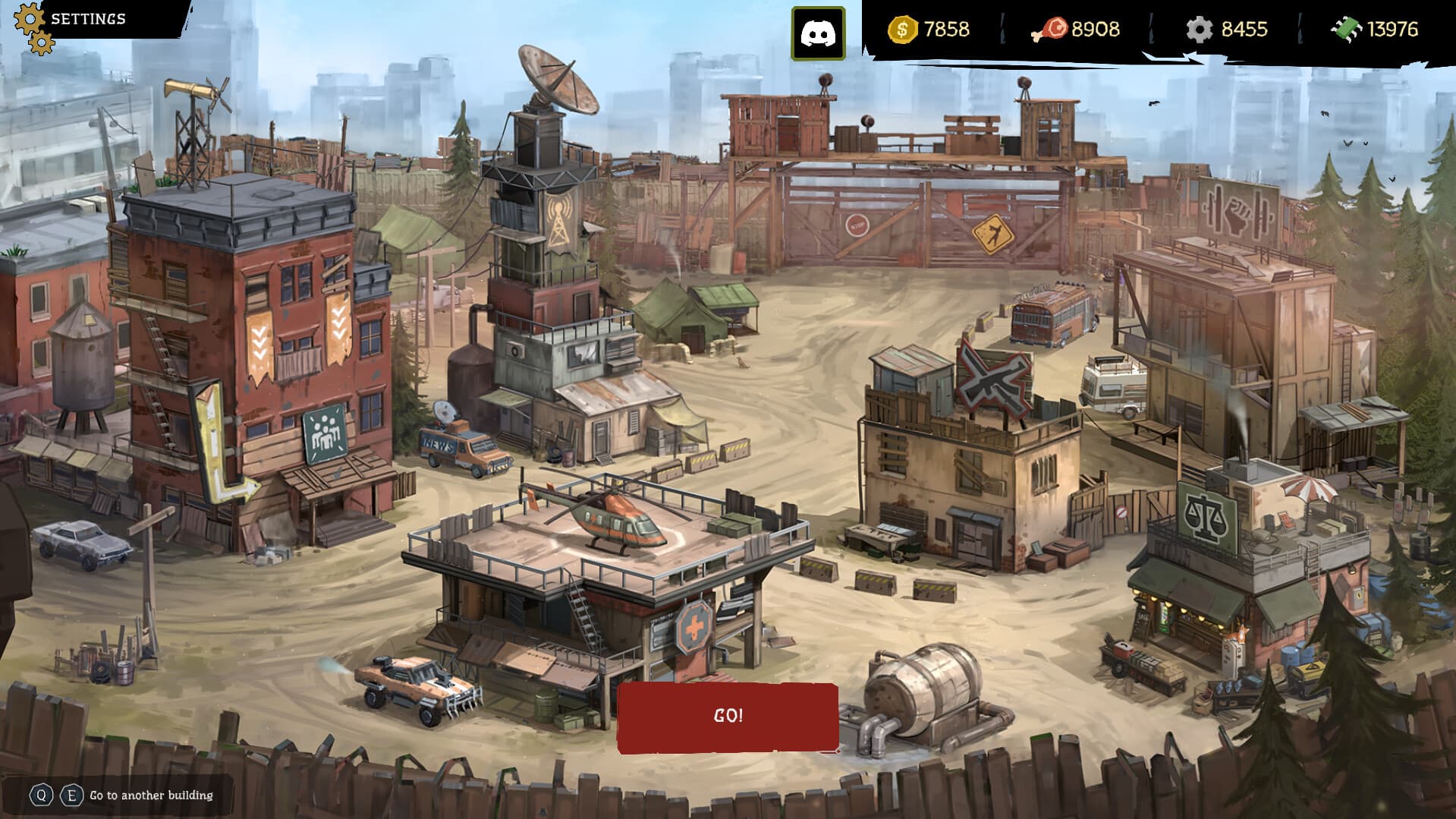
FatalZone gives a familiar zombie auto-shooter a personnel department, an equipment workshop and a reason to come home early. Movement and a developing combat build handle the horde; resources from expeditions improve a camp with seven functional buildings. It is a close fit if the desired addition is a meaningful preparation phase rather than a completely different kind of action.
What you build determines the support available to future fighters. The Training Hall improves mercenary skills, the Mercenary Base recruits replacements, and the workshop improves weapons and armor. Equipment also shapes the starting point of a deployment: weapons provide initial fighting skills, while armor supplies stats. A stronger camp changes what you can prepare before the first level-up even arrives.
Individual development is less secure than the facilities supporting it. Mercenaries gain experience and can pick up beneficial or harmful mutations, but they are mortal. That makes the evacuation helicopter more than an emergency exit from a crowded screen. Leaving early can preserve a fighter you have spent time developing, and preparing replacements becomes part of keeping the wider operation healthy.
This is fixed-building camp development, so it suits players who want strategic spending without arranging streets or defensive walls. The sharper tradeoff is loss: you can keep improving your base and still lose a favorite veteran. Compared with Zombie Defence, the weapon fire is more automatic and the attachment to vulnerable mercenaries plays a larger role in the return-home decision.
The verdict
FatalZone is the direct choice for zombie auto-shooting with functional camp upgrades and vulnerable veterans worth bringing home.
Necrosmith
Assemble undead from mismatched body parts, improve the tower’s machinery and let your creations explore and fight for the resources behind the next attempt.
- Shelter building
- Crafting
- Roguelite
- Base defense
- Platforms
- Windows PC edition via Steam; single-player.
- Price model
- Paid full-release game; optional soundtrack sold separately.
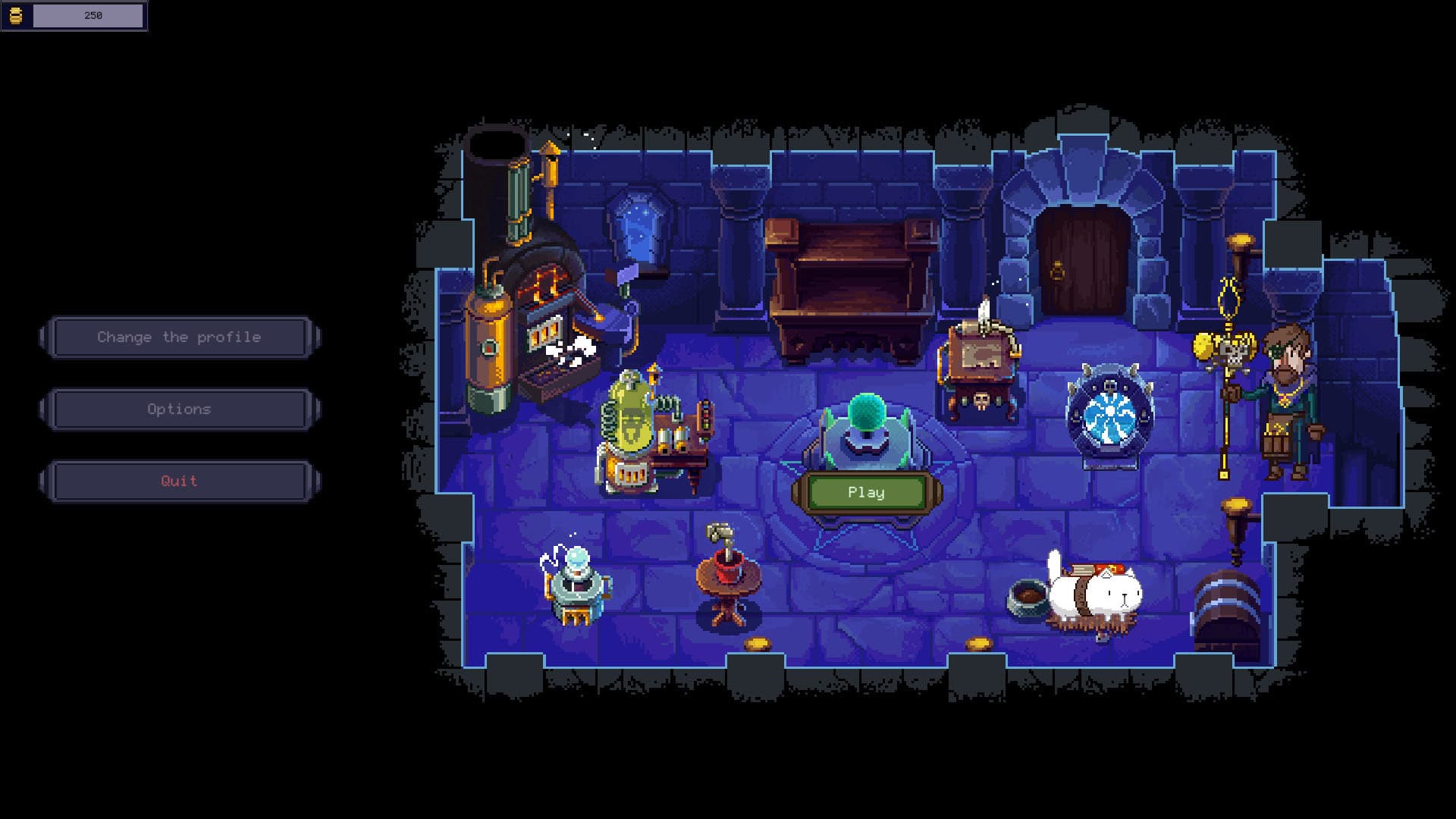
Necrosmith reverses the usual survivors fantasy: the horde you are assembling is your own. Different heads, bodies and limbs contribute characteristics and attacks, letting you create a durable brute, a faster explorer or a stranger hybrid. Most of the action runs through those creatures rather than through one permanently controlled hero. The satisfying build is an army of combinations, not just the weapon orbiting your character.
The tower supports that experiment. Necro labs grow body parts, and magical machinery improves the undead operation. Progress includes both upgrades made during an attempt and improvements in the between-session hub. The useful reason to return is to strengthen the tools that produce and support future creatures. Keep those layers separate: improving the hub does not mean the complete battlefield and army survive every failed attempt.
Your creations explore, gather resources and fight automatically, but you can intervene. Hold-position commands let a creature remain where it is needed, and direct control is available for one unit at a time. That makes defending the tower a balancing act between what the army discovers outside and what remains available to protect the center.
This is the strategic outlier for players who like automated combat but want to build its supporting machinery. The home is a fixed tower and laboratory hub, not a place for designing rows of houses. Managing several creatures also changes the rhythm: if precise crowd-dodging with one avatar is the main attraction, Crafty Survivors or FatalZone is a closer continuation.
The verdict
Choose Necrosmith for the pleasure of engineering the creatures and home machinery behind a survival attempt, with a clear shift toward strategy.
Deadly Days
Build a camp for the current roguelite attempt, spending scarce tools on rooms that change the squad’s next outing or on better custom weapons.
- Roguelite
- Squad builds
- Shelter building
- Crafting
- Platforms
- Windows, macOS and Linux via Steam; single-player. This is the original Deadly Days.
- Price model
- Paid full-release game.
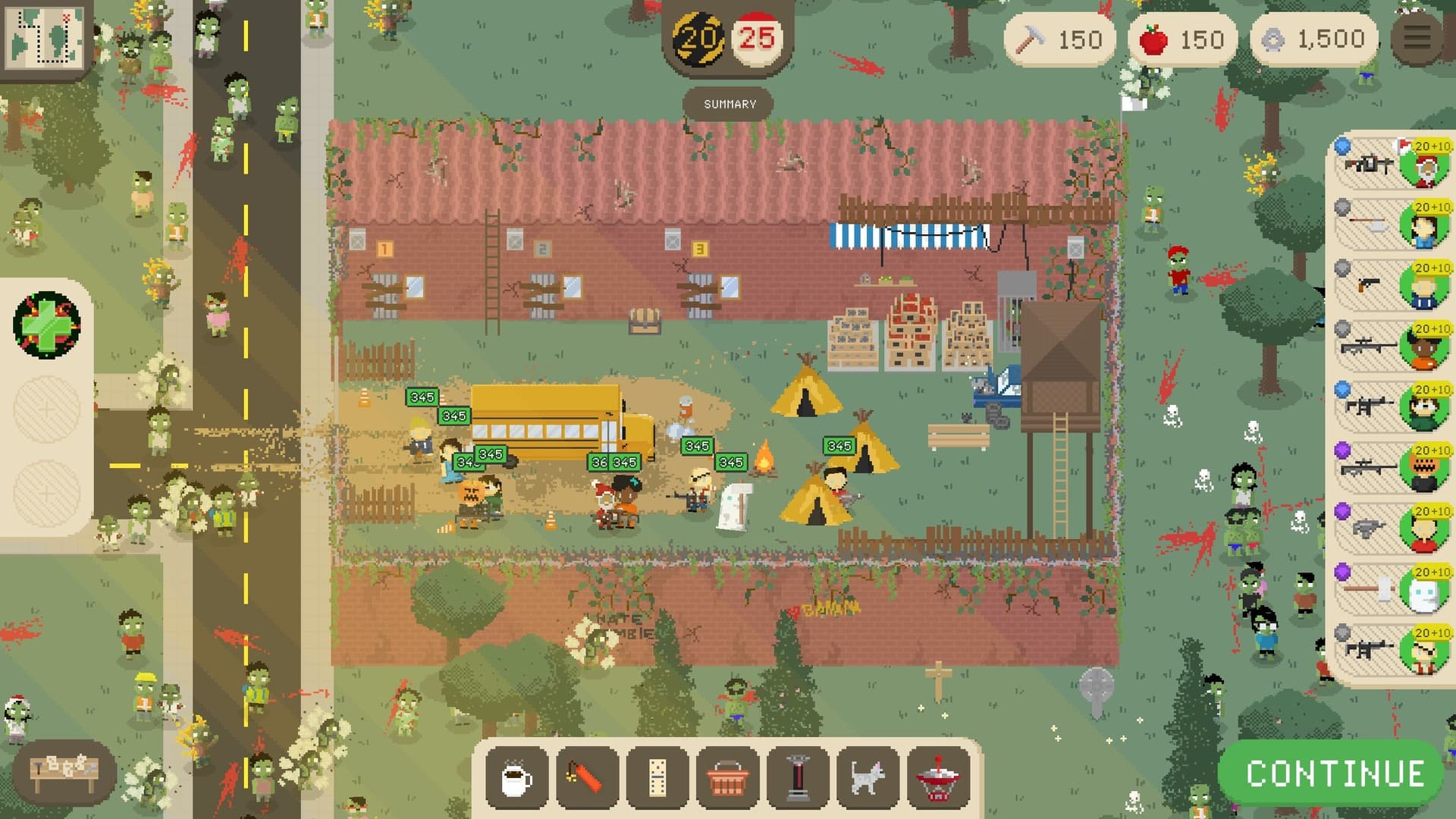
Deadly Days earns its place through how sharply its rooms affect the next trip, with one important boundary: the camp belongs to the current roguelite run. You develop it across successive scavenging days, then start a new camp after that attempt ends. Specialization unlocks provide the progress between whole runs. Choose it for a base that solves the present expedition’s problems, rather than an indefinitely preserved home.
Those problems have concrete building answers. A greenhouse supplies apples, a mechanic room automatically repairs some weapons, and a satellite uplink replaces an airstrike with an orbital laser. Tools recovered while scavenging pay for construction, particularly giving hardware stores a reason to matter. The same tools can also create and improve custom weapons. A room therefore competes with an immediately tempting equipment project.
Outings use a survivor group. You direct the squad and intervene with special powers while it gathers supplies from procedural locations; staying into the night brings more dangerous hordes. An extra stop can help finish tomorrow’s room, but the group still has to survive the decision. The attraction for a Vampire Survivors player is the accumulating combination of weapons, abilities and support, spread across a small operation instead of a lone hero.
Of these seven games, this is the clearest fit for someone who enjoys rebuilding around whatever an attempt provides. It is less suitable if losing the camp would spoil the appeal of base building. The reward is improvisation: a food-producing room, a weapons plan or a changed support attack can give successive days different priorities without requiring a sprawling city simulation.
The verdict
Pick the original Deadly Days for a camp that shapes a chain of risky outings, provided you want to rebuild on a new attempt.
How we compare
A good recommendation explains who a game suits and where it falls short. Our editorial scores use the same five criteria, each rated out of ten.
- 01
Combat
Controls, aiming, enemy readability, and the decisions you make under pressure.
- 02
Progression
Build choices during a run and meaningful progress between attempts.
- 03
Usability
Control demands, platform access, interface options, and documented device requirements.
- 04
Value
What the asking price includes, optional purchases, and the scope of the free version.
- 05
Fit
How well the game answers the specific question in this article.
Which one should you try?
For the closest familiar survivor loop, choose Crafty Survivors or FatalZone: the former develops distinct character kits through village systems, while the latter builds a mercenary operation around automatic zombie combat. Cast Out Colony is the best match for arranging an actual town, and BALL x PIT makes settlement growth a substantial partner to its ricochet builds. Necrosmith shifts the experiment into an undead army; Deadly Days makes camp spending a tactical choice within each attempt. Zombie Defence stands out when you want the next shelter project to change a fight you actively control, whether that means a crafted weapon, a permanent doctrine or a meal packed before deployment.
Your questions, answered.
Want to see what we’re building?
Zombie Defence is in Alpha. Join the waitlist.
More games to explore
- 7 Best Zombie Roguelites in 2026: Six Games to Play and One Alpha
Compare 7 zombie roguelites by what each run risks and what survives. Six released games are ready to play; Zombie Defence is an in-development browser Alpha.
- 5 Games Like Deadly Days: Roadtrip
Find five zombie and horde games that echo Deadly Days: Roadtrip through backpack puzzles, extraction choices, dangerous runs, or lasting camp growth.
- 5 Best Games Like Escape from Duckov
Find your next game after Escape from Duckov: five PvE alternatives compared for scavenging, home upgrades, combat, quests and what you lose when you die.