5 Best Extraction Games With Base Building
What the haul builds, how home improves the next raid, and which games let you design the structure itself.

Escape from Duckov is our strongest all-round released pick for extraction games with base building: every successful trip can move a hideout project forward. Choose Outpost: Infinity Siege if you want to place structural pieces and assemble a fighting fortress. Zombie Defence connects city Scrap runs to a clear shelter economy, while ZERO Sievert favors detailed bunker preparation and FatalZone puts a mercenary camp behind its evacuation runs.
The important distinction is what you build. Fixed stations, installable modules, camp services and freeform component layouts offer different kinds of satisfaction. Each of these five games has an outward trip, an extraction or evacuation step, and a persistent home that benefits from recovered supplies. The comparison follows that chain all the way back into the next outing, rather than treating any roguelite upgrade hub as base building.
Four picks are released desktop games. Zombie Defence is a browser Alpha in development, with a waitlist for news and playtest availability. The edition and mechanics checks below are current to October 2026; the five scores are editorial judgments, with Fit focused on how meaningfully extraction feeds home development.
The quick comparison
5 games, different reasons to give the next run a chance.
Choose a game to jump to its overview. Platform lists are summaries; check the linked official edition.
The games
Zombie Defence
Zombie Defence makes the next shelter project the reason to head outside: recover Scrap, decide what should consume it, and return with a better plan for the following deployment.
- Manual aim (desktop)
- Extraction
- Shelter building
- Crafting
- Permanent progress
- Platforms
- Browser Alpha in development; single-player PvE
- Price model
- Public launch pricing and monetization are unannounced
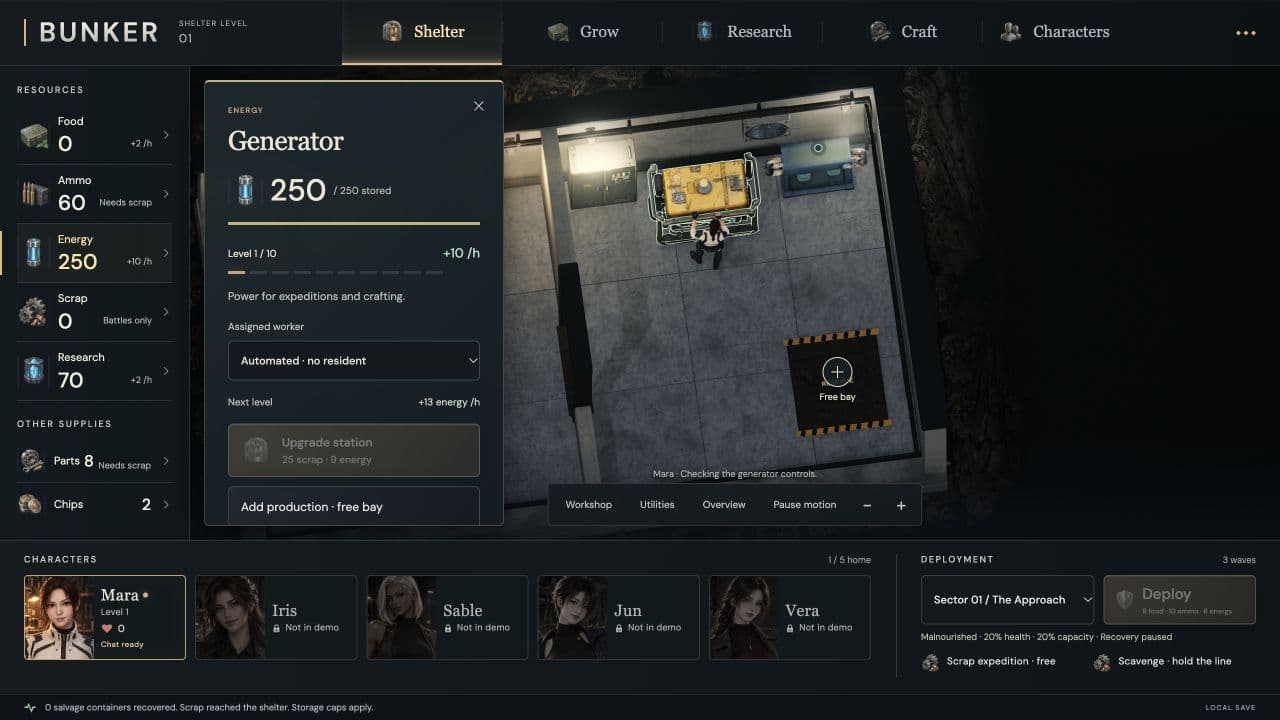
Start with a project, then go looking for its funding. Zombie Defence’s separate Scrap expeditions send you through ruined city streets to search containers and return to an extraction pad. On desktop, movement and cursor aiming let you cover a route while managing ammunition and reloads; touch fire targets the nearest living enemy. Enemy pressure increases with time, so the outing has a clear rhythm: reach useful containers, keep a way back open, and decide when you have collected enough to get on with the work at home.
That work happens in a fixed-layout underground shelter. Scrap can improve stations, feed the Ammo Press and Salvage Bench, or go into weapon crafting and upgrades. The Generator supports the energy side of preparation; Water & Hydroponics and crop racks support food and meals. A reserve bay adds a further expansion choice. These systems create competing claims on the same haul. Converting everything into ammunition may solve an immediate shortage, but leave the weapon or station you wanted waiting for another expedition.
The payoff is more than a bigger stockpile. Better production changes how you prepare, while research opens lasting choices about industry, defense and weapons. A crafting-focused shelter can reserve materials for a specific weapon project; a food-focused one can turn edible crops into a meal for the next deployment. Workers can improve station output, and production stops when inputs run out or storage fills. There is enough to plan around without laying corridors, drawing defensive walls or managing a freeform settlement.
Its forgiving expedition rules make that planning unusually steady. Scrap already picked up is settled into storage after extraction, defeat or an interrupted browser-page reload, up to capacity; built shelter progress also survives. That does not make every outing mode identical: sector defeats have their own resource rules. Here, the attraction is active collection feeding a lasting workshop rather than gambling a full equipment loadout. Choose it if you want to keep improving home even after a rough city run, and prefer upgrade priorities to architectural design.
The verdict
A strong fit for players who want personally controlled supply runs and an enduring shelter economy, with forgiving Scrap retention keeping home projects moving.
Escape from Duckov
Escape from Duckov is the strongest all-round released pick here for the pleasure of bringing an unpromising bag of junk home and turning it into a better-equipped hideout.
- Extraction
- Shelter building
- Crafting
- Loot builds
- Platforms
- Windows and macOS; official single-player game
- Price model
- Paid game
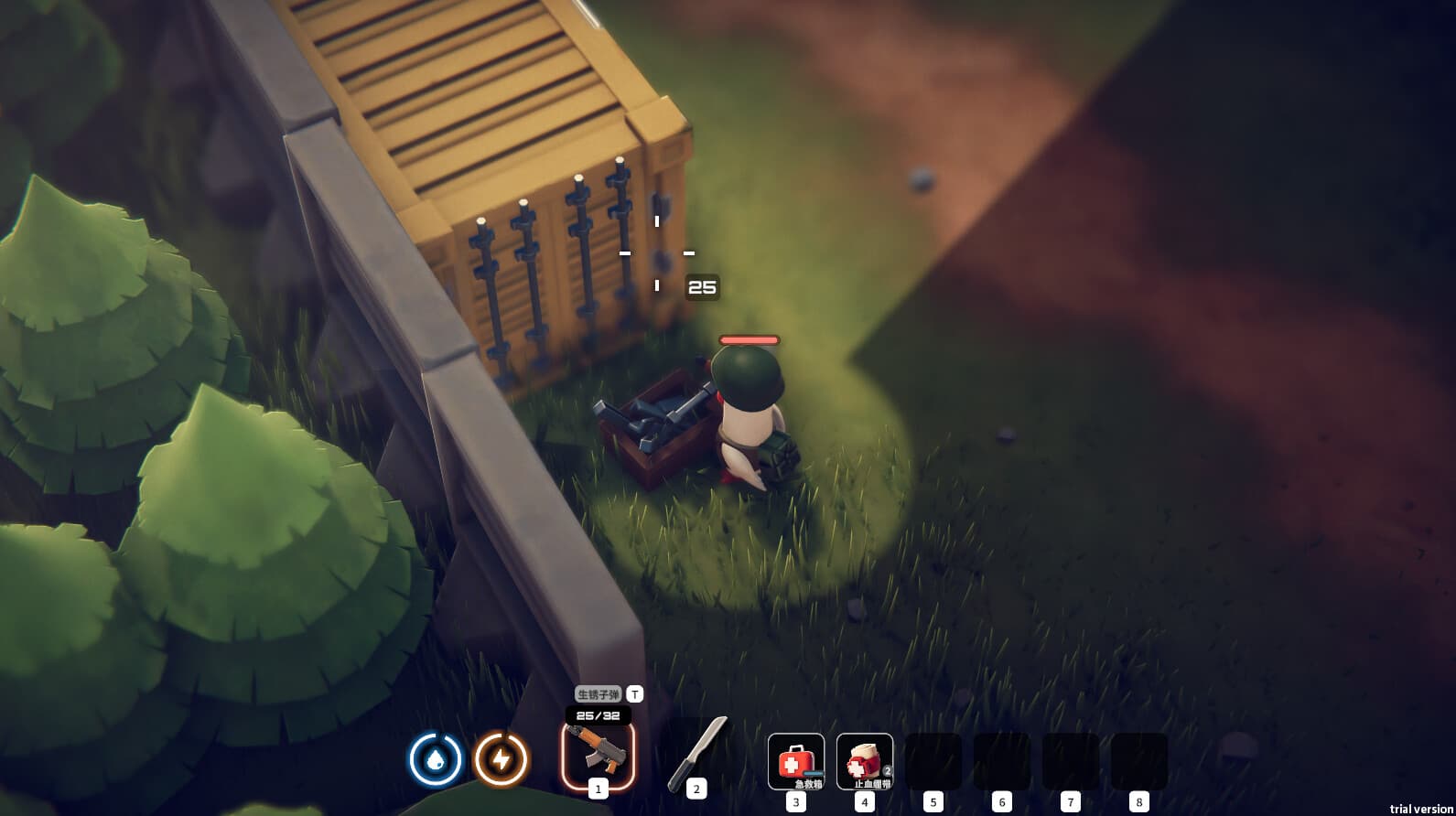
Duckov gives ordinary loot a second identity. In the field, an item occupies precious backpack space; at home, it may be a piece of your next facility or crafting project. You scavenge hostile areas, complete jobs and bring supplies through an exit into an increasingly useful hideout. Selling valuables is one route to improvement, but construction and recipes give materials a purpose beyond their cash price. Before heading out, choose the improvement you want and let that goal guide what deserves a place in the bag.
The home is a collection of facilities built inside your hideout, rather than a fort whose walls you design for an incoming siege. Workbench crafting, medical facilities and equipment preparation give the return trip its practical payoff. Finding blueprints expands what you can make, and the guns and modifications you assemble change how you handle the next hostile duck. This makes base development feel closely attached to your personal loadout: the place gets more capable as your scavenger gets better supplied, better armed and ready for tougher jobs.
It also has room for the satisfaction of making that home yours. The February 2026 update added display cabinets, weapon racks, a training dummy, a green screen and a 3D printer, alongside wallpaper and decoration changes. Functional projects and cosmetic collecting can therefore sit side by side. That is an appealing middle ground if you want a home with character but do not want the expedition loop interrupted by fortress engineering. The same update added Lab Area 37 and more quests, extending the reasons to keep using the hideout.
Successful extraction secures the haul; a bad run can instead turn the next outing into recovery work. With recovery-enabled rules, dropped belongings wait at the latest death marker, and dying again replaces the earlier marker. The support dog protects a limited part of your inventory, while harder or Custom settings can change the penalty. Keep spare equipment at home rather than carrying every useful item at once. Duckov suits patient solo collectors who enjoy accumulating ingredients and ticking off projects; its errands and inventory decisions remain a substantial part of the experience.
The verdict
Choose Duckov for a substantial solo loot-and-hideout routine with both practical projects and personal touches, rather than battlefield fort construction.
ZERO Sievert
ZERO Sievert gives the shopping-list raid a clear purpose: collect the missing pieces for a bunker module, extract, then improve the place where every future loadout is prepared.
- Extraction
- Shelter building
- Crafting
- Tactical combat
- Platforms
- Windows PC; official single-player game
- Price model
- Paid game
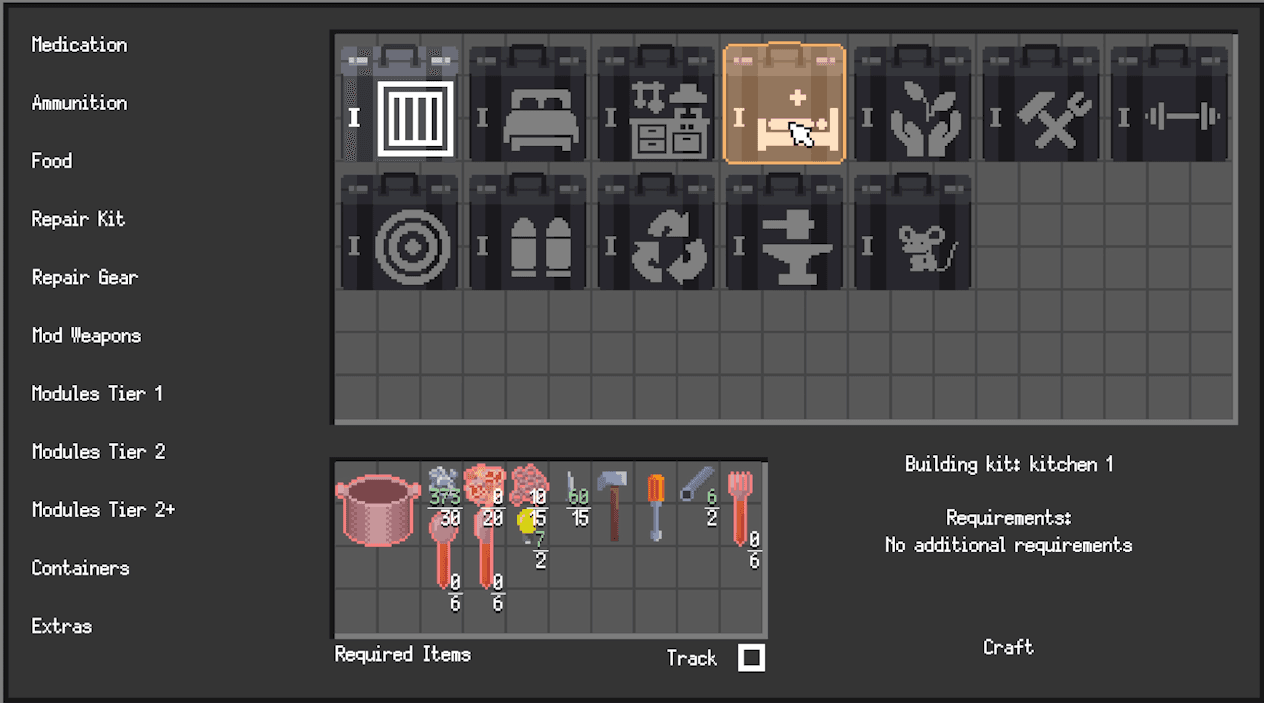
The bunker is where ZERO Sievert turns survival into a repeatable plan. You leave by train, search dangerous areas and return with the items needed for equipment, trades, quests and home improvements. Its module recipes give otherwise modest loot a reason to come back with you. Item tracking shows what a chosen project requires, what you already own and what is still missing. That is especially satisfying when a full backpack forces a decision: the missing construction ingredient may matter more than another weapon you do not intend to use.
Building is modular customization within your bunker area. You select a module, craft its building kit at the bench and install it, rather than drawing a new building shell. Storage modules unlock more stash space; a personal bed supports rest close to the place where you prepare. The workshop also handles cooking, medical supplies, ammunition, repairs and weapon customization. Put together, those functions make the home a practical support system for later raids. Bigger storage is not merely decorative progress: it gives future crafting ingredients and backup equipment somewhere to live.
The current game is kinder to experimentation than an old module guide might suggest. Since the December 2025 update, installed modules can be removed and reinstalled without crafting their base kit again. You can adjust a bunker setup as priorities change instead of treating the first arrangement as a permanent commitment. There is still real preparation work: sorting ammunition, checking equipment and deciding which materials to reserve. Choose ZERO Sievert because you enjoy that equipment-and-supply routine, not because its pixel art promises a lightweight management game.
Extraction is what banks new raid loot. Under the current Relaxed, Standard and Survivor presets, failure preserves the gear you started with, but not the fresh haul from that failed raid; Hunter loses most starting gear as well. Custom settings allow different rules. Your established bunker remains the place to rebuild the next attempt, so one failed material run does not erase its installed improvements. This is the pick for a detailed solo preparation cycle, especially if you like setting a specific module goal before entering the wasteland.
The verdict
The best choice here for players who want their extraction route, backpack priorities and bunker recipes to form one detailed plan.
FatalZone
FatalZone is the auto-shooter option: resource-gathering runs develop a persistent camp, while the decision to reach the helicopter can save a mercenary you have spent time training.
- Extraction
- Shelter building
- Permanent progress
- Roguelite
- Platforms
- Windows PC edition; single-player
- Price model
- Paid game
FatalZone puts a survivor camp behind its horde runs and an evacuation decision inside them. You steer an automatically attacking mercenary through zombies, collect resources and build up a combination of skills. When the situation turns ugly, reaching the helicopter lets you end the mission early. That matters because the person carrying the build can become a useful veteran across outings. It is a resource-and-survivor extraction loop, with a concrete way to leave; the camp is more than an upgrade menu attached to an arena that must always run to its ending.
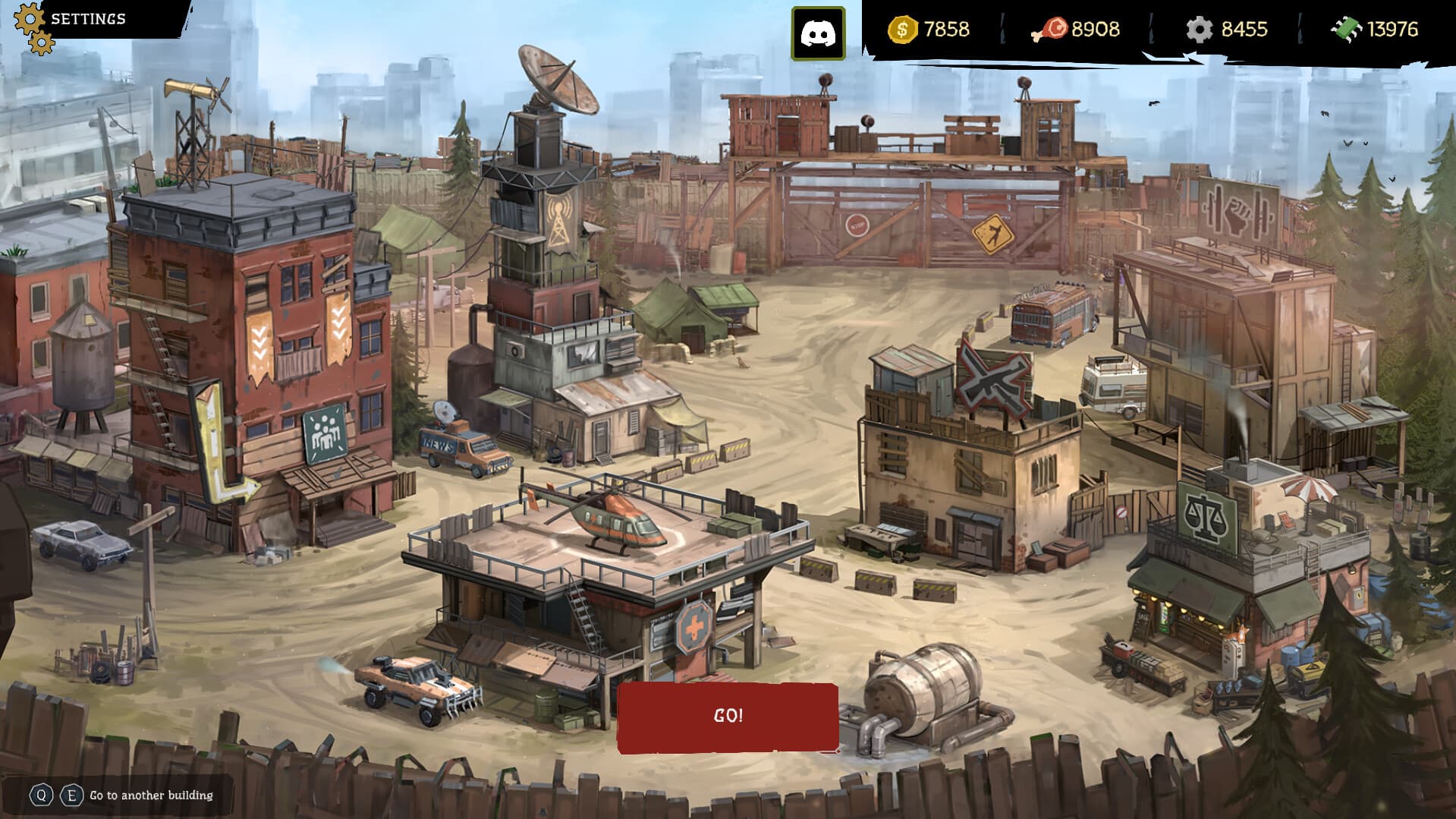
The base itself is a fixed settlement of service buildings. Its Training Hall develops mercenary skills, the Mercenary Base supplies recruits, and the workshop improves weapons and armor. Seven functional buildings each have their own upgrade path. Spending recovered resources therefore means choosing how to strengthen the next deployment: develop a fighter you already value, improve equipment, or make the camp better able to prepare replacements. There are no wall-placement puzzles here. The building choices are about the support the settlement provides to whoever goes outside next.
The Infirmary shows how directly a home upgrade can reach into the field. Its upgrades add a healing dome at the evacuation zone, with further improvements bringing stun and repulsion effects. Spending at camp can change the safety of the very place you are trying to reach on the next run. That is a more tangible payoff than a small background stat bonus. It also gives you a useful planning question after a dangerous escape: would another offensive upgrade help most, or would stronger support at the exit protect the next mercenary better?
The cost of failure is personal as well as economic. Mercenaries can die permanently, so training a favorite does not make them untouchable; the camp continues to support recruitment and preparation after that loss. Viral exposure can also produce helpful or harmful mutations. Those pressures make early evacuation a real choice even when the current build is clearing zombies comfortably. Pick FatalZone if movement, skill combinations and maintaining a roster appeal more than individually aiming each shot. Expect camp management rather than a detailed gun-stash economy or a fortress you can redesign.
The verdict
A distinctive match for players who want auto-shooter intensity, a useful persistent camp and a good reason to leave before a promising run becomes a fatal one.
Outpost: Infinity Siege
Outpost: Infinity Siege gives construction the most physical role on this list: the fortress you assemble travels into danger and helps defend the resources needed to make it stronger.
- Extraction
- Shelter building
- Base defense
- Co-op
- Platforms
- Windows PC; single-player and online co-op
- Price model
- Paid Standard or Vanguard edition; Standard cannot be upgraded to Vanguard
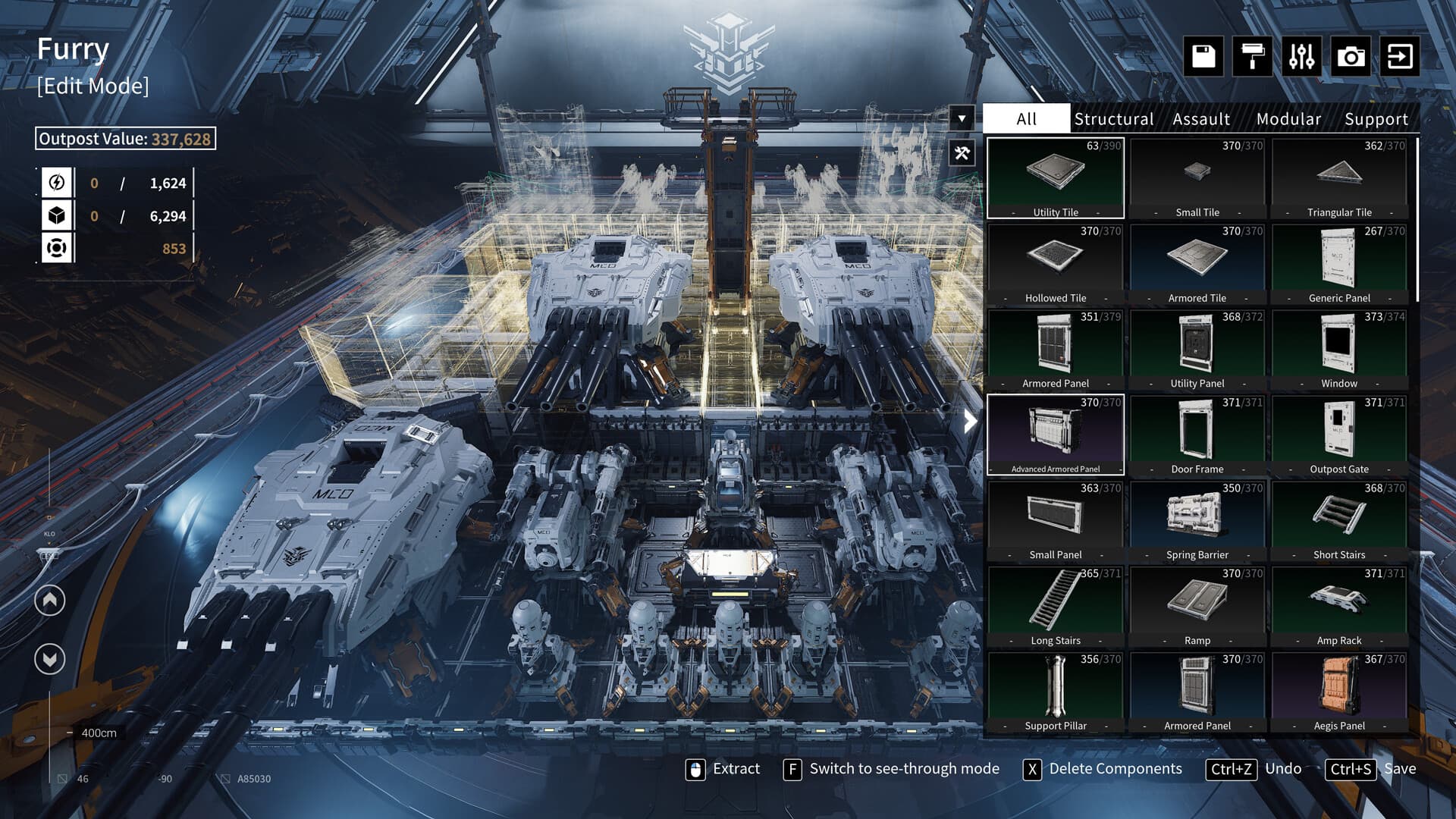
If base building means deciding where the floors, panels, stairs and guns should go, start here. Outpost: Infinity Siege lets you assemble a mobile outpost from components before deploying it. Exploration tours supply materials and useful units, then culminate in Recovery Day, when the haul must be brought home under enemy pressure. The base is both the product of previous expeditions and part of your ability to finish the next one. This is a first-person shooter and tower-defense hybrid with extraction stakes, rather than a conventional stash shooter with a small hideout menu.
The building editor supports moving, rotating and removing components, including group operations. A new turret is consequently a design problem as well as an acquisition: where should it sit, what should it cover, and how will the rest of the outpost support it? Research and crafting expand the available equipment, while generators, ammunition handling and structural pieces give the guns a working platform. The freedom is in arranging that modular fortress. You are not terraforming a continuous survival world or constructing a town that remains on one stretch of ground.
Preparation carries visibly into the next tour. Autoloaders can be stocked from the warehouse before departure, so recovered ammunition can be waiting inside the machinery that will feed your defenses. During combat, temporary facilities and command decisions complement your own shooting; the persistent outpost design is assembled at base outside combat. That makes each return an opportunity to solve a specific weakness. If a defense felt awkward to service, invest in its supporting layout instead of assuming the answer must always be one more oversized cannon.
Recovery is consequential, but failure is not accurately described as a universal wipe of everything you own. Failed tours can cost resources, gear and non-leader operatives; gear insurance, rescue beacons and difficulty-dependent item recovery can reduce particular losses. The deployment panel shows the item rescue ratio, so inspect that before committing to a richer route. Outpost asks you to care about an engineering layer alongside looting and shooting. Choose it for that deliberate preparation and the spectacle of your own design in action, especially if you want a co-op option.
The verdict
The strongest pick for actual fortress design within an extraction loop, provided you want the building and logistics to be as important as your personal weapon.
How we compare
A good recommendation explains who a game suits and where it falls short. Our editorial scores use the same five criteria, each rated out of ten.
- 01
Combat
Controls, aiming, enemy readability, and the decisions you make under pressure.
- 02
Progression
Build choices during a run and meaningful progress between attempts.
- 03
Usability
Control demands, platform access, interface options, and documented device requirements.
- 04
Value
What the asking price includes, optional purchases, and the scope of the free version.
- 05
Fit
How well the game answers the specific question in this article.
Which one should you try?
Start with the kind of home you want to improve. Duckov offers the broadest hideout-and-loot appeal, and ZERO Sievert is excellent when tracking a module recipe is part of the fun. FatalZone makes camp services and surviving mercenaries the center of the decision to evacuate. Outpost: Infinity Siege is the choice for a custom-built fortress that fights alongside you. Zombie Defence suits a more focused cycle: active Scrap runs, a choice of useful shelter investments, and retained expedition cargo that keeps the next project within reach. The best fit is the game where you can name what you are bringing the next bag of supplies home to build.
Your questions, answered.
Want to see what we’re building?
Zombie Defence is in Alpha. Join the waitlist.
More games to explore
- Extraction Shooters for Beginners: 4 Starting Options
Find your first extraction game with clear difficulty choices, gear-loss rules and practical starting plans for Duckov, ZERO Sievert, FatalZone and Zombie Defence.
- 4 Best PvE Extraction Games Without PvP
Compare four AI-only extraction games by solo or co-op support, gear loss, retained progress and access, from Duckov to Zombie Defence’s browser Alpha.
- 7 Best Single-Player Extraction Shooters in 2026
Compare seven solo PvE extraction shooters by combat, risk, progression, platform and price, from ZERO Sievert and Escape from Duckov to Zombie Defence.