Yet Another Zombie Survivors Review: Three People, One Very Bad Night
A generous squad-building bullet heaven with enough choices to make the next apocalypse feel like your own terrible idea.
Zombie Defence Editorial Team ·
Based on official PC documentation and gameplay imagery.
The zombie apocalypse has a recruitment problem. One survivor can bring a gun. Three can bring a deeply unreasonable amount of gun, a few questionable inventions and somebody who thinks a sword is a sensible answer.
Yet Another Zombie Survivors makes that little team its strongest idea. Its appeal is the way one character's tools change what you want from the next recruit, then give you reasons to rebuild the whole arrangement after a run.
The PC release is easy to recommend to players who enjoy turning a promising loadout into a ridiculous one. Expect repetition, some unlock work and a screen that can become very busy.
The squad is the build
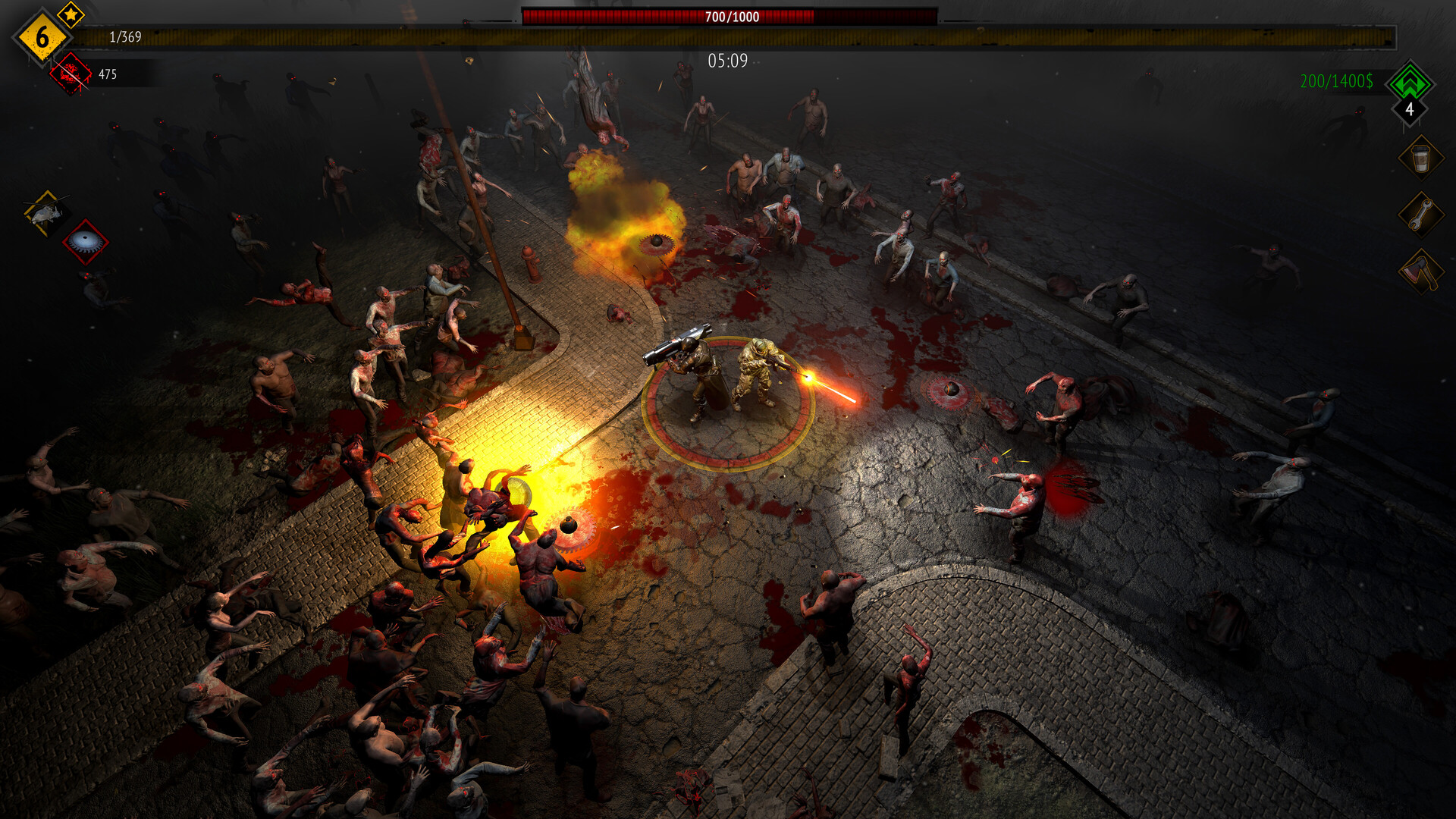
You begin with one survivor, move through an arena and assemble your killing machine as the pressure rises. SOS rescues let you recruit allies, up to a three-person squad; staying solo or stopping at two is also an option. Weapons can aim and fire automatically, leaving your attention on movement, pickups and the next upgrade.
The interesting question is what your team still needs. Another source of damage? Something to manage the crowd? A character whose support improves the people already present? A recruit brings a kit to develop, rather than simply another health bar. That gives each choice a purpose beyond picking the largest number.
There are nine survivors in the full release. Ghost leans into melee slashing, while Ranger combines a crossbow and animal companions with healing and team stat support. Mechanic can strengthen the squad's abilities. Those identities give you a useful starting point before individual weapons, evolutions and synergies complicate the plan.
Better choices than another 5%
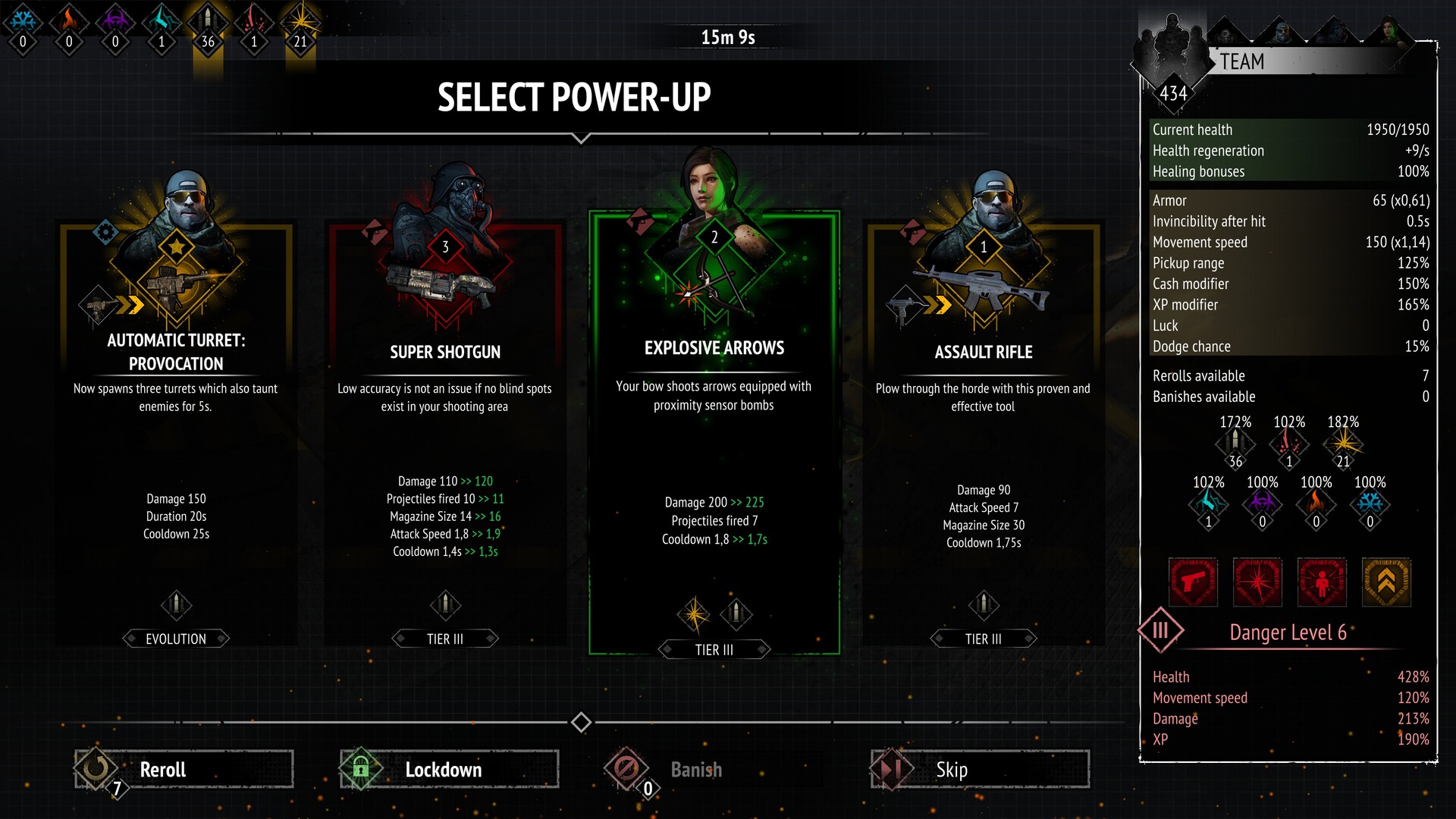
The best-looking decisions change behaviour. An official power-up screen offers a turret evolution that taunts enemies alongside shotgun, rifle and explosive-arrow upgrades. More damage is useful; persuading the crowd to look somewhere else solves a different problem. Read what an option does before chasing its colour.
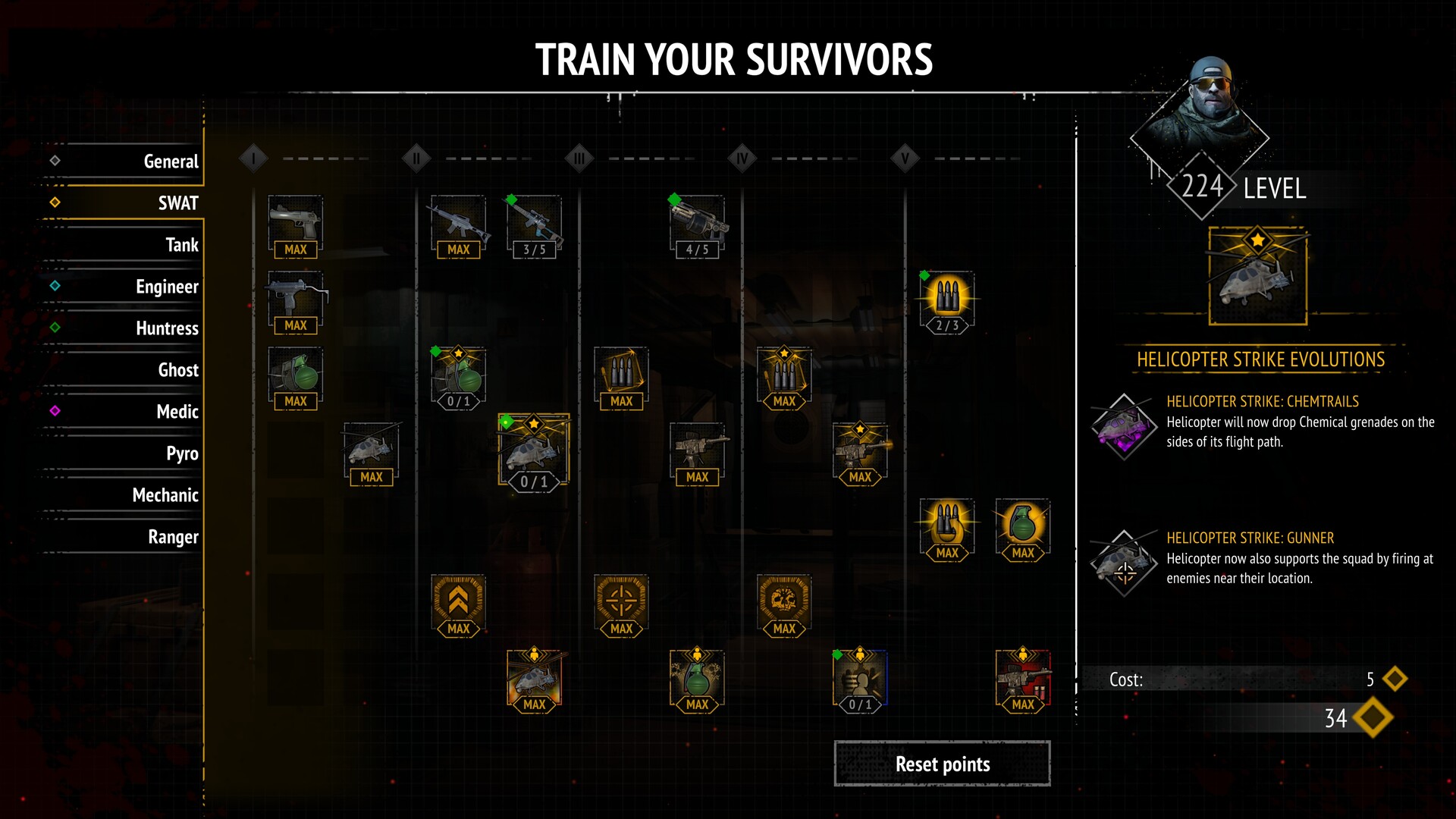
Permanent survivor trees make those decisions broader over time. Ability evolutions offer alternative effects, and damage-type tags reward paying attention to how your tools fit together. The SWAT training screen, for example, offers helicopter evolutions built around chemical grenades or supporting gunfire. That's a more appealing progression hook than endlessly polishing the same weapon.
There is a cost to spreading your attention across several characters: more moving parts to understand, and more upgrades competing to finish the build you imagined. Start with a clear job for each recruit. The horde will happily stress-test any vacancy.
You can take the aim back
Automatic combat is the comfortable starting point, but it isn't the only way to play. PC options include manual aim for the leader or the whole team, with a separate auto-fire setting. You can keep the relaxed firing rhythm while taking more responsibility for where the shots go.
That's a worthwhile middle ground for players who like building a damage engine but still want to point it at a problem. It doesn't remove the importance of positioning. You still need a route through the crowd, and an impressive weapon combination is less impressive when the squad has nowhere safe to stand.
A Camp worth coming back to
A failed attempt ends that run's assembled loadout, not the wider project. Cash, survivor specialization and permanent unlocks feed the next attempt. General and character-specific training give you longer-term goals, and resettable upgrades leave room to change direction.
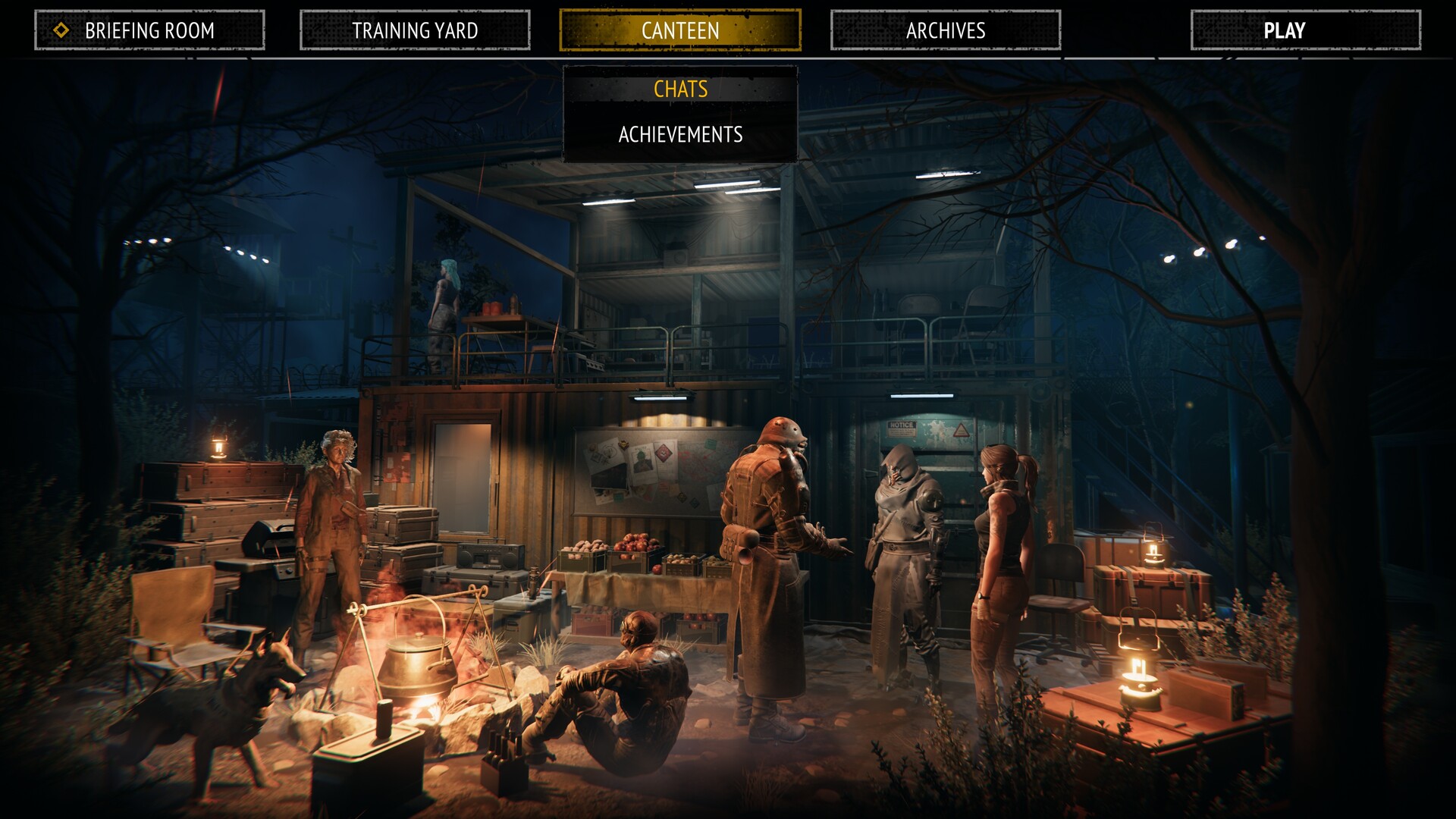
The Camp puts faces around that progression. Its Briefing Room supplies missions; conversations and radio messages add context between fights. Completed missions improve Team Bond, the permanent bonus to Cash and Specialization gains formerly called Friendship.
This is a good home for an arcade squad: enough character to make returning meaningful, with a Quick Run option when you would rather get straight to the shooting.
The tradeoff is that progression asks for repeat visits. Ranger's Survival Level 175 unlock is a clear sign that the whole toy box won't be yours immediately. Camp missions are optional, so don't turn every session into homework.
Choose your kind of unreasonable
Different modes give the build somewhere useful to go. Endurance escalates with Elite Bosses after the twenty-minute mark. Infinite removes the item limit for more extravagant combinations, but disables most achievements. Choose according to whether you want the game to push back or let the machinery get gloriously out of hand.
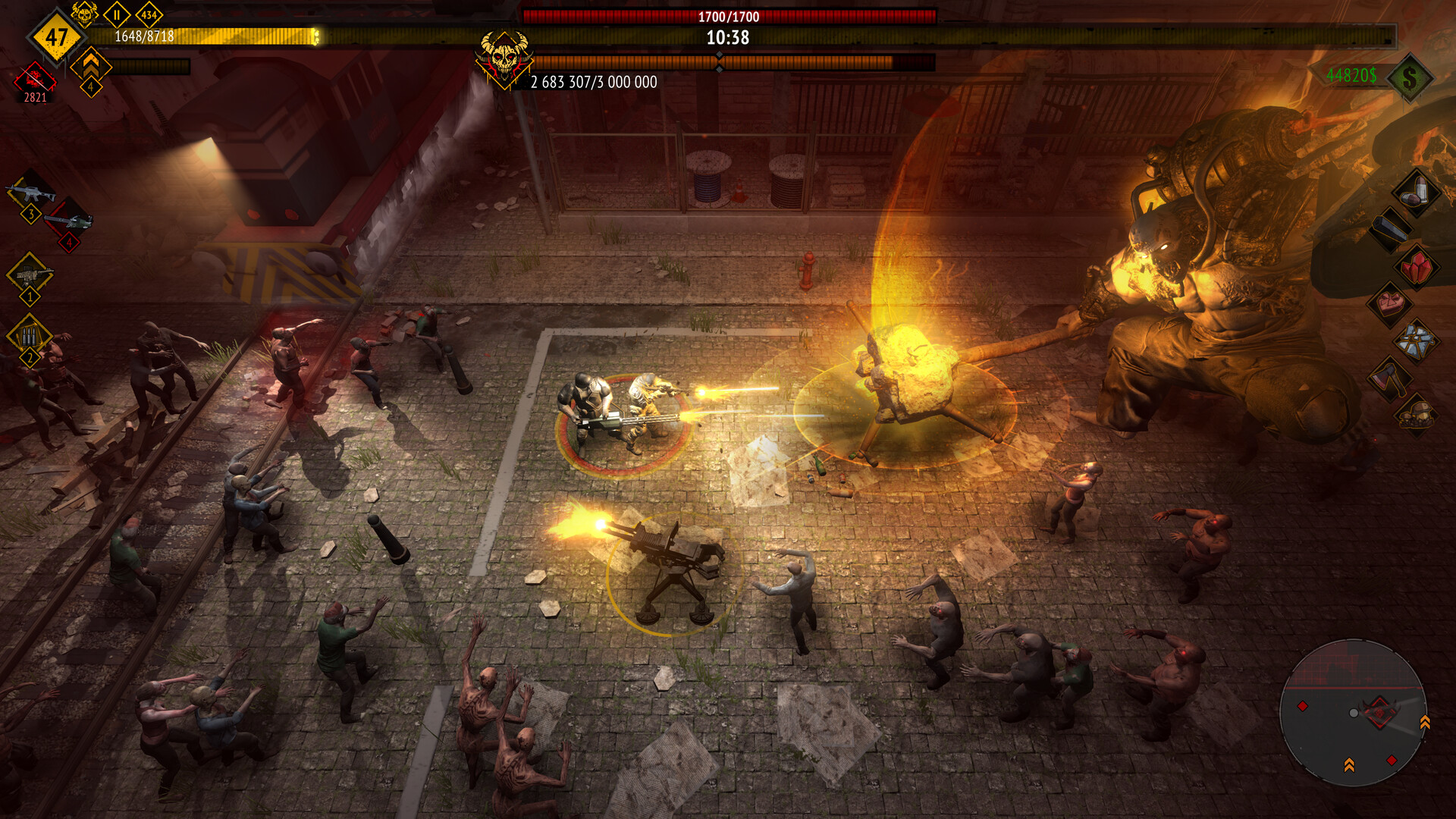
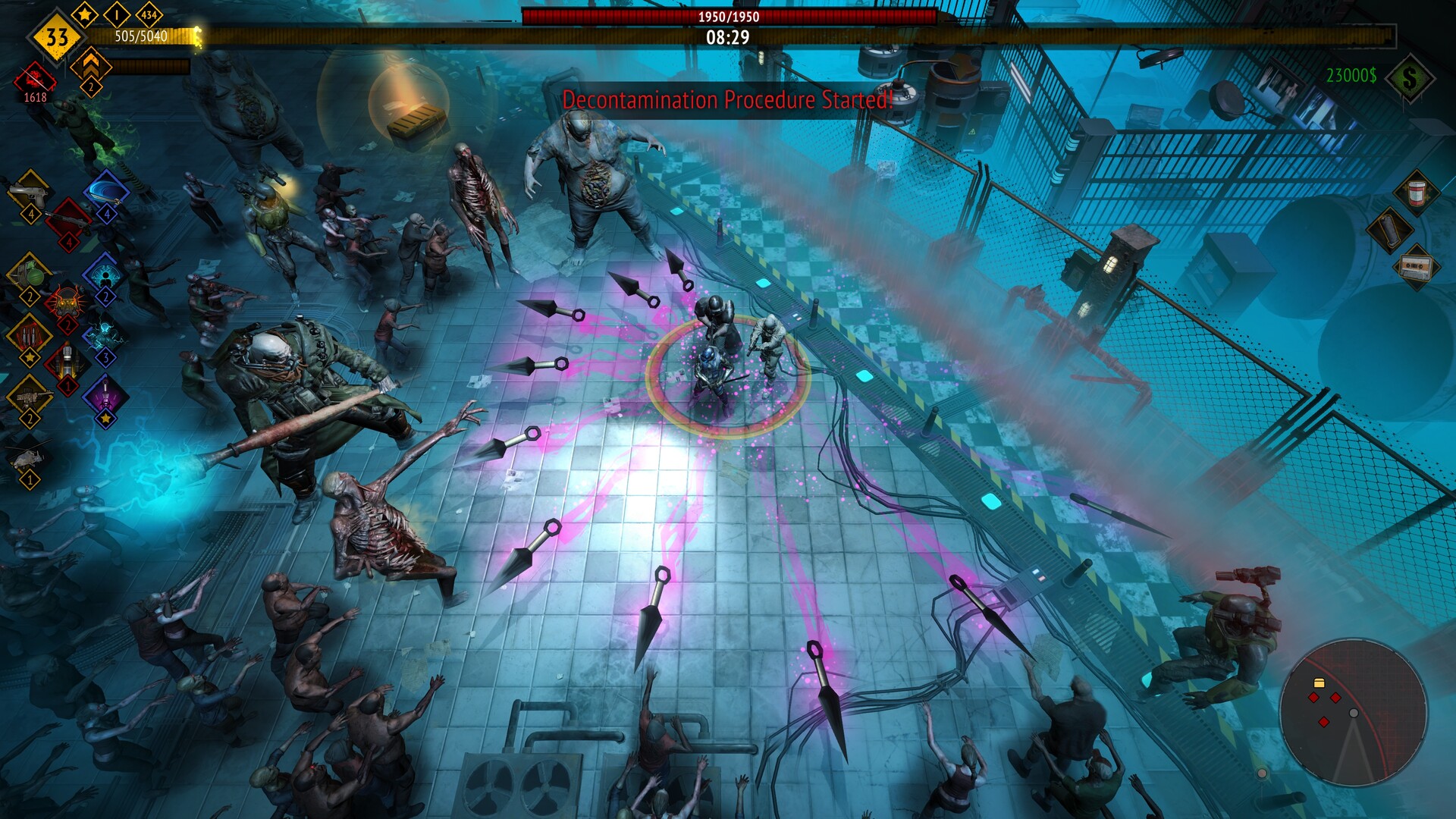
Boss Rush changes the emphasis again: build for ten minutes, then face the area's main boss. Arena hazards also discourage treating every map as a blank floor. Dead Terminal has trains; Bio Lab has its decontamination danger zones. A route that looks convenient can come with an unusually decisive objection.
These variations help, but the recurring business remains moving, upgrading and surviving a crowd. If that rhythm already sounds tiresome, more missions and bigger numbers are unlikely to rescue it.
The friction is real, too
Mission objectives can pull against the build you wanted to make, particularly when they depend on an item appearing. Update 1.0.1 added a pity system for required mission items.
That's a helpful correction, though randomness remains part of the bargain. Use the Mission Log to revisit an objective instead of assuming every attempt must advance it. Missing one item doesn't have to dictate your whole evening.
The official combat images also show the visual tradeoff: enemies, effects and equipment readouts all want attention. Effects-transparency and interface-scaling options are welcome here. A first visit to the settings is a sensible investment before blaming your eyes for failing to follow every exploding thing.
Most importantly, the three-person squad is yours alone. This PC edition is single-player, and multiplayer remains unpromised. Don't buy it expecting to give two friends the spare characters.
A straightforward PC package
The Steam edition left Early Access on August 20, 2026. This assessment covers the released PC game through stable hotfix 1.0.1b, rather than the separate public beta. Windows is the native PC platform listed by Steam.
It's a paid base game with a free Steam demo. The separately sold soundtrack is optional music, not a character or progression purchase. Gameplay unlocks come from playing the base game.
The replay value comes from learning the roster and rebuilding across modes, so the demo is particularly useful: it can tell you whether you enjoy the underlying rhythm before you commit to the longer unlock chase.
Strengths
- Squad roles make recruitment part of the build.
- Character trees, evolutions and modes support repeat experiments.
- Automatic controls and optional manual aim accommodate different levels of involvement.
- The Camp adds character and direction without requiring a visit before every run.
Tradeoffs
- Unlocking the full roster and its options takes repeated runs.
- Mission-item randomness can interrupt a preferred build.
- Busy combat imagery asks for careful positioning and sensible display settings.
- Single-player only; the squad is not co-op.
Who it suits
- Play it if team-building and repeatable upgrade experiments are the main attraction.
- A strong match for players who want automatic shooting with the option to aim manually.
- Less suitable if you want shared co-op runs, a survival sandbox or all build options available immediately.
Verdict
Yet Another Zombie Survivors earns its place through the squad. Recruitment, specialization and contrasting modes give the familiar horde loop enough decisions to sustain a long run of experiments, while the Camp gives those experiments a little personality. The catch is familiar too: you must enjoy doing the loop again.
Build depth leads the assessment. Repeated unlock work, busy visuals and mission friction keep it below the top tier, but the flexible controls and permanent progression make this a compelling squad to stick with.
PC base game (Steam)
Review score: 8.7 / 10
- Combat
- 8.7 / 10
- Progression
- 8.9 / 10
- Usability
- 8.6 / 10
- Value
- 8.4 / 10
Windows PC; single-player.
Paid base game with a free demo; soundtrack sold separately.
Full release: August 20, 2026. Coverage checked through stable hotfix 1.0.1b, September 23, 2026.
Console editions are not assessed by this PC score.
The review score averages the applicable Combat, Progression, Usability and Value scores, rounded once to one decimal. Fit is specific to each comparison and is excluded.
Can I aim and shoot manually?
Yes. PC has leader-only and whole-team manual-aim options, plus a separate auto-fire toggle in the Controls settings. Automatic aiming and firing remain available.
Can three people play the squad together?
No. The reviewed PC edition is single-player. You control the squad; its three survivors do not represent three human players.
What survives a failed run?
Your permanent progression remains, including general training, survivor specialization and unlocked content. The weapons, items and upgrades assembled during the failed attempt must be built again in another run.
What do you do in the Camp?
Pick up and revisit missions, access progression interfaces and follow survivor conversations and radio messages. Mission completion improves Team Bond. Quick Run lets you head straight into another attempt.
Does Infinite mode count towards every achievement?
No. Infinite removes the item-slot limit but disables most achievements. Endurance is the alternative for escalating survival pressure; check the progression requirements before choosing a mode.
Do I need DLC to get the characters?
No character DLC is listed for the reviewed Steam base game. Survivors are unlocked through play; the separately sold soundtrack is optional. A free demo is available before purchase.
Sources
- PC release, paid base game, demo, single-player and official screenshot gallery ·
- Official squad, Camp and full-release overview ·
- Full release: Ranger, fifth rank, Camp and Boss Rush ·
- Developer history: specialization, evolutions and usability options ·
- Update 0.9: Endurance, Infinite, Dead Terminal and progression interface ·
- Update 1.0.1: mission-item pity system and control improvements ·
- Hotfix 1.0.0c: Friendship renamed Team Bond and mission-log changes ·
- Stable hotfix 1.0.1b, September 23, 2026 ·
- September development update: optional missions, future prestige and multiplayer status ·
- Developer confirmation of leader-only and whole-team manual aim ·
- Developer confirmation of separate auto-aim and auto-fire toggles ·