7 Best Games Like Vampire Survivors With Manual Aiming
Keep the horde, the upgrades and the runaway builds. Choose where your attacks go.

20 Minutes Till Dawn is the closest starting point if you love Vampire Survivors’ escalating crowds and upgrade choices but want to aim and fire for yourself. Brotato adds optional target direction while keeping automatic attacks. Zombie Defence connects cursor-aimed horde combat to weapon projects and a persistent shelter, giving your next well-placed volley a longer-term purpose.
The key distinction is aim versus trigger. Manual aiming means choosing an attack’s direction or target separately from movement. Manual firing means deciding when to attack. A game can offer one without the other, and an aimable main weapon does not mean every aura, summon or orbiting effect follows the cursor. The seven picks below explain the actual arrangement instead of treating every auto-shooter as the same thing.
This guide covers desktop editions: six released games and Zombie Defence’s browser Alpha in development. Each combines horde pressure with run-building or continuing progression, rather than merely being a shooter with a mouse. The ratings are editorial judgments of documented design; Fit measures this specific mix of survivor-style growth and meaningful manual aim.
The quick comparison
7 games, different reasons to give the next run a chance.
Choose a game to jump to its overview. Platform lists are summaries; check the linked official edition.
The games
Zombie Defence
Direct rifle control, run-changing upgrades and a persistent shelter give each successful firing lane a purpose beyond the current arena.
- Manual aim (desktop)
- Shelter building
- Crafting
- Permanent progress
- Extraction
- Platforms
- Browser Alpha in development; desktop controls assessed here. Native mobile releases are planned.
- Price model
- Public launch pricing and monetization are unconfirmed.
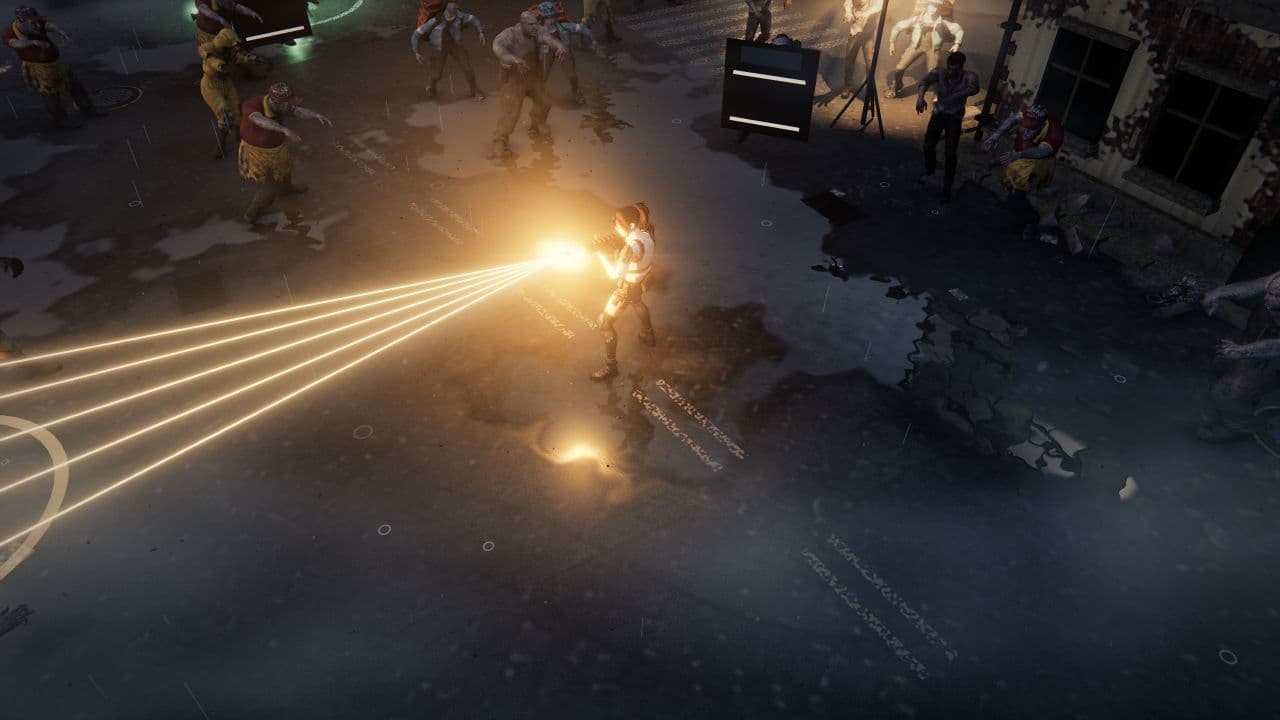
Zombie Defence puts two decisions under different hands: where to move and where to send the next shot. Desktop movement is independent of cursor aim, and you hold fire, manage a magazine and reload. That makes a retreat an opportunity to work on a chosen target, rather than a command to turn your weapon away from it. The touch arrangement is different: FIRE selects the nearest living enemy, so desktop is the version that answers this manual-aiming brief.
The connection to Vampire Survivors is the build that develops under pressure. Split Shot adds extra rays to each rifle cartridge, while Bank Shot sends shots bouncing from solid surfaces. A narrow line of fire can become a wider answer to a crowd, and a wall can become part of the shot. Campaign level-ups also put an unusual choice in front of you: take one of two battle cards, or spend that opportunity on a shelter investment. You are deciding how much of this run should help the next one.
The shelter turns that decision into weapon projects, production stations and branching research. Separate city Scrap expeditions add route planning and a return to an extraction pad; collected expedition Scrap survives defeat within storage limits. Choose it when you want to build something between aimed fights. Its larger resource loop is the tradeoff: this is a game for players who enjoy preparing the next deployment as well as surviving the current horde.
The verdict
Choose Zombie Defence for personally directed shooting whose rewards carry into a substantial shelter and weapon-building loop.
20 Minutes Till Dawn
Keep the monster crowds and branching upgrades, then add a weapon whose direction and firing you control.
- Manual aim
- Roguelite
- Short runs
- Permanent progress
- Platforms
- Windows and macOS via Steam; this comparison covers the desktop edition.
- Price model
- Paid Steam game.
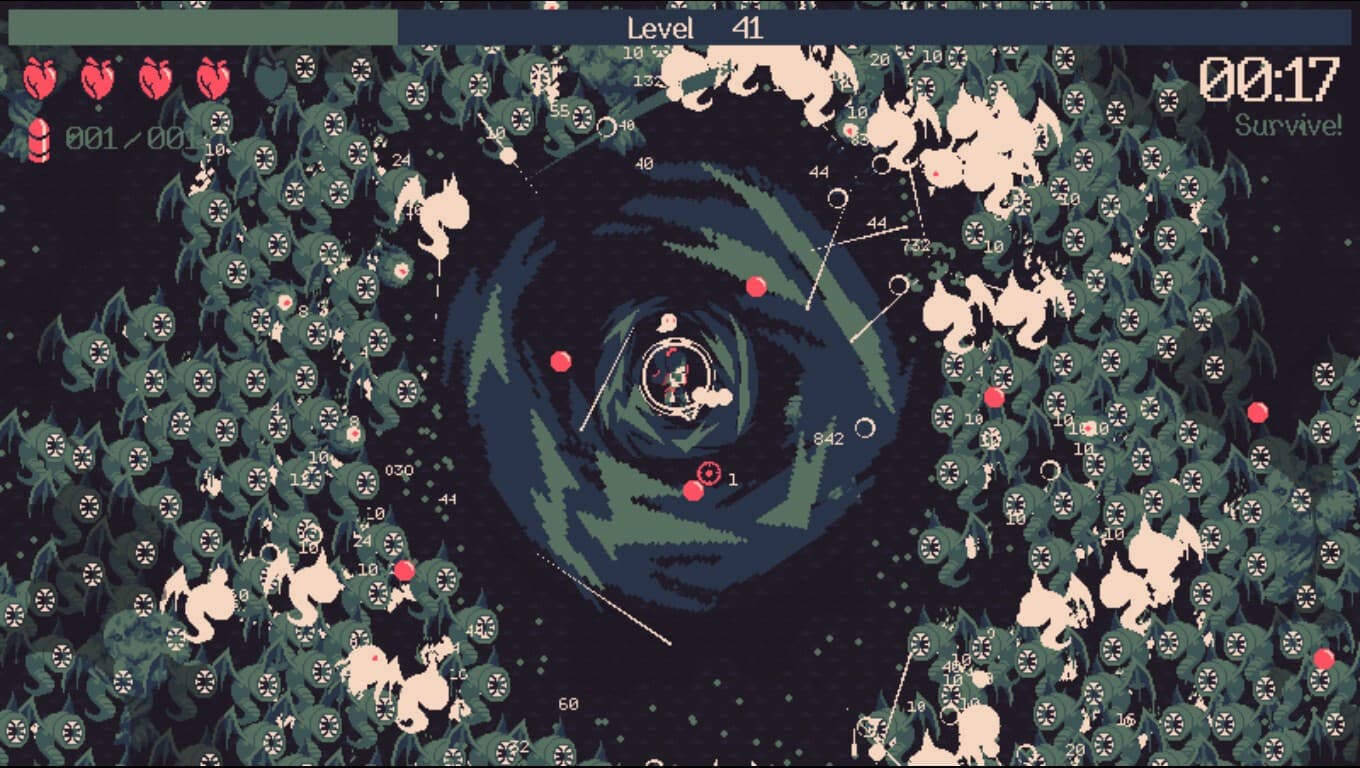
Start here if the missing ingredient in Vampire Survivors is the ability to point at a particular monster and shoot it. 20 Minutes Till Dawn explicitly pairs directional aim with active firing. That small change gives your hands a different job: you are steering the survivor and choosing the pressure point in the approaching crowd. A promising escape route is only useful if you can keep it open.
Weapon choice gives that attention a character. A shotgun build, elemental effects, summons and weapon evolutions offer different ways to deal with the night, so choosing where to fire sits inside a larger build rather than replacing it. You still collect experience and pick upgrades. The attraction is watching a direct attack grow into something extravagant while retaining a target you can personally work on.
Souls, runes and unlockable characters or weapons supply reasons to try again. The focused night-survival structure keeps the goal easy to understand, but it does not offer the expedition routes or home management of Zombie Defence. Pick this one for the cleanest combination of aimed shooting and a compact survivor-style attempt.
The verdict
The strongest first stop when you want the familiar horde-and-upgrade rhythm with more of the shooting in your hands.
Brotato
Optional manual aiming adds target direction to a six-weapon arena builder without making every attack a separate trigger press.
- Manual aim
- Loot builds
- Short runs
- Co-op
- Platforms
- Windows, macOS and Linux via Steam; desktop edition.
- Price model
- Paid base game; optional gameplay DLC is sold separately.
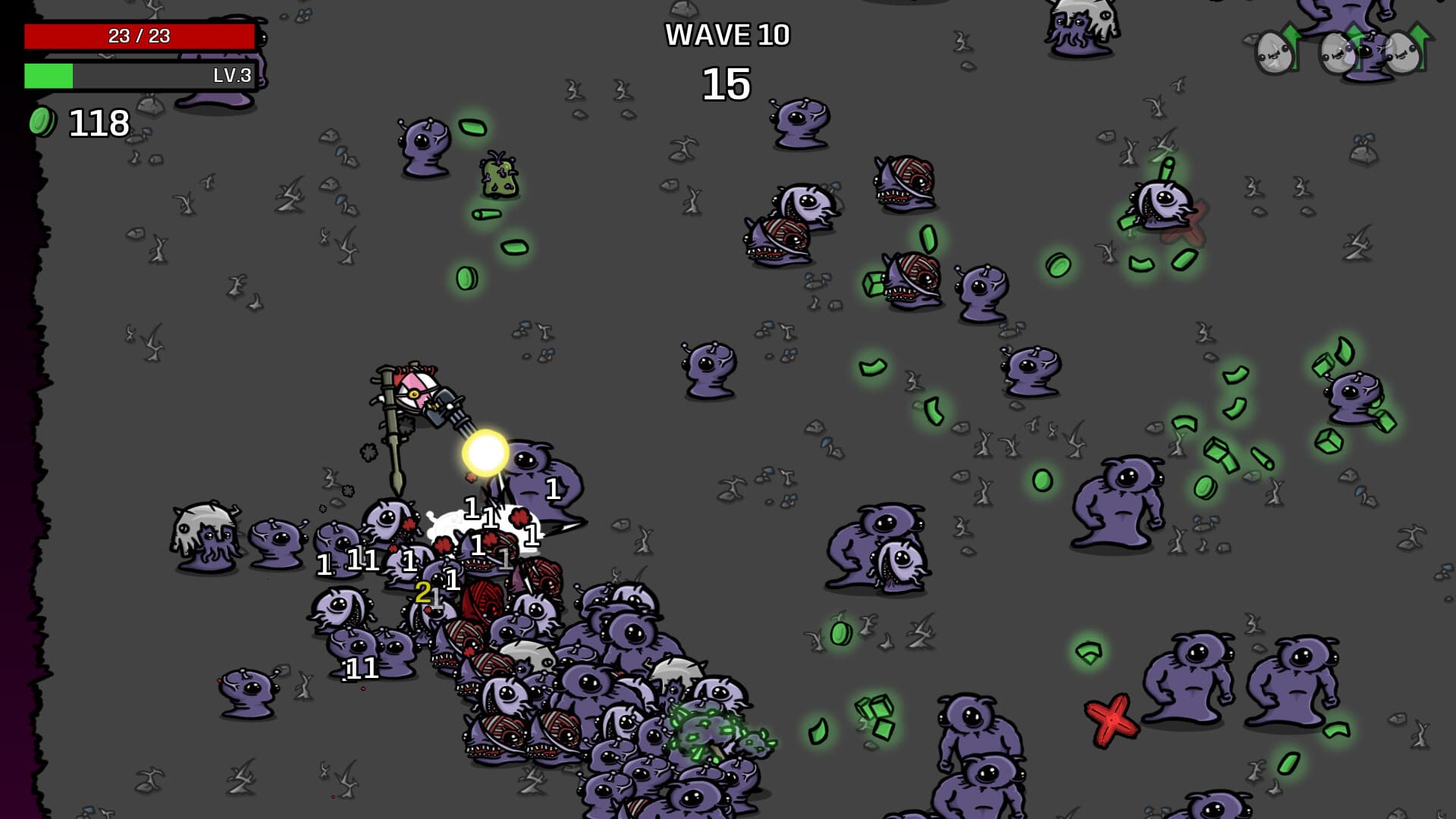
Brotato is the useful answer to “I want to aim, but I do not want to work the trigger all night.” Its weapons fire automatically, and a manual-aim option lets you direct them. The distinction matters: you are changing where the loadout attacks, while its weapons still follow their own firing cadence. Choose a ranged setup if directing shots is the part you want to emphasize.
The build happens in short, sharply divided bursts. Survive a wave, collect materials and spend at the shop before the next one. Up to six weapons make loadout decisions tangible: think about whether your arsenal wants the same engagement distance, then use your chosen direction to get value from it. The shop is your chance to solve a weakness that better aim alone will not fix.
That stop-and-shop rhythm is the reason to choose it over a longer continuous night. It is also the compromise if you dislike interruptions once a run gets moving. Local co-op for up to four players and adjustable enemy settings add flexibility, but neither changes the central promise: a compact arena build with aiming available when you want it.
The verdict
Pick Brotato for target control with a lighter trigger workload and a satisfying shop decision after each wave.
Halls of Torment
Manual attack direction sits alongside automatic options, equipment and a growing storm of abilities.
- Manual aim
- Roguelite
- Loot builds
- Permanent progress
- Platforms
- Windows and Linux via Steam; desktop edition.
- Price model
- Paid base game; optional gameplay DLC is sold separately.
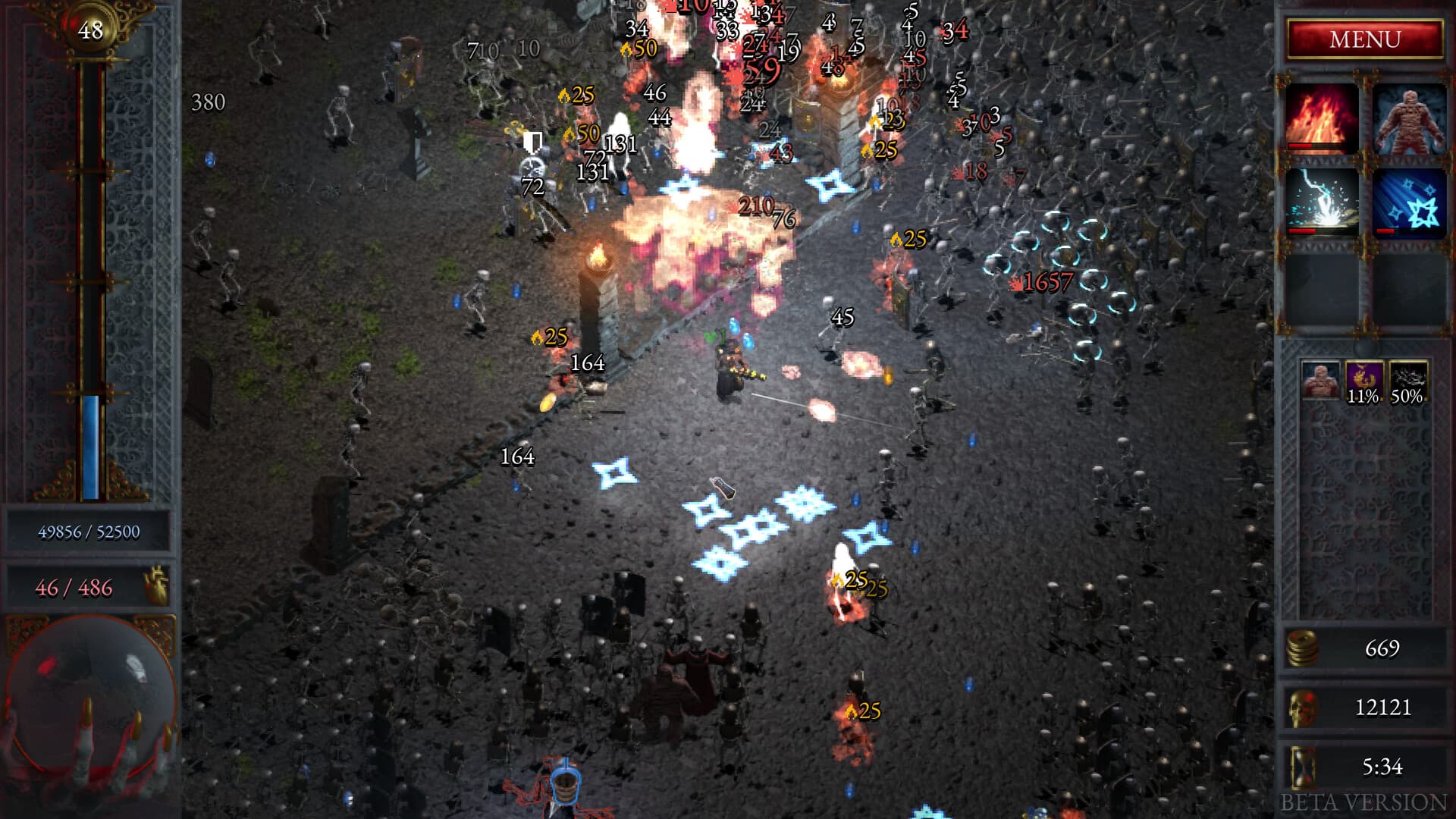
Halls of Torment is a strong fit if you want to aim without giving up the feeling that an entire build is fighting around you. Auto-aim and auto-attack are separate options. Take over the hero’s directed attacks while keeping the attack cadence automatic, or use manual attacks as well. Think of this as guiding the steerable part of your build; an aura or another independently behaving ability is not suddenly a cursor-aimed bullet.
That distinction makes character choice important. The way a hero’s main attack covers space matters alongside traits, equipment and acquired abilities. You can work on a dangerous approach while the rest of the build handles other parts of the crowd. The pleasure is less about one perfectly aimed projectile and more about making your chosen attack complement the damage already filling the hall.
Quests, items and persistent improvements give the game a substantial RPG layer. Its pre-rendered monsters and dark floors make it a good change of atmosphere, though there is more build reading and overlapping action to absorb than in a spare shooting arena. Choose it when you want deliberate direction inside a layered fantasy build, rather than direct control over every effect on screen.
The verdict
Choose Halls of Torment for a manually guided main attack wrapped in deep survivor-style RPG progression.
Yet Another Zombie Survivors
A normally automatic squad survivor becomes a flexible aiming game when you choose how much of the team to direct.
- Manual aim
- Squad builds
- Roguelite
- Permanent progress
- Platforms
- Windows via Steam; PC control options assessed here.
- Price model
- Paid game; a free Steam demo is available.
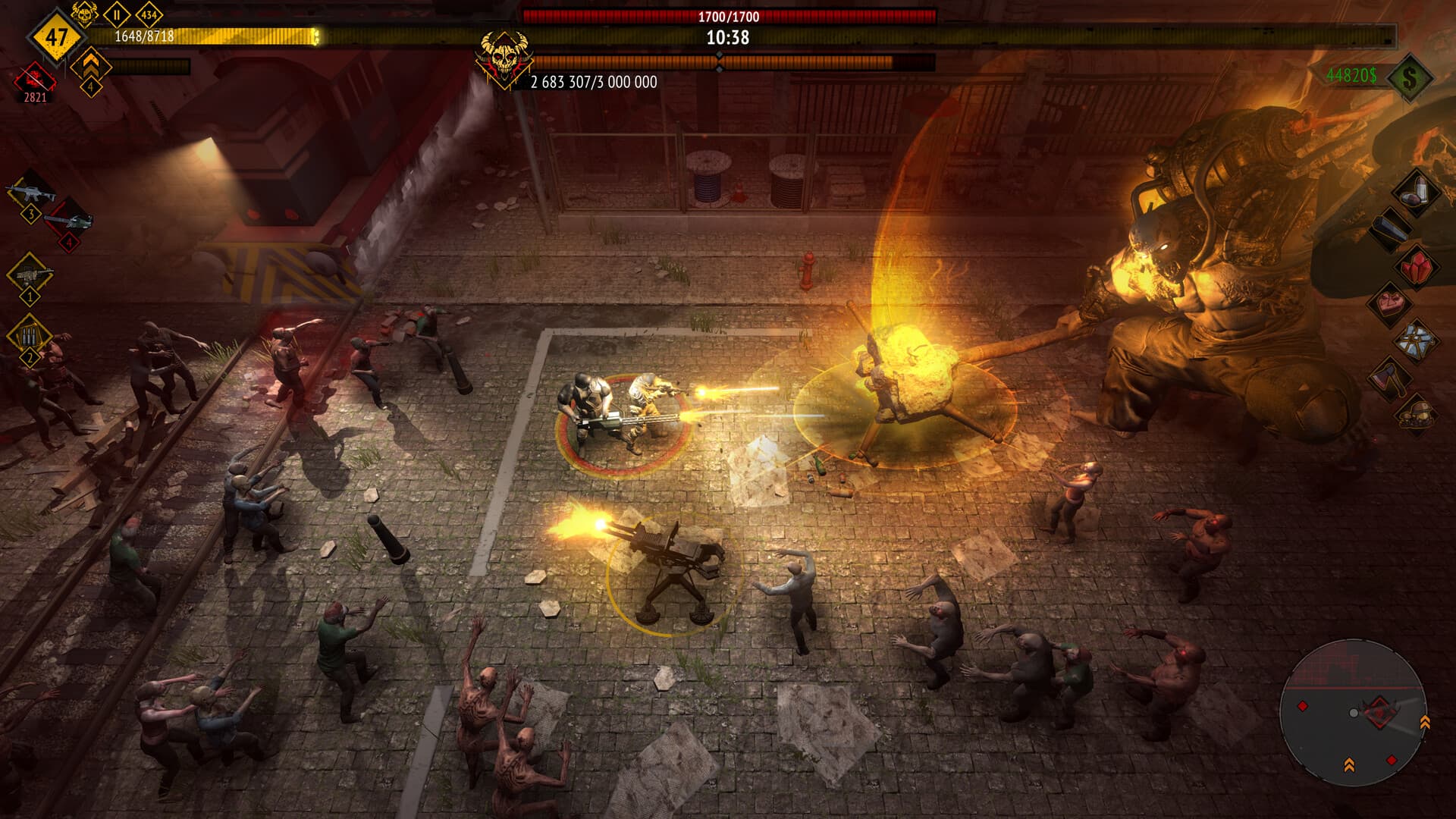
Yet Another Zombie Survivors earns its place because manual control is a genuine option, even though the default experience handles aiming and firing for you. Its Controls menu separates auto-aim from auto-fire, and manual-aim modes cover either the leader or the whole team. On a PC controller, the developer identifies the right stick as the aiming input in those modes. Start with the amount of control you actually want, rather than assuming you must switch every assistance off.
The build is a squad: begin with one survivor, recruit up to two allies and combine their weapons and skills. Leader-only direction suits a player who wants to give one attack a specific job. Whole-team direction makes concentrated damage the more obvious experiment. In either case, choosing the team and its upgrades still matters as much as choosing a firing direction.
This is a single-player squad, so the appeal is assembling complementary roles rather than coordinating human teammates. Permanent upgrades and specializations continue outside the run. It is a particularly good bridge from relaxed automatic combat to more direct involvement; the tradeoff is that the team’s synergies remain the main event, even after you take charge of aiming.
The verdict
Pick it when you want to choose how much aiming responsibility to add to a squad-based bullet heaven.
Time Wasters
Fast ship movement, auto-firing weapons and optional manual aiming turn the survivor formula into an armed flight through space.
- Manual aim
- Fast-paced
- Roguelite
- Permanent progress
- Platforms
- Windows via Steam.
- Price model
- Paid Steam game.
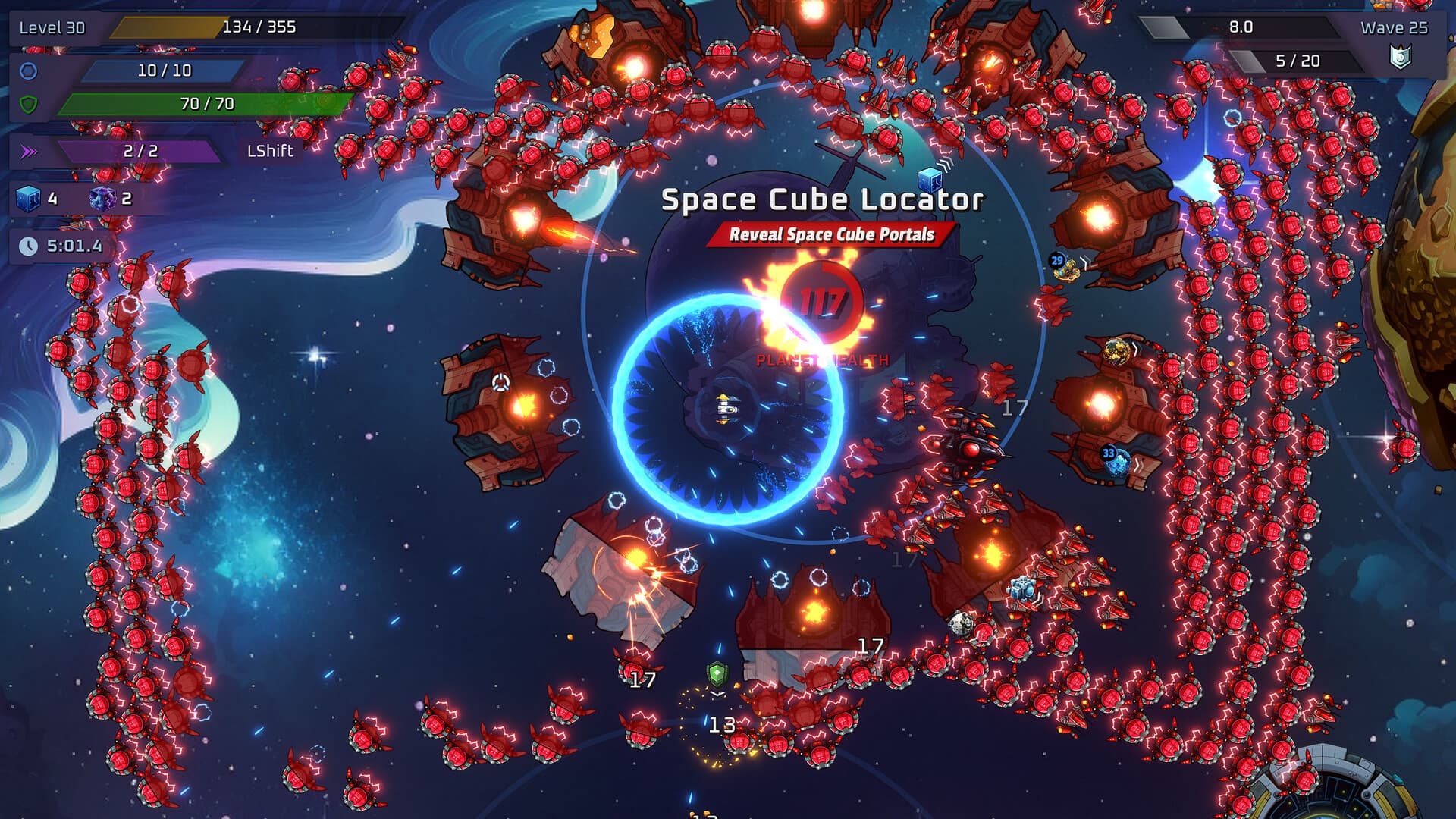
Time Wasters changes the scenery without discarding the build rush. You pilot a ship through enemy swarms, collect gold and stack weapon upgrades. The developer explicitly offers manual aiming for the weapons, which continue to auto-fire. That makes it another good choice when you want control of direction more than responsibility for pressing a trigger.
Outposts give you something to move toward and protect, while boosting adds urgency to your route. Aiming is therefore part of a three-way decision: where to fly, what to shoot and which useful location deserves your attention. Captains specialize in different weapons and upgrades, so the setup you choose changes the sort of attack you want to bring to a threatened position.
Time Cubes help reroll or accelerate upgrade choices; Space Cubes support lasting captain and outpost improvements. The result is a busier strategic flight than an empty arena. If its scenery competes with the action, the Background Opacity setting can reduce the background detail. Choose it for movement, targets and build planning together; skip it if your ideal manual shooter revolves around magazine discipline and individually timed shots.
The verdict
Choose Time Wasters for a mobile space battle where you steer both the ship and the damage while weapons handle their firing cadence.
Disfigure
A cone of light makes choosing a direction about what you can see as well as what you can hit.
- Manual aim
- Roguelite
- Permanent progress
- Short runs
- Platforms
- Windows via Steam; current full game.
- Price model
- Paid Steam game for new purchasers; earlier owners retain access.
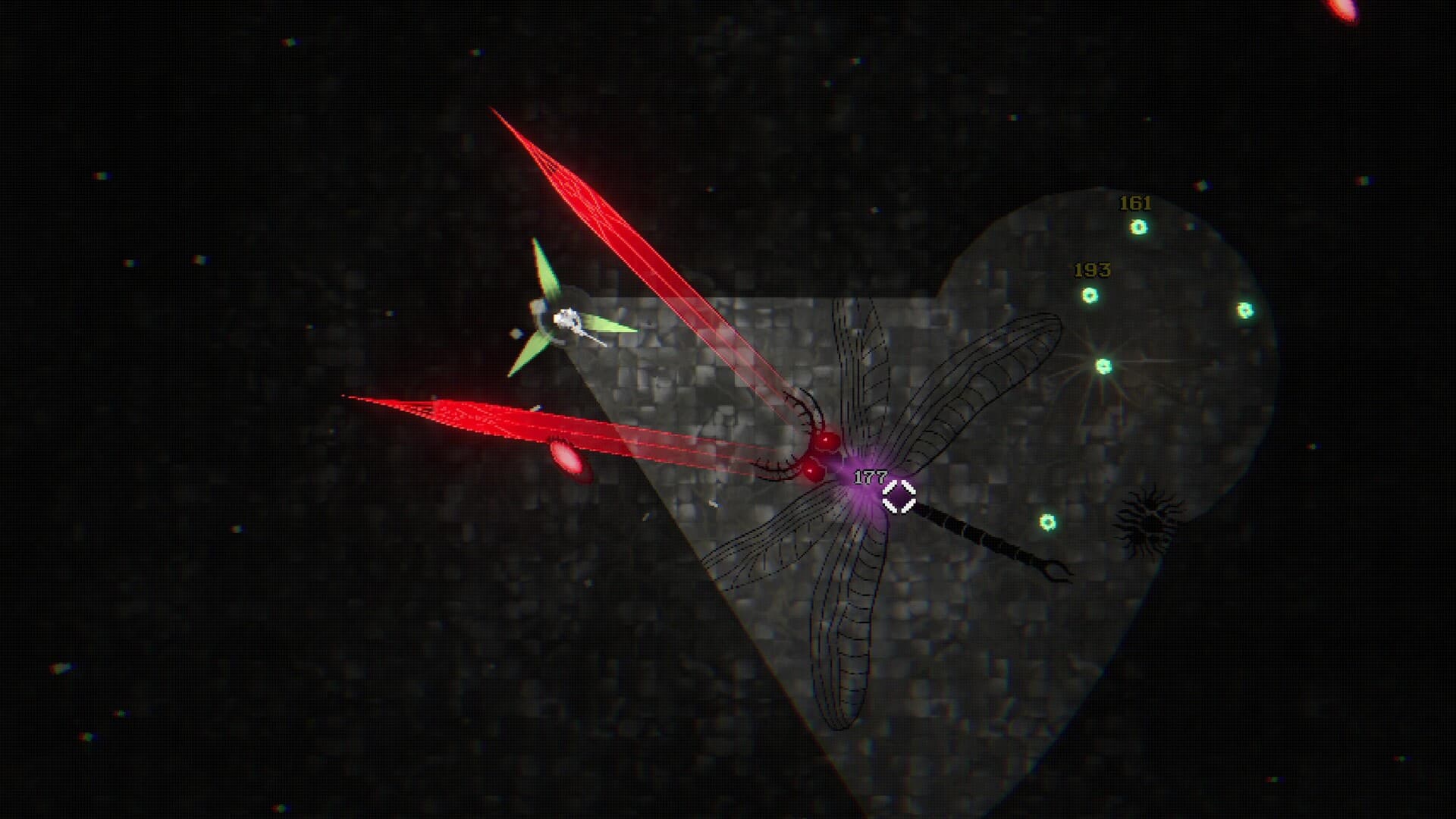
Disfigure gives aiming a second responsibility: learning what is coming. Its dark arenas let you switch between nearby circular vision and a longer cone in one direction. Manual aiming is supported, with an optional Aim Assist toggle that turns the player toward nearby enemies in view. Leave that assistance off when you want to choose the direction yourself, then decide how much surrounding awareness you are willing to trade for a longer look ahead.
The underlying loop will feel familiar: gather experience, choose upgrades and turn an initially modest weapon into a much larger answer to the horde. Vision can be part of the build too, so greater firepower is not the only useful improvement. A clear view of the next threat can be worth more than another effect obscuring the fight. This is the pick for players who enjoy uncertainty at the edge of the screen.
Credits unlock weapons and permanent improvements, while quests and weapon challenges give later attempts specific targets. The full game became paid for new purchasers with its August 2026 1.0 release; older descriptions calling it free are out of date. Its main tradeoff is exactly what makes it distinct: restricted sight and horror presentation make the aiming exercise tenser, rather than more comfortable.
The verdict
Pick Disfigure when you want a survivor build in which seeing the threat is part of earning a clean shot.
How we compare
A good recommendation explains who a game suits and where it falls short. Our editorial scores use the same five criteria, each rated out of ten.
- 01
Combat
Controls, aiming, enemy readability, and the decisions you make under pressure.
- 02
Progression
Build choices during a run and meaningful progress between attempts.
- 03
Usability
Control demands, platform access, interface options, and documented device requirements.
- 04
Value
What the asking price includes, optional purchases, and the scope of the free version.
- 05
Fit
How well the game answers the specific question in this article.
Which one should you try?
For the most direct change from Vampire Survivors, choose 20 Minutes Till Dawn. If aiming is enough and automatic firing sounds welcome, Brotato and Time Wasters are the easy shortlist. Halls of Torment puts directed attacks inside an RPG build, Yet Another Zombie Survivors lets you decide how much of a squad to aim, and Disfigure makes visibility part of the challenge. Choose Zombie Defence when the ideal reward for a good fight is a new weapon project or a stronger shelter. Start with the amount of control you want, then pick the progression loop you will be happy to return to.
Your questions, answered.
Want to see what we’re building?
Zombie Defence is in Alpha. Join the waitlist.
More games to explore
- 11 Best Vampire Survivors Alternatives in 2026
Compare ten released Vampire Survivors alternatives and one development-stage option by combat, progression, platforms and fit.
- 7 Best Games Like Brotato in 2026
Looking for games like Brotato? Compare seven horde-survival roguelites by weapon choices, wave pacing, build tradeoffs, platforms, and price model.
- 7 Games Like Deep Rock Galactic: Survivor for Mining and Swarm Runs
Compare seven Deep Rock Galactic: Survivor alternatives for mining under pressure, dodging hordes, shaping run builds, and carrying progress forward.