Halls of Torment review: bank the boots, brave the abyss
A wonderfully gloomy build laboratory where the smartest victory can be sending a useful pair of boots upstairs.
Zombie Defence Editorial Team ·
Based on official documentation and gameplay imagery.
Halls of Torment understands the emotional value of a good pair of boots. Slaying another thousand skeletons is pleasant enough, but finding equipment that can improve tomorrow’s expedition gives today’s carnage a purpose. The real hook is what you manage to bring back.
Chasing Carrots wraps that appetite in gloomy, pre-rendered fantasy: stone passages, rattling bones and a health globe with wonderfully questionable contents. Beneath the nostalgic surface sits a busy build workshop. Its strongest ideas connect the choices you make during a run with the preparations for the next.
The best loot has a return address
A dropped item helps the current expedition; a recovered item can reshape future ones. After rescuing the Wellkeeper, sending eligible equipment up the well makes it available for purchase back at camp. Finding, recovering and owning are separate steps, so a lucky chest is only the beginning.
That creates a better question than whether the new item has a bigger number. Does it support the hero you want to try next, or fill a weakness in your current equipment collection? Prioritize a useful missing option over another trophy for the cupboard.
Recovery also has limits. Extra buckets expand what you can send back, while uncommon equipment has additional postgame recovery requirements. The result is a satisfying tension between making this attempt stronger and making future attempts more interesting. Death need not mean returning empty-handed.
Build a plan, then negotiate with the level-up screen
Your hero supplies a starting identity; traits and abilities develop it during the run. Rather than choosing every attractive damage bonus, ask what the build lacks. More coverage can help against surrounding enemies, while concentrated damage matters when one durable target refuses to disappear.
The Cupbearer gives those decisions some leverage. Unlocked potions let you reroll, banish, memorize or double trait choices. Ingredients unlock the options and bottles increase their supply. Save that influence for an important interaction instead of spending it merely because a button is available.
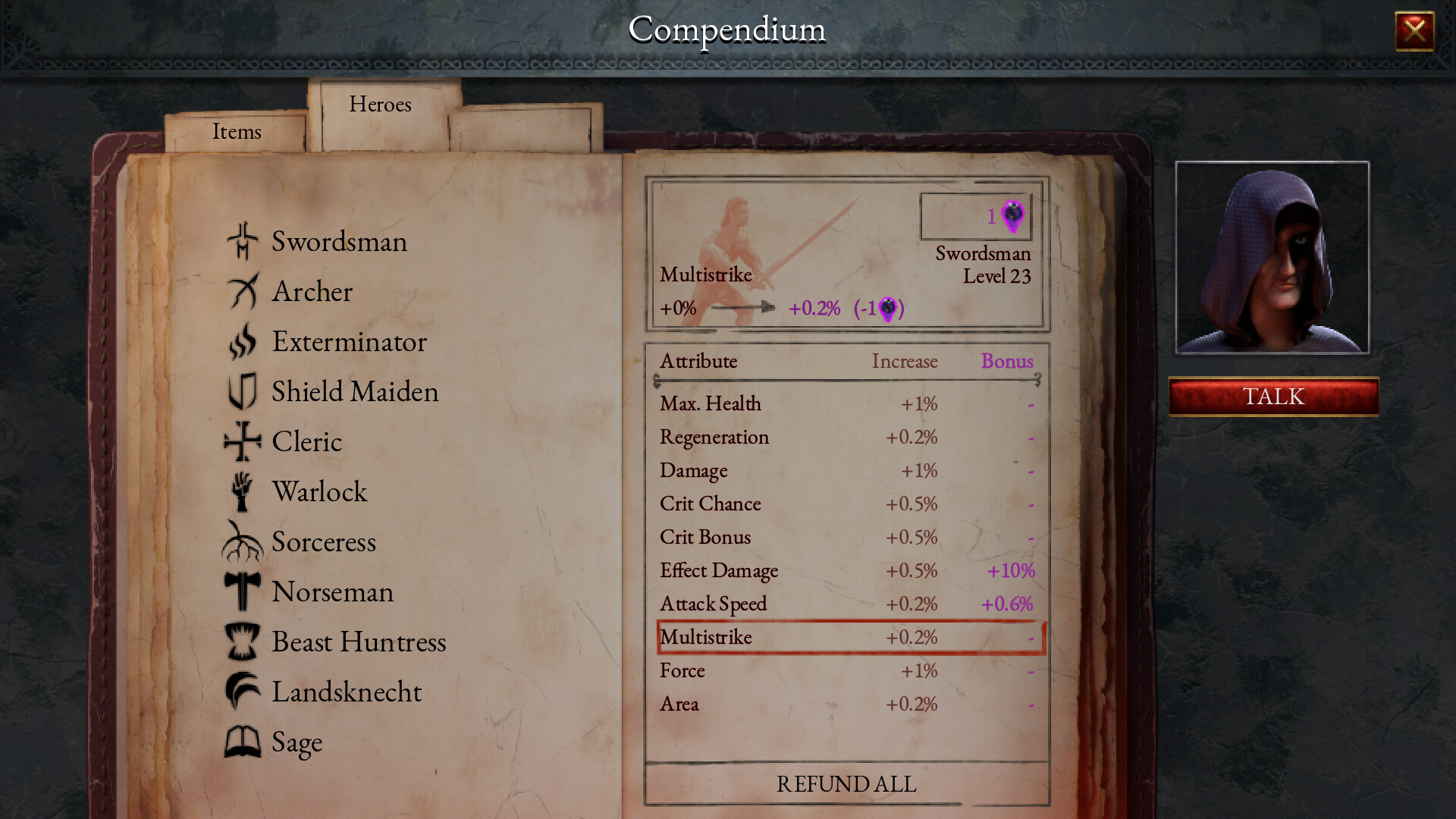
Character marks broaden the workshop by bringing another class’s traits into a chosen hero’s build. This is where experimentation gains teeth: equipment, traits and abilities can reinforce one purpose. A mixture of individually appealing upgrades is less convincing when none solves the same problem.
Take a quest, not just another lap
Quest boards supply a reason to change your habits. Their rewards open equipment and other options, and tracking a chosen objective turns a vague evening of survival into a specific experiment. A failed clear can still be useful if it advances the build you actually want.
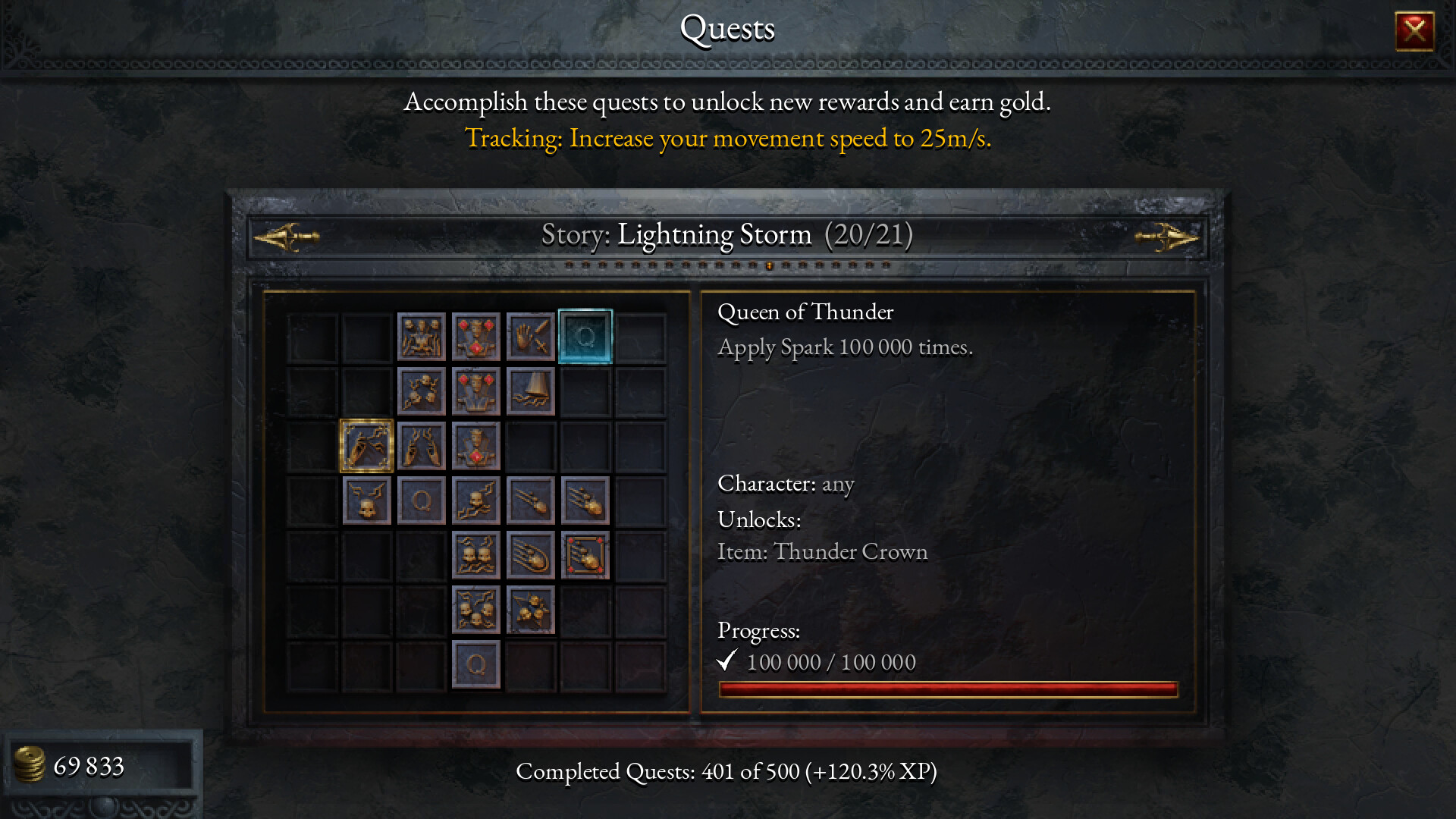
The official quest screen makes the bargain explicit: its Queen of Thunder objective links repeated Spark application to the Thunder Crown unlock. That is more useful direction than simply being told to get stronger. Pick the reward first, then build a run around earning it.
There is a catch. Large cumulative targets can become work when the associated playstyle does not interest you. Chase unlocks that create new choices, and leave completion for later. The underworld already has enough people doing the same thing forever.
The screen gets loud before the dungeon gets quiet
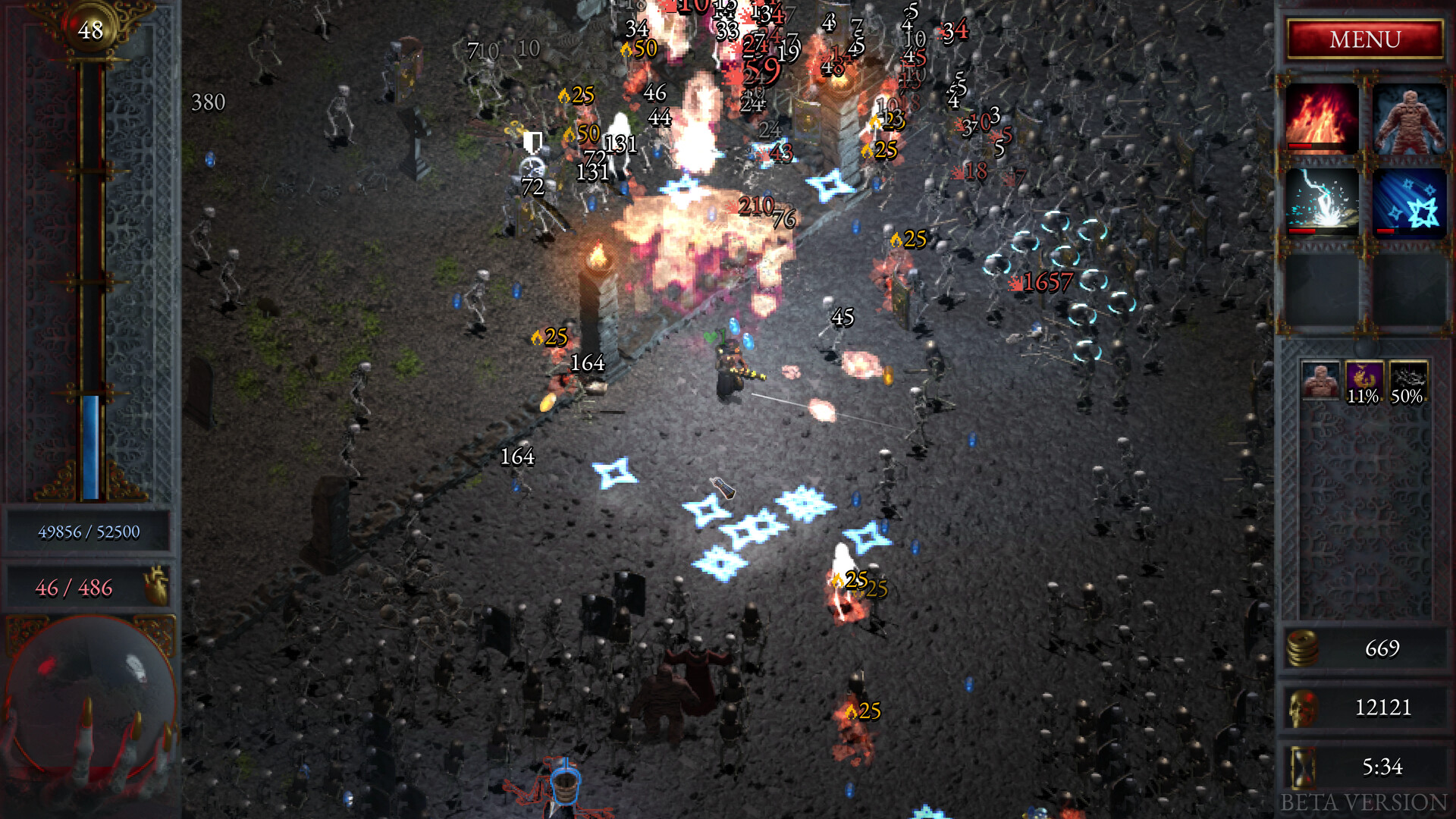
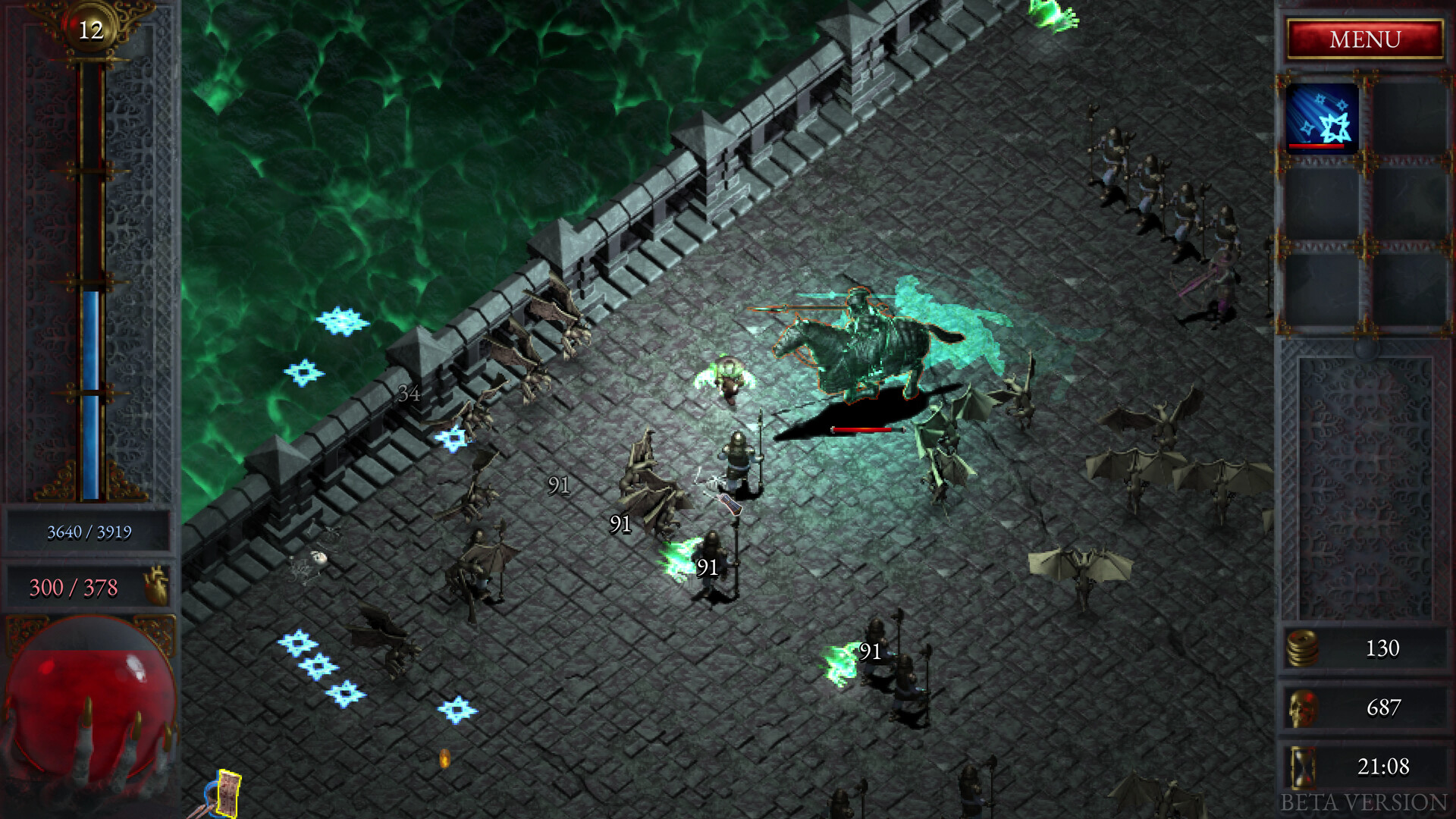
The action is about preserving space while your build does its job. A narrow bridge asks different questions from an open floor: where can you retreat, which threat blocks that route, and is the tempting pickup worth crossing the crowd? Good positioning gives your upgrades time to work.
Automatic attacking keeps the basic workload approachable, with manual control options available for more deliberate aiming. Yet the late-run spectacle is also the main readability tradeoff. Projectiles, damage numbers and overlapping effects can crowd the very information you need to stay alive.
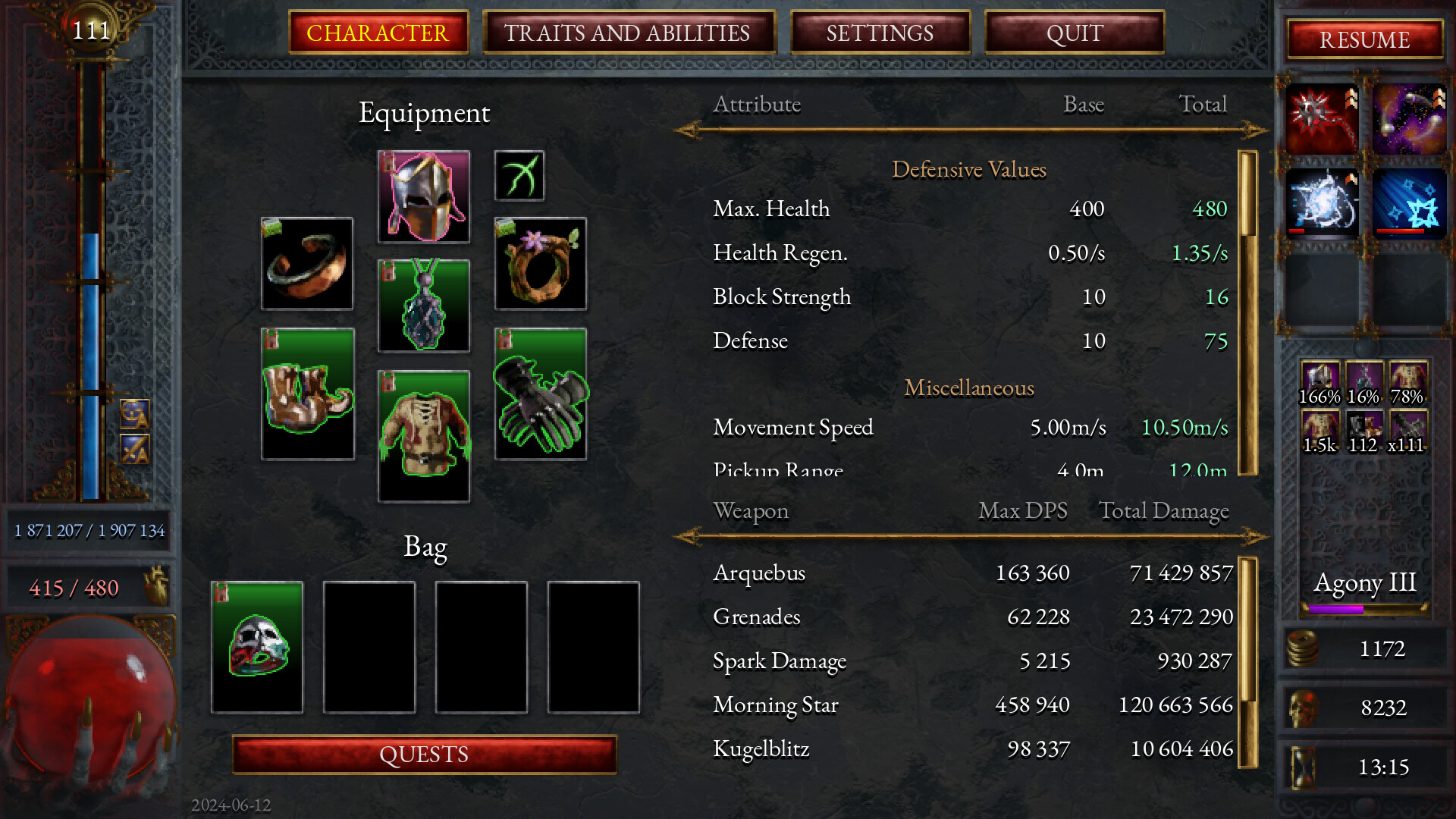
The retro interface has useful detail, including equipment statistics and damage information, but it wants your attention. Treat those screens as diagnostic tools between bursts of action. If you want a survivor game that never interrupts movement with a consequential menu, this is a demanding match.
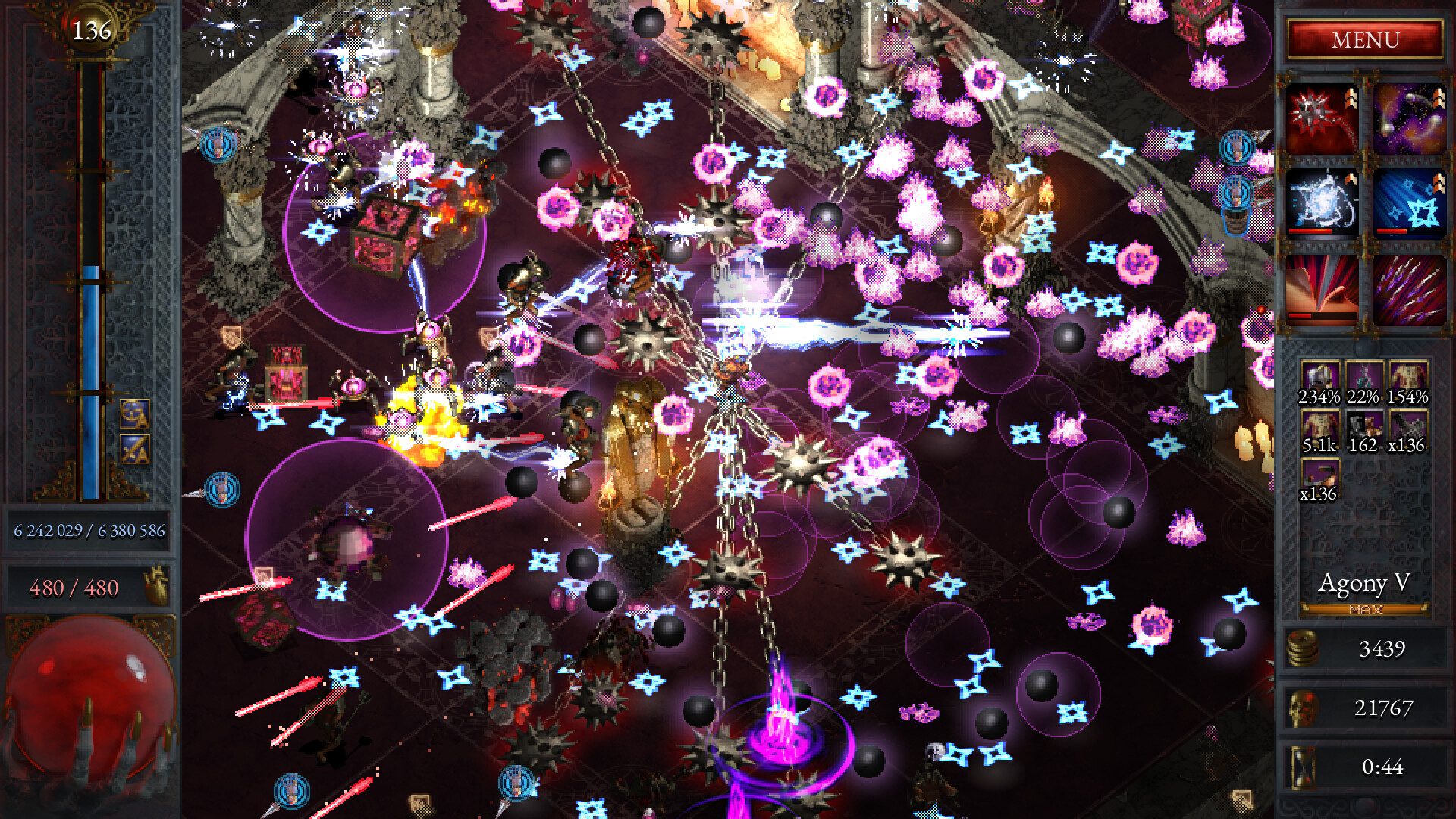
The endgame turns preparation into the challenge
The Vault connects progression directly to equipment collecting: buying thirty items from the Wellkeeper unlocks this final base-game stage. Its entry spending adds modifiers, and its Lord must be activated rather than simply arriving when the clock expires. Preparation matters before the first monster appears.
The Shrine of Torment then lets artifacts alter runs while increasing enemy pressure. Meanwhile, the rescued Scriptor spends Torment Shards on refundable character improvements. These systems offer more control over long-term goals, but they also deepen the gap between a fresh file and a fully developed collection.
Free Android is a different proposition
Steam covers the paid Windows and Linux game. Android Premium and iOS Premium are separate paid apps built around the familiar thirty-minute structure, with in-app purchases listed. The six images here are historical PC store captures, including visibly labeled beta imagery; they do not document mobile controls.
Free Android instead advertises six-to-fifteen-minute battles, equipment growth, gems, challenge play and global leaderboards. Its listing declares ads and in-app purchases, including random items. The shorter commitment is attractive, but this is a different progression and spending proposition from simply buying the PC game.
Buy what exists, leave the future on the calendar
The Boglands is a released paid PC expansion with a swamp stage, the Crone, the Alchemist and Decay-focused possibilities. The separate Supporter Pack adds cosmetics and Training Grounds. The free Bard update is already shipped on PC, so the Bard is not a reason to purchase Boglands.
iOS Premium’s history also confirms Boglands and the Supporter Pack as additional purchases. As of October 14, The Lost Archives is scheduled for October 22, 2026. Its accompanying experimental changes, including weekly challenges and wider Kill Count mode, do not count toward this review’s shipped-content verdict.
Strengths
- Recovered equipment gives later runs a purposeful starting point.
- Potions and character marks support deliberate build experimentation.
- Quest rewards provide concrete goals beyond simply surviving longer.
- Artifacts and refundable character upgrades extend the endgame.
Tradeoffs
- Cumulative unlock requirements can turn experimentation into repetition.
- Dense effects and detailed menus demand sustained attention.
- Free Android changes session length, progression and monetization.
- Paid expansions and Supporter Pack content are separate purchases.
Who it suits
- Best for players who enjoy equipment planning and interconnected build choices.
- A strong pick for dark-fantasy atmosphere and persistent solo progression.
- Less suitable for players seeking cooperative play or minimal menu reading.
Verdict
Halls of Torment is an excellent fit for players who enjoy planning a character as much as watching it demolish a crowd. Recovered equipment, directed unlocks and flexible traits make repetition productive. The price is a substantial amount of reading, repetition and increasingly crowded combat.
The paid PC edition is the clearest recommendation for that original loop, with Premium mobile offering the portable alternative. Choose free Android specifically for its shorter sessions and different progression economy. Start with the base purchase before adding more halls to your infernal appointment book.
Free Android edition
Review score: 7.6 / 10
- Combat
- 8.0 / 10
- Progression
- 8.0 / 10
- Usability
- 7.4 / 10
- Value
- 6.8 / 10
Separate free Erabit app com.halls.of.torment.roguelike.gp, with ads and in-app purchases including random items.
Listing advertises 6–15-minute battles, gems, challenge play and global leaderboards. It is not the Premium purchase.
The review score averages the applicable Combat, Progression, Usability and Value scores, rounded once to one decimal. Fit is specific to each comparison and is excluded.
How do you keep equipment between runs?
Rescue the Wellkeeper, send eligible equipment up the well during a run, then purchase it at camp. A pickup alone is not permanent ownership. Extra buckets increase recovery opportunities, while uncommon variants have later unlock requirements.
Are free Android and Premium the same game?
They are distinct editions. Free Android advertises six-to-fifteen-minute battles, gems, leaderboards, ads and in-app purchases. Premium follows the thirty-minute format. Choose around the progression model and session length rather than the shared name.
What should a new player prioritize?
Pick a useful quest reward, recover equipment that supports it, and unlock potion options through the Cupbearer. A clear objective makes an unsuccessful survival attempt productive and prevents every level-up choice from becoming an unrelated impulse purchase.
Does Halls of Torment have co-op?
The covered releases are solo experiences; Steam lists single-player. Character combinations, marks and summoned creatures are build systems, not a multiplayer party. Buy it for planning and surviving your own expedition.
Do you need the DLC, and is The Lost Archives out?
Start with the base game. Boglands and the Supporter Pack are separate extras; the free PC Bard update is already available. On October 14, 2026, The Lost Archives remains scheduled for October 22 rather than released.
Sources
- Chasing Carrots: Halls of Torment on Steam ·
- Chasing Carrots: official game overview ·
- Erabit: free Android edition ·
- Erabit: Premium Android edition ·
- Erabit: Premium iPhone and iPad edition and version history ·
- Chasing Carrots: The Boglands expansion ·
- Chasing Carrots: The Lost Archives planned release ·
- Chasing Carrots: HoT Experiemental Update - 2026-10-05 ·
- Chasing Carrots: HoT Fixes | 2026-04-14 ·
- Chasing Carrots: HoT Update - 2026-03-10 ·
- Chasing Carrots: The Boglands - Out Now! ·
- Chasing Carrots: HoT Update & Supporter Pack DLC ·
- Chasing Carrots: HoT 1.0 | Final Stage & End Game ·
- Chasing Carrots: HoT Update | 2023-06-27 | Cup Bearer & Polish ·