7 Best Horde-Survival Games With Guns
Shotguns, bullet storms and shrinking escape routes: find the kind of horde gunfight you actually want.

If you want to aim a gun while a crowd closes in, start with 20 Minutes Till Dawn or Crimsonland. If you want a whole arsenal firing while you steer through danger, Deep Rock Galactic: Survivor and Brotato take that idea in different directions. Zombie Defence adds ammunition, reloads and a persistent shelter to hands-on zombie shooting; Yet Another Zombie Survivors offers a customizable squad, and Zombie Waves brings gun-and-skill builds to mobile.
The important distinction is what your hands actually do. A manually aimed shotgun, an automatically targeted rifle and six auto-firing guns can all make excellent horde-survival games, but they ask for different skills. These seven picks earn their place through recognizable firearms, meaningful projectile behavior and sustained crowd pressure, across zombie outbreaks, alien caves and supernatural arenas.
The desktop editions are compared unless a mobile edition is named. Six picks are released games; Zombie Defence is a single-player browser Alpha in development, with waitlist signup for news and playtest availability. Scores are editorial judgments of documented design, with Fit focused on the gun-heavy horde experience.
The quick comparison
7 games, different reasons to give the next run a chance.
Choose a game to jump to its overview. Platform lists are summaries; check the linked official edition.
The games
Zombie Defence
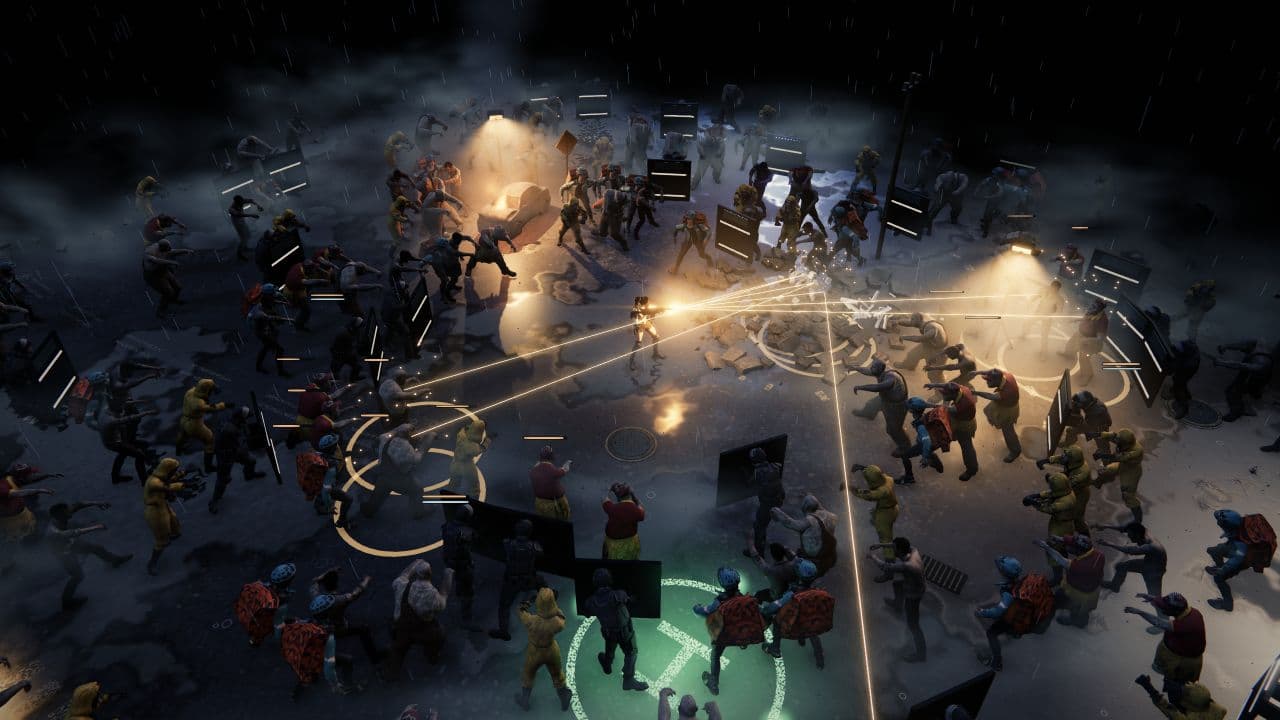
Zombie Defence makes the magazine in your hands and the ammunition back at home part of the same survival problem.
- Manual aim (desktop)
- Fast-paced
- Crafting
- Shelter building
- Permanent progress
- Platforms
- Browser Alpha in development; desktop and touch controls implemented
- Price model
- Public launch pricing has not been announced
On desktop, movement and cursor aim are separate: you choose a firing lane, hold the trigger, sprint out of trouble and reload your weapon. Touch uses a movement stick and a FIRE control that targets the nearest living enemy. That distinction matters if the attraction is deliberately shooting the opening you want to escape through. Sprinting couriers, shielded officers and knockback-resistant heavies also give target selection a purpose beyond sweeping the nearest edge of the crowd.
The gunfire can change shape during a deployment. Split Shot adds extra rays to each cartridge, while Bank Shot sends ricochets off solid surfaces. Magazine, fire-rate and impact upgrades change how long you can hold a lane and what happens when shots land. A useful decision is whether your next level-up should solve the immediate crowd problem or take the shelter-investment option that banks a lasting benefit.
Back home, a nine-weapon arsenal gives crafting a concrete destination. A Breach Shotgun, Compact SMG, Watchman Rifle and Belt-fed LMG differ in cadence, range, damage, magazines and shot count. Scrap also feeds component and ammunition production, so reserving supplies for a weapon project can compete with keeping the current gun supplied. Those are persistent choices; the temporary battle cards reset after deployment.
Choose endless Scavenge when the goal is simply to hold against escalating waves. Separate city Scrap expeditions add container searches, routes and a return-to-pad objective when you want resources for the shelter. Collected expedition Scrap survives defeat up to storage capacity, so this loop rewards gathering and preparation without making every failed outing erase the haul. The tradeoff is attention: shelter projects and supplies share the spotlight with shooting.
The verdict
Choose Zombie Defence when surviving the next crowd should also fund the gun and shelter you want to return with.
20 Minutes Till Dawn
20 Minutes Till Dawn keeps a clear line between pointing the gun and building the storm that follows each shot.
- Manual aim
- Roguelite
- Short runs
- Permanent progress
- Platforms
- Windows and macOS via Steam; desktop edition compared
- Price model
- Paid game
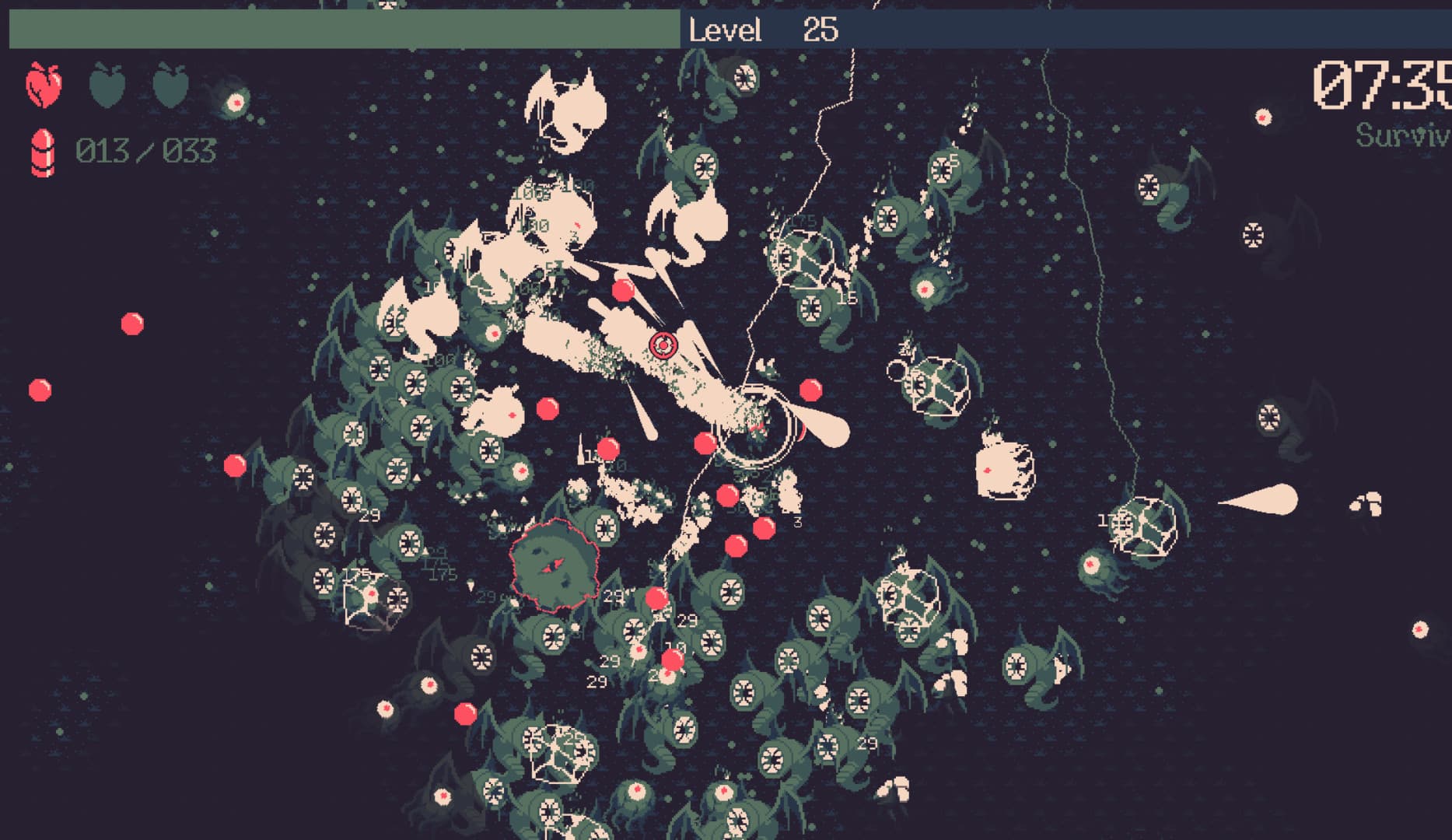
Directional aiming and active firing make the opening minutes immediately recognizable as a shooter. A shotgun gives you a spread to point into a pack; Dual SMGs offer a very different stream of fire. Reloading is part of the rhythm, and the option to disable automatic reloading when you stop shooting gives you more say over that rhythm. Leave yourself room to finish the magazine rather than treating a reload gap as an afterthought.
Then the supernatural systems start piling on. A gun build can ignite enemies, call down lightning and add further attacks around your own shots. The appeal is that the barrel still gives you a direction to care about while your upgrades expand what that direction can accomplish. Reaching level 20 opens a weapon-specific evolution choice, giving a promising setup another turn before the run ends.
For a first gun-focused run, choose a firearm whose cadence you like and read upgrades as answers to a practical problem: too little coverage, too much reload downtime or too little damage on the enemies blocking your route. Souls spent on runes and unlocks support later attempts. The main compromise is visual density: by late game, bullets, elemental effects and enemies can occupy the same small patch of screen.
The verdict
The strongest starting point here for a solo player who wants personal aim and spectacular bullet-heaven growth in the same run.
Crimsonland
Crimsonland strips the encounter down to a gun, a threatening crowd and the patch of ground you can still reach.
- Manual aim
- Fast-paced
- Co-op
- Platforms
- Windows, macOS and Linux via Steam; 2014 remaster compared
- Price model
- Paid game
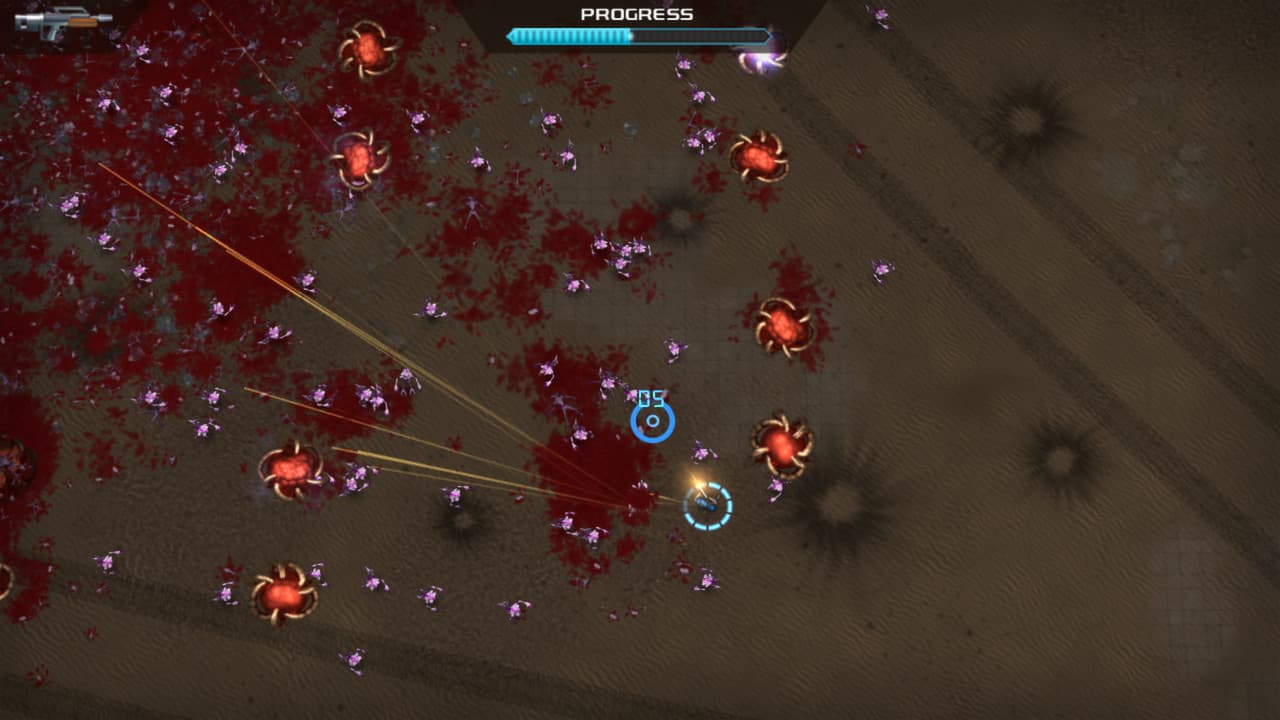
This is a twin-stick arena shooter built around directly aiming into approaching monsters. Its arsenal ranges from a pistol to much stranger hardware, including the Triple Ion Rifle and gauss shotgun. Reloads matter, too: Fastloader is an explicit example of a perk that changes your firing rhythm. The resulting appeal is immediate. A better gun or a useful perk changes how confidently you can clear space in front of you.
The progression feeds that arcade core. Quest mode unlocks weapons and perks for the survival modes; kills during a session earn experience, and level-ups let you pick stacking perks. Your next attempt draws on a broader pool, but the challenge still comes back to aiming, moving and lasting longer. Choose ordinary Survival first if you want the clearest expression of that loop before exploring its other rule sets.
Up to four players can join local co-op, including the survival modes. That makes Crimsonland an especially useful pick when the desired evening is shared gunfire and a score to beat. Its open arenas offer less environmental routing than Deep Rock Galactic: Survivor, and the presentation is unapologetically bloody. Both are part of deciding whether this focused arcade style suits you.
The verdict
Pick Crimsonland for the cleanest arcade version of shooting your own way through a horde, especially with friends on the same screen.
Yet Another Zombie Survivors
Yet Another Zombie Survivors turns the gun fantasy into a moving team: overlapping weapons, complementary abilities and one shared route through the crowd.
- Squad builds
- Manual aim
- Roguelite
- Permanent progress
- Platforms
- Windows via Steam; desktop edition compared
- Price model
- Paid game; Steam demo available
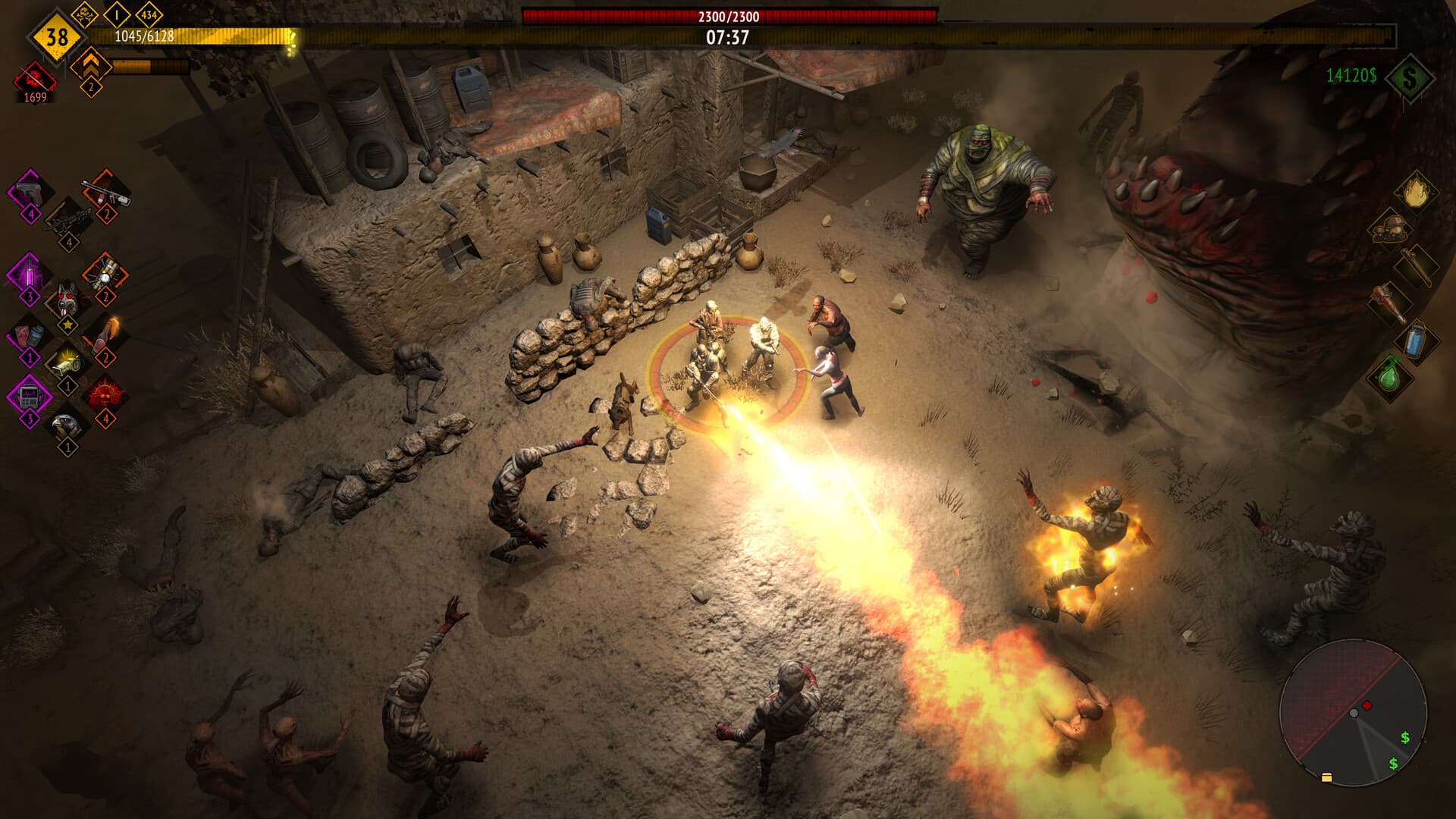
You begin with one survivor and can recruit two allies, building a squad of up to three. A gun-focused team can grow around the SWAT survivor and bring heavier fire or explosive support into the mix. The squad aims and fires automatically by default, but the developer also provides manual aiming and firing options. You can enjoy the automatic setup or take more direct control instead of choosing a different game just to move the reticle yourself.
The useful question is what the next recruit contributes. More bodies are only part of the appeal; their weapons and abilities create different combinations, and the game also allows solo and duo runs. Concentrating on a favorite survivor’s equipment is another route. Treat team composition as a way to address how the crowd is reaching you rather than collecting every flashy effect just because it appears.
Permanent upgrades sit outside the run, while in-run items reshape the current team. Arena layouts and hazards keep positioning relevant even when the guns handle targeting. The compromise is that you command the group rather than separately placing each member, and this is single-player despite the squad on screen. Its pleasure lies in coordinating a small moving arsenal, not assigning three human players their own survivor.
The verdict
Choose this when you want a squad’s worth of gunfire and build choices without giving up the option to aim for yourself.
Deep Rock Galactic: Survivor
Deep Rock Galactic: Survivor gives the guns their own trigger finger and gives you a cave full of decisions.
- Roguelite
- Exploration
- Extraction
- Permanent progress
- Platforms
- Windows via Steam
- Price model
- Paid base game; Heavy Duty expansion sold separately
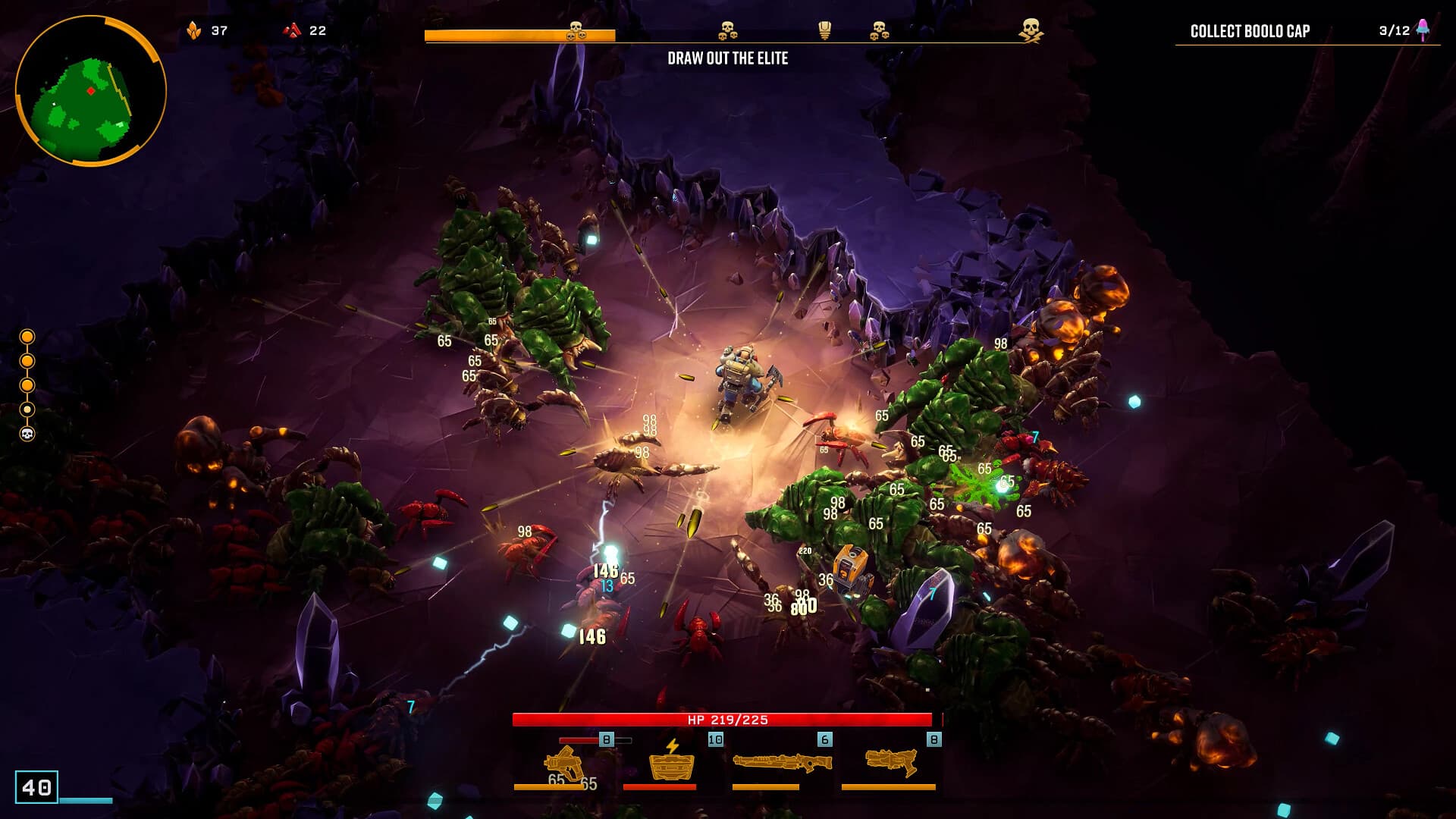
Aiming and firing are automatic, leaving you to steer a dwarf through alien swarms, mine resources and complete the assignment. The weapons are a major part of the attraction: submachine guns, autocannons and plasma carbines sit alongside the wider science-fiction toolkit. This is a good choice when watching a well-built loadout chew through a crowd is the reward, while finding a route is the hands-on challenge.
Projectile behavior still matters without manual aim. Pierce lets shots reach additional enemies, and overclocks can change the pattern itself. Omni Barrel, for example, gives compatible guns eight-direction fire. That is useful to compare with a tightly directed weapon: the shape of the attack changes which positions make sense when bugs are closing from several sides.
The cave prevents the run from becoming endless circles around an empty field. Mining, objectives and the timed return to the Drop Pod compete for your attention. Plan an exit before committing to a tempting pocket of resources; killing more bugs is only part of finishing the mission. Choose it for that moving problem of terrain and firepower. If directing individual shots is the main attraction, the automatic controls will be a weaker match.
The verdict
The best fit here for gun-heavy survival where your decisive move is often digging an escape route before you need it.
Brotato
Brotato makes carrying too many guns the premise, then asks whether you can afford to make them work together.
- Roguelite
- Loot builds
- Manual aim
- Co-op
- Platforms
- Windows, macOS and Linux via Steam; desktop edition compared
- Price model
- Paid base game; Abyssal Terrors expansion sold separately
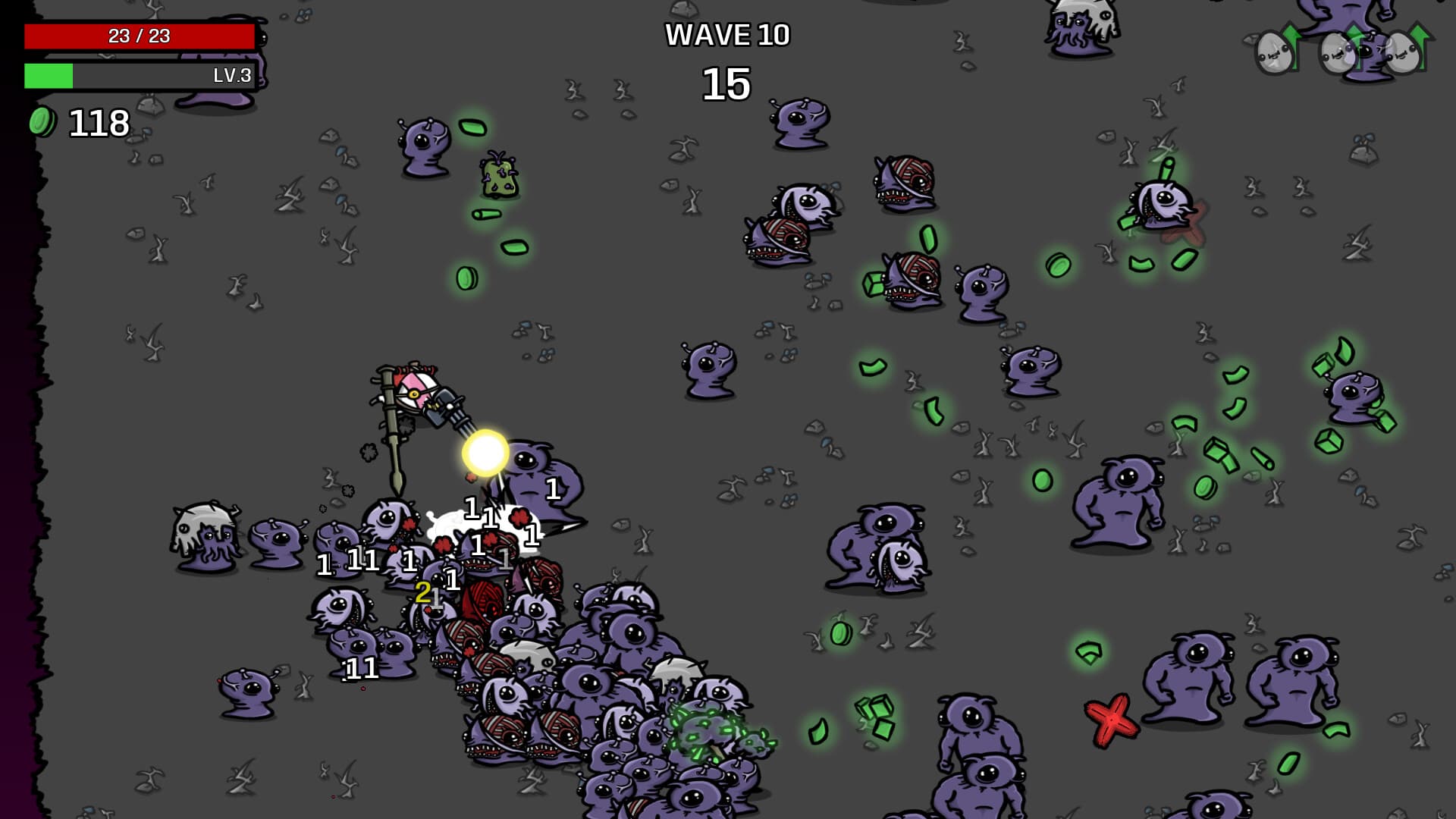
Your potato can hold up to six weapons, and firearms are a substantial part of the pool: SMGs, flamethrowers and rocket launchers are all options. Weapons fire automatically by default, with manual aiming available. The gun-heavy appeal comes from combining several attacks around one moving character, then weaving close enough to collect materials without letting the aliens close the remaining gap.
Each wave ends at a shop, which makes the experience easy to divide into action and decision-making. Buy another gun, improve the loadout or keep resources for the next opportunity. Combining duplicate weapons is one way to strengthen a setup. For a firearm-focused run, give the purchases a shared purpose rather than automatically mixing every ranged, melee and elemental option offered.
This structure is ideal if you want frequent breathing space to rethink what the guns are doing. It also means the action is deliberately interrupted; someone seeking an uninterrupted last stand may prefer Crimsonland. Local co-op supports up to four players, and adjustable enemy health, damage and speed give you room to tune the challenge while learning a new loadout.
The verdict
Pick Brotato when assembling the battery of guns is as enjoyable as steering it through the next wave.
Zombie Waves
Zombie Waves packages the gun-and-horde loop around one-handed controls, automatic aiming and a long-running mobile equipment collection.
- Fast-paced
- Roguelite
- Loot builds
- Permanent progress
- Platforms
- Android, iPhone and iPad
- Price model
- Free download with in-app purchases; Android also lists ads and random-item purchases
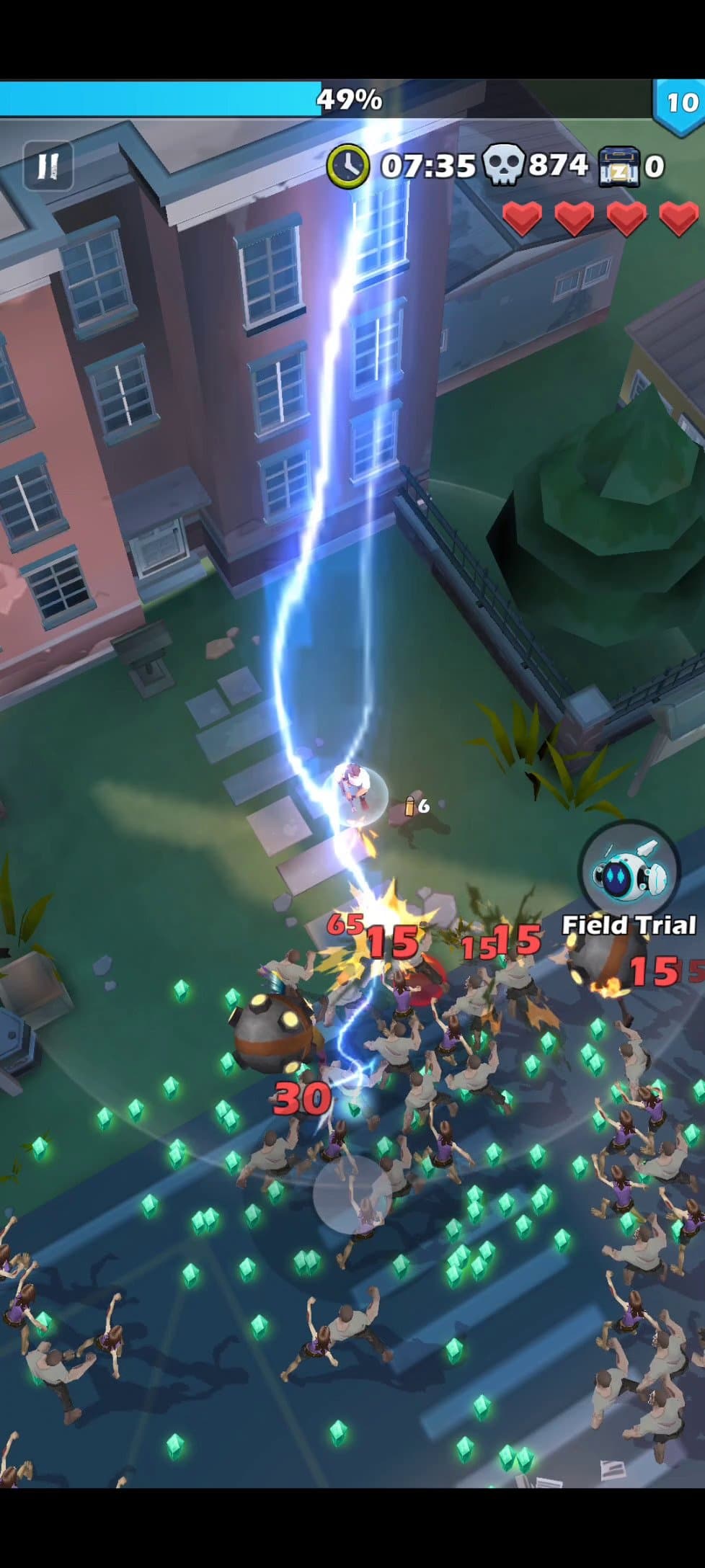
The gun gives the run its center, while roguelite skills and powerful effects expand your ability to clear the surrounding zombies. Auto-aim takes precision targeting out of the main control task, so positioning and the next skill choice deserve your attention. This makes it a natural pick for someone who wants mobile firearm spectacle without steering a separate aiming stick.
Heroes, equipment and robot companions add several ways to develop that firepower. The practical attraction is returning to a familiar loadout and extending it over many visits, then building temporary skill combinations inside a stage. Start by understanding what the equipped weapon contributes and what your supporting skills add; a screen full of effects is more useful when it solves the crowd problem in front of you.
The purchase model is the important dividing line. It is free to download, but ads and in-app purchases are part of the Android listing, which also discloses purchases containing random items. That is a different spending structure from buying a complete desktop base game. Choose it for a continuing mobile collection as well as the shooting; the many progression layers are less suitable for someone who wants only a self-contained arcade run.
The verdict
The practical mobile pick for assisted-aim gunfire and ongoing equipment growth, provided that its free-download purchase model suits you.
How we compare
A good recommendation explains who a game suits and where it falls short. Our editorial scores use the same five criteria, each rated out of ten.
- 01
Combat
Controls, aiming, enemy readability, and the decisions you make under pressure.
- 02
Progression
Build choices during a run and meaningful progress between attempts.
- 03
Usability
Control demands, platform access, interface options, and documented device requirements.
- 04
Value
What the asking price includes, optional purchases, and the scope of the free version.
- 05
Fit
How well the game answers the specific question in this article.
Which one should you try?
Choose by how much of the firing you want to control. 20 Minutes Till Dawn is the clearest mix of directed shots and escalating powers; Crimsonland is the focused arcade pick, with local co-op as a bonus. Yet Another Zombie Survivors gives you a flexible squad, Deep Rock Galactic: Survivor makes terrain the problem, and Brotato puts several guns and frequent shop decisions in your hands. Zombie Waves suits an ongoing mobile collection. Zombie Defence is the compelling choice when managing the magazine, crafting the next firearm and improving the shelter should all belong to the same survival loop.
Your questions, answered.
Want to see what we’re building?
Zombie Defence is in Alpha. Join the waitlist.
More games to explore
- 7 Best Roguelite Shooters With Short Runs
Seven roguelite shooters for shorter play: compare run timers, boss finish lines, pause controls and save rules, from Brotato to Zombie Defence.
- 7 Best Roguelite Shooters With Weapon Upgrades
Compare roguelite shooters with weapon evolutions, gun merging, overclocks and crafting. Find out which upgrades last one run and which survive the reset.
- 9 Best Zombie Horde Shooters in 2026
Compare nine zombie horde shooters, from co-op campaigns and expanding survival arenas to mobile auto-shooters and persistent shelter runs.