Zombie Waves review: one thumb, two kinds of commitment
The shooting is easy to approach. Deciding what deserves your upgrades, attention and money is the harder part.
Zombie Defence Editorial ·
Based on official mobile documentation and gameplay imagery.
Zombie Waves gives your thumb a straightforward job: keep a survivor out of a very crowded grave. Your brain gets the longer assignment. Every promising upgrade raises another question about firepower, movement, companions or the resources waiting back at the menus.
That split makes this an appealing mobile horde shooter for people who enjoy assembling a build. It also makes the free download a poor guide to the whole experience. The important question is whether you like the decisions between battles as much as the fireworks inside them.
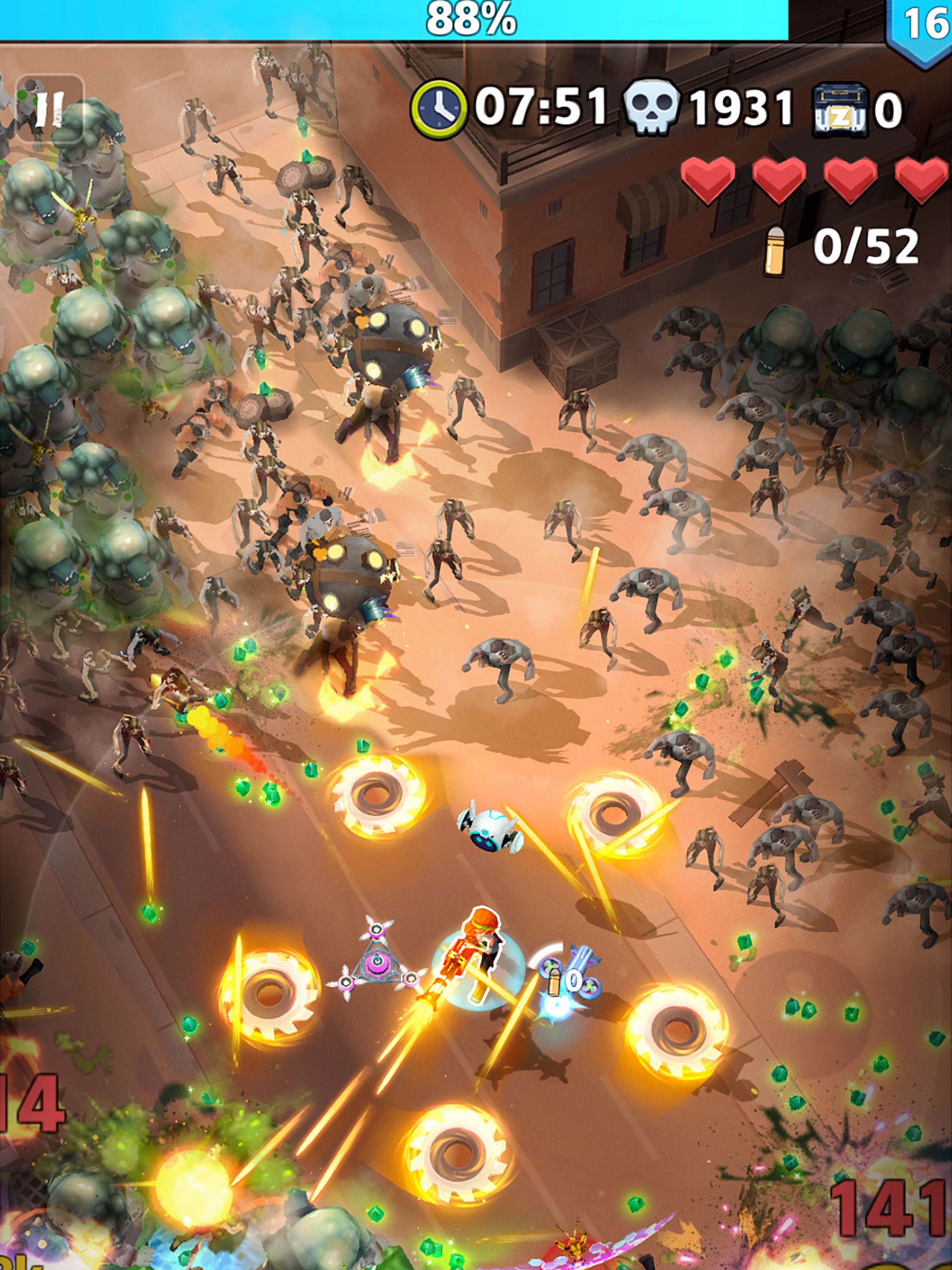
Your thumb chooses the escape route
One-handed controls and automatic aiming move the emphasis away from lining up headshots. Positioning becomes the interesting responsibility: leave yourself a way out, judge approaching groups and avoid treating the nearest patch of empty ground as a permanent address.
Enemies bunch around buildings, projectiles cross the screen and pickups dot the floor. A narrow route might funnel a crowd, but it can also remove your retreat. The zombies are remarkably enthusiastic about testing your floor plan, especially when you have left yourself only one exit.
Bosses change what a good build needs to accomplish. Clearing many small enemies and keeping damage on a large target are different problems. The Butcher shares an arena with lesser enemies, so concentrating on the biggest health bar still leaves a crowd to manage.
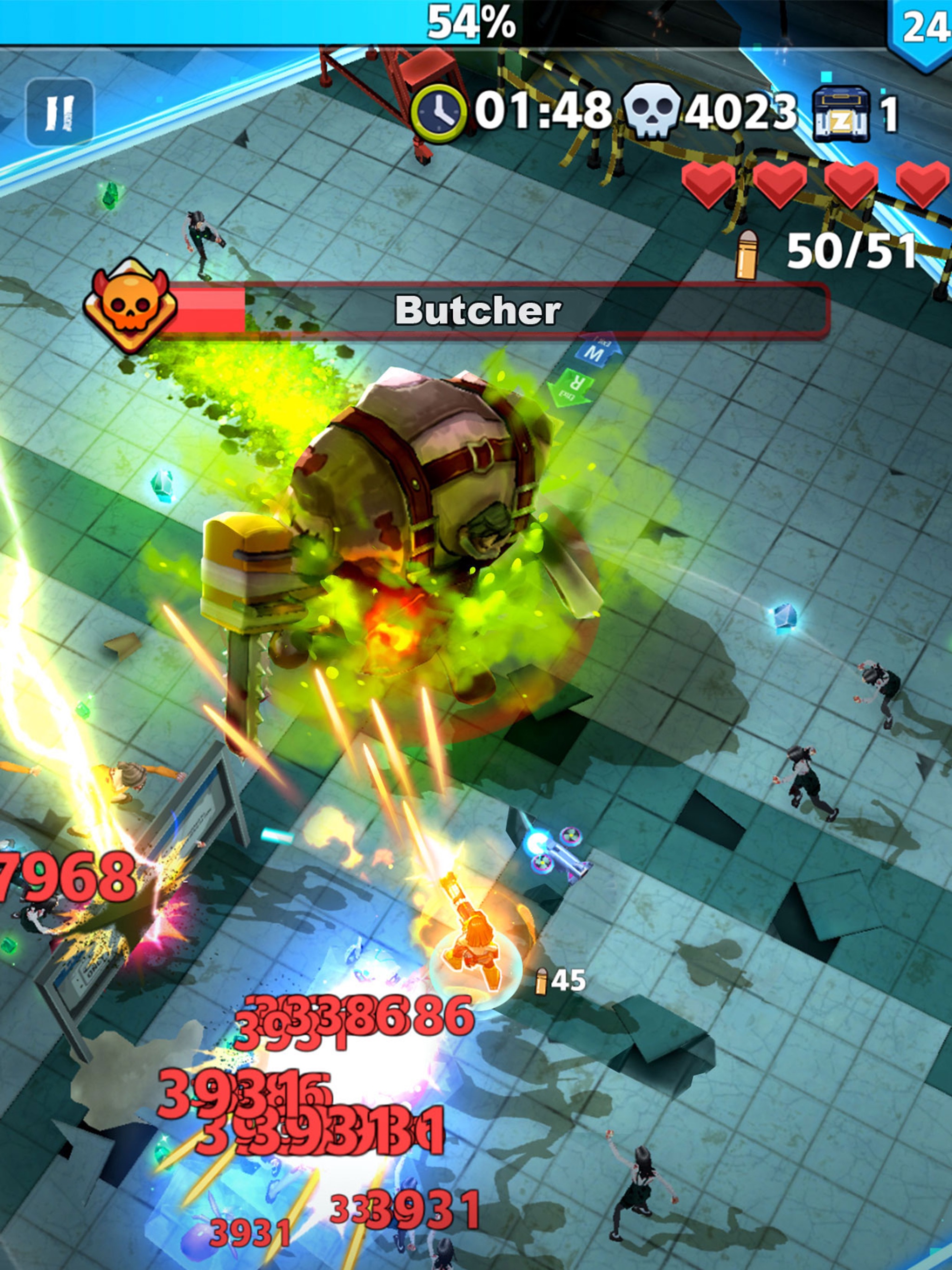
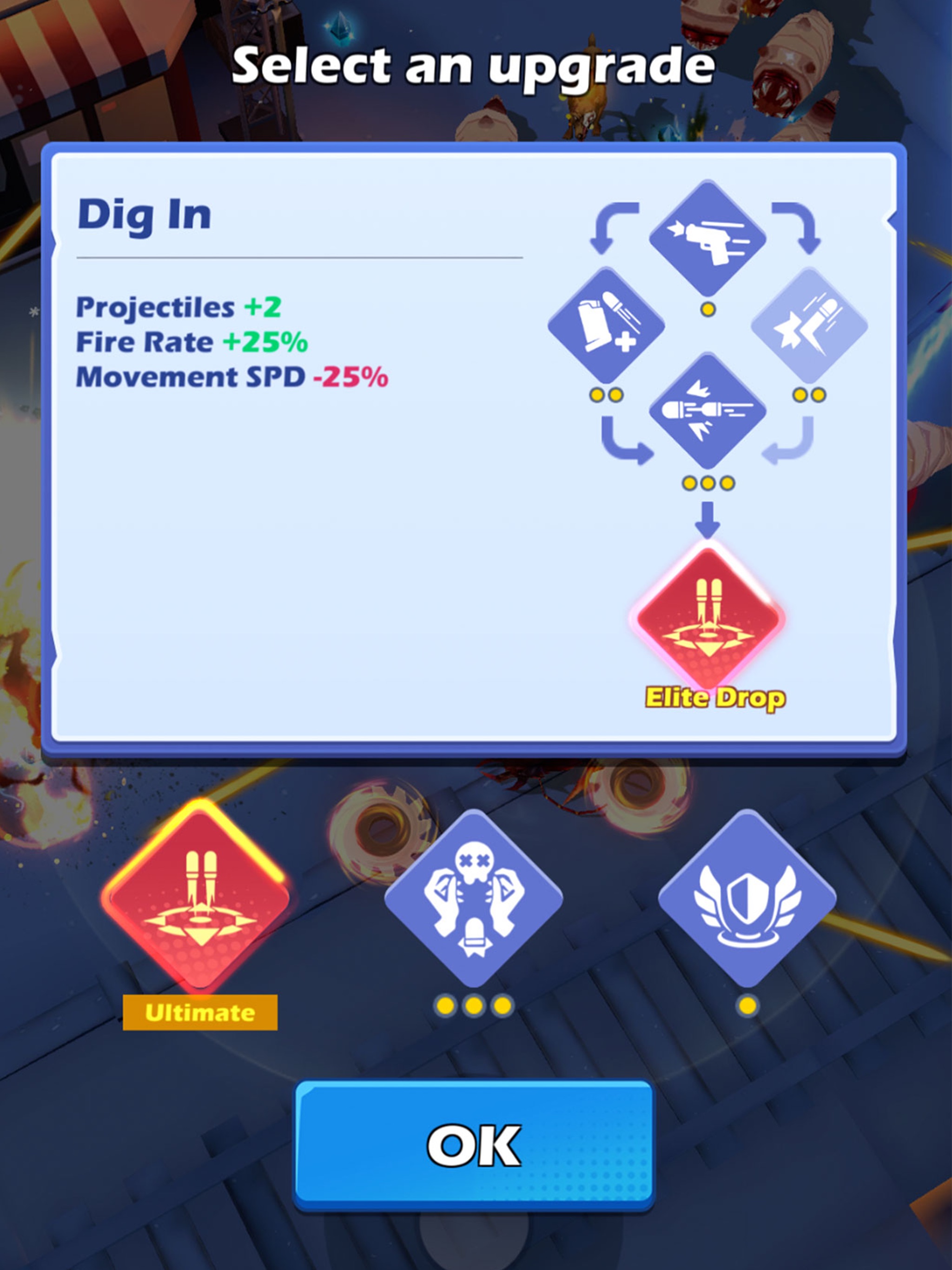
Read the red number, too
Dig In captures the appeal of the upgrade system neatly. It offers more projectiles and faster fire while taking away movement speed. Extra output can clear space, but a slower survivor has less room to repair a bad route. Read the red number before celebrating the green ones.
Rather than choosing an upgrade because its border looks expensive, ask what is currently ending your run. If enemies close the distance before you can escape, another mobility penalty needs a compelling reason. If your route is sound but targets survive, additional firepower makes more sense.
This is where the catalogue of more than 100 roguelite skills earns its interest. Quantity alone is not depth. A choice becomes meaningful when its benefit changes your priorities, its drawback remains visible and another part of the build can support it.
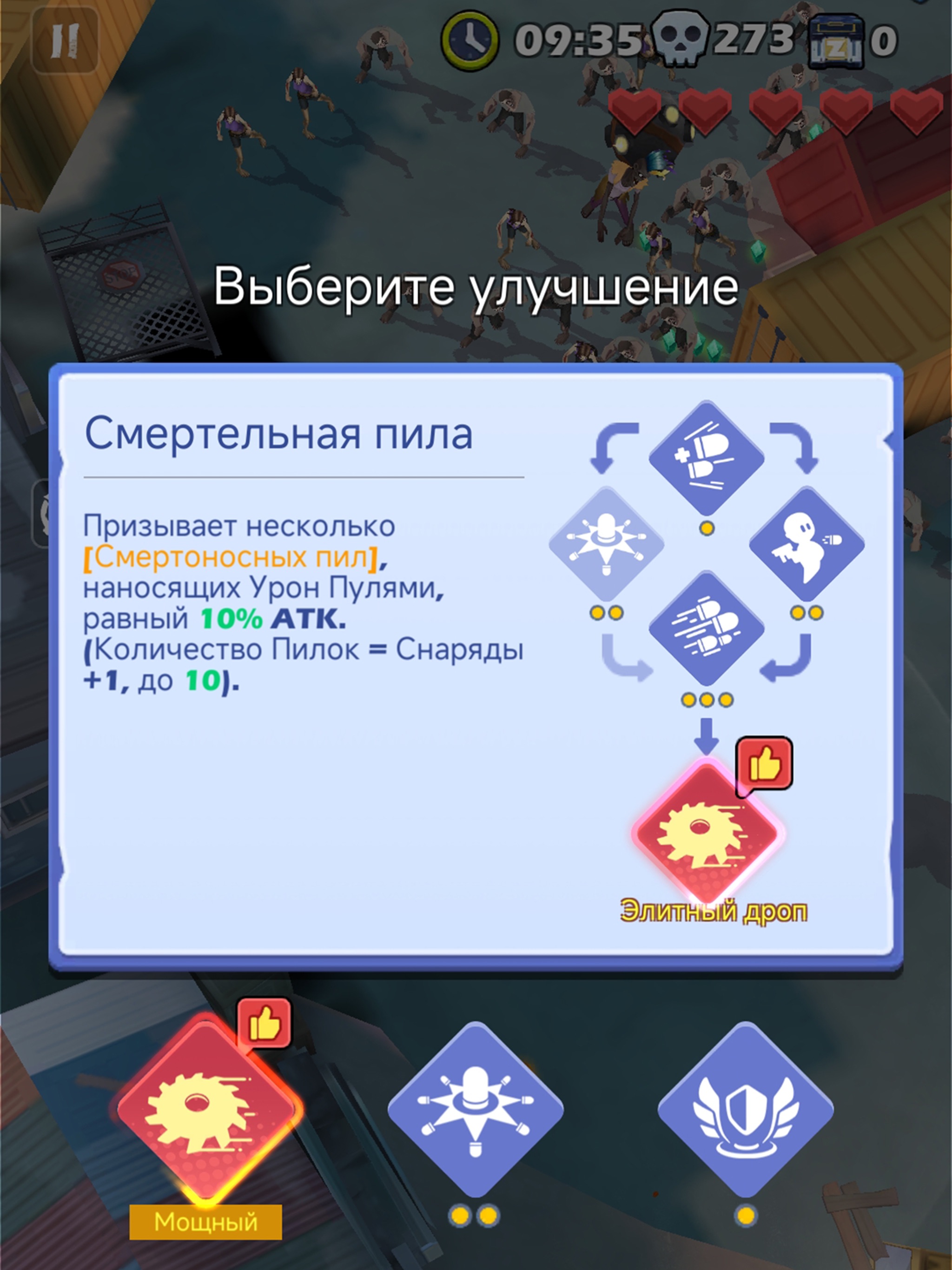
Build a relationship between upgrades
The saw upgrade ties the number of saws it produces to your projectile count. That is a much more useful invitation than another isolated bonus: an investment in one part of the build can strengthen a second effect you already want to use.
Follow that dependency when reading descriptions. Does a projectile upgrade help only the gun, or another effect as well? Are you improving the attack that actually clears your route? The best-looking option on its own is not automatically the most useful addition to your existing setup.
There is a pleasing little engineering puzzle here. A build that gains several benefits from one choice feels more deliberate than a shopping bag of glowing icons. It also gives you a reason to understand a disappointing run instead of immediately blaming your thumb.
The run ends; the collection does not
Heroes, equipment and customizable robot companions give the next attempt a starting point beyond your last skill selection. The draw is clear: keep developing a setup you recognize, then see how a new run interacts with it. This is progression you are meant to revisit.
The useful habit is to separate two questions. Did the build fail because its choices fought each other, or because your underlying equipment needs attention? Spending resources without that distinction risks improving a number while leaving the actual problem comfortably alive.
Stage rewards give each attempt a destination, while the lobby keeps purchases close to the next-run setup. Between-run management is part of the pitch. If you want every restart to be a nearly self-contained experiment, this persistent layer may feel like extra administration.
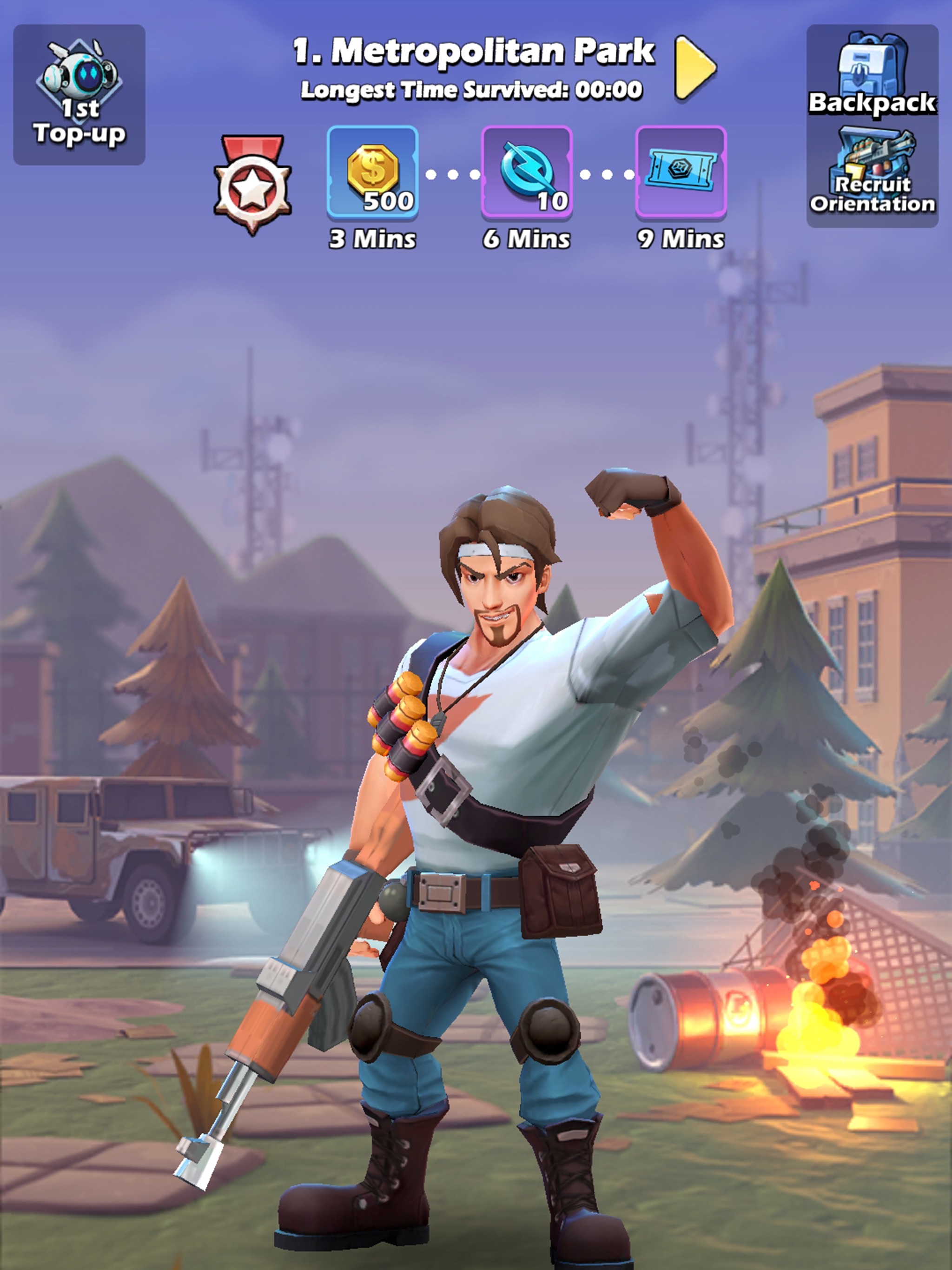
More modes, with a reason to be selective
Survival is the starting point, with competitive activities and a cross-server team-up mode widening the menu. Choose the team-up activity when you want company; use your ordinary survival attempts to learn a build. Different reasons to log in deserve different expectations.
Vehicle duels shift the view from a survivor on foot to armed vehicles trading fire down a road. Those diversions give a collection another purpose. They can also pull attention away from the simple pleasure that brought you here: picking upgrades and finding a gap in a horde.
My recommendation is to start with one question: would you repeat the main fighting loop without chasing an event reward? If the answer is yes, additional modes have something solid to extend. If it is no, more checklists are unlikely to solve the problem.
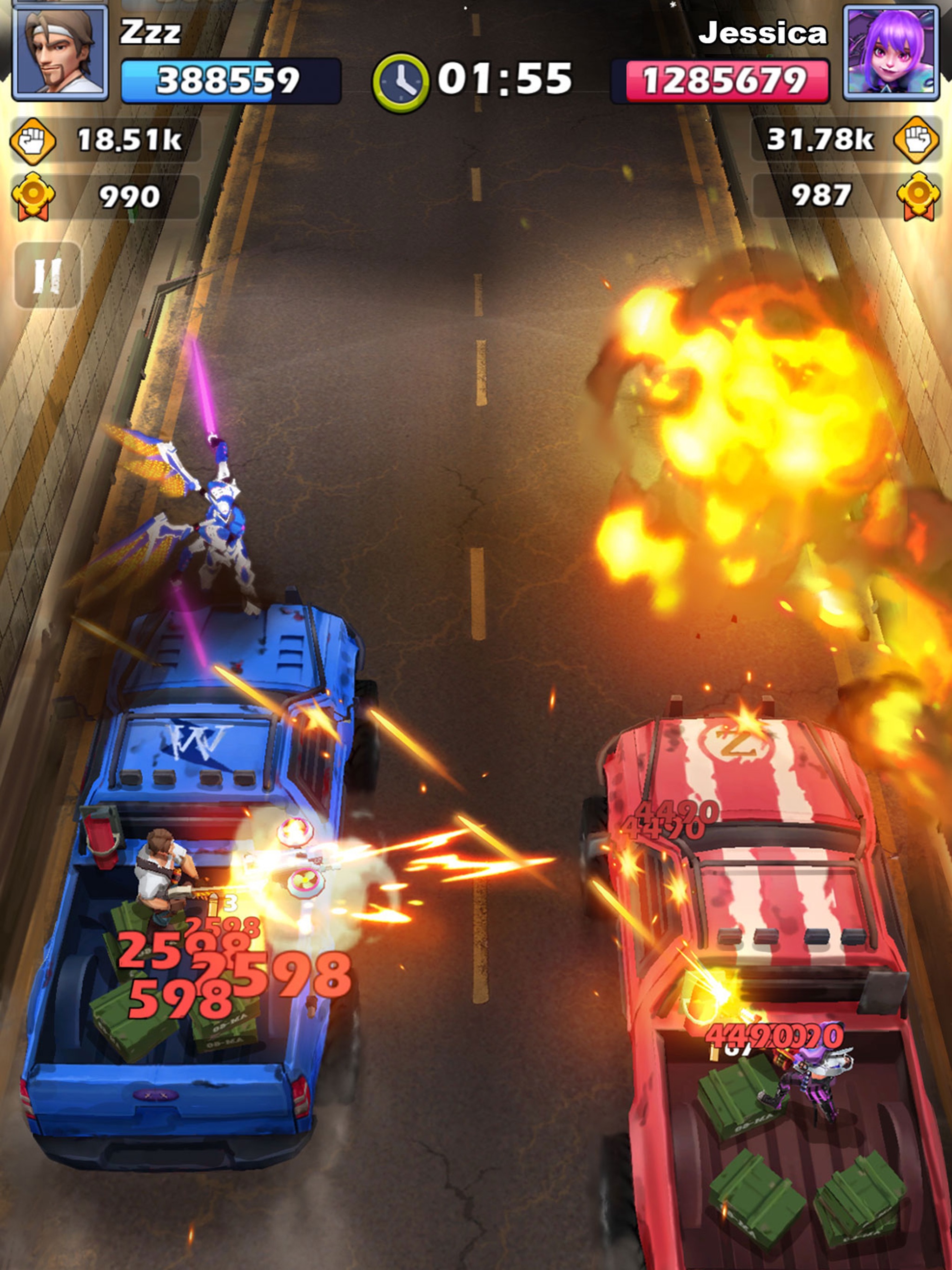
Free to begin, worth setting boundaries
Zombie Waves is free to download on both mobile stores, with advertising, in-app purchases and randomized items in the mix. That makes trying the combat straightforward. It also makes a spending limit worth deciding before an attractive offer arrives beside the next upgrade you want.
Give the basic loop several chances before paying to expand a collection. Judge an upgrade by the problem it addresses: does it strengthen a build you enjoy, or are you buying because the last attempt ended badly? Those are very different reasons to open a shop.
Keep a time budget alongside the money budget. Side activities and account rewards are useful only while they make the game more enjoyable for you. Let a missed reward stay missed occasionally; surviving the apocalypse should not become another appointment you resent keeping.
Which mobile edition does this cover?
Pick the native Android version through Google Play, or the iPhone/iPad version through Apple’s store. The Apple edition currently requires iOS or iPadOS 15.0 or later. The publisher website also provides mobile download links, making it a useful starting point for finding the correct app.
The one-handed control scheme is the key attraction for phone play; the same busy battlefields give a larger screen plenty to display. Choose the device you expect to return to regularly. A game built around developing a collection benefits from fitting comfortably into your routine.
Strengths
- Simple movement controls leave attention for positioning and upgrade decisions.
- Skill dependencies offer more to consider than isolated damage increases.
- Heroes, robots and equipment support a recognizable long-term setup.
- Bosses and side activities give that setup different problems to solve.
Tradeoffs
- Persistent upgrades add management beyond the immediate survival run.
- Ads, purchases and randomized items complicate the value proposition.
- Dense effects and damage numbers can compete with battlefield readability.
- Powerful upgrades can introduce movement penalties that punish careless positioning.
Who it suits
- Best for mobile players who enjoy skill combinations and a collection that grows between sessions.
- Less appealing if you want self-contained runs, a one-time purchase or minimal menu management.
Verdict
Zombie Waves is an inviting choice for a particular kind of tinkerer: someone who wants easy movement controls and increasingly involved build decisions. Its strongest idea is the connection between what you choose during combat and what you develop between attempts.
The recommendation is conditional on enjoying that second layer. Start free, learn why your build works and keep spending separate from the urge to rescue a disappointing run. If those boundaries sound reasonable, there is an appealing miniature workshop beneath all the zombie confetti.
Android edition
Review score: 8.0 / 10
- Combat
- 8.7 / 10
- Progression
- 8.6 / 10
- Usability
- 8.4 / 10
- Value
- 6.1 / 10
Native Android edition; the checked Google Play page metadata identifies version 4.7.3. Contains ads and in-app purchases. No Android performance test was performed.
iPhone / iPad edition
Review score: 8.0 / 10
- Combat
- 8.7 / 10
- Progression
- 8.6 / 10
- Usability
- 8.4 / 10
- Value
- 6.1 / 10
Native iPhone/iPad edition; the checked US listing identifies version 2.3.1 and requires iOS/iPadOS 15.0 or later. Free download with in-app purchases. Screenshots are official iPad media, with capture builds undisclosed.
Standard mobile editions overview
Review score: 8.0 / 10
- Combat
- 8.7 / 10
- Progression
- 8.6 / 10
- Usability
- 8.4 / 10
- Value
- 6.1 / 10
Overview of the standard native Android and iPhone/iPad editions. The publisher homepage is not a separate browser port. Android and Apple evidence remain individually identified.
The review score averages the applicable Combat, Progression, Usability and Value scores, rounded once to one decimal. Fit is specific to each comparison and is excluded.
Is Zombie Waves free to play?
Yes. The official mobile listings offer a free download with in-app purchases. Advertising and randomized purchases are disclosed, so a free start should not be mistaken for a purchase-free experience.
Do you have to aim manually?
The publisher advertises one-handed controls and automatic aiming. The central decisions discussed here are positioning and building a useful combination of upgrades, rather than manually lining up every shot.
Is Zombie Waves only single-player?
No. The game includes cooperative and competitive activities, with cross-server team-up among the named modes. Explore the team-up mode for its cooperative activities.
Do robot companions replace the player?
The official description presents customizable robots as combat companions. They belong to the wider build; their presence does not remove the player’s responsibility for movement and upgrade choices.
Is the publisher website a browser version?
The publisher website points to the native Android and Apple releases. For the mobile game reviewed here, follow the appropriate store link and install the version for your device.