7 Best Zombie Games With Idle Progression
Choose what should keep growing while you are away: a defender squad, an outpost, a shelter or a zombie-run mine.

Zombie Idle Defense is the clearest pick for an idle defender squad, Idle Outpost combines unattended fighting with a trading economy, and Zombie Defence connects timed shelter production to combat you control yourself. Zombie Waves and Merge Rush Z lean toward shooting, Zombie Homestead makes preparation a hauling job, and Idle Zombie Miner puts the undead to work. The right choice depends on what you want to do when you come back.
Three mechanics often get bundled into the phrase idle progression. Elapsed production advances an existing job or resource system during an absence. Return rewards give you currency or items when you reopen the game. Idle combat lets a squad or survivor handle attacks without constant input. A game can have one, two or all three. Auto-aim alone qualifies for none of the away-time promises, and a daily login gift is different from earnings that accumulate while you are gone.
These seven choices each offer actual away-time growth, but their return sessions feel very different. Six are released mobile games; Zombie Defence is a browser Alpha in development whose waitlist does not grant immediate access. We compare the listed editions, the documented idle mechanism and the spending model. The five ratings are editorial judgments about design and suitability, with Fit measuring this particular zombie-and-idle combination. Offline progress does not by itself establish that a game can start or run without internet.
The quick comparison
7 games, different reasons to give the next run a chance.
Choose a game to jump to its overview. Platform lists are summaries; check the linked official edition.
The games
Zombie Idle Defense
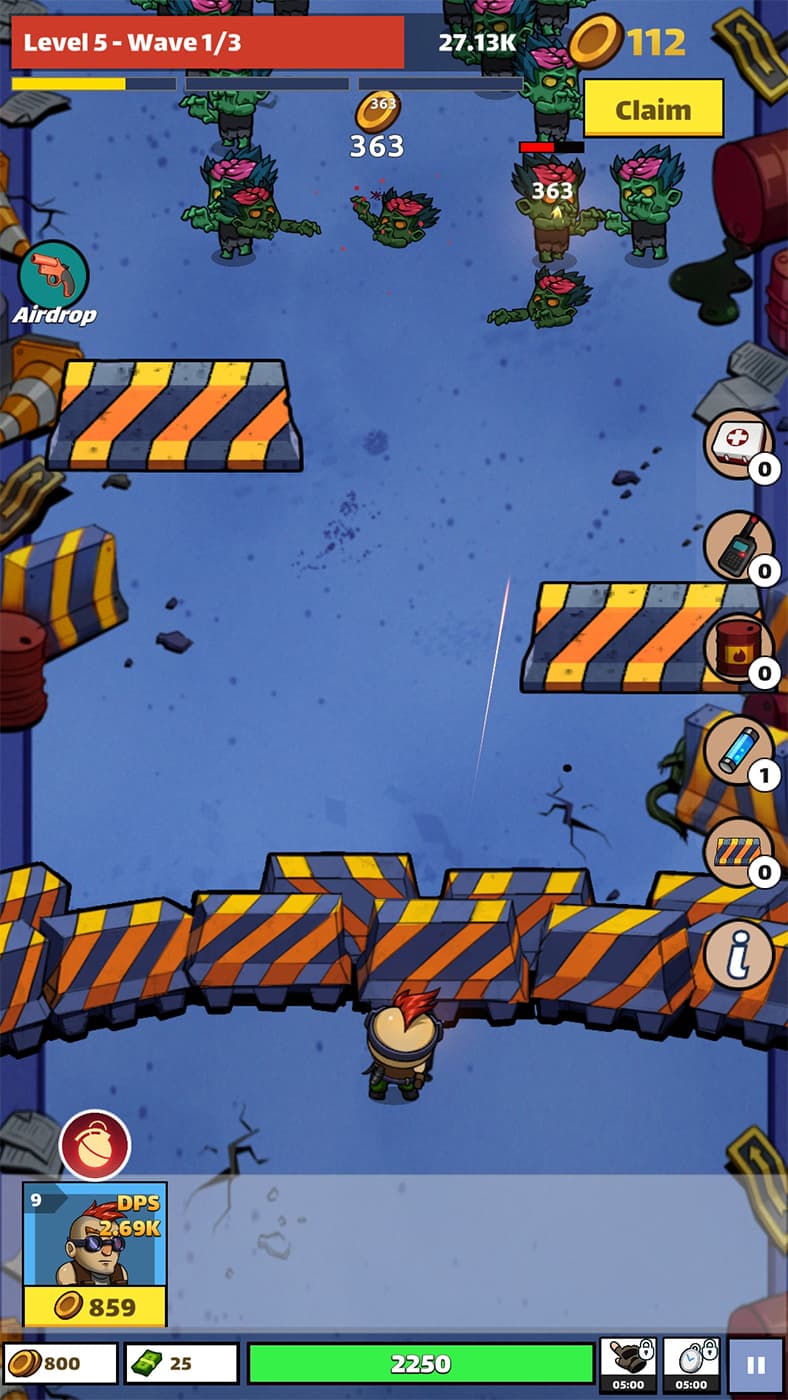
Zombie Idle Defense is the most direct starting point for an idle zombie army: prepare the defenders, improve their weapons and turn the next return reward into a stronger line.
- Idle progress
- Squad builds
- Permanent progress
- Base defense
- Platforms
- Android edition; also available on iPhone and iPad
- Price model
- Free download with ads and in-app purchases
The satisfying question here is what to upgrade before the next horde reaches the barricade. Heroes, weapons and skills supply the answer. You build a team of survivors to withstand successive waves and larger bosses, so progress feels like improving a defense rather than repeating a movement challenge. A return visit has an obvious purpose: collect the resources earned while away, revisit the squad and decide which part of the setup needs attention before pushing further.
Idle Mode is now the primary mode, a change recorded in the current mobile release notes. That matters if older footage makes the game look more like a tapping shooter. The present Android listing explicitly includes offline rewards alongside hero deployment and equipment upgrades. This is a genuine idle-defense recommendation, with both an automated battle identity and a reason to return. It is particularly appealing when you want to watch a plan handle the crowd without steering a survivor around every enemy.
There is still room for a more involved session. Sniper Duels adds a separate precision challenge, while the regular defense gives you bosses and stronger waves to work toward. Treat those as different activities: a sniper challenge can demand attention even when the main progression is built around idle rewards. That variety helps the game avoid being nothing but a collection screen, although players who enjoy open maps, scavenging routes or rebuilding a settlement will find the defensive framing narrower.
The free download includes advertising and optional purchases. Go in with a simple goal, such as strengthening the squad you actually use, rather than treating every available upgrade or offer as an obligation. The main attraction is the cycle of preparation, unattended earnings and another attempt at a harder defense. Choose it when you want zombies and incremental improvement to remain the center of the experience, with an occasional active challenge available when you feel like taking one on.
The verdict
The clearest pick for players who want a zombie-defense team to do much of the fighting while they handle its growth.
Zombie Defence
Zombie Defence gives idle progress a practical destination: the shelter prepares resources and crops, then you take those improvements into combat you control yourself.
- Idle progress
- Shelter building
- Crafting
- Farming
- Permanent progress
- Platforms
- Browser Alpha in development; native mobile releases planned
- Price model
- Public launch pricing and monetization terms are not confirmed
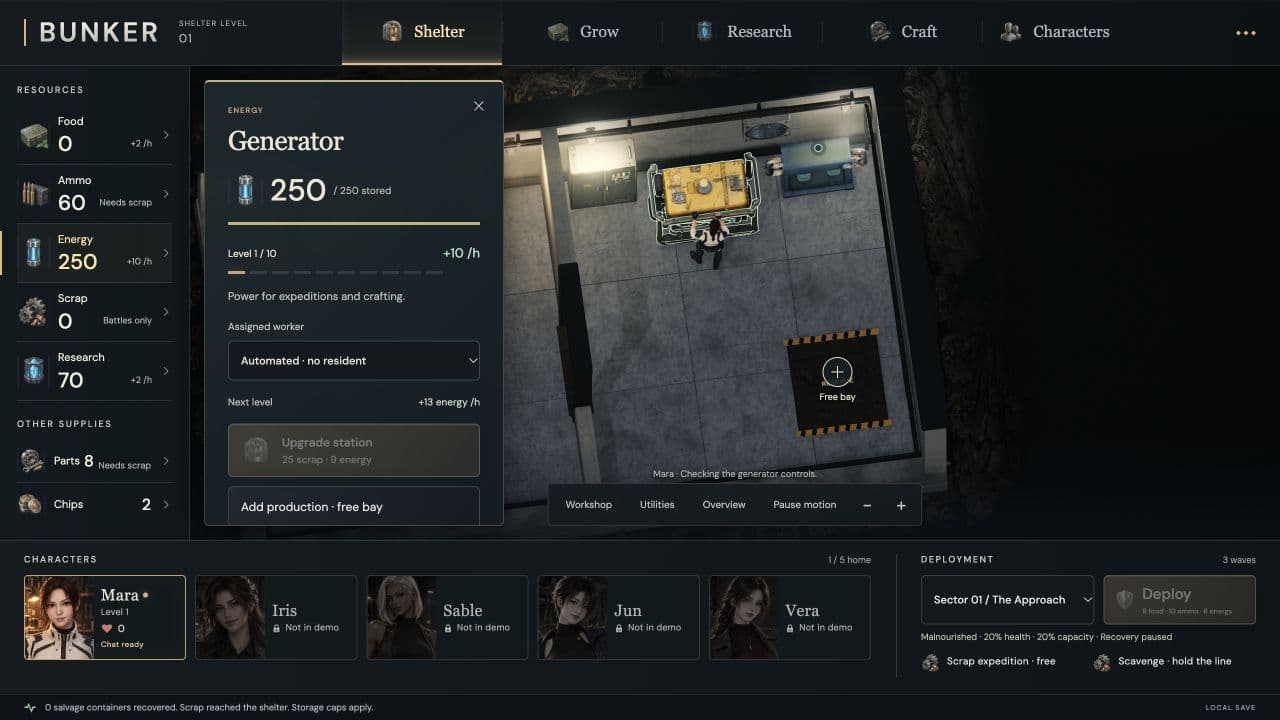
The shelter is an economy with competing jobs. The Generator stores energy, the Ammo Press supplies ammunition, the Research Lab generates research points, and the Salvage Bench processes scrap into useful outputs. Production is bounded by available inputs and storage. A line that needs scrap stops when that scrap runs out, and a full store leaves no room for more output. That makes setting up a useful absence a small planning problem rather than simply closing the browser.
The base elapsed-production window is eight hours. Night Shift and Seed Vault upgrades can extend it to a maximum of eighteen, and crop growth uses the same bounded elapsed-time system. Before leaving, check the material you want to preserve for crafting, give relevant lines enough input and leave storage space. Hydroponics adds a different rhythm: lettuce, tomatoes and roses have different growing times, ripe crops wait safely, and harvesting remains a manual action. A longer absence therefore does not automatically produce an endless succession of harvested crops.
When you return, the game asks for your hands again. Desktop combat separates movement from cursor aiming, with firing, sprinting, ammunition and reload decisions. Touch fire assists toward the nearest living enemy. Neither control scheme turns combat into an unattended activity. Sector battles, endless Scavenge and separate Scrap expeditions offer different outings, while research, weapon crafting and shelter improvements give the proceeds a lasting use. In a sector battle, choosing a shelter investment instead of an immediate combat card makes that connection especially tangible.
This is the right shape of idle progression if you want a home base to support an action game. A useful return could mean harvesting tomatoes for an expedition meal, checking ammunition output and reserving scrap for a weapon project before heading out. The tradeoff is deliberate involvement: shelter production can prepare you, but it does not clear the campaign while you sleep. Zombie Defence remains a browser Alpha in development; its waitlist is for news and playtest availability and does not grant immediate access.
The verdict
Choose Zombie Defence’s action-and-shelter design when you want something worthwhile waiting at home and a hands-on outing when you come back.
Idle Outpost
Idle Outpost is the strongest choice here for two linked idle jobs: build a better business in Trade mode and improve the survivor handling Fight mode.
- Idle progress
- Permanent progress
- Loot builds
- Platforms
- Android edition; internet connection required
- Price model
- Free download with ads and in-app purchases
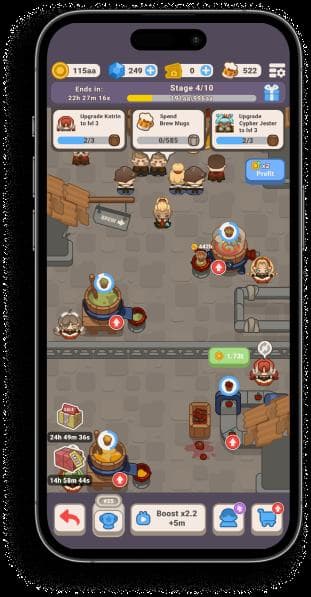
The apocalypse still needs customers. In Trade mode, you reopen production and service stations, improve their speed and value, and add staff to move customers through the outpost. It gives returning players a readable economic task: identify the slow part of the business and put the latest earnings to work there. Vault upgrades add another horizon because their global perks carry into later outposts. You are building a better business at the current location and improving the conditions for the next one.
Trade earnings continue for up to eight hours away from the app. Fight mode has its own eight-hour offline reward window, with background items and Brave Coins. These are related but distinct sources of progress. A strong trading setup does not erase the need for a capable fighter, and new Trade levels can ask for progress in Fight mode or a higher profit percentage. The connection gives you a useful reason to switch tasks when one side of the game reaches its next requirement.
Fight mode handles regular zombie waves automatically. You can press Challenge to attempt the boss, then revisit equipment if the survivor cannot push through. Looting uses shovels, and Auto Loot can filter for the rarity or secondary attributes you want. That puts the player's attention on preparation and equipment decisions rather than constant attack input. It also creates a meaningful distinction from Zombie Waves: Idle Outpost can keep its ordinary fighting loop going while you are busy managing the trading side.
The convenience has limits worth knowing before installing. Eight hours is a ceiling for the documented away rewards, and the game requires an internet connection for gameplay and synchronization. Offline earnings will not make it a reliable no-signal travel game. Advertising, optional purchases and the two-mode economy also make this busier than a tiny clicker. Choose it if you enjoy alternating between profit upgrades and a combat loadout; skip it if keeping one straightforward survivor build is already enough administration.
The verdict
A well-matched choice for players who want both an idle economy and idle combat, with separate decisions to make in each.
Zombie Waves
Zombie Waves is for players who still want to dodge a screen full of enemies, then find another pile of upgrade resources when they return later.
- Idle progress
- Fast-paced
- Loot builds
- Roguelite
- Platforms
- Android and iPhone/iPad; standard free-to-play mobile editions
- Price model
- Free download with ads and in-app purchases; Google Play discloses random-item purchases
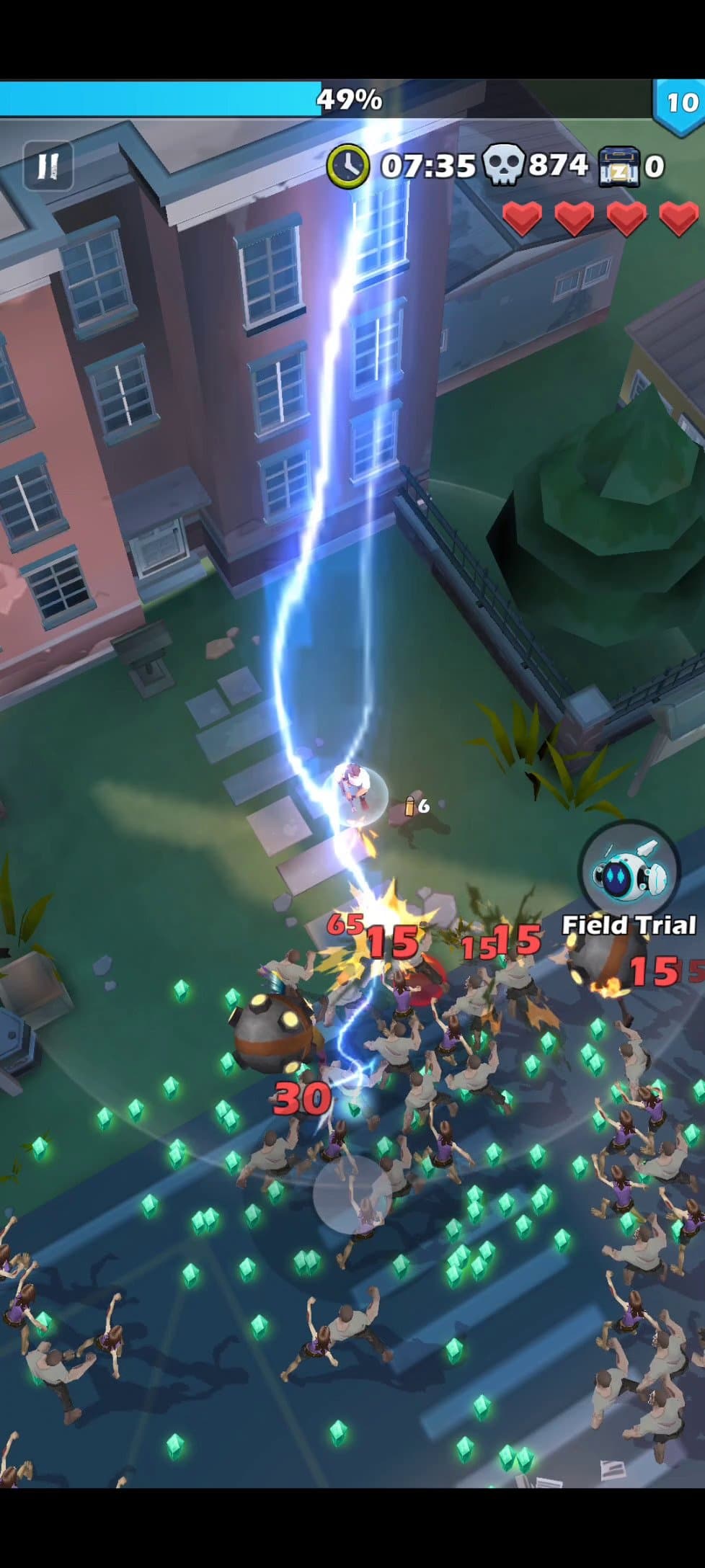
The main attraction is an active survival run. You steer through the crowd with one-handed controls while auto-aim handles target direction, then combine roguelite skills as the stage develops. Different heroes, equipment and robot companions give you longer-term choices around that immediate action. The screen can become wonderfully busy, but the job stays recognizable: keep moving into useful space and build enough power to survive the next surge. Automated aiming makes that job easier to control; it does not make movement optional.
Away progress comes from the separate AFK reward system. You can earn rewards while offline and use them to strengthen your account for later attempts. Think of it as support for the next run, rather than a promise that every uncleared stage will complete itself. That distinction is the reason Zombie Waves belongs alongside full idle-defense games without feeling identical to them. It offers an ongoing source of growth to a player whose favorite part is still being present when the horde arrives.
A useful return session starts with the persistent build. Look at the hero, weapon, equipment and companion combination you want to use before spending the latest resources, then take that plan into a stage. The run's skill choices create a second layer of decisions on top. This suits players who enjoy the contrast between a lasting loadout and temporary upgrades, and who want to see an investment change what happens on the battlefield rather than only move an income multiplier.
Its tradeoff is the surrounding free-to-play economy. Advertising and purchases, including random-item purchases on Google Play, sit beside the gear and hero chase. Set your own pace instead of assuming an AFK collection should guarantee the next stage clear. For someone seeking almost hands-off zombie combat, Zombie Idle Defense or Idle Outpost is a closer match. Choose Zombie Waves when the return reward is a welcome boost, but dodging, choosing skills and surviving a crowded arena are still the reason you opened the app.
The verdict
The pick for active mobile horde combat with a helpful return-reward system around it.
Merge Rush Z
Merge Rush Z keeps the relationship between idle income and stronger equipment simple: earn coins, combine guns and send the squad against another zombie wave.
- Idle progress
- Permanent progress
- Loot builds
- Platforms
- Android and iPhone/iPad; mobile editions compared
- Price model
- Free download with ads and in-app purchases
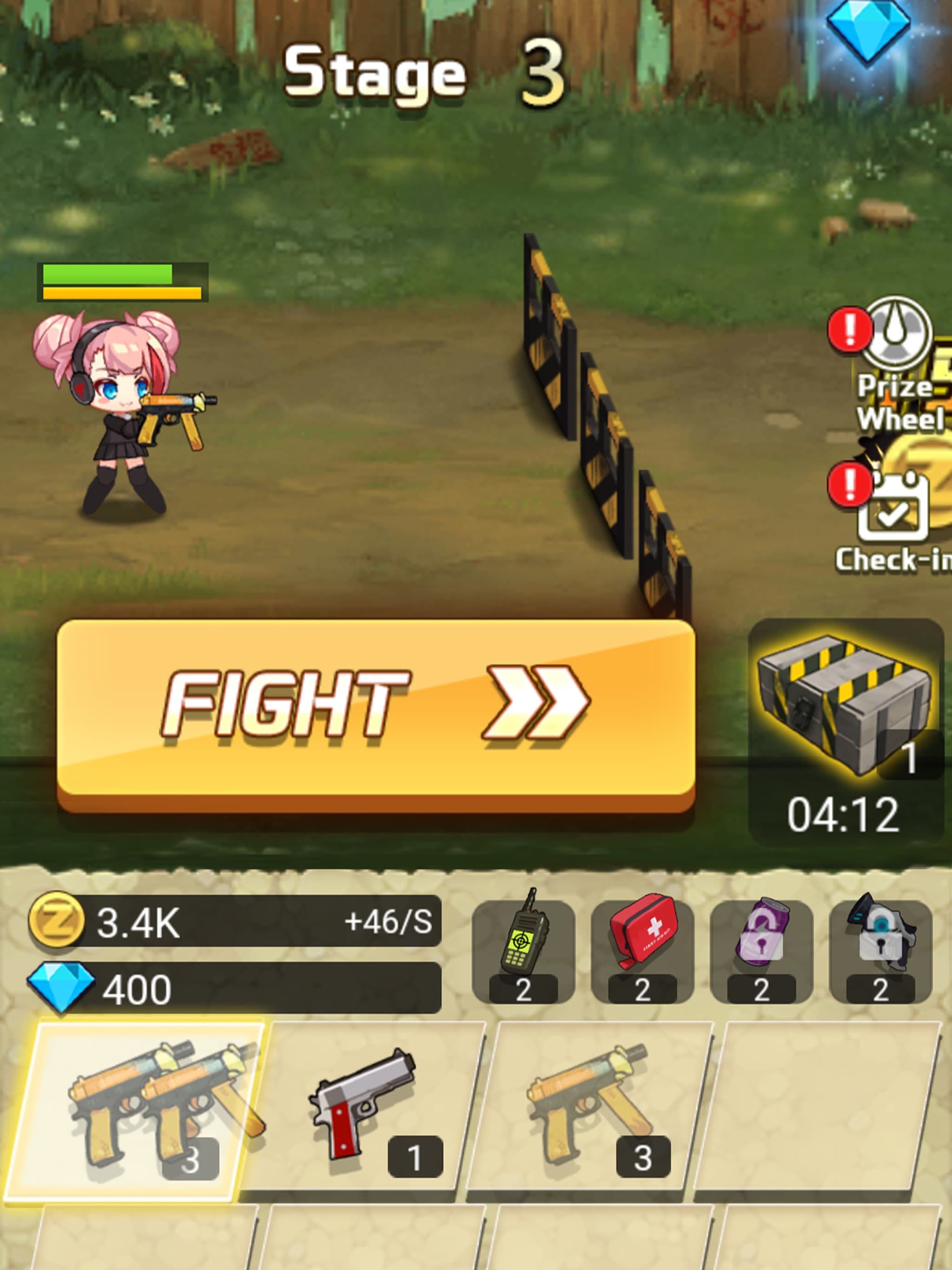
The weapon board is the hook. Matching guns combine into a higher-tier weapon, giving you a concrete next step whenever enough coins or another matching gun arrives. It is a more compact kind of progression than a large hero roster or production network. You can look at the board, see what is close to another merge and work toward that upgrade. The payoff is immediately legible because the weapon belongs to a squad facing the zombie crowd above it.
The mobile publisher describes coins continuing to accrue while you are away, with the squad handling the undead in the background. Returning is therefore about spending and combining before the next push. The game also offers daily missions and other rewards, but those are additional incentives to open it, not the explanation for its idle qualification. Even if you ignore the daily checklist, the away-earnings-to-weapon loop remains the central reason it fits this list.
Active battles let you tap to control firing, and the publisher explicitly describes ammunition as unlimited. That shifts attention toward the squad, weapon improvement and the items used during a fight rather than magazine management. Zombies vary in size, speed and abilities, with bosses providing larger obstacles to advancement. The result is an accessible shooting-and-merging rhythm: improve the gun, test it in a fight, then decide whether to keep pushing or leave the earnings to build for the next visit.
The appeal is also the limitation. If you enjoy arranging a few upgrades and seeing a stronger weapon appear, the repeated merge cycle can be exactly what you want from an idle game. If you are hoping to design a settlement, explore a map or create elaborate movement-based builds, the same tight focus will feel restrictive. Ads and optional purchases are part of the mobile package. Choose it for a clear, contained equipment goal rather than the promise of an endlessly expanding survival simulation.
The verdict
A good fit for players who want an easy-to-read idle shooting loop with tangible weapon upgrades.
Zombie Homestead: Idle Defense
Zombie Homestead makes your idle setup physical: carry supplies, feed the workers and keep turrets stocked so the base can make useful progress while you are away.
- Idle progress
- Base defense
- Shelter building
- Permanent progress
- Platforms
- Android edition; developer also lists an iPhone release
- Price model
- Free with optional rewarded ads, gem purchases and a Starter Pack
This newer mobile choice puts the player in charge of hauling. Walking close to supplies picks them up; carrying materials to a building site advances construction. Defending follows the same logic: take ammunition to turrets and wood to barricades, and the defenses handle the shooting. There is no personal aiming task. Your important decisions are where the next load should go and whether expanding the base is more urgent than keeping its existing workers and defenses supplied.
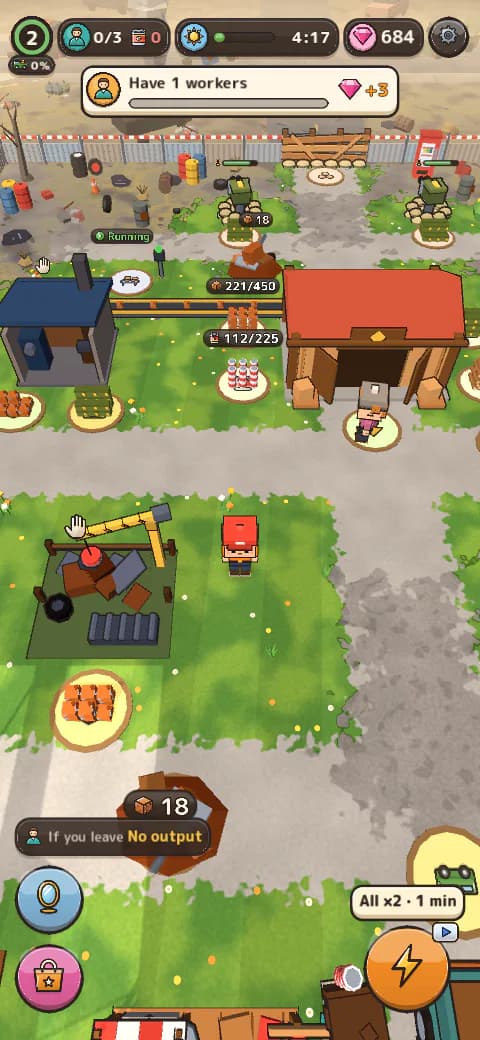
Production needs somebody doing the work. The official manual says the player can stand at a station's work pad or assign a survivor, and survivors need food at the canteen. Simply constructing a room and walking away is insufficient. The early screenshot below makes that condition visible with zero workers and a no-output warning if the player leaves. Once you have a staffed, supplied setup, the closed-app system advances production and raids and summarizes the result when you return.
Away-time attacks can consume the resources gained during that absence, but they cannot reduce the warehouse below the amount stored when you closed the app. That protected starting stock makes the defense meaningful without turning a long break into a wiped-out base. Your preparation still matters because better-supplied defenses help preserve the new output. The next visit becomes a quick diagnosis: replenish ammunition, restore the barricades and fix whichever part of the production-and-feeding chain needs attention before expanding again.
The campaign moves through six safe zones, rebuilding facilities while taking useful progress into the next location. There is also a separate Radio League challenge for players who want a scored defense session. The developer describes the main game as playable without internet; the league, ads and purchases need a connection. Optional rewarded ads and paid gems are still part of the economy. Choose Homestead if keeping a base supplied sounds more satisfying than collecting another hero, and expect hands-on hauling to remain important between absences.
The verdict
A promising logistics-focused option for players who want to prepare an idle base through movement and supply work.
Idle Zombie Miner: Gold Tycoon
Idle Zombie Miner puts the undead on the payroll. It is the low-pressure mining choice for players who want persistent economic growth and a board of workers to organize.
- Idle progress
- Permanent progress
- Platforms
- Android and iPhone/iPad; standard mobile editions
- Price model
- Free with ads and in-app purchases, including random-item purchases; paid subscription also offered
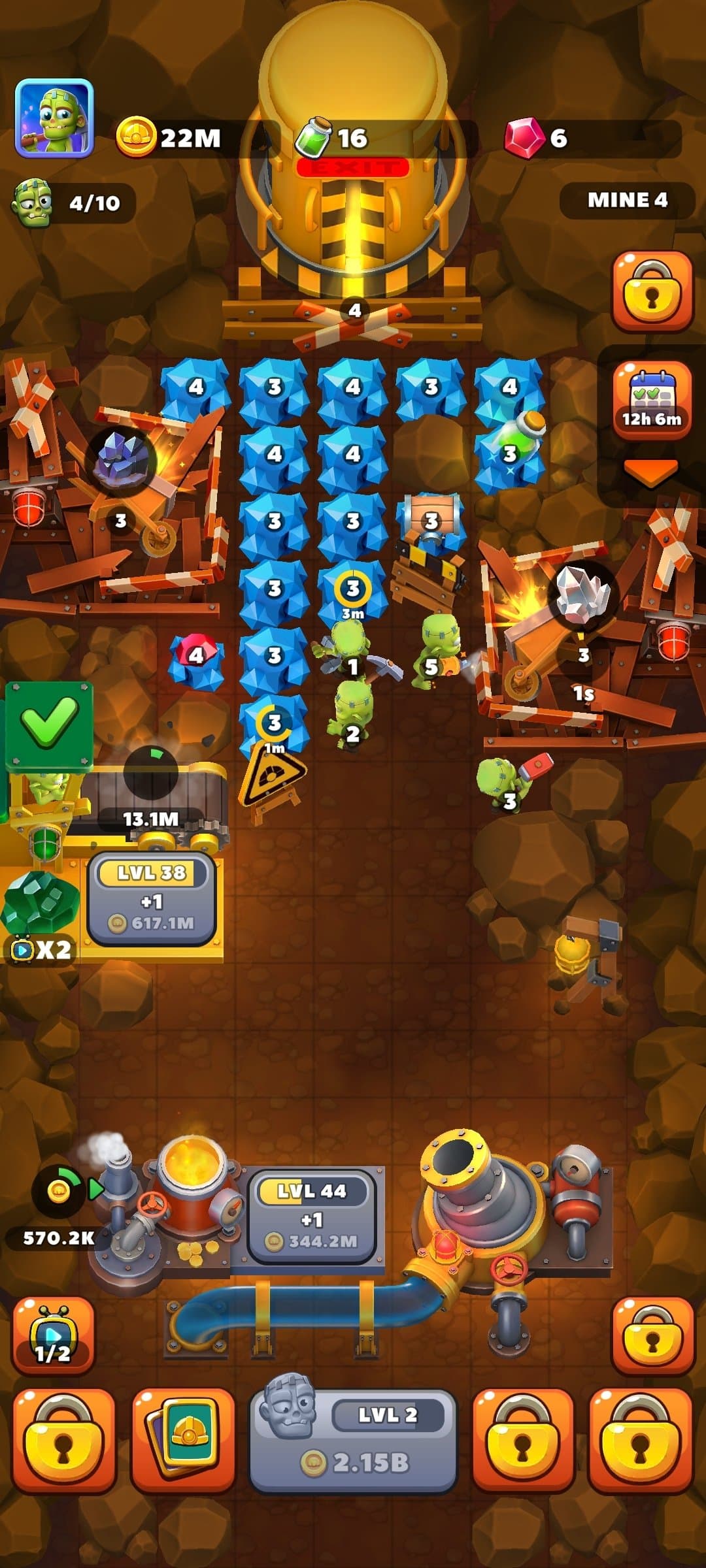
The zombies are your crew, and the mine is the problem to solve. You develop workers, improve the production infrastructure and open a path through the excavation. The core mine-management view gives that work a physical shape: numbered obstacles, workers of different levels, mining timers and upgrade panels share the screen. It makes a useful change from defense games because the question is where to put labor and money, rather than whether a barricade will hold against another wave.
The publisher explicitly includes earnings while away in the mobile game's feature set. Use that income as part of an ongoing upgrade plan, then return to organize the next stretch of work. An idle economy is most satisfying when the next investment has an identifiable job, such as improving the production that funds the rest of the mine. Here, the mines and workers give those decisions something visible to change. There is no need to turn this into a reflex test to give the accumulated resources a purpose.
Progress has both local and lasting parts. Royal Ark explains that a mine's accumulated coins, miner levels, foundry levels and mineshaft levels contribute to its final reward, while gems, essence and card upgrades carry forward. That is an important expectation to set before getting attached to one excavation. Moving on is a fresh local build supported by retained upgrades, rather than one mine that expands forever. Players who enjoy rebuilding a more capable operation will find that rhythm more appealing than those who want every worker to remain permanently in place.
This is also the least combat-focused pick in the list. Choose it because you enjoy cute undead workers and economic planning, not because you want the tension of being hunted. Ads, random-item purchases and a paid subscription are part of the commercial package, so free entry should not be mistaken for a single all-inclusive purchase. The best reason to install is the calm satisfaction of preparing a mine, leaving it to earn and coming back with a clear idea of what to improve next.
The verdict
Pick this when the zombie theme and idle economy matter more to you than fighting or surviving hordes.
How we compare
A good recommendation explains who a game suits and where it falls short. Our editorial scores use the same five criteria, each rated out of ten.
- 01
Combat
Controls, aiming, enemy readability, and the decisions you make under pressure.
- 02
Progression
Build choices during a run and meaningful progress between attempts.
- 03
Usability
Control demands, platform access, interface options, and documented device requirements.
- 04
Value
What the asking price includes, optional purchases, and the scope of the free version.
- 05
Fit
How well the game answers the specific question in this article.
Which one should you try?
For a mainly hands-off zombie-defense loop, start with Zombie Idle Defense or Idle Outpost. Choose Zombie Waves for movement-led horde runs, or Merge Rush Z for a simpler weapon-upgrade goal. Zombie Homestead rewards staffing and supply work, while Idle Zombie Miner offers a calmer economy with the undead on your side. Zombie Defence is the action-and-shelter choice: elapsed production makes the next return useful, and personally controlled combat gives the supplies somewhere meaningful to go. Pick the return activity you actually enjoy, then check that the game's storage, input and reward limits fit the gaps between your sessions.
Your questions, answered.
Want to see what we’re building?
Zombie Defence is in Alpha. Join the waitlist.
More games to explore
- 6 Best Zombie Games for Android in 2026, Plus Zombie Defence in Alpha
Compare six Android zombie games by play style and current Google Play purchase model, from story-led runs and horde roguelites to crafting survival and strategy. Zombie Defence is listed separately as an in-development Alpha.
- 5 Best Zombie Games for iPhone in 2026, Plus Zombie Defence in Alpha
Compare five current iPhone App Store zombie games, from first-person shooting and one-handed horde runs to survival crafting and a paid road trip, plus Zombie Defence in Alpha.
- 9 Best Zombie Horde Shooters in 2026
Compare nine zombie horde shooters, from co-op campaigns and expanding survival arenas to mobile auto-shooters and persistent shelter runs.