7 Best Roguelite Shooters With Weapon Upgrades
From one more bullet to an entirely different way of firing.

The best roguelite shooters with weapon upgrades make you notice the change in your next shot. 20 Minutes Till Dawn offers explicit weapon evolutions, Gunfire Reborn builds around gun modifiers and paired synergies, and Brotato turns duplicate weapons into shop decisions. Zombie Defence combines temporary shot-changing cards with a permanent crafted arsenal, while Nova Drift is the pick for experimenting with the behavior of the projectile itself.
Before choosing, separate three kinds of progress. A run upgrade strengthens the weapon you have right now. An unlock adds a weapon or modifier to future possibilities. Permanent crafting or mastery improves equipment beyond the current attempt. These seven games mix those layers differently, and the sections below explain what resets, what stays and which decisions make the shooting more interesting.
The selection spans actively aimed shooters, automatic horde shooters and one arcade space shooter. Six are released desktop games; Zombie Defence is a single-player browser Alpha in development. The named PC editions are the basis for the comparison, so mobile and console versions are not assumed to share every update. Scores are editorial judgments of the documented design, with Fit focused on meaningful weapon-building choices.
The quick comparison
7 games, different reasons to give the next run a chance.
Choose a game to jump to its overview. Platform lists are summaries; check the linked official edition.
The games
Zombie Defence
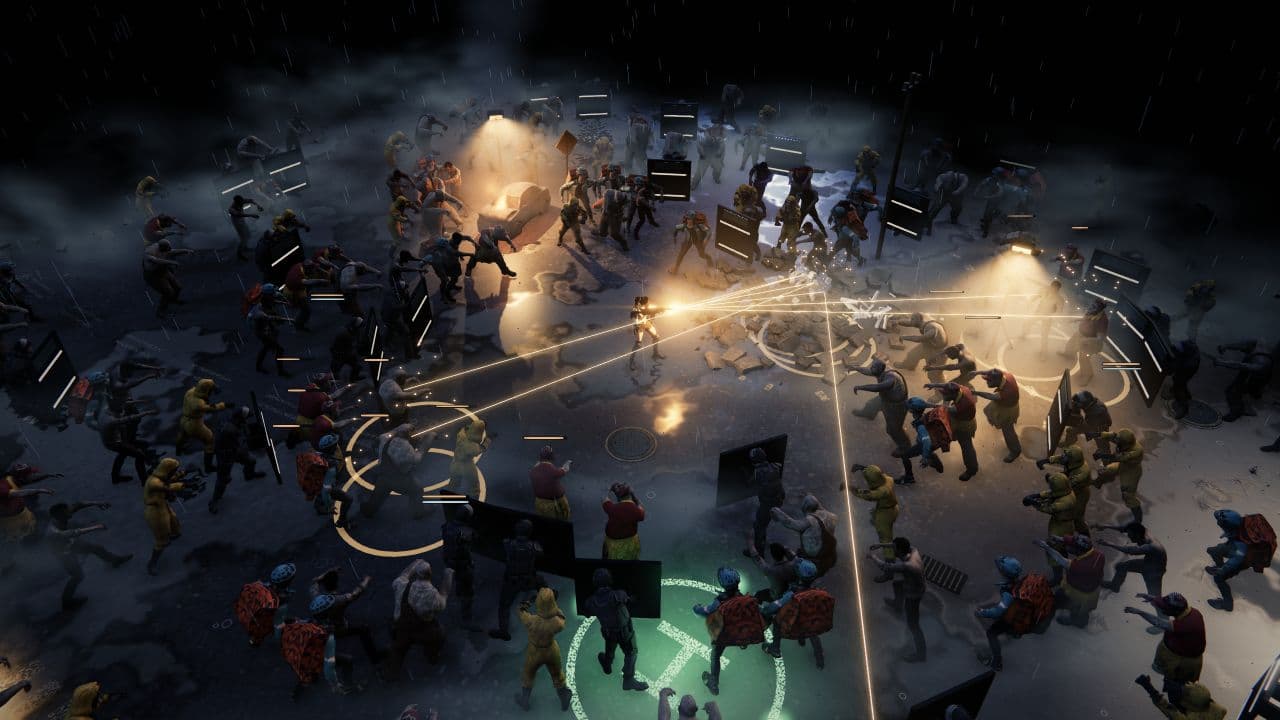
Zombie Defence gives a weapon build two lives: a temporary arrangement of battle cards outside and a lasting crafted arsenal in the shelter.
- Manual aim (desktop)
- Loot builds
- Crafting
- Permanent progress
- Shelter building
- Platforms
- Single-player browser Alpha in development; waitlist for Alpha news and playtest availability.
- Price model
- Public launch pricing and monetization terms have not been announced.
A rifle that fires faster is useful. A rifle that sends several rays from one cartridge, bounces shots off solid surfaces and bursts damage into a crowd asks you to think differently about the space around you. Zombie Defence offers seven run-card families covering fire rate, damage and knockback, extra rays, impact bursts, magazine capacity, range and ricochets. Split Shot and Bank Shot make positioning part of the build: an open firing lane, a useful wall and an obstructed blast are different opportunities. Desktop cursor aim lets you direct that fire yourself; touch fire assists toward the nearest hostile.
The interesting decision arrives at a campaign level-up, where two battle cards compete with one shelter investment. Take immediate firepower when the current horde is squeezing your escape route, or spend the choice on banked supplies or a timed production boost at home. Faster fire still consumes ammunition, and a bigger magazine changes how often you must reload. The sensible upgrade is therefore sometimes the one that fixes an interruption in your firing rhythm rather than the most spectacular new effect.
Battle cards reset after deployment. Crafted weapons, their campaign levels, modules and completed research are the separate, persistent layer. The issued AR-07 is joined by eight buildable weapons, including the Breach Shotgun, Compact SMG, Belt-fed LMG, Coil Carbine and Rail Lance. Recipes come from sector schematics, research combinations or valid receiver, barrel and feed assemblies. These are equipment projects you can plan around, with distinct cadence, range, magazine and shot patterns, rather than a lucky temporary gun that vanishes after one attempt.
Choose a weapon project before spending every recovered piece of Scrap. Crafting components, weapon levels, ammunition production and shelter improvements draw on competing resources; Arsenal research also asks you to commit to stronger, slower shots or faster, lighter fire. That creates an appealing long view behind each chaotic battle. The tradeoff is extra preparation: players who want to press restart and immediately rebuild from nothing will find a more concentrated loop in 20 Minutes Till Dawn or Nova Drift.
The verdict
Choose Zombie Defence when you want a spectacular run build and a workshop project worth returning to afterward.
20 Minutes Till Dawn
Start with a recognizable weapon, build around its quirks, then choose an evolution that changes its behavior during the same night.
- Manual aim
- Roguelite
- Loot builds
- Permanent progress
- Platforms
- Windows and macOS via Steam; the desktop edition is compared here.
- Price model
- Paid base game on Steam.
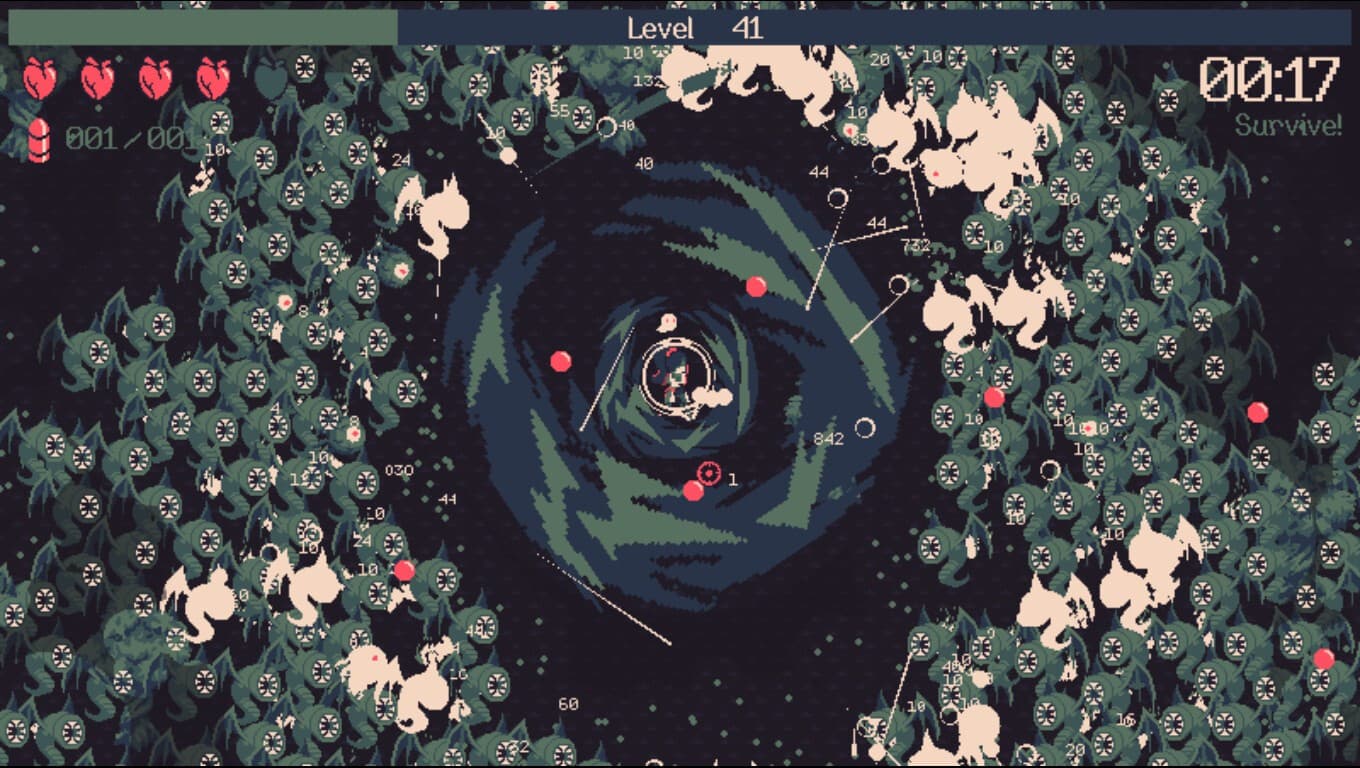
The starting weapon is the first build decision, not a placeholder until the good loot arrives. Directional aiming and active fire keep its range, magazine and firing rhythm important while upgrade trees add bullet effects, elemental damage or summons. Pick effects that reinforce the weapon you are actually using. A reload-centered plan wants ammunition and reload choices that keep its cycle working; a sustained-fire plan has a different appetite. Collecting unrelated bonuses can leave you with many upgrades and no convincing way to clear a closing lane.
At character level 20, the weapon offers a choice of three unique evolution variants. That gives the run a tangible turning point: you have to survive long enough to reach it, then choose a direction that suits the upgrades already assembled. Boss Tomes add another layer of powerful decisions. The arsenal also gets wonderfully strange. The Watering Gun tends a Spore Flower that bombards monsters, while the Cyclone Sword makes its reload a spinning attack. Conventional guns remain an option, but the game is happiest when an ordinary shooting rhythm becomes something weirder.
The evolution and level-up build belong to that attempt. Souls fund lasting runes and unlock more characters and weapons for future starts; they do not preserve the entire evolved loadout. This makes 20 Minutes Till Dawn a strong fit if you enjoy discovering how one starting tool can branch. Its limitation is equally clear: an exciting late combination is something to earn again next run, and the fixed night structure leaves less room for a persistent equipment project.
The verdict
Pick 20 Minutes Till Dawn for the cleanest route from a starting gun to a distinctly transformed run build.
Brotato
Brotato makes weapon upgrading a compact shopping problem: buy another gun, combine copies, improve supporting stats or keep your money for a better offer.
- Roguelite
- Loot builds
- Short runs
- Co-op
- Platforms
- Windows, macOS and Linux via Steam; the desktop edition is compared here.
- Price model
- Paid base game; the Abyssal Terrors gameplay expansion is sold separately.
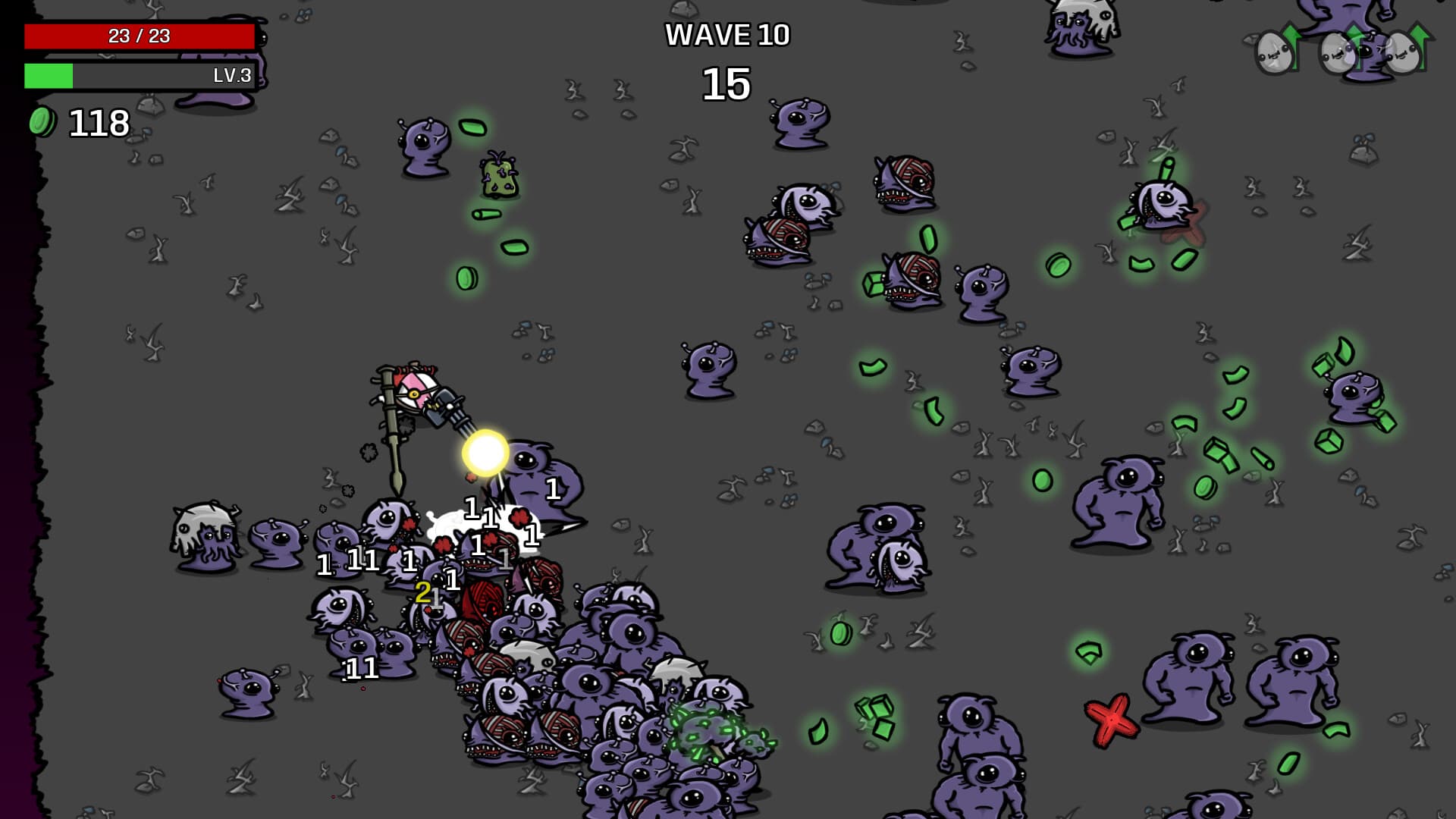
Up to six weapon slots make a build feel like an arsenal rather than one heroic firearm. Guns fire automatically by default, with manual aiming available, so much of the immediate work is choosing where to move while your loadout clears room. Between waves, the shop lets you reshape that loadout. Duplicate weapons can be combined into a higher-tier version, but combining two held guns also changes how many separate weapons you have firing. A stronger individual gun and more coverage across several slots are related decisions, not interchangeable ones.
Weapon sets and damage scaling give purchases a direction. A firearm-focused character can build around compatible guns, then buy items that improve the damage type, attack speed or other stats those weapons actually use. Buying an impressive-looking weapon outside that plan can dilute the benefits of earlier purchases. The practical habit is to inspect scaling and set bonuses before rerolling the shop: decide what the next gun needs to contribute, and remember that money spent hunting a perfect offer cannot also buy health or damage now.
The purchased arsenal, combined weapon tiers and ordinary stat gains last for the current run. Completing challenges expands the available characters, weapons and items for later attempts. That is variety you keep, rather than a permanent copy of your best six-gun setup. Brotato also supports melee and hybrid builds, so choose a gun-oriented start if shooting is the appeal. Its frequent shop breaks are ideal for players who enjoy deliberate spending, but they interrupt the continuous flow of games where upgrades arrive without a between-wave marketplace.
The verdict
Choose Brotato if upgrading weapons is most satisfying when it involves a budget, a shop and several tempting compromises.
Gunfire Reborn
A gun’s inscriptions, your hero’s Ascensions and the scrolls in your inventory can be more important than the weapon’s name or upgrade level.
- Manual aim
- Roguelite
- Loot builds
- Co-op
- Platforms
- Windows PC via Steam; this comparison uses the PC rules and content.
- Price model
- Paid base game; optional paid expansions add heroes and weapons.
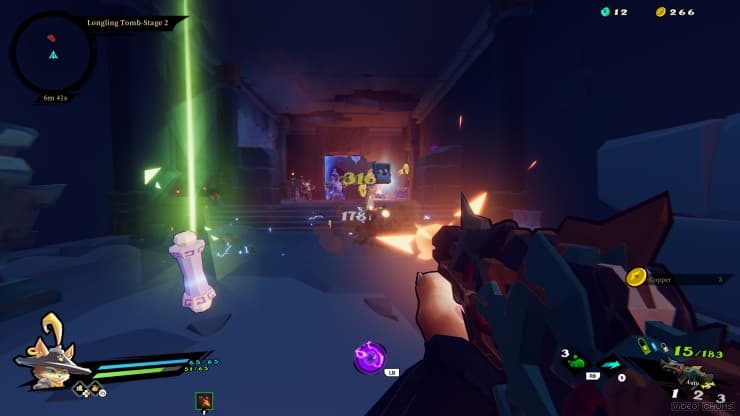
Gunfire Reborn is the pick for reading a new weapon drop and immediately imagining what it could become. The Craftsman can improve weapons, while inscriptions supply modifiers and special effects. Hero-specific Ascensions and Occult Scrolls add more layers around the gun. That makes the choice between keeping an upgraded favorite and replacing it with a promising drop genuinely interesting. Ask what the weapon does for the whole build before treating its displayed level as the deciding factor.
Gemini inscriptions provide a particularly good reason to evaluate two weapons together. Matching effects can link the pair, including a shared-magazine setup that rewards sustained fire. Suddenly the gun you are carrying alongside your main weapon is part of its engine. A useful approach is to identify the interaction you want, then spend on a weapon worth supporting rather than endlessly polishing every early drop. This is a more involved process than choosing a simple damage card, especially when scrolls and hero abilities also change the answer.
The usual adventure rebuilds its collection of weapons, scrolls and Ascensions, while talents and unlocks support future runs. There is an important optional exception: Bizarre Dream’s Transcendent Arsenal can store weapons, and imprinting can return a chosen weapon to that arsenal after the run settles. Treat that as a particular mode’s equipment system rather than the default rule for every attempt. Solo play and four-player co-op are both supported. Choose the PC edition deliberately if these systems are the attraction; this entry does not assume identical updates across the separate console and mobile releases.
The verdict
Choose Gunfire Reborn when the fun is finding a gun whose modifiers make everything else in the build click.
Roboquest
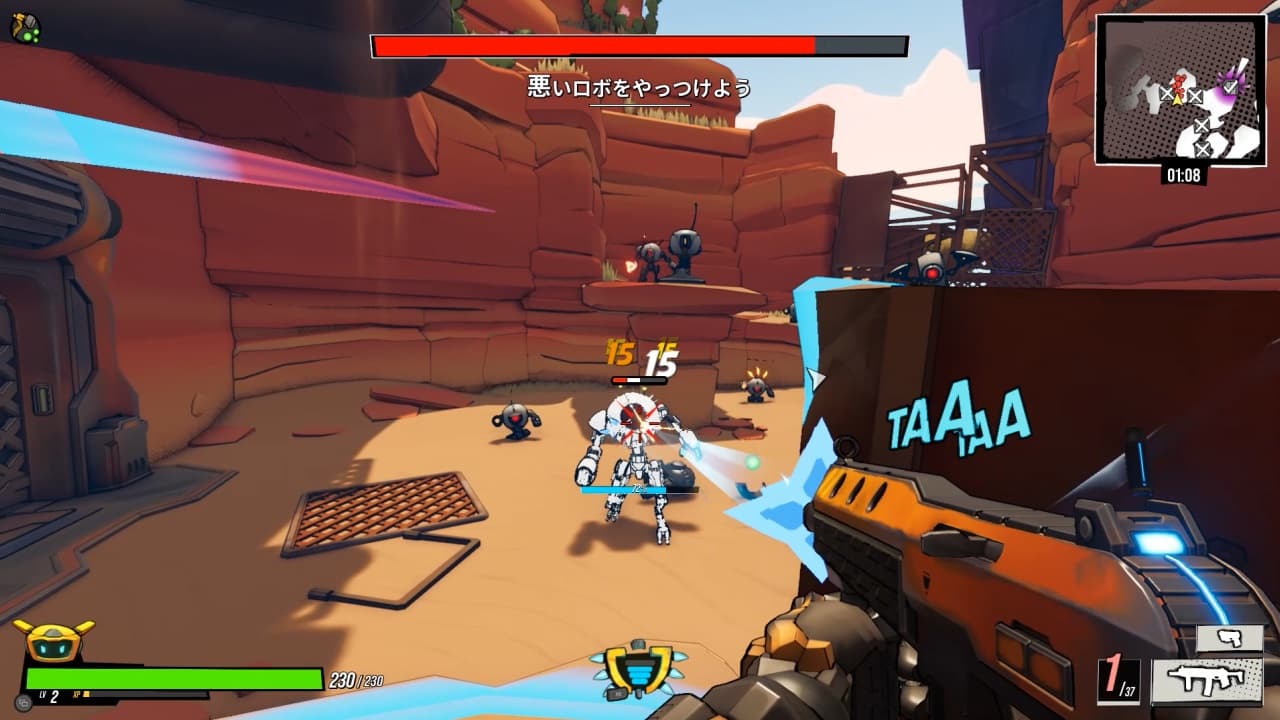
Roboquest puts class perks and weapon modifiers into a fast-moving FPS, with merchants that give a promising gun room to grow.
- Manual aim
- Fast-paced
- Roguelite
- Co-op
- Platforms
- Windows PC via Steam; the standard desktop game is compared here.
- Price model
- Paid full game with a free Steam demo; soundtrack and art book are separate extras.
Roboquest asks whether you can make the build work while jumping through incoming fire. Shotguns, rifles, sniper weapons and stranger tools give class upgrades different jobs, and weapon affixes add effects to the individual drop. A gun that suits your range and movement is a better foundation than one that merely looks impressive on paper. The build should support how you handle an encounter: holding an angle for a precise shot and sweeping through a group at close range put different demands on it.
Willy Wonder makes this more than a cycle of throwing away yesterday’s gun. After you unlock him through the basecamp, he can spend your Powercells to improve weapon rarity, opening access to more affixes, or add an extra affix through his perfumes. The specific gun remains a run investment, but its initial rarity need not be the end of its potential. That creates a useful spending test: do you already have a weapon-and-class combination worth developing, or are you paying to rescue a poor match?
Wrenches feed lasting basecamp upgrades and new options. Those unlocks improve what future attempts can offer; they do not save the full set of weapon rolls and class perks from the last attempt. If enjoying a finished build for longer matters, the unlockable Endless mode extends the process beyond the regular route and allows more perk growth. Solo and two-player online co-op are available. The main tradeoff is physical rather than administrative: upgrades still need an agile player to aim, dodge and keep the fight moving.
The verdict
Pick Roboquest if you want the upgrade decisions to sharpen an already energetic first-person shooting game.
Deep Rock Galactic: Survivor
Overclocks change what an automatic weapon does, while mining routes and mission objectives determine whether you can keep that build supplied with experience.
- Roguelite
- Loot builds
- Permanent progress
- Exploration
- Platforms
- Windows PC via Steam; the desktop edition is compared here.
- Price model
- Paid base game; the Heavy Duty gameplay expansion is sold separately.
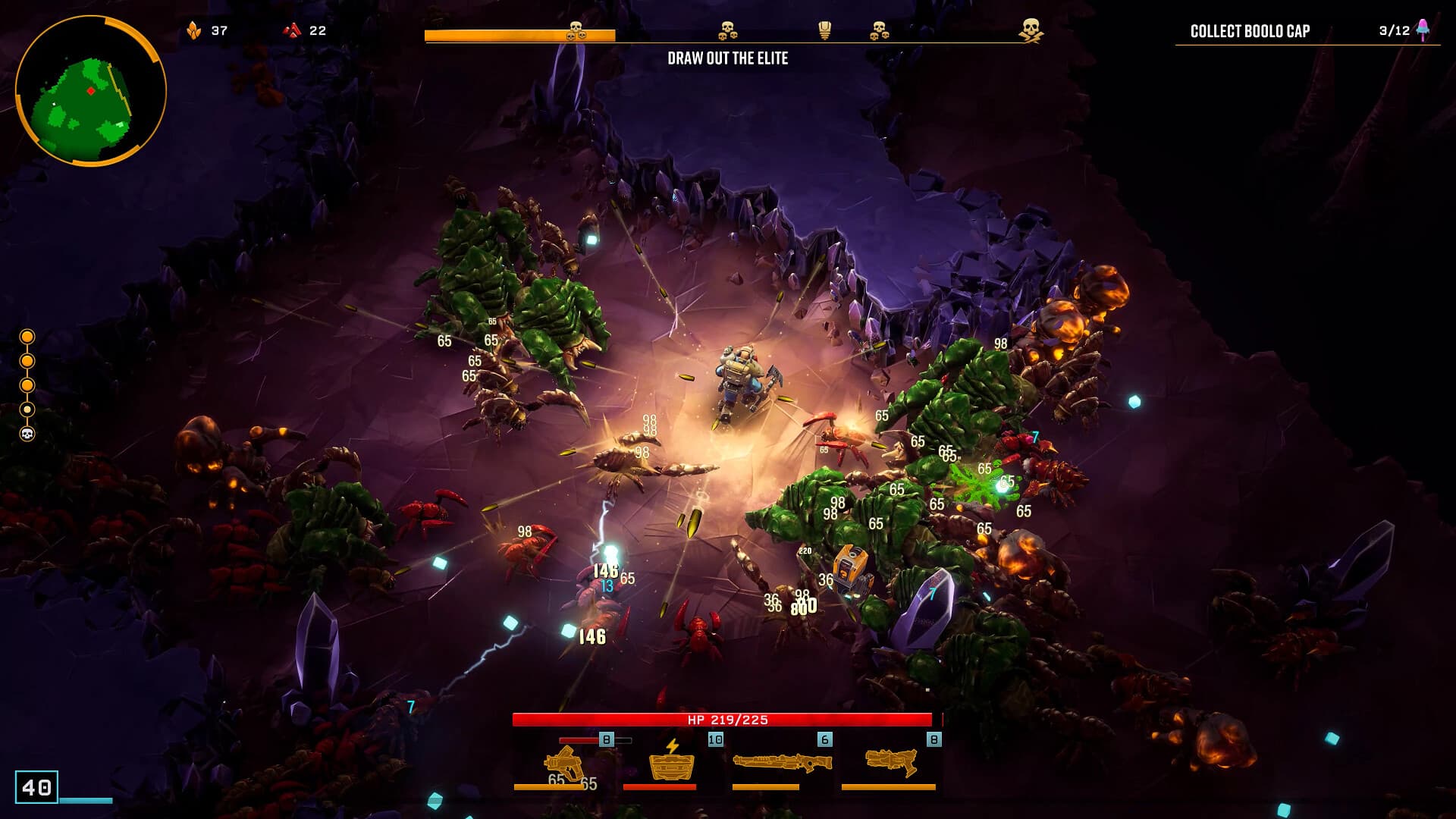
You steer the dwarf and cut routes through rock while the weapons handle firing. That frees attention for the part that makes Survivor different: moving through a cave to collect resources, meet objectives and avoid sealing yourself into a dead end. Weapon upgrades arrive inside that routing problem. Spreading improvements across the loadout can keep several tools useful, while concentrating on a particular weapon brings its overclock milestones closer. A screen full of bullets is only helpful if it leaves you a workable route.
Overclocks go beyond adding a larger damage number. Storm E-Mag makes the final bullet in a magazine fire in all directions; Omni Barrel changes compatible guns to eight-direction fire. Such effects can change where a weapon provides protection and make its firing cycle more important. The current tag system also lets compatible weapons benefit from shared upgrade cards, including synergies created by Sidearm overclocks. Build toward an interaction you can use in the cave rather than treating every offered percentage as equally valuable.
Ordinary weapon levels and chosen overclocks belong to the dive. Weapon Masteries form a separate lasting layer: a challenge run centered on one weapon can award a permanent bonus to it across modes. That is a useful distinction for players who want to improve a favorite gun over repeated attempts without carrying the same maxed-out loadout into each cave. Survivor is single-player, and its mining, objectives and return-to-pod pressure divide your attention. Choose it for automatic fire with deliberate movement and build planning, rather than for manual trigger control.
The verdict
Choose Deep Rock Galactic: Survivor when you want weapon transformations to solve a moving problem in a destructible cave.
Nova Drift
Nova Drift is for players who look at a projectile and ask how many other systems they can make it interact with.
- Manual aim
- Roguelite
- Loot builds
- Fast-paced
- Platforms
- Windows and macOS via Steam; the desktop edition is compared here.
- Price model
- Paid full game with a free Steam demo; the soundtrack is an optional extra.
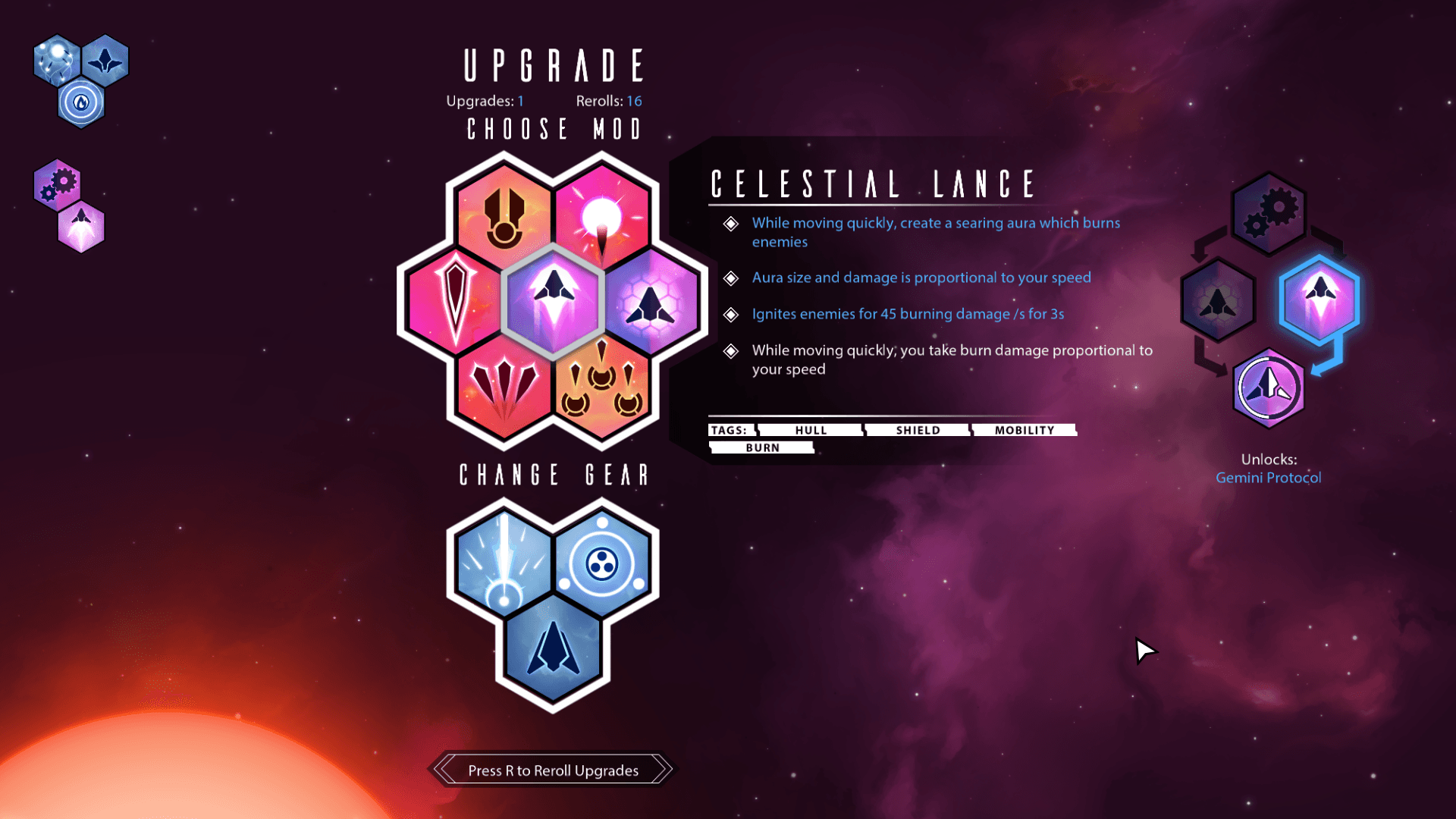
Weapon, shield and ship body provide the starting architecture; modular upgrades determine what that architecture becomes. One run can emphasize a direct-fire weapon, another its supporting constructs or the damage caused by movement and shields. For this list, start with a shooting plan and follow the interactions outward. Projectile behavior, firing rhythm and defenses are connected choices, so a tempting offensive module is worth reading all the way through, including its cost.
The developer’s Seeking Cluster Grenade example captures the appeal. Build around the Grenade weapon’s splinters, then add Heat Seeking so the fragments pursue targets. The result changes how a shot covers space rather than merely increasing the size of its number. Barrage turns a weapon into a rapid stream of fire, while Singular Strike fuses its projectiles into one large shot. These are different answers to the same starting weapon, not just successive tiers. Advanced modules have prerequisites, making early choices part of the route to a later combination. The practical question is not just whether an upgrade is strong now, but whether it moves the ship toward the interaction you are trying to assemble.
Account progress opens additional gear, modules and challenges, expanding the possibilities of future runs. The particular ship and its assembled build end with the attempt. That makes Nova Drift especially good for repeated experiments: an unsuccessful idea can teach you how the next combination should fit together. It also means this is not a permanent-gun collection game. Steering a momentum-driven ship and reading dense module interactions take adjustment, particularly if you are coming from an arena survivor where movement stops immediately when you release a direction.
The verdict
Choose Nova Drift for the pleasure of engineering an unexpected weapon behavior and then learning to pilot it.
How we compare
A good recommendation explains who a game suits and where it falls short. Our editorial scores use the same five criteria, each rated out of ten.
- 01
Combat
Controls, aiming, enemy readability, and the decisions you make under pressure.
- 02
Progression
Build choices during a run and meaningful progress between attempts.
- 03
Usability
Control demands, platform access, interface options, and documented device requirements.
- 04
Value
What the asking price includes, optional purchases, and the scope of the free version.
- 05
Fit
How well the game answers the specific question in this article.
Which one should you try?
Choose by the kind of weapon decision you want to repeat. 20 Minutes Till Dawn is the clearest fit for a dramatic mid-run evolution; Brotato makes upgrading an economical shop puzzle. Gunfire Reborn rewards comparing inscriptions across a whole build, and Roboquest adds weapon investment to agile first-person combat. Deep Rock Galactic: Survivor turns overclocks into cave-clearing tools, while Nova Drift invites stranger modular experiments. Zombie Defence is the compelling choice when you want those temporary fireworks to sit on top of a permanent weapon project: improve the shot today, then return to a shelter that can build tomorrow’s loadout.
Your questions, answered.
Want to see what we’re building?
Zombie Defence is in Alpha. Join the waitlist.
More games to explore
- 7 Best Horde-Survival Games With Guns
Compare seven gun-focused horde-survival games by aiming, reloads, projectile patterns and crowd control, from 20 Minutes Till Dawn to Zombie Defence.
- 7 Best Roguelite Shooters With Short Runs
Seven roguelite shooters for shorter play: compare run timers, boss finish lines, pause controls and save rules, from Brotato to Zombie Defence.
- 7 Best Base-Building Games With Worker Assignments
Compare seven base-building games with worker management: station specialists, individual priorities, training, schedules and the production decisions they change.