7 Best Base-Building Games With Worker Assignments
Put the right person on the right job, and make the whole base work better.

RimWorld is our strongest pick for detailed worker management: who you assign can change a job’s quality, whether it gets done at all, and what happens when the expert is injured. Fallout Shelter is the easiest introduction to matching people with production rooms. Oxygen Not Included is the choice for tracing a stalled job through skills, priorities and infrastructure. Zombie Defence connects a smaller set of specialist assignments to the supplies you use in active zombie expeditions.
The useful distinction is what an assignment actually changes. Some games give a station an output bonus. Others direct an individual’s next task, improve the quality of crafted equipment or divide a town’s population between competing professions. These seven games all give you meaningful building or facility development and a workforce you can direct. The sections below explain what the worker improves, what still limits production, and how much management the game expects from you.
The list includes six released desktop games and Zombie Defence’s single-player browser Alpha in development. Fallout Shelter also has native mobile editions. Our scores are editorial judgments of the documented systems, not storefront ratings or performance measurements. Fit emphasizes meaningful assignments and their effect on production; the recommendations distinguish a focused station manager from a full colony work planner.
The quick comparison
7 games, different reasons to give the next run a chance.
Choose a game to jump to its overview. Platform lists are summaries; check the linked official edition.
The games
Zombie Defence
A compact shelter manager with a practical staffing question: which station most needs your specialist before you head back into the city?
- Shelter building
- Crafting
- Permanent progress
- Extraction
- Manual aim (desktop)
- Platforms
- Browser Alpha in development; native mobile releases are planned.
- Price model
- Launch pricing and monetization terms are not yet confirmed.
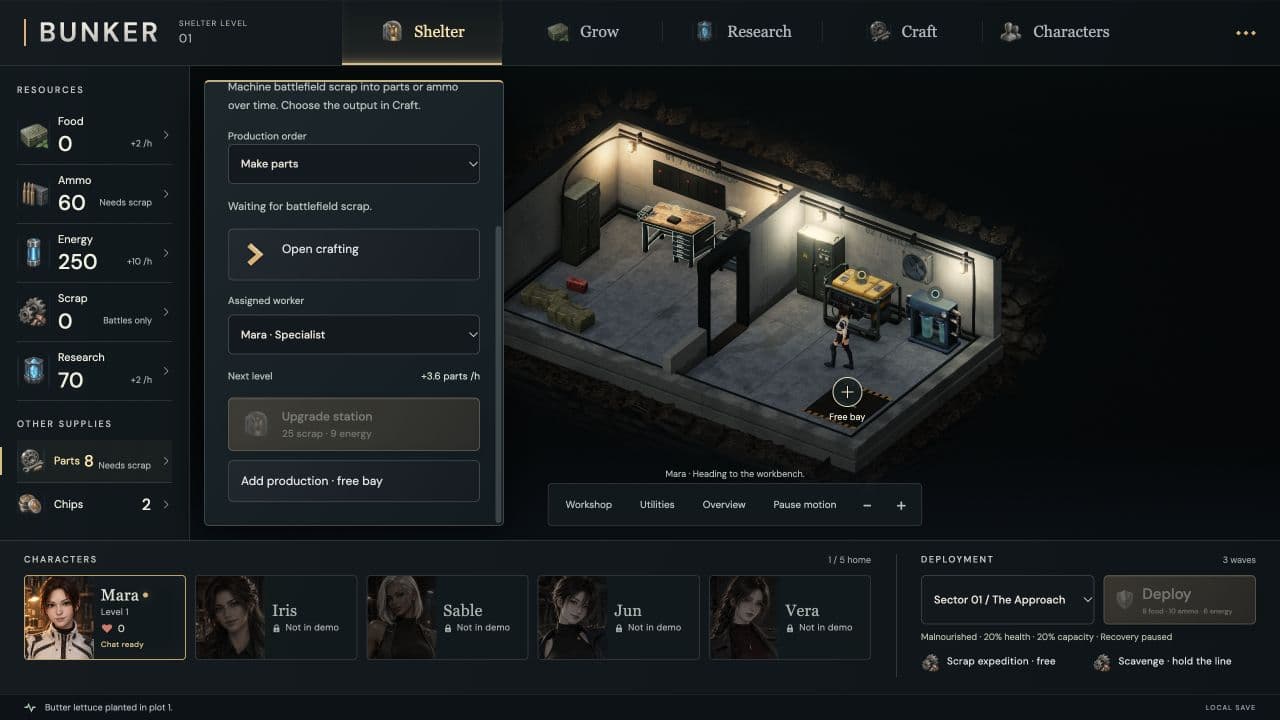
Zombie Defence makes a worker assignment a choice about the next useful supply. Its shelter stations can operate without staff, but assigning a resident raises output, and matching that resident’s specialty adds another boost. Each person can hold one assignment at a time. Putting help into the Research Lab means giving up that person’s contribution elsewhere, so a move changes what the shelter is best at producing rather than simply filling an empty portrait slot.
Mara, the resident available in the current demo, specializes in Salvage. That makes the Salvage Bench a natural home for her when parts are the bottleneck in a weapon project. Resident level and completed relationship scenes also affect output. The important check is the input bin: parts and ammunition processing consume stored Scrap. A specialist cannot rescue a line that has run out of material, and full output storage can stop production too. Staffing, supplies and the chosen production order have to agree.
This is where the active half of the game earns its place. Separate Scrap expeditions send you into the ruined city to search containers and return to an extraction pad. Recovered Scrap can fund construction, weapon crafting or processing, so feeding one line has an opportunity cost elsewhere. On desktop you handle movement, mouse aim, firing and reloads yourself; touch fire targets the nearest living enemy. The worker improves the shelter’s contribution, while you still have a hands-on job gathering the resources it needs.
The payoff is a focused production loop without a colony-wide roster of shifts, hauling permissions and emergency work priorities. Station upgrades, an expansion bay and research provide room to develop the base, but its layout is fixed. Mara is the sole available demo resident, while Iris, Sable, Jun and Vera belong to the wider authored roster. Choose it for a specialist you can place meaningfully between expeditions; choose RimWorld or Oxygen Not Included if designing an entire population’s working day is the main attraction.
The verdict
A strong fit for players who want a few consequential assignments and then a weapon in their hands: staff the station, supply it, and put its output to use.
Fallout Shelter
The clearest starting point for matching residents to jobs: put the right Dweller in the right room, then improve the person as well as the facility.
- Shelter building
- Crafting
- Permanent progress
- Base defense
- Platforms
- Windows PC, Android and iPhone/iPad; the standard Vault-management loop.
- Price model
- Free to play with optional in-app purchases.
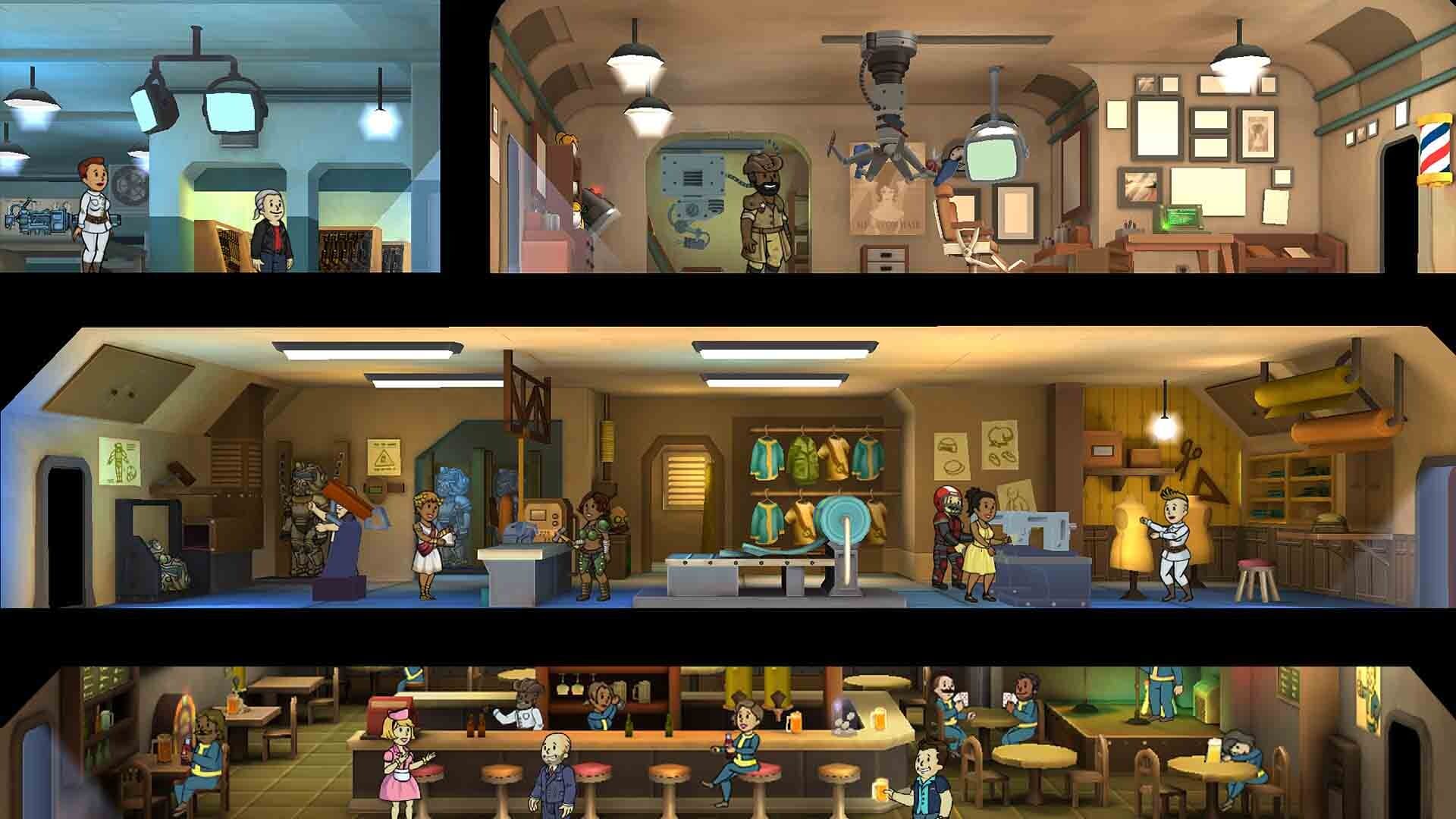
Fallout Shelter turns the staffing puzzle into something you can see in a cutaway. Each production room has a relevant S.P.E.C.I.A.L. attribute, and assigning Dwellers who suit that job improves its performance. There is little ambiguity about where a production worker belongs: you place the resident directly in the room. Power, food and water production become an understandable set of staffing decisions spread across your Vault.
Training rooms and outfits make that arrangement worth revisiting. A promising worker can become better suited to a job, while a useful outfit can strengthen the person already doing it. The tradeoff is that a Dweller spending time in training is unavailable to the production room they left. That gives you a satisfying small planning problem: improve tomorrow’s workforce without leaving today’s essential rooms too thinly staffed.
Crafting adds a useful wrinkle: the relevant S.P.E.C.I.A.L. attribute varies with the item being made. The best workshop team for one project is not automatically the best for the next. Dedicated weapon and outfit rooms need assigned Dwellers, junk and the appropriate recipes, while the room’s tier limits the rarity it can produce. That makes a staffing improvement worth checking before you assume every slow project needs another building upgrade.
The Vault is easier to read than a colony full of hidden pathing and priority conflicts, which makes Fallout Shelter the most approachable option here. Its limits are just as clear. You are staffing rooms rather than writing a detailed daily schedule, and production timers remain part of the rhythm. Incidents and expeditions also compete for equipped Dwellers. If moving a capable resident to the right place sounds more appealing than tuning a large work matrix, this is the place to start.
The verdict
The best beginner pick for visible, manageable worker assignments, especially if you want the same basic Vault idea on a phone or PC.
RimWorld
RimWorld is the strongest choice here when you want to decide who does each kind of work, in what order, and with what effect on the finished result.
- Shelter building
- Crafting
- Farming
- Tactical combat
- Platforms
- Windows, macOS and Linux; the desktop base game.
- Price model
- Premium purchase; optional expansions are sold separately.
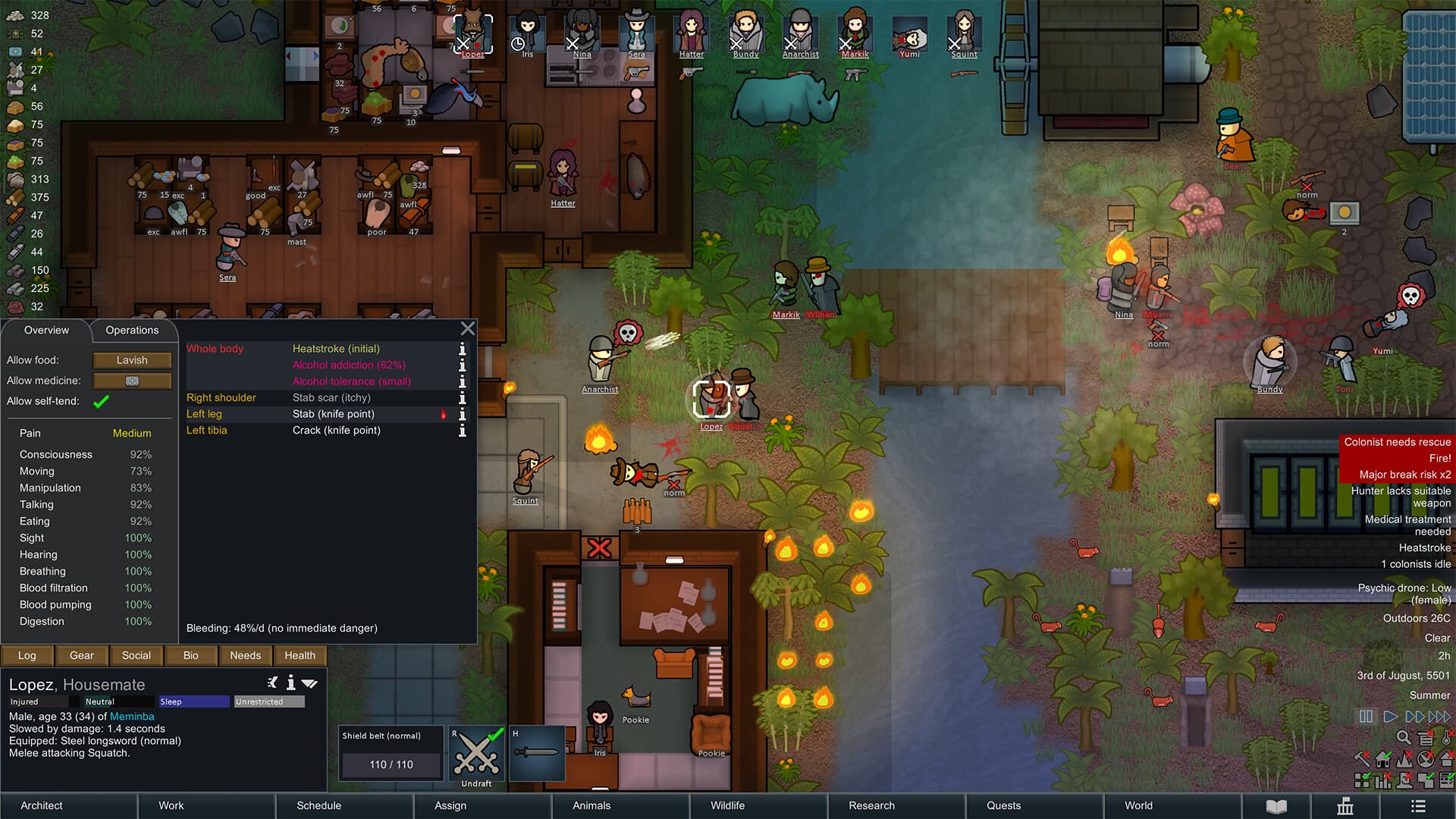
The Work tab is the heart of RimWorld’s staffing game. You can enable job types for each colonist, then switch to numbered manual priorities to decide what they tackle first. A strong researcher does not automatically belong on every other useful task: if their earlier priorities keep supplying work, the research bench waits. Specialization therefore means protecting someone’s attention as well as recognizing a high skill number.
Those skills change more than a generic efficiency bar. A capable builder gains access to harder construction and is less likely to waste a job through a botched attempt. Crafting skill influences the quality of equipment and whether a colonist qualifies for certain recipes; it is not a universal crafting-speed multiplier. Workbench bills can be assigned to a particular colonist, giving you a way to reserve an important project for the person you actually trust to make it.
The less glamorous jobs are just as revealing. You can have a talented craftsperson and a researched recipe while materials remain inconveniently scattered around the map. Someone still needs to haul, clean and keep the colony functioning. A good division of labor lets the specialist spend more time doing valuable work, but a rigid one becomes fragile when the only cook is injured or your researcher is dealing with a mental break.
That fragility is the reason to choose RimWorld rather than merely tolerate its menus. Backgrounds can make people unable to perform certain work, injuries affect their capacities, and raids interrupt the plan. You are building a team with strengths, blind spots and substitutes, not optimizing interchangeable workers. It is the richest recommendation here for a player who enjoys diagnosing why the workshop stopped, although that depth asks for more attention than a simple room-assignment game.
The verdict
Choose RimWorld when the workforce itself should be the puzzle, including the awkward question of who takes over when your best person cannot work.
Oxygen Not Included
A wonderfully demanding choice for players who want worker priorities, training and physical infrastructure to explain every missing meal or stalled machine.
- Shelter building
- Farming
- Crafting
- Platforms
- Windows, macOS and Linux through Steam; the base game.
- Price model
- Premium purchase; optional DLC is sold separately.
Oxygen Not Included asks two separate questions: what is a Duplicant qualified to do, and which work should that Duplicant choose? Skills develop their capabilities, while individual priorities direct their attention among available errands. Raising the urgency of a building is not the same thing as creating a trained worker for it. That separation makes staffing feel like designing a team rather than just adding bodies to a machine.
Specialization also has a household cost. Learned skills increase morale expectations, so giving one Duplicant a broad catalogue of abilities creates more demands on the colony that supports them. Comfortable living conditions and time away from work belong in the production plan. The interesting decision is often whether to train another specialist or improve the base enough to support a more versatile one.
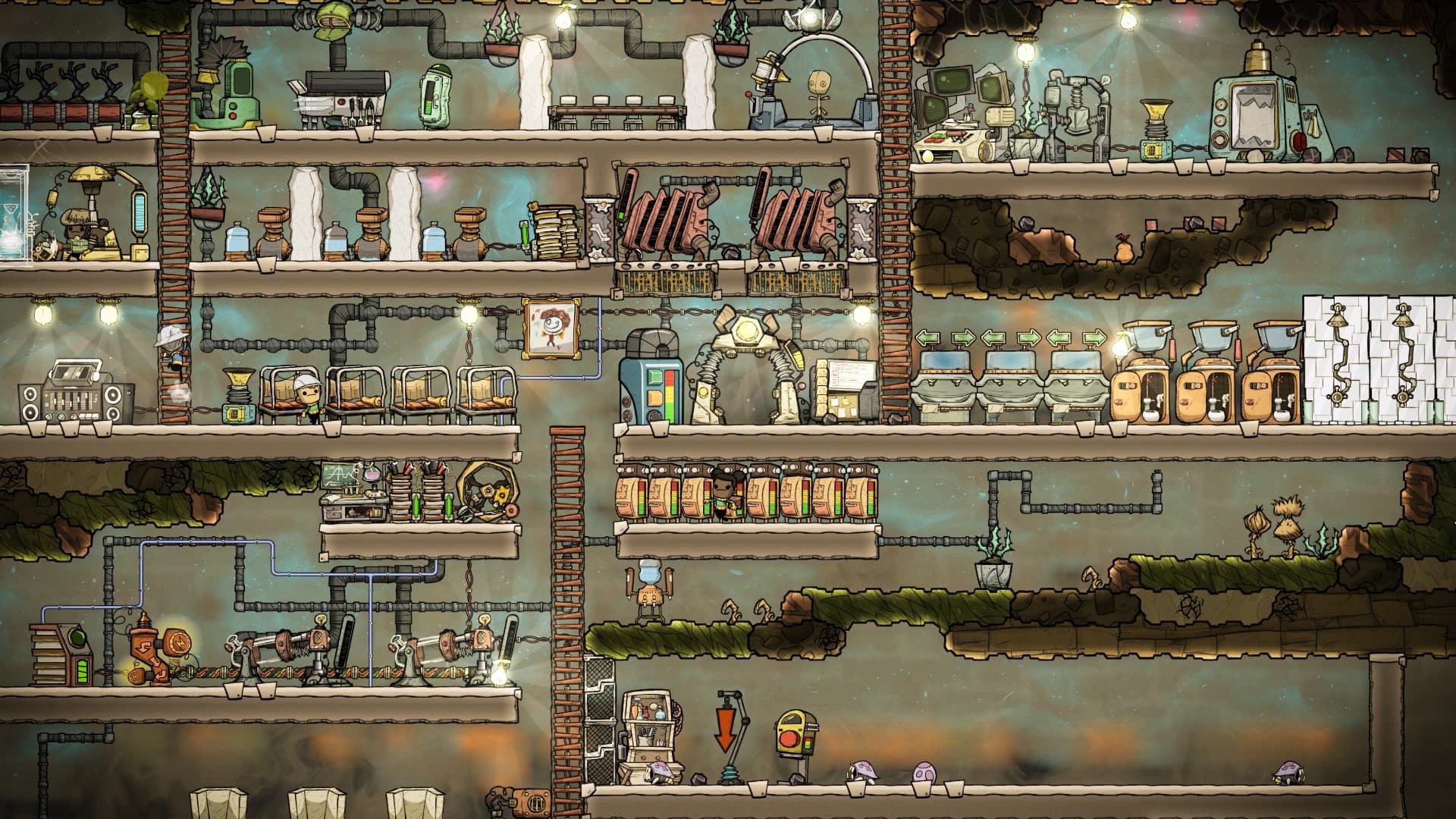
Production problems are unusually tangible. Machines need power and materials; gases and liquids travel through the systems you build; Duplicants need safe routes to reach their jobs. A researcher cannot spend all day at the station if other errands keep winning their attention. The Errands interface helps expose which work is available and which Duplicants can do it. Fixing that arrangement can be more useful than immediately building a second copy of the stalled facility.
The reward is seeing a complicated habitat become coherent: power, food, oxygen and labor start supporting one another. The tradeoff is that worker management is only part of the diagnosis. A broken supply route or unsuitable environment will not disappear because you trained the ideal specialist. This is the pick for players who enjoy explaining a failure and redesigning the system behind it. Duplicants can fight critters, and some creatures fight back, but the colony’s main drama is keeping its people and infrastructure working.
The verdict
The best choice for systems-minded builders who want to know exactly why a job is waiting, and enjoy fixing more than the worker assignment.
Stranded: Alien Dawn
Stranded: Alien Dawn makes a small crew feel busy in a legible 3D base, with enough control to organize both their jobs and the hours available to do them.
- Shelter building
- Crafting
- Farming
- Base defense
- Platforms
- Windows PC; this comparison uses the Steam base game.
- Price model
- Premium purchase; Robots and Guardians is an optional paid expansion.
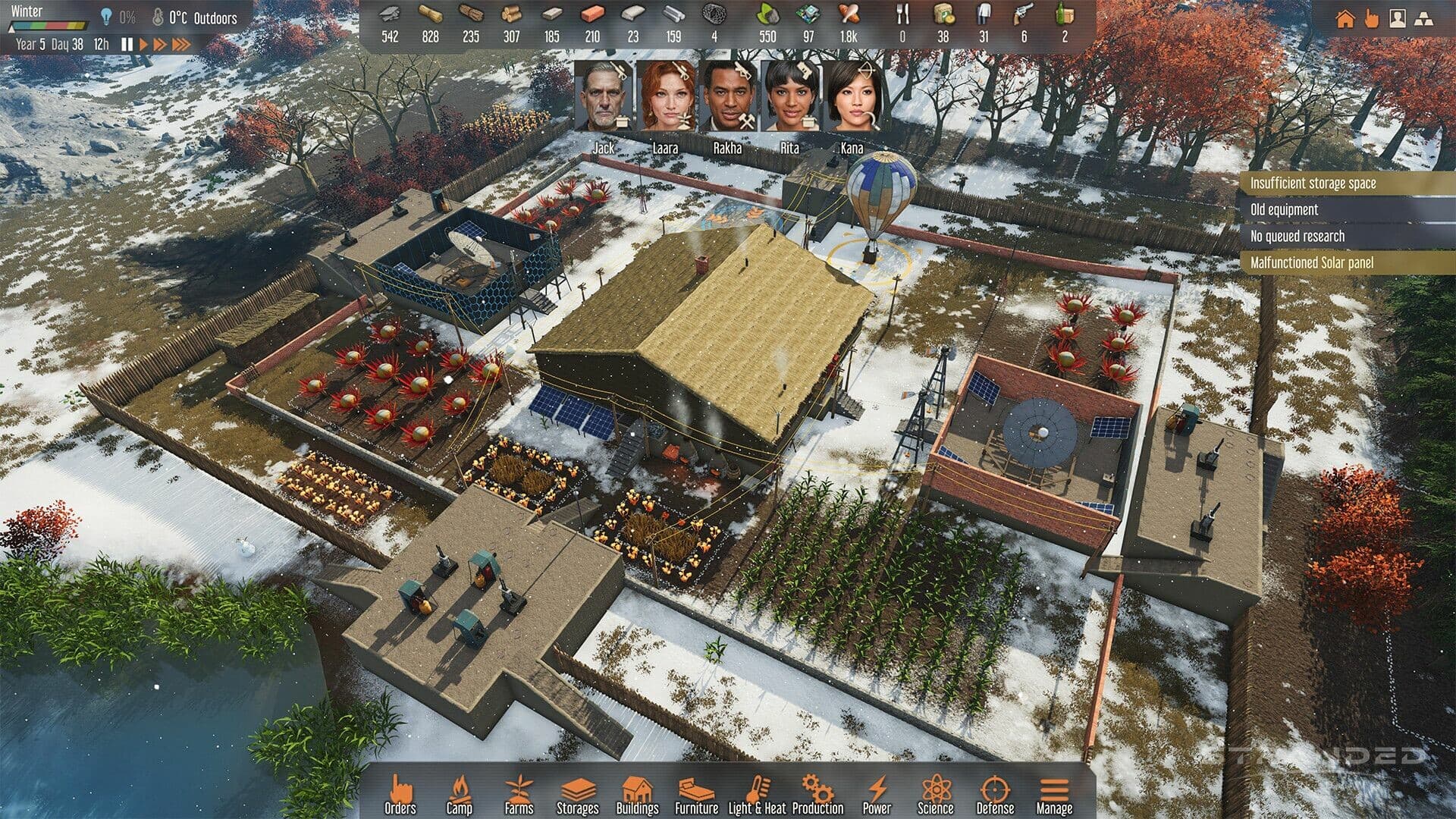
Your survivors arrive with different skill levels, traits and personal needs, so the best team is more useful than a group of identical all-rounders. Assigning tasks develops their abilities, while the base grows from improvised shelter into a technological outpost. The people who plant food, build shelter and research equipment are also the people who need to sleep, recover and defend it.
The Activities panel gives you simple assignments or more detailed priorities. You can make someone concentrate on their strongest work without requiring a fresh order for every action. Equal priorities are checked from left to right, so setting everything to the same number does not make everything equally likely to happen next. Workbenches and production machines have their own ordered task lists as well. Choosing the worker and choosing which item that worker should make are related but separate decisions.
Schedules provide the other half of the arrangement. Work, relaxation and sleep compete for time, while the colony has to supply the food and recreation that make those hours sustainable. A sensible practical goal is to keep a skilled craftsperson on the clothing or equipment you need before the season changes, rather than repeatedly pulling that person into every new building project. You can change both priorities and schedules as the settlement’s needs change.
Stranded is especially appealing if you want to watch that organization take shape in a fully 3D home. Farms, storage, workshops and defenses form a place your survivors visibly inhabit. It still demands attention: injuries, weather and alien attacks can disrupt a carefully planned day. Compared with Endzone, the emphasis is on individual crew members rather than staffing a whole town; compared with Fallout Shelter, you have much more control over the sequence and timing of their work.
The verdict
Pick it for the middle ground between readable base life and serious worker control, especially if a 3D settlement makes the management more engaging.
Endzone - A World Apart
Endzone widens the staffing problem from individual personalities to a whole settlement: how many people can you spare for water, construction, research and production?
- Shelter building
- Farming
- Base defense
- Platforms
- Windows PC; the original Endzone - A World Apart, not Endzone 2.
- Price model
- Premium base game; Prosperity and Distant Places are optional paid expansions.
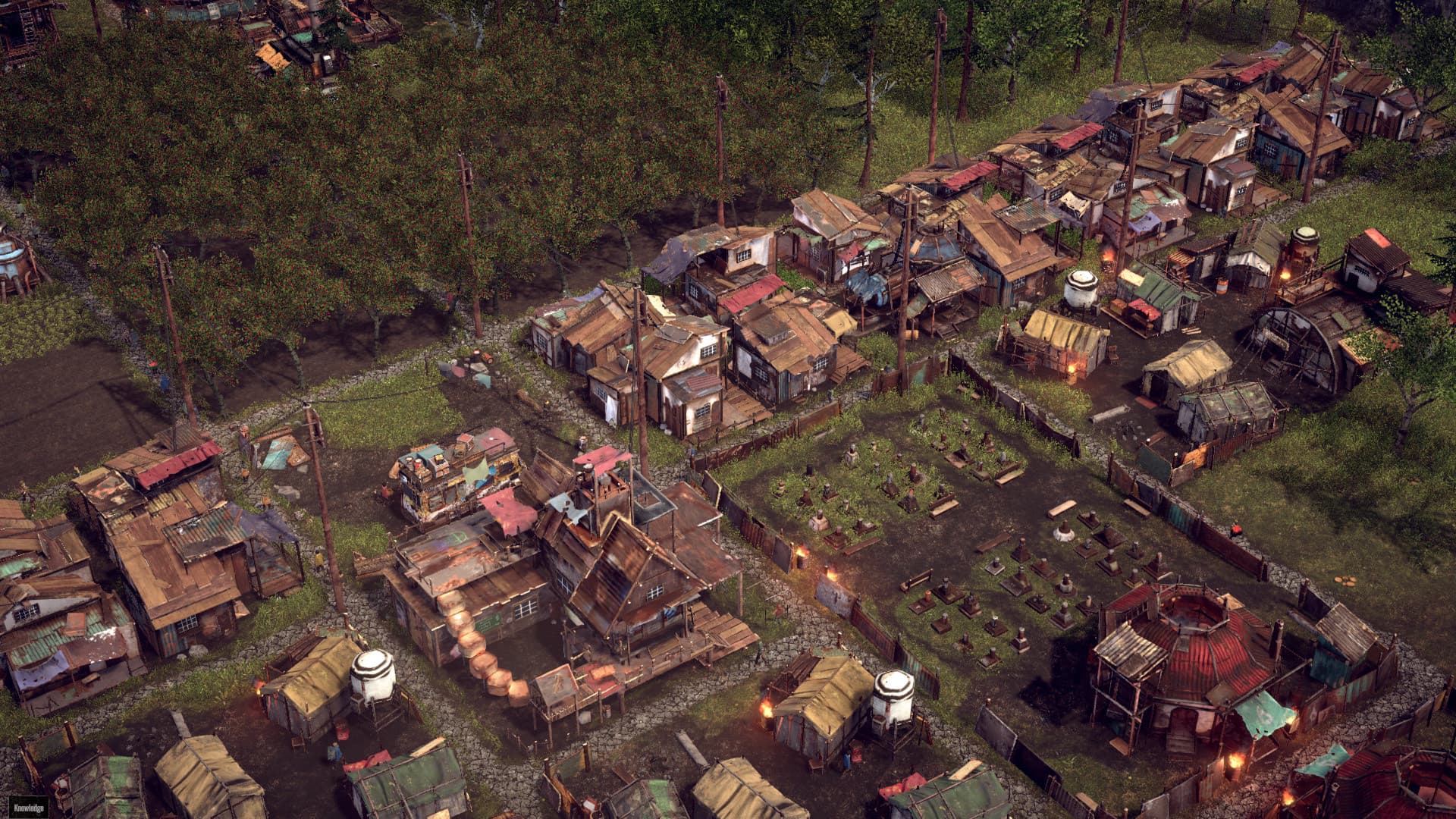
Endzone’s profession system makes population a budget you actively divide. Assign settlers to the jobs the town needs, then decide which workplaces deserve the available capacity. A new production building is not an automatic solution when the same workforce is already stretched across water, food and construction. The interesting expansion question is whether you can operate the thing you just built without weakening an essential service.
Different professions contribute in concrete ways. Builders deliver materials to construction sites and carry out the building work. Researchers generate knowledge and conduct research that opens further technologies. Decontaminators make kits that clean contaminated goods in supported storage buildings, turning labor into safer supplies. If you push construction harder, those extra builders have to come from somewhere; if you reserve more people for research, the return is future capability rather than another immediate stack of provisions.
The environment makes those allocations change over time. Drought, radiation and toxic weather put pressure on food, water and protective supplies, while roads, storage and workplace placement influence how practical the settlement is to operate. More workers can help a strained line, but they are not a substitute for the materials, transport and protective infrastructure around it. A town that expands its labor demands faster than its supporting systems becomes difficult to keep balanced.
Choose Endzone when you prefer adjusting a network of professions over assigning a named expert to every individual bench. It gives worker management a larger civic scale, with the satisfaction of getting several production chains to serve the same growing community. The tradeoff is less focus on a particular person’s skill development than in RimWorld or Stranded. You are mainly deciding where the labor should go, then making sure the settlement gives that labor a useful job to do.
The verdict
The choice for a settlement manager who wants to distribute people across an economy, rather than maintain a detailed personal work plan for every resident.
Kenshi
Kenshi lets your own squad run the outpost, giving repeated jobs a purpose beyond the next construction milestone: they support the lives you choose outside it.
- Shelter building
- Crafting
- Squad builds
- Tactical combat
- Platforms
- Windows PC; the original single-player Kenshi.
- Price model
- Premium purchase; the soundtrack is sold separately.
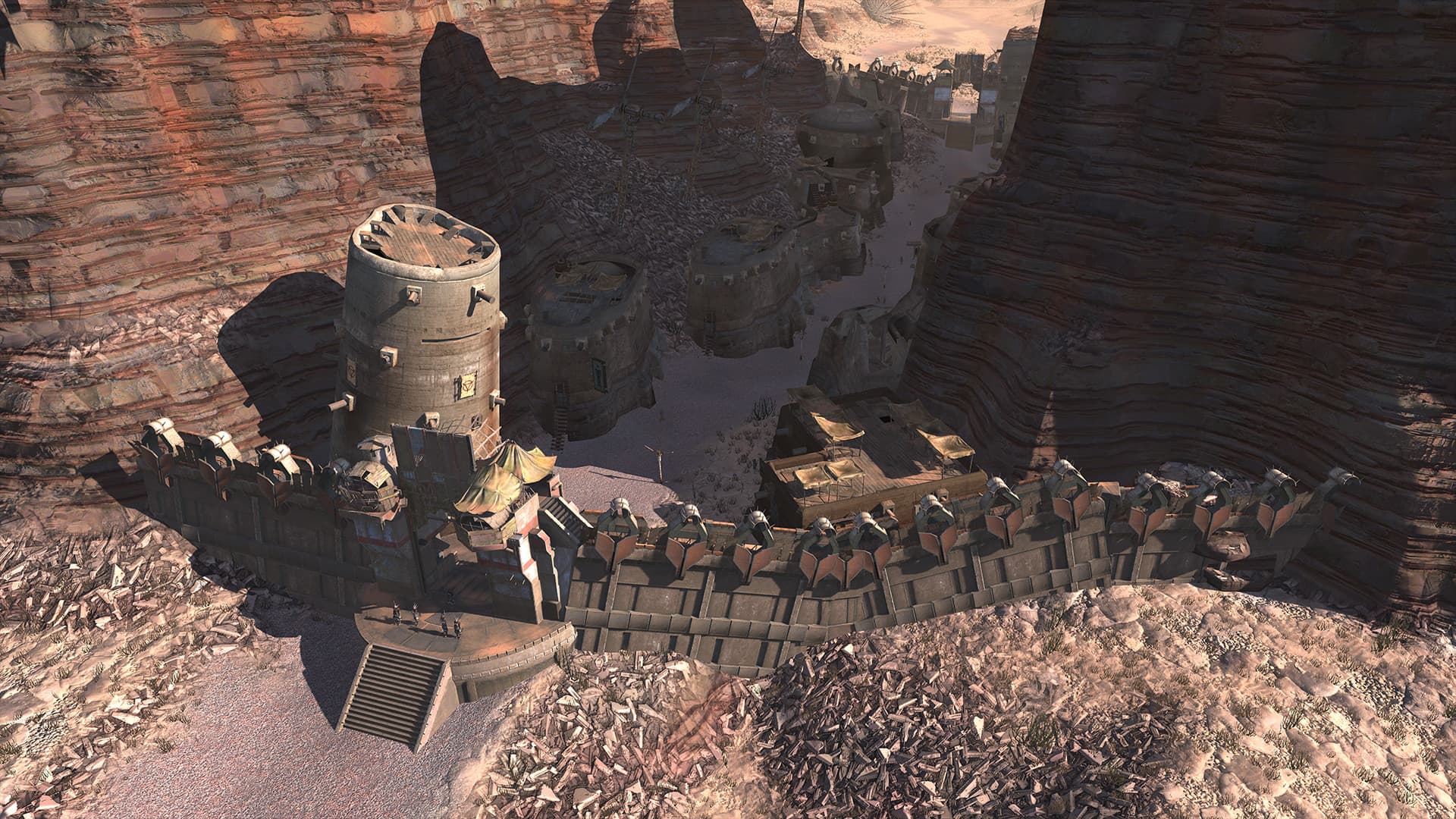
Kenshi’s workers are the same characters who can explore, trade and fight. You can establish an outpost with research and production, then set characters up to run its routines. Permanent jobs let a squad member return to recurring duties instead of waiting for another single-use order. That makes a base useful as an ongoing operation while you divide your attention between the people at home and the group venturing into the wider world.
The satisfying part is building a workable chain of responsibilities. Someone must gather or process the material, someone must use it, and the output needs somewhere to go. Hauling can itself be assigned as a continuing job, moving production into storage. A smith, farmer or researcher is therefore more useful when the rest of the outpost keeps their work supplied. Building another machine is less important than discovering which part of that chain has no reliable worker.
Character development gives the arrangement longevity. Smithing skill limits the quality of crafted weapons and determines the quality of crafted armor, so replacing an experienced smith with a spare pair of hands changes what the workshop can deliver. Engineering, medicine and other skills give the group further reasons to specialize. The outside world complicates the calculation: taking a useful resident on an expedition removes them from the home routine, and bringing them back wounded can change what they can do. The Jobs control lets you disable ordinary work orders when a character should be occupied elsewhere.
This is an excellent fit if you want the base to equip and sustain a self-directed squad. It is a tougher recommendation if you want worker management presented as a clean, self-contained building game from the first minute. Recruiting, training, travel and survival all demand attention, and the world does not scale itself to protect your beginners. The appeal is turning vulnerable people into a functioning group with a productive home, not simply filling a settlement’s available vacancies.
The verdict
Choose Kenshi when your ideal workers are also your adventurers, and the outpost should support a life beyond its walls.
How we compare
A good recommendation explains who a game suits and where it falls short. Our editorial scores use the same five criteria, each rated out of ten.
- 01
Combat
Controls, aiming, enemy readability, and the decisions you make under pressure.
- 02
Progression
Build choices during a run and meaningful progress between attempts.
- 03
Usability
Control demands, platform access, interface options, and documented device requirements.
- 04
Value
What the asking price includes, optional purchases, and the scope of the free version.
- 05
Fit
How well the game answers the specific question in this article.
Which one should you try?
Start with the kind of staffing decision you want to make. Fallout Shelter gives you visible room assignments and a workforce to train. RimWorld is the best fit for precise individual priorities and the consequences of losing a specialist; Oxygen Not Included adds a demanding infrastructure puzzle around that labor. Stranded: Alien Dawn makes a small crew’s working day tangible in 3D. Endzone - A World Apart is the broader profession-allocation game, while Kenshi turns recurring jobs into support for an adventuring squad. Zombie Defence makes a tighter connection: assign the specialist, keep the station supplied, and use the results in your own next outing. If that cycle is what makes base management satisfying to you, join the waitlist for its browser Alpha.
Your questions, answered.
Want to see what we’re building?
Zombie Defence is in Alpha. Join the waitlist.
More games to explore
- 7 Best Shelter Management Games in 2026
Compare seven shelter and colony management games, from Fallout Shelter's room assignments to resource-heavy survival, resident care, and zombie expeditions.
- 7 Best Post-Apocalyptic Base-Building Games
Build a future after the end: compare seven post-apocalyptic base-building games, from irradiated settlements and frozen cities to Zombie Defence’s shelter.
- 7 Best Games With Underground Shelters
Find an underground home worth keeping alive, from Zombie Defence’s working shelter to Fallout Shelter’s vaults and Oxygen Not Included’s intricate colonies.