Fallout Shelter review: the people are the machinery
A cheerful underground dollhouse where every new resident is another staffing decision, and a bigger vault is only better when somebody can keep it running.
Zombie Defence Editorial Team ·
Editorial assessment based on official documentation and gameplay imagery.
Fallout Shelter makes the apocalypse look like a charming apartment block until you remember that everybody inside needs feeding. Its best trick is making a tiny staffing change feel consequential: move the right person, improve a room, and the whole underground household becomes a little less precarious.
This is a management game for people who enjoy putting things in order and then discovering the next thing that needs attention. The residents supply the personality, but their jobs, equipment and time are the machinery. Vault-Tec has apparently outsourced human resources to you.

Hire the room a better worker
The central decision is whether your existing people are doing the right work. Dwellers have S.P.E.C.I.A.L. abilities, and matching their strengths to suitable jobs matters more than treating every arrival as an interchangeable pair of hands. Training and stat-boosting outfits make that workforce something you can develop.
The cutaway presentation makes this unusually personable. Workshops, living spaces and tiny residents keep the bookkeeping visible. You are arranging a machine, certainly, but it is a machine whose components dress up, flirt and occasionally require an emergency appointment with a fire extinguisher.
A new floor is a promise to feed it
Power, food and water make expansion a balancing act. Another room or resident should solve a problem, rather than simply make the vault bigger. Leave room in your plans for production and staffing; a magnificent cross-section is a poor consolation when the essential supplies are strained.
Joining compatible rooms makes the layout easier to manage. Adjacent rooms of the same type and upgrade level can merge, up to three rooms wide. Decide where those larger spaces belong before you scatter mismatched upgrades through the rock like an overenthusiastic interior designer.
Your best rifle has several applicants
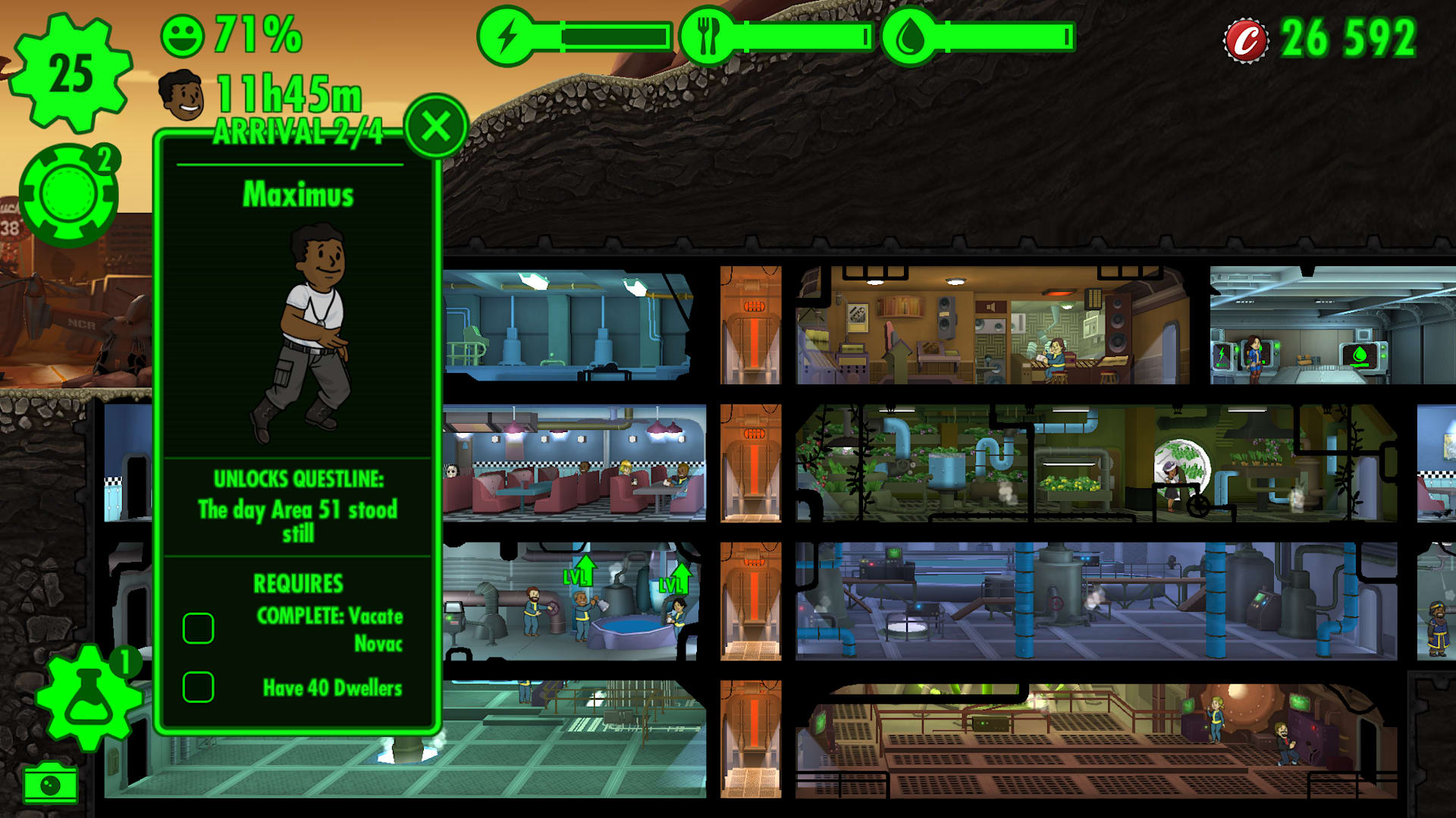
Equipment connects the peaceful vault to the dangerous world outside. Give a good weapon to an explorer and it cannot simultaneously protect a worker back home. That simple allocation problem does more for the strategy than the combat spectacle: your preparation matters before anything starts shooting.
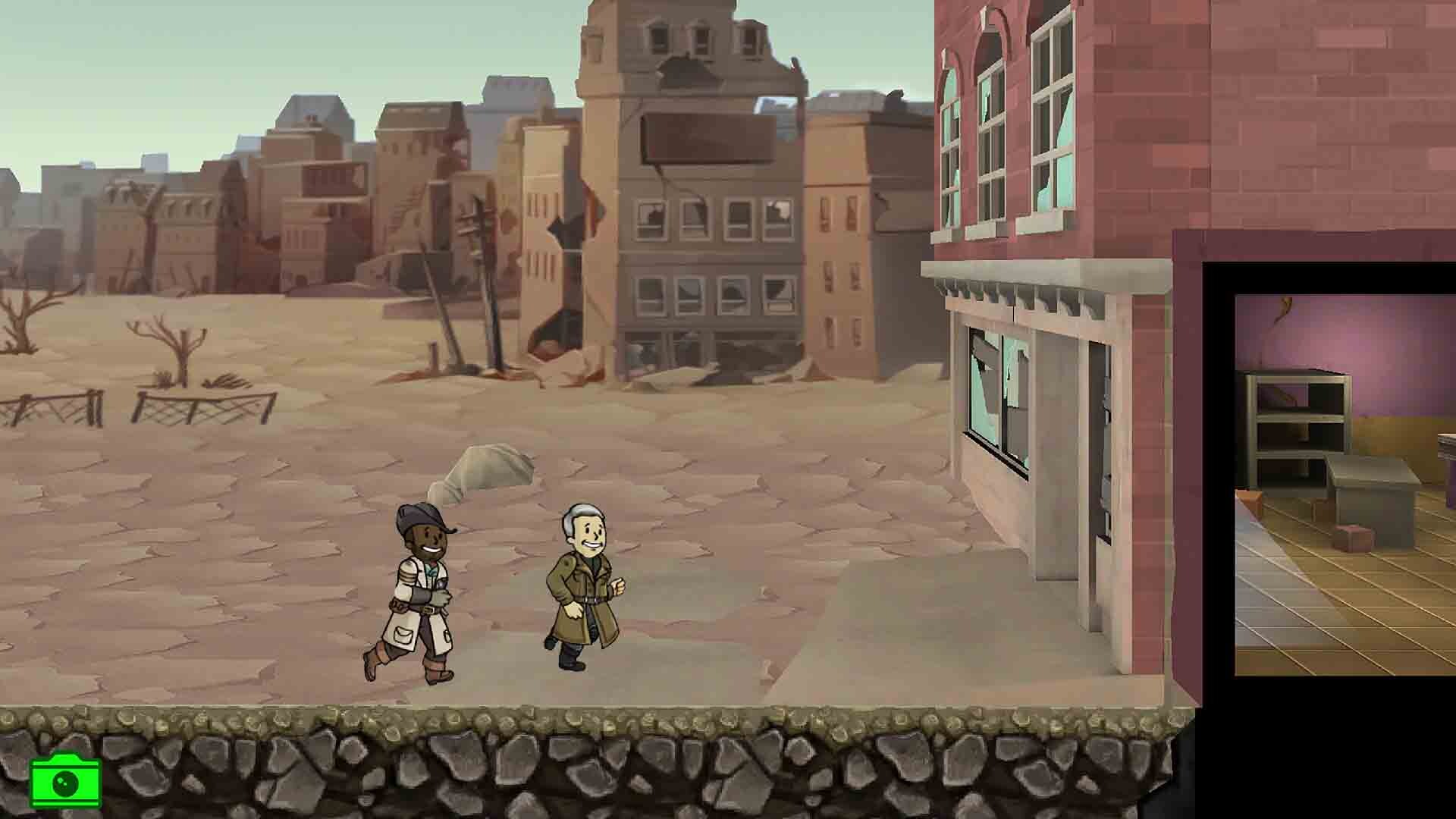
Exploration offers loot, experience and caps, while quests provide more directed outings. On quests you can assign individual dwellers to particular enemies, and Agility affects attack speed. There is a useful layer of intervention here, although anyone shopping for a deep tactical combat system should temper expectations.
The junk drawer becomes a production line
Crafting gives scavenged junk a destination. Weapons and outfits use separate workshops, and the required S.P.E.C.I.A.L. attribute depends on the item being made. The right crafting team therefore changes with the job. A permanent crew is convenient; a deliberately chosen crew is the more interesting decision.
Workshop upgrades broaden the available item rarities, while many rarer recipes must first be recovered from the wasteland. That creates a satisfying connection between excursions and domestic improvement. A trip can bring home the means to manufacture better equipment, not merely another object to equip immediately.
The tradeoff is pace. Training, production and crafting spread your plans across waiting periods. Shelter works well when you like leaving several modest projects underway and returning to finish them. It is less convincing when you want every minute at the screen to demand a fresh decision.
Seasons hand you another set of vault keys
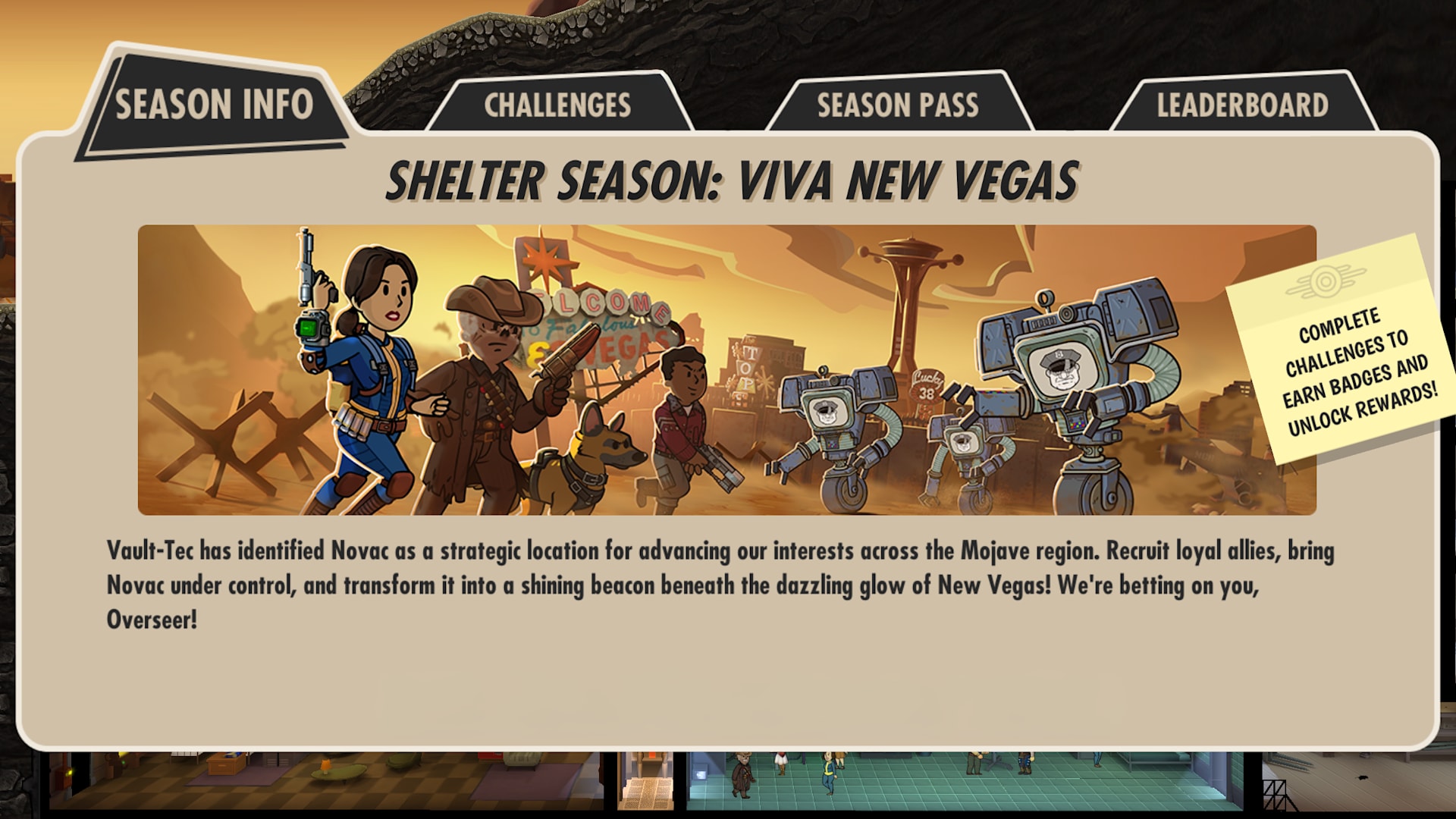
Seasons now add themed, limited-time experimental vaults separate from your main vault. That separation is appealing: you can engage with a new scenario without treating your established community as disposable. The launch example, Viva New Vegas, introduced themed quests, familiar television characters and a different set of goals.
The seasonal layer gives returning players a reason to reconsider a familiar routine. It also adds deadlines and reward tracks to a game whose ordinary appeal is gradual cultivation. Whether that sounds refreshing or exhausting depends on how much you want your virtual management job to have a calendar.
Keep the reward wheel in perspective
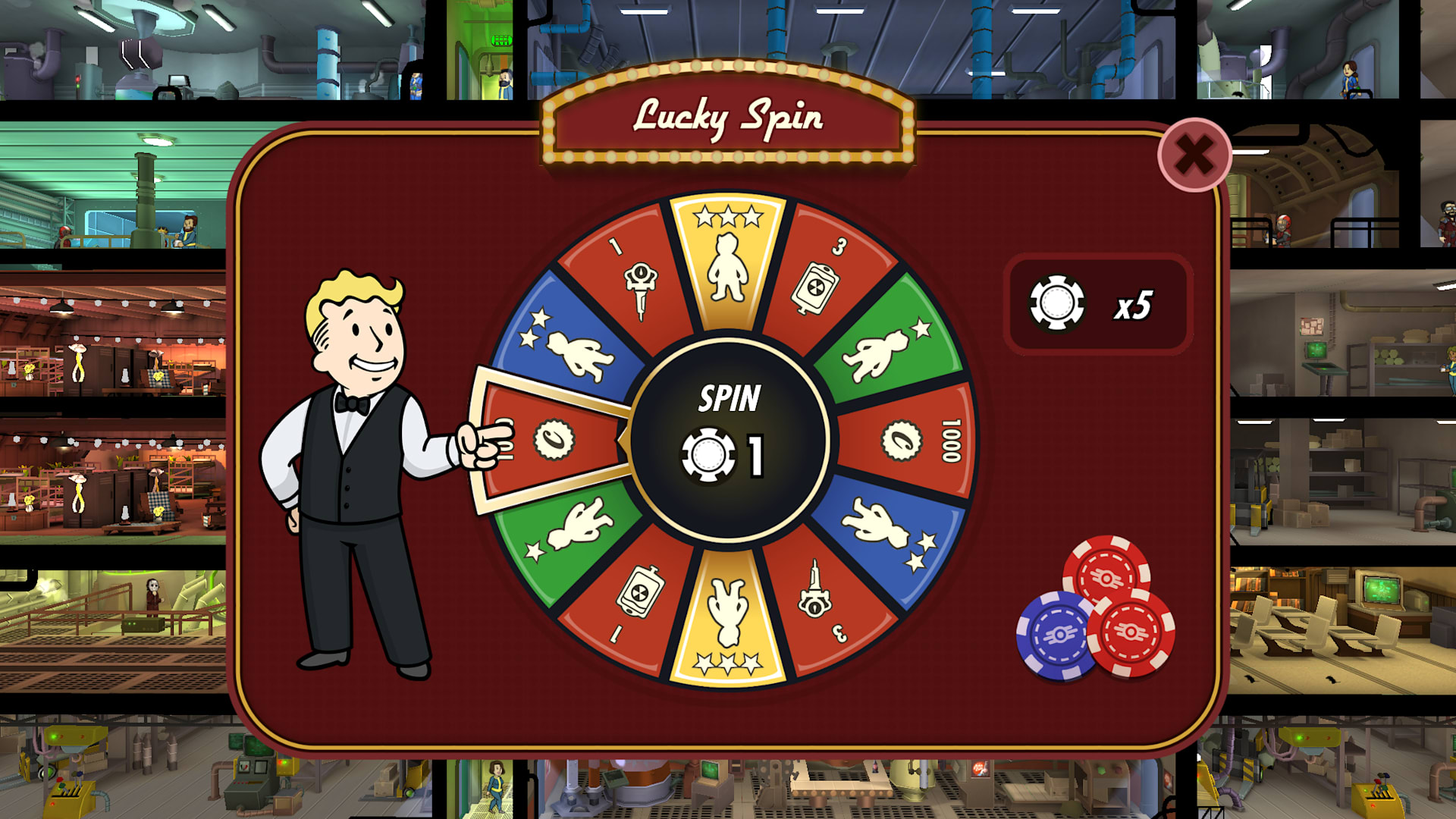
Lucky Spins add a chance-based reward interface, with the launch season awarding chips through quests. Treat that as a bonus around the management loop. Building a functioning vault remains the stronger reason to play than waiting for a reward wheel to approve your career choices.
Free entry and good value are separate questions
Both covered editions are free to start and include optional purchases. Android also lists advertising. That makes trying the core idea straightforward, but it does not make every offer a good purchase. Decide whether you enjoy managing the vault before paying to accelerate or decorate that relationship.
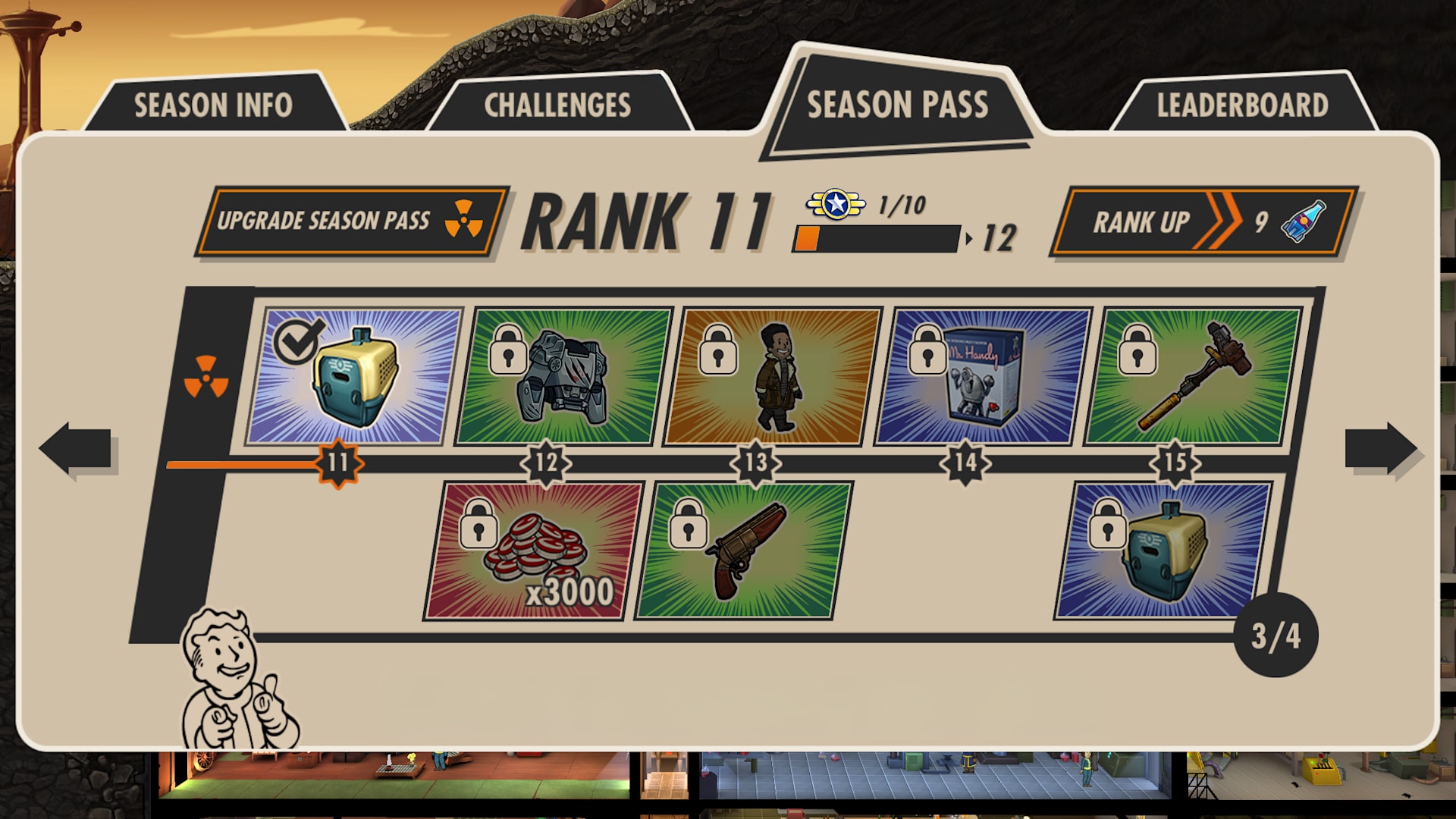
The Season Pass has free and paid tracks. Rewards, timers and premium prompts can turn a pleasant collection habit into another thing to chase, so choose your own stopping point. A paid track makes the most sense only after its specific rewards justify the cost to you.
Steam has caught up with an important chapter
Older advice that treats recent content as mobile-only is no longer reliable. Bethesda confirms Seasons on Steam, Android and iOS, and its December 2025 Steam update brought across previously mobile-only questlines, characters, equipment and themes. This review covers the Steam PC and Android products specifically.
Choose around your habits rather than assuming the PC edition is frozen in its earlier state. Android suits the idea of a vault you carry around; Steam puts it beside your desktop games. Shared announced features do not guarantee identical builds, offers or future update timing.
Strengths
- Worker placement and equipment decisions reinforce each other.
- Crafting gives exploration a useful long-term purpose.
- Expressive cutaway rooms make resource management approachable.
- Separate seasonal vaults offer fresh starts without replacing the main vault.
Tradeoffs
- Waiting and repeated collection can become routine.
- Combat supports the management game more than it stands alone.
- Random rewards and paid tracks invite unnecessary chasing.
Who it suits
- Best for patient base builders who enjoy improving a small community.
- A good fit for short check-ins between longer play sessions.
- Less suitable for players wanting intricate tactical battles or uninterrupted action.
Verdict
Fallout Shelter earns its place as an approachable management game because its people are useful in several competing ways. Assigning jobs, choosing equipment and turning expeditions into better workshops produce a neat little chain of decisions, wrapped in an unusually cheerful vision of life underground.
The recommendation comes with a clear condition: enjoy the tending as much as the growing. Timers, recurring chores and optional reward tracks can wear down the novelty. If improving your tiny workforce is the attraction, start free and let the vault earn your attention before it asks for money.
PC base game
Review score: 8.2 / 10
- Combat
- 6.7 / 10
- Progression
- 8.5 / 10
- Usability
- 8.8 / 10
- Value
- 8.6 / 10
Windows PC release on Steam, app 588430. Includes Seasons and the December 2025 addition of previously mobile-only content; not a claim about console or other PC storefront editions.
Android edition
Review score: 8.2 / 10
- Combat
- 6.7 / 10
- Progression
- 8.5 / 10
- Usability
- 8.8 / 10
- Value
- 8.6 / 10
Android app com.bethsoft.falloutshelter, published by Bethesda Softworks LLC. Includes Seasons; Google Play lists ads and in-app purchases. No cross-platform save or exact build parity claim is made.
The review score averages the applicable Combat, Progression, Usability and Value scores, rounded once to one decimal. Fit is specific to each comparison and is excluded.
Is Fallout Shelter free on PC and Android?
Yes. The Steam and Google Play editions are free to start, with optional in-app purchases. Google Play also lists ads. Seasons include a free reward track, while paid pass options provide additional rewards.
Does the Steam edition now have Seasons?
Yes. Bethesda explicitly lists Steam alongside Android and iOS for Seasons. Its December 2025 Steam update also added previously mobile-only content. That does not establish identical future release schedules for every platform.
Can you play Fallout Shelter offline?
Bethesda says the game can be played without an internet connection. The item store and access to purchased items in the redeem tab require internet. That guidance should not be stretched into a promise about every seasonal service.
How much control do you have during quests?
Quest combat lets you direct individual dwellers toward specific enemies by clicking or tapping, or by dragging. Agility affects how quickly a dweller attacks. Preparation and equipment remain important alongside that targeting control.
Do seasonal vaults replace your main vault?
No. Experimental seasonal vaults are separate from your main vault. Bethesda describes their own themes, time limits, challenges and rewards, with Season Pass characters and items transferable to the original vault after the season concludes.
Sources
- Steam: PC product, features and gallery ·
- Google Play: Android product and current update ·
- Bethesda: first-time Overseer guide ·
- Bethesda Support: crafting ·
- Bethesda Support: quest combat ·
- Bethesda Support: Seasons platforms and Steam content ·
- Bethesda: Viva New Vegas launch and interface imagery ·
- Bethesda Support: Season Pass tracks ·
- Bethesda Support: offline play ·
- Bethesda Support: in-game help ·
- Bethesda on Steam: December 2025 content update ·