7 Best Survival Games With Idle Base Progression
Build something that keeps working, then give yourself a reason to come back.

The best survival games with idle base progression give you two satisfying jobs: make the settlement productive before you leave, then do something worthwhile with its output when you return. Zombie Defence combines a productive shelter with personally controlled zombie expeditions. Choose Frozen City for a mobile production puzzle or REMNANTS for a free browser colony.
What matters is what the game actually does with the time between visits. Saving your buildings is permanent progress. Producing resources while the app is closed is away-time progress. Letting a hero attack automatically is idle combat. These can overlap, but one does not guarantee the others, and none automatically means you can start the game without an internet connection.
These seven picks include six released games and Zombie Defence’s browser Alpha in development. Some turn your return into an action session; others ask you to arrange workers, improve a squad or dispatch an expedition. Each entry explains the production limit and the kind of attention the game wants back. Availability and rules were checked in October 2026; Fit measures the connection between unattended base growth and useful decisions on your return.
The quick comparison
7 games, different reasons to give the next run a chance.
Choose a game to jump to its overview. Platform lists are summaries; check the linked official edition.
The games
Zombie Defence
Give the shelter a job, leave it enough supplies, and return ready to take a rifle back outside.
- Idle progress
- Shelter building
- Extraction
- Crafting
- Permanent progress
- Platforms
- Browser Alpha in development; native mobile releases are planned. Join the waitlist for news and playtest availability.
- Price model
- Public launch pricing and monetization are not confirmed.
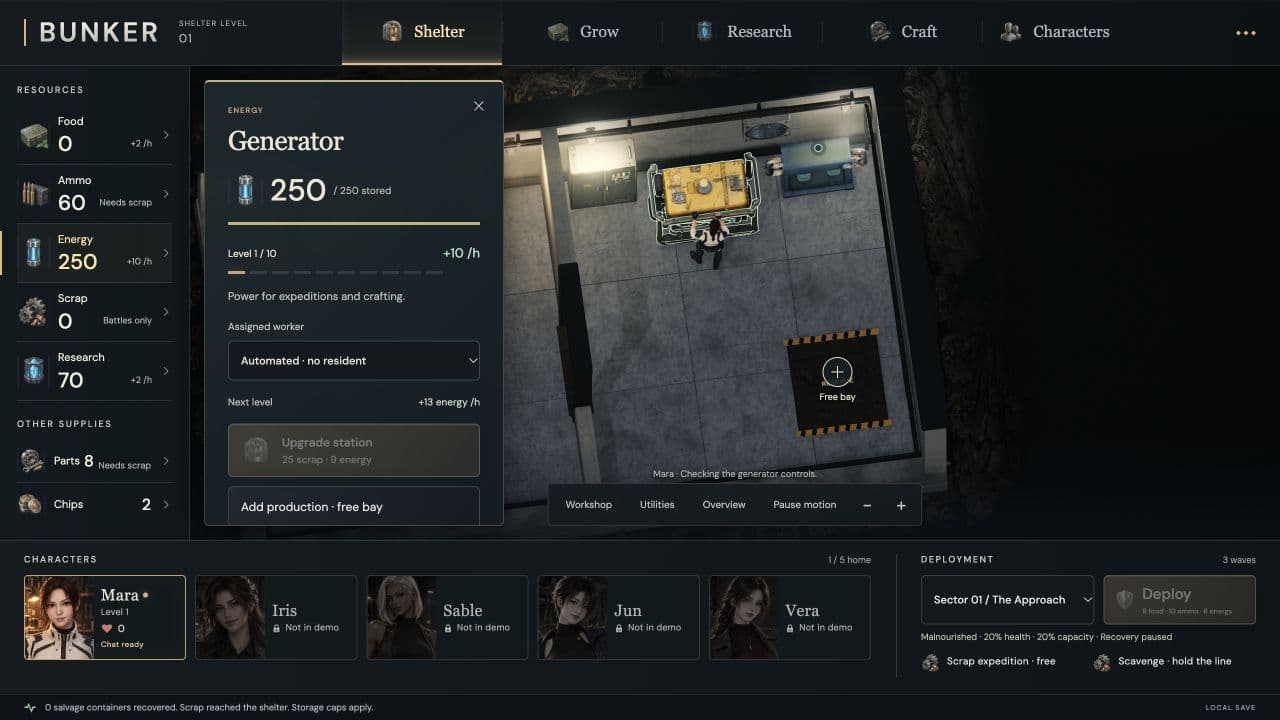
Zombie Defence makes the idle side useful because its output belongs to the same economy as your active runs. The Generator builds an energy reserve, the Ammo Press turns Scrap into ammunition, and the Salvage Bench can process materials for longer projects. Before leaving, you can decide which output matters most: ammunition for more fighting, components for a weapon, or resources held back for a station upgrade. Keeping every production line running is not automatically the best plan when they compete for the same Scrap.
The implemented Alpha calculates elapsed production between visits within an eight-hour base window. Research can extend that window to eighteen hours, but time alone cannot overcome an empty input pile or full output storage. A stocked Ammo Press has work to do; an empty one waits. Crops have their own finish point: a ripe planting waits for you to harvest it rather than endlessly cycling into more food. Checking inputs, choosing recipes and clearing space gives the end of a session a practical purpose.
Your return supplies the other half of the loop. Single-player PvE Scrap expeditions put you in the field to search containers, manage ammunition and get back to the extraction pad as pressure increases. On desktop, movement is independent of cursor aim; touch firing selects the nearest living enemy. Either way, fighting takes your attention. Collected Scrap is retained on extraction, defeat or an interrupted page reload up to storage capacity, so a rough trip can still move a shelter project forward.
This is a particularly good fit if you want the base to support action without turning the action into another countdown. The shelter uses fixed stations rather than freeform town planning, and research, farming and equipment spending give those stations competing priorities. The satisfying question is less “How much did my number grow?” and more “What can I now afford to take on?”
The verdict
Zombie Defence pairs a productive shelter with personally controlled expeditions, making it the strongest fit here for an action-led survival routine.
Frozen City
A frozen town is only as healthy as its weakest supply line, and coming back means finding that weak link.
- Idle progress
- Shelter building
- Squad builds
- Platforms
- Android, iPhone and iPad
- Price model
- Free to play with ads and in-app purchases; privilege benefits can extend away rewards.
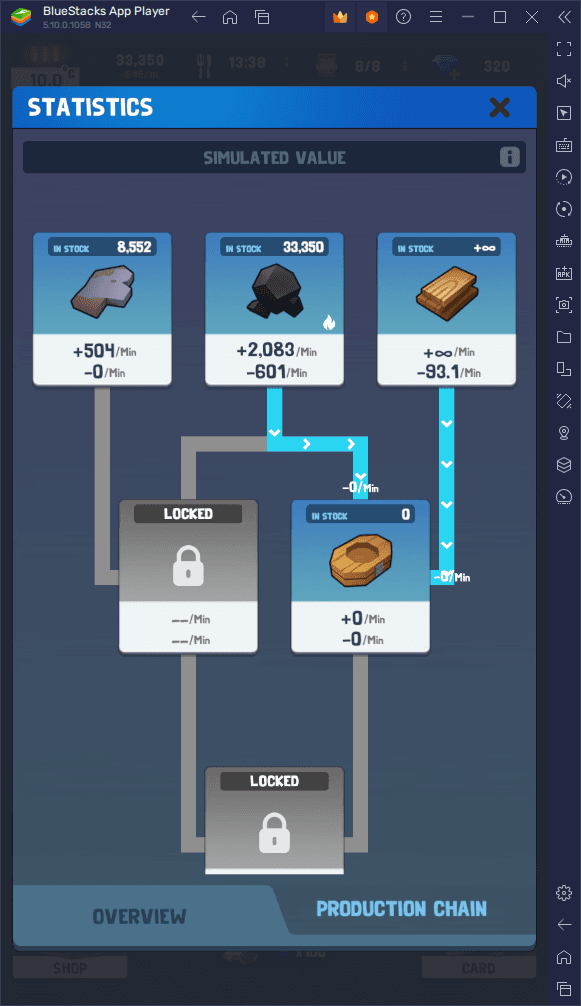
Frozen City makes worker allocation the heart of its survival fantasy. Food, fuel and manufactured goods pass through linked jobs while survivors need warmth, meals and rest. A larger workforce is useful only if the town can sustain it. That gives your next visit a concrete troubleshooting rhythm: look at the production chain, find the shortage, improve the relevant building and put people where they will actually help.
Survivors keep working while you are away, but the standard offline-reward window is two hours. Activating the game’s privilege benefit extends it to four. That makes Frozen City a better match for occasional daytime check-ins than for someone who wants an entire weekend banked. The return report also covers survivor outcomes, so it is worth stabilizing the town before closing the app rather than assuming the reward screen will rescue a badly arranged economy.
There is a useful connection between active squad decisions and future returns. Fight stages let you choose up to five heroes; winning grants Wishing Stars and improves offline rewards. A loss invites a different lineup, stronger heroes or changed positions. The appeal is building a town and squad that improve each other, with your attention moving between production bottlenecks and combat preparation. Choose it for that compact management puzzle, especially if a short cap suits the way you already check your phone.
The verdict
Choose Frozen City for frequent, purposeful check-ins built around worker efficiency and hero-team improvements.
REMNANTS
Start with scraps at a ruined gas station and grow into the person deciding which survivors the colony can spare.
- Idle progress
- Shelter building
- Exploration
- Base defense
- Platforms
- Desktop and mobile browsers
- Price model
- Free browser game; no ads or in-app purchases, with an optional creator-support link.
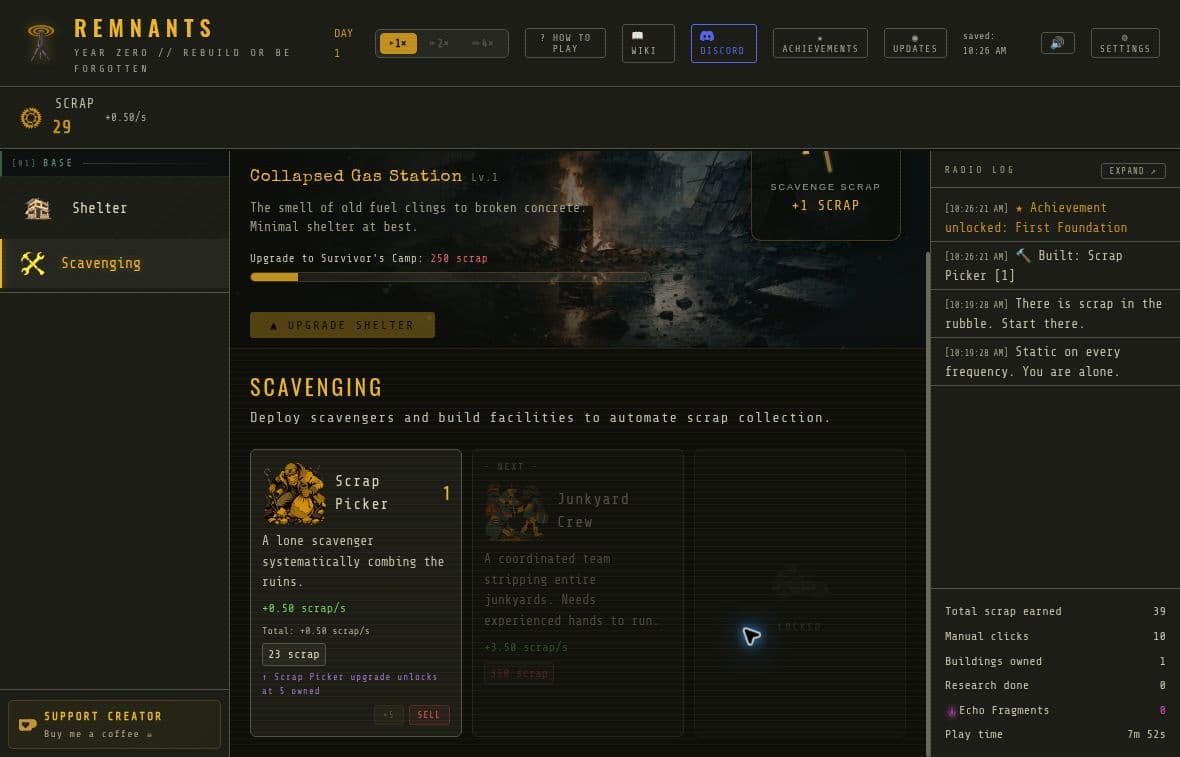
REMNANTS starts small enough to make the first automation purchase feel important. Manual scavenging buys a Scrap Picker, then a growing collection of buildings takes over more of the resource work. Food, water, power and population eventually make the colony something to balance rather than a single counter to accelerate. An attractive new facility can create a power problem; sending workers away can leave the home economy short of hands.
Its current away calculation banks up to twenty-four hours, with the later Long Quiet upgrade extending that limit to seventy-two. Base away efficiency is 35%, and blueprint improvements can raise it. That is a substantial window, but it is deliberately less productive than leaving an equally developed colony active. Food and water consumption are accounted for when calculating their positive away gains, so improving the net surplus is more useful than admiring a large gross production figure.
Expeditions make a good reason to come back and reassess the population. You choose the mission and commit a team to a timed outing; harder tiers offer better opportunities alongside real casualty risk. Those people cannot simultaneously carry every responsibility at home. Active scavenging choices and raid-defense decisions provide further interruptions to the build-and-wait rhythm. This is a colony-management game, so expect assignment and risk decisions rather than an avatar you steer through a wasteland.
The browser convenience comes with a housekeeping job worth doing: export your save. Progress is stored locally in the browser, and keeping a backup matters before clearing site data or changing devices. For someone who enjoys fine-tuning an economy without mobile-shop offers, that is a reasonable trade for an unusually accessible little colony.
The verdict
Choose REMNANTS for a browser-first survival economy where a longer break still leaves you meaningful resources and staffing decisions.
Fallout Shelter
A satisfying vault-and-wasteland routine, provided you treat automatic room collection as a limited convenience.
- Shelter building
- Exploration
- Permanent progress
- Idle progress
- Platforms
- Android, iPhone and iPad editions compared here
- Price model
- Free to play with optional in-app purchases.
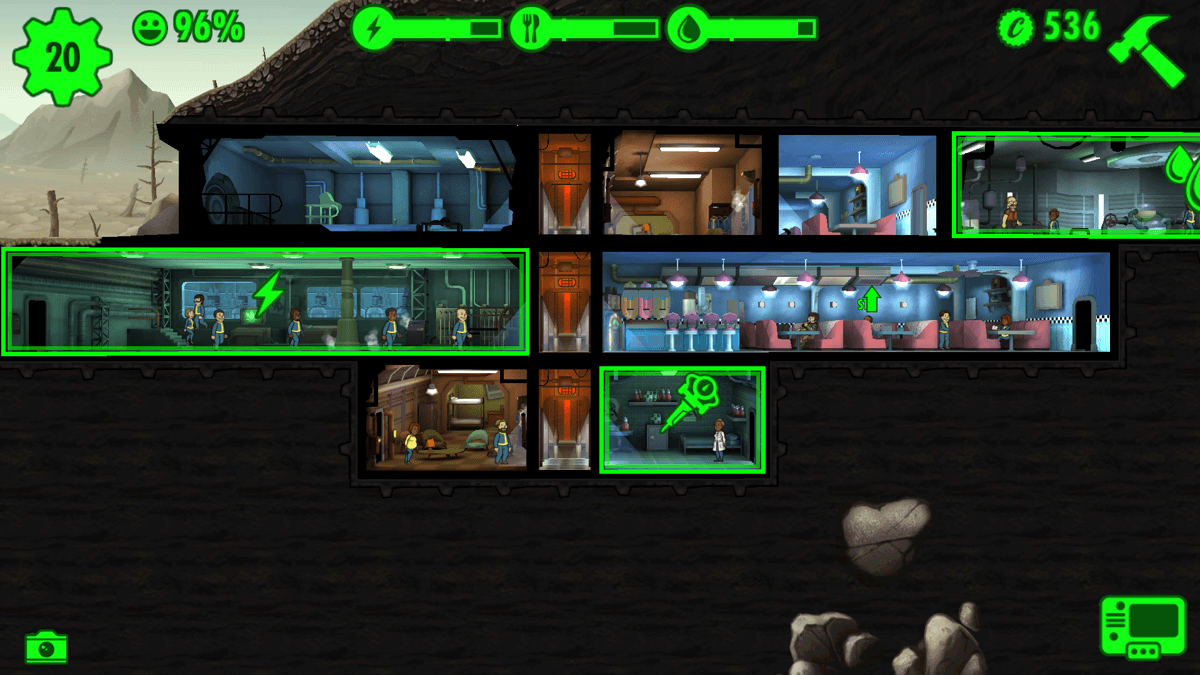
Fallout Shelter earns its place through the relationship between a staffed vault and the people you send outside it. Matching dwellers to useful work, expanding the right rooms and equipping explorers gives the base an understandable purpose. You can glance across the cutaway vault and see where resources come from. The next decision may be a stronger outfit for an explorer or another production room to support a growing population.
The important away-production detail is Mr. Handy. Bethesda says he collects resources across his assigned floor, including for a short period after you turn off the device. That is a much narrower benefit than an eight-hour or twenty-four-hour offline bank. It is useful automation once you have him, but it should not be the reason to expect every vault floor to manufacture unattended all night. Plan the vault around collecting and managing it when you return.
The stronger reason to choose Fallout Shelter is how easily it moves between domestic management and wasteland activity. You outfit dwellers for exploration and take teams through quests, then bring the gains back into a growing home. It also supports internet-free play, although purchases and code redemption require a connection. That makes the mobile edition a good companion for managing an established vault when connectivity is inconvenient, with a more modest away-production promise than the dedicated idle games here.
The verdict
Choose Fallout Shelter for the vault-and-expedition relationship and offline access, rather than a large unattended production bank.
Idle Outpost
Turn the apocalypse into a trading business, then decide whether the next upgrade belongs in the shop or on your fighter.
- Idle progress
- Loot builds
- Permanent progress
- Platforms
- Android edition compared here
- Price model
- Free to play with ads and in-app purchases.
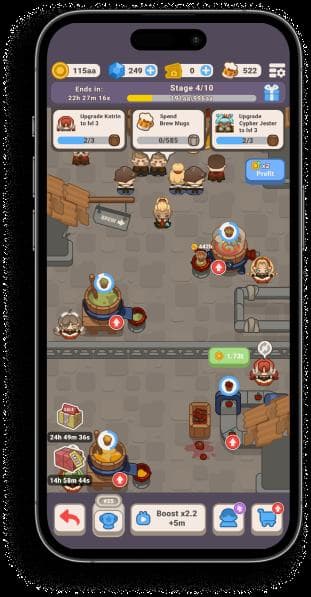
Idle Outpost puts the base economy in the foreground. In Trade mode, you open and upgrade stations, expand staffing and improve the rate at which the outpost serves its customers. Sales continue in the background for up to eight hours. Returning with a pile of earnings lets you target the next bottleneck instead of having to rebuild your momentum from nothing, and permanent Vault perks carry benefits across outposts.
The active side is a different kind of activity from Zombie Defence’s expeditions. Fight mode runs automatic enemy waves, while you work on gear and decide when to challenge a boss. It has its own offline rewards, also capped at eight hours. Progress in Fight can unlock the next Trade level, so a business upgrade and a combat improvement can be two parts of the same route forward. The attraction is choosing improvements and pushing a stalled stage, not aiming a gun yourself.
That distinction makes Idle Outpost a strong choice if you want a very low-input apocalypse with clear return rewards. It is less suitable if “an active expedition” means moving through a place and reacting to enemies. There is also a practical connection requirement: the game’s Android description requires internet access, and its support guidance calls for a stable connection to synchronize offline earnings. An eight-hour earnings bank does not make it an internet-free travel game.
The verdict
Choose Idle Outpost when you want the business to earn while you are away and your return session to focus on upgrades, gear and boss attempts.
Whiteout Survival
Daybreak Island offers a concrete away-production loop, but it sits inside a much busier survival strategy game.
- Idle progress
- Shelter building
- Squad builds
- Platforms
- Android, iPhone and iPad
- Price model
- Free to play with in-app purchases.
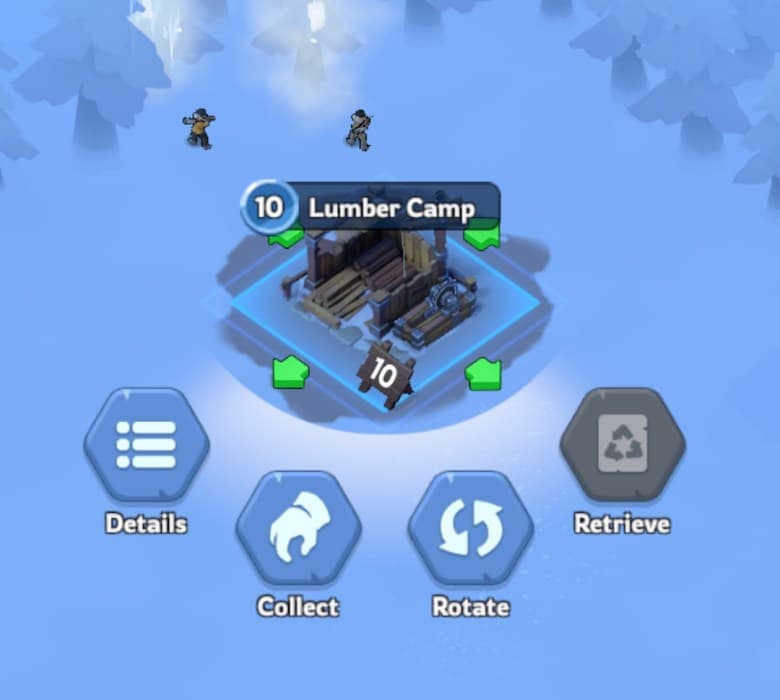
Whiteout Survival is the pick for someone who wants a shared-world strategy routine as well as a productive home. The furnace settlement, heroes and alliance systems offer much more to attend to than a small idle colony. Within that larger game, Daybreak Island supplies the specific feature that matters here: its Lumber Camp keeps cutting trees while you are offline. You can leave work underway and return to develop the island further.
There is a meaningful entry requirement. Daybreak Island arrives through the Dock at Furnace level nineteen, so it is not the opening game loop. Its Tree of Life stores up to twelve hours of Life Essence. That twelve-hour rule belongs to the tree’s currency storage, not to every resource in the city or the Lumber Camp. Woodcutters also work more efficiently while you are looking at the island screen, giving active island visits a production benefit.
The island is appealing because a little building and collection project lives alongside the broader hero-and-alliance game. Your return can involve island improvements before you turn to teams and the wider map. The price of that breadth is a more demanding overall commitment: multiplayer competition and scheduled activity are a different proposition from an entirely private colony. Pick Whiteout because you want that larger strategy game too, rather than progressing through nineteen Furnace levels solely to unlock a quieter corner.
The verdict
Choose Whiteout Survival if alliance strategy already appeals and you want a genuine away-producing island as part of that routine.
Legacy of the Ark: Beneath the Broken Sky
An incremental rebuilding game for players who want to allocate survivors, send expeditions and eventually finish the journey.
- Idle progress
- Shelter building
- Exploration
- Permanent progress
- Platforms
- Windows PC through Steam
- Price model
- Free to play with optional in-game purchases.
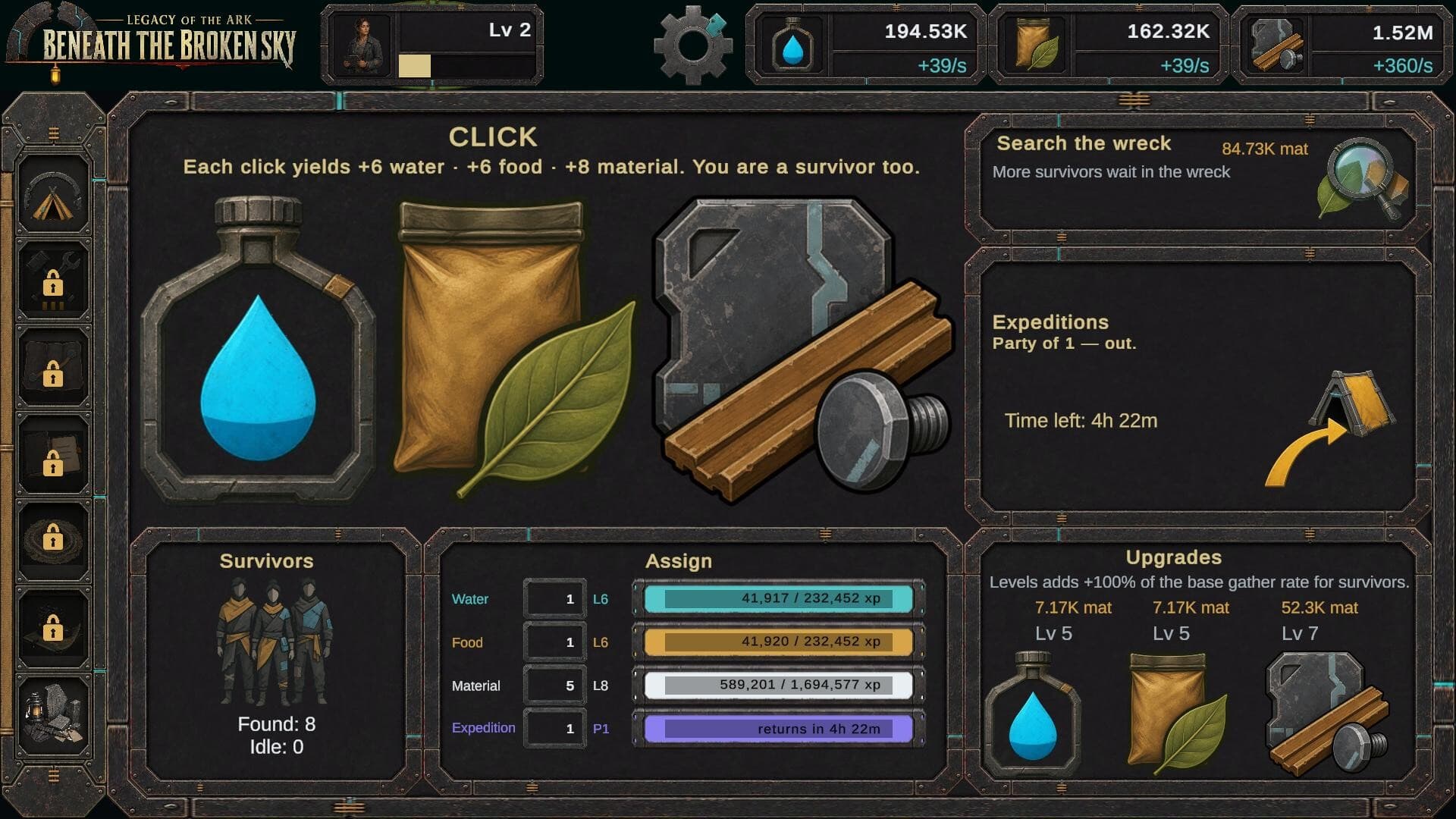
Beneath the Broken Sky begins at a wrecked Ark with manual collection of water, food and materials. Awakened survivors take over the work, improve through use and can be assigned to expeditions. The pleasure is seeing your role change from the extra pair of hands to the person choosing how the workforce is divided.
The camp genuinely produces while you are away, and expedition timers can continue outside the session. Player upgrades can increase offline capacity, making longer absences a progression choice alongside stronger clicks and better automation. Expedition staffing supplies the tradeoff: survivors searching beyond camp are people you cannot assign to its ordinary production.
This is the calm, systems-led end of the list. You are dispatching teams and planning development rather than controlling combat outings. Its Anchor Test converts progress into lasting Memories, and repeated cycles advance toward a defined Time Stability ending. That destination will appeal if you enjoy an incremental economy but want the satisfaction of eventually completing it.
The verdict
Choose Beneath the Broken Sky for patient workforce planning and an idle survival journey with a finish line.
How we compare
A good recommendation explains who a game suits and where it falls short. Our editorial scores use the same five criteria, each rated out of ten.
- 01
Combat
Controls, aiming, enemy readability, and the decisions you make under pressure.
- 02
Progression
Build choices during a run and meaningful progress between attempts.
- 03
Usability
Control demands, platform access, interface options, and documented device requirements.
- 04
Value
What the asking price includes, optional purchases, and the scope of the free version.
- 05
Fit
How well the game answers the specific question in this article.
Which one should you try?
Choose by what you want to do after collecting the resources. Frozen City suits a quick production-and-squad check; REMNANTS gives a browser colony a generous away window; Idle Outpost turns the return into trading upgrades and automated battle progression. Fallout Shelter is stronger for vault management and internet-free play than for long unattended manufacturing. Whiteout Survival fits an existing appetite for alliance strategy, while Beneath the Broken Sky offers a quieter workforce puzzle with an ending. Zombie Defence best matches the goal of a shelter that prepares you to head out, aim, fight and bring the next project’s supplies home.
Your questions, answered.
Want to see what we’re building?
Zombie Defence is in Alpha. Join the waitlist.
More games to explore
- 7 Best Base-Building Games With Worker Assignments
Compare seven base-building games with worker management: station specialists, individual priorities, training, schedules and the production decisions they change.
- 7 Best Shelter Management Games in 2026
Compare seven shelter and colony management games, from Fallout Shelter's room assignments to resource-heavy survival, resident care, and zombie expeditions.
- 7 Best Games With Underground Shelters
Find an underground home worth keeping alive, from Zombie Defence’s working shelter to Fallout Shelter’s vaults and Oxygen Not Included’s intricate colonies.