7 Best Games With Underground Shelters
Seven different lives below ground, with rooms to improve, people to support and good reasons to close the door.

An underground shelter is most satisfying when it feels like a place you have made livable. The lights work because you kept the generator supplied. The next expedition is possible because someone grew food, made ammunition or finally finished the workshop. For that feeling, choose Fallout Shelter for a readable vault full of residents, Sheltered for intimate family survival, or Oxygen Not Included for a colony whose air, water and heat all need engineering. Zombie Defence connects its underground home to active zombie fighting and permanent equipment projects.
These seven games approach life below ground differently. Some let you excavate the terrain; others give you rooms and facilities to develop. Mr. Prepper adds the pleasure of hiding a second life beneath an ordinary house, while Craft The World and Dwarf Fortress let a small refuge become a sprawling dwarven settlement. The important distinction is what you will actually do after entering the shelter: assign people, maintain equipment, plan production or carve the next floor.
The list covers six released desktop games and Zombie Defence’s single-player browser Alpha in development. Its waitlist provides Alpha news and playtest availability, rather than immediate access. Our editorial scores compare each game’s documented design; Fit emphasizes a substantial underground home and the decisions that keep it useful.
The quick comparison
7 games, different reasons to give the next run a chance.
Choose a game to jump to its overview. Platform lists are summaries; check the linked official edition.
The games
Zombie Defence
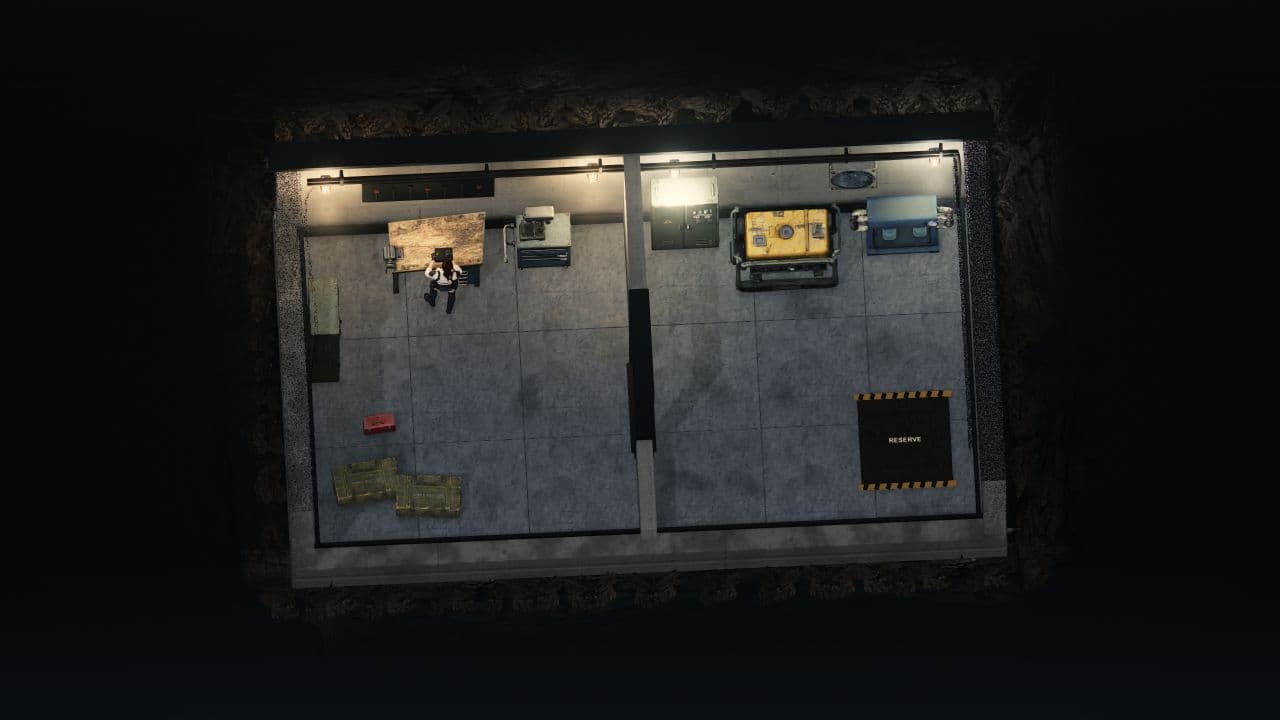
Its shelter is a compact, inhabited workshop with practical jobs: supply the next deployment, develop permanent weapons and decide which improvements deserve your recovered Scrap.
- Shelter building
- Crafting
- Farming
- Permanent progress
- Extraction
- Platforms
- Single-player browser Alpha in development; join the waitlist for Alpha news and playtest availability.
- Price model
- Public launch pricing and monetization are not confirmed.
Zombie Defence makes the return underground part of the reward. Its live 3D shelter contains the Water & Hydroponics station, Ammo Press, Generator, Salvage Bench and Research Lab. You upgrade these facilities and assign or train a worker, while a reserve bay offers a choice such as a power bank, purifier or additional salvage station. The layout is fixed, so the interesting question is what this home should produce next, rather than how many tunnels you can excavate.
The clearest daily decision happens at the Salvage Bench. Scrap can become machine parts or ammunition, but it is also needed for construction and weapon improvements. If you are saving for a particular gun, automatically processing the whole stockpile can work against your plan. Change the output or pause a line, then use the available supplies deliberately. Production stops when its inputs run out or output storage fills; elapsed-time gains have limits, so a useful shelter still benefits from attention.
The growing area gives the bunker another rhythm. Lettuce and tomatoes provide food or ingredients for a meal carried into the next deployment; roses are gifts rather than rations. Water supports irrigation, tending can improve a harvest, and ripe crops wait for you to collect them. Meanwhile, 28 research nodes include permanent either-or doctrines, and nine persistent weapons give the workshop identifiable projects. There is plenty to decide without turning every room into a separate industrial simulation.
The shelter also has a personal side through Mara’s branching conversations, remembered replies and relationship choices. She is the resident available for interaction in the current demo. Outside, you personally move, fire and reload in top-down combat; desktop aiming follows the cursor, while touch fire assists toward the nearest hostile. Separate city Scrap expeditions feed the economy, with collected Scrap retained after defeat up to storage capacity. Choose this combination if home should be somewhere to prepare and return to, with an active fight between visits.
The verdict
Choose Zombie Defence when the appeal of living underground is having a useful, persistent home behind your next fight.
Fallout Shelter
Build a community room by room, keep its basic resources flowing and turn individual Dwellers into workers, explorers and better-equipped defenders.
- Shelter building
- Crafting
- Permanent progress
- Exploration
- Platforms
- Windows PC via Steam; this entry covers the original desktop Fallout Shelter.
- Price model
- Free to play with optional in-app purchases.
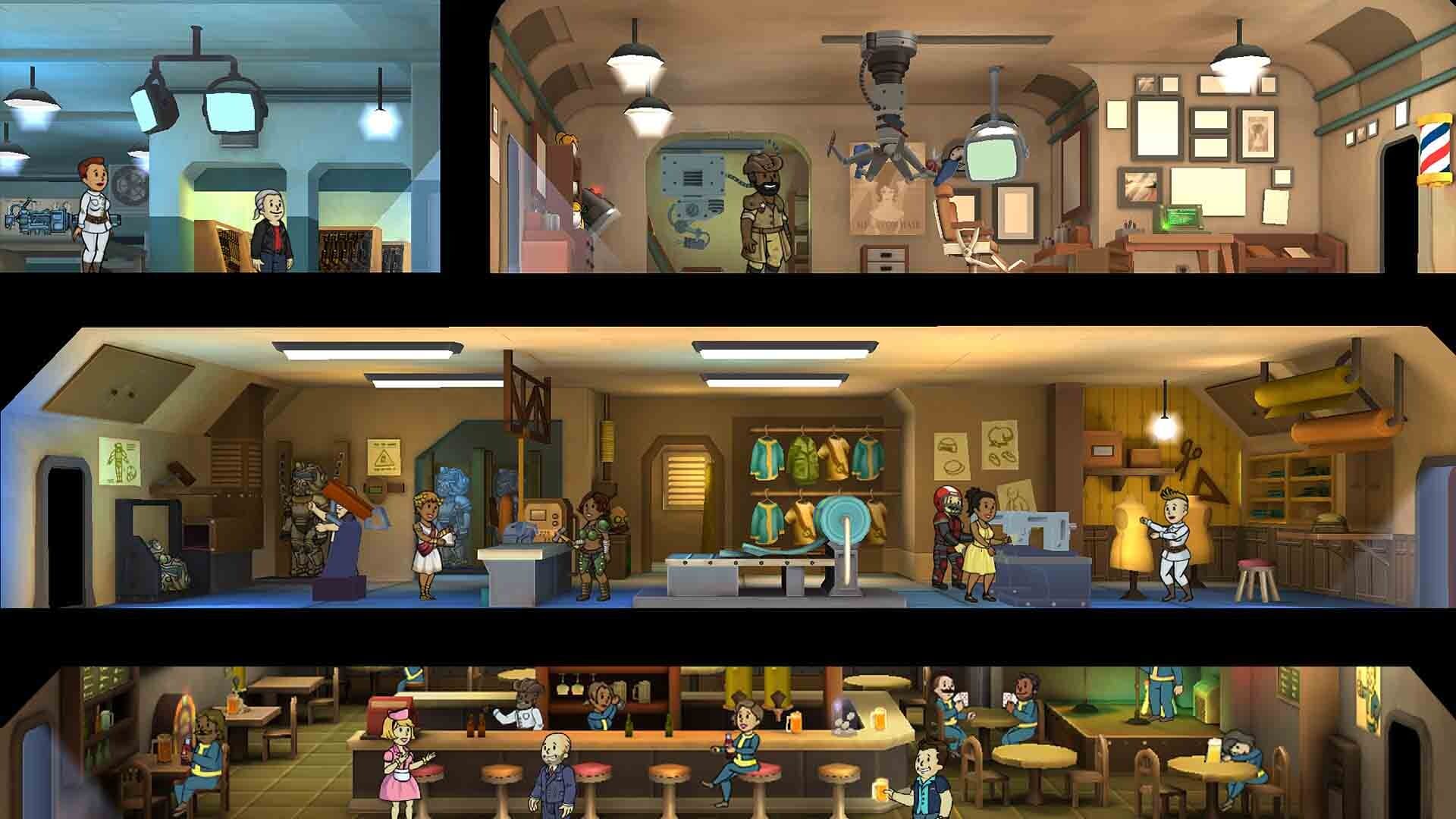
Fallout Shelter delivers the most immediately readable version of the underground-vault fantasy here. Its cross-section lets you watch residents go about their jobs while the settlement grows downward. Food, water and power require space and staff; a new room is useful only if the wider vault can support it. Bethesda’s own beginner advice emphasizes grouping related rooms and planning ahead, which captures the central pleasure: a busy little world becoming more organized under your care.
The people give that layout its meaning. Dwellers have different abilities, can receive training and equipment, and need appropriate assignments. Expanding the population provides more hands, but it also gives you more people to accommodate. Sending someone into the Wasteland can bring back equipment, experience and Caps, at the cost of removing them from the home workforce and exposing them to danger. The vault door is a boundary you cross for a reason, rather than an ornamental entrance.
Workshops add specific goals once the basic routine settles. Weapons and outfits have separate crafting rooms; the item determines which S.P.E.C.I.A.L. attribute matters, and higher room tiers support more advanced recipes. Rare finds and recovered junk therefore become plans for improving the people already living below ground. This is especially appealing if you enjoy looking at a modest worker and imagining the better-equipped specialist they could become.
The tradeoff is pace. Much of the satisfaction comes from assignments, collections and improvements accumulating over repeated visits, with incidents and exploration adding danger around that routine. It is less about designing plumbing or walking through a personally built corridor than directing a growing collection of specialized rooms. The Steam edition is a free starting point, but its optional purchases remain part of the package.
The verdict
Start here if you want a welcoming-looking underground community with clear jobs and a manageable production loop.
Sheltered
A bed, a working shower and a clean floor can feel like major achievements when a small family must keep the bunker habitable between dangerous supply trips.
- Shelter building
- Crafting
- Exploration
- Tactical combat
- Platforms
- Windows, macOS and Linux via Steam; original Sheltered, not Sheltered 2.
- Price model
- Paid standalone game.
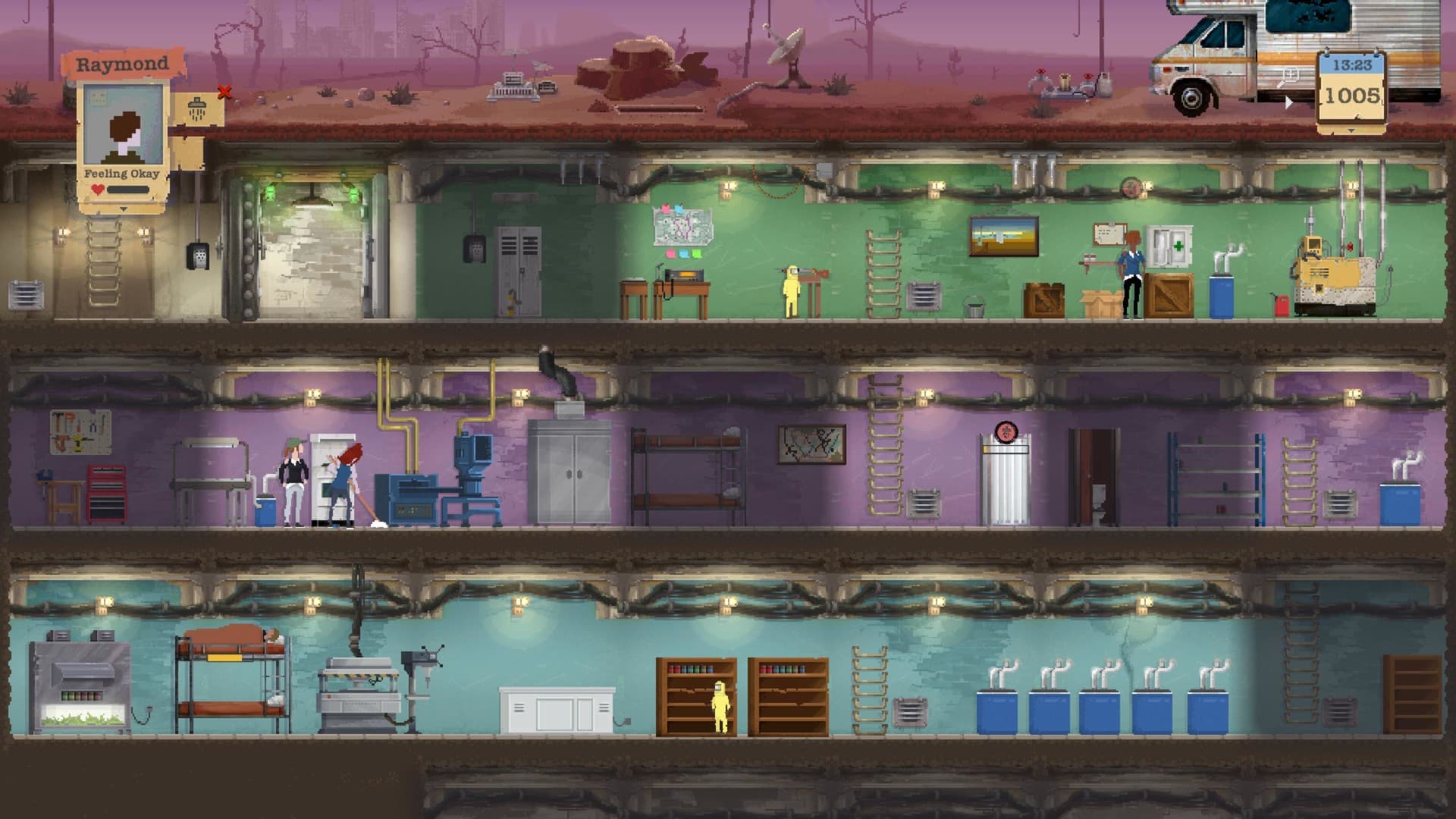
Sheltered is the strongest choice for the emotional contrast between the exposed surface and a cramped home below it. You begin with four family members and turn a deserted bunker into somewhere they can survive. Its pixel-art cutaway keeps the practical details close together: sleeping space, storage, equipment and the ladders between floors. It does not take a vast city to make a returning expedition feel important when the people waiting are the family you created.
The facilities produce wonderfully unglamorous decisions. A bed or bedroll lets a tired scout recover; a toilet, shower and mop help keep daily life workable. Cleaning matters because a neglected shelter can attract rats that consume your rations. Rearranging furnishings can make room for another essential item before you have the resources for a grand expansion. The atmosphere comes from doing these ordinary things under extraordinary pressure.
Water links the home and the outside world particularly well. Longer expedition routes need more of it, so an ambitious trip competes with use inside the bunker. You must also decide who leaves and who stays to build or repair equipment. The radio brings encounters back to the shelter view, letting you direct the exploring party without losing the sense that home is the center of the game. Recruitment can add useful people, but every new arrival becomes part of the household you must sustain.
Combat is turn-based and functions as a dangerous fallback when an encounter cannot be resolved peacefully. Experience and trauma can change your family, so useful progress includes protecting the people who have already survived with you. This is not a relaxed decorating game: needs and maintenance keep interrupting construction plans, and failure can be severe. That pressure is also why a stocked shelf and an extra bed have such weight.
The verdict
Pick Sheltered for a tense, intimate underground home where making life a little less miserable is a meaningful victory.
Oxygen Not Included
The rock around your home is part of the problem to solve. Dig out living space, connect life-support systems and keep the colony comfortable enough to continue working.
- Shelter building
- Farming
- Crafting
- Exploration
- Platforms
- Windows, macOS and Linux via Steam; the base game is the focus here.
- Price model
- Paid base game with optional paid expansions and content packs.
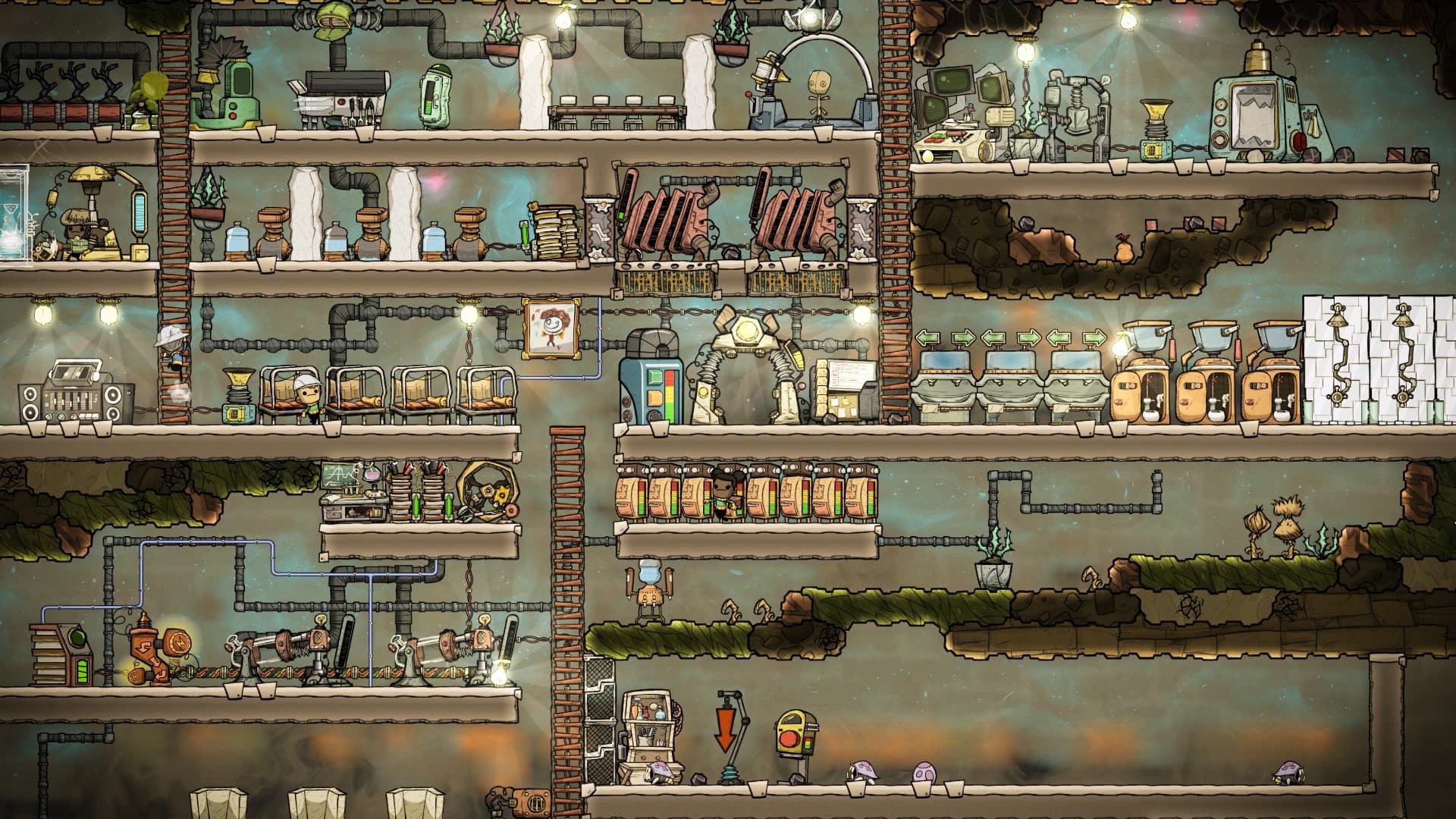
Oxygen Not Included turns the underground setting into the machinery of survival. Your Duplicants live inside an asteroid, where opening a new chamber changes the space your colony must manage. Excavation is only the beginning: breathable air, plumbing, electricity, food and temperature all belong in the plan. It is the clearest recommendation if you want to understand how a sealed home works instead of simply paying to upgrade its rooms.
Its facilities create chains of consequences. A power source needs to suit the network you are building; heat produced by that infrastructure has to go somewhere. Pipes connect useful liquids and gases to the places that need them, while the oxygen overlay reveals conditions that the normal view cannot adequately explain. A handsome room can still be a poor place to live. Progress often means revising a system so that several parts finally cooperate.
The Duplicants prevent this from becoming a purely abstract factory puzzle. Accommodations, food and leisure affect their stress, so efficiency must leave space for a livable colony. That gives a bedroom or recreation area a different importance from a spare machine. A sensible next project might improve everyday conditions rather than open more territory. The best fit is a player who enjoys following a problem back through the network and making the whole home more dependable.
There are limited confrontations with creatures: Duplicants can attack critters, and protective Pokeshells can attack threats near their eggs. Those interactions are a small part of a game centered on environmental engineering, not an enemy-wave defense loop. The real commitment is learning the simulation. A failure can have several connected causes, and a growing colony asks you to keep reading its systems rather than assuming the initial solution will scale forever.
The verdict
Choose Oxygen Not Included if your ideal underground shelter is an engineering project that gradually becomes a livable home.
Mr. Prepper
Construct and supply an underground hideout while maintaining the ordinary-looking life above it, with exploration and a larger escape plan giving the rooms a purpose.
- Shelter building
- Crafting
- Farming
- Exploration
- Platforms
- Windows and macOS via Steam; this comparison covers the full base game.
- Price model
- Paid base game; Animal Farm is a separately sold expansion.
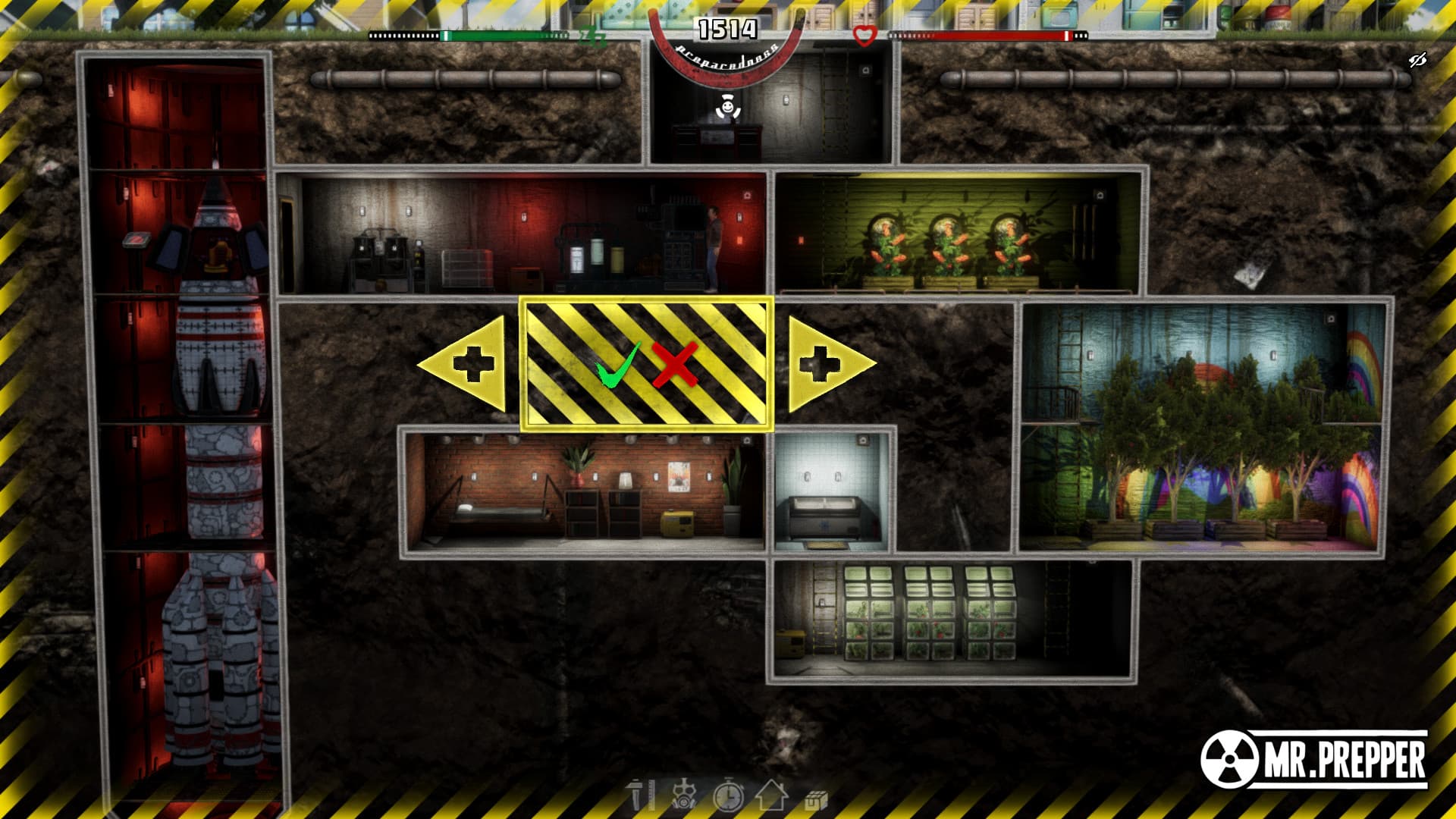
Mr. Prepper is the pick for anyone who likes the idea of a perfectly normal house concealing a much more interesting basement. Its protagonist lives under an authoritarian government and develops an underground shelter in secret. The cross-section makes that double life visible: everyday domestic space above, growing rooms, machinery and a much larger project below. Here the shelter is a private act of preparation rather than a colony you openly govern.
You construct facilities, craft tools, cultivate supplies and trade with neighbors for useful materials. Exploration and quests take you to other locations when the bunker cannot provide what the current plan requires. That creates a practical question for each day: should the next stretch of time go into improving self-sufficiency, finding materials or advancing an outside relationship that can help the project? Your character also needs food and rest, which puts a limit on treating every waking moment as construction time.
Government attention changes the feel of that routine. Agent inspections mean the home has to remain a convincing cover for what is happening underneath. A bunker that works beautifully is only part of the achievement; keeping its purpose concealed belongs to the same challenge. The larger escape-machine objective gives the rooms a direction, making this a good fit if a completely open-ended building sandbox leaves you wondering what to do next.
Later conveniences can reduce some maintenance: the developer’s automation update added links that move water to irrigators and fuel to refuelers. Exploration also includes combat, with a revised two-button attack system available through the game’s progression and settings. Even so, the attraction is the preparation routine and secret workspace. The tradeoff is that quests, inspections and personal needs repeatedly pull you away from the layout you were hoping to finish.
The verdict
Choose Mr. Prepper for the pleasure of making a secret underground workshop steadily more capable while keeping life upstairs believable.
Craft The World
Direct a growing dwarf tribe through digging, crafting and defense, then turn the materials coming home into a more comfortable and secure residence.
- Shelter building
- Crafting
- Exploration
- Base defense
- Platforms
- Windows and macOS via Steam; this entry focuses on the desktop base game’s single-player building loop.
- Price model
- Paid base game with optional paid DLC.
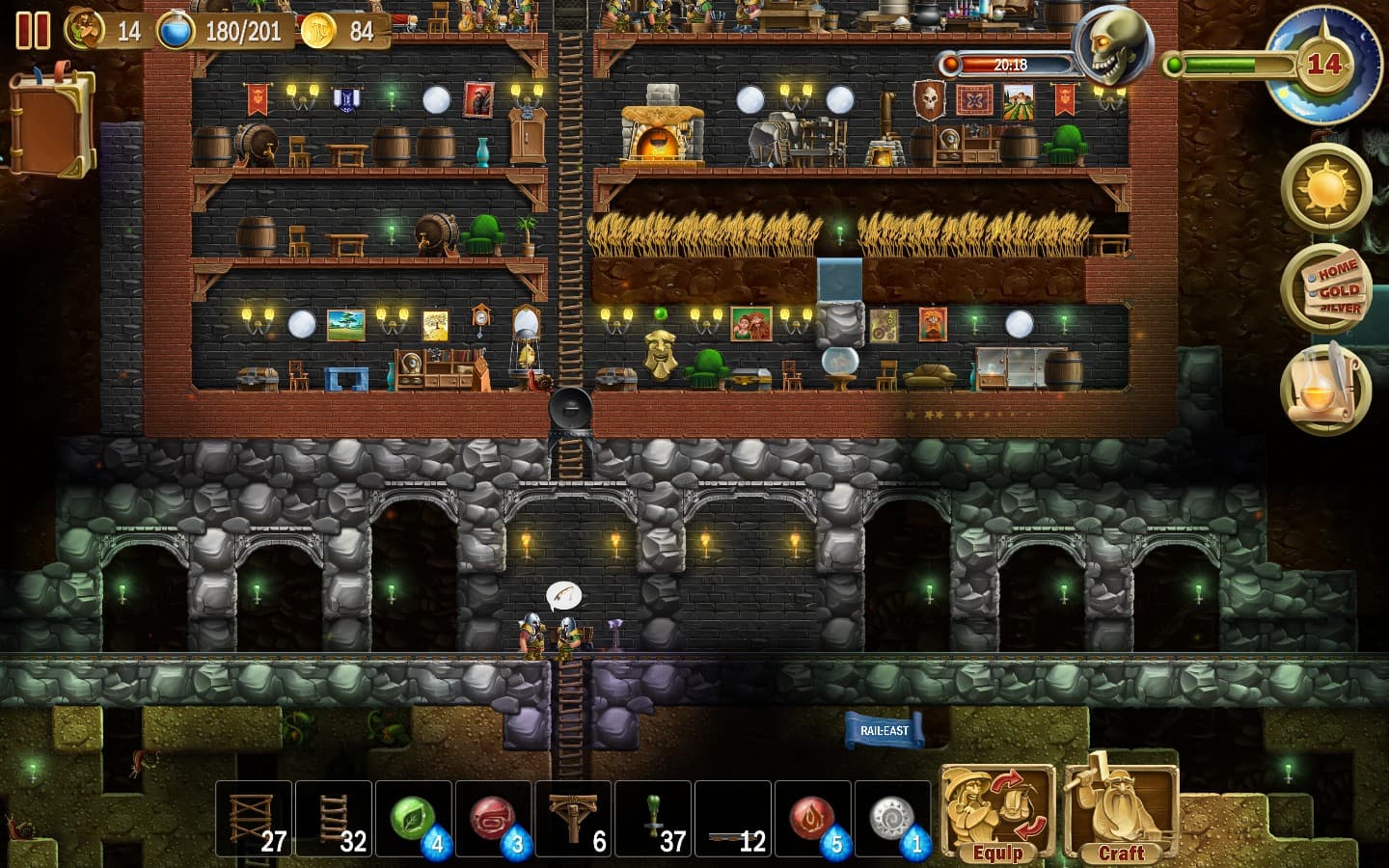
Craft The World combines the readable side view of a shelter game with a much larger amount of earth to explore. You command dwarves to dig, build and attack, beginning with one dwarf and adding more as you progress. Their residence can extend above or below ground, so the underground fantasy is something you shape rather than a mandatory sealed-bunker layout. Mined passages and furnished living areas can belong to the same continuous place.
The basic needs are satisfyingly tangible. Dwarves need food, clothing and places to sleep, while crafting produces building blocks, furniture, equipment and meals. An ore discovery therefore feeds more than a number at the top of the screen: it can help improve the tribe’s tools, protection or home. You are balancing the desire to push farther into the earth against the needs of the people doing the digging.
Depth also brings atmosphere. Randomly generated layers contain caves, dangerous creatures and abandoned rooms, while the surrounding world has changing weather and a day-night cycle. Spells let you assist the dwarves by lighting dark areas, opening temporary portals or attacking monsters. It is a good middle ground if you want meaningful excavation but prefer watching a team carry out tasks to steering one miner through every step.
The shelter needs defenses because monsters can gather to break in, and periodic portal waves add a stronger threat. Walls, traps and other protective structures compete with domestic improvements for your attention. This makes it livelier than a pure household manager, but less restful. Pick it for the cycle of exploring, outfitting the tribe and improving a refuge, rather than for realistic bunker utilities or detailed individual psychology.
The verdict
Choose Craft The World for an approachable-looking dwarven home with real excavation, crafting goals and monsters at the door.
Dwarf Fortress
Excavate rooms across multiple elevations, support workshops and food production, and build a home whose inhabitants have needs far beyond a roof over their heads.
- Shelter building
- Crafting
- Farming
- Base defense
- Platforms
- Windows and Linux via Steam; graphical edition, focusing on Fortress mode.
- Price model
- Paid graphical Steam edition; the separately distributed Classic edition is free.
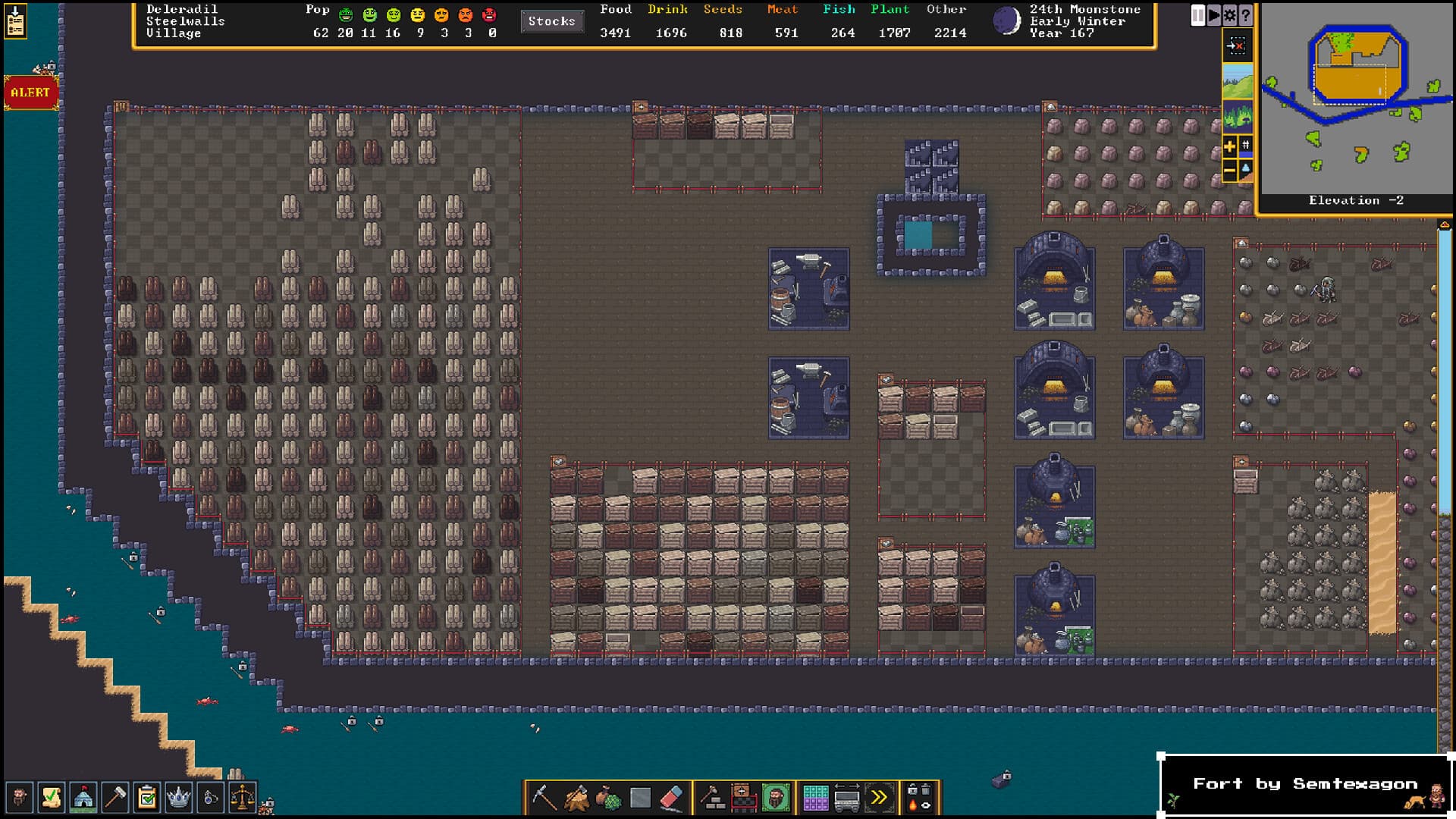
Dwarf Fortress takes the underground shelter idea to its largest social scale. A mountainside outpost can grow into connected floors of industry, storage, living space and public rooms. Its vertical levels matter: you design a fortress inside the geology instead of choosing a slot for the next prefabricated facility. The graphical Steam edition adds illustrated tiles and in-game tutorials, but the underlying ambition remains a demanding simulation of a working society.
Daily priorities begin with keeping the dwarves supplied, especially with food and drink, then broaden into the production that makes the settlement capable. Workshops turn available materials into useful objects; stockpiles organize what the colony has to work with. Floodgates let you direct water for farming, but handling water and magma also creates opportunities for expensive mistakes. A new underground level is therefore a commitment to making its connections and inhabitants work, not just a larger floor plan.
The home becomes more interesting as it becomes less purely practical. Taverns, temples, libraries and guildhalls can meet needs and enrich dwarven life. Reading a dwarf’s thoughts gives context to their happiness, while visitors, nobles and hostile civilizations bring demands from outside your construction plan. Furnishing a room can serve a person, a profession or an institution, giving the mountain a history that a simple production menu cannot provide.
The cost of that depth is attention. You manage through orders and systems, and combat is part of defending the settlement rather than personally aiming every blow in Fortress mode. Individual injuries and material properties feed a detailed simulation, with care for wounded dwarves adding another responsibility. Choose it if you want an underground home you can keep learning about; choose a smaller game here if you mainly want to watch a comfortable bunker fill out without mastering a large vocabulary of tasks.
The verdict
Choose Dwarf Fortress when a bunker feels too small and you want to build an underground civilization with all the complications that implies.
How we compare
A good recommendation explains who a game suits and where it falls short. Our editorial scores use the same five criteria, each rated out of ten.
- 01
Combat
Controls, aiming, enemy readability, and the decisions you make under pressure.
- 02
Progression
Build choices during a run and meaningful progress between attempts.
- 03
Usability
Control demands, platform access, interface options, and documented device requirements.
- 04
Value
What the asking price includes, optional purchases, and the scope of the free version.
- 05
Fit
How well the game answers the specific question in this article.
Which one should you try?
Choose the kind of life you want below ground. Fallout Shelter makes a busy vault easy to read, while Sheltered gives a few beds and a water reserve the weight of a family’s survival. Oxygen Not Included is the engineering choice, and Dwarf Fortress is the deeper social and architectural commitment. Mr. Prepper excels at a hidden personal bunker; Craft The World joins a furnished dwarf home to excavation and defense. Zombie Defence is the strongest match here when the shelter should prepare you for hands-on zombie action: production, crops, weapon projects and research turn recovered supplies into a home that keeps supporting the next deployment.
Your questions, answered.
Want to see what we’re building?
Zombie Defence is in Alpha. Join the waitlist.
More games to explore
- 7 Best Shelter Management Games in 2026
Compare seven shelter and colony management games, from Fallout Shelter's room assignments to resource-heavy survival, resident care, and zombie expeditions.
- 7 Best Base-Building Games With Worker Assignments
Compare seven base-building games with worker management: station specialists, individual priorities, training, schedules and the production decisions they change.
- 7 Best Post-Apocalyptic Base-Building Games
Build a future after the end: compare seven post-apocalyptic base-building games, from irradiated settlements and frozen cities to Zombie Defence’s shelter.