Sheltered review: the apocalypse has a chore list
Four people, one bunker and absolutely nobody excused from maintenance duty. Sheltered makes the little jobs matter, sometimes painfully.
Zombie Defence Editorial ·
Based on official documentation and gameplay imagery, checked on 14 October 2026. PC leads the review, with console and iOS scope identified separately.
The end of the world has left your family with an underground bunker and a surprisingly domestic problem: somebody still has to clean it. Sheltered turns that unglamorous job description into its best idea. Survival depends on keeping a household functioning while sending its members into danger.
This is the original Sheltered, released on PC in 2016, rather than Sheltered 2. Its appeal is intimate: four vulnerable people, a shelter that needs attention and expeditions that might solve tomorrow's shortage. If arranging a workable routine sounds more satisfying than mowing down monsters, pull up a bedroll.
Build a family, then make a rota
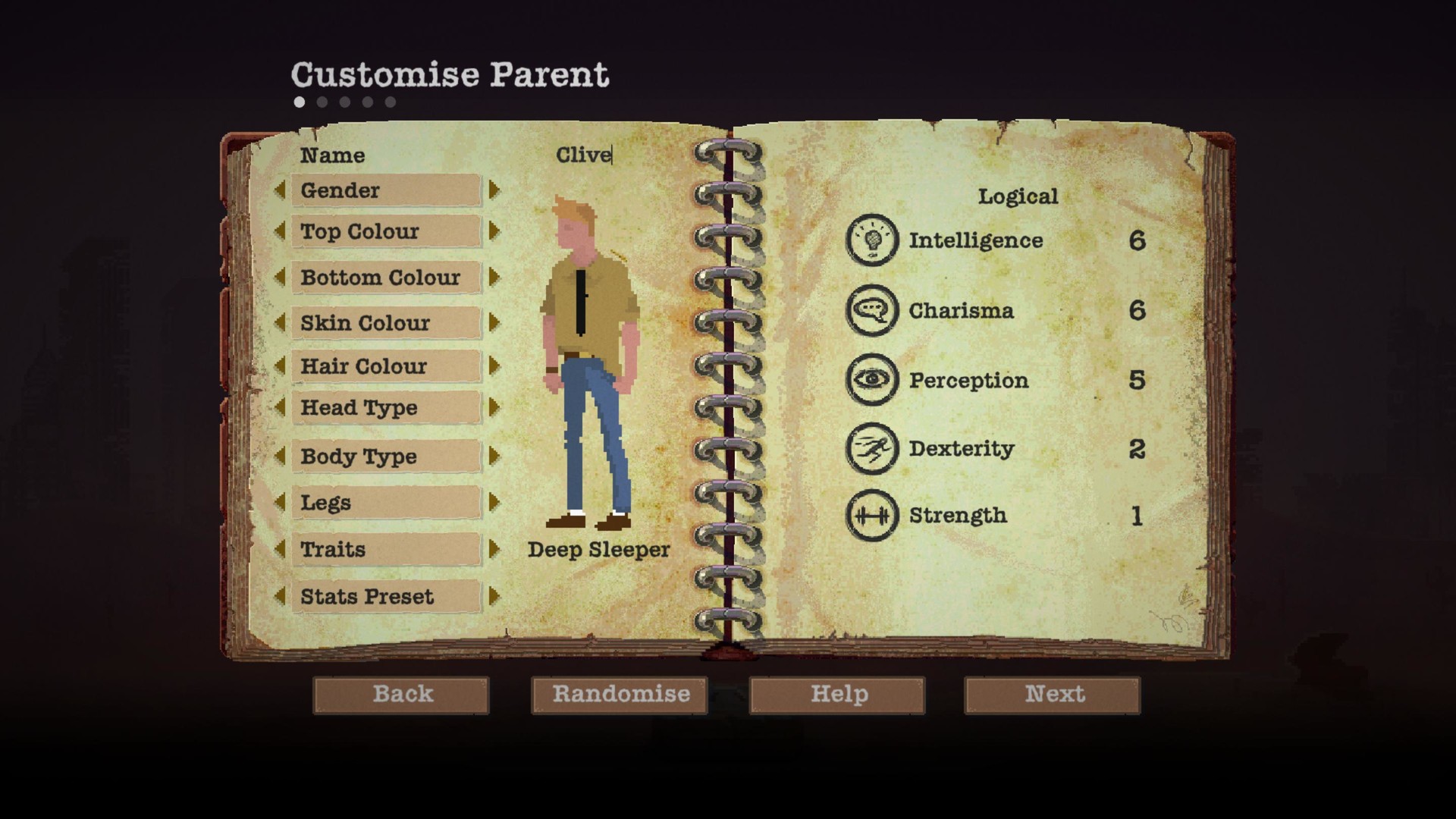
Your starting family consists of two adults and two children, with appearance, traits and attributes to configure. That opening screen deserves more thought than the matching outfits. Decide who will handle dangerous outings and who will keep the machinery and crafting work moving at home.
The useful question is not simply who has the biggest numbers. It is whether the household still works when its strongest expedition members leave. A perfectly prepared scavenger does little good if everyone remaining underground has become an afterthought.
Names and pixel portraits give that planning a personal edge. Permanent death makes a lost survivor more than a broken production schedule. Sheltered works because the person you risk outside is also someone whose bed you arranged inside.
The bunker is a machine with people inside
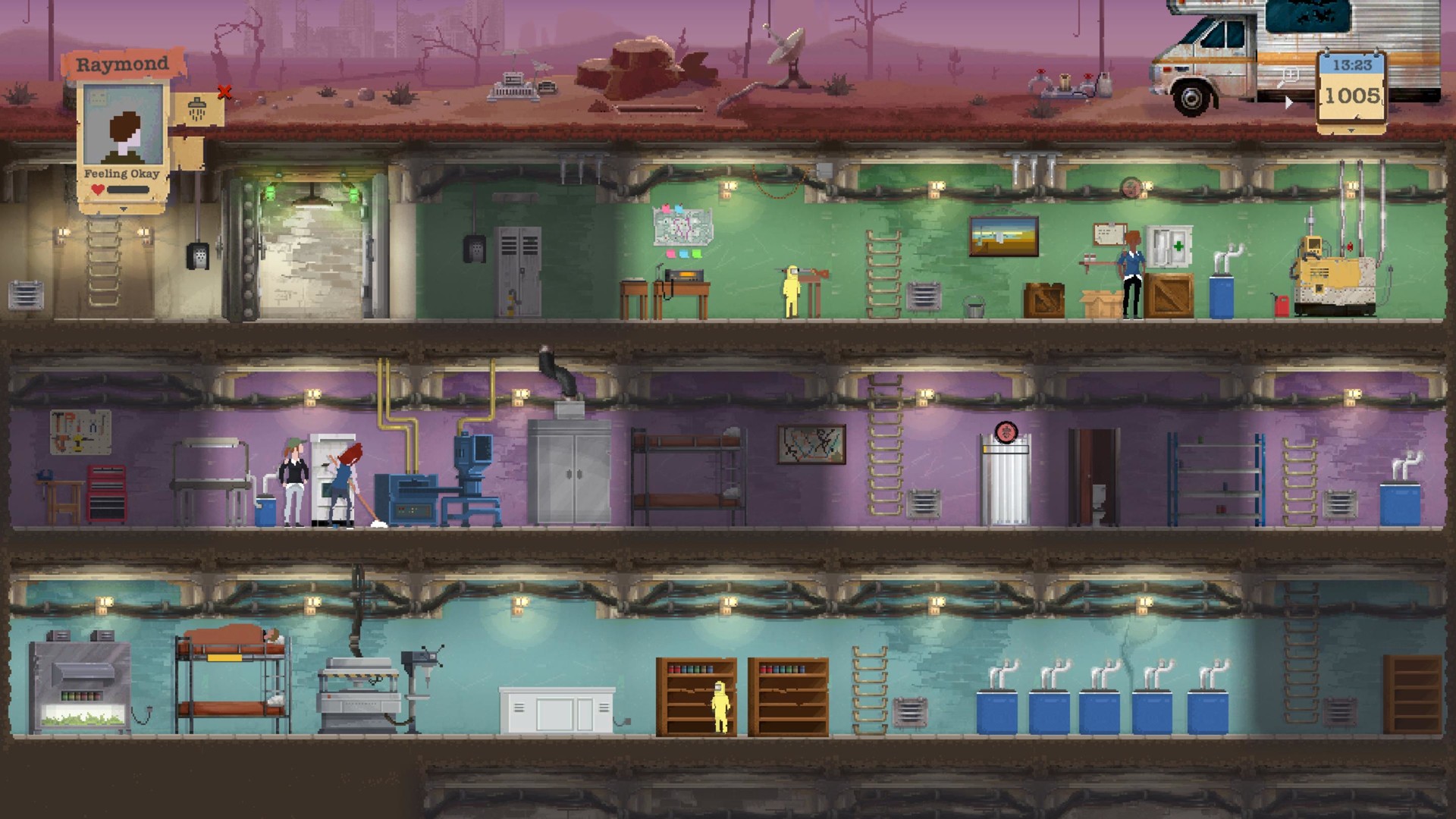
Food, water, rest and hygiene compete for attention while equipment needs care. This is the review's central recommendation: judge a new construction project by the problem it removes. A more impressive shelter is not automatically a more resilient one.
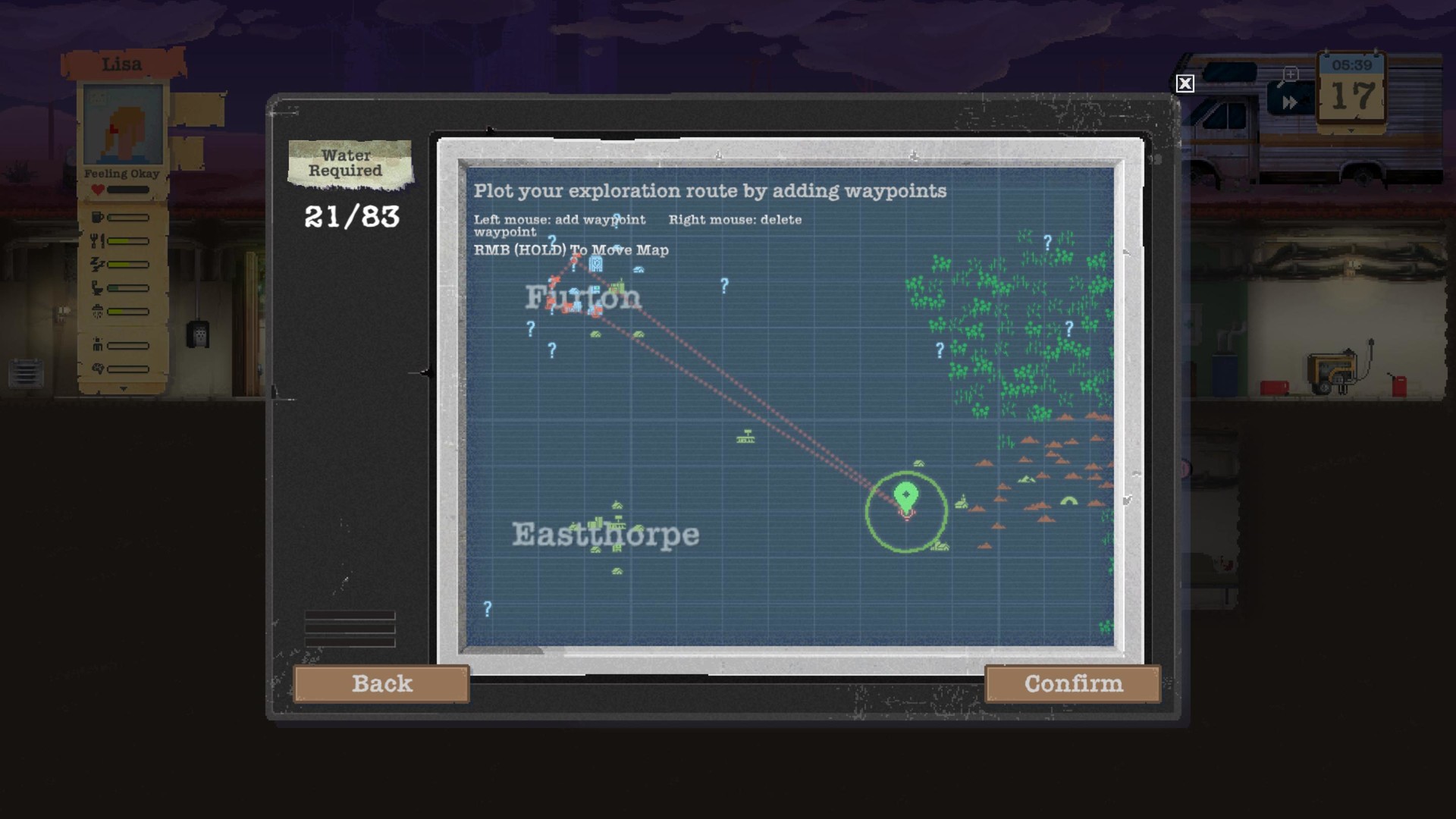
Water is particularly awkward because it serves both the household and travel. The expedition map puts a water cost beside your proposed route. Spending generously outside can leave the people at home with difficult choices; spending nothing can leave everyone short of the supplies they need next.
Cleanliness has teeth, too. A dirty shelter attracts rats that eat rations, so the mop belongs in your survival plan. Fuel supports the generator and powered equipment. Treat upkeep as a repeating circuit of checks rather than a heroic emergency repair whenever something finally fails.
The trade-off is repetition. Anyone hoping that building the right object will permanently retire a chore may find the routine wearing. For the right player, however, recognising trouble early is the achievement. The apocalypse has apparently retained the position of facilities manager.
Every outing spends tomorrow's safety
Expeditions connect the bunker to a larger wasteland without turning Sheltered into a free-roaming action game. You plot destinations, prepare the party and respond to discoveries through the radio. The exciting part is committing scarce resources before you know exactly what the trip will return.
Bring a weapon, a gas mask and suitable carrying equipment when available. More importantly, leave with a shopping list. Food keeps people alive now; a useful component might enable the upgrade that eases the next crisis. An inventory full of vaguely promising junk is still an inventory full.
Recipe tagging helps turn those scavenging decisions into a plan. Mark what you want to build, then watch for the relevant components. This is a welcome connection between domestic needs and distant loot, reducing the temptation to grab everything that looks vaguely expensive.
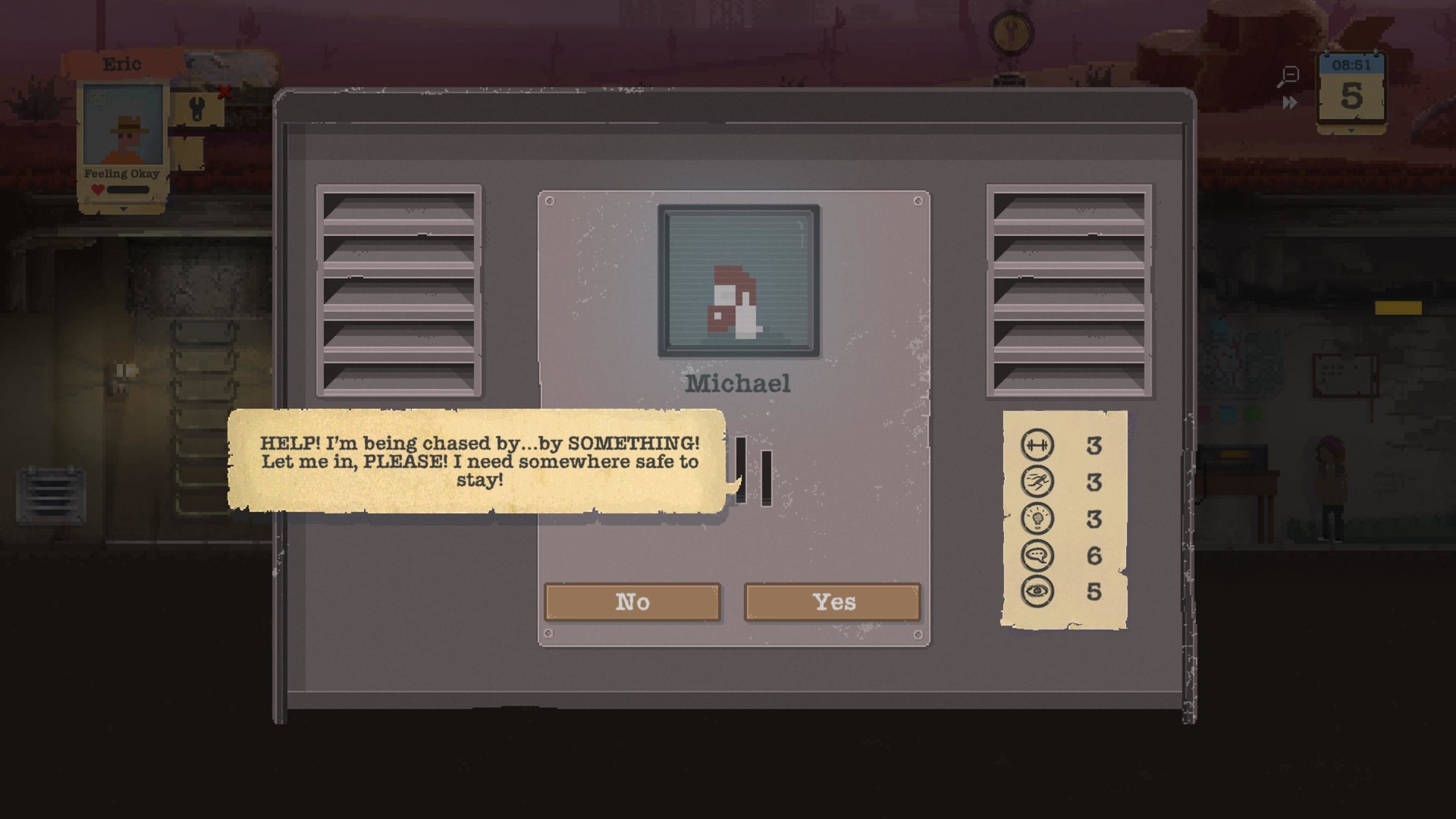
The radio also opens access to traders and potential recruits. It gives the shelter another way to respond to a shortage, but also another demand on your attention. Sheltered's rhythm is consequently stop-and-check management: consider the interruption, make a decision, then return to whatever was about to go wrong.
A fight is an expense with a health bar
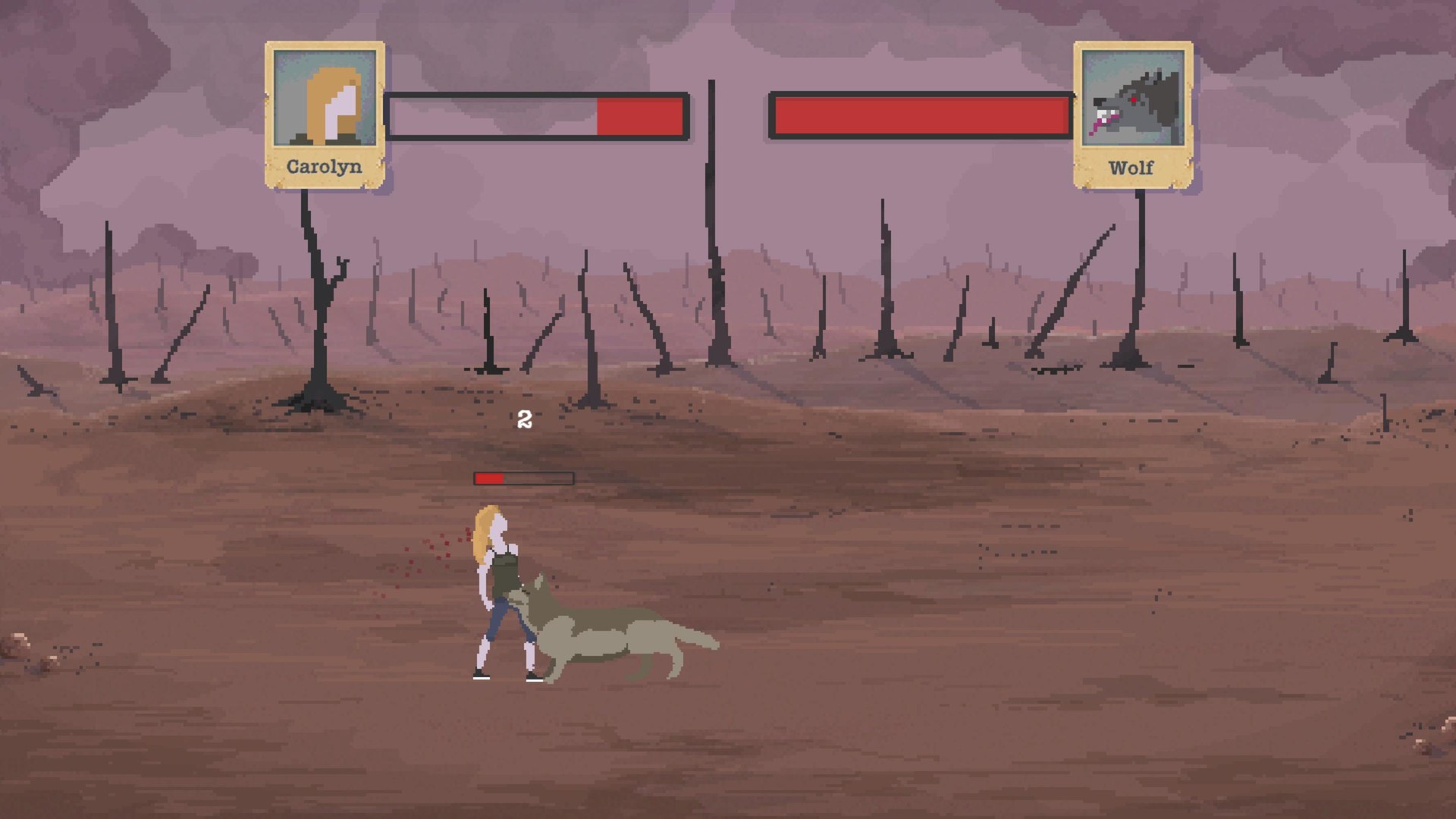
Wasteland encounters can become turn-based fights against hostile survivors or animals. Combat earns its place because of what is at stake outside the battle screen. You are risking a family member and the work already invested in keeping that person equipped and alive.
Approach an encounter with an exit strategy in mind, rather than assuming every stranger is an opportunity for loot. The useful victory is bringing people and supplies home. That makes combat a tense supporting system, although it is a weaker selling point for somebody primarily seeking elaborate tactical battles.
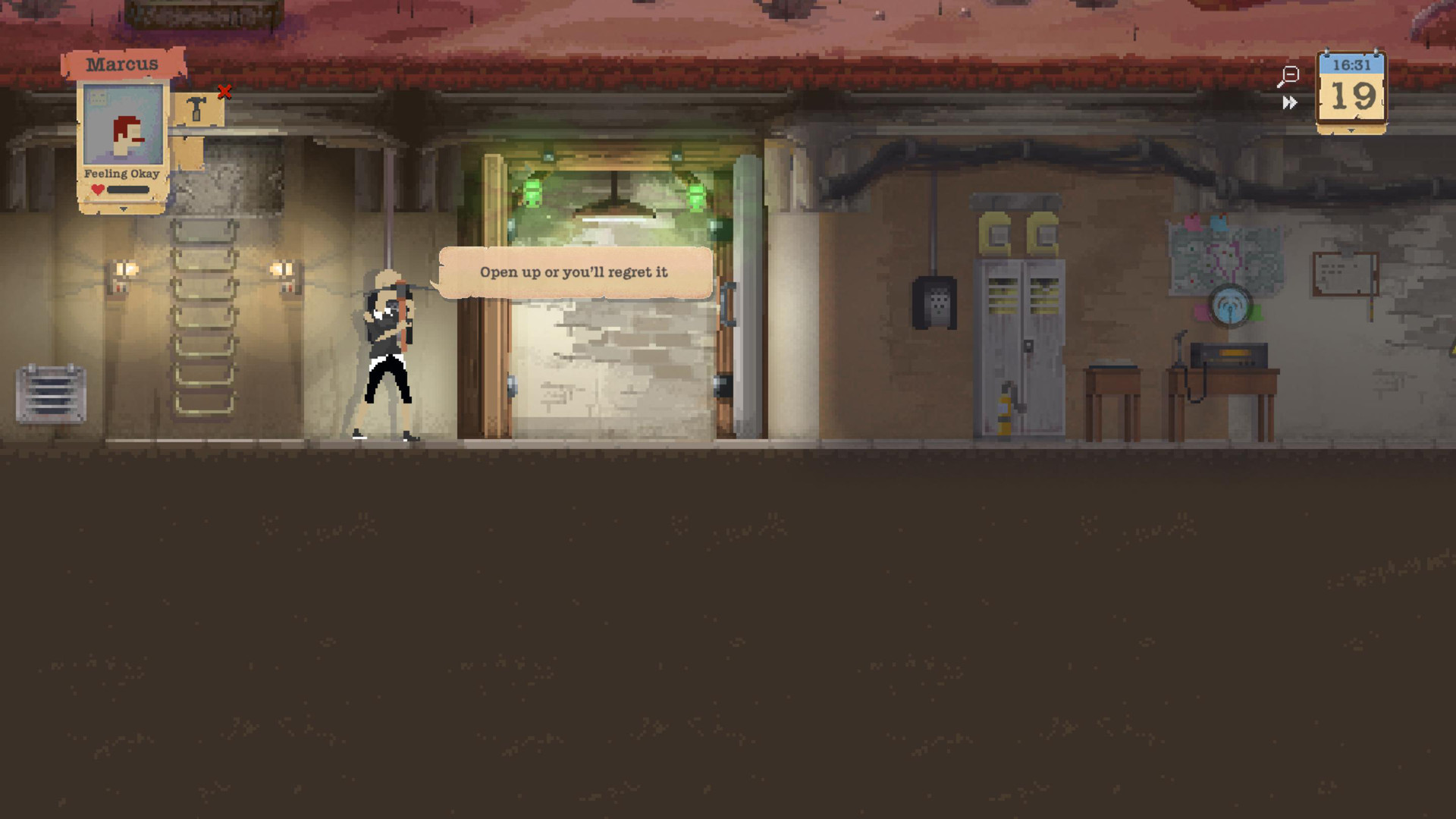
Nor is the bunker a universal safe zone. The original game's raid updates added direct fighting between inhabitants and intruders, with equipment and traps contributing to defence. Investing everything in outgoing expeditions while leaving home protection neglected is a particularly expensive form of optimism.
Growth means being able to cope
Crafting, improving the shelter and developing survivors provide a strong reason to keep planning. The most appealing upgrades promise breathing room: a household that can absorb a setback instead of turning every shortage into a catastrophe. Progress feels meaningful because its purpose is so easy to understand.
Recruitment complicates that progress in a useful way. Another survivor can contribute work, but also joins the list of people who need support. Read a visitor's attributes, consider the household's weak spot and ask whether your existing supplies can carry the expansion.
The cutaway rooms make the bunker itself an effective record of your priorities. Beds, storage, work areas and supplies share a limited space, and rearranging objects is part of making it work. It is pleasingly tangible planning, even when the desired luxury is merely a less chaotic floor.
That clarity comes with an attention cost. Character needs, object interactions, radio decisions and inventory panels all compete for the same pair of eyes. The presentation suits patient players who enjoy inspecting a small system; it is less welcoming when you want a relaxed, largely self-running settlement.
When ordinary survival is not stressful enough
Survival is the natural starting point, asking you to sustain the household for as long as possible. The PC package also benefits from the free Surrounded and Stasis scenarios. They give established survival habits a destination rather than simply adding another reason to continue indefinitely.
Surrounded asks you to withstand a 50-day siege under severe resource constraints. Stasis pivots toward assembling and launching a rocket before the shelter's protection runs out. These goals are valuable precisely because they change what a successful day means.
That makes the original game a stronger long-term proposition for someone who enjoys its underlying chores. Extra scenarios will not transform maintenance into a different genre, though. If the basic cycle feels like unpaid overtime, another deadline is unlikely to improve the employment package.
Choose the edition, not just the title
PC is the reference edition here. Team17 also confirms Surrounded and Stasis for PlayStation 4, Xbox One and Switch. The publisher's platform page is an overview of these releases, not a special edition that automatically guarantees identical controls or performance.
The separate iPhone and iPad edition puts the family-management game on a touch device. Choose it if carrying your bunker around matters more than having a desktop workspace. For reading character needs and sorting through this many small panels, a larger screen is the sensible preference.
Sheltered 2 is a separate sequel with its own faction-leader and faction-relationship systems. Choose the original for the family-centred game described here, and check the title carefully when browsing bundles. Buying both games is a separate decision from choosing a platform for this one.
Strengths
- Household needs give scavenging and crafting a clear purpose
- Family customisation and permanent loss make planning personal
- PC scenarios add goals beyond indefinite survival
Tradeoffs
- Repeated maintenance is central to the experience
- Combat supports the management game rather than leading it
- Dense panels demand close attention, especially on smaller displays
Who it suits
- For patient survival-management players who enjoy organising people and supplies
- Less suited to action-first players or anyone seeking hands-off base building
Verdict
Sheltered is an appealingly grubby management game for players who like making a fragile household dependable. Its strongest decisions happen between the dramatic moments: who leaves, what comes back and which problem gets the next handful of materials.
The cost is persistent micromanagement and combat that serves survival more than spectacle. Choose the PC version for the clearly documented scenario package, keep the mobile scope separate, and expect a bunker that rewards attention rather than one that eventually runs itself.
PC base game
Review score: 7.5 / 10
- Combat
- 6.1 / 10
- Progression
- 8.1 / 10
- Usability
- 7.2 / 10
- Value
- 8.4 / 10
Original Steam game, app 356040; includes documented Surrounded and Stasis updates.
Windows, macOS and Linux are listed; historical minimum requirements are not a modern-device performance guarantee.
The Steam language list does not include Japanese or Korean.
Platform editions overview
Review score: 7.5 / 10
- Combat
- 6.1 / 10
- Progression
- 8.1 / 10
- Usability
- 7.2 / 10
- Value
- 8.4 / 10
Publisher overview covering the original game across platforms; not a separate premium edition.
Surrounded and Stasis are confirmed for PS4, Xbox One and Switch. Console performance and control parity are not assessed.
iPhone / iPad edition
Review score: 7.2 / 10
- Combat
- 6.1 / 10
- Progression
- 8.1 / 10
- Usability
- 6.8 / 10
- Value
- 7.6 / 10
Separate iPhone and iPad listing, app ID 1217949099.
The listing requires iOS/iPadOS 10.0 or later; no modern-device hands-on compatibility test is claimed.
Desktop bonus-scenario parity is not established. The iOS listing is not the native Steam macOS edition.
The review score averages the applicable Combat, Progression, Usability and Value scores, rounded once to one decimal. Fit is specific to each comparison and is excluded.
Is this review about Sheltered or Sheltered 2?
The original Sheltered. Sheltered 2 is a separate game; its faction-leader and faction-diplomacy features are outside this review.
Which mode should a beginner choose?
Start with Survival. Learn household needs, crafting and expeditions there before attempting the more specific pressures of Surrounded or Stasis.
What does the PC game include?
The original survival-management game plus the free Surrounded and Stasis scenario updates. Team17 also confirms those scenarios for PS4, Xbox One and Switch.
Why does water matter when planning expeditions?
Travelling uses water, and longer routes cost more. The same supply supports the household, so compare the route cost with what the people staying home will need.
Is Sheltered a multiplayer game?
The Steam edition is listed as single-player. You manage the family yourself; several characters in a shelter do not make it a co-op game.
Sources
- Steam: original Sheltered ·
- Team17: original game and platform links ·
- Apple: iPhone and iPad listing ·
- Team17: survival guide and platform FAQ ·
- Team17: Surrounded release ·
- Team17: Switch edition contents ·
- Team17: shelter combat update ·
- Team17: PC and console update ·
- Official Steam announcements: Stasis and subsequent fixes ·
- Team17: original release and permanent death ·
- Steam: Sheltered 2, separate sequel ·