5 Games Like Into the Dead: Our Darkest Days for Life Between Runs
Fragile people, difficult outings and five very different reasons to get home.

Getting someone home is a victory. Then come the empty cupboard, unfinished repair and person who needs a quiet word. Into the Dead: Our Darkest Days understands that surviving an outing begins the next responsibility.
This War of Mine is the closest match for that vulnerable, side-on shelter life. Other picks favor family upkeep, difficult leadership, movement or personal connection. What do you want to protect when the door closes?
The quick comparison
5 games, different reasons to give the next run a chance.
Choose a game to jump to its overview. Platform lists are summaries; check the linked official edition.
The games
This War of Mine
A full backpack cannot fix everything waiting at home.
- Shelter building
- Crafting
- Exploration
- Platforms
- PC via Steam; base game with the Final Cut update
- Price model
- Paid game; Stories episodes and other paid DLC sold separately
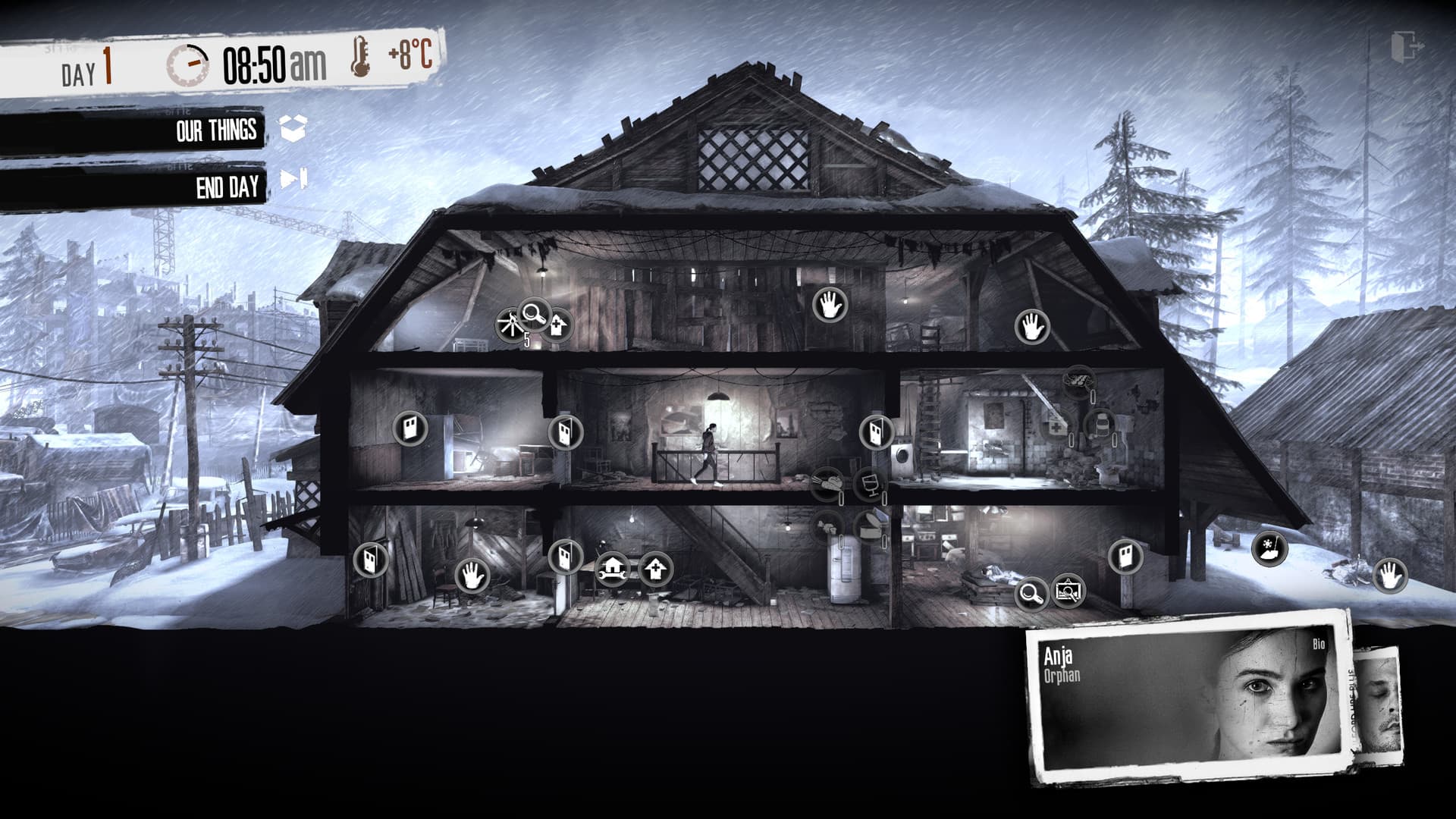
This War of Mine gives daylight to the household and darkness to the scavenger. Civilians repair, trade and care for each other before somebody leaves for supplies. The familiar cutaway view makes that separation powerful.
Who can risk tonight, and which shortage matters most? Medicine helps a sick housemate; building materials promise a more livable tomorrow. Valuable loot means little if the urgent problem remains untouched.
Supplies you want may be keeping somebody else alive. Helping, taking and protecting complicate survival’s neat arithmetic. These civilians are enduring a war, so the emotional center stays with vulnerability, not zombie-killing competence.
The fixed house rewards patient improvement, without Our Darkest Days’ pressure to find another refuge. Start here for the closest emotional match, uncomfortable decisions and precious little room for an action-hero fantasy.
The verdict
The closest match for the relief, and responsibility, of getting someone home.
Zombie Defence
A better gun is one reason to return. Mara is another.
- Manual aim (desktop)
- Extraction
- Shelter building
- Crafting
- Permanent progress
- Platforms
- Single-player browser; desktop and touch controls
- Price model
- Public launch pricing unannounced
Zombie Defence makes shelter investment last: fixed stations, crafted weapons and research turn preparation into tangible progress. Outside, desktop play means moving, aiming and timing reloads yourself; touch fire assists toward the nearest living enemy.
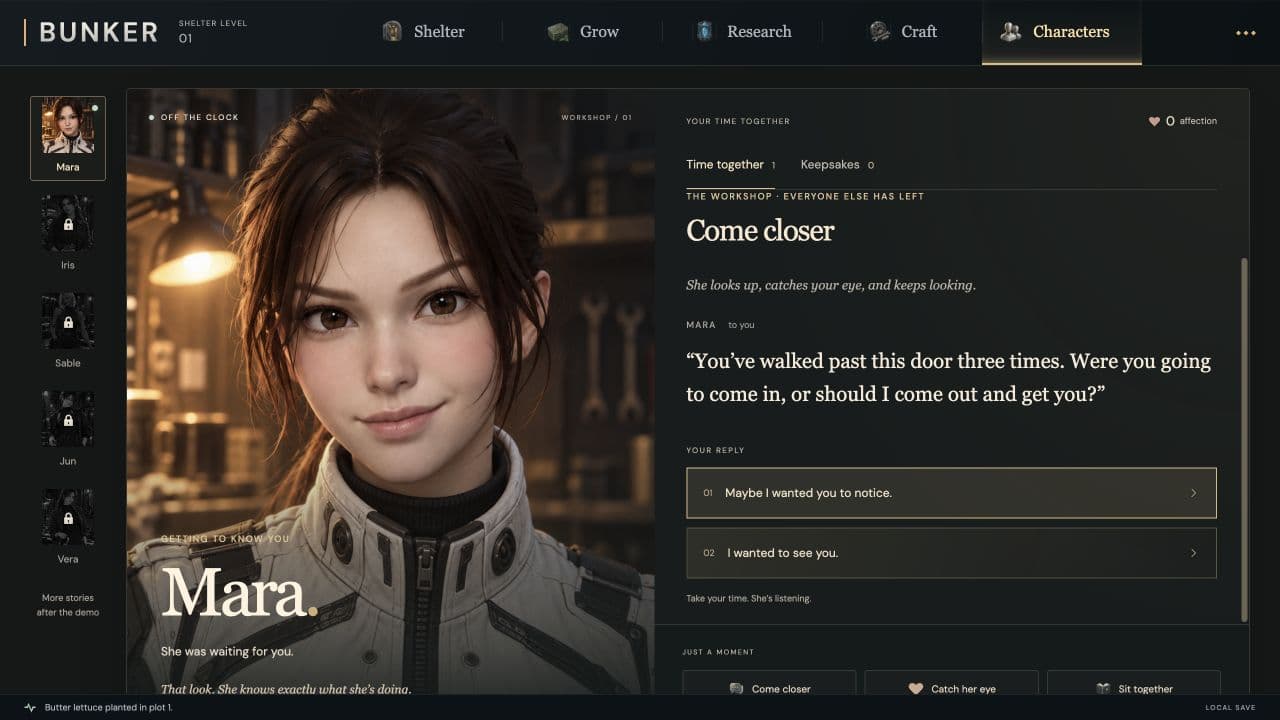
Workers boost stations, with specialties rewarding a careful match. Each resident holds one assignment at a time. Moving Mara to help one project sacrifices her contribution elsewhere: a household decision with a visible consequence.
Mara’s authored conversations remember your replies, allowing friendship, romance or a slower pace. Coming home can mean continuing a conversation, even when the workshop has nothing new to offer. Progress gets a human face.
Crops and cooking prepare deployments; food shortages reduce readiness without lethal starvation. Domestic care is gentler here. Separate Scrap expeditions retain collected Scrap after defeat, up to storage capacity, so failed outings still contribute.
Choose it for active firefights and a home that keeps getting better. The same rooms become more useful, your arsenal grows, and Mara’s story gives the return trip a little more meaning.
The verdict
For players who want danger outside and something steadily warmer inside.
Sheltered
The end of civilization has not canceled the chores.
- Shelter building
- Crafting
- Exploration
- Tactical combat
- Platforms
- PC via Steam; the original Sheltered
- Price model
- Paid game
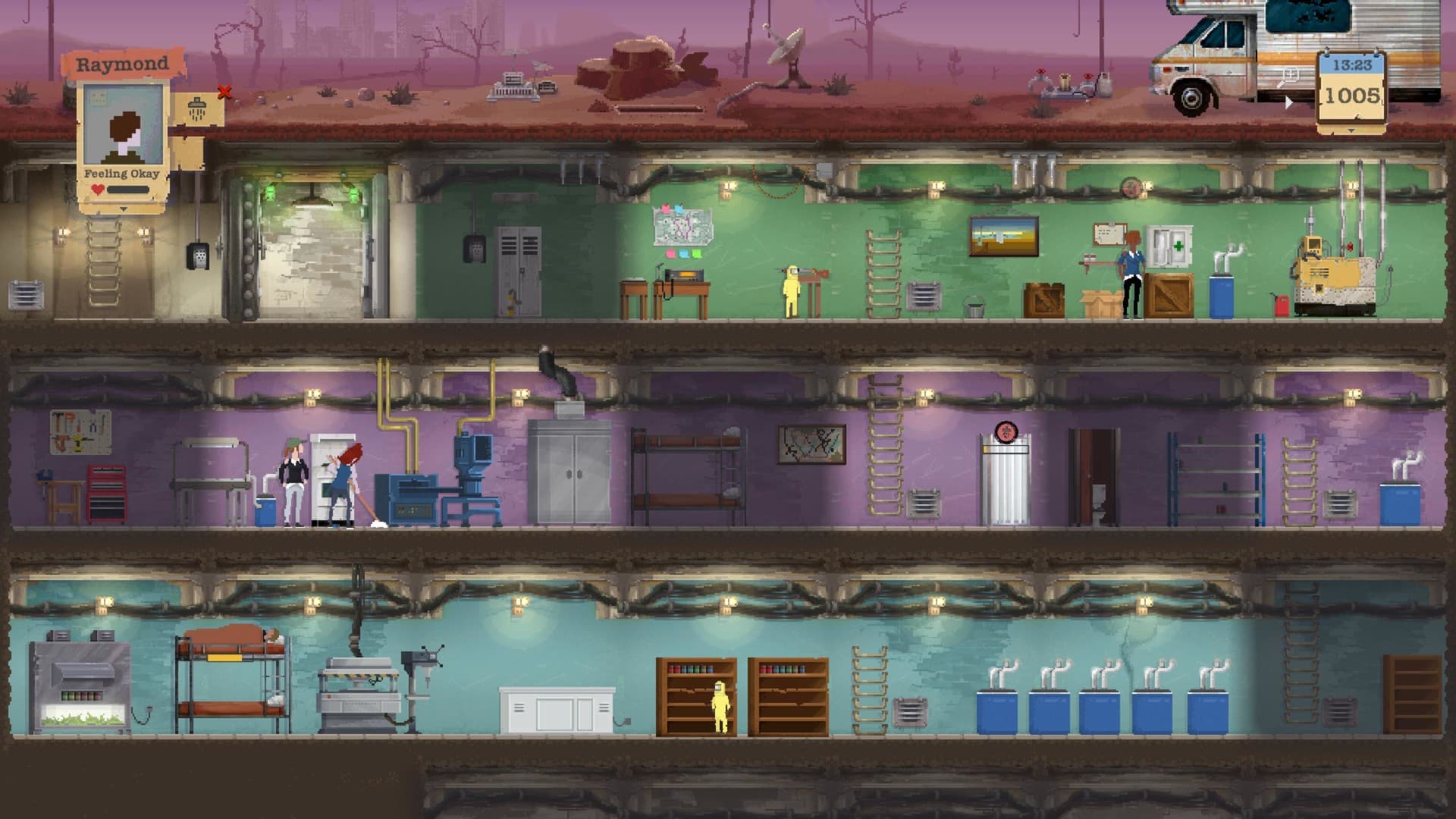
Sheltered lets you stop looking for the next address. Customize a family, settle into an underground bunker and make it habitable after a nuclear catastrophe. Improving this one home becomes the long-term project.
Expeditions support daily living and new equipment. Check what the family needs before deciding what to chase outside. A useful haul keeps the household functioning, even when it contains nothing exciting.
Encounters can become turn-based fights, while experience and trauma change the people returning through the airlock. Recruiting an outsider brings another personality into the bunker and another relationship whose loyalty needs attention.
That slower domestic rhythm is the attraction. Maintenance gets substantial time; expeditions cannot reproduce continuous side-scrolling stealth. If you wished Walton City would let you settle somewhere properly, here is your invitation to stay.
The verdict
The strongest pick for making one small home work, day after day.
Dead State: Reanimated
The school has supplies. Its residents still have complaints.
- Tactical combat
- Shelter building
- Exploration
- Permanent progress
- Platforms
- Windows PC; Reanimated edition
- Price model
- Paid game
Dead State: Reanimated makes homecoming the beginning of another difficult conversation. Your community occupies a Texas school; a field party fetches supplies. Reactive dialogue adds social weight, with residents judging your leadership.
Individual mood and overall shelter morale are separate concerns. A manageable community total can hide one unhappy person. Favors, preferred upgrades and particular luxury items let you respond to somebody specific.
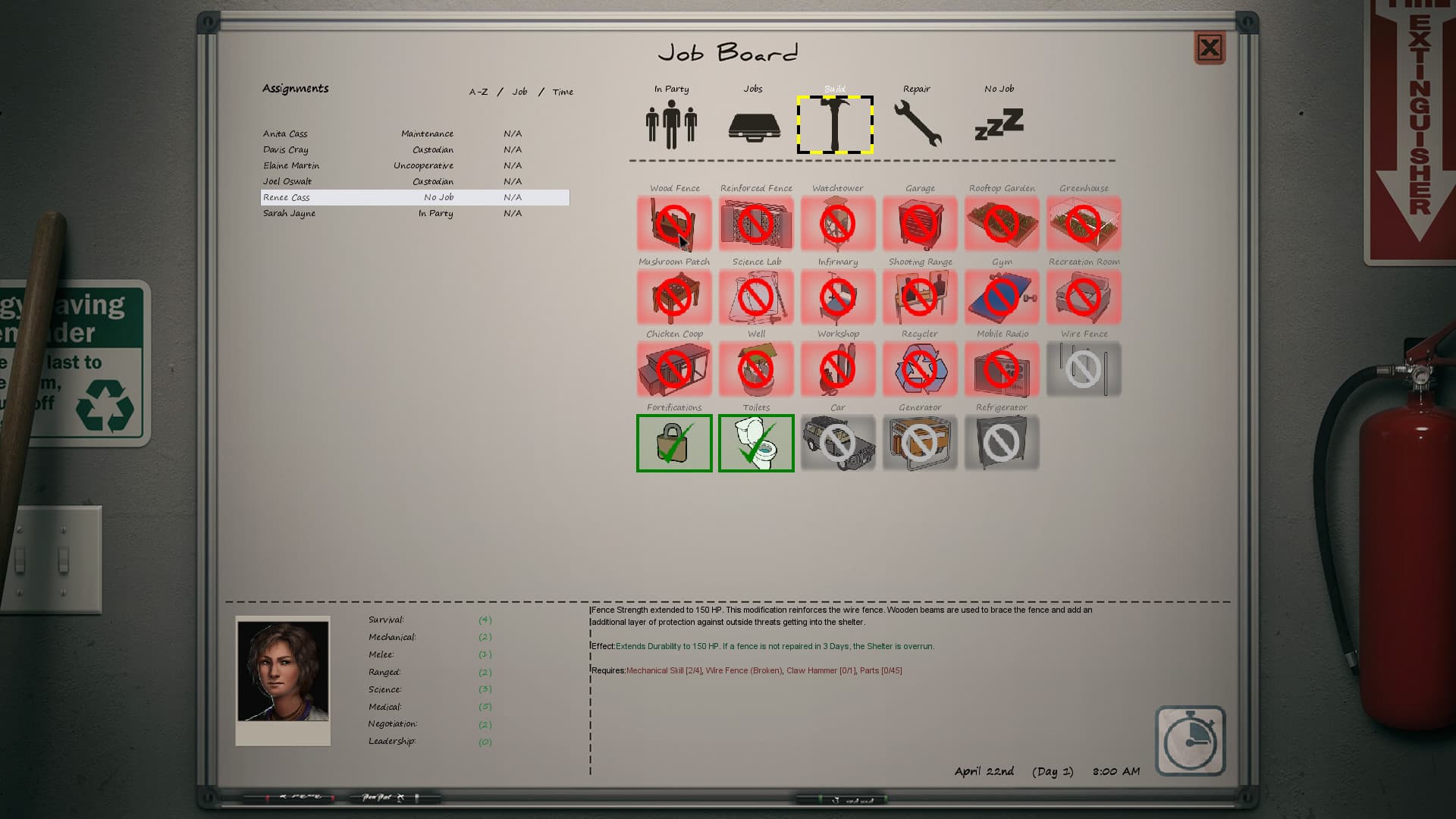
The Job Board makes people part of your planning. Take a specialist outside and they cannot finish a shelter project. Leave them working and the field party loses their help. Neither decision comes free.
Turn-based combat gives positioning and action points time to matter. Substantial dialogue reinforces the deliberate RPG rhythm. Pick this when leadership interests you more than the immediate tension of slipping through a dark building.
The verdict
For the player who wants to know everyone behind the supply counter.
Organ Trail: Director’s Cut
Home has four wheels and cannot afford to stop.
- Exploration
- Platforms
- PC via Steam; Director’s Cut base game
- Price model
- Paid game; Final Cut expansion sold separately
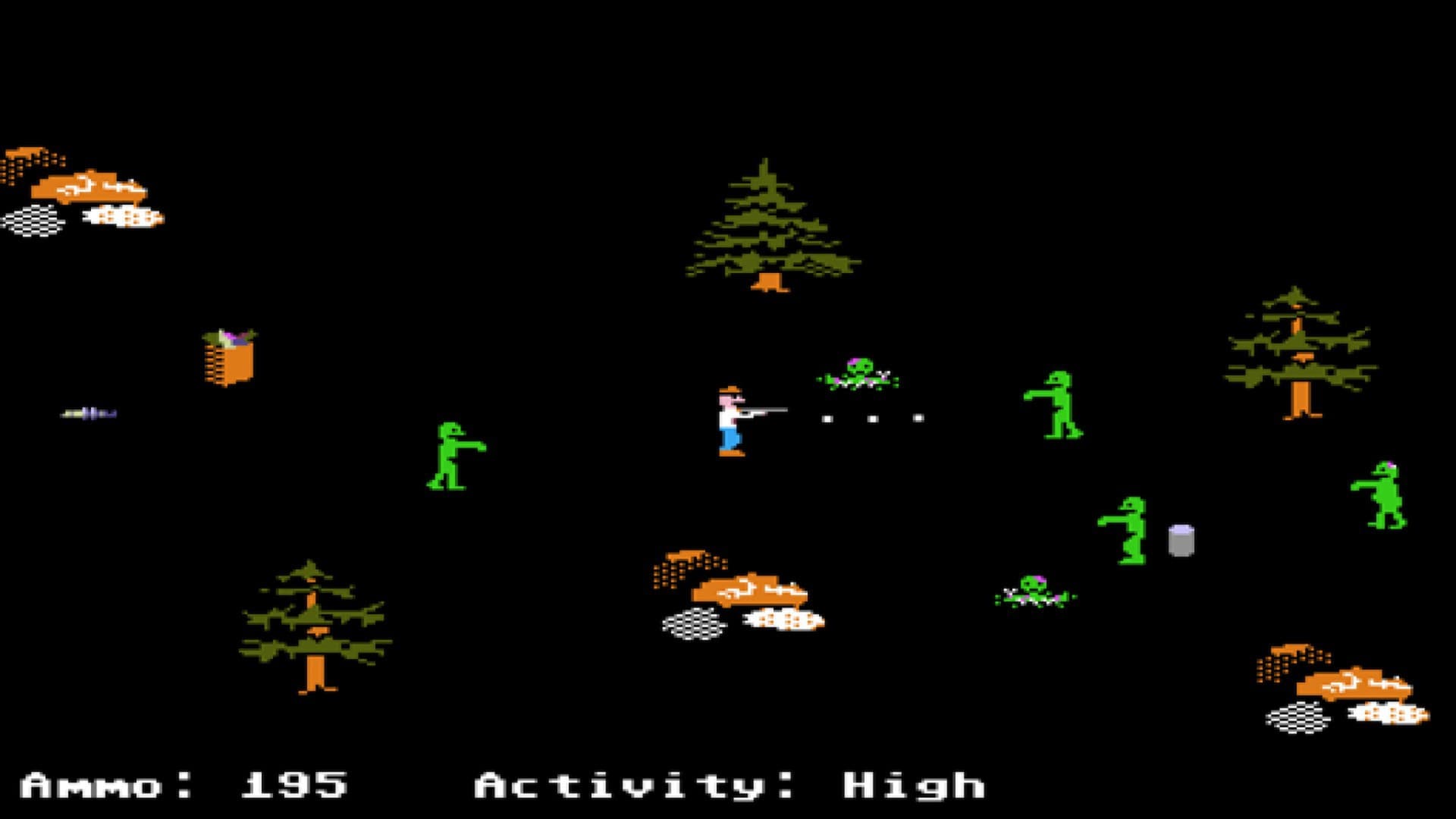
Organ Trail puts four companions in your station wagon and sends you west. Staying put offers no permanent answer. Towns, repairs and scavenging stops matter because they help the group reach the next stretch.
Food, ammunition, fuel and medicine solve different emergencies. Plenty of one cannot compensate for an empty supply of another. Town jobs, trading and scavenging compete for attention; the next leg makes those choices urgent.
Illness, bites and deaths mark the familiar names traveling with you. Spare retro presentation and darkly comic road events feel different from Walton City, but accumulated mishaps still give the journey human continuity.
Director’s Cut supplies the travel-and-scavenge loop. Route choice and drop-in combat co-op require the separate Final Cut expansion. Come for momentum and resource triage; detailed shelter interiors and long conversations belong elsewhere.
The verdict
The wildcard for players more attached to the group than its address.
How we compare
A good recommendation explains who a game suits and where it falls short. Our editorial scores use the same five criteria, each rated out of ten.
- 01
Combat
Controls, aiming, enemy readability, and the decisions you make under pressure.
- 02
Progression
Build choices during a run and meaningful progress between attempts.
- 03
Usability
Control demands, platform access, interface options, and documented device requirements.
- 04
Value
What the asking price includes, optional purchases, and the scope of the free version.
- 05
Fit
How well the game answers the specific question in this article.
Which one should you try?
This War of Mine offers civilian vulnerability, Sheltered family upkeep and Dead State difficult leadership. Organ Trail keeps moving; Zombie Defence builds a lasting home around Mara. They share a question: who makes the return trip matter?
Your questions, answered.
Want to see what we’re building?
Zombie Defence is in Alpha. Join the waitlist.
More games to explore
- 7 Games Like Last Fortress: Underground for Bunkers and Survival
Compare seven Last Fortress-like games, from underground rooms and survivor jobs to alliance battles, colony engineering, and hands-on zombie runs.
- 7 Games Like The Last Stand: Dead Zone for Bases and Missions
The Last Stand: Dead Zone is offline. Compare seven survival games built around shelters, supply runs, and lasting progression, with current platforms and price models.
- 5 Games Like Decision: Red Daze for Action, Settlements, and Scavenging
Compare five zombie games by direct combat, survivor management, scavenging, and what each trip builds back at home.