Deep Rock Galactic: Survivor review: dig your own escape route
The guns fire themselves. Deciding which wall to disappear through is very much your problem.
Zombie Defence Editorial Team ·
Based on official documentation and gameplay imagery.
An open patch of floor is useful. A wall you can turn into an open patch of floor is better. Deep Rock Galactic: Survivor makes that distinction the heart of its alien-squashing business, turning mining into a combat decision.
This is Funday Games’ solo, top-down auto-shooter, not the original Deep Rock Galactic’s cooperative shooter. Your dwarf fires automatically while you steer, excavate and assemble upgrades. The clever bit is how often the profitable route is also the dangerous one.
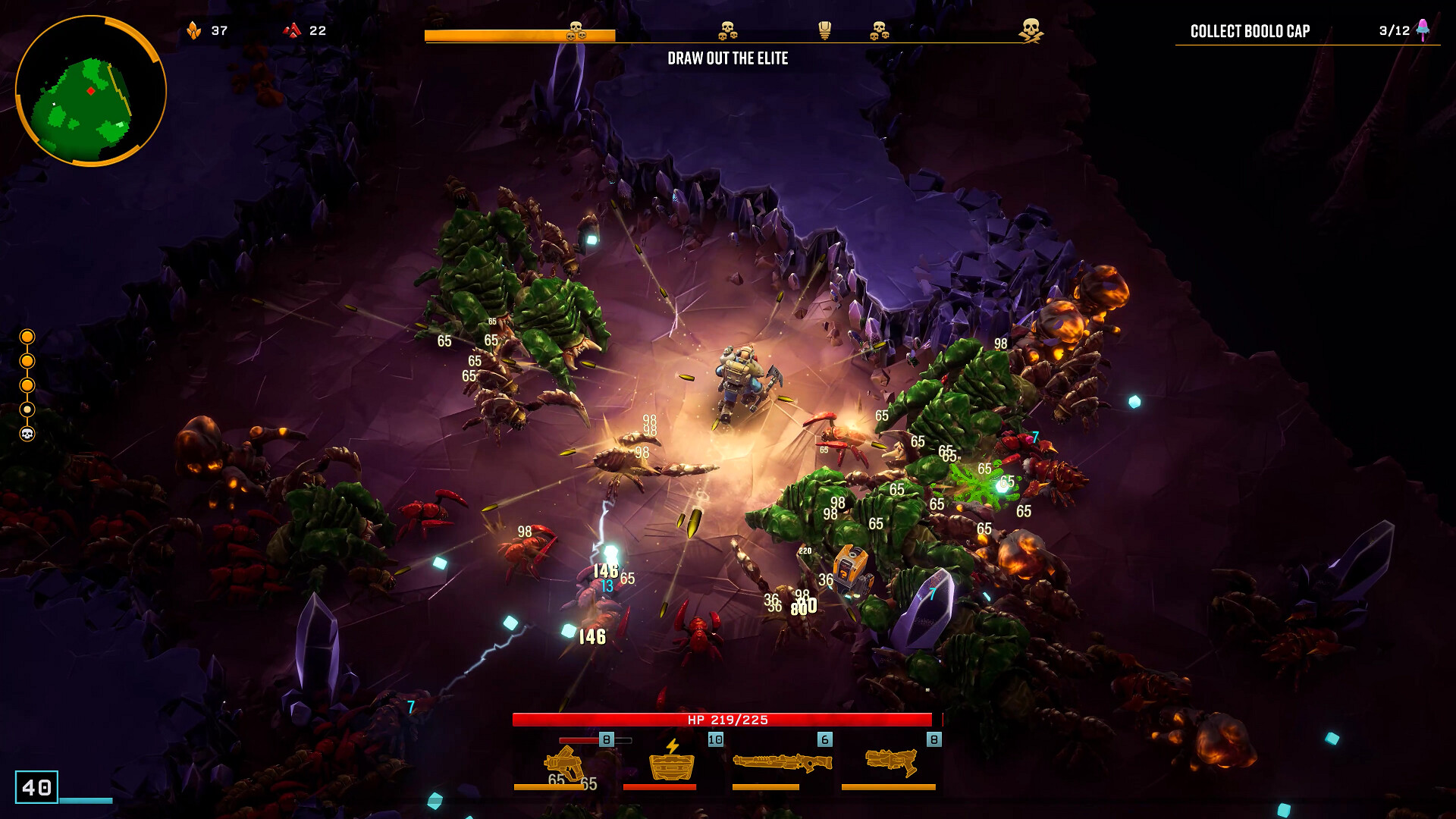
Your pickaxe is an escape plan
Walking into rock sets your dwarf to work. That turns a mineral deposit into more than a reward marker: it is a stop you must budget for while the swarm closes. Excavating a shortcut can be smarter than outrunning enemies around it.
The same freedom can make a trap. A tunnel saves distance but narrows your options, especially if you start digging before checking what is behind you. Leave an exit before chasing the last tempting nugget. Geological enthusiasm is not body armor.
Procedural caves keep that calculation moving. You are reading nearby resources, gaps and objectives rather than following a memorized lap. Mining speed and pickup reach therefore deserve serious attention: they can shorten the time spent exposed, not merely make collection more convenient.
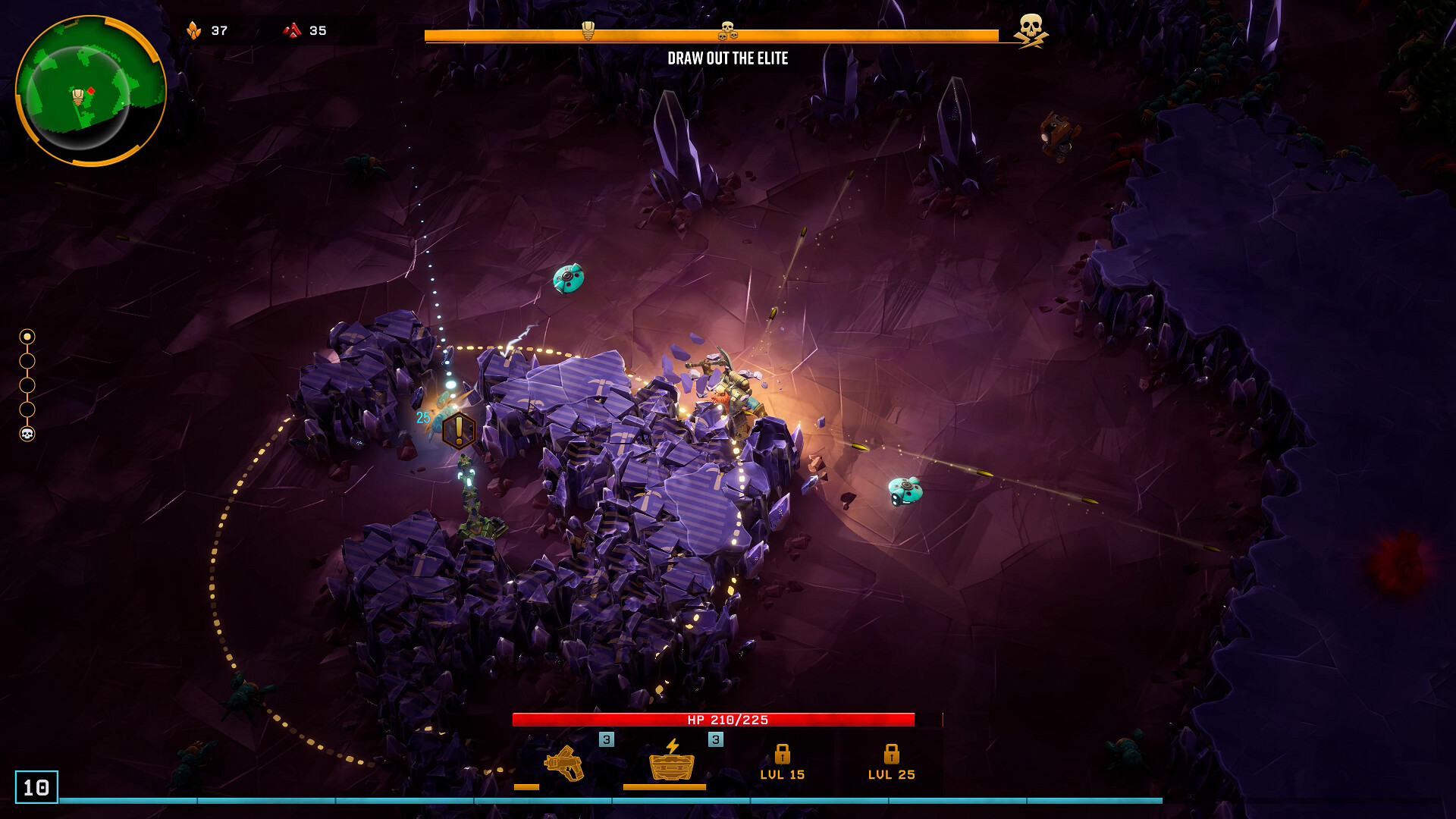
Automatic guns, deliberate builds
The usual four-weapon loadout offers different ways to cover your route. Direct fire, drones and area effects solve different problems. A build that erases a packed approach may still struggle when a boss demands sustained damage and room to maneuver.
Level-up cards make you choose between improving the current arsenal and correcting its weaknesses. More damage is welcome, but another drone or faster reload can change coverage. Read the weapon and tag a bonus affects before chasing its rarity color.
Overclocks deepen that process by changing weapon behavior. Update 1.1 also expanded tag synergies, including Sidearm and Favourite, so related choices can support several weapons. The appeal is assembling a working system rather than buying four unrelated machines that happen to be loud.
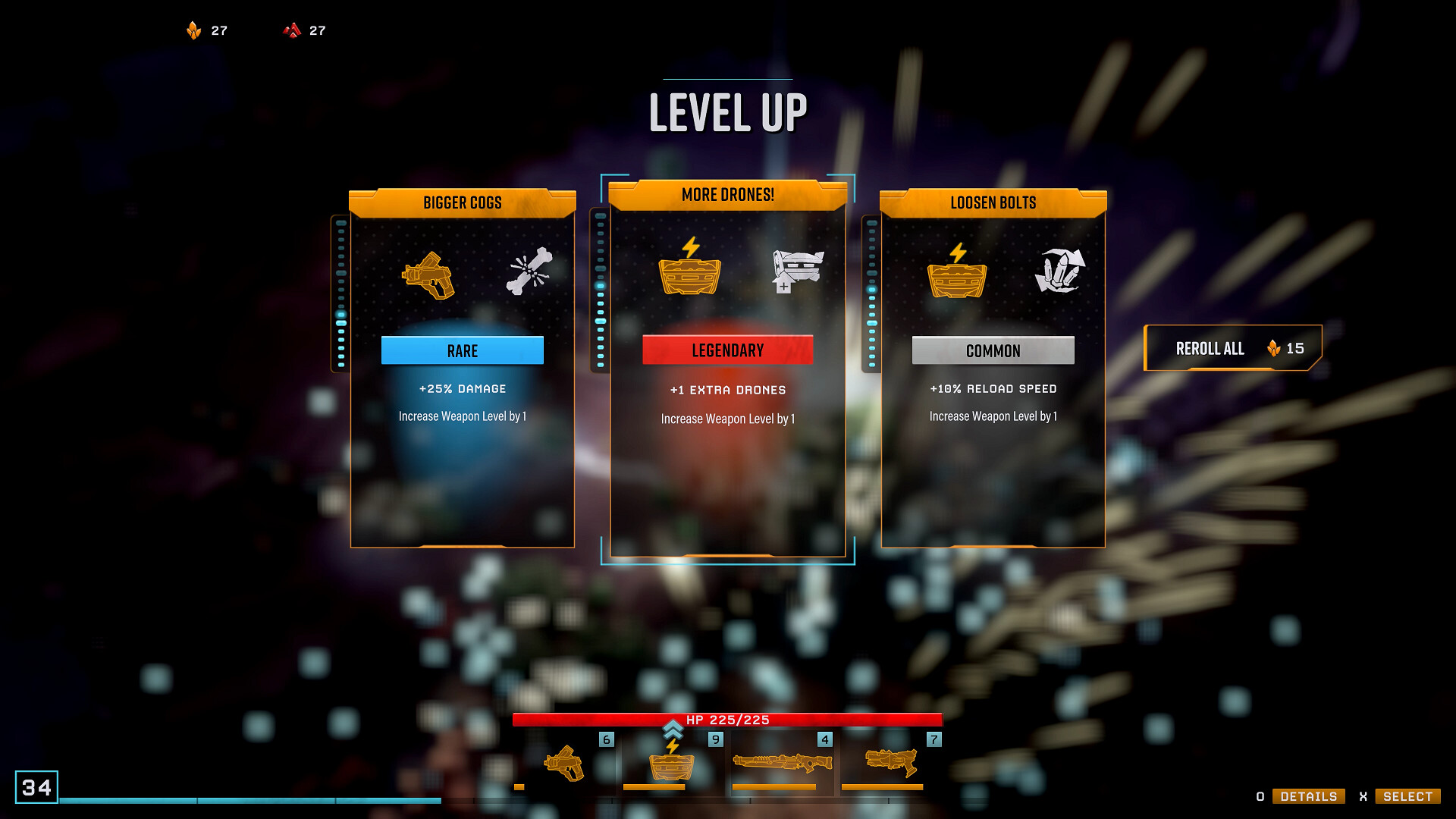
The shop explains the greed
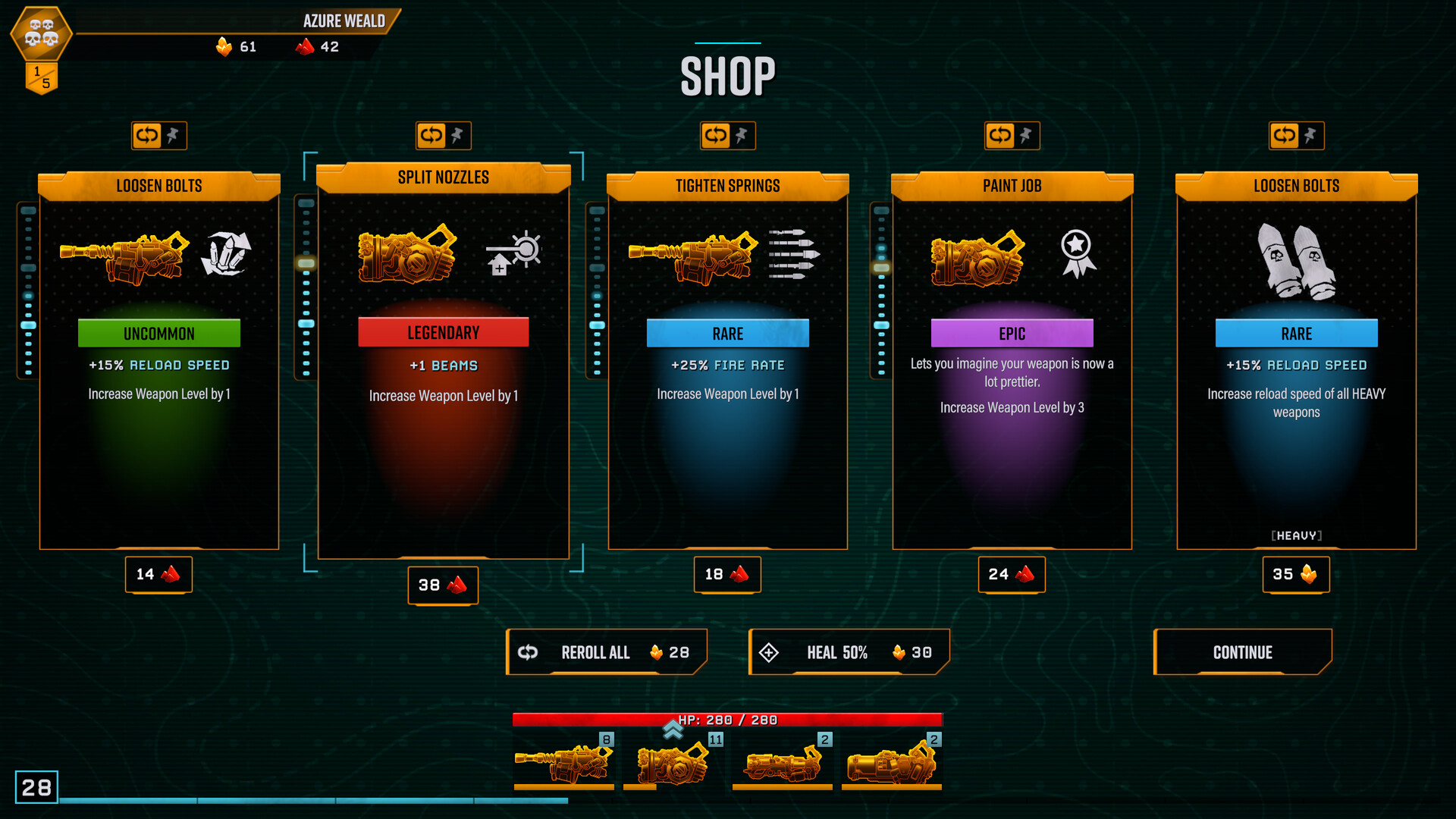
Gold and nitra feed the between-stage shop, where weapon upgrades compete with other improvements. Gold also pays for options such as healing and rerolls. A detour becomes easier to justify when it buys the missing upgrade, harder when it leaves you needing medical attention.
The useful question is what the next stage needs. Patch a weak weapon, improve a shared tag, or keep enough gold to heal? The store screenshot makes the tension wonderfully plain: several attractive cards, two limited balances, and no employee discount for optimism.
Assignments change the fight
Elimination gives the familiar escalation a concrete destination: beat the threats, meet the assignment and reach extraction. Faster boss kills earn better chest rewards, creating a reason to finish the fight instead of endlessly stalling for more resources.
Escort Duty changes the geometry. B0b-33 the Drilldozer needs Oil Shale, and its movement depends on your proximity. You can pause its advance by stepping away, but the growing alien threat keeps that pause from becoming an unlimited lunch break.
That moving objective favors crowd control and careful positioning. Later, the Ommoran Heartstone adds Beamers that need pickaxe attention. You are balancing fuel, swarm management and machinery rather than asking every build to solve the same boss-shaped problem.
A career, with paperwork
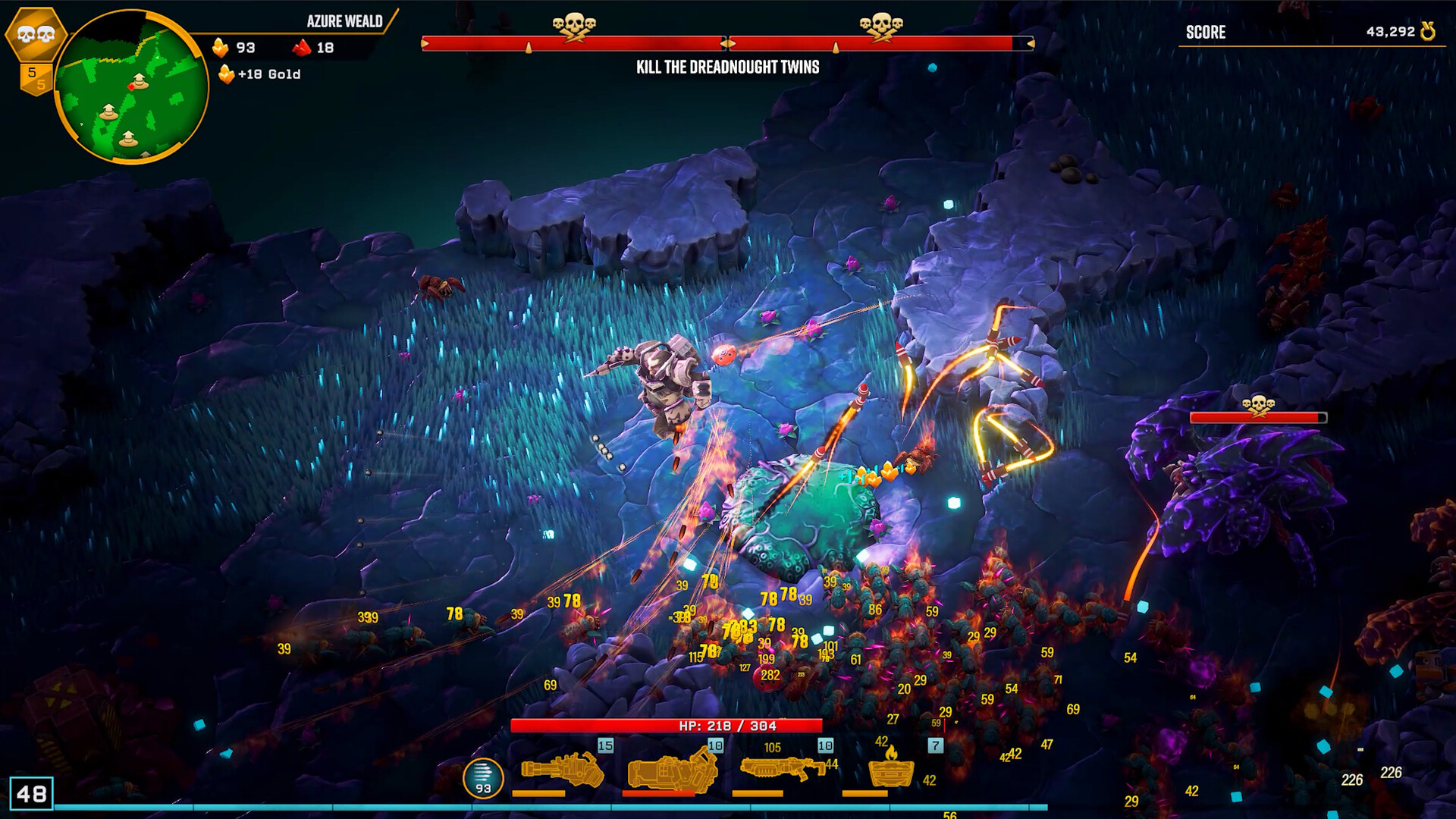
Progression spreads across weapon unlocks, permanent upgrades, mission goals, masteries and gear. The mission roadmap uses sectors and gates, giving repeat dives specific targets. The advantage is direction; the cost is that reaching the next challenge can require more checklist work.
Gear is the biggest additional layer. Six categories cover defense, combat, collection and Bosco upgrades, with rarities and quirks creating loadout choices between missions. Credits and minerals can improve individual pieces, so hauling resources home keeps feeding more than one system.
The 1.0 redesign removed Morkite Reactor Cores and detached basic mastery bonuses from repeated hazard climbing. Later mastery rewards add further goals. There is still plenty to pursue, but old guides describing that removed currency can send returning miners down the wrong tunnel.
Useful options under the fireworks
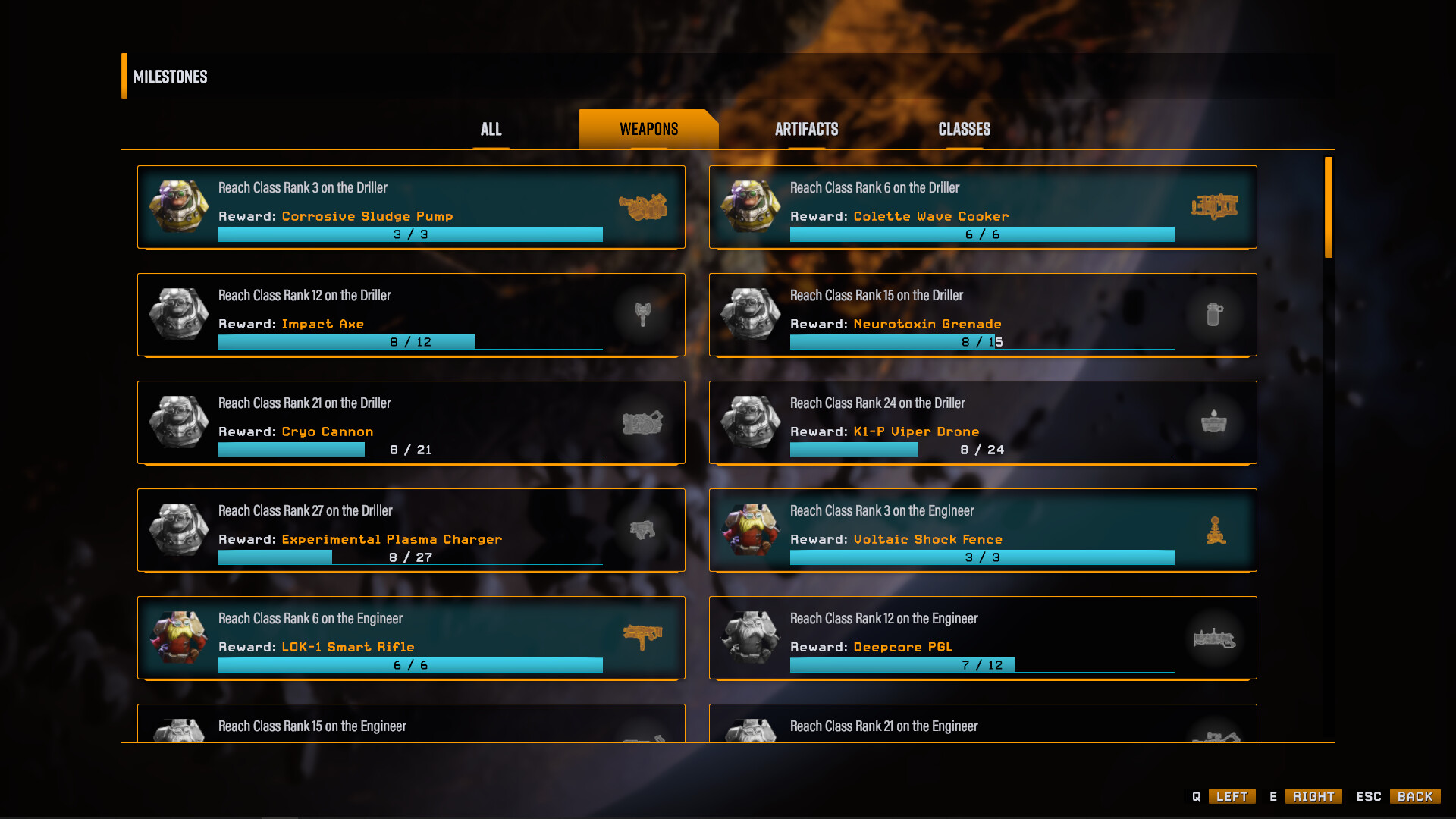
The practical caveat is readability. Glyphids, damage numbers and overlapping effects can compete with the route you need to see. The visual-effects slider is a meaningful option here: reduce the spectacle if it obscures an opening, rather than treating maximum fireworks as mandatory.
PC mid-run saving now checkpoints when you enter the shop and resumes from that visit. That makes interruptions less punishing, but it is a between-stage safety net rather than a promise to preserve every second of a messy encounter.
Know what the base game includes
Endless Mode is already part of the free Update 1.1, released alongside Heavy Duty in April 2026. Its faster opening stages, fifteen-artifact limit and steeper escalation after stage ten give established builds another test without requiring that paid expansion.
Heavy Duty separately adds the Demolisher, Egg Hunt and Glacial Strata. Those are not base-game inclusions. Knockout, announced in September 2026, remains upcoming at this review’s October 14 cutoff; its Brawler class is not part of the score or buying recommendation.
A separate purchase for your pocket
The iPhone and iPad edition is a separate port, with Piktiv handling mobile development. Its free trial offers Scout, Elimination and Crystalline Caverns on Hazard 1. The full-game unlock is a one-time purchase, with portrait and landscape play supported.
The US stores list the PC base game at $12.99 before discounts and the iOS full unlock at $12.99. Mobile also lists paid extras separately. Treat the trial as a device check before buying, particularly if dense combat effects bother you.
The iOS listing requires iOS or iPadOS 17 and an A12 Bionic or newer compatible device. It supports controllers, while its update history records stability work and a reduced-effects Compatibility Mode. That makes the trial valuable; a supported device is not a frame-rate guarantee.
Strengths
- Mining changes routes and combat space rather than interrupting the action.
- Weapons, tags and overclocks support meaningful build decisions.
- Distinct missions and free Endless Mode extend the base game.
Tradeoffs
- Dense swarms and effects can make routes harder to read.
- Gear, gates and unlock goals add repetition between breakthroughs.
- The mobile unlock and paid expansions are separate purchases.
Who it suits
- Players who want movement decisions beyond running circles.
- Build tinkerers happy to pursue long-term unlocks.
- Solo miners rather than groups looking for cooperative Deep Rock.
Verdict
Survivor earns its place by making the arena editable. Mining, shopping and survival pull on the same decisions, while weapons and gear give those decisions long-term consequences. It is an unusually purposeful choice for players who find empty-circle kiting a little thin.
The trade is a busy screen and a substantial progression climb. Buy it for route planning, build tinkering and increasingly awkward assignments. If your ideal survivor game becomes hands-off once the weapons mature, Hoxxes has a different employment policy.
PC base game
Review score: 8.7 / 10
- Combat
- 8.9 / 10
- Progression
- 8.8 / 10
- Usability
- 8.1 / 10
- Value
- 8.8 / 10
Windows PC base game; paid expansions are outside this rating.
Includes the free Update 1.1 additions, including Endless Mode.
iPhone / iPad edition
Review score: 8.5 / 10
- Combat
- 8.9 / 10
- Progression
- 8.8 / 10
- Usability
- 7.7 / 10
- Value
- 8.5 / 10
Separate iPhone and iPad port by Piktiv, published by Ghost Ship Publishing.
Free limited trial; full-game unlock and expansions are separate purchases.
Public App Store listing shows 1.2.15; Apple lookup API still returned 1.2.14 when checked.
The review score averages the applicable Combat, Progression, Usability and Value scores, rounded once to one decimal. Fit is specific to each comparison and is excluded.
Does Deep Rock Galactic: Survivor have co-op?
No. Survivor is a single-player top-down auto-shooter. The original Deep Rock Galactic is a separate game with cooperative play. Buying Survivor does not provide the original game or its multiplayer missions.
Do you aim and fire the weapons yourself?
Weapons fire automatically. Your main decisions are movement, mining, positioning and upgrades, including which weapons and overclocks to combine. Automatic firing removes the trigger work; it does not remove the need to manage space.
Is Endless Mode included without Heavy Duty?
Yes. Endless Mode arrived in the free Update 1.1 alongside the paid Heavy Duty release. The Demolisher class, Egg Hunt mission and Glacial Strata biome belong to that expansion and are separate from the base game.
Can you stop a PC run and continue later?
Yes. The documented PC checkpoint system saves when you enter the shop and resumes from the beginning of that shop visit. Finish the current stage first if you want its progress included before quitting.
Is the iPhone or iPad version completely free?
No. The free trial covers Scout in Crystalline Caverns on Hazard 1 Elimination. Unlocking the full game requires a one-time purchase, and expansions are separate. Check the current local price and compatibility on the App Store.
Sources
- Funday Games: official game overview ·
- Steam: PC base game and official screenshots ·
- Funday Games: 1.0 release and progression changes ·
- Funday Games: Escort Duty explained ·
- Funday Games: gear system explained ·
- Funday Games: gate rework and visual-effects slider ·
- Funday Games: shop checkpoints and gear improvements ·
- Funday Games: Heavy Duty and free Update 1.1 release ·
- Funday Games: June 2026 balance and fixes ·
- Funday Games: mobile port and free-trial model ·
- App Store: iPhone and iPad version history and purchase options ·
- Funday Games: Knockout announcement ·
- Steam: original Deep Rock Galactic co-op game ·