Gunfire Reborn review: give that ridiculous gun a plan
The best loot is the piece that makes everything else click. This animal-led roguelite shooter gives that idea a very loud vocabulary.
Zombie Defence Editorial ·
Based on official documentation and gameplay imagery.
A spectacular gun can still be the wrong gun. Gunfire Reborn builds its best decisions around that little insult: a weapon drops, the numbers look lovely, and your existing hero skills and scrolls quietly ask what you think you are doing.
The answer matters more than the loot's sparkle. This first-person roguelite sends animal heroes through combat stages, then turns their growing collection of abilities and equipment into a miniature engineering project. The machinery happens to run on bullets, elemental effects and occasionally very enthusiastic kung fu.
Pick a hero, then ask what the gun is for
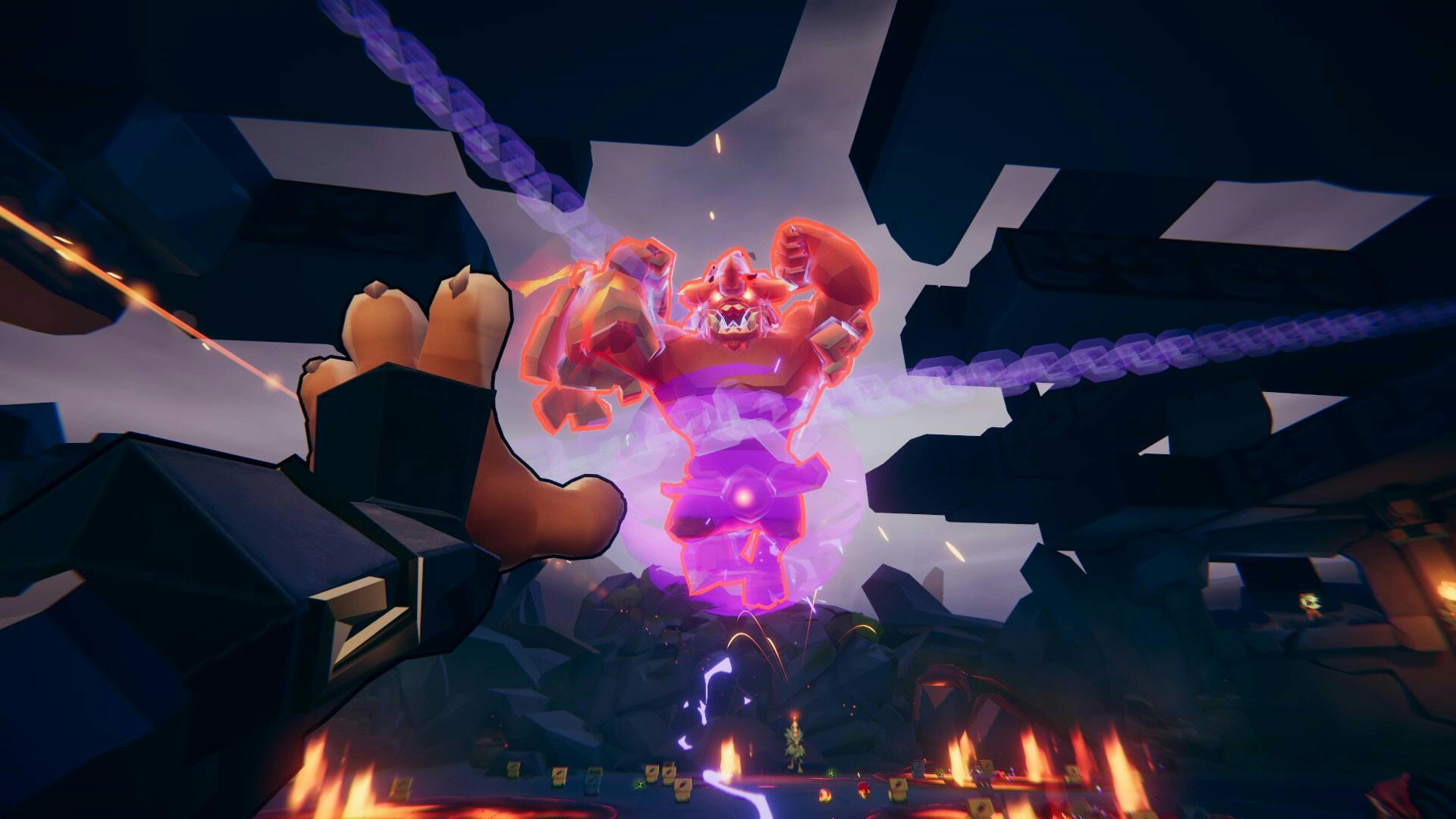
Crown Prince makes a useful starting point for understanding the design. Energy Orb restrains enemies, while Smoke Grenade supplies corrosive damage. That gives you a way to interrupt a threat and shape a fight before considering which dropped weapon deserves your attention.
Ao Bai approaches the problem with two weapons at once. Qing Yan changes the defensive bargain: armor replaces a regenerating shield, and landing his Leap restores armor. A close-range attack can therefore be part of staying alive, rather than simply a reckless alternative to shooting.
These differences keep hero selection meaningful. An upgrade that rewards fighting from a distance invites a different plan from one supporting repeated close-range hits. Start with the action you want to repeat, then choose rewards that make that action safer, stronger or more frequent.
Read the gun, not just its damage number
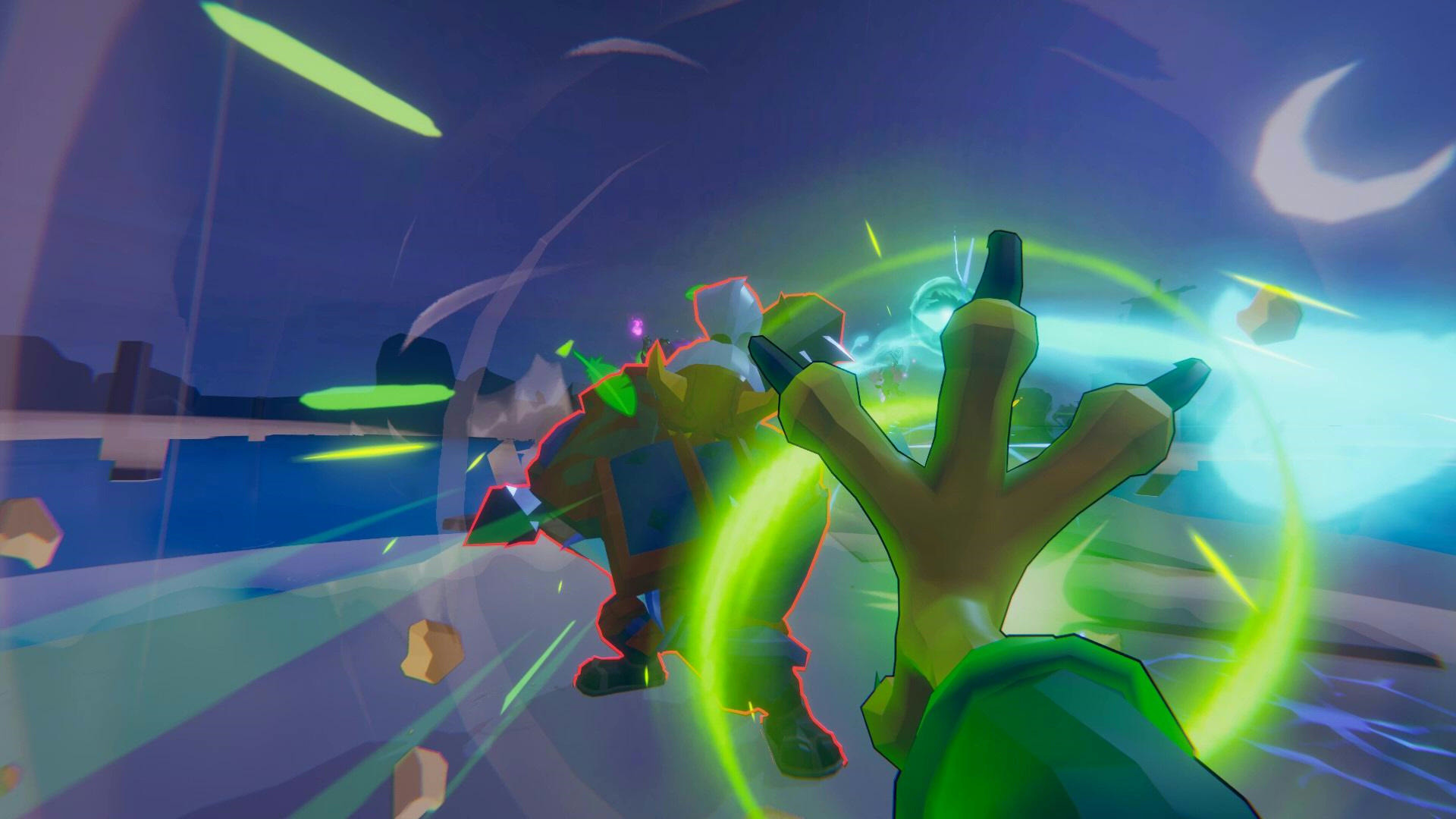
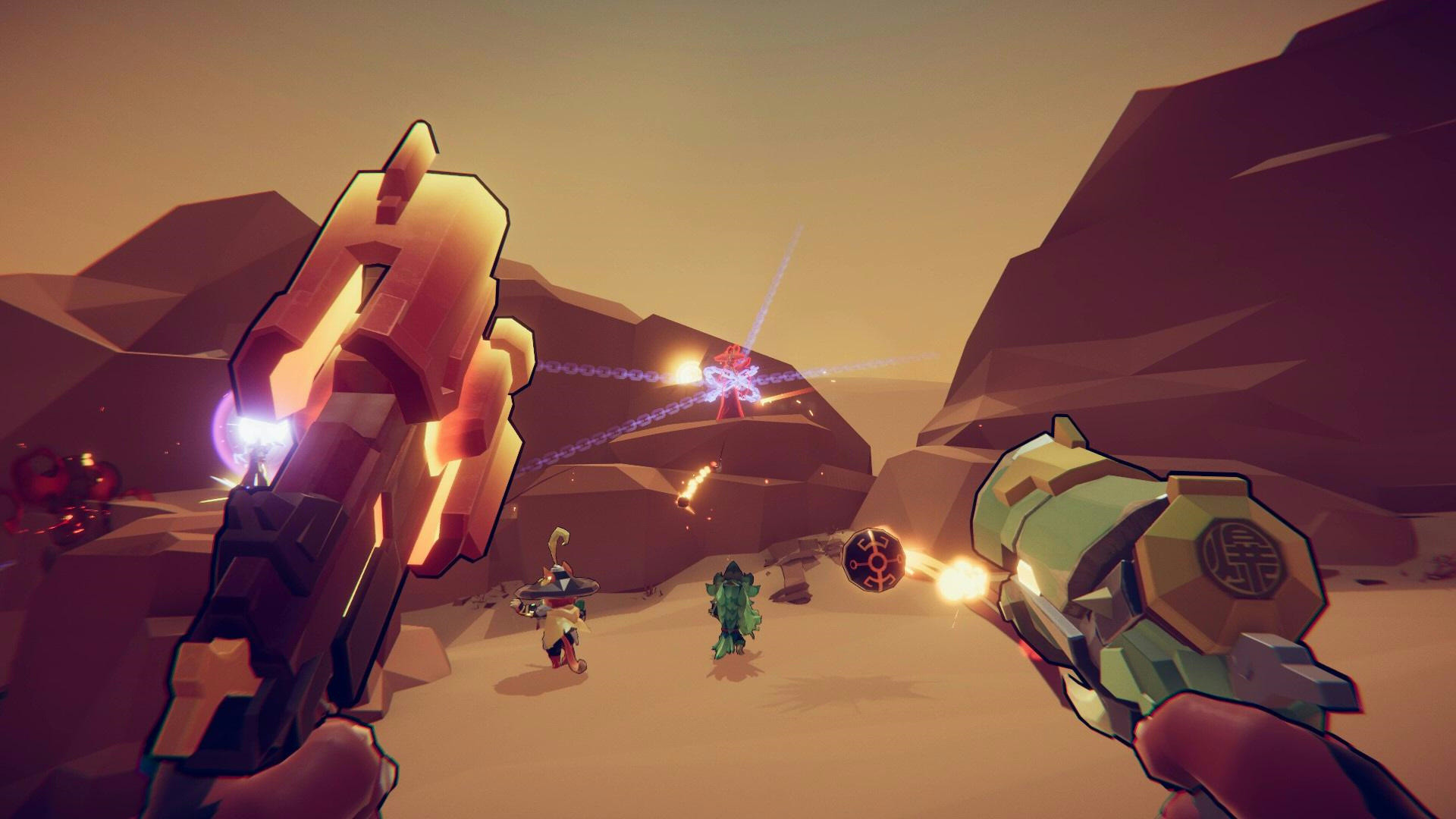
Weapons arrive with inscriptions, so their extra effects deserve the same attention as their basic damage. Fire rate, reload rhythm and the conditions that trigger bonuses all affect whether a find fits. A huge number is less impressive when you rarely satisfy the condition attached to it.
Consider Tao, whose flying-sword system links ammunition consumption to her primary ability. A fast-firing weapon has a purpose beyond putting more holes in things. The question becomes whether your equipment feeds the skill you are building around, rather than whether it wins an isolated damage comparison.
That is a much better reason to inspect another drop than simply chasing a replacement with a bigger number. Gunfire asks you to understand a relationship between systems. Sometimes the correct response to exciting new loot is to leave it on the floor. Heartbreaking. Sensible.
Scrolls turn a preference into a build
Occult Scrolls are the other half of the argument, while Ascensions develop your hero during the run. Their appeal is not merely accumulating bonuses. They can alter what counts as a good weapon, a comfortable engagement distance or a worthwhile risk.
Long Shot rewards distance, for example. Fish or Bear Paw trades weapon damage per hit for hitting twice. Those are invitations to think about positioning and hit-triggered effects, not automatic upgrades for every character. A promising interaction matters more than collecting a bag full of unrelated benefits.
Crown Prince's Ascensions offer another clear fork: strengthen elemental damage, lean into the grenade, or develop the orb. You can adapt when rewards push you sideways, but spending every choice on a different idea leaves fewer pieces working toward the same result.
Death pays tuition, but the classes repeat
Soul Essence feeds lasting talent upgrades, giving failed attempts a second purpose. You lose the ordinary run's equipment arrangement, but the talent tree can strengthen your next attempt. The distinction is important: you are developing a foundation, not permanently shelving every fantastic gun you discover.
This makes early losses easier to justify, although it also introduces a climb before your options fully open. If you dislike permanent power increases in a roguelite, the talent layer will not magically become more appealing because a cheerful animal is administering it.
The official design combines handcrafted spaces with randomized encounters and rewarding side vaults. Expect familiarity as well as variation. Returning to an early area tests whether you understand it better; the changing build supplies much of the freshness when the scenery stops being a surprise.
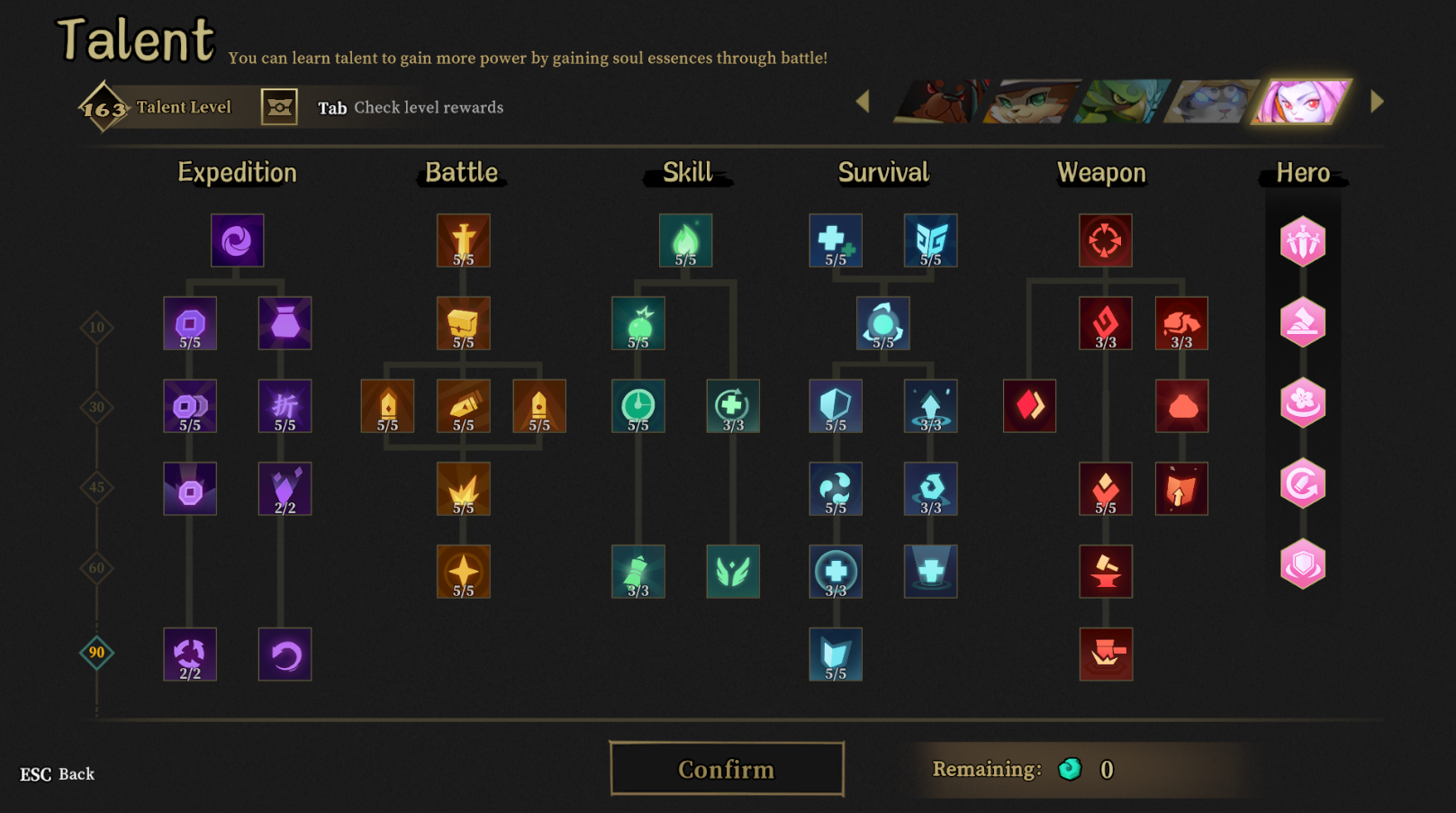
Four heroes, one increasingly busy screen
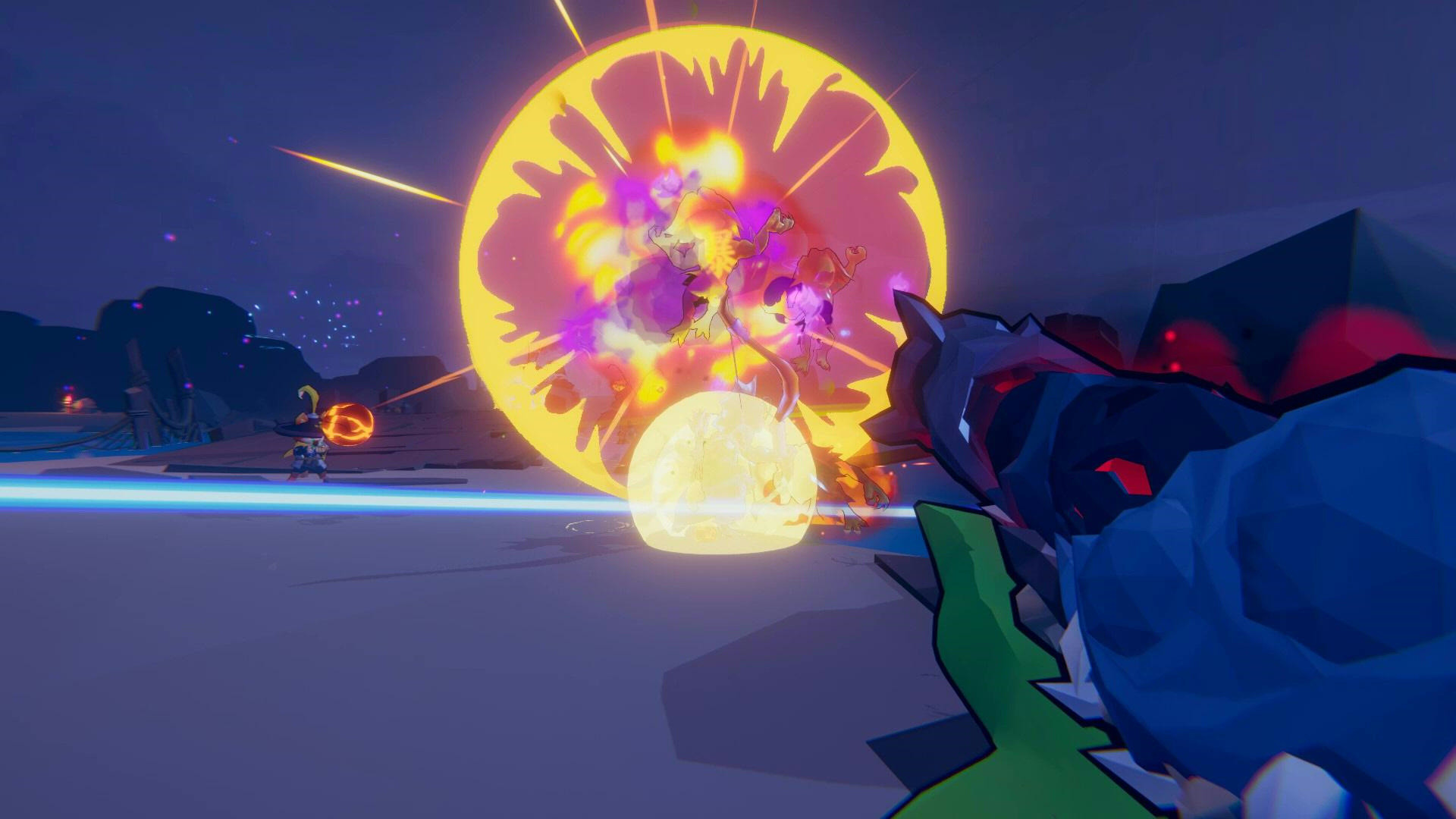
Online co-op supports up to four players, and enemy difficulty scales with the party. More guns do not remove the need for a plan. Crowd control and damage can complement one another, while stopping to recover a fallen teammate gives positioning a purpose beyond protecting your own health.
There is an enjoyable social decision beneath the explosions: does this pickup help my build, or would somebody else's abilities make better use of it? A group that communicates about equipment gets something richer than four separate players trying to win the damage-number competition.
Visual busyness is the cost. Bright projectiles, skill effects and enemies compete for attention, and the item vocabulary adds reading between fights. Steam's later additions, including bot teammates and main-stage reconnect support, reduce some friction, but the underlying game still rewards patience with its systems.
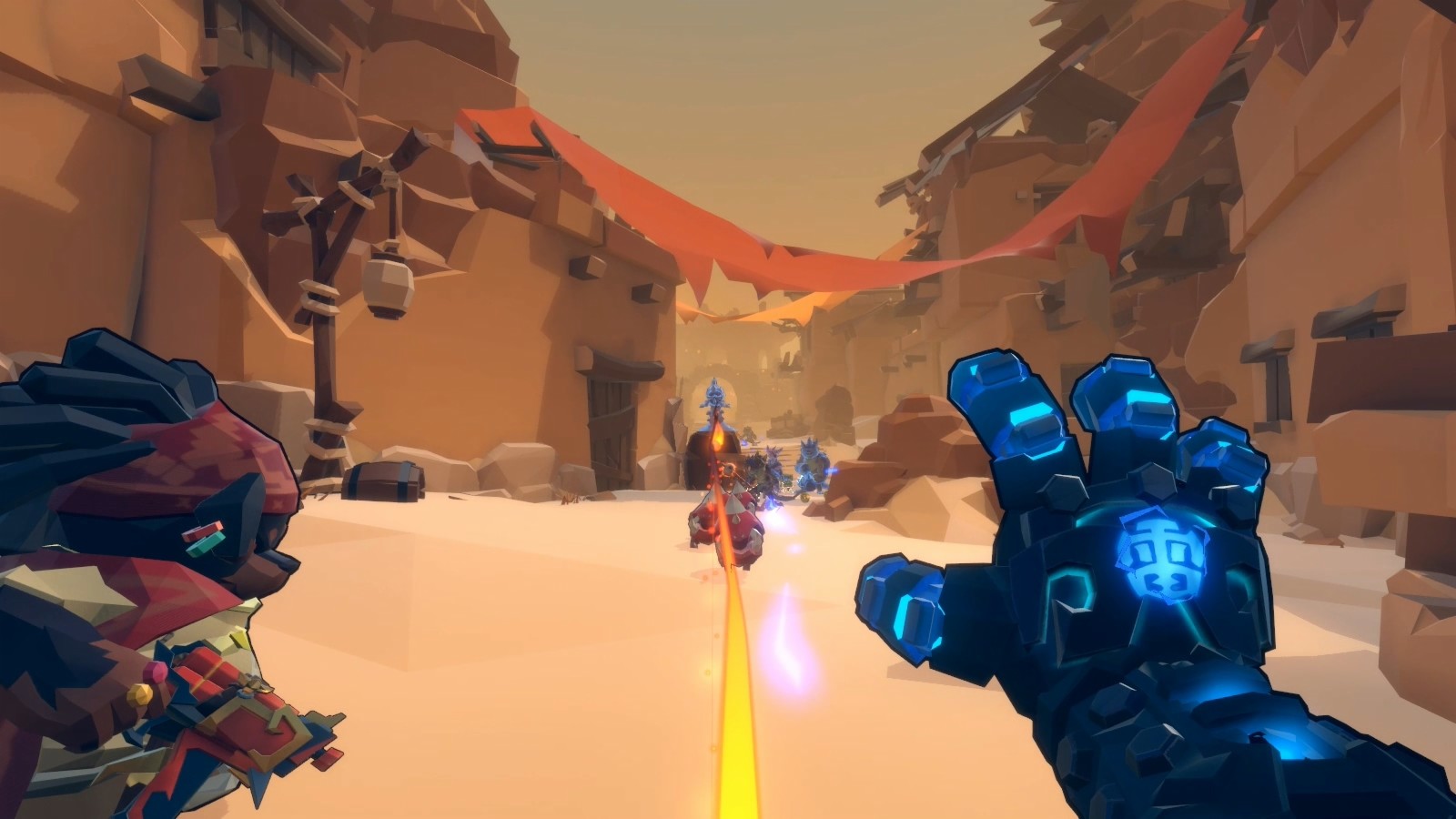
Buy the right branch of the adventure
The main assessment here concerns the Steam PC base game. Four separate paid packs expand it: Visitors of Spirit Realm, Artisan and Magician, Realm of Frost and Inkwash, and Echoes From Primal Grove. Each lists two heroes and four weapons, so check the package before counting those extras.
The additions have clear identities. Visitors brings Li and Xing Zhe; Artisan pairs Nona's wooden mecha with Zi Xiao's card-based abilities. Frost adds Lyn and Momo, while Primal Grove introduces Yoyo and Cang Jue. Pick an appealing playstyle after discovering what the base roster already does for you.
Android and iPhone/iPad use a different purchase model: a paid base with three initial heroes and additional character purchases. Google's description includes acts, weapons, scrolls and items as that mobile version receives updates. Apple's listing specifically advertises controller support, including PlayStation and Xbox controllers.
Console releases belong to 505 Games' publishing branch, and its Microsoft PC release should not be confused with Steam. The 505 co-op help page covers an Xbox–Microsoft PC pairing. Choose your group's exact edition first; a shared title is not a reliable multiplayer compatibility chart.
Strengths
- Hero abilities change weapon priorities and positioning
- Scrolls, inscriptions and Ascensions create interlocking build choices
- Permanent talents give failed runs a useful afterlife
- Solo and four-player online co-op support different rhythms
Tradeoffs
- Layered effects and item terminology demand attention
- Repeated early stages accompany the permanent-upgrade climb
- Steam DLC and mobile hero purchases complicate the total cost
- Platform branches require care when buying for a group
Who it suits
- FPS players who enjoy building synergies between fights
- Co-op groups willing to agree on the same edition
- Roguelite fans comfortable learning through repeated attempts
Verdict
Gunfire Reborn earns its appeal by making a weapon choice also a character choice. Its strongest recommendation goes to players who enjoy adapting a build while still aiming, dodging and picking targets themselves. The shooting gives the theory an immediate, satisfyingly messy examination.
Buy the base game first, learn one hero, and let the loot suggest your next experiment. The crowded effects and repeated opening stages are real tradeoffs, but the combination of active combat and flexible builds gives each good decision somewhere exciting to go.
PC base game
Review score: 8.3 / 10
- Combat
- 9.0 / 10
- Progression
- 9.1 / 10
- Usability
- 7.5 / 10
- Value
- 7.7 / 10
Steam PC base game. Four separately sold DLC packs add heroes and weapons; they are not included in this edition rating.
The 505 Games Microsoft PC and console releases are separate branches and are not rated here.
Android edition
Review score: 8.4 / 10
- Combat
- 9.0 / 10
- Progression
- 9.0 / 10
- Usability
- 7.7 / 10
- Value
- 7.7 / 10
Paid Android base game with three starter heroes; additional heroes are sold through in-app purchases.
Mobile content updates do not establish feature, DLC, save or multiplayer parity with Steam.
iPhone / iPad edition
Review score: 8.4 / 10
- Combat
- 9.0 / 10
- Progression
- 9.0 / 10
- Usability
- 7.7 / 10
- Value
- 7.7 / 10
Paid iPhone/iPad base game with three initial heroes and in-app purchases. The App Store advertises game-controller support.
The App Store seller currently appears as HONGKONG DELAN CO., LIMITED. This listing is not the Steam or console edition.
The review score averages the applicable Combat, Progression, Usability and Value scores, rounded once to one decimal. Fit is specific to each comparison and is excluded.
Can you play Gunfire Reborn alone?
Yes. Solo play is supported, and online co-op allows up to four players in total. Steam also has the Spirit Puppet bot-teammate feature; do not assume that feature is present in every port.
What carries over after a run?
Permanent talent upgrades carry over. Your ordinary run build, including collected weapons and scrolls, is rebuilt on the next attempt. Soul Essence supports lasting progression, while some advanced modes add their own systems.
Do you need the Steam DLC to start?
No. The base game is a standalone purchase. The four listed DLC packs each add two heroes and four weapons; they expand your build options rather than being required to begin the adventure.
Is the mobile purchase the same package as Steam?
No. Android and iPhone/iPad offer a paid base with three initial heroes and additional in-app purchases. Google Play says acts, weapons, scrolls and items are included as the mobile version is updated. This is not a promise of Steam content parity.
Can Steam, mobile and console friends all play together?
Do not buy on that assumption. The official 505 support article addresses Xbox and Microsoft PC co-op specifically. It does not establish universal compatibility with Steam, PlayStation or mobile. Agree on the exact edition before your group purchases.
Sources
- Official PC site: heroes, weapons, handcrafted levels and vaults ·
- Steam: PC base game and DLC catalogue ·
- Official update archive: Crown Prince, Qing Yan and scroll effects ·
- Official June 2021 update: talents, Tao and Reincarnation ·
- Official September 2024 update: Spirit Puppet and reconnect ·
- Official 2024 update: previous-season selection ·
- Visitors of Spirit Realm: paid Steam DLC ·
- Artisan and Magician: paid Steam DLC ·
- Realm of Frost and Inkwash: paid Steam DLC ·
- Echoes From Primal Grove: paid Steam DLC ·
- Google Play: Android purchase and content model ·
- App Store: iPhone/iPad content and controller support ·
- 505 Games: console publishing responsibility ·
- 505 Games: Xbox and Microsoft PC co-op support ·
- Xbox Wire: permanent talents and co-op scaling ·
- Official PC news feed: update history checked through September 2026 ·