7 Best Roguelites With Meaningful Skill Trees
The best node is not always the biggest bonus. Look at what it unlocks, what it changes, and what choosing it costs.

A meaningful skill tree gives you a reason to follow one path before another. It might unlock a new combat mechanic, make an awkward build work, or close a rival route. A screen full of damage percentages can offer worthwhile progression, but the most interesting question is what your next purchase changes about the decisions you make.
For a huge permanent tree, start with Soulstone Survivors. For flexible hero specialization, look at Death Must Die. Nova Drift and 20 Minutes Till Dawn put their best prerequisite puzzles inside the run itself. Zombie Defence connects permanent, mutually exclusive doctrines to both shooting and shelter management. Six picks below are available as paid games; Zombie Defence is a browser Alpha in development with a waitlist.
Three distinctions make this list easier to use. Permanent trees improve future attempts. Run-local trees reset with the build. Exclusive branches prevent the rival choice, while a prerequisite simply says what must come first. We have favored games where you can explain an upgrade’s consequence in plain language, and we identify which kind of commitment each one actually asks you to make.
The quick comparison
7 games, different reasons to give the next run a chance.
Choose a game to jump to its overview. Platform lists are summaries; check the linked official edition.
The games
Zombie Defence
Its research tree asks what kind of defender you want to become, then makes you live with the opportunity cost.
- Manual aim (desktop)
- Permanent progress
- Shelter building
- Crafting
- Roguelite
- Platforms
- Browser Alpha in development; native mobile releases are planned.
- Price model
- Public launch pricing is unannounced; the waitlist is for Alpha news and playtest availability.
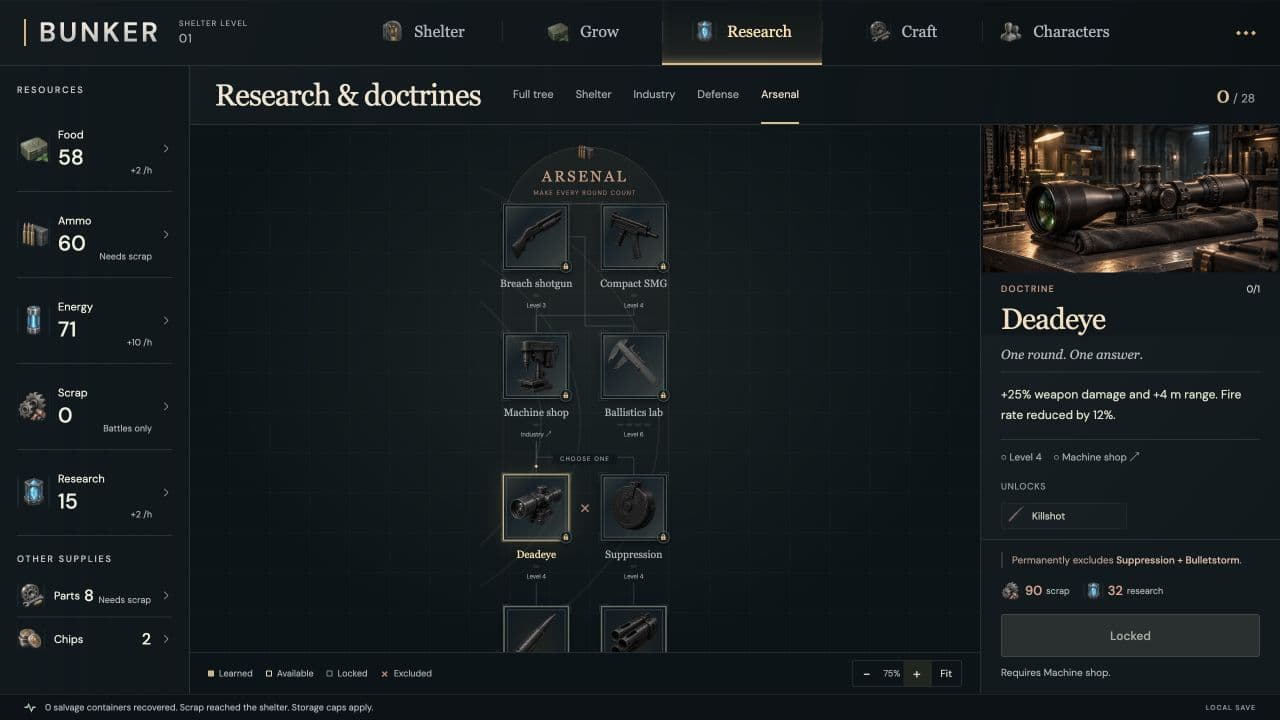
Zombie Defence gives branch choice a tangible consequence. Its 28 research nodes span Shelter, Industry, Defense and Arsenal, with prerequisites leading into rival doctrines and their capstones. The Arsenal route makes the idea easy to grasp: Machine shop is a prerequisite for Deadeye, which opens Killshot and sits opposite Suppression. Deadeye favors harder, longer-range shots at the cost of fire rate; Suppression favors faster, lighter fire. Choosing one closes the opposing route. This is a decision about the rhythm of future fights, not a promise that enough grinding eventually buys both identities.
That difference matters because you handle the weapon. Desktop combat separates movement from cursor aiming and asks you to manage ammunition and reloads. A slower, stronger shot rewards making an opening count; faster fire gives you a different way to spend that opening and your magazine. Read the rival doctrine and its follow-on upgrade before committing. The biggest damage number on one node cannot tell you which branch suits the way you actually want to shoot.
The same principle reaches the workshop. Industry’s Artisan and Assembly Line routes put crafting efficiency and faster processing on opposite sides of a permanent choice. Scrap also pays for weapons and shelter work, so a research plan competes with the equipment you could build now. Choose a near-term weapon project and a doctrine destination together, rather than treating the tree as a separate checklist that deserves every available resource.
Keep that permanent layer separate from the battle draft. A campaign level-up offers two combat cards and one shelter investment. Picking Split Shot changes the current deployment; choosing the shelter option banks a lasting or timed benefit instead. Weapon cards reset after deployment, while research and shelter progress remain. The interesting tension is therefore both long-term and immediate: decide your specialization at home, then decide how much of today’s firepower you can afford to trade for tomorrow’s shelter.
The verdict
Choose Zombie Defence if the satisfying part of a skill tree is committing to a lasting identity, with consequences both in a gunfight and back at the workshop.
Soulstone Survivors
The appeal is reaching a character’s defining mechanic, then building a run that makes the most of it.
- Roguelite
- Permanent progress
- Loot builds
- Fast-paced
- Platforms
- Windows, macOS and Linux via Steam.
- Price model
- Paid base game; optional Supporter Pack and soundtrack are sold separately.
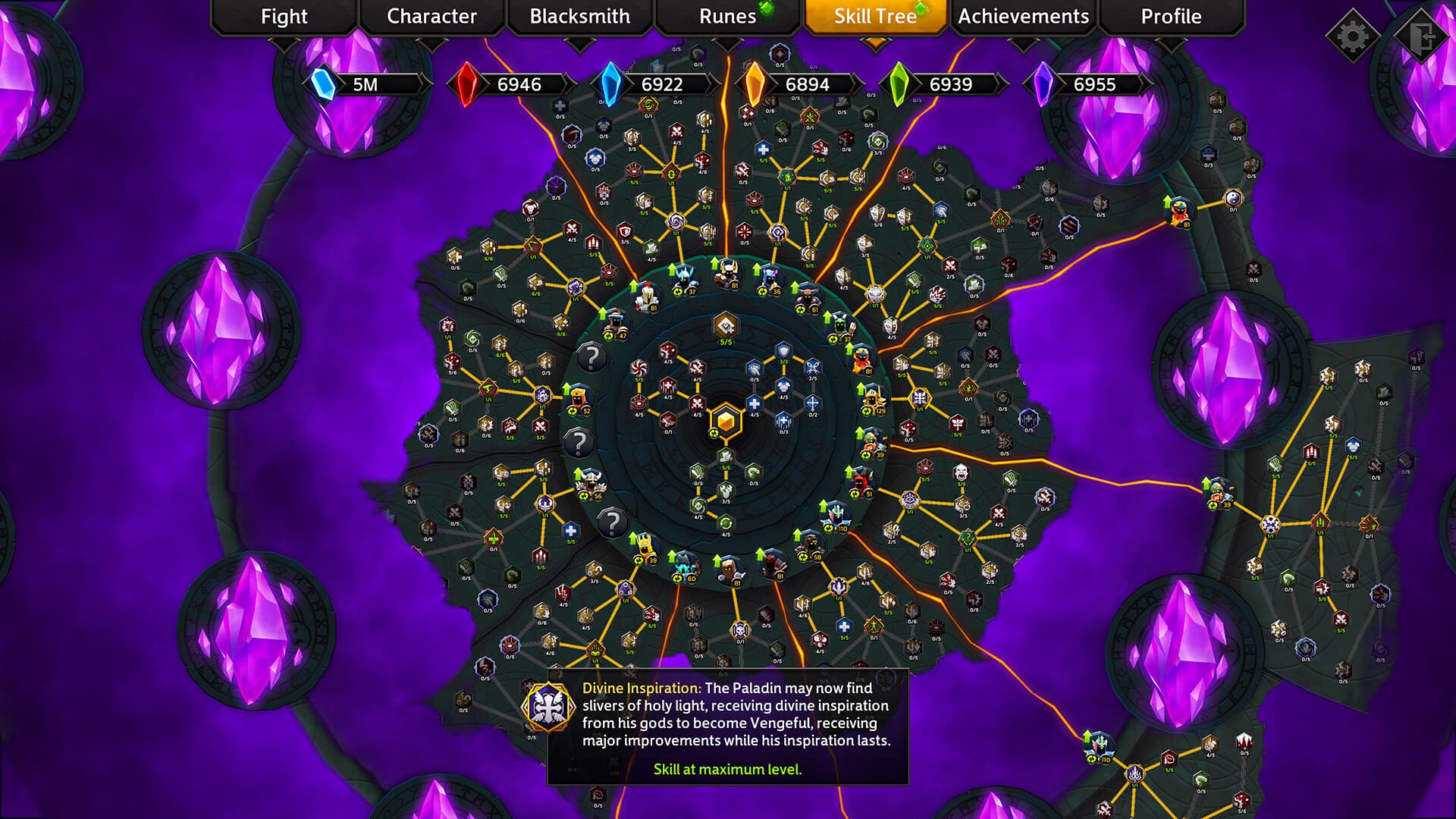
Soulstone Survivors is the obvious starting point if you want a tree big enough to get pleasantly lost in. A central progression layer expands into character-specific branches, with character Prestige earning points for their nodes. The important rewards include Ascension mechanics and rune unlocks as well as numerical improvements. Follow a route toward something that changes your decisions in the arena; buying another small percentage is more satisfying when you know what it is helping you reach.
The Paladin offers a useful example. Divine Inspiration introduces slivers of holy light that feed an empowered Vengeful state. That gives positioning another purpose beyond avoiding an enemy telegraph: you are also managing access to your character’s power. The upgrade is persistent, but the opportunity it creates must still be used during the fight. Other characters have their own Ascensions, so expanding this tree can change what you pay attention to instead of simply making the same rotation stronger.
Your run’s skill and power-up choices remain a separate build. The tree gives you a richer starting toolkit; it does not preserve the finished combination from the last arena. Pick a character whose Ascension sounds enjoyable, advance that branch, and then draft skills and runes around the behavior you want to emphasize. This keeps the enormous progression map connected to a recognizable playstyle.
The tradeoff is the sheer amount of incremental purchasing around those milestones. Soulstone Survivors is mainly about choosing what to develop first, rather than permanently locking yourself out of the other half of the tree. Players who want a sprawling collection project will appreciate that breadth. Players looking for a small number of irreversible class decisions should put Zombie Defence higher on their shortlist.
The verdict
Choose Soulstone Survivors for the biggest long-term tree project here, especially if character-specific mechanics are what keep you coming back.
Death Must Die
The Constellarium makes a hero more than a starting weapon, while a limited allocation keeps the whole tree from becoming one giant shopping list.
- Roguelite
- Permanent progress
- Loot builds
- Platforms
- Windows and macOS via Steam.
- Price model
- Paid Early Access game.
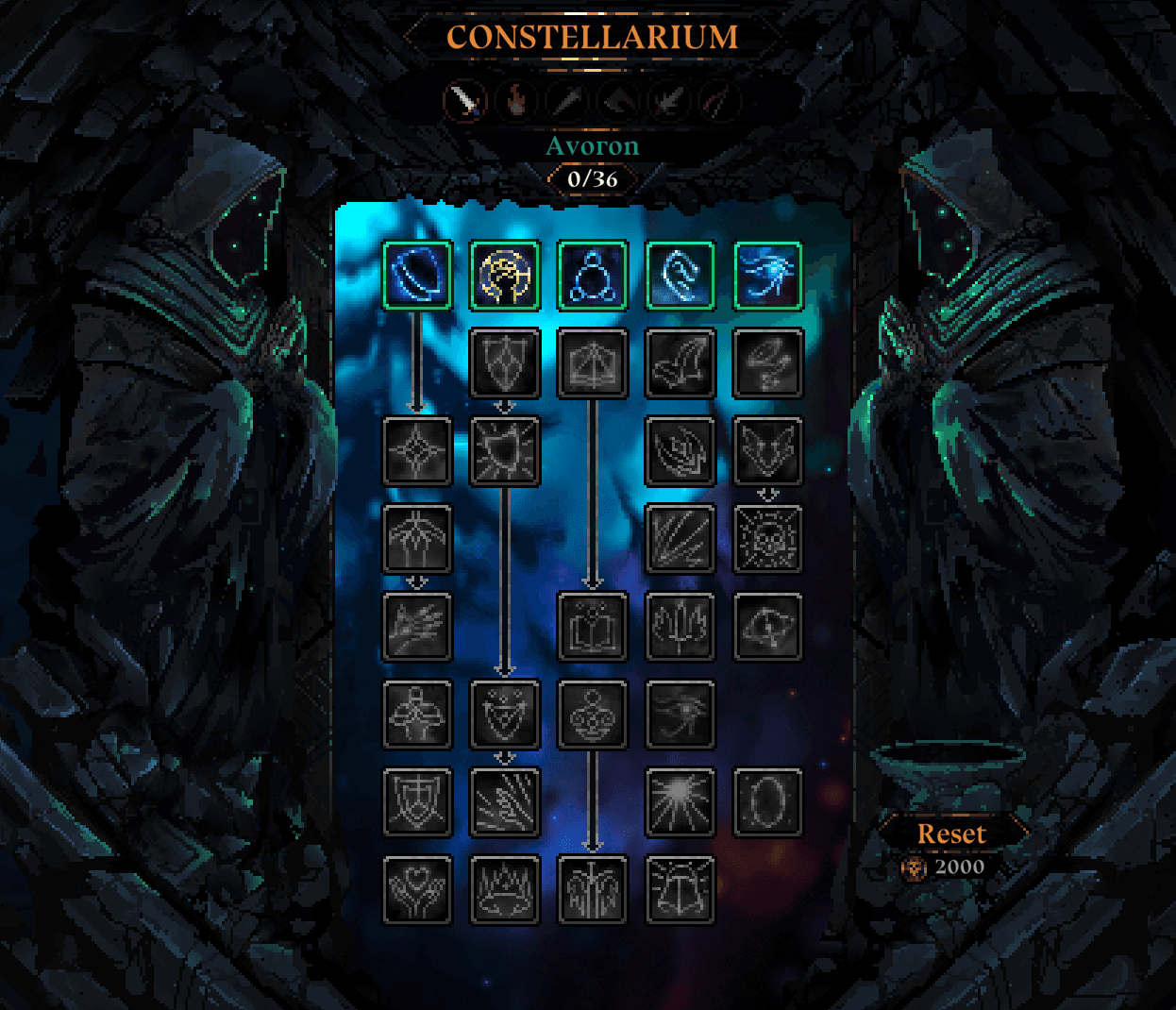
Death Must Die places each hero’s talent tree in the Constellarium. Boss kills earn Cosmic Essence for that hero, and a limited point budget makes you decide which paths deserve investment. Connected talents turn an initial direction into a more developed build. These allocations belong to the between-run layer; the gods’ blessings you assemble inside an attempt are another set of choices entirely.
Avoron demonstrates why the distinction matters. The developer’s Knight examples include a blocking and armor route with counterattack support, a divine route, and a path interested in better blessings. A defensive setup can make a block part of your offensive plan, rather than merely the moment you avoided damage. Spending those points on another direction changes what equipment and god offers are attractive before the first horde even arrives.
You can reset talents and save talent loadouts, so the commitment is a limited allocation rather than a permanently closed rival doctrine. That is an excellent fit if you enjoy comparing two versions of the same character. Keep the hero constant, choose one clear damage or defensive theme, and use equipment to support it. Then see whether the blessings offered during the run strengthen that plan or justify a pivot.
The drawback is that talents are only one part of a busy build system. Equipment has its own properties, gods offer another layer of synergy, and a promising talent plan does not guarantee the blessings you want. Avoid spreading your points across several unrelated payoffs just because each looks useful alone. A smaller, coherent package gives you a clearer idea of what your next item or level-up choice should accomplish.
The verdict
Choose Death Must Die if you want a persistent talent system that supports changing your mind and testing a new version of a familiar hero.
Nova Drift
A good upgrade path can turn steering, shield breaks or a dangerous side effect into the center of your entire build.
- Roguelite
- Loot builds
- Fast-paced
- Platforms
- Windows and macOS via Steam.
- Price model
- Paid game with a free Steam demo; soundtrack sold separately.
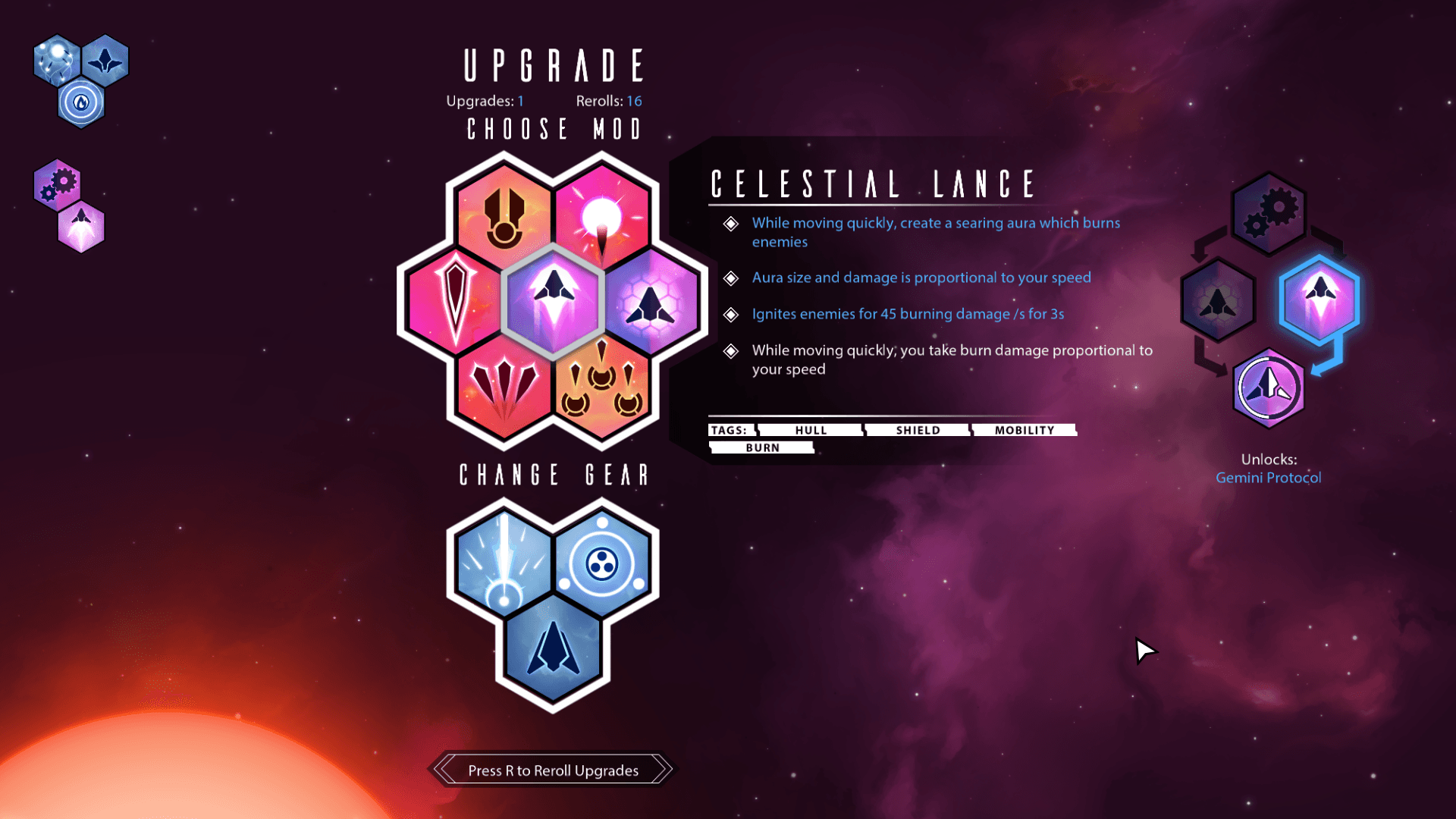
Nova Drift puts its most interesting tree decisions inside the run. You combine weapon, shield and body gear with linked upgrade modules, following prerequisites toward stronger interactions. Super Mods enter the available pool when their special requirements are met. Account progress unlocks more options to encounter, but a finished run does not leave you with a permanent, fully upgraded ship for the next attempt.
That structure rewards working backward. Pick the behavior you want first, then trace the modules that enable it. The developer’s Celestial Striker example uses a Hullbreaker body for high-speed impacts, an Amp Shield to support its velocity and damage, and Volatile Shields to turn a shield break into an explosion. Celestial Lance adds an offensive aura while moving quickly. Your steering becomes part of the damage engine, so a movement upgrade can matter more than another conventional weapon bonus.
The best transformations also ask for compensation elsewhere. Dying Star, for example, damages your own ship while burning nearby enemies. Taking a powerful effect before you can survive its cost can undermine an otherwise promising run. Read both the upside and the liability, and spend a level on the supporting defense when the build needs it. A prerequisite is only the condition for accessing a mod; it is not proof that your current ship can use it safely.
Randomized offers keep a planned route from being a guaranteed shopping sequence. Rerolls help, but you still need useful intermediate choices while pursuing the final combination. That makes Nova Drift especially rewarding for players who enjoy adapting a blueprint under pressure. If you mainly want to bank permanent stat increases after every defeat, Rogue Legacy 2 is the closer match.
The verdict
Choose Nova Drift when you want the tree itself to be the run: a chain of choices that changes the machine you are piloting.
Rogue Legacy 2
The Manor turns an inheritance into new classes, useful services and a stronger family, with competing priorities every time you spend.
- Roguelite
- Permanent progress
- Exploration
- Platforms
- Windows, macOS and Linux via Steam; also Nintendo Switch, PlayStation 4/5 and Xbox One/Series X|S.
- Price model
- Paid game.
Rogue Legacy 2 makes its upgrade tree part of the family home. Gold from an heir’s attempt funds the Manor for the descendants who follow, opening branches of upgrades, classes and services. This is an accumulating permanent tree, so the question is usually what to unlock first. Buying one useful route does not mean declaring the rest of the estate forbidden forever.
The strongest early choices are not all direct damage upgrades. The Sage Totem opens Mastery XP: playing different classes earns permanent bonuses that carry across classes. That unlock changes the value of choosing an unfamiliar heir. Instead of asking only which descendant will survive longest today, you can also consider which class will improve the family by being played.
Other routes solve different problems. Repurposed Mining Shaft improves the gold reward attached to heir traits, while Offshore Banking helps accumulate money toward pricier purchases. The Architect can hold the Kingdom’s layout in place, making repeat attempts at a discovered boss more direct. If your problem is reaching that boss consistently, an access or economy upgrade may do more for your next few attempts than another small stat increase.
The Manor is not where every kind of power comes from. Heirlooms permanently grant abilities through challenges found in the world; Relics modify the current heir’s attempt and disappear when that heir dies. Keep those layers distinct when planning. Spend the inheritance on the bottleneck you can actually identify, then let the heir’s class and the Relics encountered shape the run. The limitation is that parts of the tree remain a steady climb through stat ranks, and no purchase removes the need to read attacks and platform well.
The verdict
Choose Rogue Legacy 2 if you like deciding what the next generation needs most, then watching the entire family benefit from that investment.
Gunfire Reborn
Its talent board improves the tools you start with, while Ascensions and loot determine what this particular expedition becomes.
- Roguelite
- Permanent progress
- Co-op
- Loot builds
- Platforms
- Windows PC via Steam; this comparison uses the PC edition.
- Price model
- Paid base game; optional paid expansions add heroes and weapons.
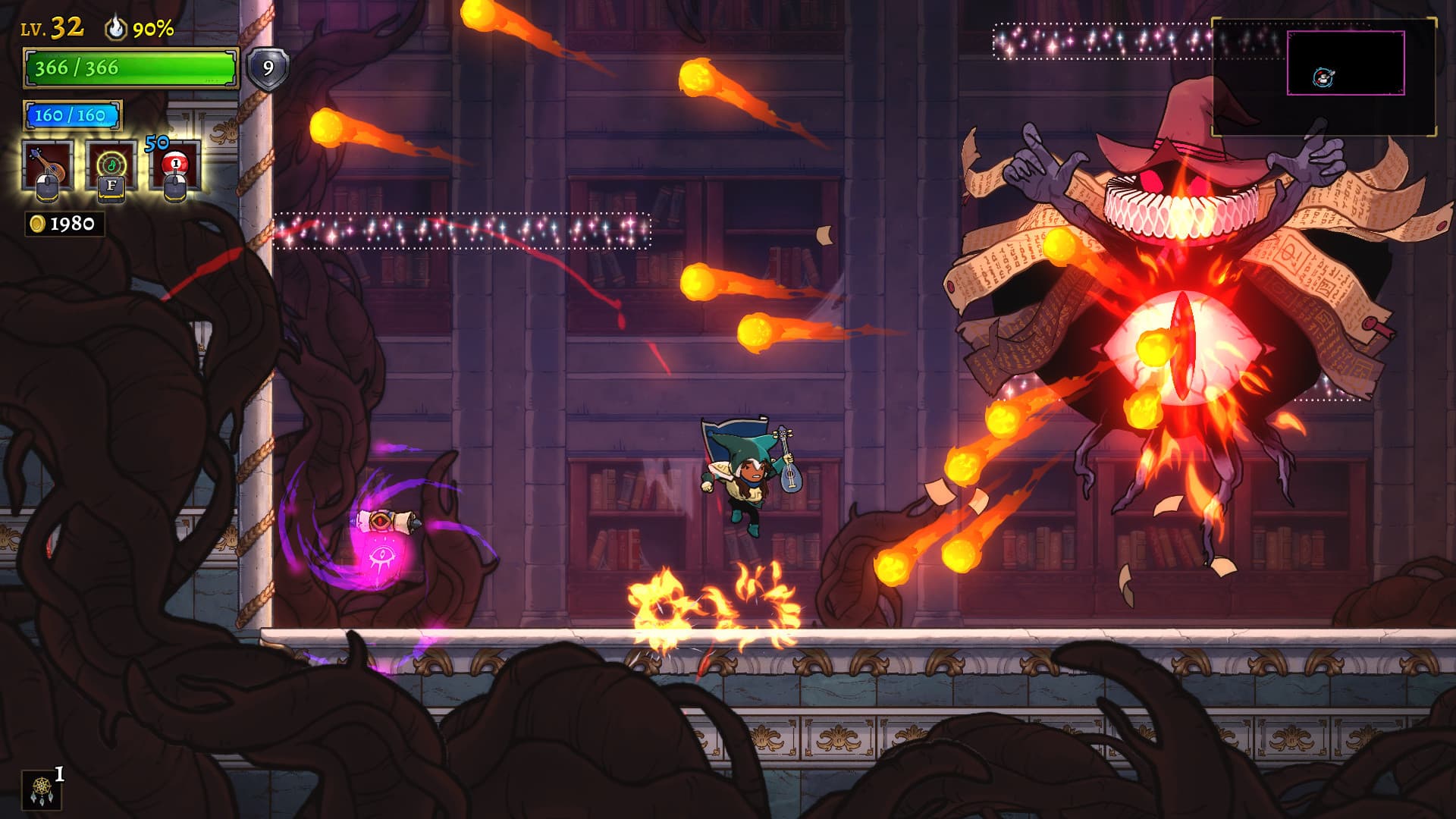
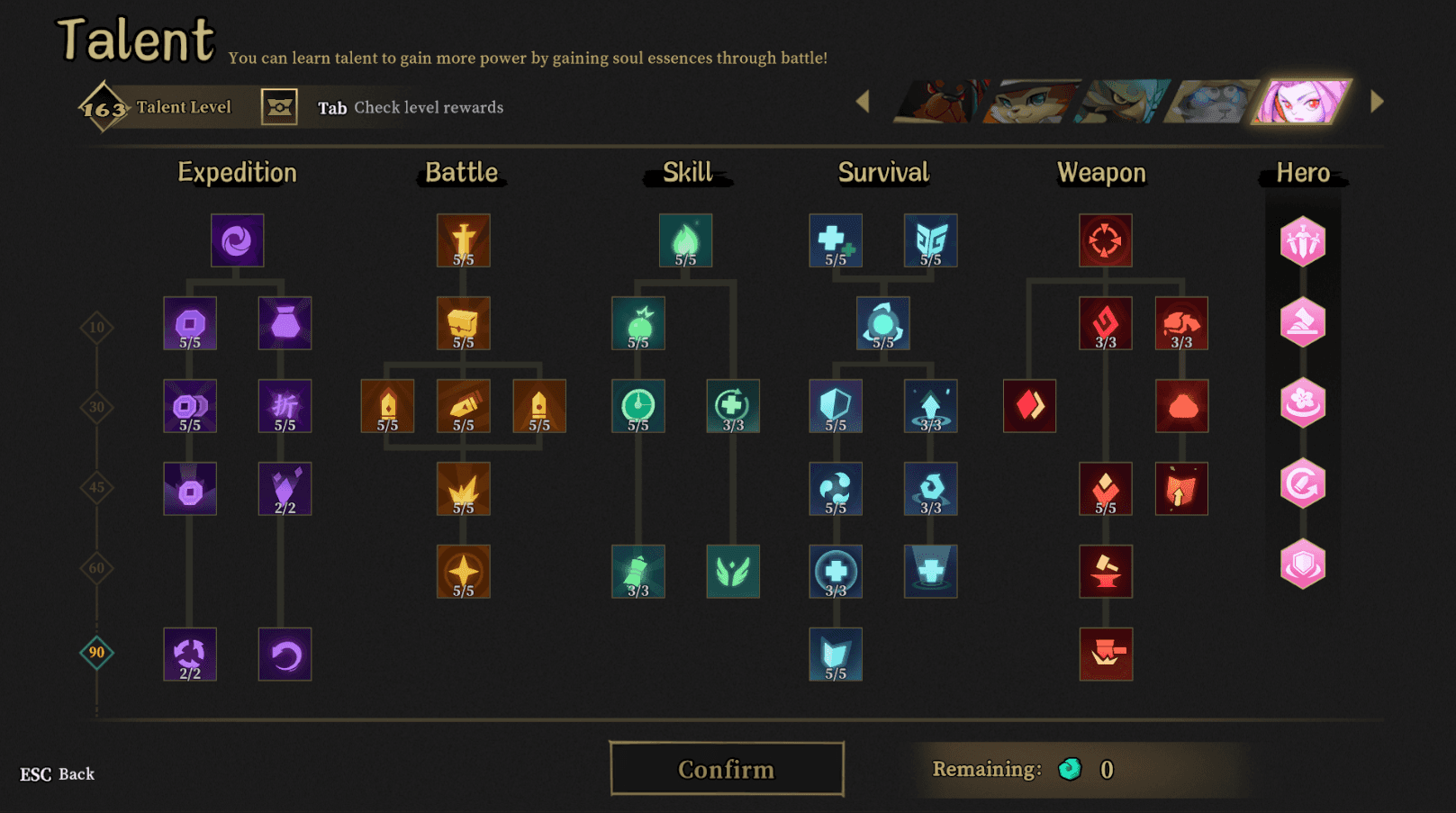
Gunfire Reborn divides permanent talents into Expedition, Battle, Skill, Survival, Weapon and a hero-specific category. Soul Essence funds this between-run layer, with talent-level thresholds gating later tiers. That is a useful distinction from a strict prerequisite chain: a connected-looking board can ask for broader progression rather than one exact route through adjacent skills. Plan around the next tier you want to reach as well as the benefit of the next individual purchase.
Hero talents make the investment less generic. Tao’s Superior Magazine supports a larger magazine and quicker reloads; Resilient Shield starts shield recovery after a kill. Those effects pull in different directions when you are deciding what your current problem is. One supports sustained offense, while the other rewards finding a finishing blow to recover momentum. A talent choice becomes meaningful when you can explain what it lets your hero do more reliably.
Inside the run, Ascensions, weapon drops and Occult Scrolls build on that starting foundation. An Ascension selected from a goblet is not another permanent purchase on the Soul Essence board. You still have to adapt to the weapons and enhancements that appear. Treat permanent talents as preparation for the style you enjoy, then use the expedition’s actual offers to decide how far to lean into it.
The long-term board is mainly a progression and purchase-order system, not an irreversible choice between rival classes. Its value here is giving an FPS player something concrete to improve between attempts while preserving the pleasure of discovering a fresh combination in combat. The cost is cognitive load: talents, Ascensions, weapons and scrolls all deserve attention, and optional hero expansions add still more combinations if you want them.
The verdict
Choose Gunfire Reborn if you want a first-person shooter where long-term talent planning supports, rather than replaces, improvising a build during the run.
20 Minutes Till Dawn
Small upgrade trees make the next step easy to read, then synergy requirements give you a reason to connect several of them.
- Roguelite
- Manual aim
- Permanent progress
- Loot builds
- Platforms
- Windows and macOS via Steam; this comparison uses the paid desktop edition.
- Price model
- Paid desktop game; mobile editions have different purchase models.
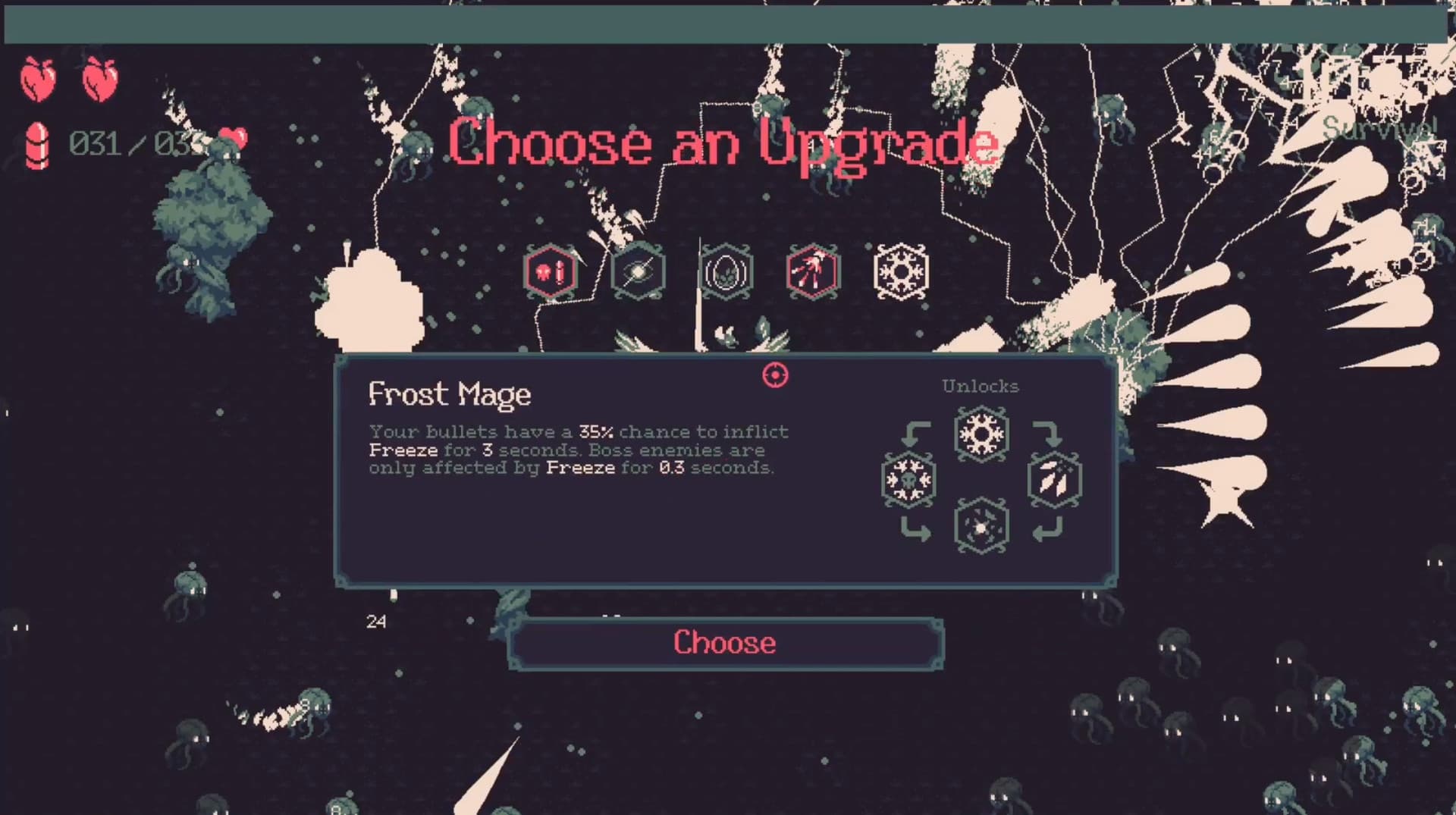
20 Minutes Till Dawn offers a more compact version of the skill-tree puzzle. Level-up choices belong to small, connected upgrade families, and the selection screen previews what a starting upgrade opens. Frost Mage is an immediately understandable example: bullets gain a chance to freeze enemies, and the displayed diamond points toward further ice upgrades. Your first choice buys both an effect now and access to a direction you can develop later.
The next level of planning comes from synergies that require upgrades from more than one route. Generator, for example, requires Recharge and Energized. You cannot simply select the final synergy because it suits your ideal build; you must assemble the qualifying pieces and then encounter the offer. That gives an otherwise ordinary-looking intermediate upgrade a purpose, especially when it completes the other half of a combination.
There is no need to mistake that dependency for a permanent class commitment. The combat upgrades are drafted anew in another run. Souls spent on runes and character or weapon unlocks form the lasting progression layer instead. For a useful first plan, choose a weapon, one main damage direction and one supporting problem to solve, such as keeping enemies away while you aim. Add a new branch when it helps that plan rather than because it is the only theme you have not sampled yet.
The pressure comes from having limited opportunities to finish the route while enemies continue to grow more dangerous. A build can have several promising beginnings without the payoff it needs. That is why these smaller trees work so well: the next dependency is legible, and the difference between a completed combination and a bag of unrelated bonuses becomes easy to understand. You still have to aim, fire and manage reloads while putting it together.
The verdict
Choose 20 Minutes Till Dawn for a clear introduction to prerequisite-driven builds, with enough synergy hunting to keep those small trees interesting.
How we compare
A good recommendation explains who a game suits and where it falls short. Our editorial scores use the same five criteria, each rated out of ten.
- 01
Combat
Controls, aiming, enemy readability, and the decisions you make under pressure.
- 02
Progression
Build choices during a run and meaningful progress between attempts.
- 03
Usability
Control demands, platform access, interface options, and documented device requirements.
- 04
Value
What the asking price includes, optional purchases, and the scope of the free version.
- 05
Fit
How well the game answers the specific question in this article.
Which one should you try?
Choose the kind of decision you want to keep making. Soulstone Survivors suits a long character-development project; Death Must Die suits revising a limited talent plan. Rogue Legacy 2 makes unlock order and the next generation matter, while Gunfire Reborn layers permanent talents underneath an adaptable FPS build. Nova Drift and 20 Minutes Till Dawn are the picks for tracing prerequisites during the run. Zombie Defence is especially relevant when you want a permanent doctrine to change both how you fight and what you prioritize at home. Whichever you choose, work backward from one useful payoff, check its prerequisites, and ask what you are giving up to reach it.
Your questions, answered.
Want to see what we’re building?
Zombie Defence is in Alpha. Join the waitlist.
More games to explore
- 7 Best Games Like Brotato in 2026
Looking for games like Brotato? Compare seven horde-survival roguelites by weapon choices, wave pacing, build tradeoffs, platforms, and price model.
- 9 Best Roguelites With Permanent Progression
Compare nine roguelites by what survives defeat: permanent upgrades, unlocks, story, family estates, camps, and shelter growth.
- 11 Best Vampire Survivors Alternatives in 2026
Compare ten released Vampire Survivors alternatives and one development-stage option by combat, progression, platforms and fit.