7 Best Roguelite Shooters With Short Runs
Build something ridiculous, reach a useful stopping point, and know what survives when you leave.

Brotato is the strongest all-round choice when your break can be interrupted: its short waves lead into shops that save the run. For a compact, high-speed blast, pick Gunlocked 2’s ten-minute Turbo mode. For a fuller aiming-and-upgrades arc, 20 Minutes Till Dawn gives you a clear survival target. Zombie Defence adds a different reward for finishing an outing: supplies and choices that improve the shelter you return to.
The useful distinction is between a short run and a short appointment with a game. A survival timer counts combat; reading upgrades, shopping, pausing and fighting a final boss can stretch the time you spend at the screen. The durations below are published game targets or developer descriptions, not stopwatch results. Where there is no fixed minute limit, we explain the actual endpoint or save boundary.
These seven recommendations cover six released PC games and Zombie Defence, our browser Alpha in development. Its waitlist provides Alpha news and playtest updates. We compare the named Steam editions of the released games; mobile versions, demos and sequels can have different rules. Choose first by how you need to stop, then by the kind of build you want to make.
The quick comparison
7 games, different reasons to give the next run a chance.
Choose a game to jump to its overview. Platform lists are summaries; check the linked official edition.
The games
Zombie Defence
Three-wave operations and player-chosen Scrap extractions connect temporary combat builds to lasting weapons, research and shelter improvements.
- Manual aim (desktop)
- Roguelite
- Extraction
- Shelter building
- Permanent progress
- Platforms
- Browser Alpha in development; waitlist for Alpha news and playtest availability.
- Price model
- Public launch pricing and monetization are not confirmed.
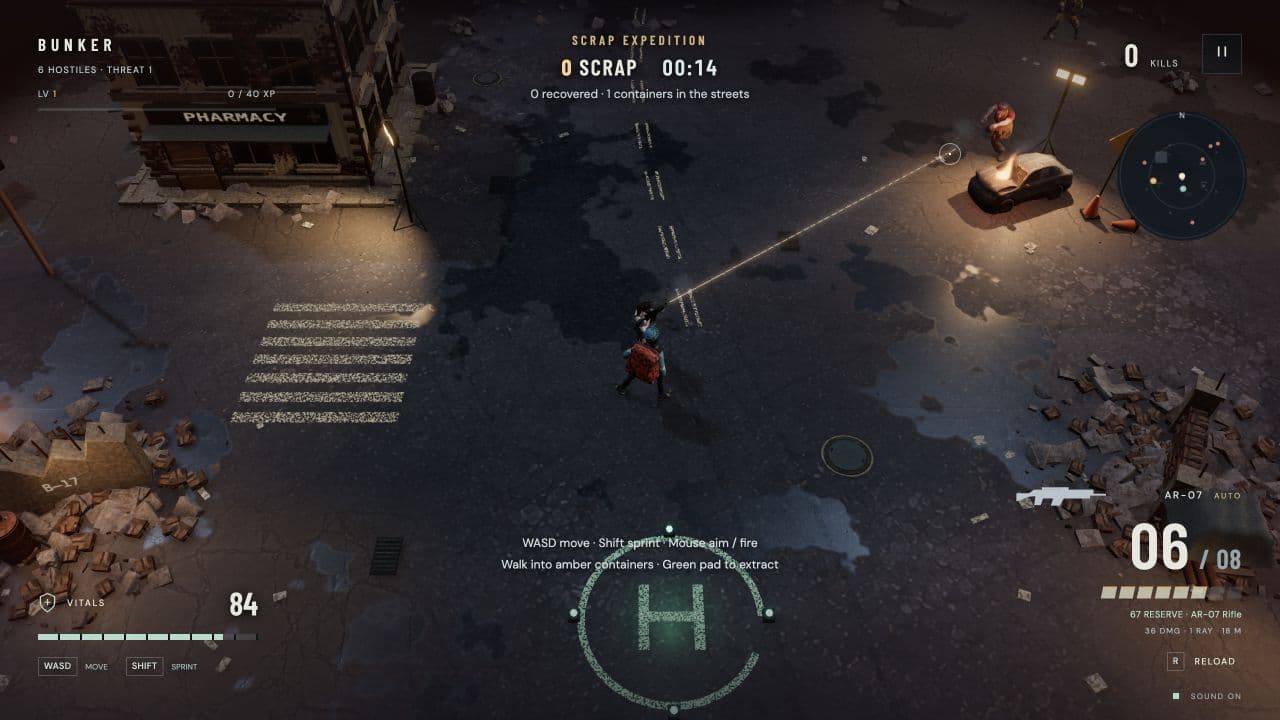
Choose the outing before choosing the upgrades. A sector operation has a finite three-wave objective; a Scrap expedition asks you to collect supplies in a ruined city and return to the extraction pad. Endless Scavenge is the open-ended holdout, so it is the least obvious choice when you want a firm endpoint. Zombie Defence’s fit here comes from bounded objectives and controllable outings, rather than a promised ten- or twenty-minute timer.
The interesting roguelite decision happens before you get home. In campaign combat, a level-up presents two battle cards and one shelter investment. Take fire rate, extra rays or ricochets to solve the immediate crowd, or spend the choice on a benefit that reaches beyond this deployment. A faster weapon still needs ammunition; a useful shot still needs an escape lane. Desktop movement and mouse aim are independent, while touch FIRE targets the nearest living enemy.
Give an outing a concrete purpose: reserve recovered Scrap for a weapon component, or bank progress toward a research choice. The battle cards reset after deployment, but the shelter project continues. That makes a modest haul worth caring about without requiring every attempt to become a record-length survival run. The extra management is also the tradeoff: planning resources and equipment adds another layer if all you want is an immediate arena restart.
Pause/Resume or Escape stops active combat, and losing window focus also pauses the battle. Collected Scrap from a Scrap expedition is retained after extraction, defeat or interrupted browser-page reload settlement, within storage capacity. That retention is separate from saving an unfinished fight. Sector defeat has different supply penalties, while established shelter upgrades and long-term equipment remain.
The verdict
Choose Zombie Defence when a useful run means making progress toward something you will use tomorrow, as well as surviving today’s fight.
Brotato
Short fights, six weapon slots and a shop after each wave turn build-making into a chain of small commitments.
- Roguelite
- Short runs
- Loot builds
- Manual aim
- Platforms
- Windows, macOS and Linux via Steam; this comparison covers the PC edition.
- Price model
- Paid base game; optional paid DLC sold separately.
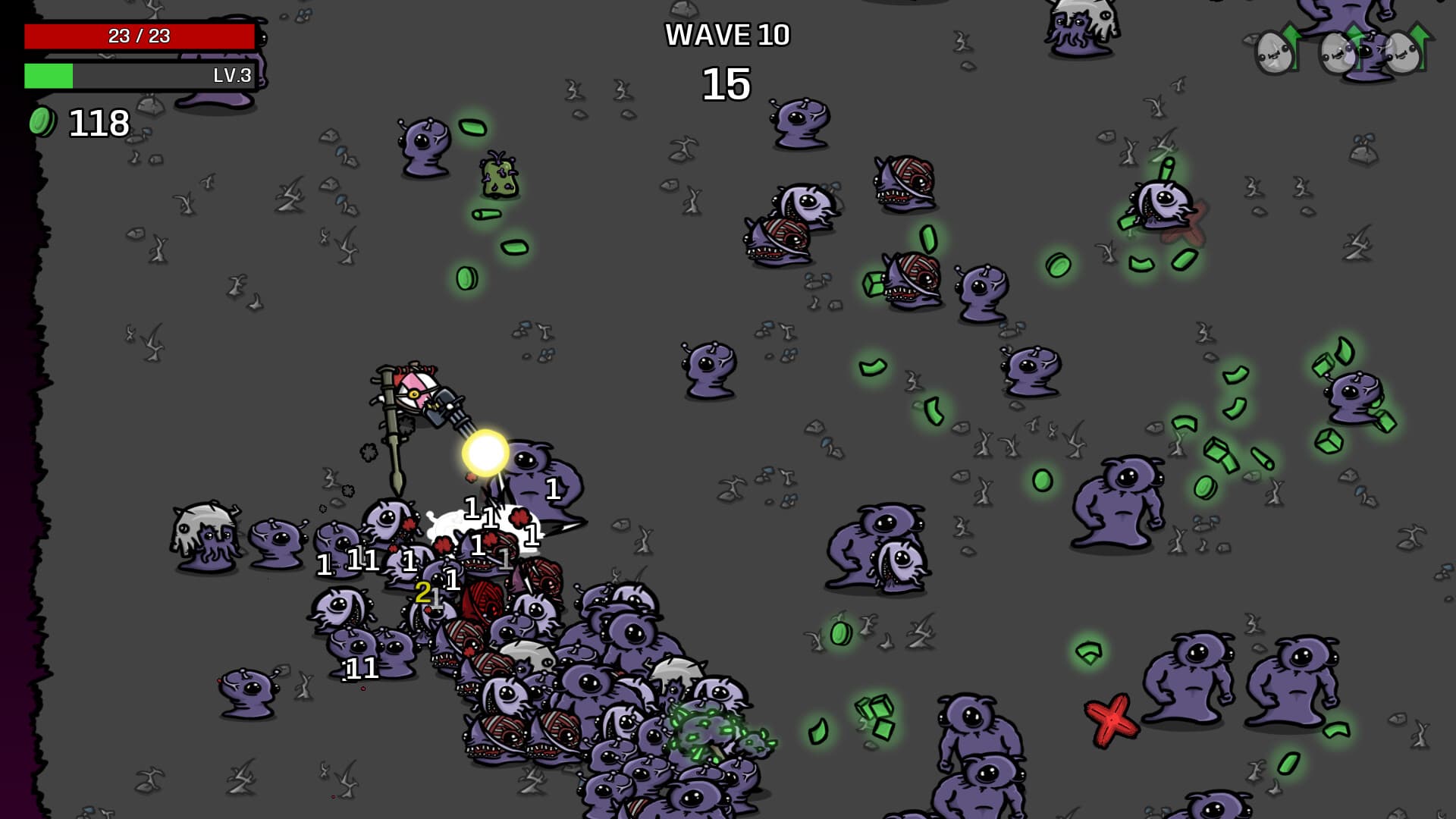
Brotato is the easiest recommendation here for an unpredictable break. Its Steam description puts runs under thirty minutes and individual waves at twenty to ninety seconds. Treat those as the game’s advertised format, with shop decisions adding their own time. The crucial feature is the rhythm: survive a wave, collect the results, then work out what the next version of your potato should look like.
Up to six weapons make that shop surprisingly consequential. You might consolidate matching weapons into a stronger set, reroll for an item that supports your character, or keep materials for a later purchase. Weapons fire automatically by default, with manual aim available. The action tests the build through movement and spacing; the shop is where you decide whether damage, survival or a more specialized interaction deserves the next investment.
The PC developer notes are unusually clear about leaving: runs save at every shop and can resume after the game exits or crashes. More recent New Dawn instructions explicitly describe returning to the main menu during a wave and using Resume to try that wave again. Finish the wave and stop at the shop if you want a clean boundary. Do not confuse the separate End Run command with temporarily leaving a run you intend to continue.
This structure rewards players who like thinking in rounds. It is less appealing if the best part of a shooter, for you, is uninterrupted flow: every shop asks for attention, and comparing several small stat changes can consume the spare minutes that combat did not. That is still a useful trade when you would rather interrupt a build than throw it away.
The verdict
The best starting point if you want a compact roguelite shooter and expect real life to interrupt it.
20 Minutes Till Dawn
A compact survival shooter in which the build changes quickly, but you still have to direct the weapon and make room to fire.
- Manual aim
- Roguelite
- Short runs
- Permanent progress
- Platforms
- Windows and macOS listings on Steam; check the current Mac compatibility notice before purchase.
- Price model
- Paid Steam game; mobile editions have separate terms and are not assessed here.
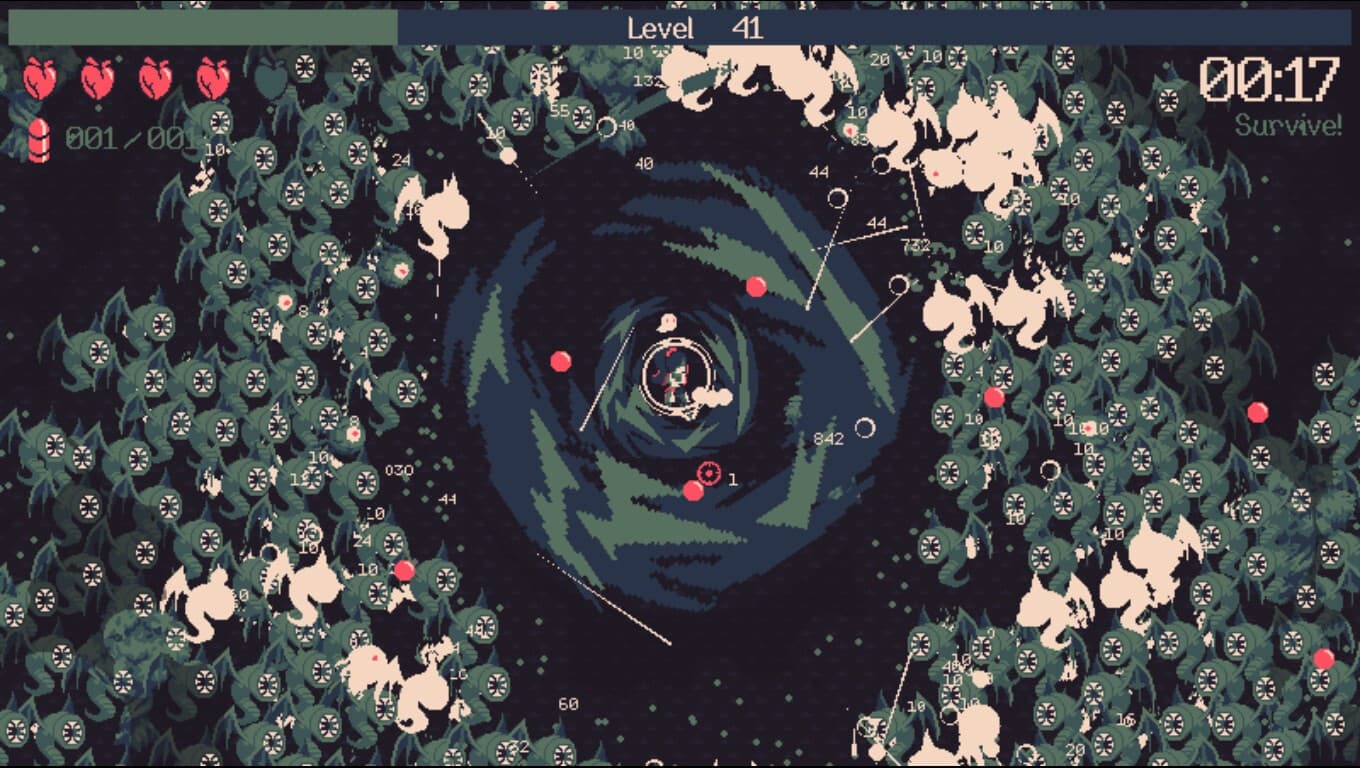
The standard objective is right in the name: survive twenty minutes. The current Steam listing also describes a ten-to-twenty-minute run format. That gives 20 Minutes Till Dawn a clearer commitment than a shooter whose ideal run simply continues until you die. The countdown is the combat target, however, so leave breathing room for reading upgrades and pausing rather than starting exactly twenty minutes before you need to leave.
Its best trick is giving a short attempt a distinct middle. At level twenty, a weapon offers a choice of three evolution variants. Before that point, you are deciding how bullets, elements, summons and reload-related effects should support one another. Taking a shotgun toward burning damage asks for a different set of supporting choices than leaning into summoned attackers. Directional aiming and active firing keep you involved while the build grows around you.
Souls carry a separate purpose between attempts: they support rune progression and additional characters or weapons. A failed experiment can therefore open another starting point without preserving the failed build itself. The pause menu is documented in the PC developer updates, including a fix for firing while paused. Use pause for a brief interruption; persistent Souls and runes should not be mistaken for a verified close-and-resume feature for the live run.
Choose it when you want the satisfaction of piloting the damage you have assembled. The cost is divided attention: aiming, movement and choosing the next upgrade all compete for it. A tight run format does not make the game a low-attention diversion, especially when a new evolution changes the way you need to fight.
The verdict
Pick this when you want a compact build arc that still asks you to aim, rather than just steer around enemies.
Gunlocked 2
Turbo compresses this space shooter into a fast build-and-score format, while Mission mode offers a different answer to interruptions.
- Roguelite
- Short runs
- Loot builds
- Fast-paced
- Platforms
- Windows via Steam; full release.
- Price model
- Paid Steam game.
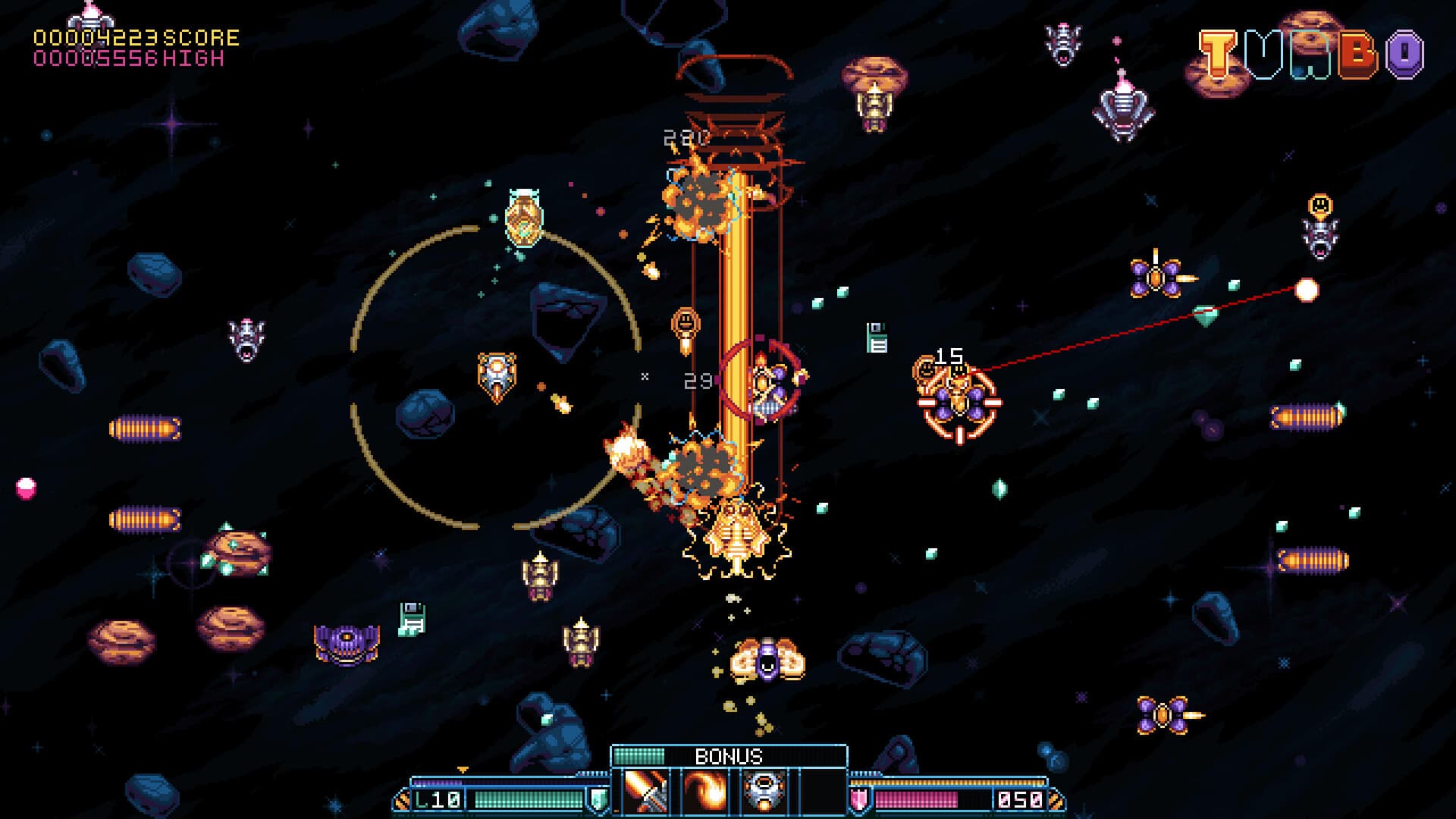
Select Turbo if the point is to finish a small, concentrated run. Its developer describes ten-minute games with accelerated leveling, large enemy waves and powerups, without bosses or warp-gate choices. Those omissions matter: the mode removes a final boss’s variable kill time and the campaign-style route decisions from its arcade format. Collecting the TURBO letters becomes another thing to chase while the battlefield fills with shots.
The short format still sits inside a distinctive combat system. Your ship’s position influences weapon targeting, and an active dodge gives you a way out of a dangerous line. The Air Brake supports smaller positioning adjustments. Pilot skills, weapon-specific enhancements and pre-run augments let you build around a preferred strength rather than choose a ship solely for its appearance. The appeal is learning where the ship needs to be for the loadout to work.
Here is the important mode split: Turbo explicitly has no saving. Mission mode advertises save and resume, allowing its longer journey to be split across sessions. Do not buy it expecting to close a Turbo run and restore it later just because the store page mentions saving. If your break has an uncertain end, choose Mission for its save support; if you want a defined arcade attempt, choose Turbo and allow extra time around its ten-minute format.
There is plenty to learn in the targeting shapes and upgrade interactions, so a fast run is not necessarily a simple one. Turbo also sacrifices Mission’s branching route choices and boss encounters. That is exactly why it belongs on this list: you can choose the version of the game that suits today’s time, rather than force a longer mode into a smaller gap.
The verdict
Choose Turbo for a compact arcade crescendo; choose Mission when preserving an interrupted run matters more than its total length.
Yet Another Zombie Survivors
The current Boss Rush mode gives squad-building a deadline: assemble enough power before the final boss arrives at minute ten.
- Squad builds
- Roguelite
- Short runs
- Permanent progress
- Platforms
- Windows via Steam; this comparison covers the full PC release.
- Price model
- Paid Steam game; a free Steam demo is listed separately.
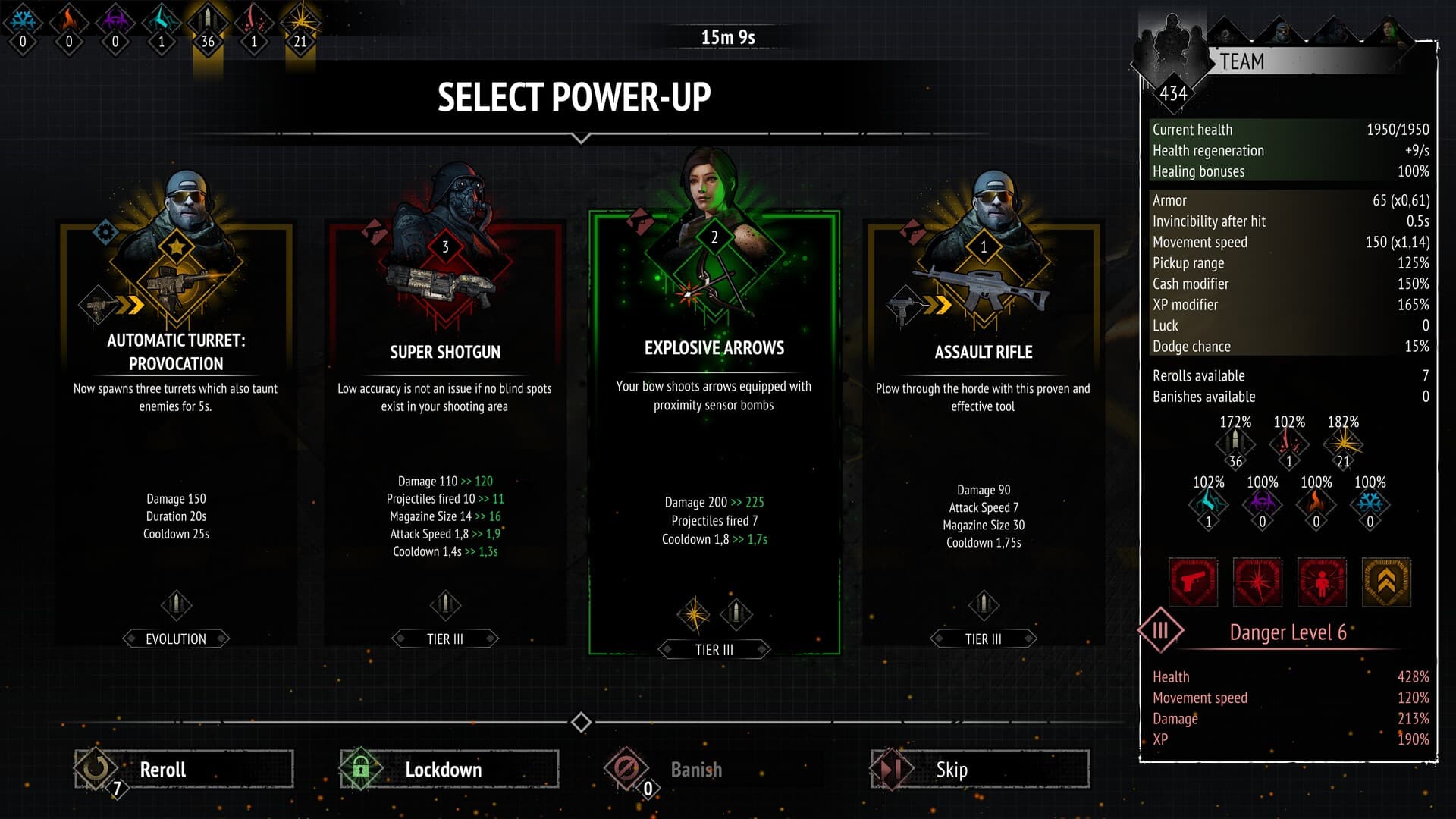
For this list, the mode to look at is the full-release version of Boss Rush. You spend ten minutes strengthening the team, then the arena’s final boss appears. The run still needs that boss defeated, so this is a ten-minute buildup plus a fight, not a guaranteed ten-minute finish. It also unlocks after completing Hardcore on the relevant map, making it a goal to work toward rather than an immediate shortcut for a new player.
A squad changes the build problem. You start with one survivor and can recruit two more; weapon and ability choices then need to work across that three-person team. Shared damage types and survivor synergies reward deciding what job each member should do before the deadline arrives. Automatic attacks let you concentrate on team movement, while optional manual aiming and firing controls are available when you want to direct the action yourself.
If you need to stop early, the pause menu’s Conclude Run command settles the attempt. The developer’s update notes say concluding collects cash pickups still on the level, so ending deliberately has a progression payoff. It ends the run rather than suspending it for later. Skill trees and survivor specialization give that cash and repeated attempts a purpose between fights; the Camp adds character missions and conversations when you have time for them.
The attraction is getting a small team to click under a visible deadline. The compromise is that building the roster, unlocking the mode and finishing its boss all sit outside the simple ten-minute number. Pick it for a focused squad challenge with room around the edges, rather than an appointment you can end at exactly the same minute every time.
The verdict
A strong fit for a short, purposeful squad-building challenge once you have unlocked the mode and can allow time for its finale.
Disfigure
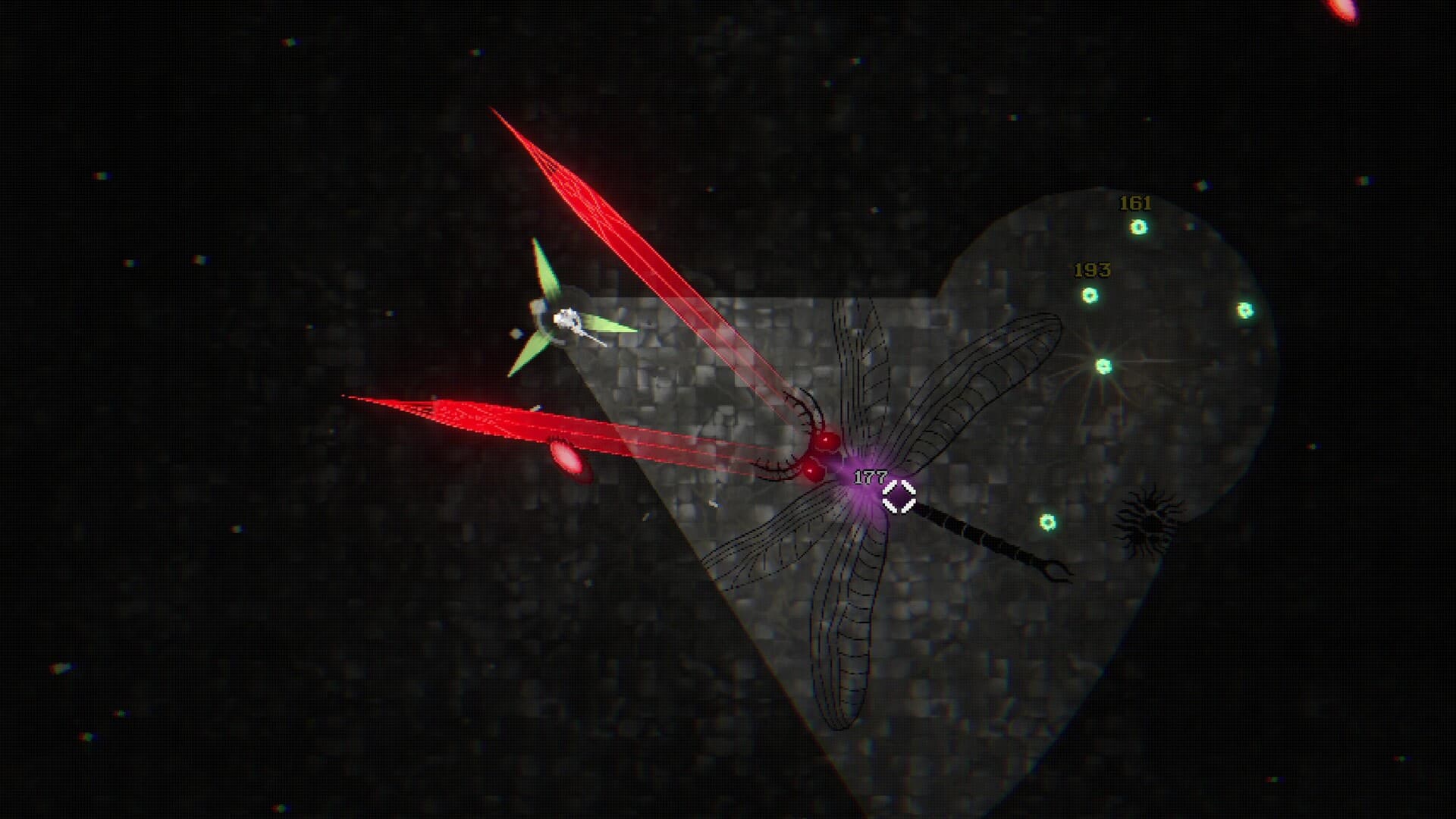
Disfigure gives the survival format a sharp constraint: the horde exists beyond the light you can currently see.
- Manual aim
- Roguelite
- Short runs
- Permanent progress
- Platforms
- Windows via Steam; current full game.
- Price model
- Paid for new Steam purchasers; players who already owned it before the paid transition retain access.
The current developer description places Disfigure’s runs at twenty to thirty minutes, with quick restarts and an Endless mode for longer play. That puts it toward the roomier end of this list. Choose it when you have space for a compact survival attempt rather than a strict ten-minute window. The range is the developer’s description of the format, not a measured promise about every difficulty or build.
Circle and cone vision create a decision that stays relevant even after the weapon becomes powerful. The circle shows the area around you but not as far; the cone reaches farther in one direction and leaves other approaches less visible. A strong damage build does not make those blind spots disappear. Manual aiming, with an optional assist toggle, makes looking and shooting part of the same tactical problem.
The current full release gives earned Credits more to do between attempts: weapons, gear and permanent upgrades all compete for them. Quests reward discoveries and weapon-related goals, while ascension challenges add reasons to revisit a familiar weapon. During a run, the pause screen exposes runtime statistics, so there is a documented place to stop and inspect what your current build is doing before you push onward.
That combination suits someone who wants tension rather than a brightly readable victory lap. Restricted visibility is the point of the combat, and it can be tiring when you only wanted a relaxed break. In exchange, the same survival-and-upgrade structure demands a different kind of attention: where you look can matter as much as the amount of damage you have bought.
The verdict
Choose Disfigure for a compact horror-tinged shooter with real visibility decisions, and budget more time than you would for Turbo.
Nova Drift
Nova Drift builds a heavily customized ship within a compact arcade run, and its current Save and Quit feature makes an unfinished experiment easier to keep.
- Roguelite
- Loot builds
- Short runs
- Fast-paced
- Platforms
- Windows and macOS via Steam; this comparison covers the current PC release.
- Price model
- Paid Steam game; a free demo is listed separately.
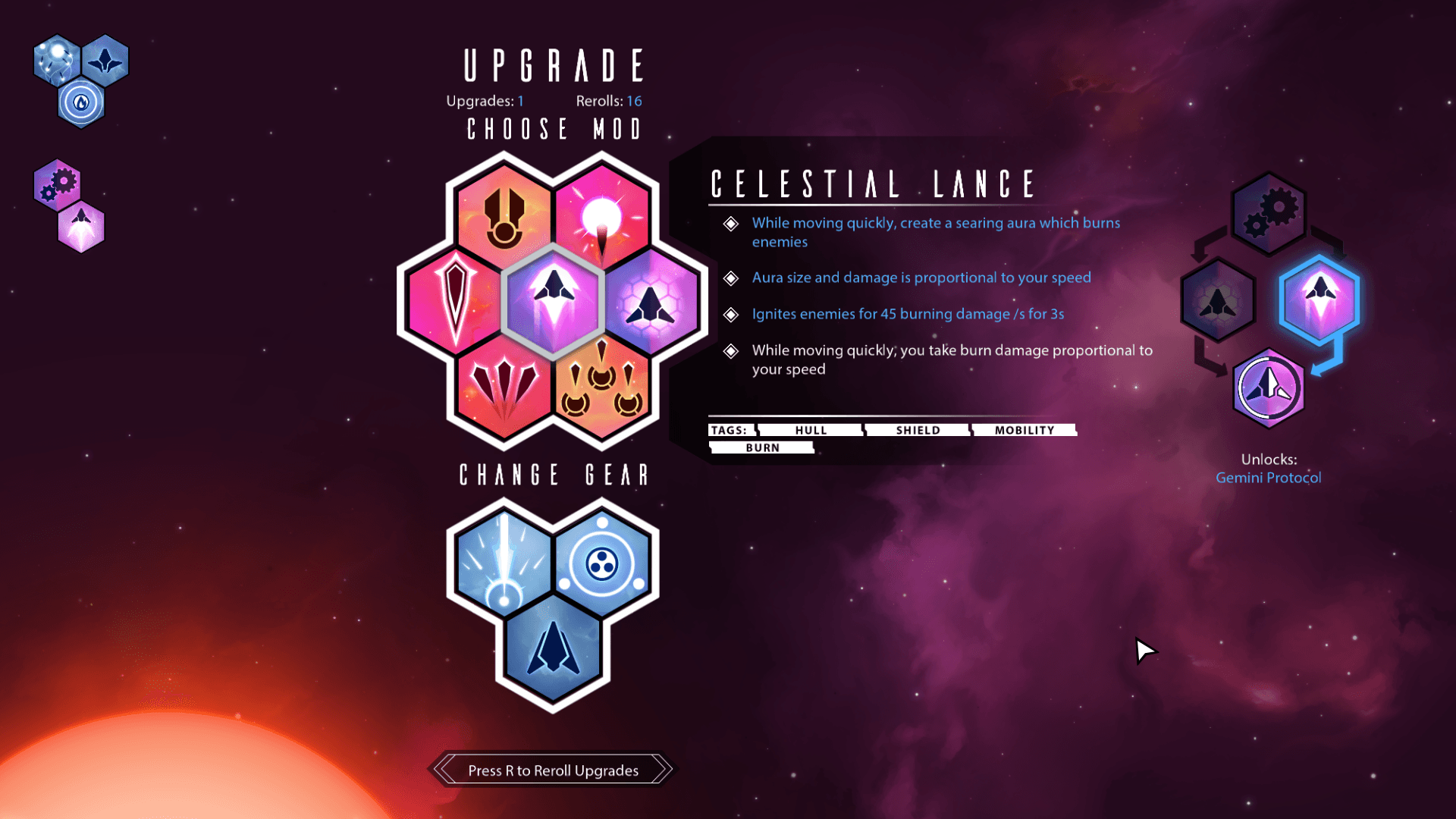
Nova Drift is the choice for players who enjoy the theorycrafting as much as the shooting. Its current store description emphasizes quick runs that take a build from its starting idea to execution in one session. It does not promise a universal minute cap. The scheduling advantage is instead a concrete feature added in March 2026: Save and Quit can preserve the game in progress for later.
Weapon, shield and body choices give each experiment a direction. Thermal Lance focuses damage into a beam; a Carrier body supports a swarm of constructs; a Warp shield turns its own destruction into a teleport and blasts. Modular upgrades can then change how those components interact. The question quickly becomes more interesting than which upgrade has the largest number: are you building around firing, movement, shield effects or machines that fight beside you?
Save and Quit comes with a real cost for score-chasers: using Resume prevents the final score from being submitted to online leaderboards. For someone testing a strange build between other commitments, that is often a worthwhile exchange. For a competitive attempt, it changes the plan. Decide which kind of run you want before relying on the save feature, and use the explicit command rather than treating every kind of application closure as equivalent.
It is also easy to spend a large share of the session comparing upgrade paths. Draft mode can start you deeper into the action with a pre-constructed build, while Endless invites you to continue after victory. Both change what a run asks of you. The standard attraction remains the rapid evolution of a ship, with enough interlocking mechanics to make a small experiment feel substantial.
The verdict
Choose Nova Drift when you want a deep build in a small space and are happy to trade leaderboard eligibility for the freedom to resume later.
How we compare
A good recommendation explains who a game suits and where it falls short. Our editorial scores use the same five criteria, each rated out of ten.
- 01
Combat
Controls, aiming, enemy readability, and the decisions you make under pressure.
- 02
Progression
Build choices during a run and meaningful progress between attempts.
- 03
Usability
Control demands, platform access, interface options, and documented device requirements.
- 04
Value
What the asking price includes, optional purchases, and the scope of the free version.
- 05
Fit
How well the game answers the specific question in this article.
Which one should you try?
Pick Brotato if interruptions are your main concern: the shop checkpoint gives a small piece of a run a dependable place to land. Choose Gunlocked 2’s Turbo mode for a concentrated ten-minute format, or 20 Minutes Till Dawn for hands-on shooting with a clear survival target. Yet Another Zombie Survivors makes a squad build race toward a boss; Disfigure turns limited visibility into the challenge. Nova Drift is the pick for intricate experiments you can now save and resume, provided online leaderboard eligibility is not the priority. Zombie Defence suits the player who wants a finite battle or chosen extraction to move a longer project forward: a stronger weapon, a research decision or a better-equipped shelter. Decide what a satisfying stopping point looks like before you press start.
Your questions, answered.
Want to see what we’re building?
Zombie Defence is in Alpha. Join the waitlist.
More games to explore
- 7 Best Horde-Survival Games With Guns
Compare seven gun-focused horde-survival games by aiming, reloads, projectile patterns and crowd control, from 20 Minutes Till Dawn to Zombie Defence.
- 7 Best Roguelite Shooters With Weapon Upgrades
Compare roguelite shooters with weapon evolutions, gun merging, overclocks and crafting. Find out which upgrades last one run and which survive the reset.
- 9 Best Zombie Horde Shooters in 2026
Compare nine zombie horde shooters, from co-op campaigns and expanding survival arenas to mobile auto-shooters and persistent shelter runs.