7 Best Zombie Games With Weapon Crafting
What you make, what it costs, and whether the result changes your next fight.

The best zombie games with weapon crafting make a pile of salvaged materials feel like a plan. Choose 7 Days to Die for a complete survival production chain, Dead Island 2 for elemental weapon mods, or Zombie Defence for fixed gun assemblies that feed a persistent shelter-and-combat loop. Dead Rising 2 is the standout for combining everyday objects into something wonderfully impractical.
This list separates three things that are often called crafting: building a weapon from components, fabricating a modification for an existing weapon, and upgrading a reusable blueprint. Buying a finished gun with coins does not count by itself. The useful question is what decision the recipe gives you: which materials to keep, which item to improve, or which combat role to prepare for.
The seven selections include six released games and Zombie Defence’s browser Alpha in development. We compare the editions named in each entry, with current availability and systems checked in October 2026. Scores weigh combat, progression, usability and value; Fit rewards meaningful weapon-crafting choices.
The quick comparison
7 games, different reasons to give the next run a chance.
Choose a game to jump to its overview. Platform lists are summaries; check the linked official edition.
The games
Zombie Defence
Build a named weapon from known components, fund it through a persistent shelter, then take it into active top-down zombie combat.
- Manual aim (desktop)
- Extraction
- Shelter building
- Crafting
- Permanent progress
- Platforms
- Browser Alpha in development; native mobile releases are planned. Join the waitlist for news and playtest availability.
- Price model
- Public launch pricing and monetization are not confirmed.
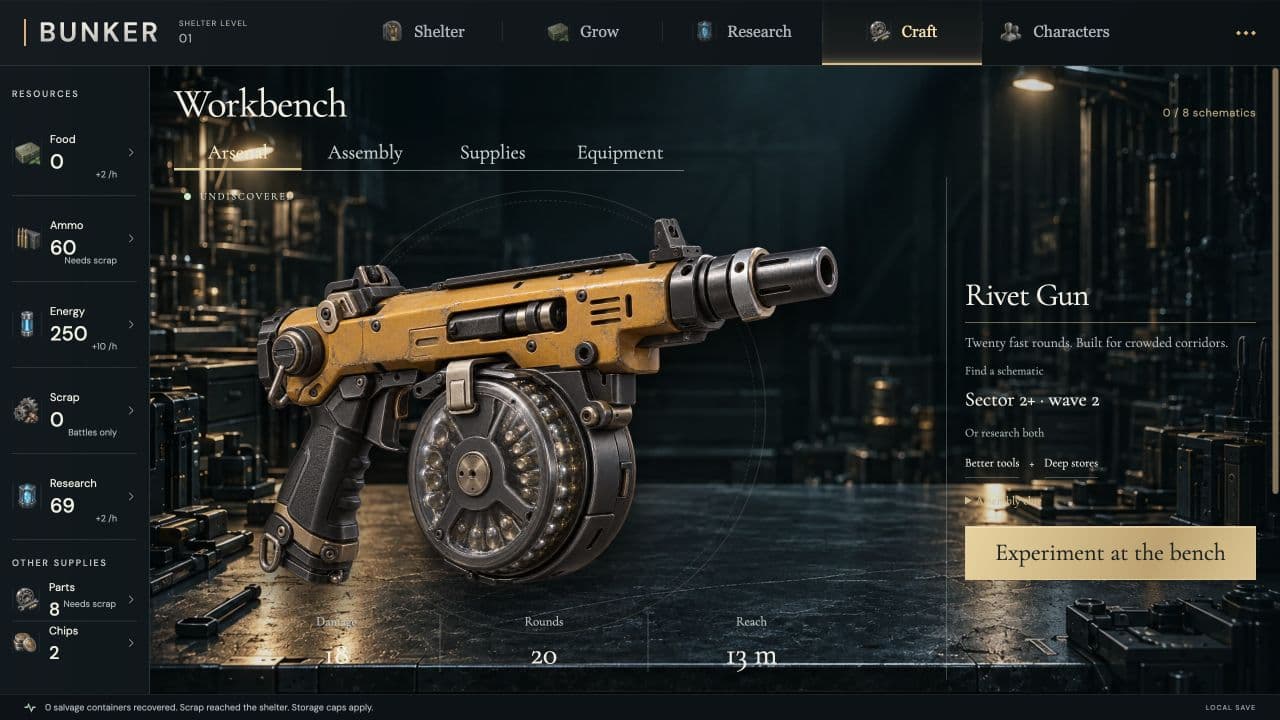
Zombie Defence makes the next weapon a project you can plan. Its workbench has eight buildable weapons alongside the issued AR-07, each with a fixed receiver, barrel and feed combination. A light receiver, rifled barrel and drum feed produce the Rivet Gun. A light receiver, short barrel and spring feed make the Pipe Carbine. Machine parts and energy fund the components, and final assembly also consumes energy. These are specific assemblies with persistent ownership, rather than a shop purchase or a temporary level-up reward.
There are three ways to discover a recipe: recover its battlefield schematic, complete its research pair, or assemble the correct components. For the Rivet Gun, the research route is Better tools plus Deep stores. An incorrect assembly consumes nothing, which makes experimentation a useful alternative to waiting for a schematic. Advanced electrical builds require Machine shop; the Coil Carbine and Rail Lance then bring wall ricochets into the arsenal. The point is to choose the firing pattern and handling you want, and give your next outing an identifiable target.
The interesting cost is shared Scrap. The Salvage Bench can turn it into machine parts or ammunition, while shelter upgrades and weapon levels need it too. Leaving an ammunition line running can delay the components for a new gun. Switching output or pausing a line is therefore part of the build decision, not background bookkeeping. Once you have your weapon, six craftable equipment modules provide another deliberate choice, with one equipped at a time. Temporary combat cards still change the current battle without replacing that permanent loadout.
This preparation pays off in fights that still need your attention: desktop movement and cursor aim are independent, magazines empty, and reloads create vulnerable moments. Touch fire assists toward the nearest living enemy. Separate city Scrap expeditions supply the shelter, and their collected Scrap survives defeat up to storage capacity. The appeal is a dependable workshop-to-battle loop; the boundary is a defined weapon catalogue and fixed-layout shelter rather than unrestricted gun design or freeform construction.
The verdict
Choose Zombie Defence for the satisfaction of planning a permanent loadout, managing its supply chain and personally using the result against a horde.
7 Days to Die
Crafting is part of a larger survival economy in which weapons, ammunition, workstations and a defensible home all need resources.
- Crafting
- Shelter building
- Base defense
- Co-op
- Platforms
- Windows, macOS and Linux via Steam; this comparison covers the current desktop game.
- Price model
- Paid base game with optional cosmetic DLC; regional prices and discounts vary.
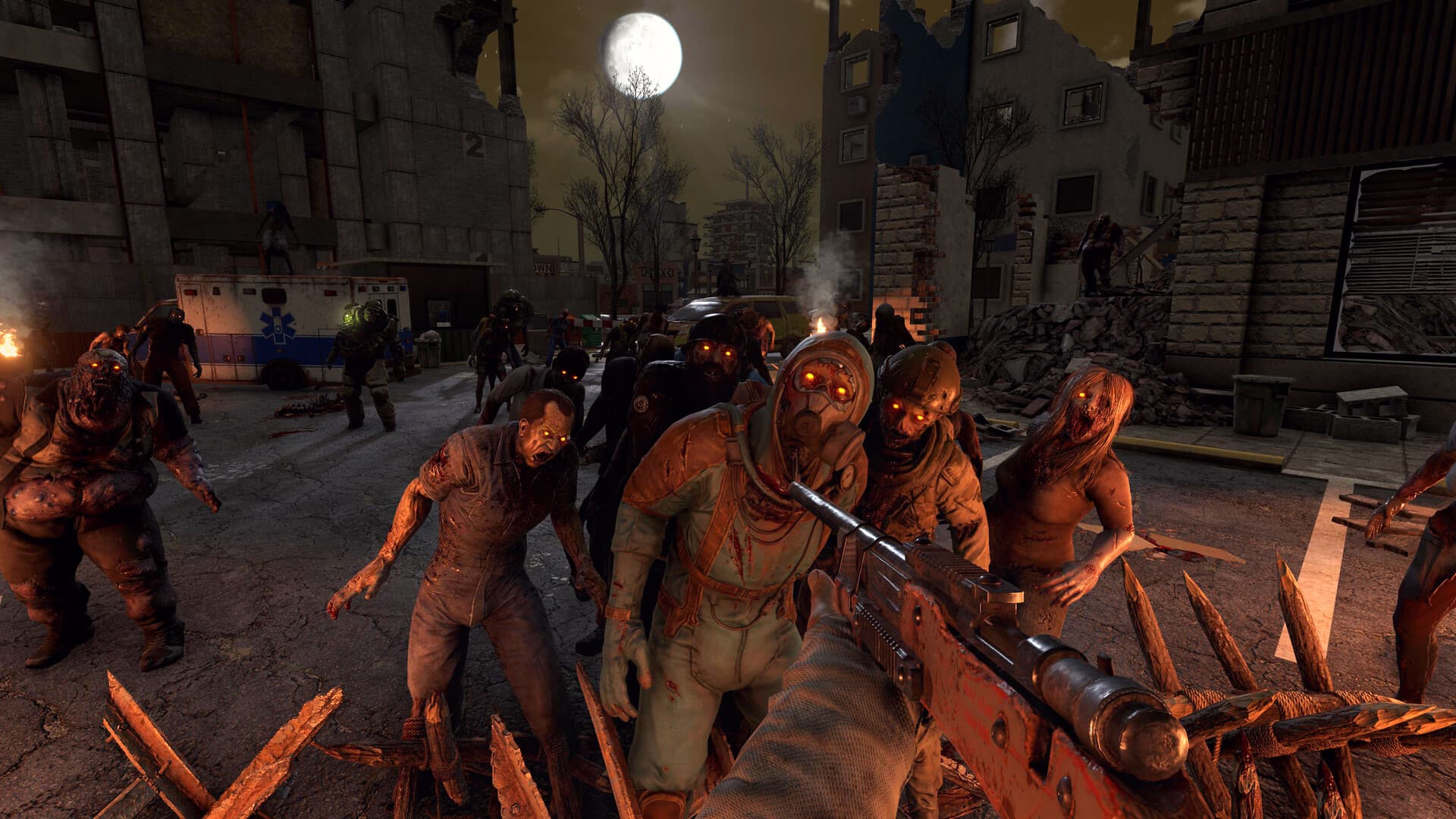
7 Days to Die is the broadest pick here if making a weapon should involve the world around it. You gather and process materials, unlock recipes, craft and repair equipment, and fit weapon mods. The material list changes what an outing is for: a baseball bat uses forged iron, wood, leather and duct tape, while more advanced firearms draw on dedicated weapon parts and components such as springs. Finding a gun and building a sustainable way to arm yourself are different achievements.
That distinction matters when the same world also asks you to prepare defenses and keep ammunition available. A workshop upgrade can improve future production, but spending everything on infrastructure leaves less for the next fight. The payoff is an unusually connected loop: scavenging supports the bench, the bench supports your combat loadout, and the loadout helps you reach more demanding places. Solo and multiplayer play give that economy different scales without turning crafting into a separate minigame.
The systems introduced in V3.0 make it important to check world settings rather than follow an old recipe guide blindly. Crafting progression, costs, timers and repair rules are configurable. Its Combine Station can transfer stronger percentage attributes between similar items, adding a reason to inspect a second copy before discarding it. This is an excellent choice for long-term workshop planning, but the breadth of survival systems makes it a larger commitment than picking a mod at a workbench and returning to an authored mission.
The verdict
Pick 7 Days to Die when you want an entire survival campaign to grow around your workshop, with enough settings to shape the workload.
Dead Island 2
Its strongest crafting is weapon modification: turn an ordinary blade or blunt weapon into a specialized tool for close-range zombie combat.
- Crafting
- Loot builds
- Co-op
- Fast-paced
- Platforms
- Windows and Apple-silicon macOS via Steam; this comparison covers the desktop base game.
- Price model
- Paid game with optional expansions and additional paid content.
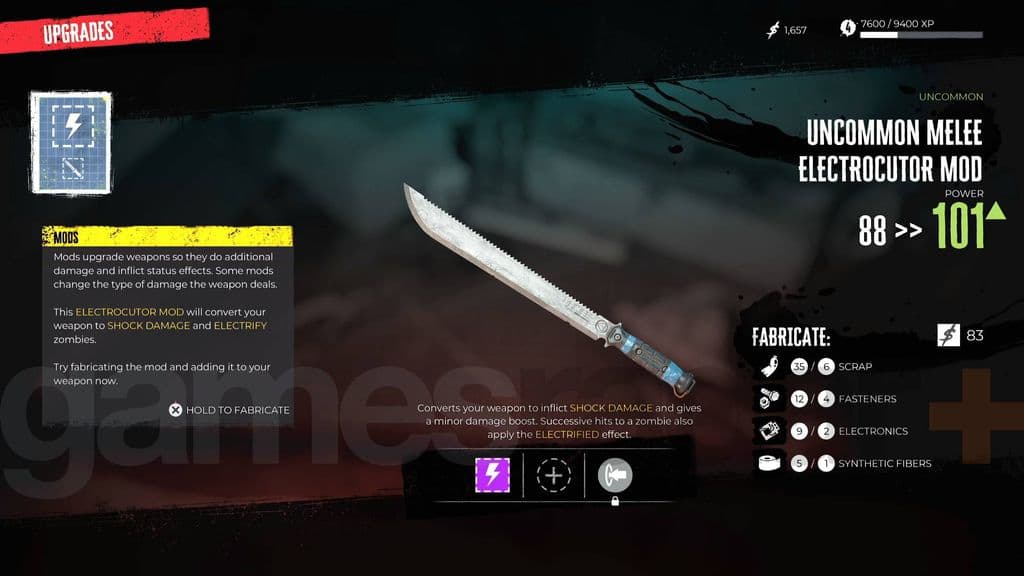
Dead Island 2 belongs on this list for what you fabricate onto a weapon. You usually begin with an existing item, then use a workbench to add mods and perks. The Electrocutor mod converts a compatible weapon to shock damage; the pictured fabrication screen calls for scrap, fasteners, electronics and synthetic fibers. Gathering those materials gives a found machete a new combat role instead of merely paying a vendor for a bigger number.
Good combinations start with how the weapon will be used. The publisher’s own examples pair a sledgehammer with Impactor for force and disorientation, then Empowering for stronger heavy and critical hits. An electrified blade has a different purpose, especially around water. The choice is less about assembling a gun from raw components and more about making a base weapon, elemental effect and perk work together in a fight.
That makes the game particularly attractive if you want the crafting payoff quickly visible on enemies. Repairing damaged gear still brings you back to the workbench, and a favorite build depends on finding a suitable base item. It is a concentrated action-RPG loop: scavenge a weapon, tailor its behavior, use it in close combat, and decide which finds deserve more materials. Players seeking a factory or a permanent home full of production lines should look elsewhere on this list.
The verdict
Choose Dead Island 2 if your favorite part of crafting is turning a familiar weapon into something nastier, then immediately seeing the difference in combat.
DYSMANTLE
The ruined island is your material supply: stronger equipment lets you break more objects, and the recovered resources fund the next useful craft.
- Crafting
- Exploration
- Permanent progress
- Platforms
- Windows and macOS via Steam; Android, iPhone and iPad editions are also available. Scores here describe the desktop game.
- Price model
- Paid base game with optional paid expansions; mobile editions are separate purchases.
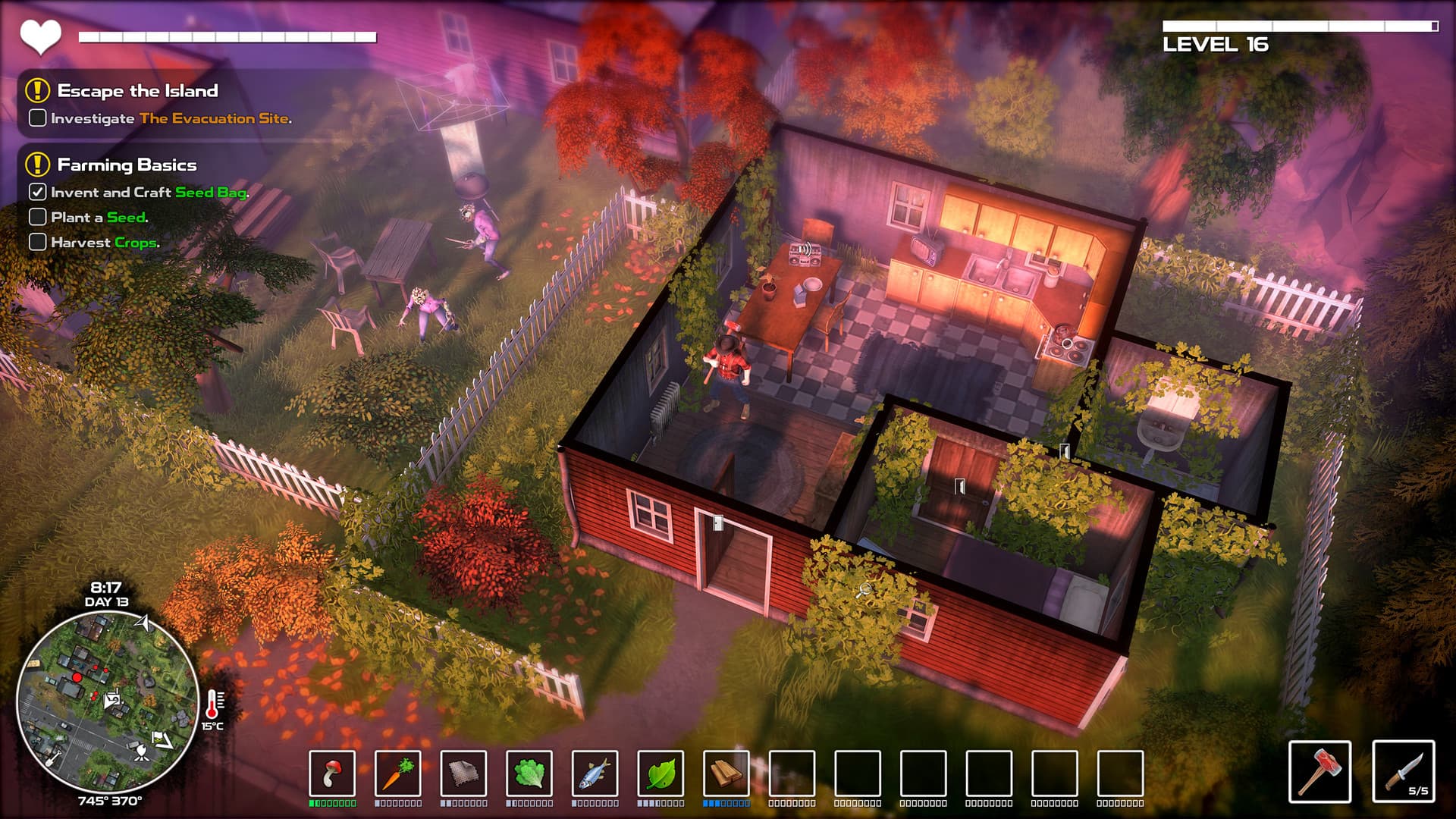
DYSMANTLE changes the usual question from “which container has the part?” to “what can I take apart?” Its furniture, fences and buildings become material sources when your equipment is strong enough. Plastics, rubber and metals feed permanent weapons, tools, outfits and trinkets. An upgrade can therefore pay you twice: it helps against hostile former inhabitants, and it expands the set of objects you can dismantle for the next project.
The equipment ladder is the reason to choose it over a game with deeper one-off weapon customization. You are gradually improving your ability to travel through and exploit a handcrafted island. Melee and ranged weapons, along with traps, support that exploration; crafting provides dependable milestones rather than asking you to keep replacing the same basic weapon. Cooking can add permanent character improvements as well, and hunger does not kill the survivor.
The tradeoff is how much time the game puts between those milestones. Breaking objects and collecting their materials is a central activity, not a brief intermission before another fight. If you enjoy seeing a previously stubborn obstacle become useful salvage, that repetition is the point. If you mainly want a surprising new weapon combination every few minutes, Dead Rising 2 offers a more immediate form of invention.
The verdict
Pick DYSMANTLE for the long-term pleasure of turning an entire ruined island into better equipment and newly accessible routes.
Dying Light 2 Stay Human: Reloaded Edition
Find a weapon blueprint, improve it at a Craftmaster and spend materials to produce weapons with better underlying quality.
- Crafting
- Exploration
- Co-op
- Loot builds
- Platforms
- Windows via Steam; this comparison covers Reloaded Edition.
- Price model
- Paid edition including Bloody Ties; optional bundles and in-app purchases are available.
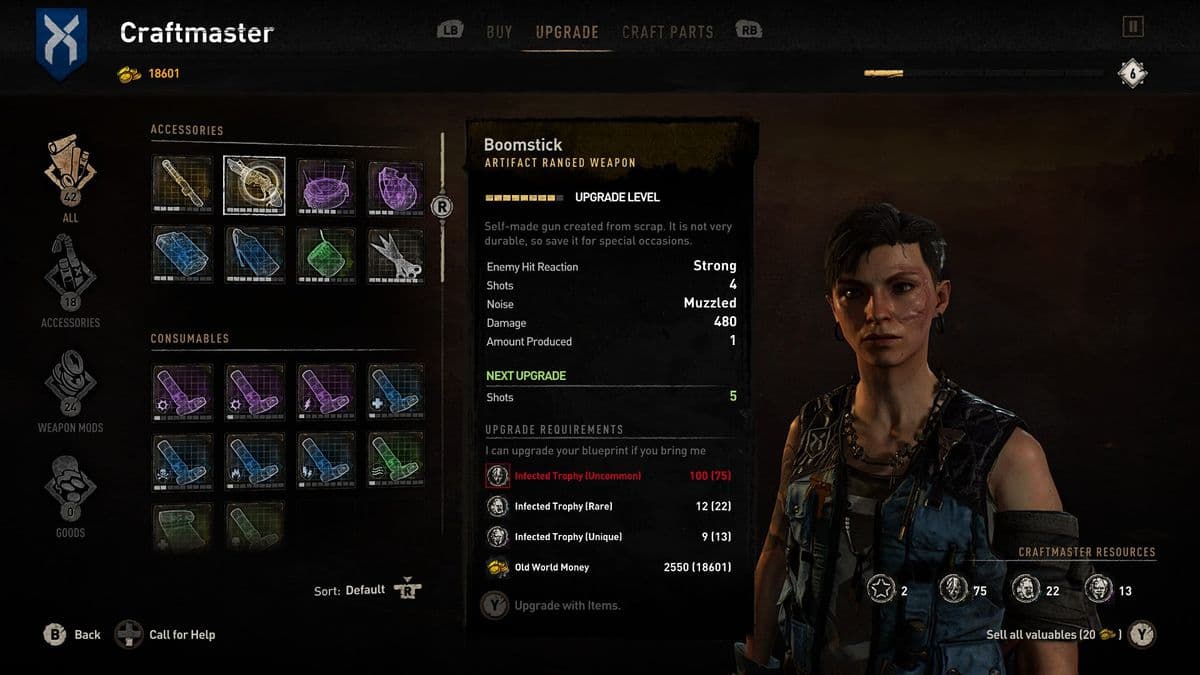
Dying Light 2’s weapon crafting is easy to underestimate if you remember only its launch systems. The Gut Feeling update added a dedicated route for making weapons from blueprints found while exploring or earned as rewards. Craftmasters handle the process, and upgrading a blueprint improves the quality of what it produces: damage, durability, modification slots and the number of affixes all matter. Investing in a plan has value beyond the particular weapon currently in your hand.
The distinction to understand is control versus randomness. You can choose the blueprint and strengthen it, but a newly crafted weapon’s affixes are randomized. That gives you a repeatable source of the weapon you like without guaranteeing an identical set of secondary bonuses. Materials also have a competing use: Craftmasters can repair weapons for resources and Old World Money, with the cost affected by lost durability. Sometimes maintaining a good existing item is more appealing than crafting another.
The reward for this preparation is a city built around first-person combat and movement. Rooftop routes, parkour attacks and dangerous nighttime streets make the loadout one part of how you approach an encounter. Choose it if you want your crafting project embedded in a large action-RPG adventure. Expect more time in exploration, missions and resource collection than in the compact workbench-to-fight rhythm of a smaller game.
The verdict
Choose Dying Light 2 for repeatable weapon projects with room for stat hunting, attached to a substantial parkour-and-combat adventure.
Dead Rising 2
Find two compatible objects, take them to a maintenance-room workbench and turn a practical recipe into an immediately usable combat toy.
- Crafting
- Exploration
- Co-op
- Fast-paced
- Platforms
- Windows via Steam; this comparison covers the original Dead Rising 2, not Off the Record.
- Price model
- Paid base game with optional paid skill packs.
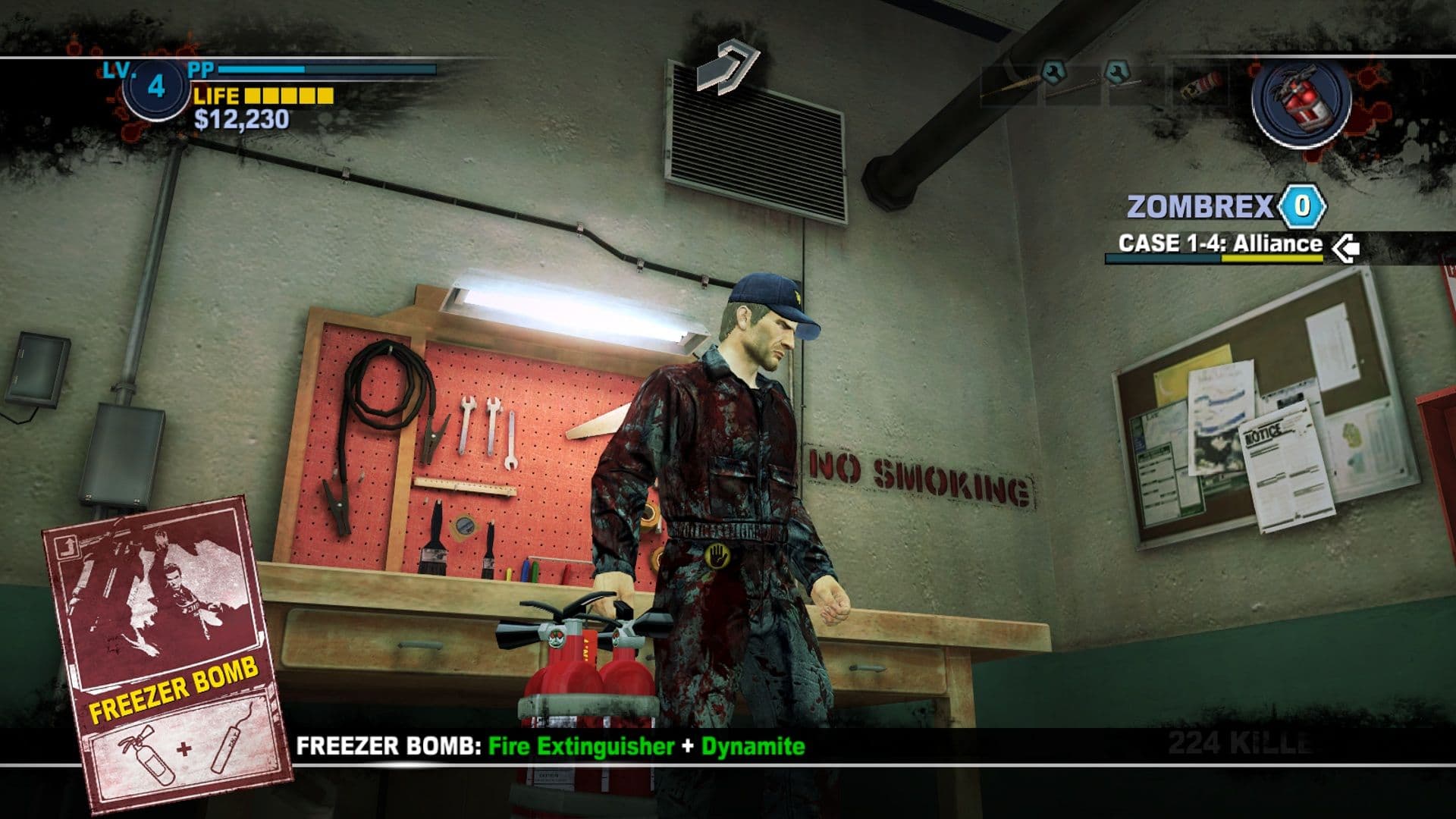
Dead Rising 2 has the most literal “I made that” appeal in this selection. A baseball bat plus a box of nails becomes a Spiked Bat; a paddle and chainsaw become a Paddlesaw. The objects themselves are the ingredients. Instead of turning a stack of abstract crafting currency into a slight stat increase, you carry two recognizable pieces through Fortune City and join them at a workbench.
Combo Cards explain pairings and can increase the Prestige Points earned or add attacks to a weapon. They are not a universal permission slip: a valid combination can be made before you own its card. That makes discovery meaningful, while the card system still rewards progress. The pictured Freezer Bomb is another clear example, with the game displaying the fire-extinguisher and dynamite combination beside the finished item.
The counterweight to that inventiveness is the campaign’s schedule. Chuck has people to rescue, cases to follow and a daughter who needs Zombrex; hunting components is one demand among several. Crafting decisions are therefore about the route you can afford and what you want to carry now. It is a strong fit for comic experimentation under pressure, and a weaker fit for anyone hoping to spend an uninterrupted afternoon managing a permanent workshop.
The verdict
Pick Dead Rising 2 when you want memorable ingredient combinations and immediate combat experimentation, with a campaign clock that keeps decisions moving.
Last Day on Earth: Survival
Resource runs feed basic weapon crafting and a gunsmith bench, where learned modification blueprints become longer-term equipment goals.
- Crafting
- Shelter building
- Exploration
- Platforms
- Android, iPhone and iPad; a stable internet connection is required.
- Price model
- Free download with in-app purchases. Google Play lists ads and purchases that may include random items.
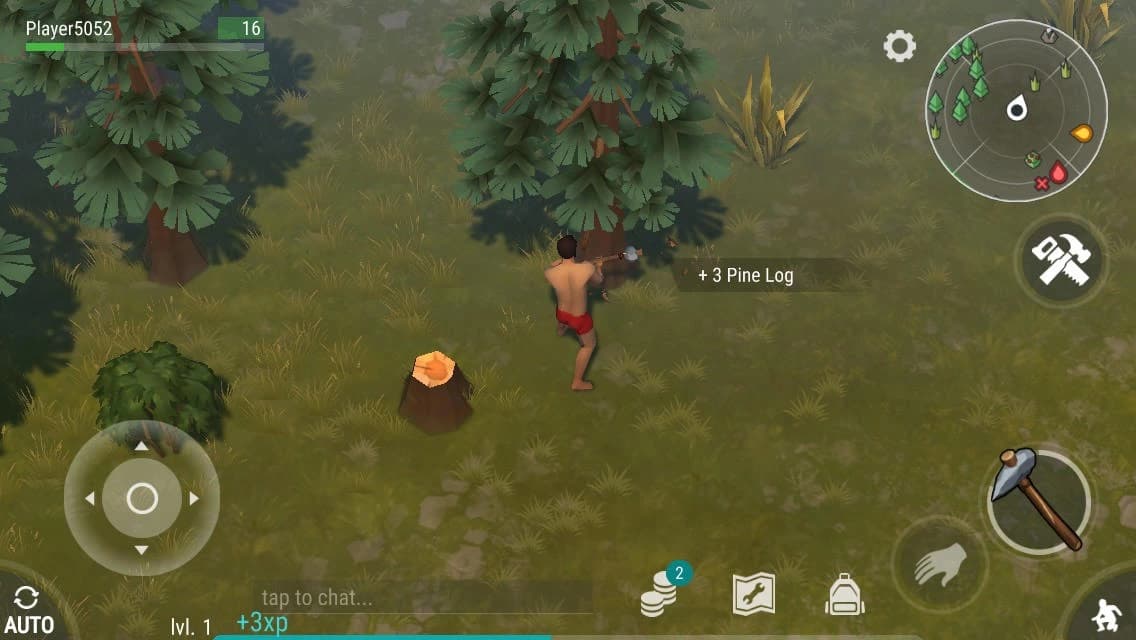
Last Day on Earth offers the phone-sized version of a serious materials problem. Basic survival crafting covers weapons and other equipment, but the gunsmith bench adds a second layer: find a modification blueprint, learn it, gather the materials and craft the mod for a compatible weapon slot. Modules can affect damage, attack speed, critical properties and other handling characteristics. A useful project begins with the weapon you actually want to improve, not simply the rarest-looking blueprint in storage.
The ingredients send you toward different activities. Kefir identifies carbon composite and factory parts with firearm recycling, lenses with world scavenging, and big bones with dangerous zombies. That creates a real choice between keeping a firearm for use and converting it into a chance at crafting resources. More importantly, previously crafted modifications remain available after the weapon breaks or is lost. Replacing the weapon does not mean rebuilding that entire upgrade project from the beginning.
This persistence is valuable because the surrounding survival loop can be punishing. The publisher warns that death in random locations loses carried loot, and hunger and thirst still need attention. Free entry makes it easy to begin, but the game also has ads and in-app purchases, including random items. Choose it for long-running mobile equipment projects if you are comfortable planning resource trips and accepting setbacks along the way.
The verdict
Choose Last Day on Earth for mobile weapon crafting with persistent modification progress, provided you enjoy the resource planning around it.
How we compare
A good recommendation explains who a game suits and where it falls short. Our editorial scores use the same five criteria, each rated out of ten.
- 01
Combat
Controls, aiming, enemy readability, and the decisions you make under pressure.
- 02
Progression
Build choices during a run and meaningful progress between attempts.
- 03
Usability
Control demands, platform access, interface options, and documented device requirements.
- 04
Value
What the asking price includes, optional purchases, and the scope of the free version.
- 05
Fit
How well the game answers the specific question in this article.
Which one should you try?
Start with the kind of workshop you want. 7 Days to Die makes weapons part of an expansive survival economy; Dead Island 2 makes the next mod part of the next fight. DYSMANTLE rewards patient dismantling with permanent equipment, while Dying Light 2 turns blueprint investment into repeatable weapons with variable affixes. Dead Rising 2 is the choice for playful item combinations, and Last Day on Earth brings enduring modification projects to mobile. Zombie Defence is especially compelling when you want a named gun to be a deliberate goal: identify the components, reserve the Scrap, build the weapon and use it yourself while the shelter keeps growing.
Your questions, answered.
Want to see what we’re building?
Zombie Defence is in Alpha. Join the waitlist.
More games to explore
- 5 Mobile Games With Farming and Combat + One Alpha to Watch
Compare five mobile games where crops support combat or survival, from Stardew Valley’s farm sim to Terraria’s herb potions, plus the Zombie Defence browser Alpha.
- 6 Mobile Survival Crafting Games + One Alpha to Watch
Compare six mobile survival-crafting games by recipes, combat and world design, then see what Zombie Defence is building in its browser Alpha.
- 7 Best Survival Games With Farming and Combat
Compare seven survival games where planting supports fighting, from Zombie Defence’s shelter crops to Valheim homesteads, cave farms and zombie food economies.