7 Best Survival Games With Farming and Combat
Grow something worth coming home for, then put the harvest to work in the next fight.

The best survival games with farming and combat give the harvest a job. Valheim turns food into the health and stamina behind a successful expedition. 7 Days to Die puts crops inside a zombie-survival economy. Zombie Defence connects a compact shelter garden to provisions and a meal for the next hands-on fight. Choose by the kind of preparation you enjoy, not simply by how many crops appear in a feature list.
These seven picks all include actual planting or cultivation as well as active danger. Six are released games compared in their Steam desktop editions; Zombie Defence is our browser Alpha in development, with a waitlist for news and playtest availability.
Look at the whole cycle: what you plant, what it costs to keep growing, what the harvest improves and what interrupts the routine. A garden that supports permanent upgrades feels different from one that feeds a hungry group or prepares a temporary combat advantage. Our five editorial scores cover combat, progression, usability, value and fit for this particular grow-and-fight combination.
The quick comparison
7 games, different reasons to give the next run a chance.
Choose a game to jump to its overview. Platform lists are summaries; check the linked official edition.
The games
Zombie Defence
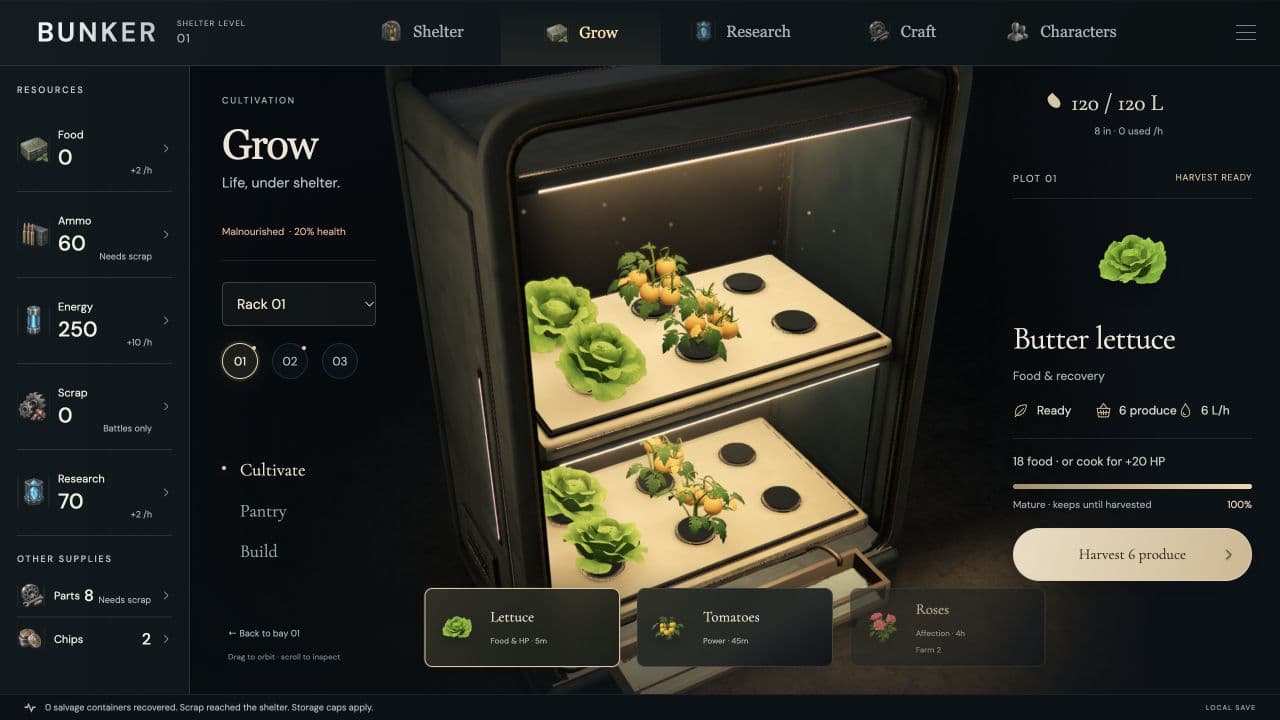
Zombie Defence gives a harvest three possible destinations: colony provisions, a meal for the next outing, or a gift for someone at home. That makes the garden part of your combat planning without asking you to manage an entire countryside.
- Farming
- Manual aim (desktop)
- Shelter building
- Crafting
- Permanent progress
- Platforms
- Browser Alpha in development; single-player PvE. Native mobile releases are planned.
- Price model
- Public launch pricing and monetization terms are unconfirmed.
The current garden grows Butter lettuce, Golden tomatoes and Shelter roses. Each rack adds three planting plots, with twelve racks supporting 36 plots; the second rack unlocks roses. Lettuce is the quick crop, tomatoes take longer, and roses are the longer-term gift crop. The useful decision is what to put in those spaces before heading out. More edible plants support supplies and battle preparation, while roses serve the relationship side of the shelter rather than feeding it.
Water gives cultivation a real input cost. Purifiers improve irrigation, and tending spends stored water to increase the harvest. Ripe crops wait safely for you to collect them, so a finished batch does not demand an emergency return in the middle of a fight. Pantry capacity still matters. A garden full of mature plants is only useful if you make room, harvest and decide how to use the produce.
That last decision reaches directly into combat. Lettuce and tomatoes can replenish colony food, supporting nutrition and the defender’s available health ceiling. Alternatively, five lettuce make a Garden Bowl for extra maximum health, while three tomatoes make a Sunset Soup for increased attack power. You pack one meal for the next outing. Choosing a crop is therefore partly choosing what kind of preparation you want: a sturdier defender, more offensive power, or food held back for the colony.
Then you leave the growing racks behind and fight yourself. Desktop combat uses separate movement and mouse aim, with firing, sprinting, ammunition and reloads to manage. Sector battles and Scrap expeditions give the return to shelter a purpose, with recovered supplies competing for station upgrades, crafting and research. This is a fixed-layout shelter with expandable stations, so its strength is a readable grow–prepare–fight rhythm. Players who want to fence an outdoor estate or reshape the terrain will get that kind of farming freedom elsewhere.
The verdict
Choose Zombie Defence when you want a small, purposeful garden whose harvest changes how you prepare for the next hands-on zombie fight.
Valheim
Valheim makes farming feel like part of becoming a better adventurer. Your fields supply food, and food changes the health and stamina you can take into the wilderness.
- Farming
- Crafting
- Co-op
- Exploration
- Platforms
- Windows, macOS and Linux via Steam; current 1.0 desktop edition, solo or up to ten players.
- Price model
- Paid base game.
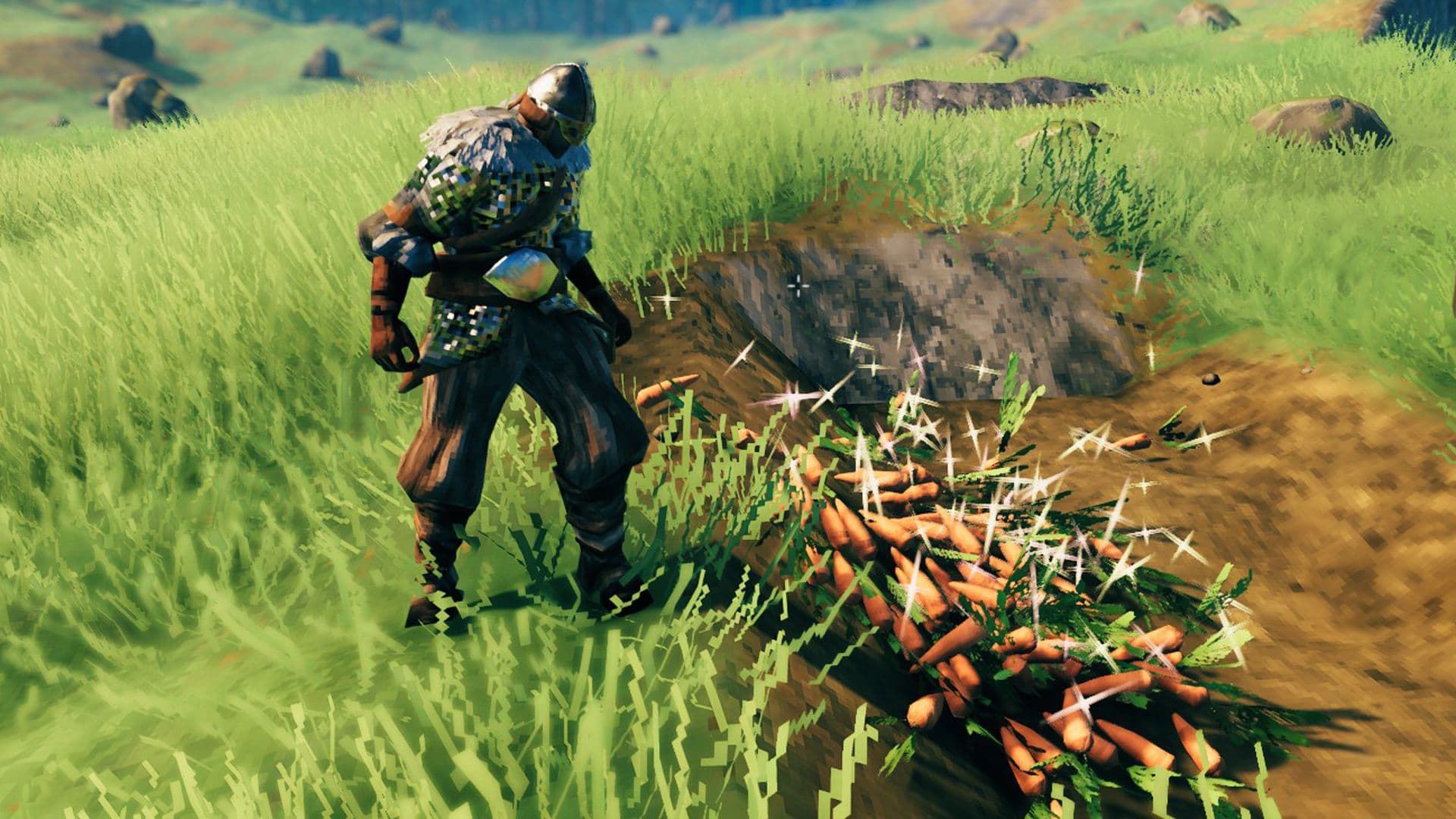
This is the strongest all-round choice if you want to build a home, work its surrounding land and then leave on dangerous journeys. With the Cultivator, you prepare growing space, plant and return to harvest. Carrots are an early example of turning seeds into ingredients for your food supply. Separate crafting stations turn gathered materials into the tools, armor and weapons that make expansion possible. Cultivation takes place in the world you inhabit, so the farm becomes part of the settlement’s layout rather than a separate production menu.
The important distinction is what food does. Valheim does not make eating a requirement to avoid starvation; it uses meals to improve your total health and stamina. That turns a stocked food supply into room for error and room for action. Before a difficult expedition, the question is whether the garden and kitchen can support the way you intend to fight. Simply owning a better weapon does not replace that preparation.
Farming also has its own progression. The Farming skill reduces Cultivator stamina use, improves farming-item durability and can provide extra harvest yield. A Scythe speeds harvesting, while the feast system provides longer-lasting meals that several players can share. These are good reasons to improve the routine rather than endlessly enlarge the field. In a group, the person tending supplies contributes to the same adventure as the player gathering ore or scouting the next boss.
The cost is the amount of life surrounding each battle. Biome exploration, workstations, construction and boss progression all compete for attention, and the settlement needs defenses as well as a pleasing floor plan. The appeal is the full preparation ritual: return, repair, grow, equip and set out again. If your ideal farm exists mainly to launch a quick fight, Zombie Defence’s smaller shelter loop is the more focused design.
The verdict
Pick Valheim for the broadest homestead-to-expedition fantasy: a farm you build, a kitchen you rely on and battles worth preparing for.
7 Days to Die
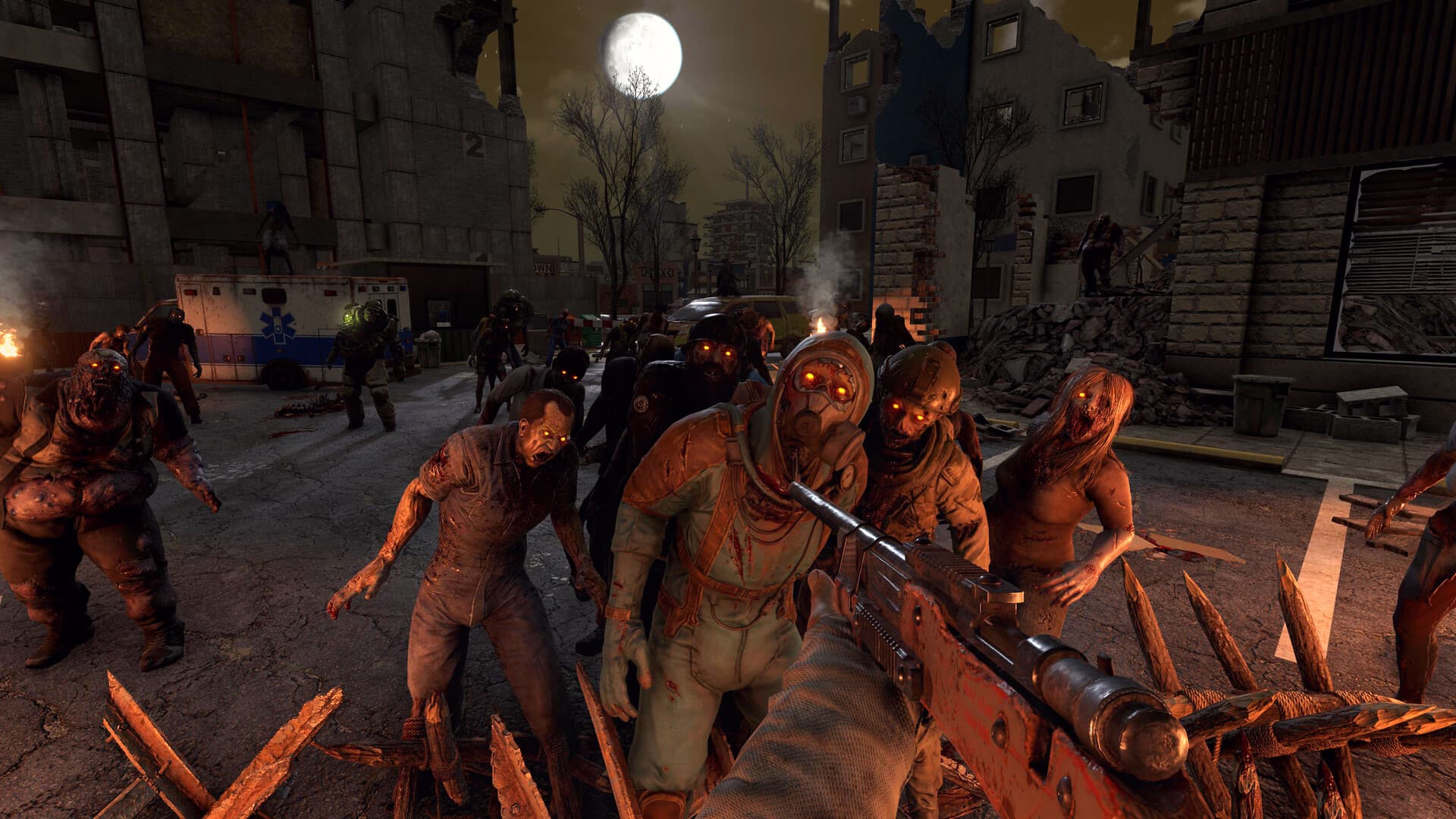
7 Days to Die puts the vegetable patch in the same survival economy as ammunition, construction and first-person fighting. Its current crop and livestock systems make the farm useful well beyond producing something to eat.
- Farming
- Base defense
- Crafting
- Co-op
- Platforms
- Windows, macOS and Linux via Steam; current desktop edition with solo and multiplayer play.
- Price model
- Paid base game with optional cosmetic packs sold separately.
Planting here belongs to a much larger preparation problem. You need a food supply, but also equipment, repair materials and a base that can cope with attacks. Time spent building up crops is time you could have spent scavenging or strengthening defenses. That tension is the attraction: a productive settlement gives you more control over the next excursion, yet getting it established exposes you to the wider world’s demands.
The released Henpocalypse update gives corn a particularly clear second job. Corn and rotting flesh become Rekt’s Chicken Feed, which supports a Chicken Coop’s production of eggs and feathers. You first have to catch a chicken and carry it back through zombie territory. The farming chain therefore reaches out into combat before it becomes reliable home production. Coop tools can accelerate production, reduce feed costs or enable breeding, giving you concrete improvements to work toward.
The resulting supplies can support both ordinary provisions and specialized preparation. The update’s Chicken Wings recipe, for example, combines a domesticated chicken with corn meal, eggs, oil and honey, and temporarily improves melee damage while providing infection immunity. That is a particularly good example of farming and fighting feeding one another: crops sustain livestock, livestock and other ingredients produce a useful meal, and that meal supports another dangerous trip.
You can also tune how demanding the cycle becomes. The current sandbox settings include crop yield, seed drops and crop growth, alongside Blood Moon timing and other survival options. Set those deliberately when creating a world instead of assuming every server offers the same agricultural workload. This is the best choice here for players who want to build a food economy under pressure, provided they also want the complexity of a first-person survival sandbox.
The verdict
Choose 7 Days to Die when a successful farm should feel like an achievement inside a dangerous, customizable zombie world.
Core Keeper
Core Keeper pairs a real cultivated garden with mining, equipment progression and boss expeditions. Its standout advantage is the ability to develop beyond manual chores into purpose-built farming machinery.
- Farming
- Crafting
- Co-op
- Exploration
- Platforms
- Windows and Linux via Steam; current desktop edition, solo or up to eight players online.
- Price model
- Paid base game; optional guide and soundtrack sold separately.
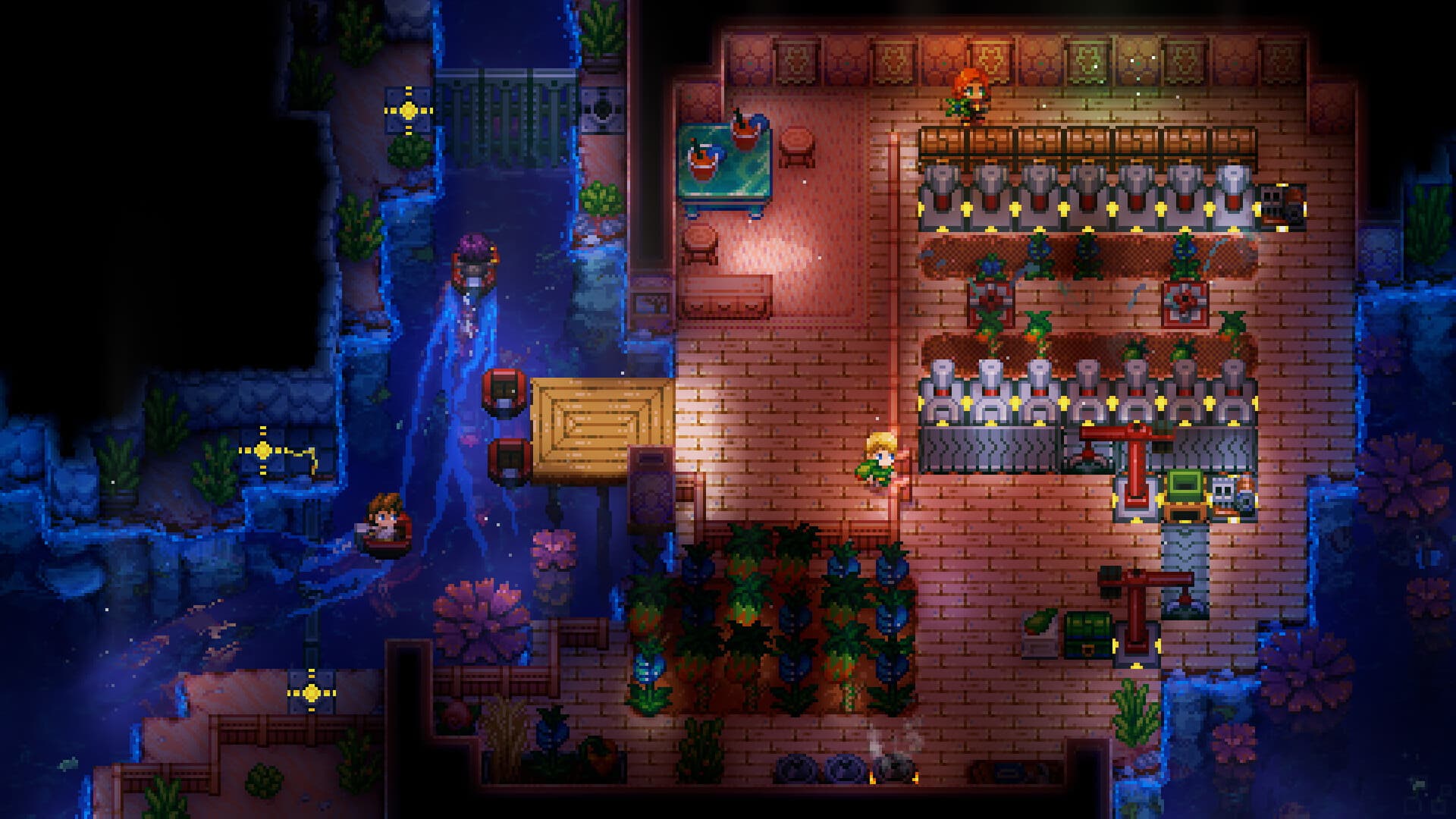
The underground starts as something to explore and gradually becomes somewhere to live. Seeds found during your adventures let you establish crops at home, and harvested ingredients can be combined with fish in the cooking pot to discover foods with different effects. That makes the garden a repeatable source for your preferred preparations. Finding something useful in a new biome can change what you want to grow, rather than merely add another decorative plant to the base.
The current automation layer is the important reason to consider it over older farming recommendations. Void & Voltage added the Robot Farm Arm and Seed Extractor alongside an Advanced Automation Table and other machinery. The progression is no longer limited to doing the same garden work by hand forever. You can make the supply system itself a project, investing in equipment that supports planting and harvesting while you develop the rest of the settlement.
There is still an adventure to supply. Mining opens routes and provides materials for better equipment, while monsters, mini-bosses and Titans demand combat preparation. Talent points and loot give the fighting side its own growth. For a cooperative group, the systems leave room for useful specialization: someone can organize the farm and supplies while others explore, mine or prepare for a boss. The crops matter because the team has somewhere dangerous to go afterward.
Choose the scale of farming you actually enjoy. A compact garden can support exploration; a bigger automated operation becomes a construction and resource-management project in its own right. Neither removes the need to learn combat encounters or obtain better equipment. Core Keeper is especially appealing if you like watching a humble patch of planted ground become reliable infrastructure, and then using that preparation to venture farther underground.
The verdict
Pick Core Keeper if improving the farm’s workflow sounds as satisfying as improving the weapon you take on the next expedition.
DYSMANTLE
DYSMANTLE is the gentler pick for players who want meaningful crops and dangerous exploration without a farm built around avoiding starvation. Its food progression makes a good harvest feel like an investment in the character.
- Farming
- Crafting
- Permanent progress
- Exploration
- Platforms
- Windows and macOS via Steam; desktop base game with solo and local shared-screen co-op.
- Price model
- Paid base game; Underworld, Doomsday and Pets & Dungeons are separate paid expansions.
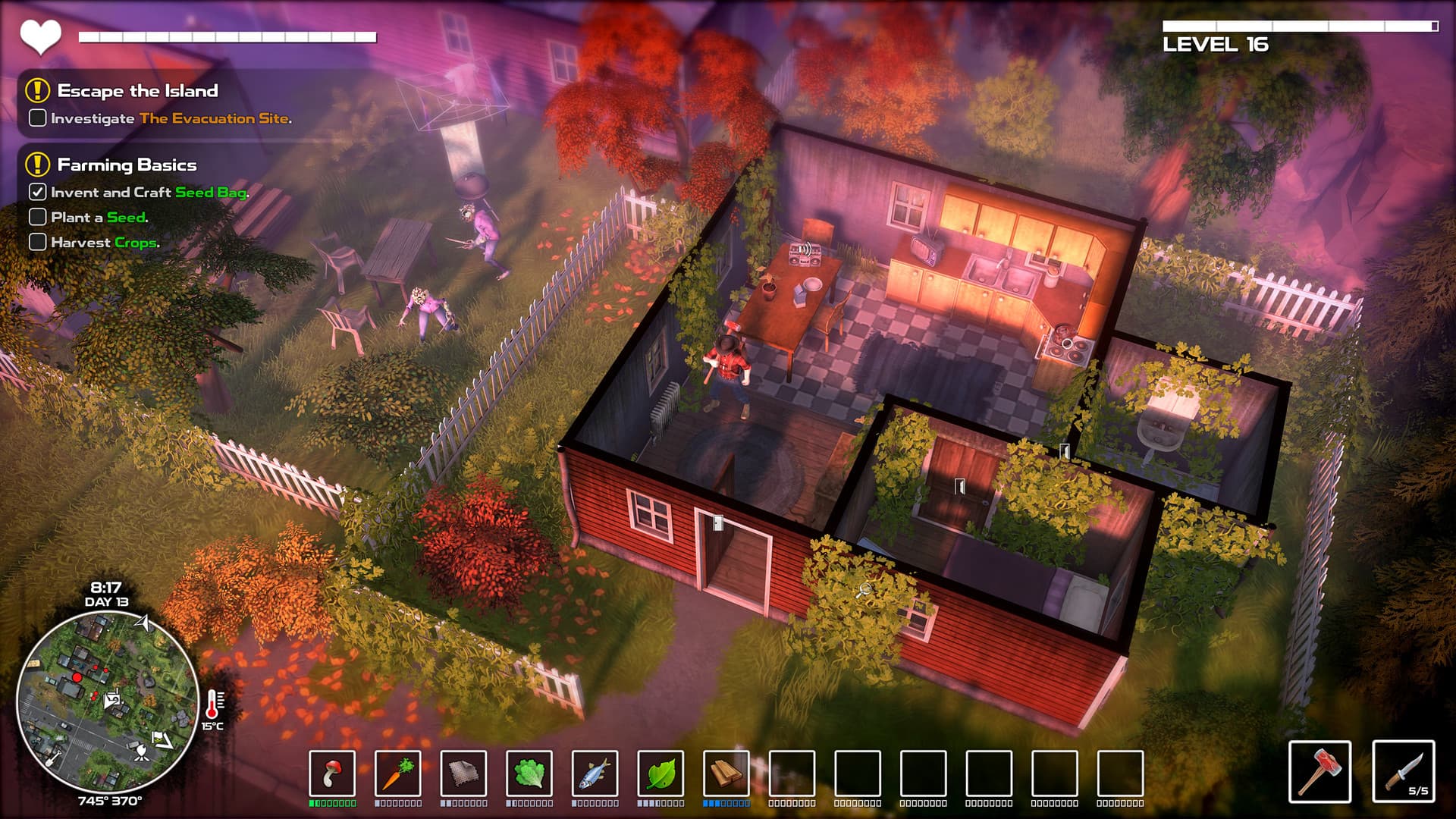
The central rhythm is wonderfully destructive: break objects for materials, improve your tools and equipment, and open up more of a handcrafted island. Monsters make those trips dangerous, so the supplies you bring home have a practical purpose. Farming joins that loop through actual planting and harvesting. The game’s Farming Basics objective introduces the Seed Bag, then asks you to plant and collect a crop, making the distinction from simply looting vegetables quite clear.
The harvest matters because recipes can provide permanent stat and ability upgrades. A crop grown toward one of those recipes contributes to lasting progress rather than only a temporary pre-battle window. That gives you an easy way to set a gardening goal: work backward from a useful recipe, decide which ingredients you need to cultivate, and use the growing interval for another gathering or exploration trip.
There is also room to make cultivation part of your home. The home-building update added Planters for indoor growing, so a garden need not remain an isolated outdoor patch. Be careful about edition expectations, though: the faster Enhanced Seed Bag that plants a three-by-three area belongs to the Underworld expansion. The base game already supports farming; that particular convenience is an additional purchase.
The tradeoff is the game’s broader emphasis. Fighting, traps and equipment matter, but much of the pleasure comes from dismantling the island and completing its lasting improvements. You will never die of hunger, which removes a constant pressure from the farming loop. Choose it when you want to return to the garden because it can make you stronger, rather than because an empty stomach is about to end the adventure.
The verdict
Choose DYSMANTLE for purposeful, lower-pressure farming that helps build a permanently stronger survivor.
Don’t Starve Together
Don’t Starve Together is the pick for people who want to understand their plants. Seasonal preferences, nutrients, tending and weeds make agricultural knowledge valuable inside an already dangerous survival world.
- Farming
- Co-op
- Crafting
- Exploration
- Platforms
- Windows, macOS and Linux via Steam; desktop edition with solo and cooperative play.
- Price model
- Paid base game. The Steam purchase includes an extra gift copy; optional characters and cosmetic content are sold separately.
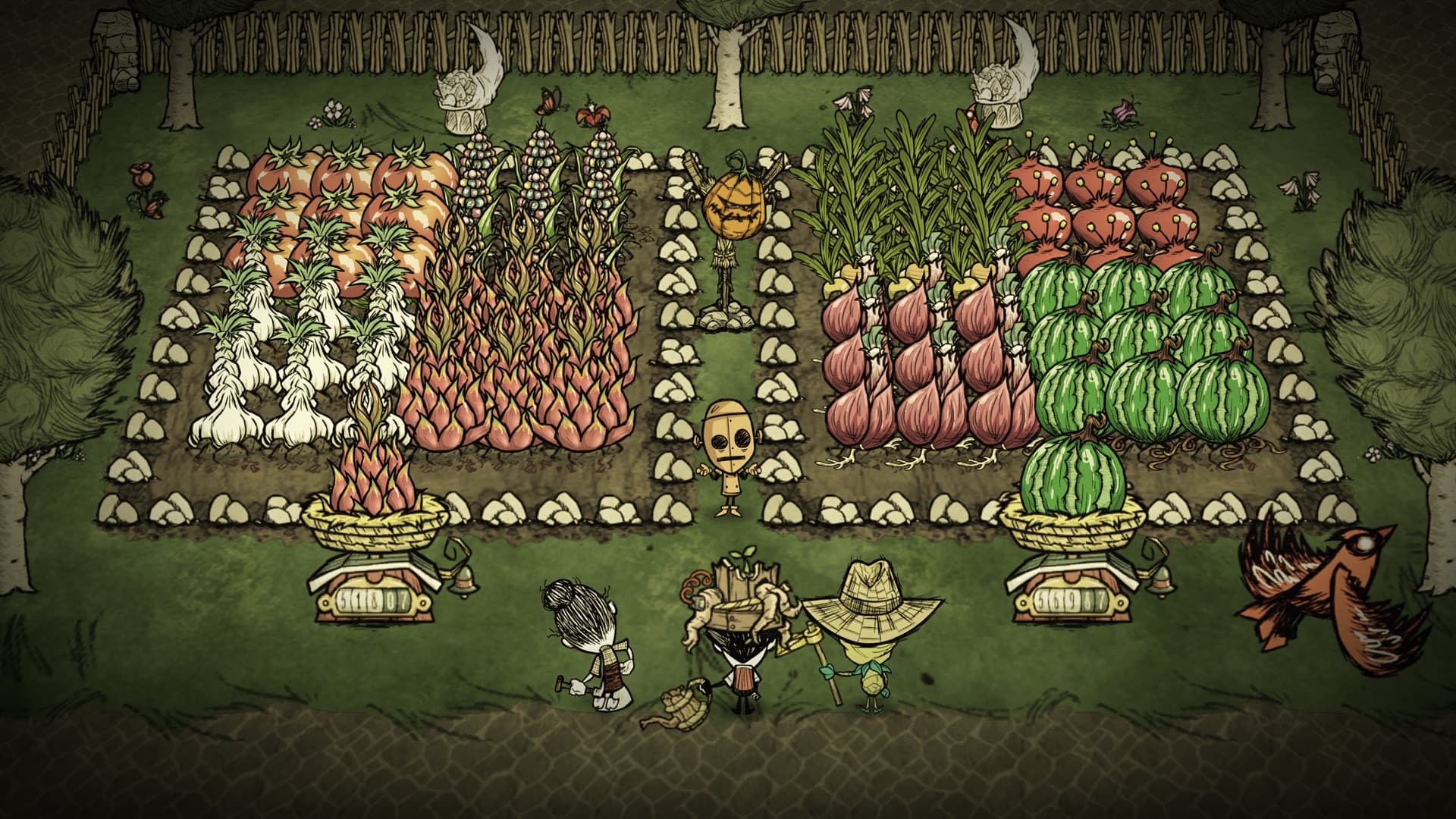
Its farming system goes beyond putting a seed in a timer slot. You plow fields, sow seeds and tend the resulting plants. Vegetables have preferred growing seasons and nutrient types, so choosing what to grow together and when to grow it becomes part of the challenge. The Gardeneer Hat and Plant Registry make learning those preferences an in-game project. This is a strong fit if a successful garden should reward observation and experimentation.
Care improves the outcome, but perfect horticulture is not the entry requirement. Klei’s farming update explicitly distinguishes neglect from killing the crop, while warning that weeds can become a problem. That leaves room to begin with a useful small patch and then improve it. The temptation is to optimize everything immediately; the sensible approach is to establish food you can maintain before taking on a much larger garden.
The surrounding world prevents that garden from becoming the whole game. Seasonal bosses, roaming threats and shadow creatures still demand equipment, preparation and attention. Your crops help keep the group fed and ready, but knowing when to stop tending and deal with danger is another survival skill. Cooperative play makes that tension productive: one survivor can work on food while another gathers materials or handles a threat, and everyone depends on the combined effort.
Compared with Zombie Defence’s compact three-crop allocation, this is a more intricate agricultural system inside a more demanding wilderness. Compared with Core Keeper, the attraction is learning plants’ needs rather than building a machinery-led supply line. Choose it if you enjoy becoming knowledgeable about an unfriendly world. If you mainly want to harvest something quickly and get back to shooting, its layered responsibilities can feel like a detour.
The verdict
Pick Don’t Starve Together for the most knowledge-driven garden here, especially if a group wants to share the work and danger.
Raft
Raft makes the farm part of the vehicle carrying you through the adventure. Your growing space, food preparation, storage and defenses all share a floating home that needs constant practical attention.
- Farming
- Shelter building
- Crafting
- Co-op
- Platforms
- Windows via Steam; current desktop edition with solo and online cooperative play.
- Price model
- Paid base game.
The opening problem is space and supply. Debris gathered with the hook becomes equipment and additions to the raft, including crop plots. Planting food gives you something to return to after gathering or exploring, while cooking and later preparation options give the harvest a use. Because the garden travels with you, improving it also means deciding how to arrange the home you navigate around and work on.
Watering and protection make the growing cycle more than decoration. Crops need water, and seagulls can eat from the plots. Later equipment improves the routine: the full-release update includes Advanced Crop Plots in three sizes and an Advanced Scarecrow, while sprinklers provide a route away from watering every plot by hand. The useful investment is the one that relieves your current bottleneck, whether that is growing space, crop protection or repeated maintenance.
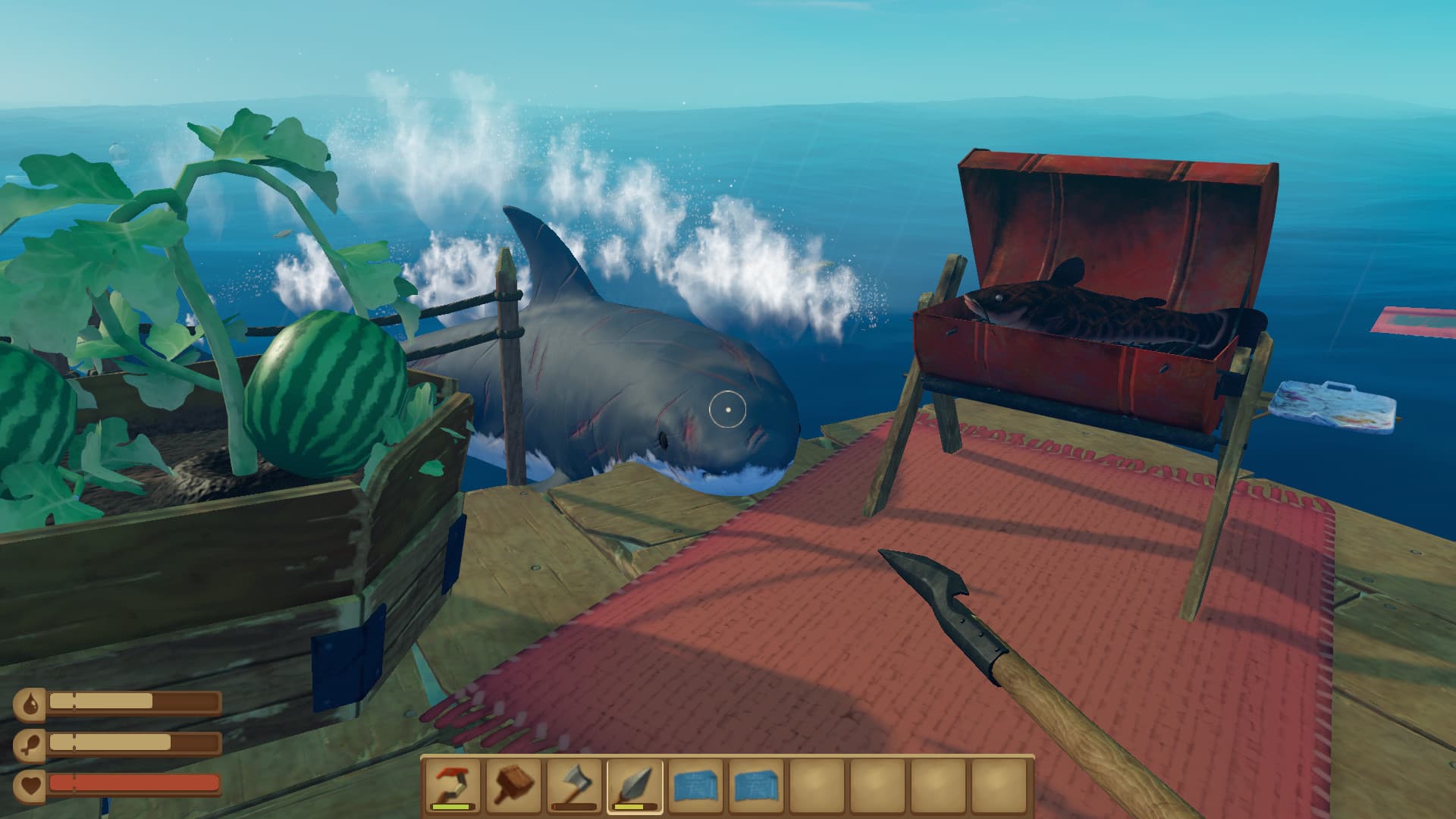
Then the shark arrives. The screenshot captures the appeal neatly: watermelons on one side, a grill on the other, and a spear ready beside a shark attacking the raft. Food production and fighting occupy the same small living space. Islands and underwater gathering add further reasons to prepare before leaving the deck, while research unlocks more things to build when you return.
Raft is a better choice for players who want survival interruptions than for players seeking a dense combat build system. Fighting protects the journey and breaks up the supply routine; it does not dominate every moment. In co-op, that balance gives friends room to divide gardening, collecting and exploration duties. Alone, the same breadth means every thirsty plant, missing material and unwelcome visitor becomes your responsibility.
The verdict
Choose Raft for a traveling homestead where the garden is always close and trouble can arrive right at its edge.
How we compare
A good recommendation explains who a game suits and where it falls short. Our editorial scores use the same five criteria, each rated out of ten.
- 01
Combat
Controls, aiming, enemy readability, and the decisions you make under pressure.
- 02
Progression
Build choices during a run and meaningful progress between attempts.
- 03
Usability
Control demands, platform access, interface options, and documented device requirements.
- 04
Value
What the asking price includes, optional purchases, and the scope of the free version.
- 05
Fit
How well the game answers the specific question in this article.
Which one should you try?
Choose Valheim for an expansive homestead that prepares you for boss expeditions, or 7 Days to Die for a food economy built under zombie pressure. Core Keeper is the pick for developing agricultural machinery; Don’t Starve Together rewards deeper knowledge of the plants themselves. DYSMANTLE makes cultivated ingredients part of permanent improvement, while Raft keeps your garden moving through the adventure. Zombie Defence is especially compelling when you want the connection to stay close and readable: allocate a few plots, use the harvest wisely, pack one useful meal and head back into active combat.
Your questions, answered.
Want to see what we’re building?
Zombie Defence is in Alpha. Join the waitlist.
More games to explore
- 7 Best Survival Games With Cooking Buffs
Compare seven survival games where cooking changes your next expedition, from Valheim’s food slots to DYSMANTLE’s permanent upgrades and Zombie Defence’s packed meals.
- 7 Best Survival Games Where Death Does Not Erase Your Base
Keep the home, understand the setback. Compare seven survival games by death losses, recoverable gear, optional modes and the risks that can still end a world.
- 7 Best Survival Games With a Base That Keeps Growing
Build a home that matters across outings. Compare seven survival games for lasting upgrades, useful workshops, shared worlds and the setbacks that still count.