Valheim review: the adventure comes home
Every dangerous expedition makes the next home improvement look like a brilliant idea.
Zombie Defence Editorial ·
Based on official documentation and gameplay imagery.
Valheim has a wonderful way of making a kitchen extension feel heroic. A trip into hostile country needs better meals, those meals need ingredients, and suddenly the person tending the farm is contributing as much to the expedition as the Viking polishing an axe.
That connection is the game’s great trick. Exploration gives domestic work a purpose; domestic work makes exploration possible. You are building the place you want to return to, then finding increasingly alarming reasons to leave it. The roof can wait. Unless it cannot.

A home with a job to do
The basic rhythm is gathering, making equipment, exploring a tougher biome and preparing for its Forsaken boss. New materials unlock recipes, so discovery changes what your settlement can produce. A workshop is effectively a record of where you have been and what you can attempt next.
Building earns its place in that rhythm. Walls and roofs provide a refuge, while structural integrity and defence put practical limits on the grand design. Start by asking where crafting and storage should go. Architectural ambition is more affordable after the place actually works.
The appeal is choosing which improvement solves today’s problem. Better equipment helps a dangerous journey; another outpost makes a distant area easier to work from. Both are progress. Valheim is especially good at making a modest, useful building feel like a landmark.
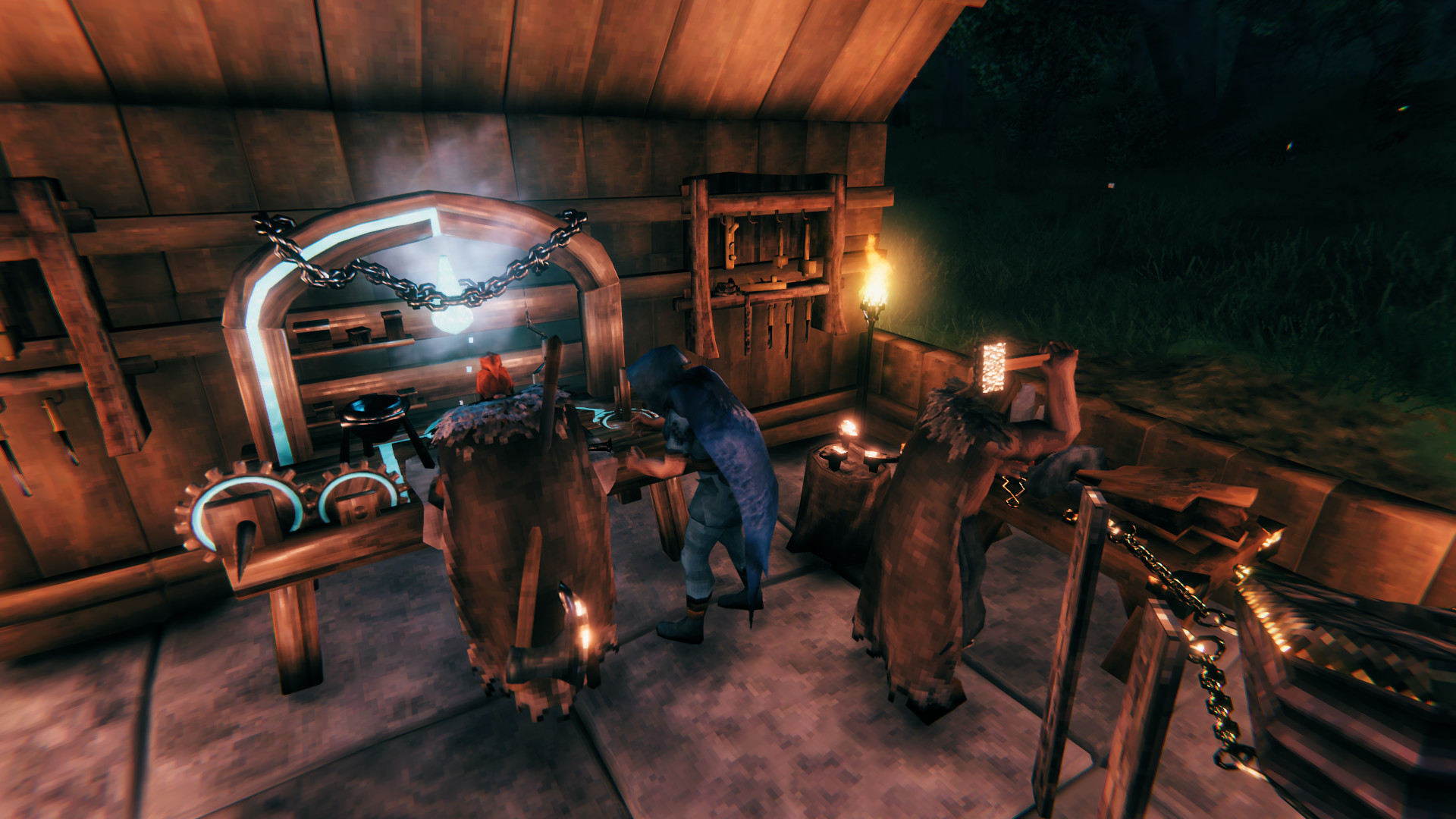
Dinner is part of your loadout
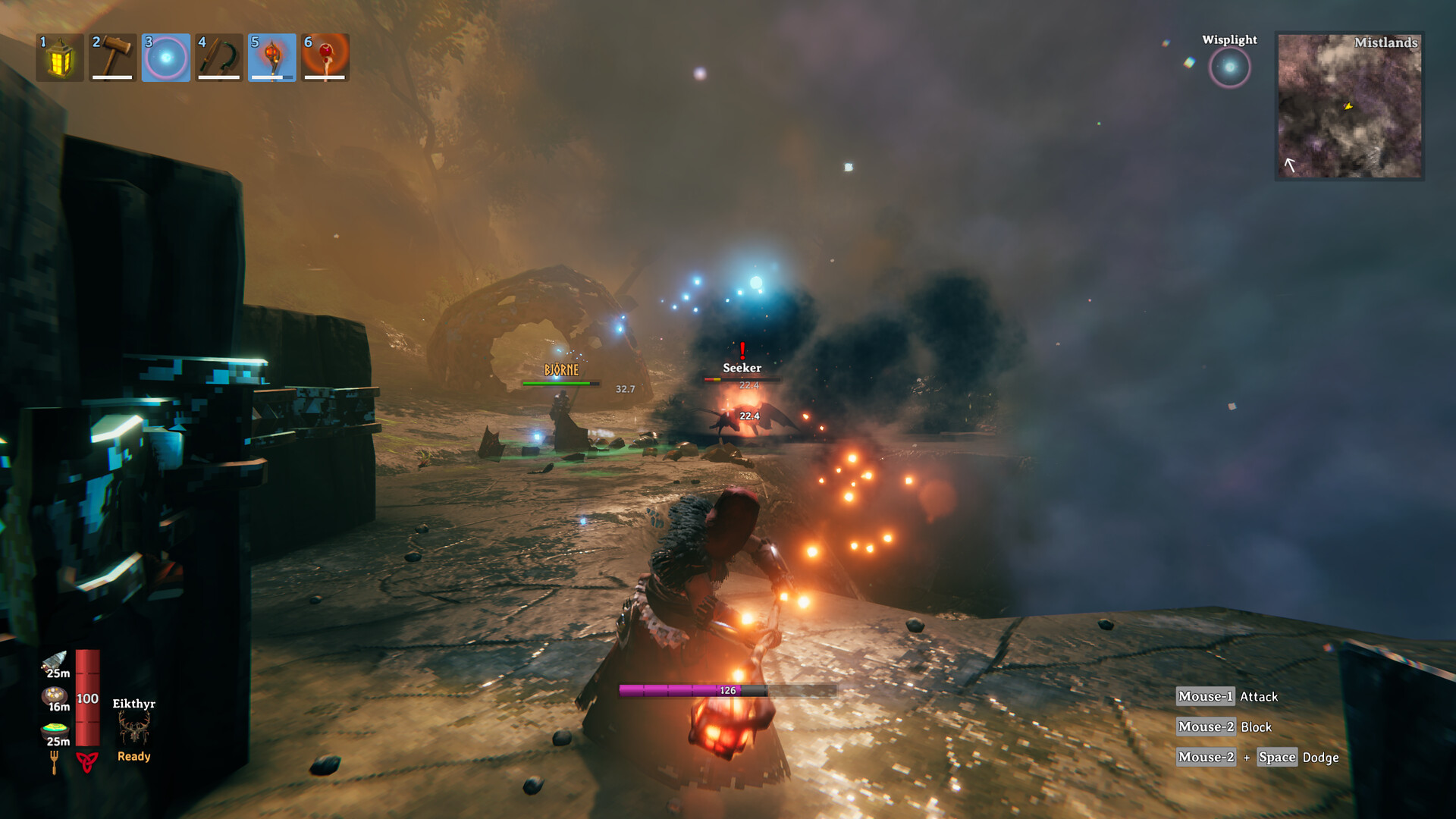
Food increases health and stamina rather than operating as a starvation deadline. Health-heavy and stamina-heavy dishes support different priorities. Choosing dinner is therefore a combat decision: do you want more room for mistakes, or more energy to move and attack?
Blocking also gives health a tactical role, while dodging asks you to read an attack and commit at the right moment. The sensible response to trouble is not always another swing. Leave yourself a way out instead of spending your entire stamina bar proving a point.
Call to Arms adds another layer through equipped trinkets. Fighting builds adrenaline, and filling its bar triggers the trinket’s temporary perk. Perfect blocks and perfect dodge rolls contribute, making clean defence part of an offensive plan rather than merely a pause between hits.
That is a satisfying basis for combat: preparation chooses your options, then timing determines how well you use them. It also explains the sting of arriving underprepared. A stronger weapon cannot do every job that a better meal, a shield and some restraint should be doing.
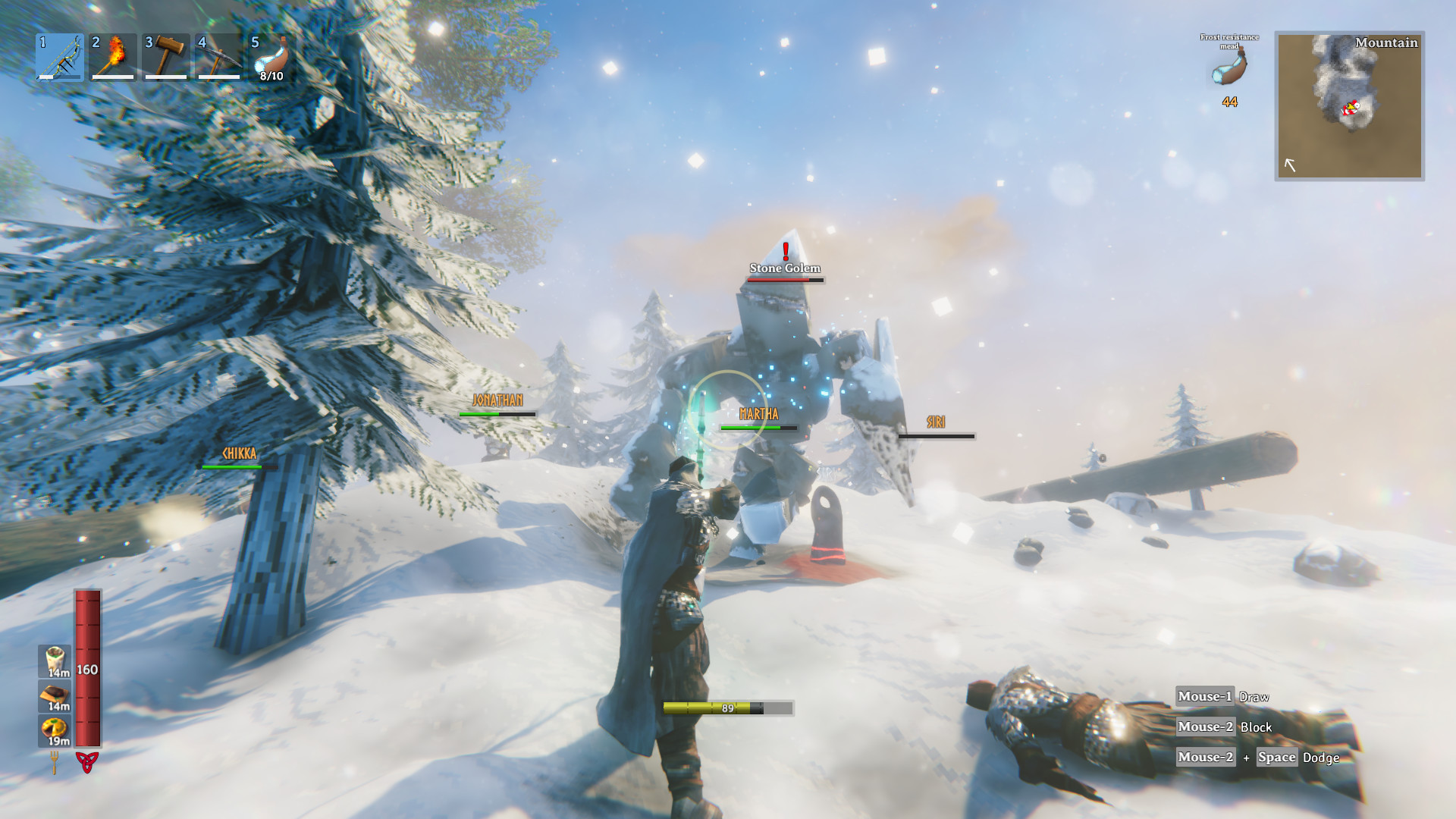
The map keeps sending you back to the workshop
Valheim’s generated worlds make geography matter. Sailing connects distant projects, while biomes change the resources and dangers you are planning around. A promising coastline is more than scenery when you are deciding where the next working base belongs.
The progression reaches beyond the early forests, swamps and mountains into Mistlands, Ashlands and now the released Deep North. Version 1.0 arrived on 9 September 2026. Its new northern biome expands the equipment, food and building possibilities, rather than simply adding another snowy backdrop.
For returning players, the practical choice is whether to continue an established world or begin again. Existing saves still work, but new biome generation needs unexplored territory. A fresh world makes the whole progression a shared journey again; an old one preserves the settlement you already care about.
That choice captures Valheim’s strongest long-term pull. The destination matters, yet so does everything accumulated on the way there. A new material is exciting because it might change your next weapon, your next meal or the house your friends keep arguing about.
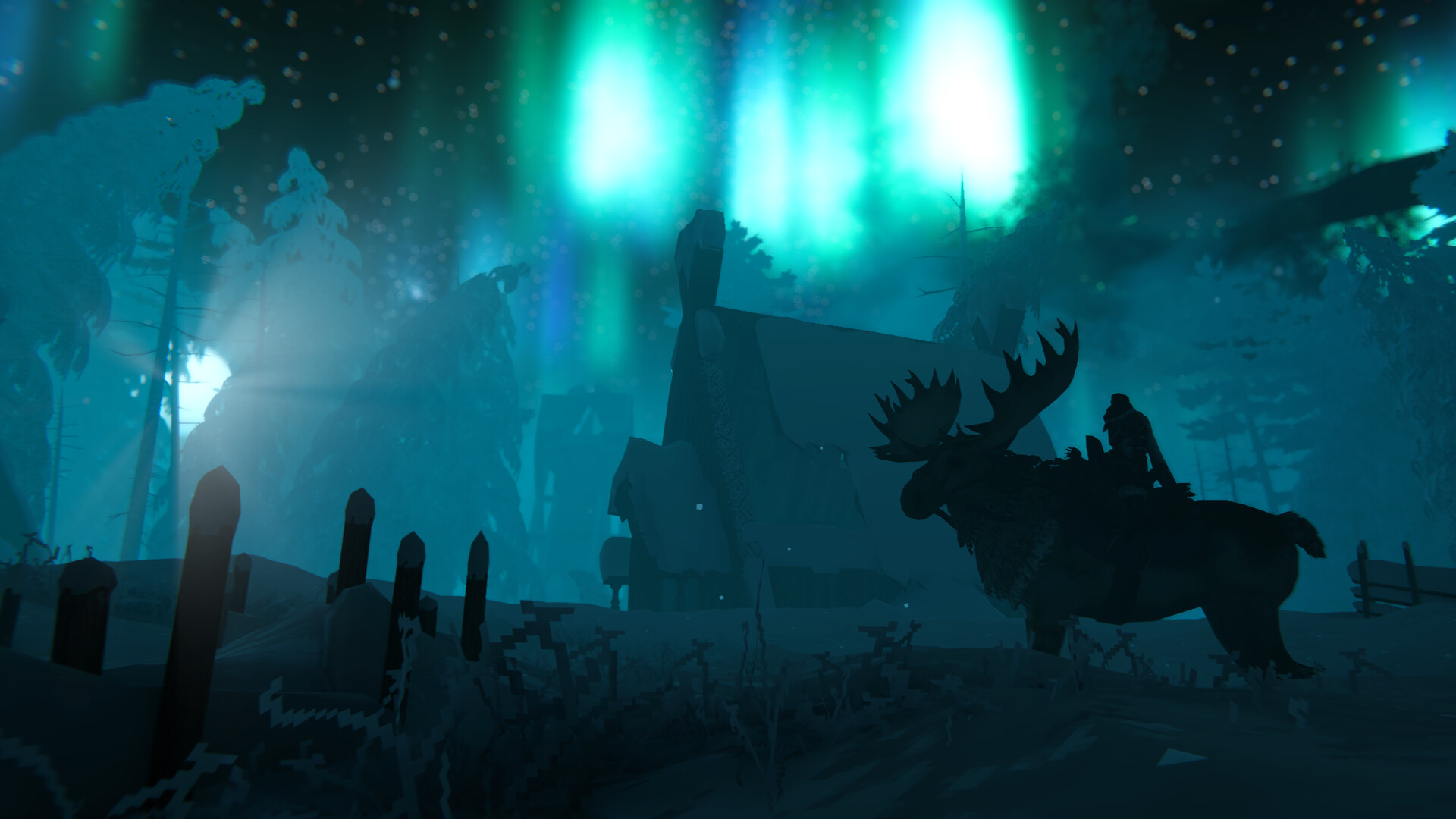
Someone has to keep the lights on
Solo play is fully supported, and co-op accommodates up to ten players. A group can split the work between builders, gatherers and fighters, but the best arrangement is one everyone actually enjoys. Assigning a friend permanent kitchen duty requires more diplomacy than slaying a monster.
There are no official Iron Gate servers. You can host a session or run a dedicated server, which makes the hosting decision important for a continuing group. Agree who maintains the world and when the group tackles major bosses before everyone settles into different schedules.
Crossplay supports the available platforms, including PC, Xbox, PlayStation 5 and Nintendo Switch 2. Save syncing is narrower: Xbox and the Microsoft Store PC version share saves, while other platforms do not have that cross-platform sync. A Steam purchase is not a Microsoft Store licence.
For a regular crew, the payoff is a world that becomes recognisably yours. Useful contributions remain visible after a session ends. The cost is coordination: a shared project needs shared expectations, especially when one enthusiastic builder starts treating the coastline as a personal renovation programme.
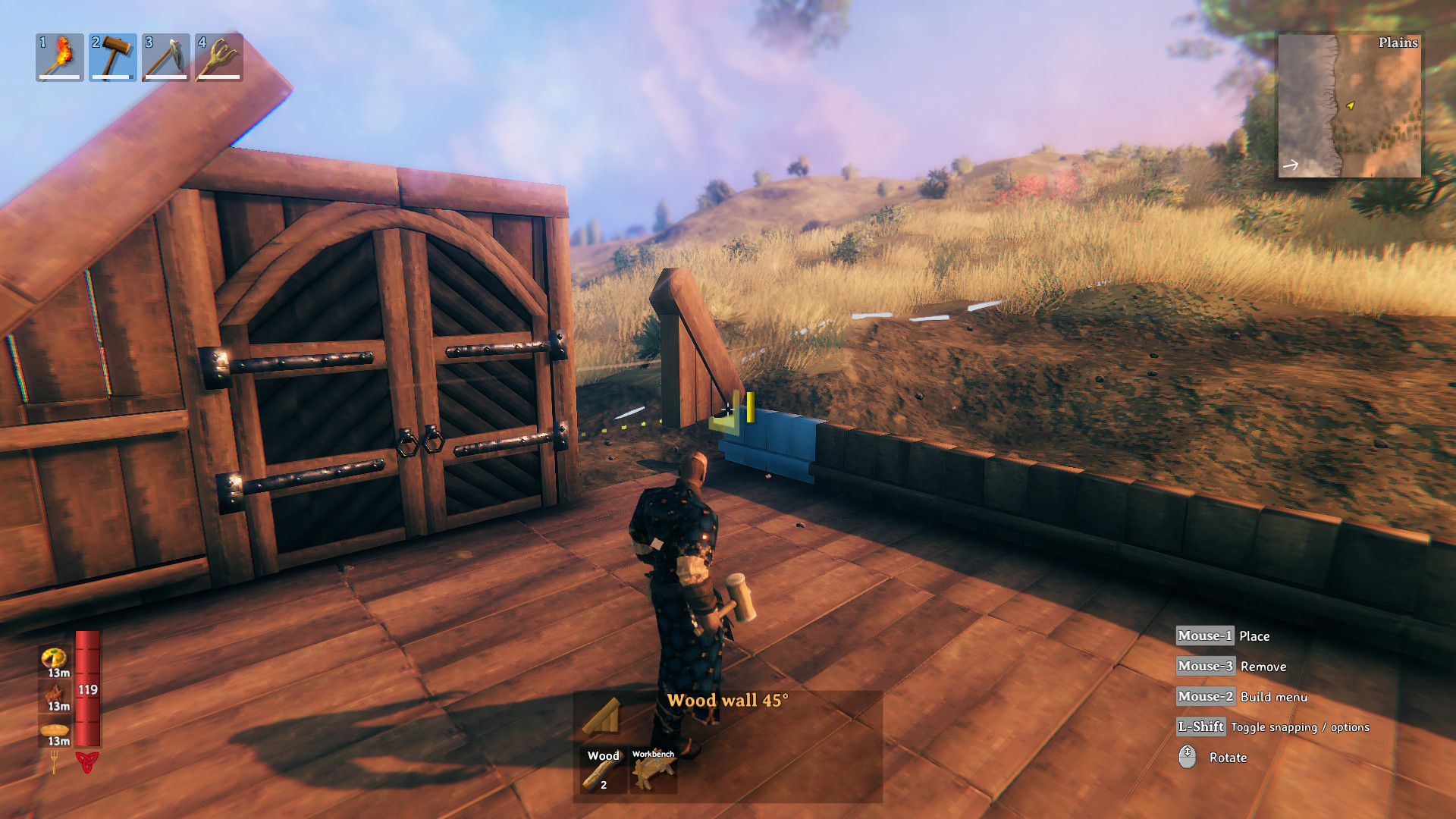
Adjust the chores before they become the game
The same resource loop that gives a settlement weight can become repetitive. If a group wants dangerous expeditions but has little appetite for gathering, discuss the world modifiers. Difficulty, resources, raids and portal rules can be adjusted without making mod installation the opening activity.
Those choices deserve a conversation before the first big project. A stricter world gives logistics more importance; a gentler one leaves more room for construction and wandering. Neither choice fixes a group whose members want entirely different games, but it makes those differences easier to spot.
Version 1.0 overhauled the hammer menu and added upgradeable pockets. Later patch 1.0.14 expanded keyboard rebinding and added a toggle-block accessibility setting. These are welcome practical improvements to a game where building and organising can occupy as much attention as swinging a weapon.
It is still worth treating a long-lived world carefully. Patch 1.0.17 addressed a rare save-chunk bug that could erase objects. Keep backups, and distinguish the stable game from Public Test: saves updated on a test branch may require an older backup to return safely.
Worth the work, if you like the work
Valheim’s value comes from how much meaning its systems give one another. Combat feeds crafting, crafting supports travel, and travel justifies another base. Players who enjoy planning as much as fighting get far more from that relationship than players looking for uninterrupted action.
The 1.0 update was included for existing Early Access owners. New buyers should check their local storefront price and choose the platform around their group and save needs. This review’s rating covers the PC base game; console availability does not make it a console performance assessment.
The deciding question is simple: does preparing the expedition sound like part of the adventure? If so, Valheim offers a remarkably persuasive reason to keep improving a shared home. If it sounds like an obstacle between you and the next fight, the chores will eventually win.
Strengths
- Food, equipment and combat decisions reinforce one another
- Biome progression gives crafting and construction a lasting purpose
- Solo and co-op worlds support different kinds of useful contribution
- World modifiers let groups adjust the balance of challenge and chores
Tradeoffs
- Resource collection and settlement upkeep can become repetitive
- A persistent shared world needs hosting and group coordination
- Crossplay does not provide universal cross-platform save syncing
- Long-lived saves deserve backups, especially around branch changes
Who it suits
- Builders who want their home to support a larger adventure
- Co-op groups happy to plan expeditions and share maintenance
- Solo survival players who enjoy preparation and steady discovery
Verdict
Valheim makes survival feel constructive. Its best idea is that your safest place and your most dangerous ambitions depend on each other. The result is a generous, demanding adventure for players who can enjoy a productive evening without needing a boss kill to validate it.
Gathering and group administration are real costs, and the world settings deserve attention. Accept that bargain and the homecoming becomes as satisfying as the departure. Just leave enough floor space for whatever the next expedition brings back.
PC base game
Review score: 8.6 / 10
- Combat
- 8.6 / 10
- Progression
- 9.2 / 10
- Usability
- 7.6 / 10
- Value
- 9.0 / 10
Covers the Steam PC base game on the stable 1.0.17 release, checked 14 October 2026.
Steam supports Windows, macOS and Linux. Other storefronts and console ports are contextual, not separately scored here.
Public Test features are excluded. Official store screenshots span different builds; exact capture versions are not supplied.
The review score averages the applicable Combat, Progression, Usability and Value scores, rounded once to one decimal. Fit is specific to each comparison and is excluded.
Is Valheim still in Early Access?
No. Version 1.0 launched on 9 September 2026 with the Deep North biome. The latest stable patch verified for this review is 1.0.17, published on 6 October 2026.
Can you play Valheim alone or with friends?
Yes. It supports solo play and co-op for up to ten players. You can host a session or use a dedicated server; Iron Gate does not provide official servers.
Does crossplay also transfer saves between every platform?
No. Crossplay supports playing together, but cross-platform save sync is limited to Xbox and the Microsoft Store PC version. Steam and the other platforms do not share that save sync.
Do you need to restart your world for version 1.0?
No. Existing saves remain usable, although new biome generation needs unexplored areas. Iron Gate recommends a fresh start for the full experience, so restarting is an option rather than a requirement.
Can you make gathering and combat less demanding?
Yes. World modifiers allow changes to difficulty, resources, raids and portals. Agree on the settings with your group; they can substantially change how much preparation and transport your world asks of you.
Sources
- Steam: Valheim PC store ·
- Iron Gate: Valheim overview ·
- Iron Gate: Valheim FAQ ·
- Iron Gate: Valheim 1.0 launch ·
- Iron Gate: Valheim 1.0 FAQ ·
- Iron Gate: Patch 1.0.17 ·
- Iron Gate: Patch 1.0.14 ·
- Iron Gate on Steam: Call to Arms stable release ·
- Iron Gate on Steam: Hearth & Home food and blocking changes ·
- Iron Gate on Steam: Hildir world modifiers ·
- Iron Gate: Crossplay FAQ ·
- Iron Gate on Steam: Public Test Branch FAQ ·