Deadly Days: Roadtrip review: pack first, panic later
A zombie road trip where the luggage does the heavy lifting, and one more loot stop can become a very expensive mistake.
Zombie Defence Editorial Team ·
Based on official documentation and gameplay imagery.
The apocalypse has finally found a use for being good at packing. Deadly Days: Roadtrip lets you turn an awkward backpack into a portable catastrophe, then sends you out to discover whether your beautiful arrangement can survive contact with a street full of zombies.
This is the action-focused branch of Deadly Days, rather than the original game’s survivor-group management. You steer a survivor through the danger, build around their equipment and keep the bus moving. The clever part is how much of the fighting gets decided between the gunshots.
Your backpack is the weapon
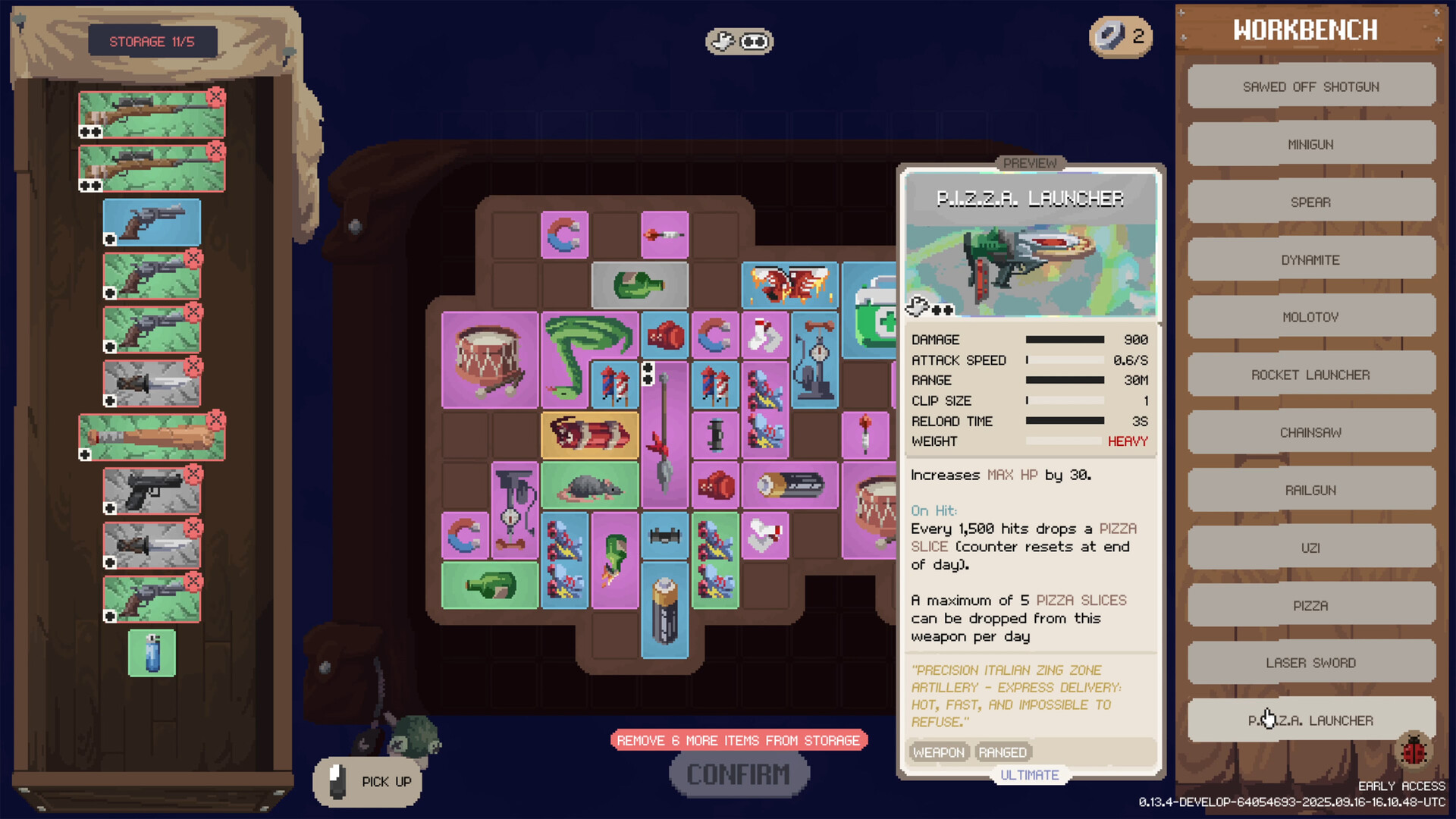
Items occupy actual blocks, so finding something powerful is only half the problem. Placement matters because equipment can affect neighboring or marked spaces. A tidy-looking bag can be a terrible build; an ungainly arrangement can be the one that makes the whole machine sing.
The useful question is not simply which weapon has the biggest number. Ask what your supporting items can reach, whether a new piece breaks an existing interaction, and what you must move to make it work. Empty space becomes a resource, rather than an aesthetic failure.
Crafting gives that rearrangement a destination. Combining equipment into stronger tools can change what the bag needs next, while airdrops offer another chance to fix its weaknesses. The workbench even includes a P.I.Z.Z.A. Launcher. Apparently, contactless delivery has become a much more aggressive business.
The bus does not run on optimism
A stop is both a battlefield and a shopping opportunity with terrible customer service. You collect experience and supplies, find fuel, and decide when to leave. Staying longer can strengthen the run, but it also means managing the growing danger instead of simply clearing a checklist.
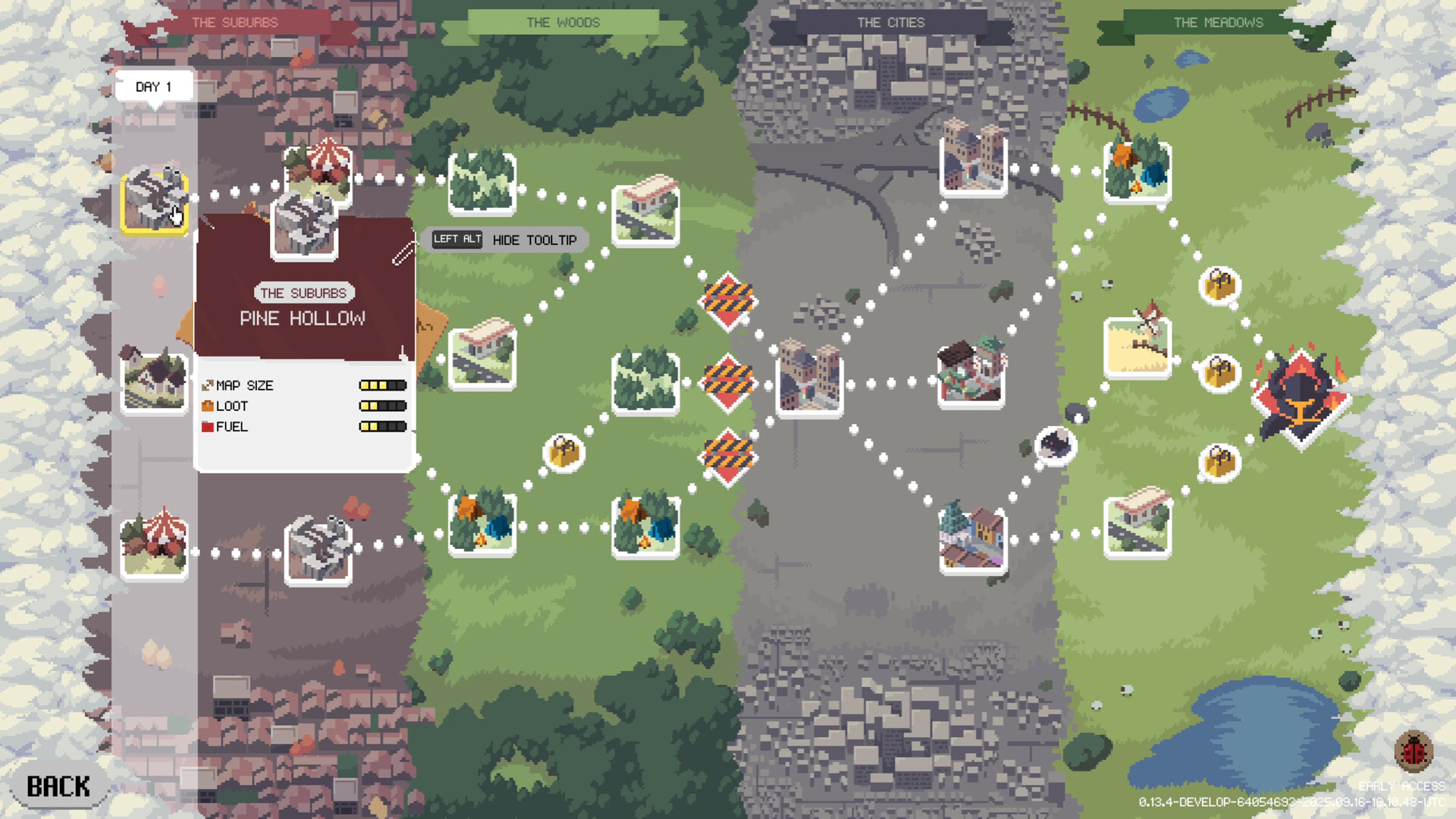
The route map gives those decisions a wider frame. Compare fuel and loot prospects before picking the next destination, then read any stage modifiers. Extra experience might justify a harder stop; an earlier Reaper arrival changes how much leisurely rummaging your plan can actually afford.
Pick a survivor, then pick a problem
Survivors offer different starting ideas for a build, rather than merely changing the portrait. Bushy uses seeds that root enemies and benefits from critical hits against rooted targets. That makes crowd control and compatible damage bonuses a more coherent plan than collecting unrelated upgrades because they look shiny.
Penny the Clown sends homing balloons into enemies, and the coastal update adds a survivor whose surfboard replaces the usual dash. These are useful changes of rhythm: controlling space, building around triggers or moving differently gives another trip a reason to exist beyond a larger damage total.
Failure still has a shopping list
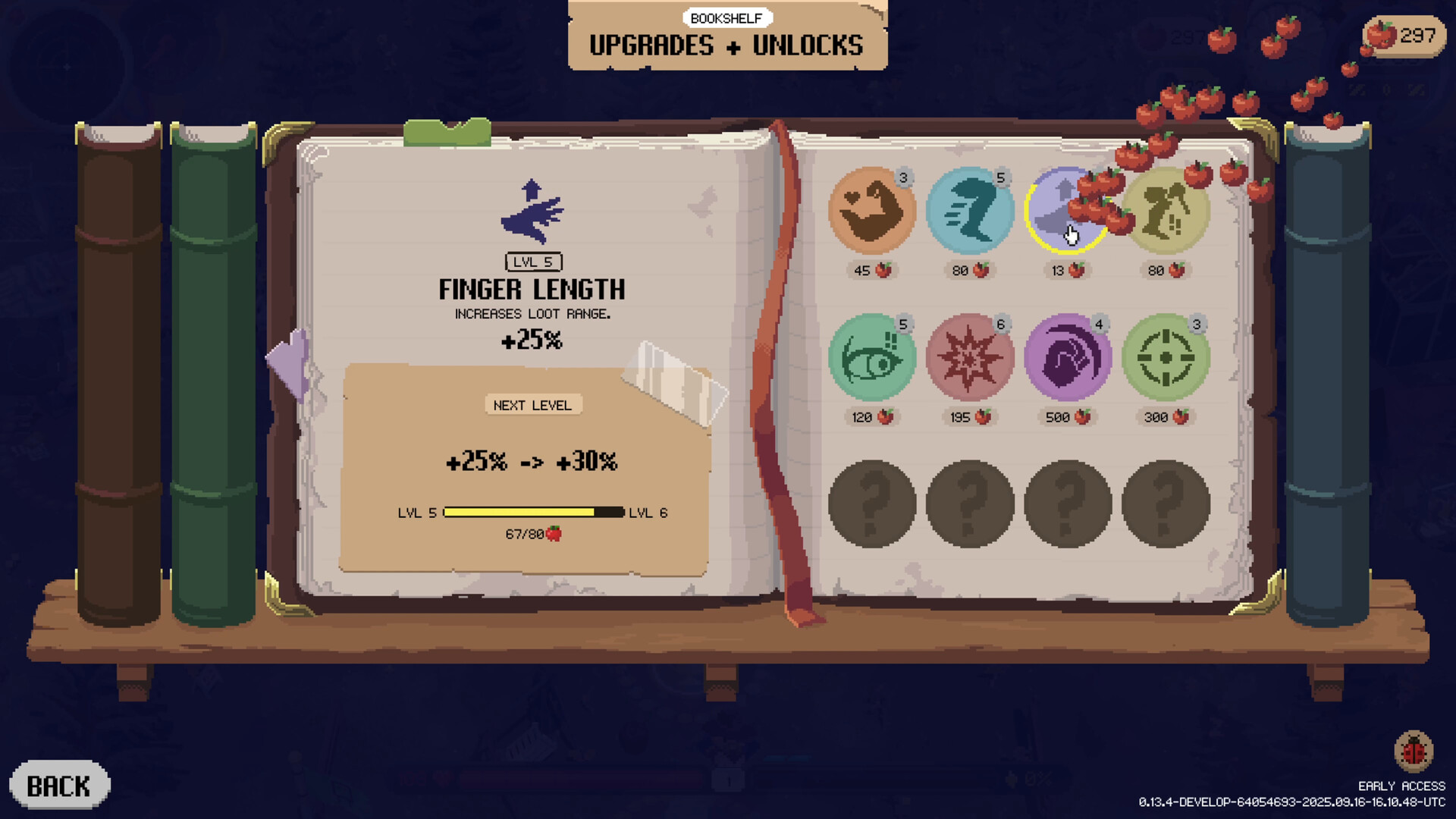
Back at base, persistent upgrades give the next departure a better foundation. Character-item stickers can be bought with apples and carry across runs. That creates a useful choice between deepening a survivor you understand and branching out to explore a different signature mechanic.
Item banishing adds another lever: once unlocked at the workbench, it can remove unwanted equipment from future loot pools. Run history also records your backpack and performance. Together, those systems encourage a more interesting post-mortem than blaming the nearest zombie for your deeply optimistic purchasing decisions.
Continuation is built around day boundaries, with saves at the beginning and end of a day. Plan a stopping point around those transitions instead of assuming every second of a mission is preserved. The trip has breathing spaces, but it is still worth choosing yours deliberately.
There is somewhere to drive toward
The current game already includes the Headquarters Run, an endgame assault on MKing Corp. You prepare across runs before taking on its multi-stage finale. That gives the accumulating upgrades a destination, while the rising MKing Response Level adds pressure during the preparation.
Endless Mode and Weekly Mode serve different appetites. Endless extends the endurance challenge; Weekly supplies a shared character, scoring rules and modifiers. The latter is a welcome excuse to improvise when your favorite build has become a ritual you could assemble with your eyes shut.
Bring a friend, leave room for friction
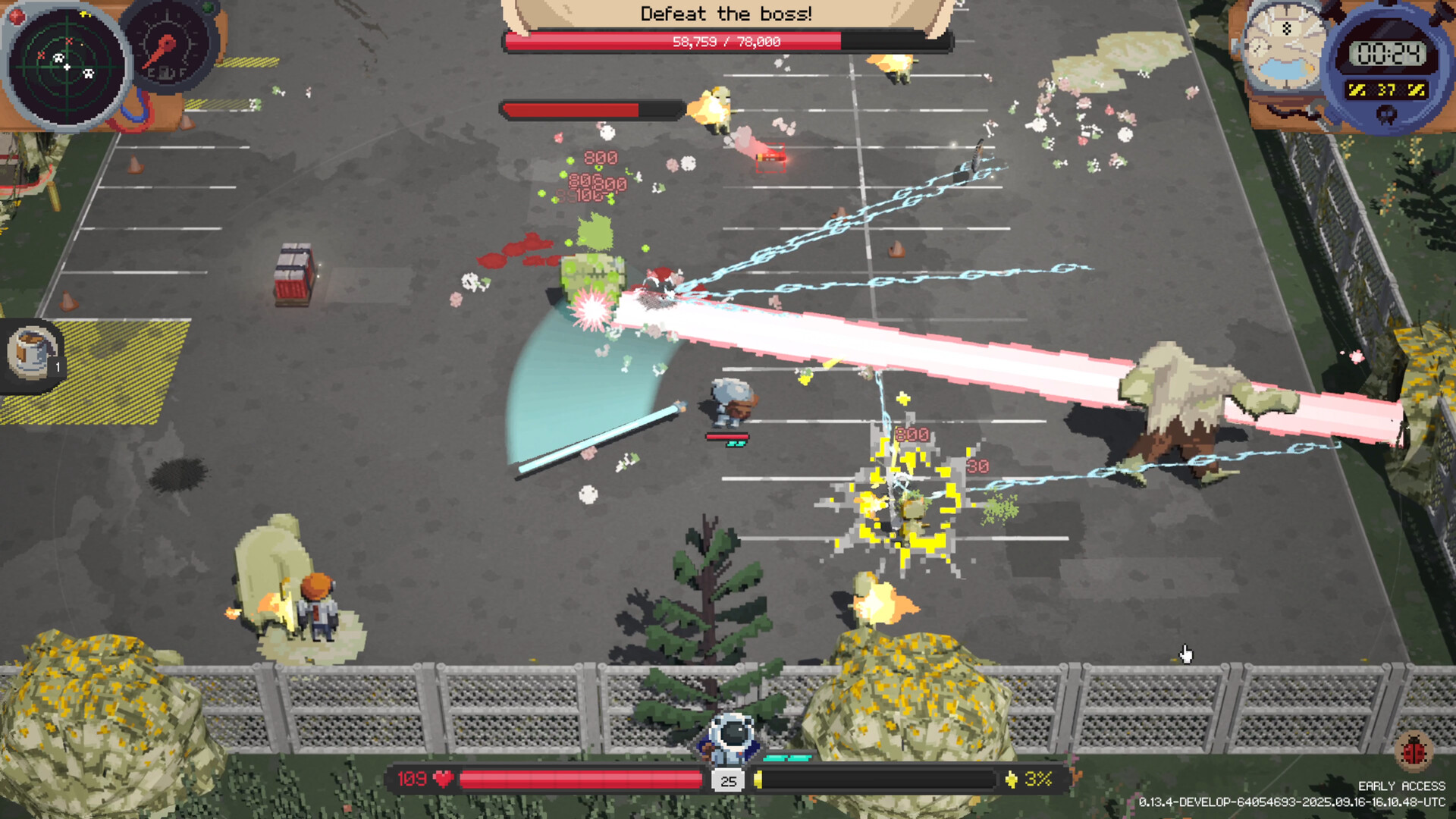
Two-player couch co-op arrived in the Bite & Bright update, with online sharing through Steam Remote Play. One player needs a controller. The developer still labels this co-op implementation beta until 1.0, so treat it as an available extra with some remaining development work attached.
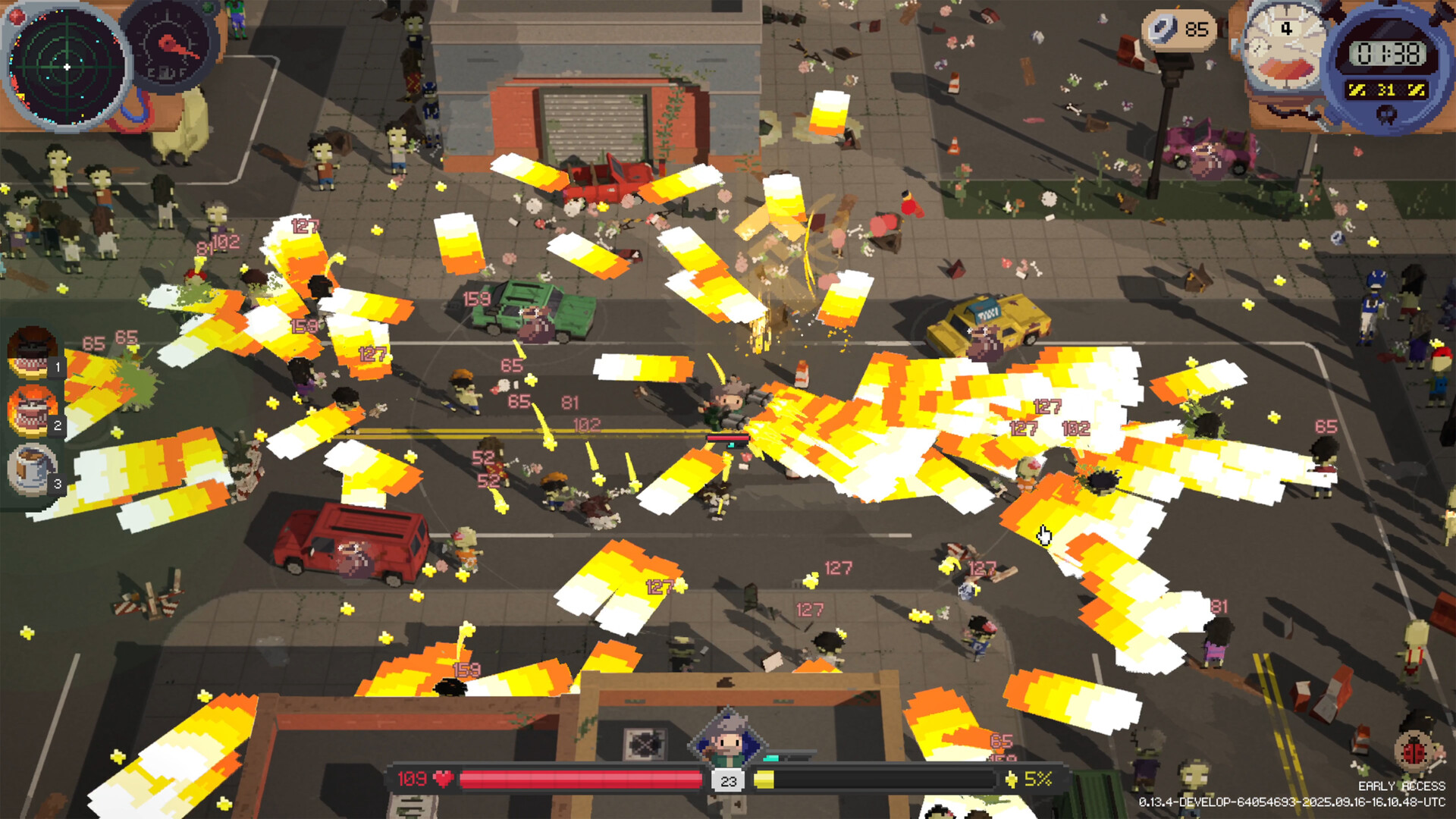
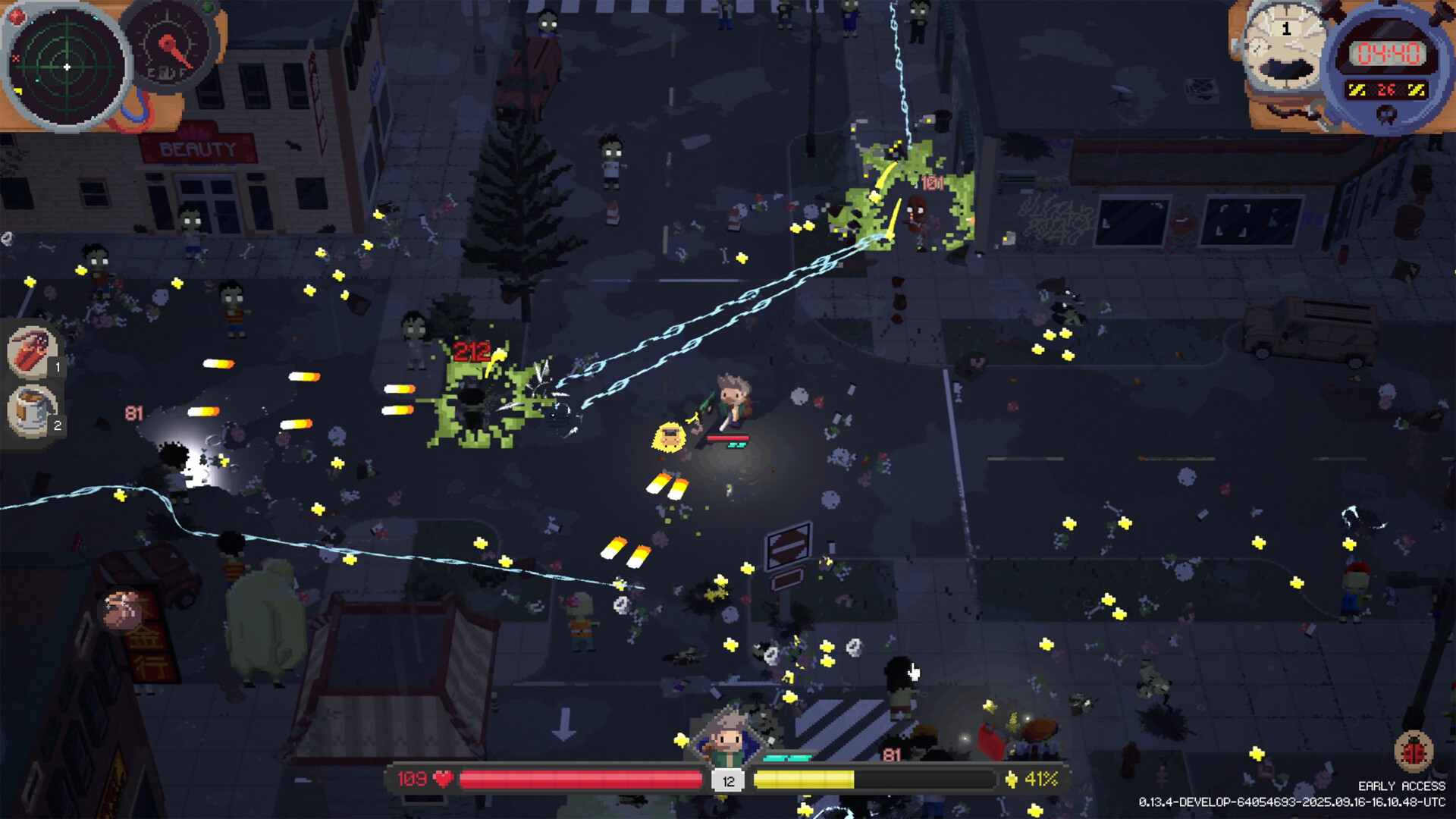
The bigger everyday tradeoff is attention. Dense projectile displays compete with enemy tells, while the inventory asks you to read effects and rethink placements. Recent updates improve tooltips and controller handling, but the underlying appeal remains a mixture of hectic movement and deliberate menu time.
What you can play right now
As of October 14, 2026, this assessment covers the Steam Windows PC game in Early Access, with 0.22.1 the latest published patch. Its current offering includes the core road-trip loop, persistent progression, Headquarters finale, Endless and Weekly modes, and the beta co-op option.
Version 1.0 is announced for October 29, 2026, alongside PlayStation 5 and Xbox Series X|S releases. Those are upcoming releases, not extra platforms covered by this verdict. Early Access owners are promised the Steam 1.0 update free; future additions do not need to rescue today’s central idea.
Strengths
- Backpack positioning makes equipment choices meaningfully interact
- Fuel, extraction and route choices add stakes beyond surviving a timer
- Survivor mechanics and persistent upgrades support different build goals
- Headquarters, Endless and Weekly modes give runs different purposes
Tradeoffs
- Inventory reading and rearrangement can interrupt the action-heavy appeal
- Busy combat effects demand attention to positioning and enemy tells
- Co-op remains beta in this assessed Early Access version
Who it suits
- Players who enjoy fitting together item synergies as much as shooting hordes
- Survivor-game fans who want route planning and an extraction decision
- Build experimenters happy to work with an evolving Early Access game
Verdict
Deadly Days: Roadtrip has a strong answer to the crowded survivor genre: make packing a combat skill, then make leaving a combat decision. Its best ideas support each other, giving the next item, next stop and next survivor a reason to matter.
The recommendation is strongest for players who enjoy tinkering and can tolerate the interruptions that tinkering brings. Come for the ridiculous weapon combinations, stay for the satisfying choices around them. Just remember that a perfectly organized backpack is not much comfort on an empty bus tank.
PC base game
Review score: 8.1 / 10
- Combat
- 8.1 / 10
- Progression
- 8.5 / 10
- Usability
- 7.6 / 10
- Value
- 8.0 / 10
Steam Windows PC base game in Early Access, assessed through published patch 0.22.1 on October 14, 2026.
Original Deadly Days, the separate demo and the Supporter Pack are outside this rating.
October 29, 2026 full release and console editions are announced, not yet released on the assessment date.
The review score averages the applicable Combat, Progression, Usability and Value scores, rounded once to one decimal. Fit is specific to each comparison and is excluded.
Is Roadtrip the same game as the original Deadly Days?
No. The original Deadly Days centers on managing a group of survivors. Roadtrip is a separate action roguelite built around directly controlled survivors, equipment placement and zombie-clearing road trips. Buying one is not buying the other.
Is Deadly Days: Roadtrip out of Early Access?
Not on this review’s October 14, 2026 assessment date. The Windows Steam game remains in Early Access. Pixelsplit has announced October 29, 2026 for version 1.0, with a free update for existing Early Access owners.
Can you save a run and continue later?
Yes. Run continuation uses saves at the start and end of a day. Plan breaks around those boundaries; it is not a promise of resuming at the exact moment you leave an active mission.
Does Roadtrip have co-op or online multiplayer?
It has two-player couch co-op, with online play through Steam Remote Play; one player needs a controller. This mode is still labeled beta before 1.0. Remote Play support should not be mistaken for a separate native online matchmaking system.
What is already included in the current PC game?
The playable Early Access game includes the road-trip and backpack-building loop, persistent upgrades, survivor unlocks, bosses and the Headquarters endgame. Endless Mode, Weekly Mode and beta co-op are also available; this review does not score promised future content.
Sources
- Steam: Deadly Days: Roadtrip product, platform, Early Access status and official gameplay gallery ·
- Pixelsplit: We're launching into 1.0 on October 29! ·
- Pixelsplit: Patch 0.22.1 ·
- Pixelsplit: Update 0.22 - Bite & Bright ·
- Pixelsplit: Update 0.21 - Sunscream ·
- Pixelsplit: Update 0.20 - Weekly Madness ·
- Pixelsplit: Update 0.19 - BLOOM & BOOM! ·
- Pixelsplit: Update 0.18 - Get ready for the SNOWVERLOAD ·
- Pixelsplit: DEADLY DAYS: ROADTRIP OUT NOW IN EARLY ACCESS! ·
- Steam: original Deadly Days product identity ·