7 Best Survival Games With Crafting and Research Trees
Choose the blueprint, build its supply chain, and understand which decisions you can undo.

An unlocked blueprint is only half a victory. You still need the materials, a working station and enough supplies left to survive while you build it. For survival games with crafting and research trees, The Riftbreaker is the pick for a defended industrial economy, ICARUS for a hands-on climb through manufacturing tiers, and Zombie Defence for permanent doctrines that close a competing branch. DYSMANTLE makes the same pleasure more approachable: improve the tool, dismantle something tougher, make the next tool.
The seven games below connect recipes to a visible technology or invention tree. They do not all make the same kind of choice. A prerequisite says what must come first; an expensive unlock decides what you postpone; an exclusive branch removes another option. That distinction matters more than how many icons fill the screen. We also separate learning a recipe from keeping the item, the character or the world in which you use it.
Six selections are released games. Zombie Defence is a single-player browser Alpha in development, with a waitlist for news and playtest availability. The named desktop editions and their systems were checked in October 2026. Ratings are editorial judgments of documented design; Fit emphasizes useful crafting goals, meaningful prerequisites and the decisions around research.
The quick comparison
7 games, different reasons to give the next run a chance.
Choose a game to jump to its overview. Platform lists are summaries; check the linked official edition.
The games
Zombie Defence
A fixed weapon recipe tells you what to make; a branching doctrine tells you what kind of workshop and fighter you want to become.
- Manual aim (desktop)
- Extraction
- Shelter building
- Crafting
- Permanent progress
- Platforms
- Single-player browser Alpha in development; native mobile releases are planned. Waitlist signup covers Alpha news and playtest availability.
- Price model
- Public launch pricing and monetization are not confirmed.
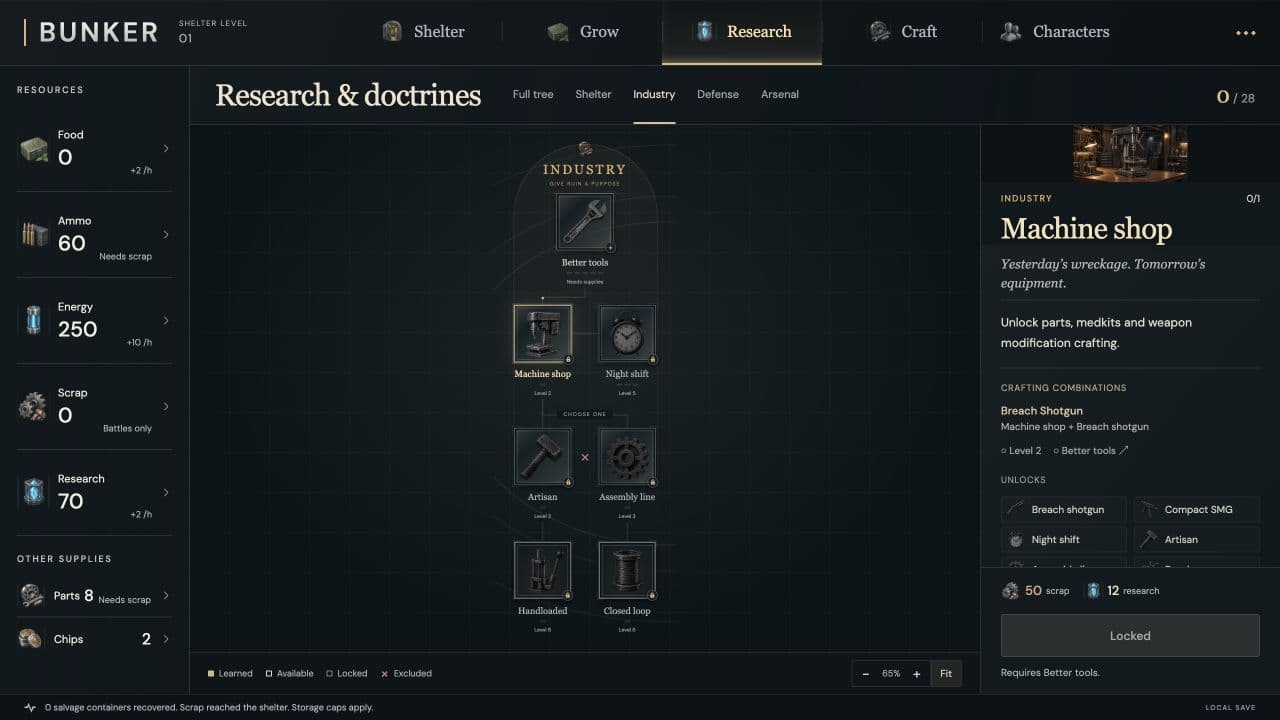
Zombie Defence puts a particularly useful decision between research and crafting: some improvements cannot coexist. Its 28 research nodes span Shelter, Industry, Defense and Arsenal. In Industry, Artisan and Assembly Line are rival commitments, trading crafting efficiency against processing speed. In Arsenal, Deadeye favors harder, slower shots while Suppression leans toward faster, lighter fire. Choosing one doctrine closes its partner. These are lasting build decisions, not two upgrades you simply buy in succession.
The ordinary prerequisites matter too. Machine shop sits behind Better tools and a shelter-level requirement, linking an industrial investment to equipment and crafting opportunities. The arsenal contains nine persistent weapons: the issued AR-07 and eight fixed recipes you can build. Discovering a weapon through a schematic, its research pair or a valid component assembly gives you a concrete destination. Six craftable equipment modules add another layer, with one equipped at a time. Research therefore changes both the route to a project and the capabilities of the finished loadout.
The bottleneck is a resource you can recognize: Scrap. The same stock can support construction, weapon levels, ammunition or processing into parts. Feeding every unit into ammunition may keep a fight supplied while pushing a new weapon further away. Switching the Salvage Bench output or pausing a production line lets you protect the materials for your chosen project. The Research Lab, Generator and other fixed shelter stations make the costs legible without asking you to design an unrestricted factory.
You then use the results in active top-down combat, managing movement, magazines and reloads; desktop cursor aiming is independent of movement, while touch fire selects the nearest living enemy. Separate Scrap expeditions replenish the workshop, and collected expedition Scrap is retained after defeat up to storage limits. The appeal is a tight connection between what you recover, what you research and how you fight. The commitment is real: an excluded doctrine is a sacrificed option, and the defined recipe catalogue favors deliberate specialization over inventing arbitrary equipment.
The verdict
Choose Zombie Defence when you want research to define a lasting playstyle and crafting to give each supply run a specific purpose.
The Riftbreaker
Research opens a stronger machine, weapon or defense, then the economy has to supply it while alien attacks test the result.
- Crafting
- Base defense
- Exploration
- Co-op
- Platforms
- Windows PC via Steam; solo and up to four-player online or LAN co-op. This entry focuses on the Story Campaign.
- Price model
- Paid base game; optional story expansions and a soundtrack are sold separately.
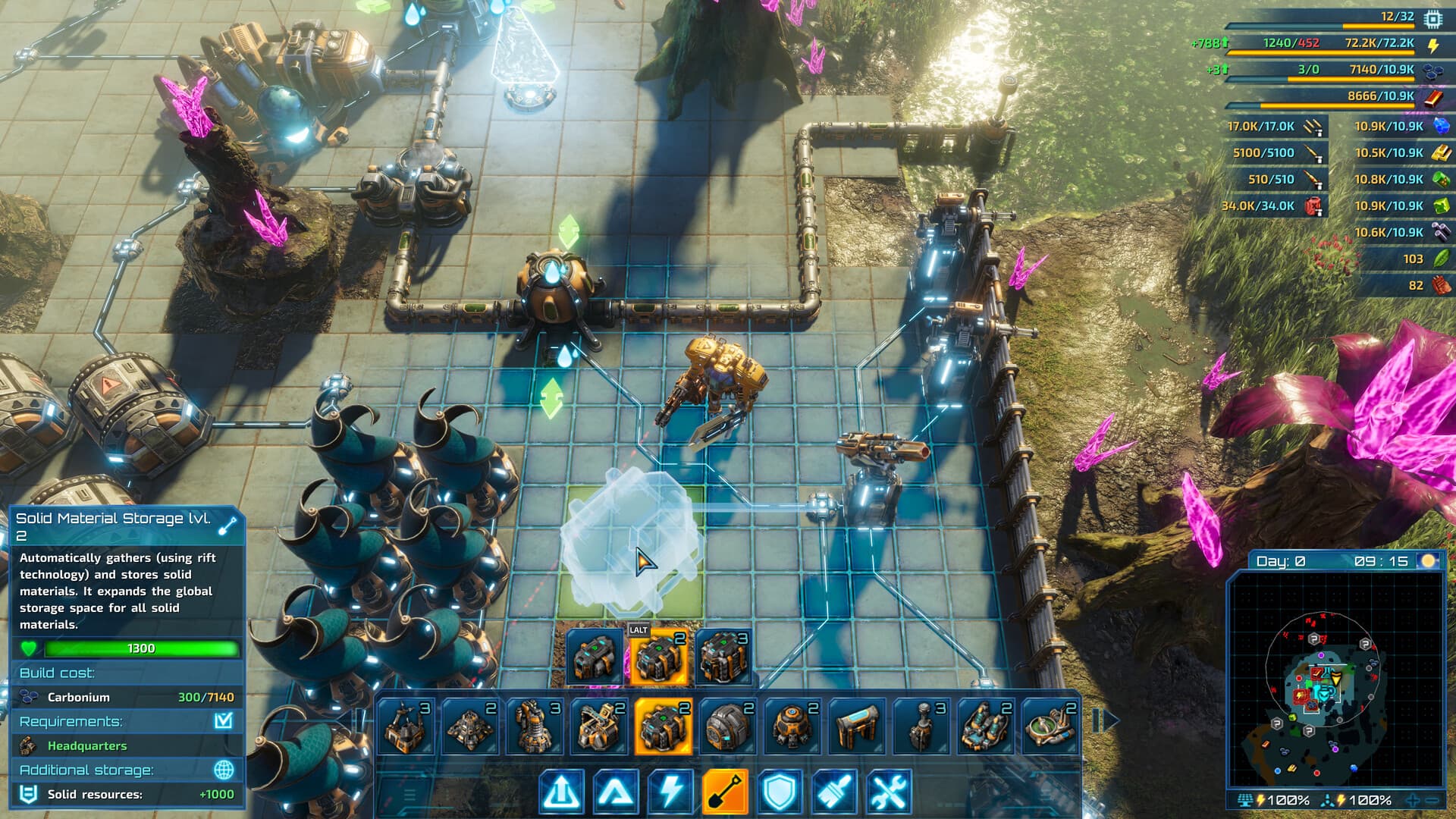
The Riftbreaker is the strongest fit here if the research screen should eventually become an industrial landscape. Ashley Nowak pilots the armed mech Mr. Riggs while you build mines, refineries, power plants and defenses on Galatea 37. Research produces blueprints for buildings and personal equipment; crafting turns those plans into usable gear. The resulting question is bigger than which weapon has the highest damage: can the network support the technology you want next?
The current Story Campaign makes that question tangible by charging resources when a research item enters the queue, as well as requiring research time. Materials committed to future technology are materials you cannot immediately put into another building or crafted item. This gives a tempting distant unlock a real opportunity cost. The separate Survival mode keeps its own research rules, so do not assume a campaign progression guide describes the timed-wave mode exactly.
Exploration supplies another prerequisite. Alien samples help unlock technologies, and outposts in resource-rich regions feed the wider economy. A new blueprint can send you looking for a material source; a better weapon can make that trip easier; a stronger power network can make the subsequent production practical. This is an unlock-and-supply chain rather than a permanent choice between incompatible doctrines.
The price of that scale is attention. You are both the person driving into trouble and the planner responsible for the walls, towers and industrial infrastructure behind you. Adjustable enemy attacks, resources and difficulty let you ease that pressure, and PC co-op can share the action. Choose the campaign if you want the satisfaction of keeping the expanding machine running, not just completing its research checklist.
The verdict
Choose it for the broadest connection between a research queue, crafted combat equipment and an industrial base under pressure.
DYSMANTLE
Your improved tool is also a key to better materials, making the invention tree feel connected to every building you pass.
- Crafting
- Permanent progress
- Exploration
- Co-op
- Platforms
- Windows and macOS via Steam; desktop base game with solo and local shared-screen co-op.
- Price model
- Paid base game; Underworld, Doomsday and Pets & Dungeons are optional paid expansions.
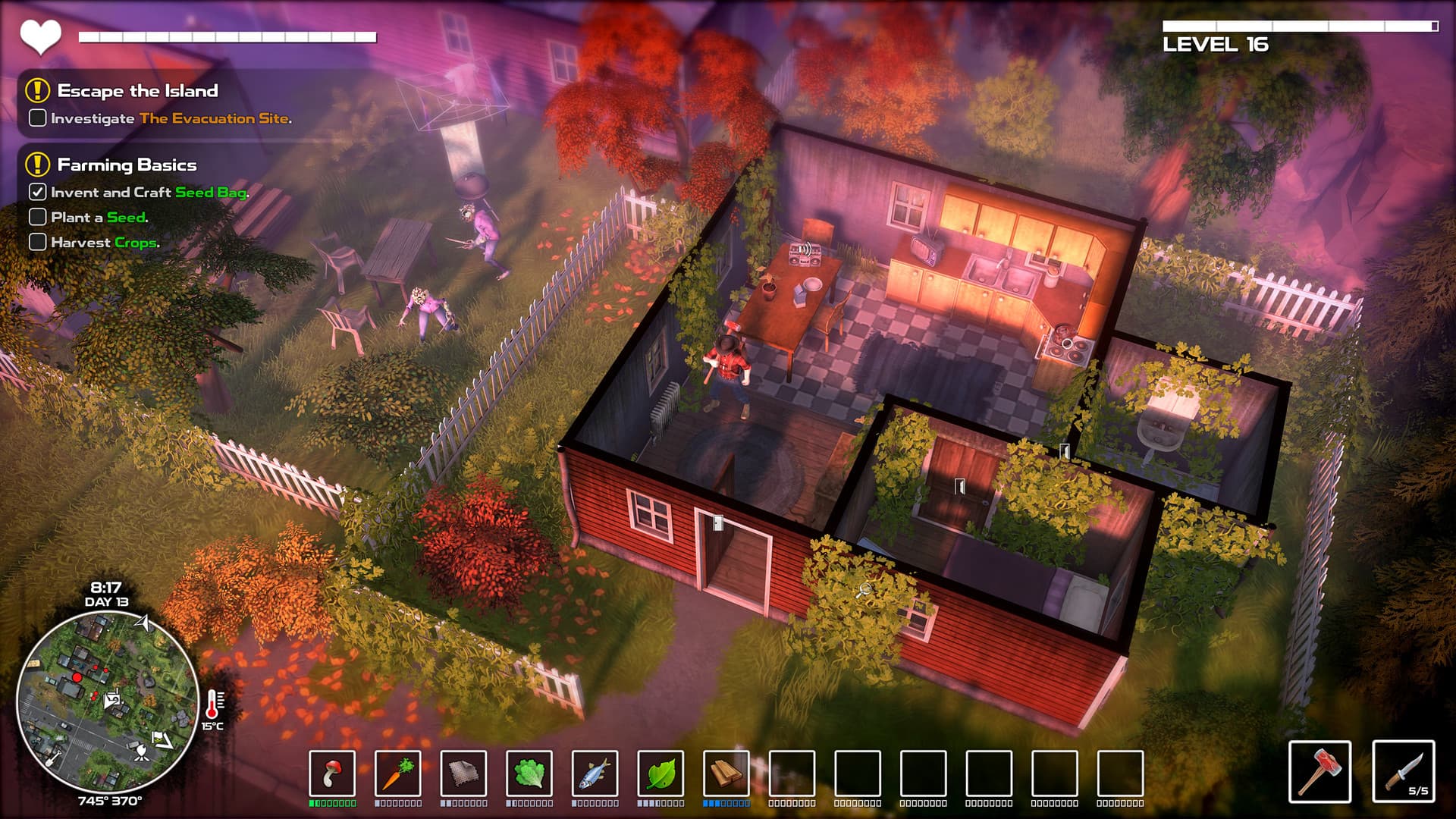
DYSMANTLE starts with a very persuasive crafting promise: much of the ruined island can become useful material if you bring the right tool. Weapons and tools are permanent equipment you improve, and the invention tree puts that growth into a sequence. The Wrench, for example, follows the Baseball Bat in the Invent tree and fills the blunt-tool gap before the Sledgehammer. A new unlock changes what you can tackle rather than merely decorating the inventory.
That makes the landscape part of the research plan. When stronger tools can break tougher objects, yesterday’s unhelpful obstacle becomes tomorrow’s material source. Your next objective might be an upgrade that broadens what you can dismantle, an outfit for exploration or a useful trinket. The feedback is unusually clear: you can see the thing you want to break, work toward the capability, then return with a better answer.
This is invention through prerequisites, materials and exploration rather than a staffed laboratory or an irreversible doctrine system. Farming and cooking sit alongside the equipment ladder, and cooking recipes can grant permanent stat and ability improvements. Hunger does not kill the protagonist, which gives planning a gentler rhythm than the continuous needs management in ICARUS or Rust.
The tradeoff is repetition in the gathering itself. Turning a neighborhood into components is central to the attraction, so the tree will not rescue you if dismantling objects already feels like a chore. For players who enjoy that physical sense of improvement, though, DYSMANTLE is a welcoming way to pursue a long list of useful inventions without managing an entire colony’s work schedules.
The verdict
Choose DYSMANTLE for tangible tool progression and a less punishing survival-crafting adventure, especially if you like returning to old obstacles with new equipment.
ICARUS
Planetary blueprints, character talents and orbital equipment are separate layers, so knowing a recipe is only one step toward a finished expedition kit.
- Crafting
- Shelter building
- Exploration
- Co-op
- Platforms
- Windows PC via Steam; solo or up to eight-player co-op. This entry recommends persistent Open World mode.
- Price model
- Paid base game with optional expansions and content packs; the Kepler systems update is free for base-game owners.
ICARUS is the pick for players who want to walk through the production chain themselves. Planetary technology unlocks craftable equipment and stations, character talents develop a specialization, and the orbital workshop supplies another path to equipment using earned currencies. These systems serve different purposes. A useful talent does not automatically give you the materials for a blueprint, and owning the blueprint does not make its crafting station appear.
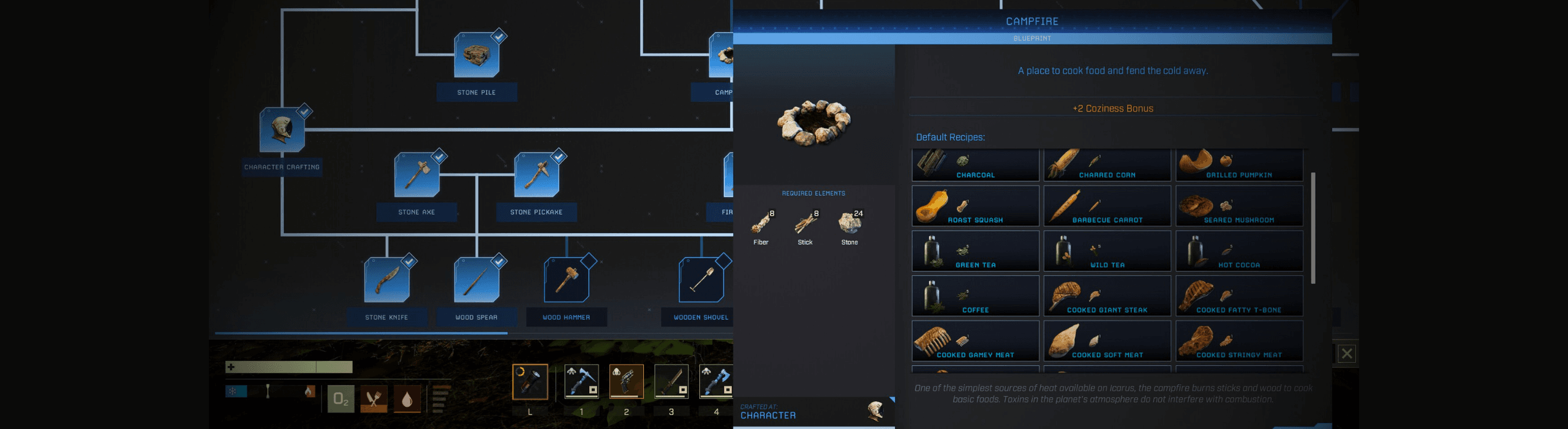
The tech tree helps you plan those dependencies. Hovering a blueprint can reveal the recipes its station enables; building-set nodes show the pieces included in an unlock. Some special equipment also has a mission prerequisite, with the relevant mission-reward unlocks shared across characters on the account. Before spending your attention on a distant item, trace the station and material chain that will actually produce it.
The manufacturing climb now reaches Tier 5 through the free Kepler update. Its oil chain is an especially clear example: obtain Crude Oil and refine it, or use the alternative Biofuel-to-Refined-Oil process, then feed further production or fuel tools such as the Chainsaw and Jackhammer. Research has a physical footprint in the world. The reward is a new capability; the bill includes the facilities and supply route needed to keep using it.
Choose Open World if you want that infrastructure to remain your ongoing project. Individual Missions are a different experience, asking you to establish a base for a timed objective, while Open World also supports narrative Operations. Storms, oxygen, food and wildlife keep preparation relevant in either case. This is mainly a question of unlock order and investment, rather than permanently banning the other half of a technology tree; the substantial tradeoff is how much gathering and construction stands between the plan and the finished machine.
The verdict
Choose ICARUS for a substantial PvE crafting project you can inhabit, with Open World providing the clearest home for a lasting workshop.
Rust
Spend Scrap to learn a route through workbench technology, then gather and defend the materials needed to make the equipment.
- Crafting
- Shelter building
- Manual aim
- Exploration
- Platforms
- Windows and macOS via Steam; online PC edition. Server rules and wipe schedules vary.
- Price model
- Paid base game with optional DLC packs and an item shop.
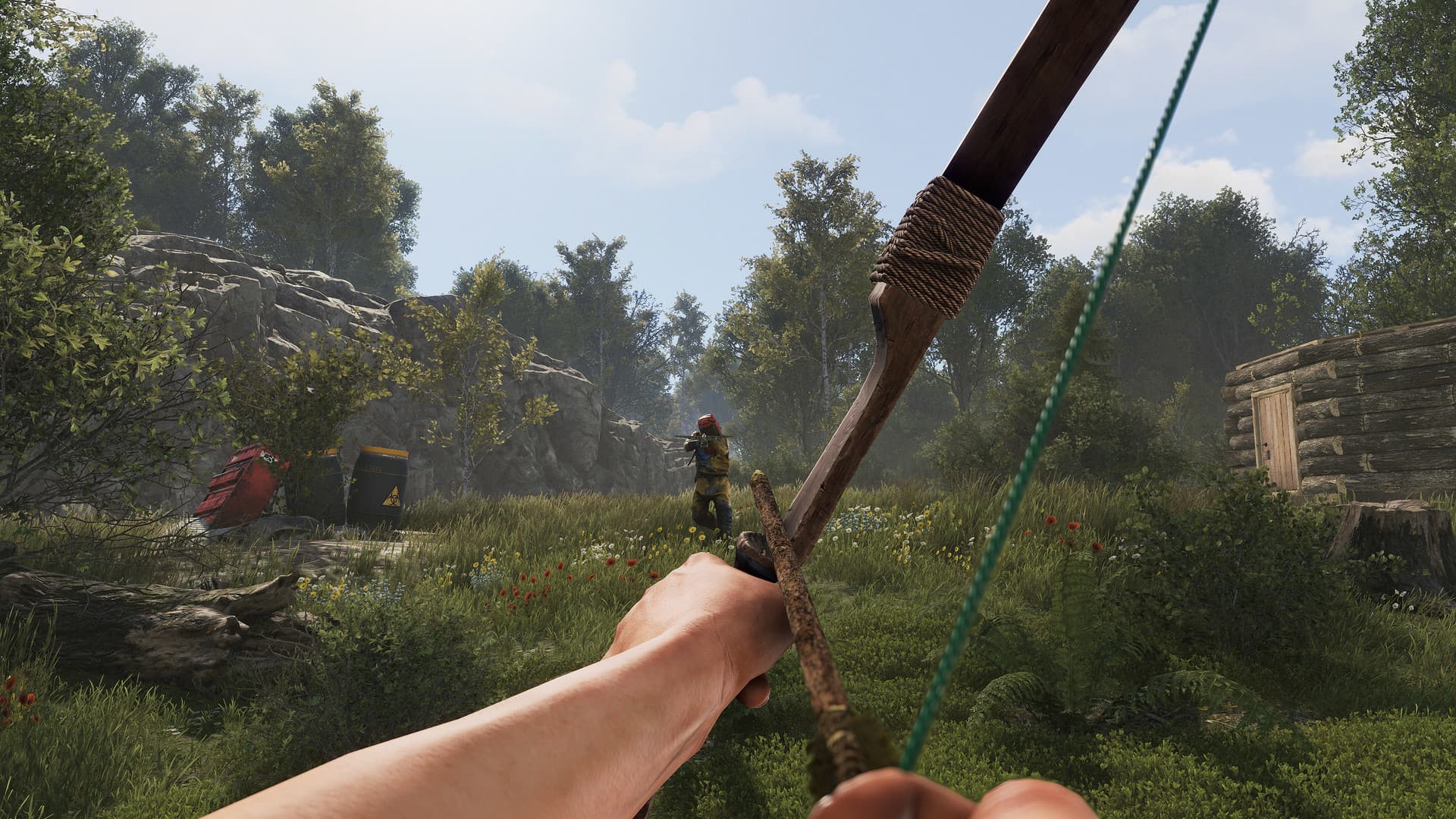
Rust gives a research decision a hostile audience. The workbench tech tree offers a planned route toward craftable items, while the Research Table lets a found item become the basis for learning its blueprint. That gives scavenging two possible rewards: equipment you can use now and knowledge that lets you manufacture more. Neither route removes the need to gather the recipe’s actual materials.
The current PC interface can preview the path to a selected node and unlock the required sequence together. That is a useful convenience, not permission to skip its prerequisites. Progression also extends beyond the Scrap you spend on unlocks: higher workbenches require Blueprint Fragments, adding a reason to venture toward contested sources of loot. A tidy plan on the tree can become a much less tidy trip home.
This is why Rust suits competitive groups and players who want their crafting choices tested socially. Researching better equipment has to sit alongside securing the materials, building somewhere to use them and protecting what you make. A rival can interrupt the production plan before the first finished item comes off it. The tree determines a route through the economy; other people decide how comfortable that route will be.
Persistence needs the right expectation. A crafted stockpile can be lost to raids, and a blueprint wipe can reset learned technology. Map wipes and blueprint wipes are different events, and the server’s stated rules matter. Choose Rust if rebuilding and racing through progression are part of the attraction. For a workshop intended to accumulate quietly over one long solo save, ICARUS Open World or DYSMANTLE is the better direction.
The verdict
Choose Rust when a technology race against other survivors sounds more exciting than a protected collection of permanent unlocks.
RimWorld
The technology tree expands what the colony can produce, but people, workstations and supplies determine whether the plan gets made.
- Crafting
- Shelter building
- Tactical combat
- Permanent progress
- Platforms
- Windows, macOS and Linux via Steam; single-player desktop base game.
- Price model
- Paid base game; expansions are optional and sold separately.
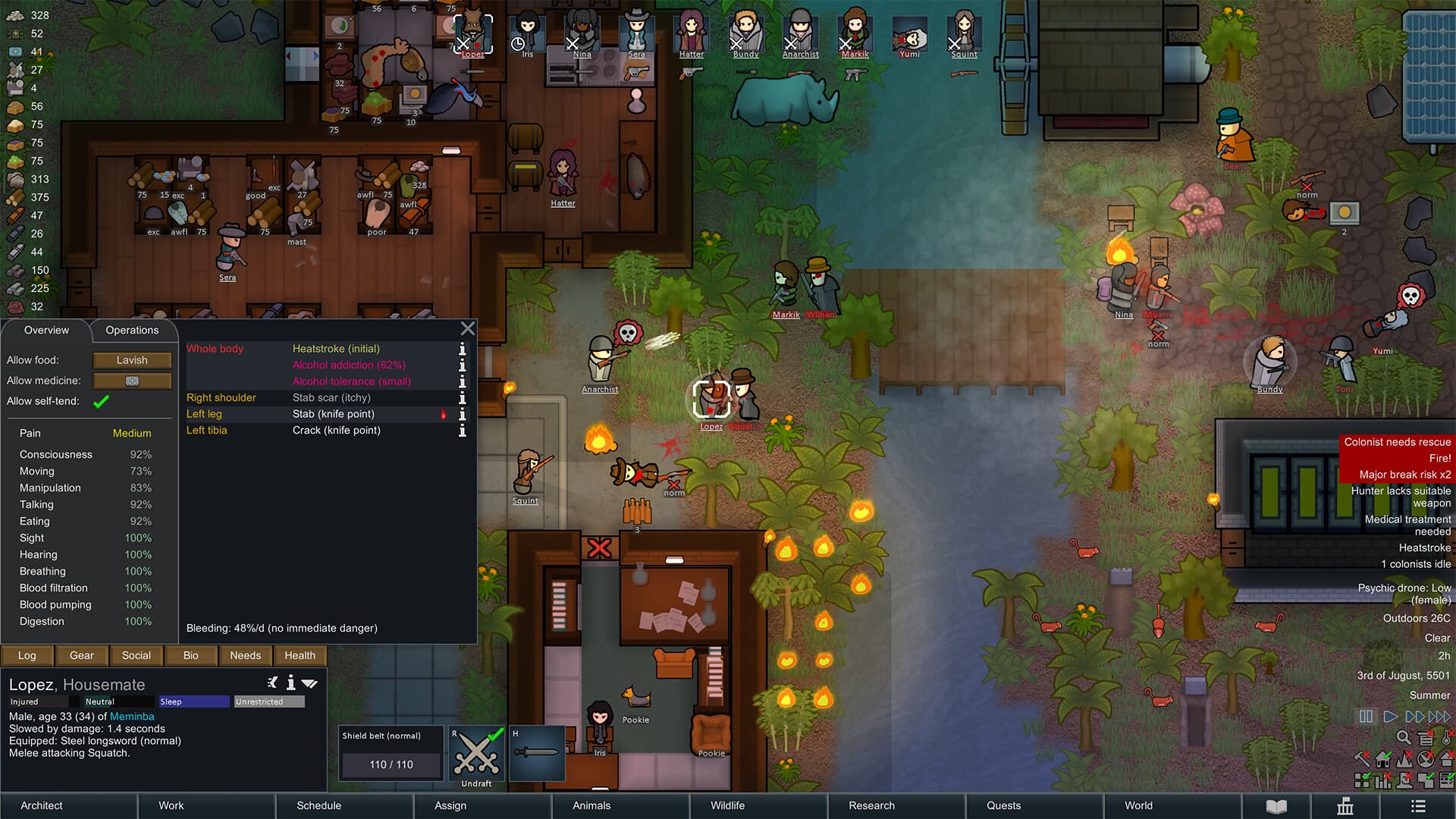
RimWorld turns the crafting-and-research question into a staffing problem. Colonists have different capabilities, needs and priorities, so a good researcher is a person whose time you must make room for. Basic projects can use a simple research bench, while more advanced work calls for better research facilities. The tree expands the settlement’s options, but it does not remove the need to feed the person doing the work.
Crafting is organized through workbench production bills rather than one protagonist instantly combining ingredients. Weapons, apparel and components need suitable materials and a worker to make them. Developing fabrication is especially valuable because advanced components and equipment become projects inside your own production economy. The practical goal is not merely to unlock a sophisticated recipe; it is to have the workshop and labor capacity to use it without abandoning everything else.
The interesting choices usually concern timing rather than mutually exclusive branches. A research project for future industry can be sensible in a stable settlement and badly timed when injuries, food shortages or defensive preparations demand the same colony’s attention. This is the strongest recommendation here if you want technology to compete with human needs. The result feels different from a hero’s skill build because the whole community has to sustain it.
That depth comes with management overhead. Assigning work, supplying benches and responding to events can absorb the session even when you began with one neat crafting objective. RimWorld is a colony survival simulation with tactical fights, not a first-person gathering game. Pick it when those interruptions sound like the story you want the research system to create.
The verdict
Choose RimWorld when the most interesting prerequisite is having a healthy, supplied community capable of building what it has learned.
Oxygen Not Included
Technology gives your asteroid colony new machines and material recipes; keeping them powered, supplied and thermally manageable is the real achievement.
- Crafting
- Shelter building
- Permanent progress
- Platforms
- Windows, macOS and Linux via Steam; single-player base game.
- Price model
- Paid base game; Spaced Out! and other DLC packs are sold separately.
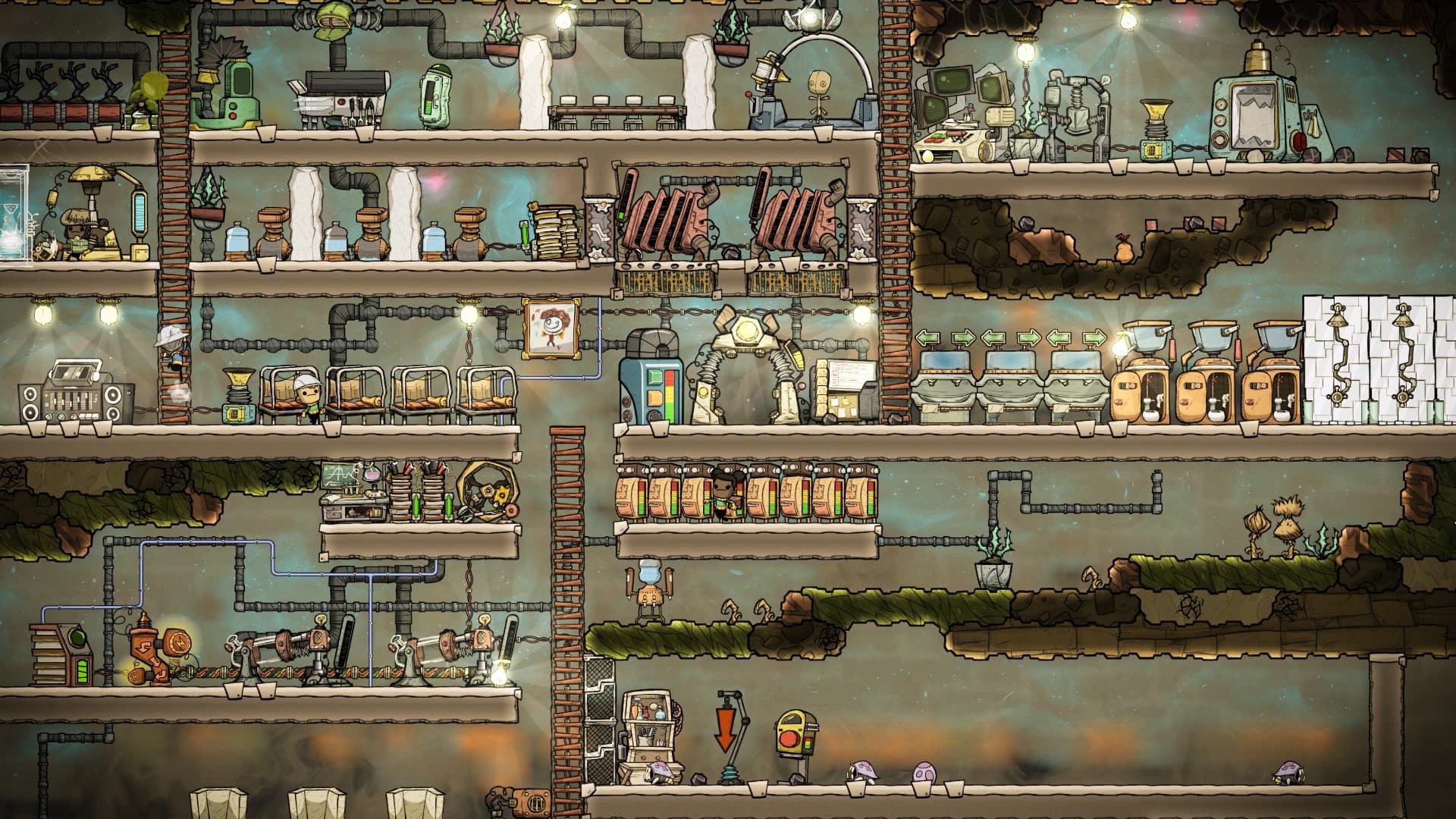
Oxygen Not Included makes a wonderful counterpoint to weapon-led progression. Its Duplicants survive inside an asteroid, and the technology tree opens options for food, sanitation, power, industrial materials and eventually space travel. Research is part of the colony’s work, while fabrication turns raw resources into useful products. The defining decision is which capability will solve your next bottleneck.
A new machine rarely solves that problem alone. Plumbing has to take fluids where they belong, electrical circuits have limits, and production can create heat that the rest of the base must handle. Unlocking industrial technology is therefore an invitation to design a working system. A production line that makes the desired material while disrupting the colony’s temperature or power supply is not a finished solution.
The base game’s later manufacturing makes the recipe side especially clear. The Molecular Forge converts rare materials into advanced products such as Thermium, Insulation and Super Coolant. That connects distant resource collection to something you can build and use back home. These are sequential research and supply requirements, not opposing doctrines that permanently erase one another. The satisfaction comes from making the chain sustainable.
Choose it for engineering under survival pressure rather than sustained fighting. Duplicants can attack critters, and creatures such as Pokeshells can defend their eggs, but those limited confrontations are a small part of the experience. The harder task is understanding how gases, liquids, temperature, workers and machines affect one another. If that sounds like an absorbing puzzle, this is the pick whose research tree keeps generating useful questions long after a blueprint unlocks.
The verdict
Choose Oxygen Not Included when you want to understand and sustain the machinery behind every useful unlock.
How we compare
A good recommendation explains who a game suits and where it falls short. Our editorial scores use the same five criteria, each rated out of ten.
- 01
Combat
Controls, aiming, enemy readability, and the decisions you make under pressure.
- 02
Progression
Build choices during a run and meaningful progress between attempts.
- 03
Usability
Control demands, platform access, interface options, and documented device requirements.
- 04
Value
What the asking price includes, optional purchases, and the scope of the free version.
- 05
Fit
How well the game answers the specific question in this article.
Which one should you try?
Choose the kind of commitment you enjoy. The Riftbreaker makes research a resource decision inside a defended industrial economy; ICARUS asks you to build the manufacturing ladder with your own hands. DYSMANTLE delivers the clearest tool-to-material payoff, while Rust turns the same planning into a contest that can reset with the server. RimWorld makes workers and competing needs the bottleneck; Oxygen Not Included makes the machinery itself the puzzle. Zombie Defence is the distinctive choice for a compact version of this loop with genuinely exclusive doctrines: plan a permanent weapon, reserve its resources and commit to the research path that supports how you want to fight.
Your questions, answered.
Want to see what we’re building?
Zombie Defence is in Alpha. Join the waitlist.
More games to explore
- 7 Best Base-Building Games With Worker Assignments
Compare seven base-building games with worker management: station specialists, individual priorities, training, schedules and the production decisions they change.
- 7 Best Shelter Management Games in 2026
Compare seven shelter and colony management games, from Fallout Shelter's room assignments to resource-heavy survival, resident care, and zombie expeditions.
- 4 Survival Games With Hydroponics and Farming
Compare four survival games by their growing systems: water, power, crop care and harvests, from Zombie Defence to RimWorld, Oxygen Not Included and Subnautica.