4 Survival Games With Hydroponics and Farming
Choose the garden by what keeps it growing, what can go wrong and what the harvest actually does.
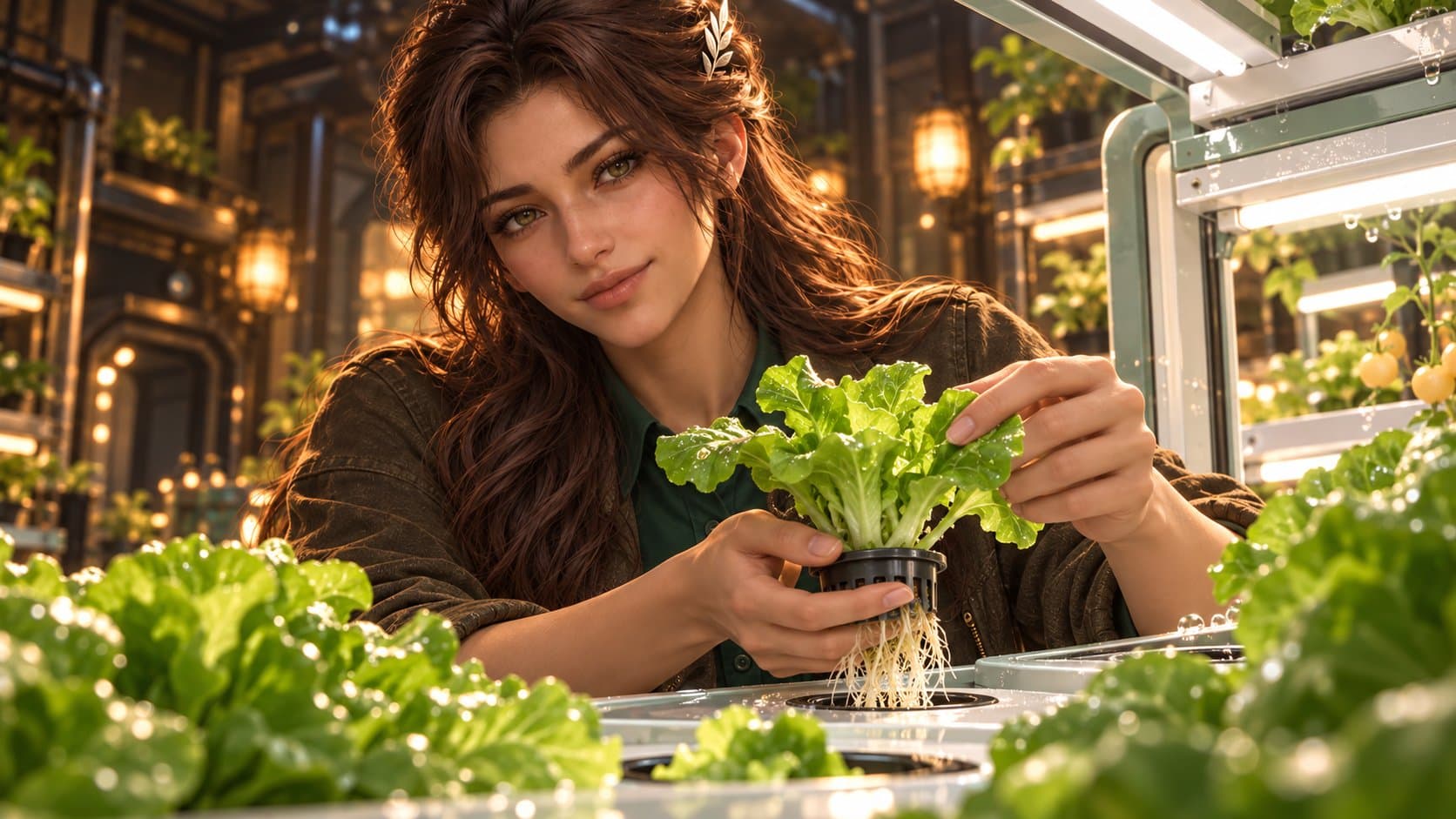
For survival games with hydroponics and farming, start with the kind of responsibility you want. Oxygen Not Included makes the growing environment an engineering project. RimWorld asks whether powered basins are worth replacing ordinary fields. Subnautica makes cultivation part of a welcoming underwater home. Zombie Defence keeps the garden compact and purposeful, with water, timed crops and harvests that support the shelter and the next expedition.
These four games cover different versions of that idea. RimWorld and Oxygen Not Included are colony simulations; Subnautica is the original single-player underwater adventure. We compare their released Steam desktop editions with Zombie Defence’s browser Alpha in development. Its waitlist is for news and playtest availability, rather than immediate access.
The useful buying question is not simply “Does it have hydroponics?” Ask what you supply, who does the work and where the produce goes. A powered basin can replace unsuitable ground without removing labor. A piped farm can still fail when its growing conditions change. A modest planter can be the better choice if you want fresh food between adventures without turning the whole session into agricultural troubleshooting.
The quick comparison
4 games, different reasons to give the next run a chance.
Choose a game to jump to its overview. Platform lists are summaries; check the linked official edition.
The games
Zombie Defence
Zombie Defence makes cultivation a small set of consequential choices: which crop gets the slot, whether to spend water on tending, and whether the harvest becomes provisions, a meal or a gift.
- Farming
- Shelter building
- Crafting
- Permanent progress
- Extraction
- Platforms
- Browser Alpha in development; single-player PvE. Native mobile releases are planned.
- Price model
- Public launch pricing and monetization are not confirmed. Join the waitlist for Alpha news and playtest availability.
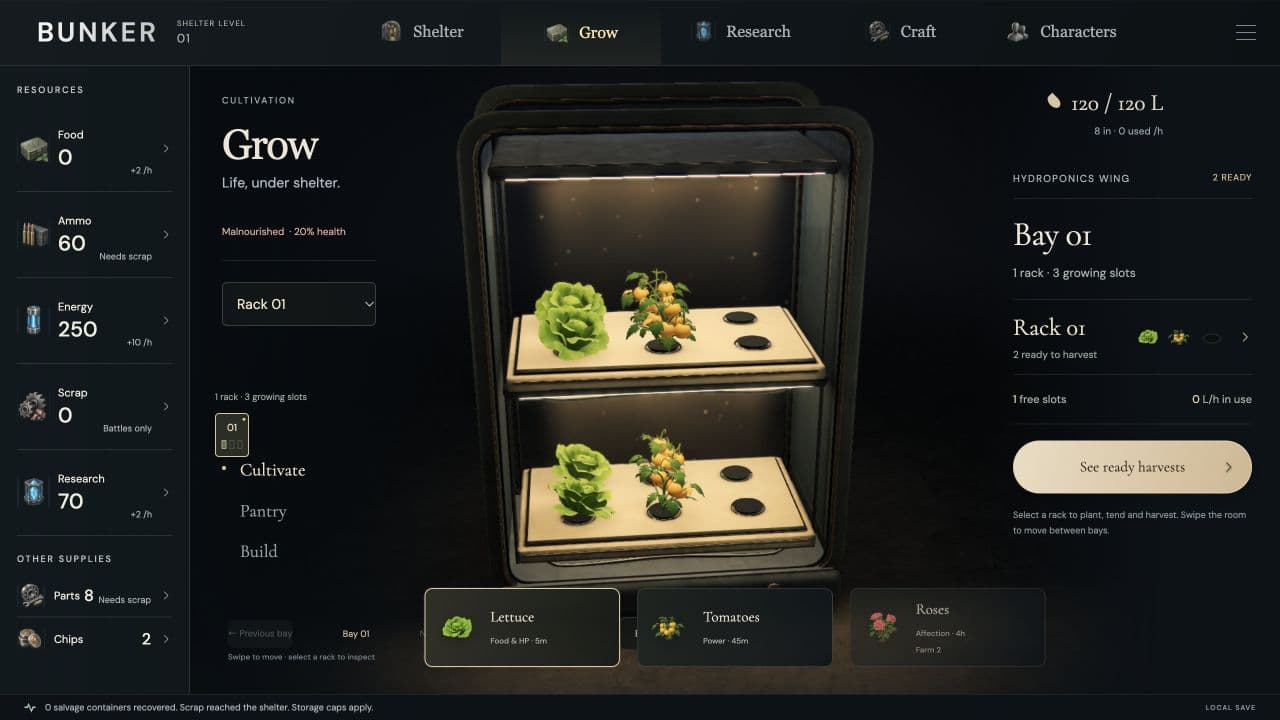
The growing rack is easy to understand because its three crops have different jobs. Butter lettuce is the quick food crop, Golden tomatoes take longer and support a different meal, and Shelter roses become affection gifts. The current Alpha’s base growth times are five minutes, 45 minutes and four hours respectively, before irrigation and bonuses. That gives timing a practical role: plant toward the next thing you need, rather than automatically filling every slot with whichever crop has the longest timer. Each additional rack adds three plots, and the second rack unlocks roses.
Water is the dependency to watch. Purifiers improve supply, irrigation affects growing speed, and tending spends stored water for a better yield. If the tank runs dry and the ongoing supply is insufficient, growth slows rather than destroying the plants. The useful expansion question is therefore whether another rack will be properly supplied. More planting slots create more potential output, but improving water provision can be the more effective next investment. This is a readable allocation problem that fits between outings without demanding a room-by-room climate-control project.
The stages stay hands-on: plant, let the crop grow, optionally tend it and return for the harvest. Ripe crops wait safely until you collect them, while pantry capacity limits how much you can bring in. Elapsed-time growth has a cap, so a planted rack can make progress between visits without becoming an endlessly repeating harvest machine. Before leaving the shelter, check which plots are occupied and what room remains in storage; on return, collect what is ready and choose the next planting deliberately.
The produce then forks into useful decisions. Lettuce and tomatoes can replenish colony food or go into a packed meal: Garden Bowl improves maximum health, while Sunset Soup improves attack power for the next deployment. Nutrition also affects the defender’s available health ceiling, although hunger itself is nonlethal. Roses compete for growing space while serving relationships rather than the pantry. Choose this garden if you enjoy preparation that leads promptly back to active zombie combat. Its appeal is a focused three-crop system whose output matters, while RimWorld and Oxygen Not Included offer much broader agricultural management.
The verdict
Choose Zombie Defence when you want a manageable hydroponic routine with a clear payoff every time you prepare to leave the shelter.
RimWorld
RimWorld gives this comparison its clearest soil-versus-hydroponics decision. The better farm depends on land, climate, electricity and the people available to work it.
- Farming
- Shelter building
- Tactical combat
- Crafting
- Platforms
- Windows, macOS and Linux via Steam; single-player desktop base game.
- Price model
- Paid base game; optional expansions are sold separately. Basic farming and hydroponics are in the base game.
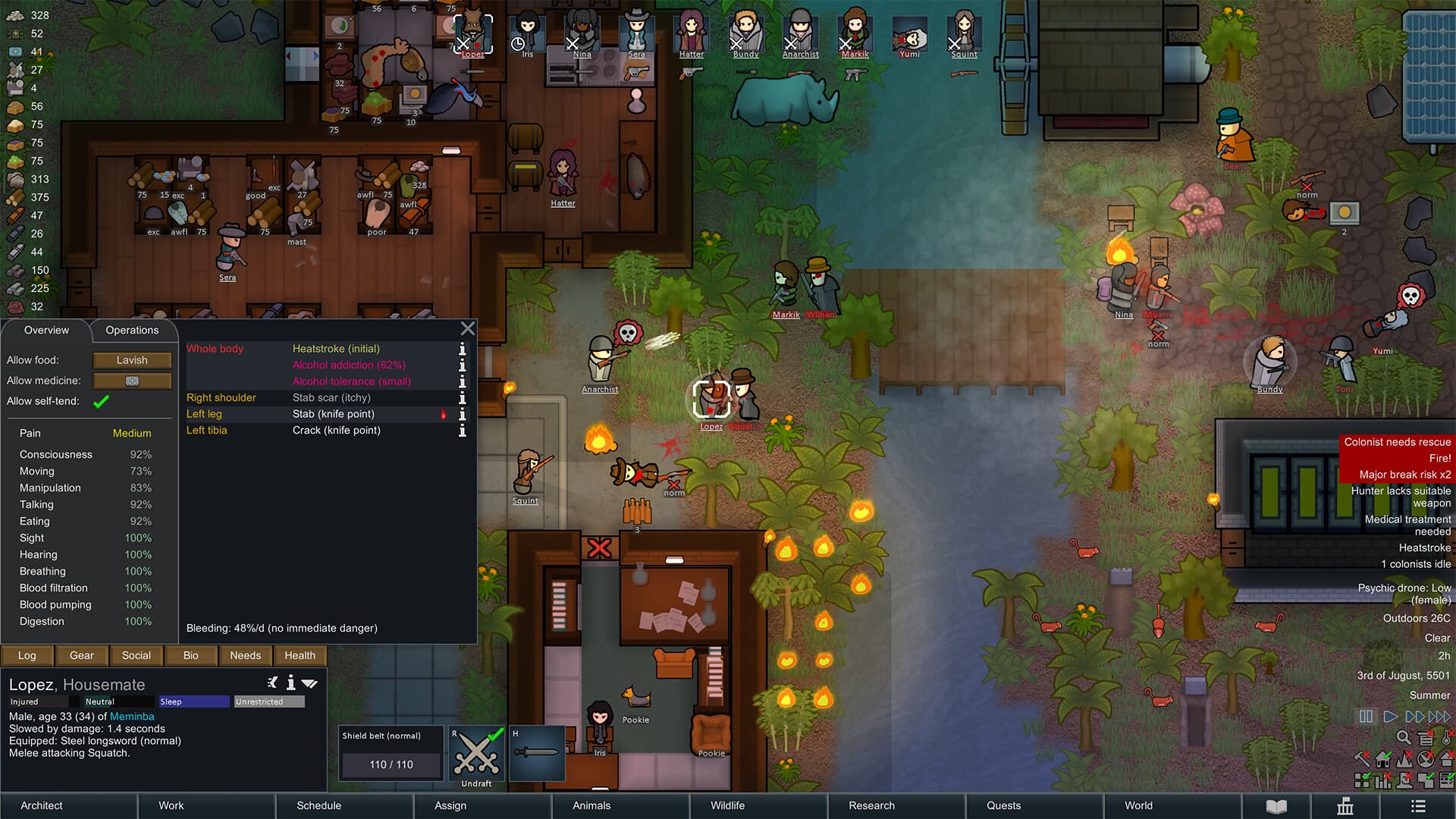
Your first agricultural decision starts before the first seedling. A temperate settlement and a frozen tundra colony have very different growing seasons, and the colonists you bring have different abilities. Ordinary growing zones let you put usable soil to work while the settlement establishes food and shelter. The planted area is only one part of the plan: someone must sow and harvest it, then handle the produce. That makes farming a staffing commitment as well as a land-use choice. A large field with too few available growers can be an impressive-looking promise rather than a dependable food supply.
Hydroponics changes the land problem. Researched basins offer fertile growing space where natural soil is scarce, but need continuous electricity; losing power can kill their crops. They also leave lighting and temperature to you. In a roofed growing room, a sun lamp and suitable temperature control are separate parts of the design. Crucially, a greenhouse can also use natural soil. You do not need to replace good ground with basins simply because you want to put a roof over it. Compare the whole installation before spending on the more elaborate option.
Crop selection then changes the workload. Rice responds strongly to the basin’s fertility and produces frequent harvests, which is useful in limited space but repeatedly calls growers back to work. Potatoes benefit less from that fertility, while corn cannot be planted in the base game’s basins. This is why a single “best farm” blueprint misses the interesting choice. Decide whether you are short of growing area, reliable power or worker time, then choose the crop and layout that address that shortage. Expensive infrastructure should solve a specific problem in the colony.
The payoff is keeping people fed through a world that refuses to follow your agricultural schedule. Injuries, fires and raids can pull workers away, while hunger and stress affect the same residents you need to keep the settlement running. Our recommendation is to judge a farm by whether the colony can maintain it during a bad week, rather than by its ideal output alone. Keep a food reserve and avoid making every meal depend on one fragile plan. Choose RimWorld when you want the garden’s failures and recoveries to become part of a larger human survival story.
The verdict
Choose RimWorld for the most interesting decision about whether to build hydroponics at all, and how to keep the people behind it productive.
Oxygen Not Included
Oxygen Not Included is the strongest pick when the pipes, supplies and growing conditions are the reason you want to farm. A healthy crop is evidence that several systems are working together.
- Farming
- Shelter building
- Crafting
- Permanent progress
- Platforms
- Windows, macOS and Linux via Steam; single-player base game.
- Price model
- Paid base game; Spaced Out! and other DLC packs are optional purchases. The core growing systems discussed here are in the base game.
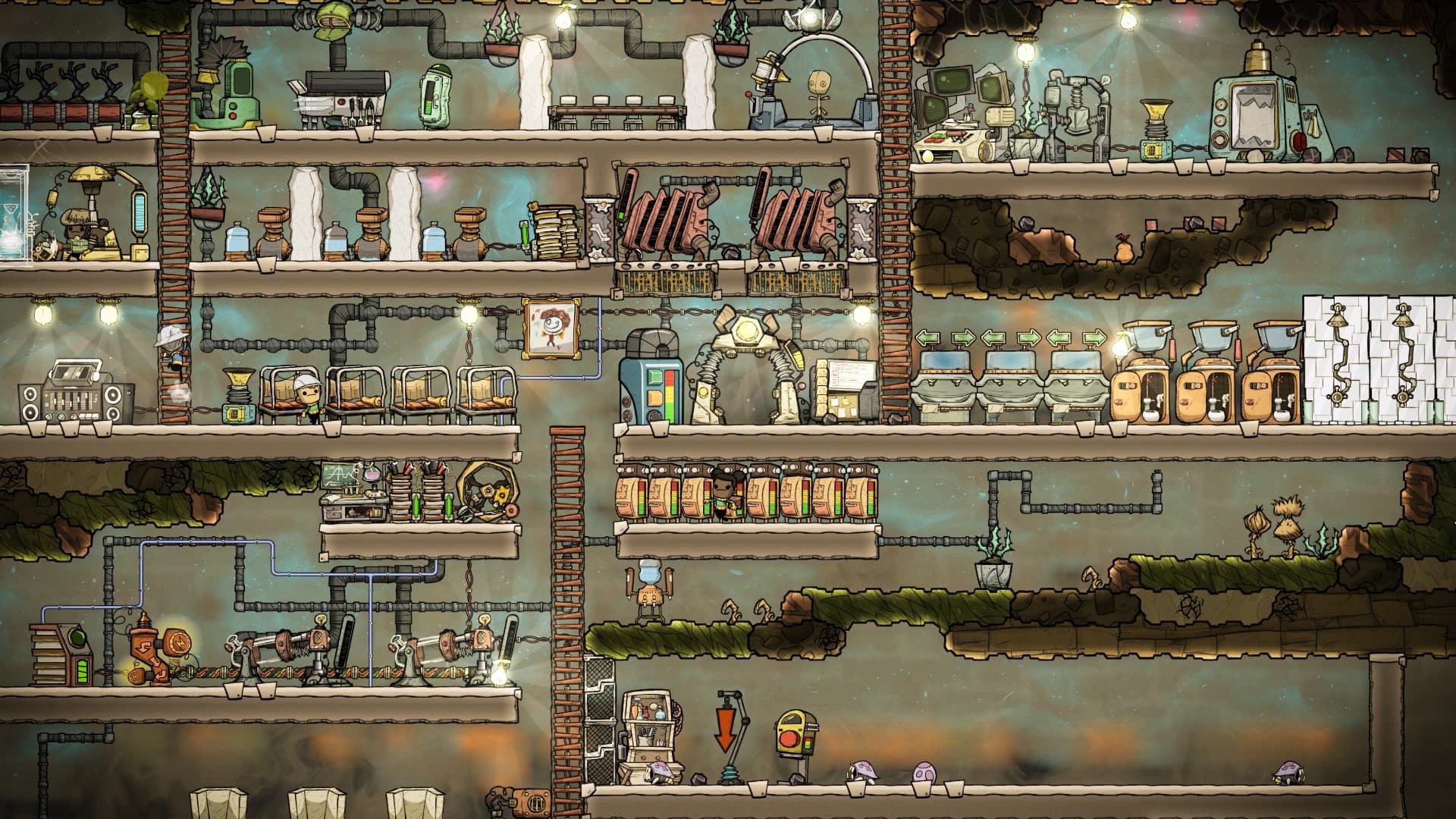
The important distinction is between the plant and the building holding it. A Hydroponic Farm provides a piped route for irrigation, but the chosen crop still determines what resources it needs. Mealwood uses dirt as fertilizer; Bristle Blossoms require water and have their own temperature requirements. Putting either into a more sophisticated farm does not make their needs interchangeable. Begin with a crop whose inputs your colony can actually supply, then improve the delivery system when that helps. The appealing puzzle is choosing an agricultural chain that fits the resources you have uncovered.
Growth depends on maintaining those conditions over time. A seed becoming a harvest is not simply a timer you can ignore while the rest of the base changes. Inadequate irrigation can leave an irrigated plant wilted, and temperature management matters alongside the supply line. Machinery elsewhere in the colony also produces heat, so a room that began in a comfortable location may need protection as industry expands. The practical lesson is to investigate the failing condition before adding more plants. A larger copy of a broken farm only creates a larger food problem.
From there, farming becomes a satisfying sequence of improvements. Research opens better infrastructure, pipes move liquids, and a Farm Station in an appropriate greenhouse lets skilled Duplicants improve growth through crop tending. Automated material transport can reduce parts of the hauling burden too. Each improvement has a wider cost: equipment must be built and supplied, powered machinery belongs on a functioning circuit, and workers still have other colony errands. The goal is a dependable food chain, so solve the current bottleneck before installing every possible machine around it.
Food quality adds another reason to develop beyond bare survival. Better meals help support the colony’s well-being, while oxygen, sanitation and heat keep competing for resources and attention. That makes ONI the most demanding growing-system recommendation here: it rewards curiosity about why a farm succeeds and why it suddenly stops succeeding. Choose it if looking at the plumbing and tracing the problem sounds enjoyable. Choose Zombie Defence for a smaller allocation loop, or Subnautica when you would rather spend most of the session exploring beyond the garden.
The verdict
Choose Oxygen Not Included when you want to understand the system that grows dinner, then redesign it until the colony can rely on it.
Subnautica
Subnautica is the pick for cultivating a home rather than supervising a workforce. Its growbeds bring collected plant life into a base that supports increasingly ambitious dives.
- Farming
- Shelter building
- Crafting
- Exploration
- Platforms
- Windows and macOS via Steam; the original single-player Subnautica, with its current updates.
- Price model
- Paid game. Below Zero and Subnautica 2 are separate games.
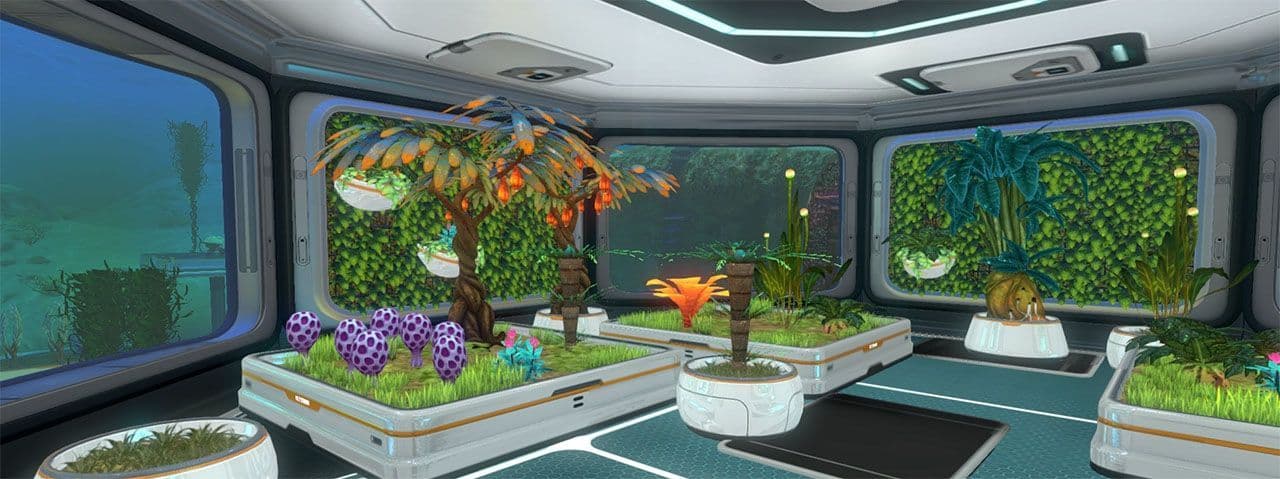
The satisfying step is bringing something living back from the world and giving it a place of your own. Growbeds accommodate cultivation inside and outside habitats, with indoor pots offering another way to arrange plants. The plant selection includes edible fruits and vegetables as well as ornamental species. This is a lighter form of survival gardening: choose suitable plants and growing spaces, watch them develop and collect what you need. The appeal is that the garden becomes part of the place you inhabit, with greenery close to the equipment and supplies that make exploration possible.
Choose the purpose of the planting before you fill the room. A food-growing area and a decorative collection serve different needs, even when both look inviting through a seabase window. Floor pots, wall-mounted pots and Living Walls also give you ways to make the habitat feel settled. Our recommendation is to establish a useful supply corner first, then use spare space for the species you like seeing at home. That keeps the project connected to survival while leaving room for the pleasure of building somewhere beautiful under an alien sea.
The surrounding habitat supplies the engineering challenge. You construct connected modules, store resources and maintain the home that supports your dives. Powered equipment needs electricity, and ambitious expansion has to respect hull integrity; too many weak sections or windows can create a flooding problem that needs repair. Those are base-wide responsibilities, rather than a reason to treat every growbed as an ONI-style irrigation installation. The newer Large Room and Glass Dome additions also offer more room for a substantial living space once you have developed the necessary building options.
The tradeoff is scope. This is a single-player exploration adventure with gardening inside it, so the major progression still comes from finding resources, making equipment and reaching new depths. Food is one part of preparing for those trips, alongside oxygen and the means to deal with dangerous wildlife. Choose it when the garden should make returning home feel better, then let you get back out into the ocean. If your ideal evening is spent tuning crop inputs, moving workers and diagnosing a food-production failure, the colony simulations above provide more of that work.
The verdict
Choose Subnautica for an underwater refuge with a living garden, especially when you want cultivation to support exploration without taking it over.
How we compare
A good recommendation explains who a game suits and where it falls short. Our editorial scores use the same five criteria, each rated out of ten.
- 01
Combat
Controls, aiming, enemy readability, and the decisions you make under pressure.
- 02
Progression
Build choices during a run and meaningful progress between attempts.
- 03
Usability
Control demands, platform access, interface options, and documented device requirements.
- 04
Value
What the asking price includes, optional purchases, and the scope of the free version.
- 05
Fit
How well the game answers the specific question in this article.
Which one should you try?
Choose by the problem you want to solve. Oxygen Not Included is the strongest fit for crop inputs, irrigation and environmental engineering. RimWorld makes the decision between fields and powered basins part of a colony’s labor and survival plan. Subnautica offers a lighter garden inside a memorable home. Zombie Defence is the choice for a compact, clearly connected routine: improve water supply, plant toward a need, harvest by hand and decide what the shelter or next expedition should receive. Start with the system you can enjoy maintaining, not the one with the most machinery.
Your questions, answered.
Want to see what we’re building?
Zombie Defence is in Alpha. Join the waitlist.
More games to explore
- 7 Best Base-Building Games With Worker Assignments
Compare seven base-building games with worker management: station specialists, individual priorities, training, schedules and the production decisions they change.
- 7 Best Shelter Management Games in 2026
Compare seven shelter and colony management games, from Fallout Shelter's room assignments to resource-heavy survival, resident care, and zombie expeditions.
- 7 Best Survival Games With Crafting and Research Trees
Compare seven survival games by recipe prerequisites, research costs and lasting tech choices, from Zombie Defence’s doctrines to ICARUS and The Riftbreaker.