State of Survival review: the zombies can wait; your alliance cannot
A busy zombie strategy game with two speeds: quick hero encounters and a settlement that keeps asking what comes next.
Zombie Defence Editorial Team ·
Based on official documentation and gameplay imagery.
State of Survival gives you a zombie problem, then hands you a management job. Your heroes tackle infected encounters; your settlement needs construction, research and troops; your alliance wants bodies for the next fight. The monsters are dangerous, but the calendar has excellent range.
That split is the attraction. Small tactical choices give the apocalypse a human scale, while the wider war rewards preparation and cooperation. It is also the warning label: if you want uninterrupted zombie shooting, a few dramatic store images will give you the wrong shopping list.
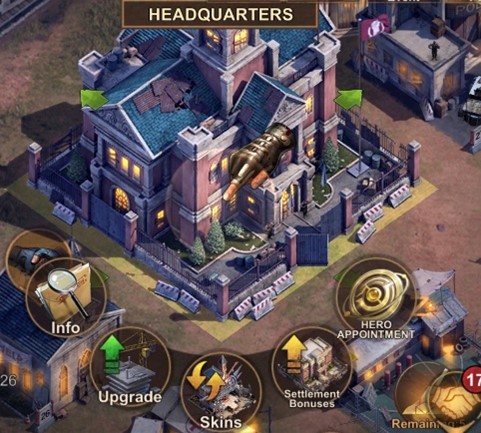
Build the upgrade that unlocks your next move
The settlement is the engine room. Gather resources, improve buildings, research bonuses and train troops, then feed the results into tougher activities. Your best question is rarely which building looks impressive. Ask which requirement blocks the next useful upgrade, and clear that bottleneck first.
That creates a satisfying chain of small plans. A military improvement needs support from the economy; a bigger army needs somewhere to recover. Concentrating resources on a clear objective feels purposeful. Sprinkling them across every tempting icon produces a very busy base with remarkably little to show for it.
Construction timers change the rhythm. You choose what to start now, what can run while you are away and when saved accelerators actually help. This is enjoyable background planning for players who like tending a project. For anyone seeking a complete adventure in one sitting, the waiting is structural.
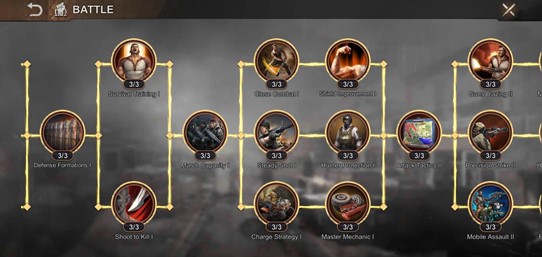
Your squad and your army are different tools
Explorer Trail adds a smaller tower-defense-style layer, built around assigning heroes and using their active and passive skills against infected. The interesting decisions concern the team and its abilities. It provides a more immediate problem than another building queue, without turning the whole game into a free-roaming action shooter.
Army combat asks a different question: what are you sending, and what supports it? Infantry form the frontline, with riders and hunters behind them. The official formation guide warns against treating one troop type as an entire army. A formidable damage number is less impressive when nobody survives to deliver it.
Look at the job before chasing the biggest power total. Frontline health and defense support endurance; rear-line attack and lethality support damage. These are preparation decisions rather than twitch tests. Much of the battle is decided through roster, research and formation choices before the march begins.
Collecting heroes is only the first expense
Heroes sit inside a larger development machine. The documented Completion system distinguishes Control, Offense and Defense builds, with a counter relationship between them. Thinking about a compatible team gives collection a strategic purpose. Unlocking a portrait is the start of an investment, rather than a finished solution.
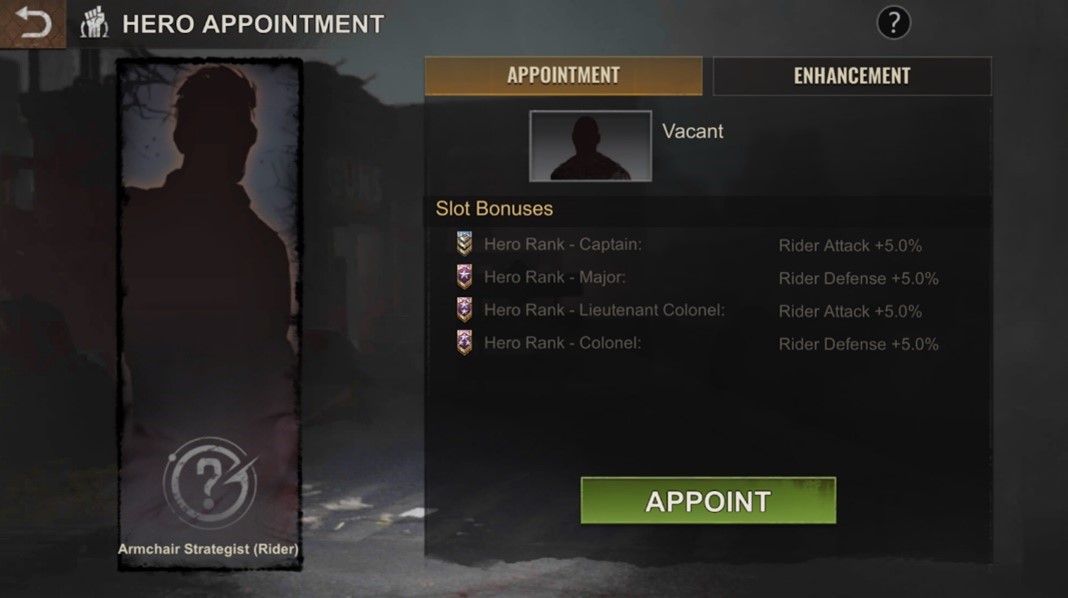
Appointments add another use for your roster: heroes occupy settlement roles that provide troop bonuses. That is a welcome reason to consider more than a single favorite squad. It also means another interface, another upgrade track and another opportunity to spend resources on the wrong priority.
The breadth is substantial. Official updates have expanded building progression and added systems such as Behemoth development and patrols. Long-term planners get plenty to work toward. The downside is accumulation: an established account has layers of dependencies, and returning players face a stack of homework wearing combat boots.
Choose allies by their clock as well as their power
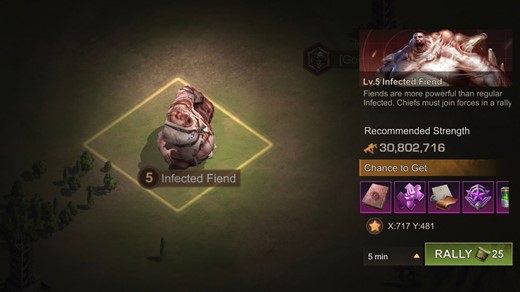
The world map gives that preparation a social purpose. Infected Fiends invite joint rallies, and competitive events turn individual settlements into parts of an alliance plan. Joining an active group is therefore a gameplay decision. Check its expectations and usual event times before treating a high power ranking as a recommendation.
Fortress Fight illustrates the appeal: alliances register, send troops and contest control. The official guide explicitly encourages coordinated rallies and positioning near the objective. You contribute to something larger than another personal upgrade, and there is room for a useful supporting role instead of pretending everyone is the main character.
There is also a recovery bill. Hospital capacity and casualty rules matter, and rules differ between activities. Read the event conditions before committing troops. An exciting attack can be a poor strategic decision if rebuilding afterward consumes the resources you needed for the next milestone.
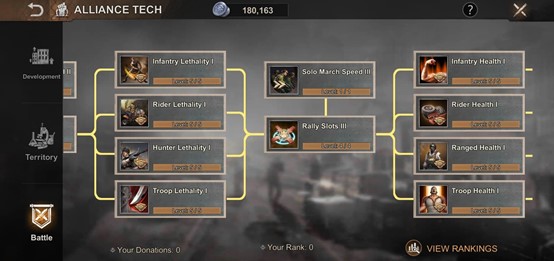
Useful shortcuts in a crowded command center
Years of additions make the interface a central part of the experience. You move among settlement tasks, heroes, intel, events and alliance activity. That breadth supports different session lengths, but it asks you to learn a system of menus rather than simply master a movement stick.
The September 2026 notes show concrete housekeeping improvements: batch Hero Searches, completed intel promoted in the list and clearer identification of your troops in rallies. Earlier updates added immediate reward collection for completed Explorer Trail stages. These conveniences reduce repeated work; they do not make every system self-explanatory.
Free entry, with progress on the shop shelf
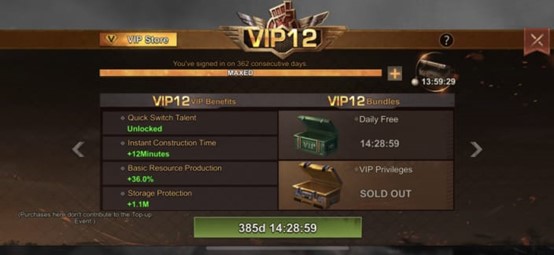
Both mobile editions are free to download with in-app purchases. Google Play also flags purchases containing random items. The US Apple listing includes Biocaps and several crate products, from a $0.99 pouch to a $49.99 Mega Crate. Those are examples of store products, not a quoted budget for completing the game.
The critical distinction is between enjoying progress and competing on equal terms. Resources, development tracks and spending sit close to military strength. Free access makes trying the loop easy; it does not make the competitive economy neutral. Set your spending ceiling before an event turns a temporary shortfall into a persuasive offer.
Treat the settlement and alliance routine as the product you are choosing. The stores also advertise separate events, including Survival Royale and puzzle activities. Their presence does not erase the underlying strategy game, and a crossover or ad should not be your only reason to commit to its daily demands.
Strengths
- Settlement, troop and hero development connect into purposeful long-term plans.
- Alliance rallies and objectives give preparation a shared payoff.
- Hero encounters provide a smaller-scale alternative to settlement administration.
Tradeoffs
- Timers and event schedules can turn optional play into a daily obligation.
- Purchases and randomized rewards complicate the value of competitive progression.
- Accumulated systems make learning or returning to the game demanding.
Who it suits
- Players who enjoy building toward a long-term objective in short check-ins.
- Alliance-minded strategists comfortable coordinating around scheduled activities.
- Hero collectors willing to plan investment and keep a firm spending limit.
Verdict
State of Survival is strongest when a focused settlement plan feeds a useful alliance contribution. Hero encounters give that long climb variety, while roster systems offer more decisions than a simple power counter suggests. It suits the player who enjoys preparation, shared objectives and a game that keeps expanding.
Its weak point is the price of keeping pace, measured in attention as well as money. Try the free opening with a modest goal and an alliance whose schedule fits yours. If the routine itself is not enjoyable, a shinier hero will not turn it into a different game.
iPhone / iPad edition
Review score: 7.4 / 10
- Combat
- 7.1 / 10
- Progression
- 9.0 / 10
- Usability
- 6.8 / 10
- Value
- 6.5 / 10
App Store ID 1452474937; bundle com.kingsgroup.ss; publisher FunPlus International AG.
Version 1.27.0, released September 23, 2026; requires iOS/iPadOS 15.0 or later.
Free download with in-app purchases; US examples are region-specific.
Android edition
Review score: 7.4 / 10
- Combat
- 7.1 / 10
- Progression
- 9.0 / 10
- Usability
- 6.8 / 10
- Value
- 6.5 / 10
Google Play package com.kingsgroup.sos; publisher FunPlus International AG.
Listing updated September 21, 2026; public listing does not expose a verified numeric build.
In-app purchases include random items; device performance is not measured here.
Standard mobile editions overview
Review score: 7.4 / 10
- Combat
- 7.1 / 10
- Progression
- 9.0 / 10
- Usability
- 6.8 / 10
- Value
- 6.5 / 10
Overview of the listed Android and iPhone/iPad editions, not a browser port.
The official site also links desktop clients; those are outside this review’s rated editions.
Feature availability can vary by State and progression.
The review score averages the applicable Combat, Progression, Usability and Value scores, rounded once to one decimal. Fit is specific to each comparison and is excluded.
Is State of Survival mainly a zombie action game?
Its foundation is settlement building, army development and alliance strategy. Explorer Trail supplies hero-based infected combat, and events add other activities. Choose it for that mixture rather than expecting continuous third-person shooting.
Can I play without spending money?
Yes. Both mobile listings offer free entry with optional purchases. Building a free account is different from matching every competitor: paid development and random-item purchases make a spending limit and realistic goals important.
Do I need to join an alliance?
You can work on personal development, but alliances provide the context for joint rallies and major cooperative or competitive objectives. Choose a group whose event schedule and participation expectations suit the time you actually have.
Which mobile versions does this review cover?
The Android app uses com.kingsgroup.sos, and the iPhone/iPad App Store listing is 1452474937, both under FunPlus International AG. The mobile overview groups those editions; it does not describe a browser edition.
Will every guide or event apply to my account?
Not necessarily. State age, progression and staged feature releases can affect availability. Check the event rules and in-game announcements before saving materials for a particular feature or assuming a guide describes your current conditions.
Sources
- Official Android listing and purchase disclosures ·
- Official iPhone and iPad listing ·
- Apple application identity and version metadata ·
- Official game overview and Explorer Trail description ·
- Official basic troop formation guide ·
- Official troop attribute guide ·
- Official hero builds guide ·
- Official hero appointment guide ·
- Official Fortress Fight guide ·
- Official casualty and hospital guide ·
- Official Explorer Trail raid update ·
- Official September 2026 interface improvements ·
- Official progression expansion: Behemoth Institute ·
- FunPlus developer and platform announcement ·
- Official community: Hero Appointment guide with interface images ·
- Official community: rally preparation guide with interface images ·