6 Free-to-Play Zombie Survival Games, Plus Zombie Defence
Find a survival loop worth sticking with when your spending limit is zero.

Start with Unturned on PC if you want to build, gather and survive without making a premium currency balance the center of your plans. Last Day on Earth is the stronger fit for a mobile scavenging-and-workbench routine, while Dead Frontier 2 puts the pressure on ammunition, equipment and the next building you search. Those are three very different answers to the same question: which free-to-play zombie survival games give you an interesting life between the fights?
A zero download price tells you how to enter. The survival systems tell you whether you will want to stay. Food that you can grow, equipment that wears out, a backpack you can lose and a workshop you keep all change the value of a supply run. So do paid progression bonuses, randomized purchases and competition against other players. This comparison follows those differences across six released, free-entry games. State of Survival is included as the settlement-and-alliance strategy option, with its genre clearly separated from hands-on scavenging.
The seventh entry is Zombie Defence, a browser Alpha in development with implemented combat, crafting and persistent shelter systems. It belongs on the watch list rather than in the count of games you can start for free today: public pricing and access are unannounced. Availability and purchase information were checked on October 13, 2026.
The quick comparison
7 games, different reasons to give the next run a chance.
Choose a game to jump to its overview. Platform lists are summaries; check the linked official edition.
The games
Unturned
The clearest starting point here for players who want their survival plan to revolve around food, tools and shelter rather than buying progression.
- Shelter building
- Crafting
- Farming
- Co-op
- Platforms
- Windows, macOS and Linux via Steam; this comparison covers the PC edition.
- Price model
- Free base game; optional cosmetic purchases and paid Permanent Gold Upgrade.
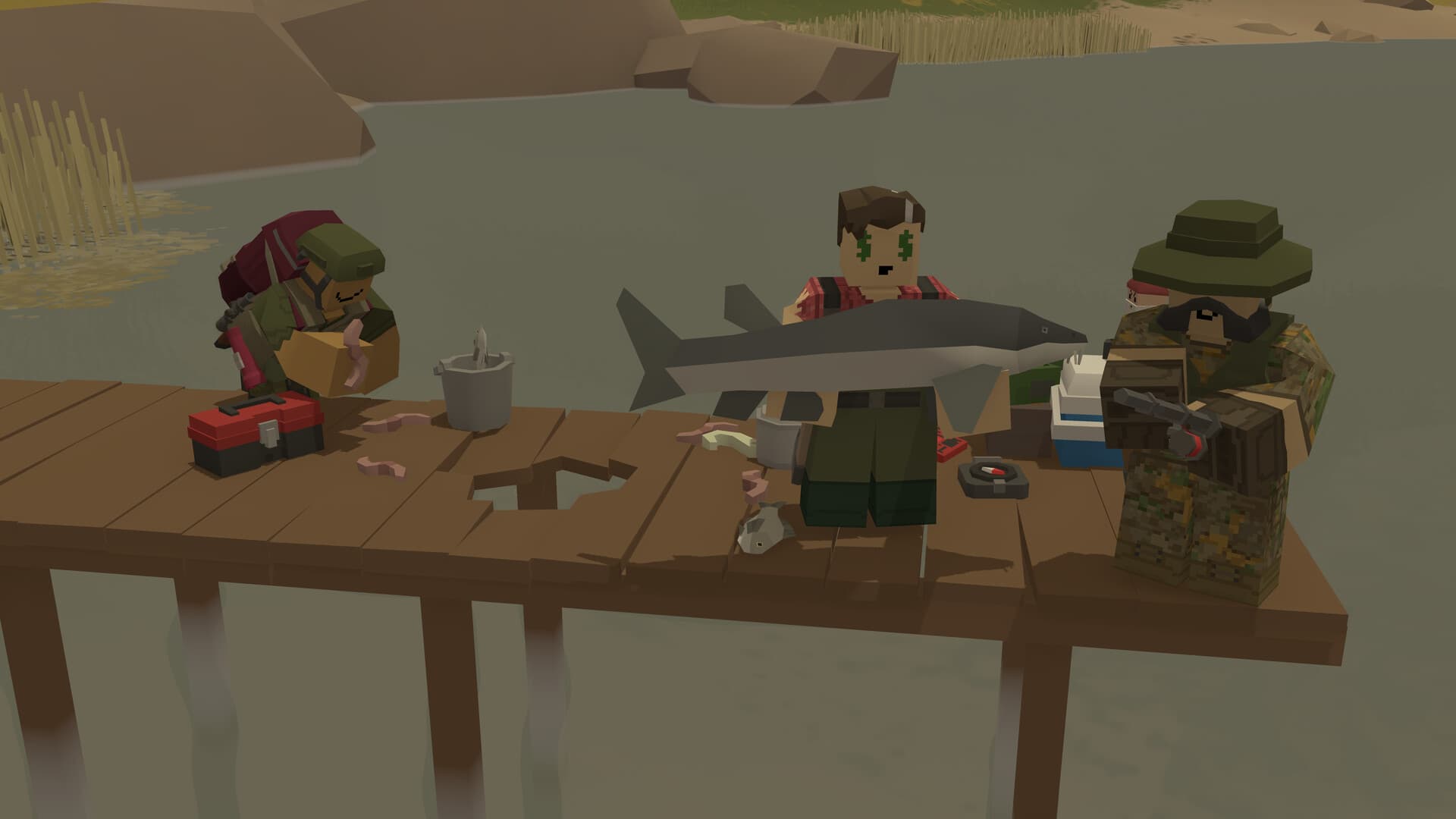
Unturned gives you an apocalypse to inhabit instead of a ladder of menu-driven missions. Scavenging is only one way to keep yourself supplied: hunting, fishing and farming give you reasons to learn the landscape and invest in a home. Crafting and fortification turn resources into something more useful than a bigger number in a reward screen. That makes it a particularly good match for a no-spend player who likes setting personal goals, such as a dependable food supply or a better-equipped base, without needing a competitive ranking to validate the effort.
Its simple-looking world still asks practical questions. Food and drink affect your survivor's stats, and water canisters distinguish clean, dirty and salty water. Seeds grow into harvestable crops. Those details create a satisfying change in priorities: first find enough to get by, then build systems that make the next outing less desperate. You are not just unlocking stronger guns. You are changing what you need to carry, which locations are worth visiting and how much preparation goes into leaving a safe spot. The inventory, crafting and server choices also mean this is a game to learn, not an instant arcade distraction.
The current Steam description says the game's item purchases are cosmetic and describes its approach as having no pay-to-win mechanics. There is also a separate Permanent Gold Upgrade. Its listed benefits include extra character slots, customization and access to premium Golden servers, so the accurate promise is a free survival game with optional extras, not that every possible option costs nothing. Nothing in that upgrade description makes it a prerequisite for beginning the ordinary gathering, building and zombie-survival loop. A strict zero-budget player can start with the base edition and decide later whether any optional extra actually matters.
Choose the rules before you invest heavily. Single-player is the cleanest place to learn without another player's schedule or aggression shaping the session; multiplayer adds cooperation or PvP and server-specific settings. The developer's documentation explicitly allows gameplay settings to be overridden, so read a server's rules before assuming its experience matches another server's. For a useful first goal, establish a repeatable supply route and a place to organize the results. If that process is enjoyable, you have found the core attraction. If you mainly want constant guided rewards, Unturned's freedom may feel directionless.
The verdict
Our first choice for a zero-budget PC survival sandbox. Start in single-player or choose a server whose rules fit the amount of risk you want.
Last Day on Earth: Survival
A good fit if bringing materials home, choosing a crafting project and protecting a modest loadout sound more rewarding than rushing the next unlock.
- Shelter building
- Crafting
- Exploration
- Permanent progress
- Platforms
- Android, iPhone and iPad; stable internet required.
- Price model
- Free download with ads and in-app purchases, including randomized items.
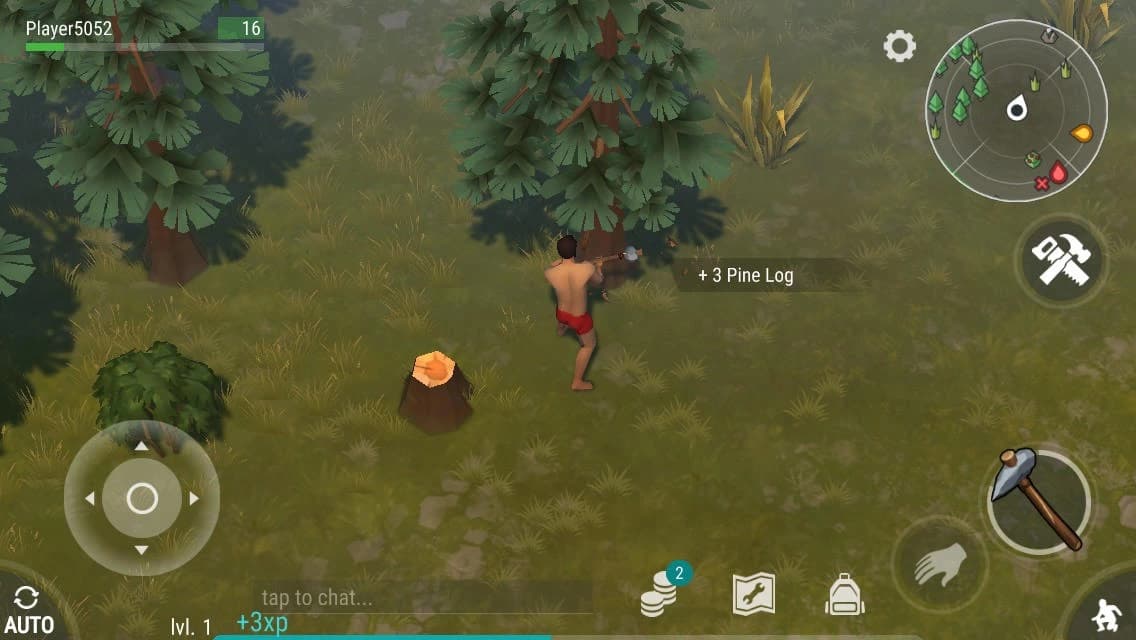
Last Day on Earth makes the journey between your base and hostile locations the heart of survival. You collect materials, build storage and workbenches, and turn supplies into weapons, armor, medicine and larger projects. Forests, farms, bunkers and other destinations give those projects a reason to exist. The appeal for an unpaid player is tangible: a run can help equip the next one or add something useful at home. The best way to approach it is with a chosen objective, rather than treating every destination as an invitation to take your most valuable equipment into danger.
The loss rules deserve attention because they change that calculation. Kefir says your buildings, blueprints, skills and levels survive character death, while your carried inventory is at risk and corpse recovery is conditional. The current store description specifically warns about losing loot in random locations. This creates two different kinds of progress: the lasting foundation at home and the supplies you are risking on this trip. A sensible no-spend habit is to take equipment you can replace, bring appropriate healing and return with useful materials before curiosity turns a successful outing into a recovery attempt.
Purchases do not make equipment permanent. Kefir's support guidance says bought weapons and armor still lose durability and can break, while purchased resources can be lost after death like found ones. Its official shop also advertises season rewards, rations for automatic location clearing and equipment packs. That is a practical reason to separate a desire for progress from a desire to buy relief after a bad run. Playing free does not remove the resource economy, and spending does not remove it either. Learn the survival routine on ordinary gear before deciding whether the repetition itself is something you enjoy.
It is also worth choosing this game for the right social experience. The main journey is single-player; The Crater is a separate unlockable multiplayer area with clans, trading and PvP. The base-and-loot loop is therefore not a promise of exploring the whole campaign side by side with a friend. For a personal no-spend check, choose one useful workstation or equipment recipe and follow its material chain without buying a shortcut. Judge the trips, preparation and resource replacement along the way. That gives you a better answer than counting a burst of introductory rewards or chasing a vehicle project before you understand its requirements.
The verdict
Choose it for a deliberate mobile gathering-and-crafting routine. Bring a replacement plan as well as a weapon, and do not confuse buying gear with protecting progress.
Dead Frontier 2
Choose the horror of entering another abandoned building with limited supplies, then build a survivor whose skills and equipment make those searches more purposeful.
- Manual aim
- Loot builds
- Exploration
- Co-op
- Platforms
- Windows PC via Steam; internet connection and a Dead Frontier 2 account required.
- Price model
- Free to play with in-game purchases; paid credits and Gold Membership are offered.
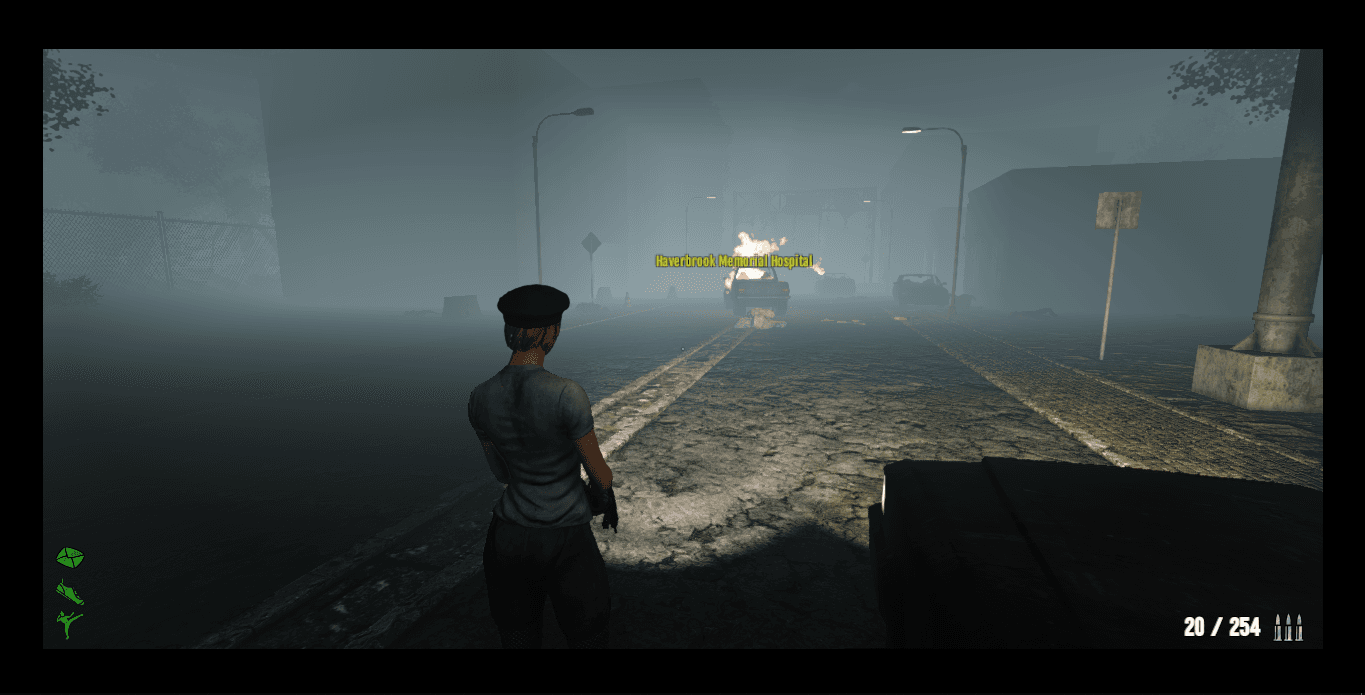
Dead Frontier 2 is the pick for players who want survival to sound like an almost-empty magazine. Its developer emphasizes conserving ammunition and searching abandoned buildings for scarce supplies and rare equipment. That gives combat an economic question alongside the aiming question: is this encounter worth what you are about to spend on it? The player-driven market adds another route for turning an outing into something useful. A piece of equipment need not fit your build to have potential value, but learning what is useful to keep or trade becomes part of the game.
Long-term progression centers on your survivor's skills and equipment rather than decorating a freeform homestead. The Chapter 1 story release added quests, puzzles and new points of interest, alongside crafting recipes and armor repair kits. That combination gives a player more structure than simply entering doors until a rare item appears. For a first project, follow the early story while building a loadout around a clear weapon preference. Keep track of the supplies that plan consumes. A weapon that looks powerful on its own is not necessarily the one that best supports the kind of scavenging you enjoy.
Free entry is real, but the paid side is broader than appearance changes. The developer introduced Gold Membership with experience and loot benefits, and the September 2026 anniversary announcement still advertised credit and GM purchases. Those are reasons to assess the ordinary unpaid loop on its own terms, rather than assume that every account progresses identically. They do not establish an unavoidable payment wall or a fixed number of unpaid hours to reach a milestone. If comparing your gains with boosted accounts would spoil the atmosphere, that matters more than the fact that the install button is free.
The main recommendation here is the ongoing survival-horror game, not every challenge under its roof. The developer's 2026 Nightmare Loop addition is an explicitly hardcore, permadeath roguelike challenge gated behind an account with a level-60 character. Do not transfer that mode's stakes to every ordinary outing, or use it as a beginner's yardstick for whether the game is playable without spending. Solo and cooperative play give you a choice in how to explore the core game. Treat careful scavenging, a functioning build and an interesting story route as the initial goals, with endgame challenges left for when you actually want them.
The verdict
A strong free-entry option for horror-minded PC players who enjoy making supplies count. Judge it by the scavenging and character-building loop, not by a race against boosted progression.
Dawn of Zombies: Survival
The denser mobile crafting choice, with hunger, radiation, repair and quests giving you several competing reasons to prepare before leaving shelter.
- Shelter building
- Crafting
- Exploration
- Permanent progress
- Platforms
- Android, iPhone and iPad; online survival game.
- Price model
- Free download with ads, in-app purchases and randomized items; paid Golden Status offers gameplay benefits.
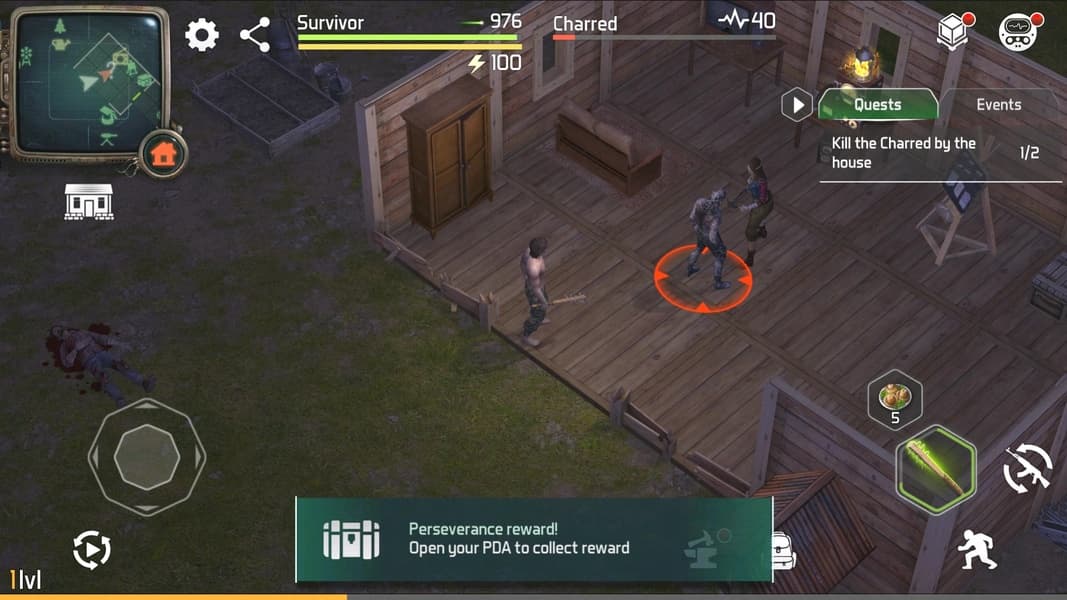
Dawn of Zombies adds a more contaminated, quest-driven flavor to the mobile shelter-and-scavenging formula. Hunger and thirst share the survival agenda with radiation and disease, while hostile areas contain bandits, creatures and infected enemies. That makes preparation about more than taking the strongest weapon you own. There is a story to follow, factions to encounter and a growing set of blueprints and skills to work toward. Pick it if the appeal of surviving is figuring out what the next destination requires, then assembling a kit with a specific job in mind.
The combat systems support that planning. Stealth lets you approach enemies differently, and the documented weapon selection includes elemental damage. Repairing weapons and armor adds a maintenance route alongside making replacements. None of that makes resources limitless; it gives you additional decisions about where to spend them. A useful no-spend priority is a modest, repeatable equipment setup rather than several ambitious upgrades at once. After a trip, ask what you spent on the encounter and what the return contributes to your next goal. That question keeps a large crafting catalogue from becoming an endless list of things you feel obliged to own.
The payment boundary is unusually easy to describe because the official listings name it. Golden Status includes equipment, extra inventory functionality, gold and skill-point benefits, and the App Store lists it as a purchase. The same storefronts disclose advertising or randomized purchases. A free account therefore exists alongside paid convenience and progression advantages. You should not assume equal resources or equal inventory functionality, but neither should an optional status package be described as proof that the ordinary story or crafting loop inevitably stops without it. The better question is whether the unboosted version of those systems appeals to you.
For a personal trial, choose a quest and one practical piece of equipment, then work toward them without opening paid bundles. That reveals whether preparation and maintenance feel like satisfying survival or unwanted administration. Keep expectations focused on the documented exploration, quests and shelter systems: the store still separates coming-soon clan bases, MMO raids and cooperative PvE quests from its current feature list. This is not the safest choice if a broad shared-world co-op campaign is your deciding requirement. It is a much clearer recommendation for someone who wants a detailed mobile survival project and is comfortable ignoring premium status.
The verdict
Try it for the quest-and-preparation loop. Keep goals narrow enough to enjoy on an ordinary account, and treat Golden Status as a separate paid proposition.
Undawn
The broadest home-and-open-world option here: survival indicators, third-person combat and a flexible manor share space with online RPG progression.
- Shelter building
- Crafting
- Exploration
- Co-op
- Platforms
- Windows PC, Android, iPhone and iPad; online game.
- Price model
- Free to play with in-app purchases; mobile stores disclose randomized items or loot boxes.
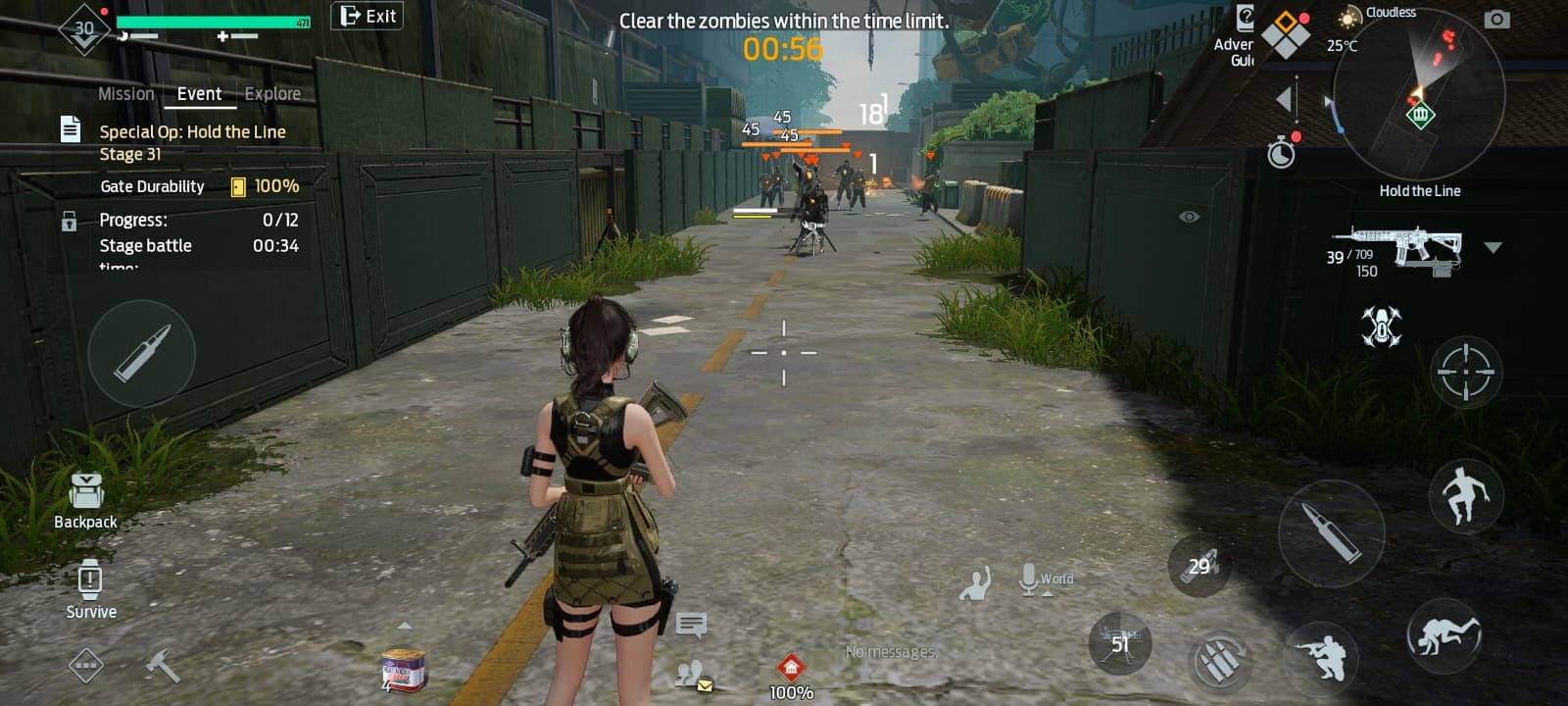
Undawn makes room for two different ambitions: getting better equipped for the infected wilderness and creating a home you want to return to. Its open world combines gathering, tools, weapons and survival companions with a freely customizable manor. Weather affects personal survival indicators including hunger, hydration, health and mood. That is a different appeal from merely paying construction costs out of a settlement resource total. Your character has needs in the field, while the home gives gathered materials a second use beyond replacing combat supplies.
For a no-spend player, the breadth can be a strength if you choose a lane. You might concentrate on exploration and practical crafting, then use home construction as the next project when you want a change of pace. The documented gear options include firearms, melee equipment, drones, decoys and turrets, so combat is connected to preparation rather than a single unchanging weapon. But breadth also brings more systems to understand. If all you want is a quiet sequence of scavenging trips with minimal menus or social obligations, an online survival RPG can become busier than the fantasy that attracted you.
The stores make clear that free entry comes with purchases. The iOS listing includes RC currency packs and a Weekly Card, and discloses loot boxes; Google Play flags randomized items as well. Set your own unpaid objective before competitive progression starts defining it for you. A finished room, a useful crafted item or an explored area is a much more controllable target than matching another account's power.
PvE and PvP both belong to Undawn's design, so choose it with that wider online context in mind. Do not read freeform housing as a promise of a private, offline building game. For your first sessions, focus on whether gathering, personal upkeep and the controls are enjoyable on the device you intend to use. Then assess how much of the game you want to spend on cooperative activities or competition. The game makes the most sense for a player who enjoys several linked hobbies inside one apocalypse, and less sense for someone who wants every reward to advance one simple survival track.
The verdict
Choose Undawn for a long-term home-and-exploration project with other players around. Keep your own building and PvE goals ahead of any pressure to match someone else’s account.
State of Survival: Zombie War
A useful option for the player who wants to organize a surviving community, provided they actually want a competitive strategy game.
- Shelter building
- Permanent progress
- Squad builds
- Base defense
- Platforms
- Android, iPhone and iPad; this comparison covers the mobile editions.
- Price model
- Free download with in-app purchases, including randomized items.
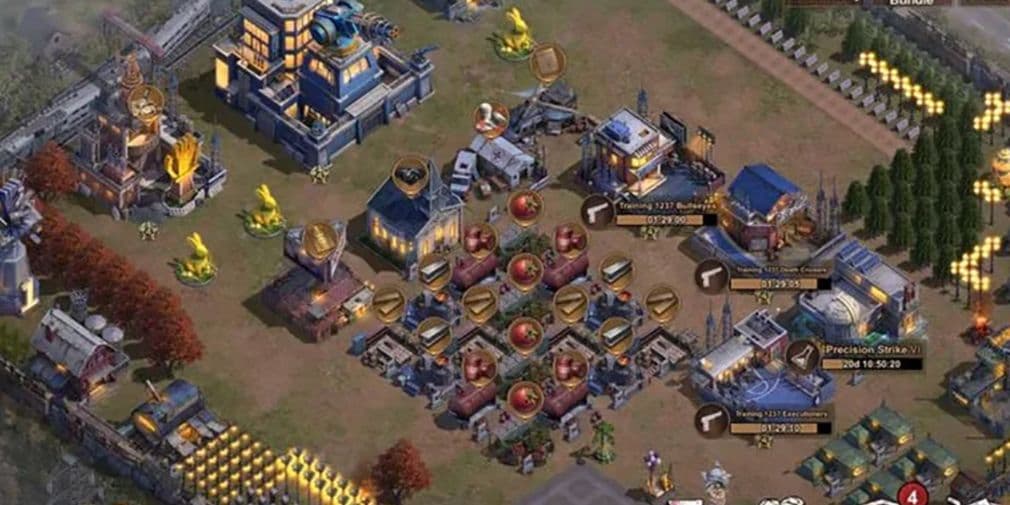
State of Survival uses the apocalypse as the setting for a settlement-and-alliance war game. You develop buildings, train troops, research improvements and recruit heroes, with resources feeding the wider operation. That gives it a real survival-community fantasy, but it is a different kind of decision-making from searching a cupboard with your last few bullets. Your principal concern is how the settlement and its forces develop together. Choose it for planning and social coordination, not because a zombie-themed advertisement has suggested an entire game of direct-action scavenging.
The lasting project is the settlement, supported by heroes and military progression. Zombie encounters and additional modes provide variety, but alliances and cross-server battles are part of the official pitch, too. That changes what a zero budget means in practice: you are choosing a role in an environment where other people have their own goals and schedules. A friendly alliance whose expectations suit your play time may matter more to your enjoyment than whether an individual building upgrade looks exciting. Ask about that before committing to a group, particularly if you want casual participation rather than a competitive routine.
There are in-app purchases and randomized items. FunPlus has also documented events that combine ordinary activities, resources and speedups with purchasable bundles, illustrating why an event reward track is not automatically a pure measure of play time. That does not establish a specific current spending requirement, and old event prices or rewards should not be treated as today's offer. It does establish a useful habit: look at what an event asks you to consume before chasing its headline reward. Spending saved resources can be a cost even when you keep your real-money spending at zero.
The practical no-spend approach is to choose settlement progress and compatible social play as your goals, then assess whether those remain enjoyable without chasing every ranking. If your real wish is to craft your own weapon, pack food and physically return from a dangerous expedition, choose Last Day on Earth, Unturned or Undawn instead. State of Survival is here because some players mean community rebuilding when they search for zombie survival. It can satisfy that preference, but the strategic and competitive context is central to the recommendation, not a footnote you should discover after investing in a base.
The verdict
Pick it only if settlement strategy and alliance life are what you want. For a zero-budget player, a compatible group and a realistic personal goal matter more than chasing a power ranking.
Zombie Defence
Its implemented survival loop gives every recovered resource several jobs: prepare the next fight, complete a weapon project or strengthen the shelter you keep coming home to.
- Manual aim (desktop)
- Extraction
- Shelter building
- Crafting
- Permanent progress
- Platforms
- Browser Alpha in development; native mobile releases planned.
- Price model
- Public pricing and monetization are unannounced. Watch-list entry, not a currently playable free release.
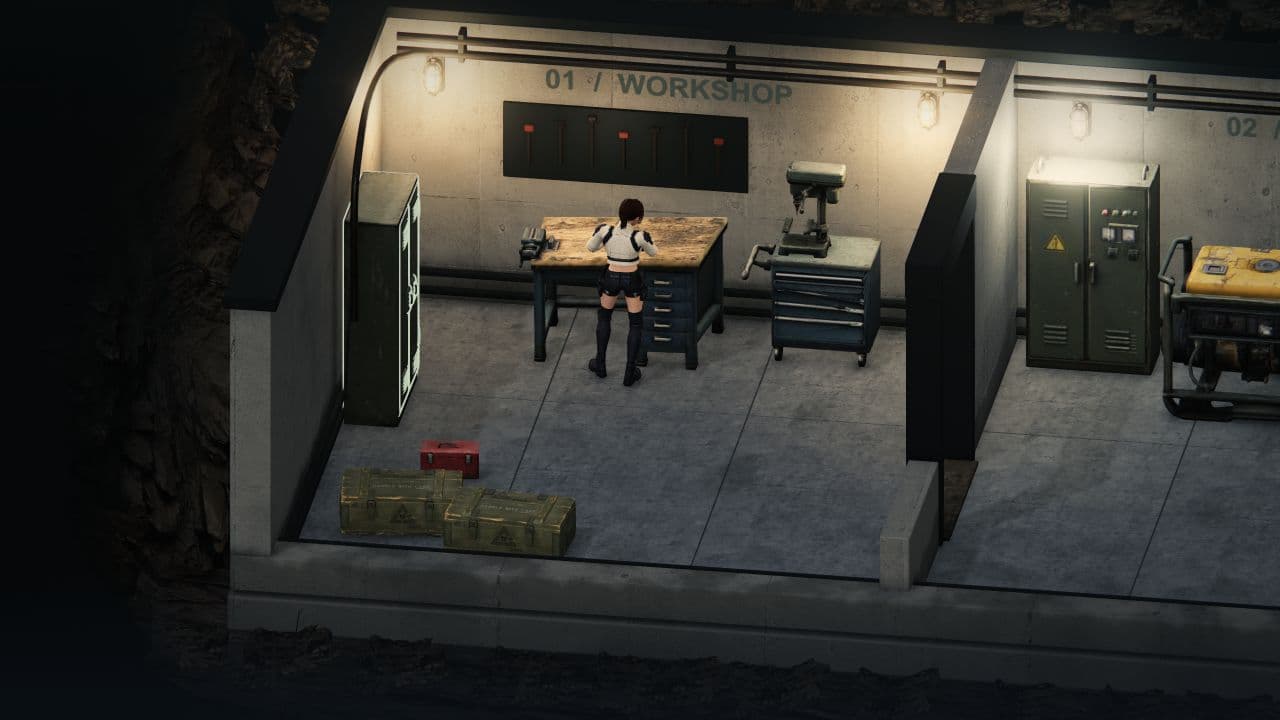
Zombie Defence ties active top-down combat to a persistent underground shelter. Desktop play separates movement from cursor aiming and asks you to fire, reload and manage ammunition; touch fire assists by targeting the nearest living enemy. The most interesting link between combat and home is the campaign level-up choice: take a battle upgrade for immediate help, or invest the choice in a shelter benefit. That puts future security into the same decision as surviving the next rush. It is a concrete reason to follow the game if you enjoy action with something durable waiting on the other side.
The shelter provides real resource competition. Scrap can go toward construction, weapon levels, components or ammunition, while the Salvage Bench consumes actual inputs and stops when they run out or output storage fills. Weapon crafting has identifiable projects, including the Rivet Gun and Breach Shotgun, with recipe discovery through schematics, research or valid component assembly. Research includes mutually exclusive doctrines, so development is not simply buying every improvement in a straight line. For a survival-minded player, the appealing decision is choosing a project and reserving materials for it instead of letting every recovered unit disappear into routine production.
Food is part of preparation as well. Hydroponic crops can feed the colony or become a meal for the next deployment, while irrigation and storage affect how you manage the growing area. The home is a fixed-layout shelter with station upgrades and expansion choices, rather than a freeform construction sandbox. This gives it a focused shape: you manage useful rooms, production and supplies, then take those preparations back into combat. It offers a more directed home loop than Unturned's open sandbox and a more hands-on combat connection than State of Survival's settlement strategy.
Failure also has a deliberately lighter side. In the separate city Scrap expeditions, collected scrap survives extraction, defeat or an interrupted page reload, subject to storage limits. Sector defeats use different rules and can levy some stored resources above a protected floor, but rooms, research and crafted weapons remain. That makes shelter progress more durable than a single trip's outcome. It is an appealing balance for players who want the pressure of fighting their way through a ruined city and the satisfaction of building something that outlasts a bad deployment.
The verdict
Watch it for the linked combat, crafting and durable-shelter loop. Join the waitlist for Alpha news and playtest availability, then judge the public economy when its terms are announced.
How we compare
A good recommendation explains who a game suits and where it falls short. Our editorial scores use the same five criteria, each rated out of ten.
- 01
Combat
Controls, aiming, enemy readability, and the decisions you make under pressure.
- 02
Progression
Build choices during a run and meaningful progress between attempts.
- 03
Usability
Control demands, platform access, interface options, and documented device requirements.
- 04
Value
What the asking price includes, optional purchases, and the scope of the free version.
- 05
Fit
How well the game answers the specific question in this article.
Which one should you try?
Choose the survival problem you actually want to solve. Unturned is our first stop for a free PC sandbox where gathering and a provisioned home are the main project. Last Day on Earth and Dawn of Zombies suit mobile players who enjoy planning equipment and crafting goals, with real upkeep and purchase-related tradeoffs. Dead Frontier 2 is the more atmospheric choice for ammunition-conscious scavenging; Undawn offers a wider online world and a customizable home. State of Survival makes sense when alliance strategy is the attraction. For all six, judge a manageable unpaid goal before committing to competitive catch-up or an enormous unlock chain. Zombie Defence is worth following for a different balance: active combat supplies a persistent shelter, and crafting, crops and research make those returns meaningful. Join the waitlist for Alpha news and playtest availability.
Your questions, answered.
Want to see what we’re building?
Zombie Defence is in Alpha. Join the waitlist.
More games to explore
- 6 Best Zombie Games for Android in 2026, Plus Zombie Defence in Alpha
Compare six Android zombie games by play style and current Google Play purchase model, from story-led runs and horde roguelites to crafting survival and strategy. Zombie Defence is listed separately as an in-development Alpha.
- 6 Mobile Survival Crafting Games + One Alpha to Watch
Compare six mobile survival-crafting games by recipes, combat and world design, then see what Zombie Defence is building in its browser Alpha.
- 4 Best Zombie Base-Building Games on Mobile, Plus Zombie Defence in Alpha
Compare four current Android and iPhone shelter games by building freedom, combat control and alliance demands, then see where Zombie Defence’s browser Alpha fits.