Zombie Horde: Build & Survive review: buy yourself breathing room
The clever purchase is the one that gives your gun another few seconds to work. This compact defense game makes space a resource worth protecting.
Zombie Defence Editorial ·
Based on official documentation and gameplay imagery.
The barricade is doing its job. Unfortunately, its job is buying time, and you have spent that time watching a growing crowd instead of thinning it. Zombie Horde: Build & Survive turns this tiny planning error into the central joke of its apocalypse: excellent fence, shame about the teeth.
Vlad Wise’s browser defense game puts a moving, automatically firing survivor inside a battlefield reinforced with turrets and traps. Its strongest idea is the connection between those jobs. Build space to maneuver, then use that space to make your defensive purchases count. A fortified corner is only useful while you can leave it.
Two phases, one very practical question
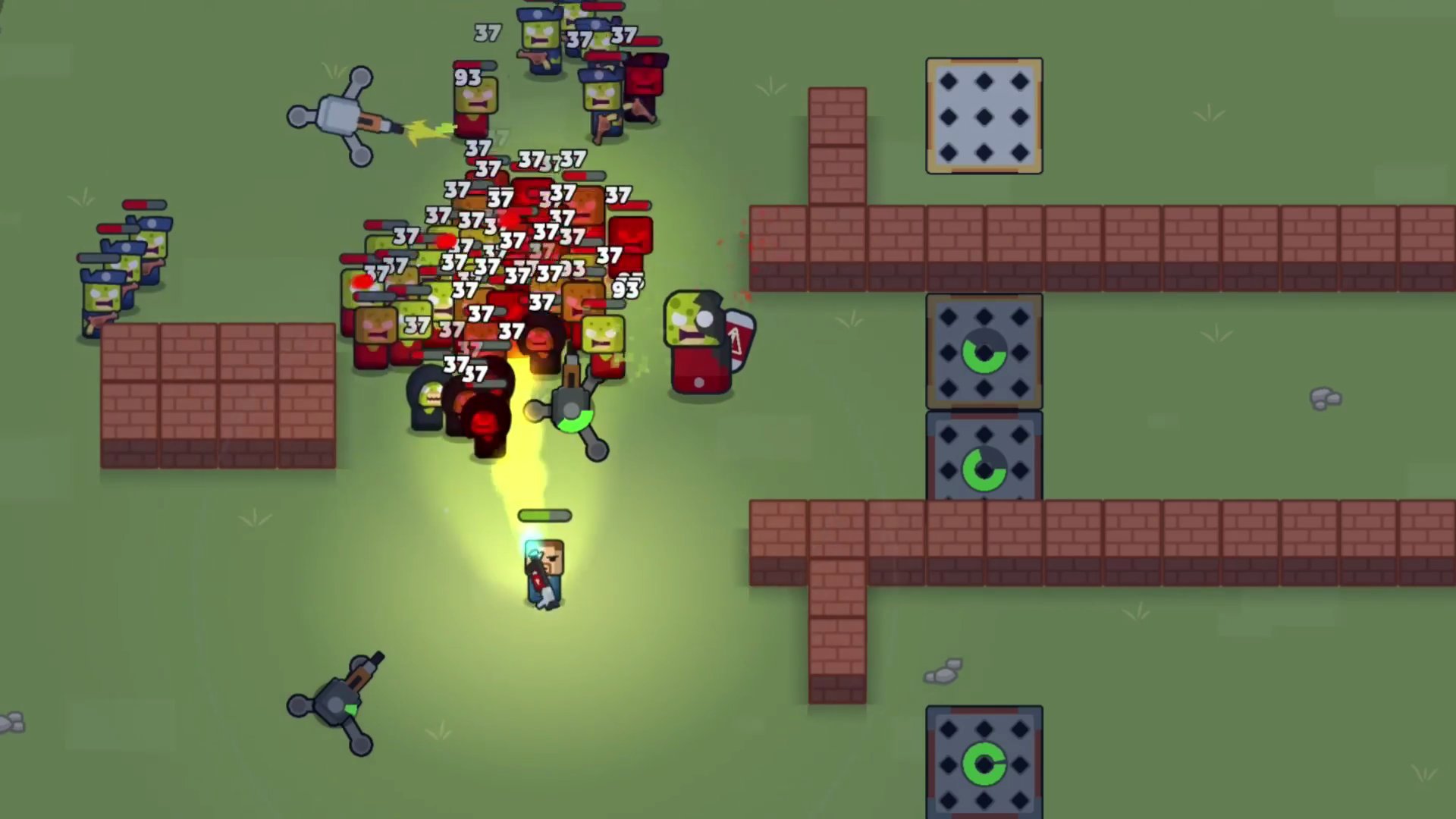
The rhythm is easy to grasp: prepare your defenses, trigger the fighting, survive the wave, then spend the rewards. The preparation break matters because it lets you change the next encounter before the zombies arrive. You are buying a better situation, rather than merely a bigger damage number.
Ask what went wrong last time. Did enemies reach you too quickly, or did they pile up because your weapons could not clear them? Those failures suggest different purchases. Another barrier addresses the first problem; stronger firepower or turret support is the more convincing answer to the second.
Construction feels purposeful without demanding a colony manager’s spreadsheet. The refuge stages the next defense. The local planning department has one requirement: fewer zombies on the wrong side of the wall.
A barrier needs someone to exploit the delay
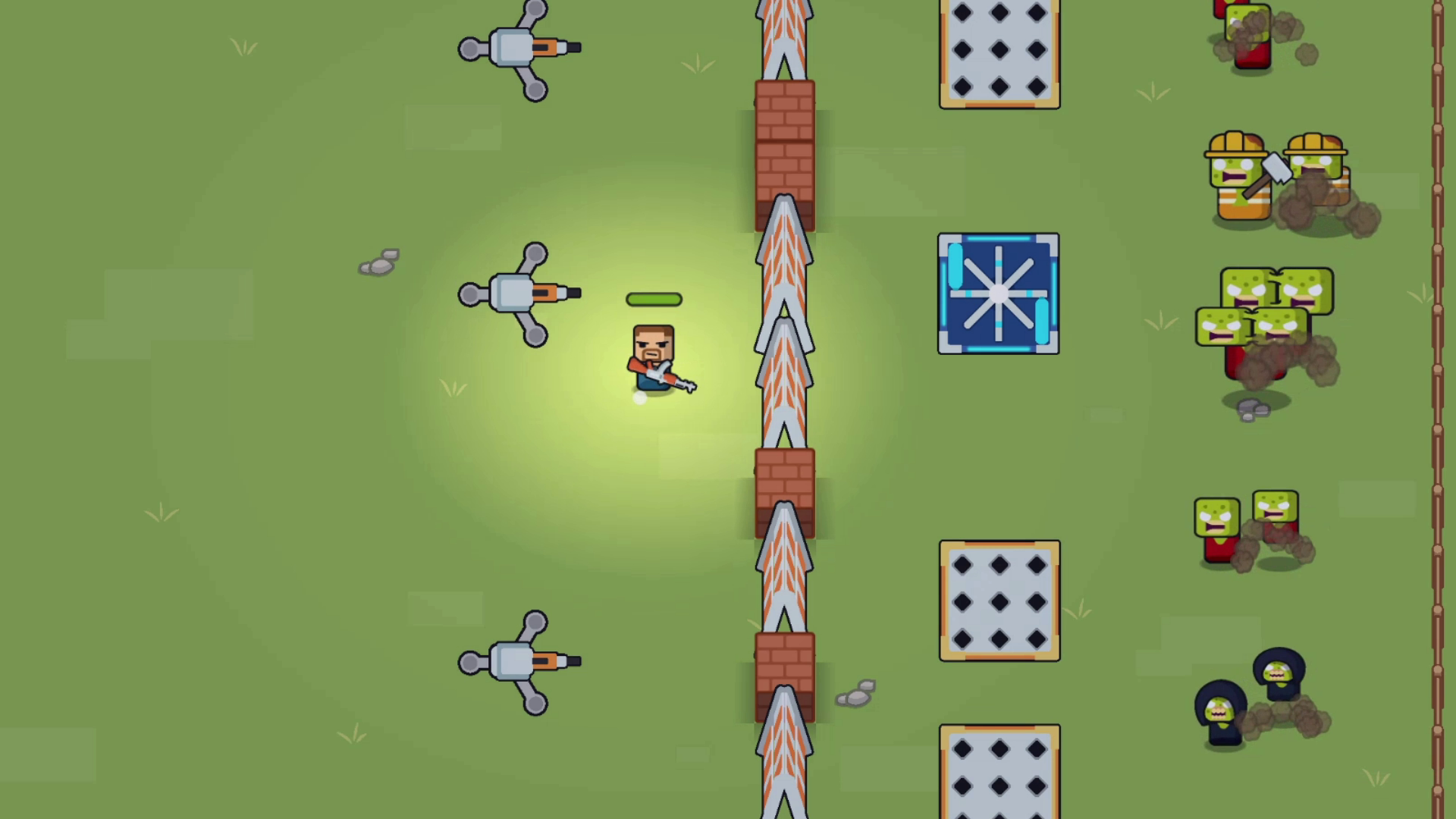
Barricades slow the approach; they do not finish the fight for you. Think of each one as a temporary firing window. Investing in a tougher obstruction makes sense when your existing guns can capitalize on the extra seconds, and less sense when the whole lane already resembles a waiting room.
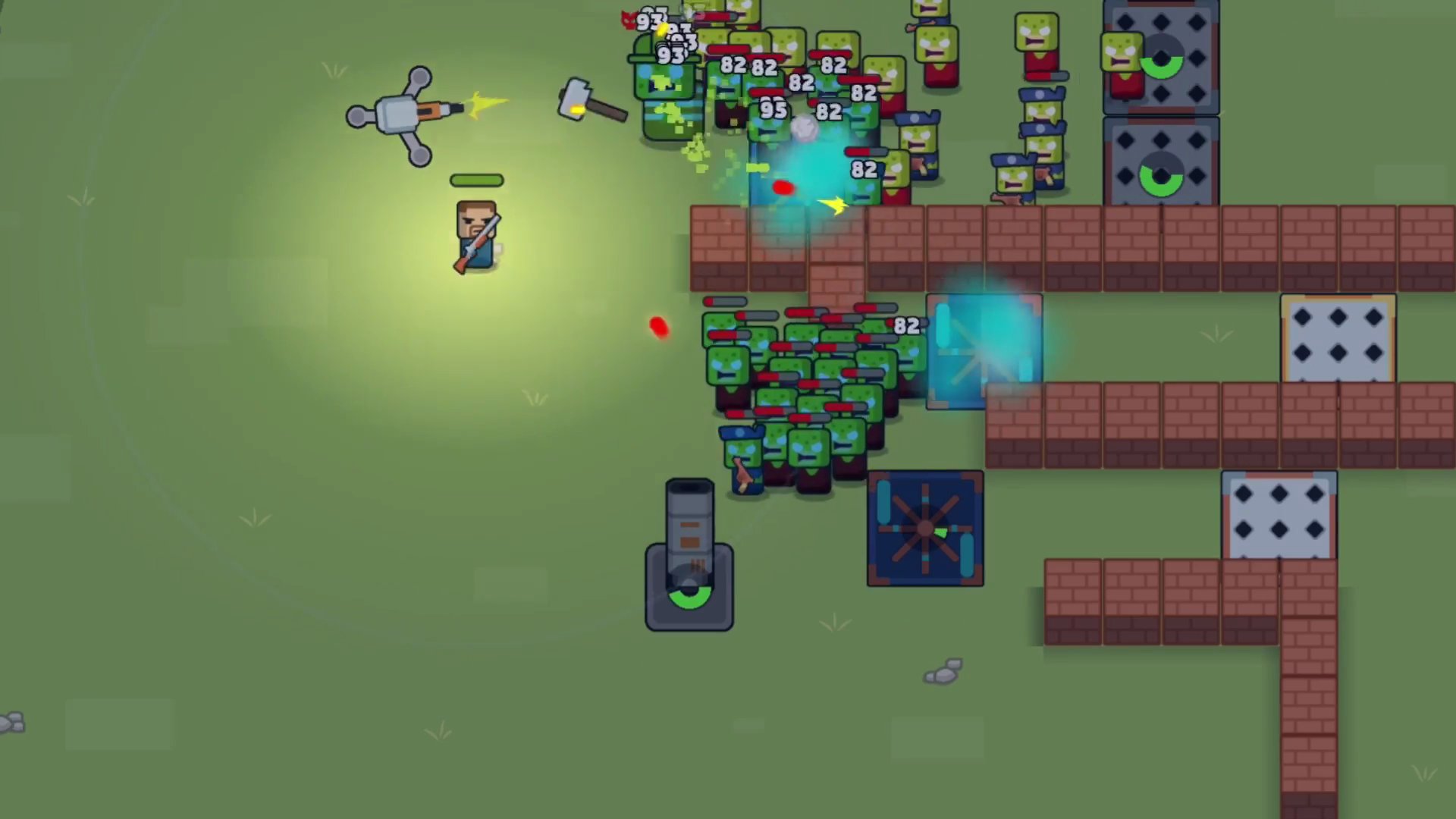
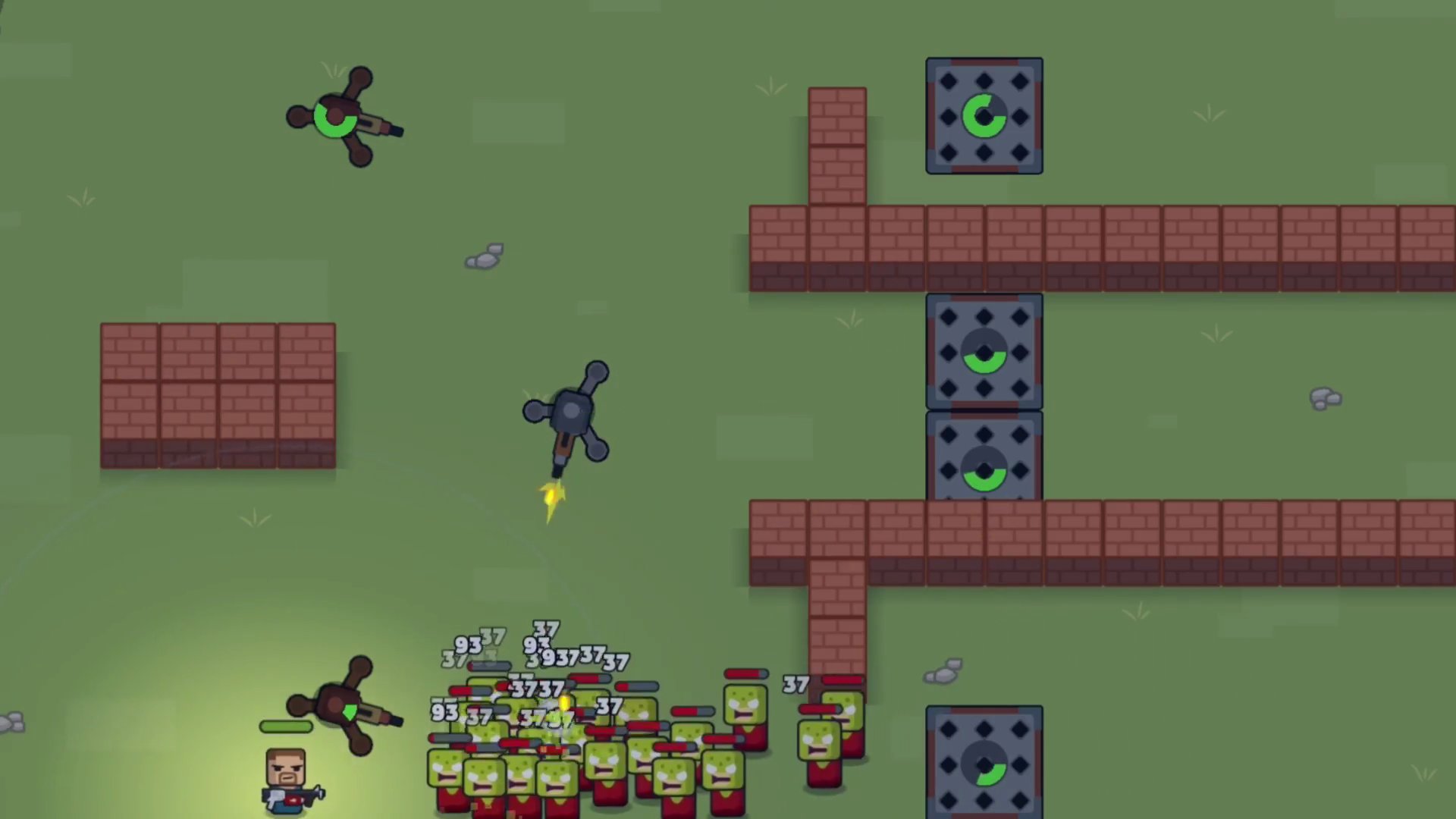
The official scenes show narrow openings, brick corridors and defensive equipment concentrated around likely approaches. That geometry gives your movement a purpose. Stay near useful coverage, but leave yourself somewhere to retreat when the crowd squeezes through. Standing directly in the opening turns the architect into the next obstruction.
Defensive confidence can become a liability once several groups arrive. Plan for the breach as well as the hold: where will you go, and which guns will still help you there?
Automatic fire still leaves you a job
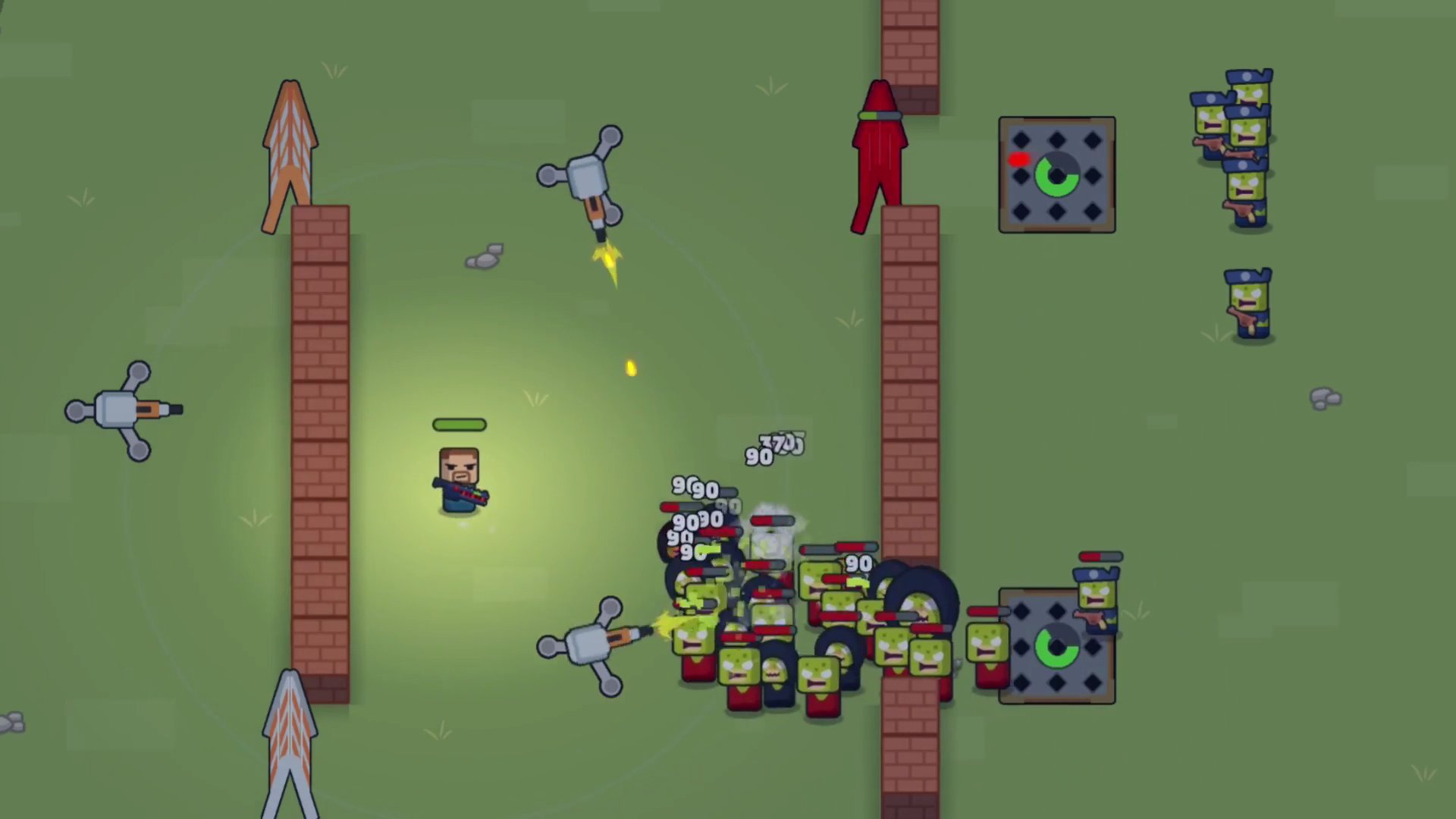
Shooting is automatic, so movement carries much of the active workload. Desktop controls use WASD or the arrow keys; mobile uses a dragged virtual joystick. That short input list makes the premise immediately approachable, while spacing, changing lanes and staying clear of contact supply the actual decisions.
The sensible habit is to move around the threat rather than straight through it. Draw enemies past functioning traps and turrets, then shift before the pack closes the available gap. You want the horde traveling through your damage, not your survivor traveling through the horde. Small distinction; large medical bill.
Players seeking separate aiming, trigger timing and demanding reloads should look elsewhere. The combat appeal is spatial: choosing where to stand, when to abandon that spot and how much help your setup provides.
Layer damage instead of trusting one trick
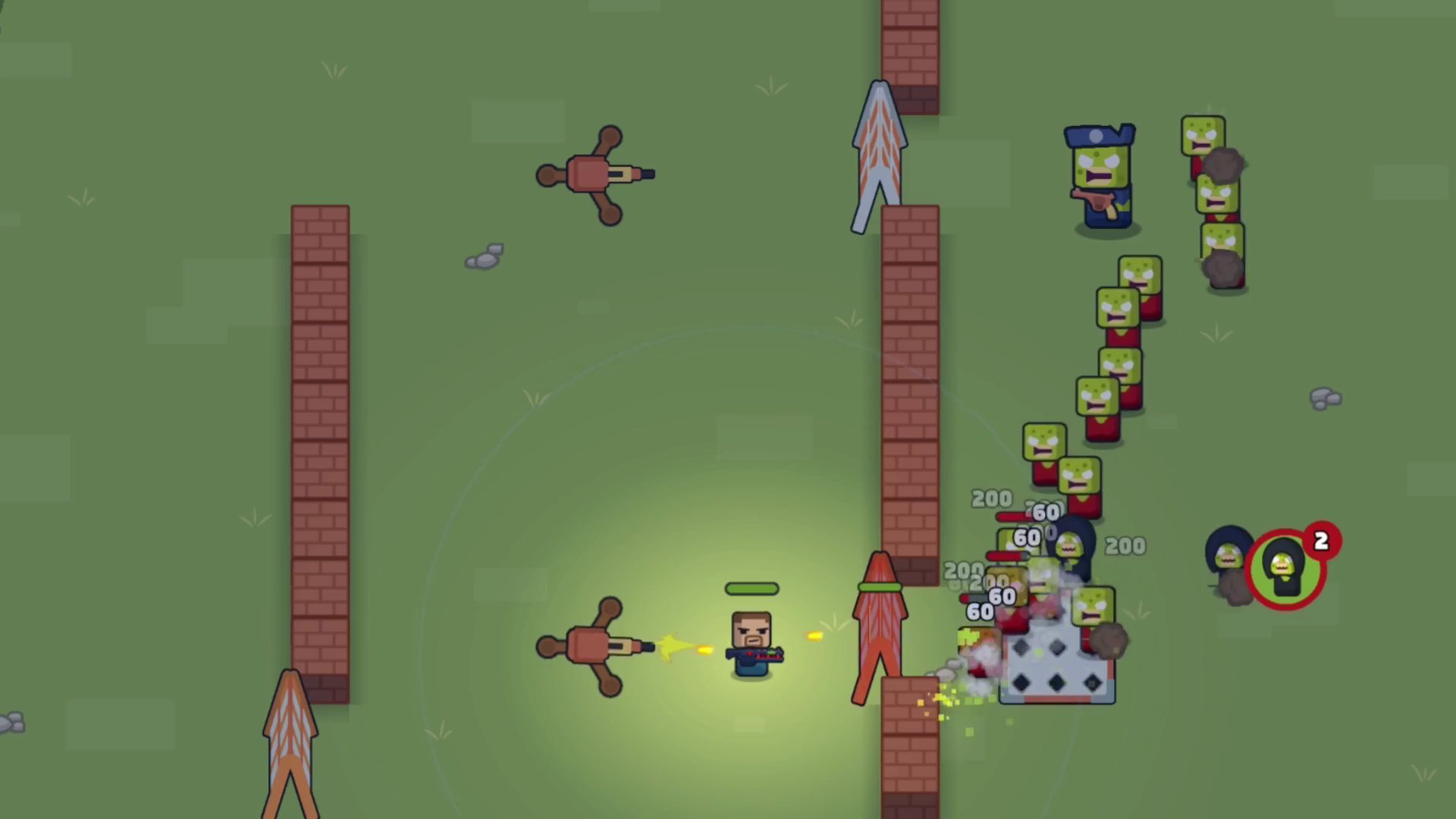
Turrets add an independent source of fire, while floor traps punish enemies moving through particular spaces. The official gallery also shows flame attacks and cold-blue effects covering clustered groups. These are useful visual distinctions: ordinary shooting, sustained pressure and crowd control make different demands on where you position yourself.
A floor full of spikes is tempting, but traps cannot replace the whole damage plan. Pair a threatening approach with weapons that exploit it. If enemies are already inside, a remote trap is no comfort; nearby turret coverage and a clear route offer a more practical insurance policy.
Green enemies, red health bars and bright effects communicate threats, but dense damage numbers can bury individual bodies. Read the pack’s shape and the remaining exits instead of admiring every successful hit.
Keep the upgrades, rethink the defense
Battle money pays for the immediate defense; saved menu currency, upgrades and unlocked levels give you something to build on afterward. That lasting development offers a reason to return without turning the battlefield itself into a permanent home you maintain forever.
Upgrade categories include hero health and damage, critical-hit improvements, barricade durability, and damage and reload improvements for defensive structures. Those categories support a useful choice between improving your own survival margin and getting more work from the defenses. The strongest purchase is the one that addresses the way your current plan fails.
Saving progress and preserving a live arena are different promises. The durable layer is development and level access; do not treat every placed object as permanent property. CrazyGames identifies this title as supporting cloud progress, but that does not establish save transfer between CrazyGames, Playgama and separate app-store versions.
A small commitment with a familiar ceiling
Free browser access lets you judge the rhythm before committing to a larger survival game. Landscape presentation suits wide defensive lanes; keyboard or touch movement brings the premise to desktops, phones and tablets.
Free entry also comes with interstitial and rewarded ads, whose availability and timing can vary by host. That matters to value even when the core loop asks for little commitment. The appeal depends partly on your tolerance for browser-game interruptions.
Upgrades and layouts offer several answers to the same question: how do you survive a stronger approach? Come for compact tactical problem-solving and an improving toolkit. Planning and kiting remain the main event.
Strengths
- Preparation purchases directly change the next fight.
- Automatic fire leaves room to concentrate on spacing and defensive coverage.
- Saved upgrades and unlocked levels give repeated attempts a lasting purpose.
Tradeoffs
- Repeated waves keep the long-term variety concentrated on defense and kiting.
- Overlapping effects and damage numbers can obscure crowded approaches.
- Interstitial and rewarded ads belong to the free browser model.
Who it suits
- Players who enjoy tower defense but want to move a survivor themselves.
- Browser players looking for approachable controls and short tactical decisions.
- Upgrade hunters content with focused arena defense rather than settlement simulation.
Verdict
Zombie Horde: Build & Survive earns its place through a clear relationship between spending and survival. Barricades create time, turrets exploit it, traps shape the approach and movement rescues the plan when those layers fail. It is an appealing browser-sized version of the pleasure of preparing for trouble.
The best audience is the player who enjoys improving a small defensive puzzle, then personally dealing with its consequences. Automatic fire, modest visuals and recurring waves keep the scope focused. Build something useful, keep an exit open and remember that a very expensive barricade is still not a gun.
Browser edition
Review score: 8.4 / 10
- Combat
- 8.2 / 10
- Progression
- 8.3 / 10
- Usability
- 8.8 / 10
- Value
- 8.4 / 10
Covers the 2D Vlad Wise game distributed by Playgama on CrazyGames; CrazyGames catalog ID 50139.
Publisher-hosted browser data supplements the storefront evidence. Saves are not assumed to transfer between hosts.
The similarly named Roblox experience and native app-store releases are outside this edition rating.
The review score averages the applicable Combat, Progression, Usability and Value scores, rounded once to one decimal. Fit is specific to each comparison and is excluded.
Do you aim and shoot manually?
Shooting is automatic. You move with WASD or the arrow keys on desktop, or a dragged joystick on mobile. Focus on spacing and keeping enemies within useful defensive coverage rather than treating it as a twin-stick shooter.
Should you buy barricades or stronger weapons first?
Identify the failure you need to fix. Barricades buy time, while weapons and turrets remove enemies. If a crowd grows faster than your guns can thin it, another barrier alone will only postpone the same problem.
What progress carries over?
Menu currency, upgrades and unlocked-level progress carry over. Individual battlefield placements should not be treated as a permanent settlement. Cross-site save transfer between CrazyGames and other hosts is not established.
Is it free, and does it use ads?
The CrazyGames browser edition is free to access. Interstitial and rewarded ads are part of the browser game, so free entry should not be confused with an uninterrupted premium purchase. Advertising availability and timing can depend on the host.
Is this the Roblox game with the same name?
No. This review covers Vlad Wise’s 2D browser game distributed by Playgama, using the CrazyGames page linked here. The Roblox experience is a separate product; its co-op and companion features do not belong to this review.