5 Zombie Shooters for Physics, Ragdolls and Impact
Compare what a hit actually changes: body motion, visible damage, environmental interactions and the feel of the gun.

For gun-first zombie combat with spectacular feedback, start with Killing Floor 2. For bodies colliding with enemies and the environment, look at Dying Light 2. Dead Island 2 is the damage-detail pick, They Are Coming supplies a smaller 2D playground, and Zombie Defence connects physical top-down shooting to a persistent shelter. The latter is a browser Alpha in development: its waitlist covers news and playtest availability, not immediate access.
The important distinction is what you want a hit to do. A ragdoll lets a body’s connected parts move under simulated forces and collisions. Dismemberment changes which parts remain attached. A hit reaction may be an authored animation, while blood, camera movement and sound contribute their own impact feedback. Games often blend these techniques. A dramatic fall alone does not tell you which system produced it, and the still images below illustrate the games rather than prove a physics sequence.
This five-game shortlist covers different parts of that spectrum. Killing Floor 2 and They Are Coming build their loops around shooting; Zombie Defence adds longer-term shelter decisions. Dead Island 2 and Dying Light 2 are included as melee-heavy action RPGs with real firearm systems, so their gun access and broader pace deserve attention. Decide whether you want a satisfying weapon in your hands, a detailed target that changes as you hit it, or a whole encounter shaped by movement and collisions.
The quick comparison
5 games, different reasons to give the next run a chance.
Choose a game to jump to its overview. Platform lists are summaries; check the linked official edition.
The games
Zombie Defence
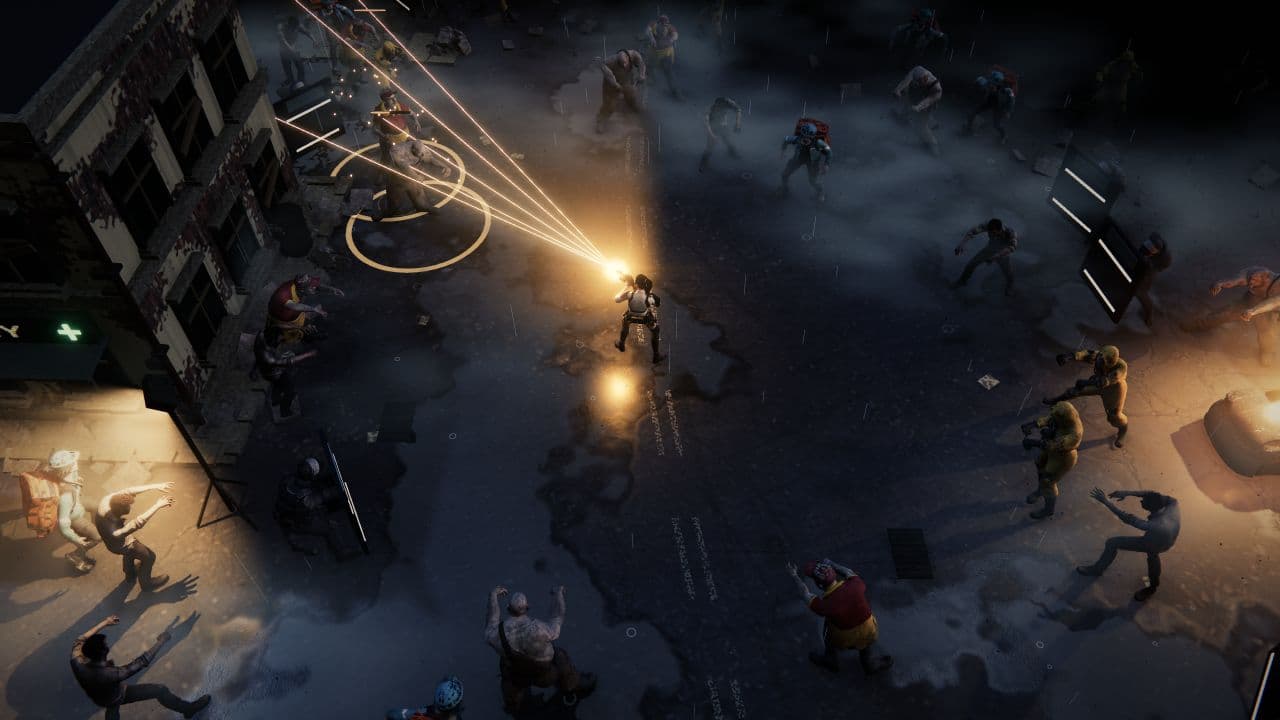
Zombie Defence connects jointed death ragdolls, ammunition management and geometry-aware weapon upgrades to a persistent shelter campaign.
- Manual aim (desktop)
- Fast-paced
- Shelter building
- Crafting
- Permanent progress
- Platforms
- Browser Alpha in development; desktop and touch controls
- Price model
- Public launch price and monetization terms have not been announced
Zombie Defence puts the shot and the escape route in the same decision. On desktop, movement and cursor aim are independent, so you can back away from a crowd while firing into the gap you need next. You still have to watch the magazine and choose when to reload. The elevated camera keeps the wider approach visible, making this an appealing choice if you want physical gunfire without the close-up view of a first-person shooter. Touch controls use nearest-living-enemy targeting when you hold FIRE.
The body reactions combine animation with a genuine physics handoff. Fatal headshots and fatal blast hits trigger the ragdoll immediately; other fatal hits can begin with a short death animation before the jointed body takes over. The ragdoll inherits the enemy’s movement and receives the shot impulse at the struck body segment, with limits that restrain excessive force. Corpses collide with scenery and other corpses. Living enemies do not trip over those bodies, and old corpses are removed under lifetime and count limits, so the result is responsive aftermath rather than a permanent barricade made from the dead.
Weapon upgrades give that physicality a practical role beyond watching a body fall. Heavy Rounds increases damage and knockback, Split Shot spreads extra rays from one cartridge, and Bank Shot bounces shots from solid surfaces. Impact bursts can catch nearby enemies, but cover blocks the blast. That makes the next upgrade a question of geometry: do you need stronger pushes against the front rank, a broader fan across the approach, or a ricochet angle around the space you are defending? The cards change the problem you can solve with a magazine.
The longer-term attraction is having somewhere to spend the rewards. Campaign level-ups can trade immediate firepower for a shelter investment; crafting and research create equipment goals between outings. Separate Scrap expeditions feed that economy, and collected Scrap is retained on extraction or defeat up to storage capacity. Choose this if you want shot feedback inside a continuing survival loop. The tradeoff is focus: whole-body falls and directional impact matter more here than graphic dismemberment or a close-up anatomy sandbox.
The verdict
Choose Zombie Defence for active top-down gunplay where impact feedback serves crowd control and every outing can support the shelter.
Killing Floor 2
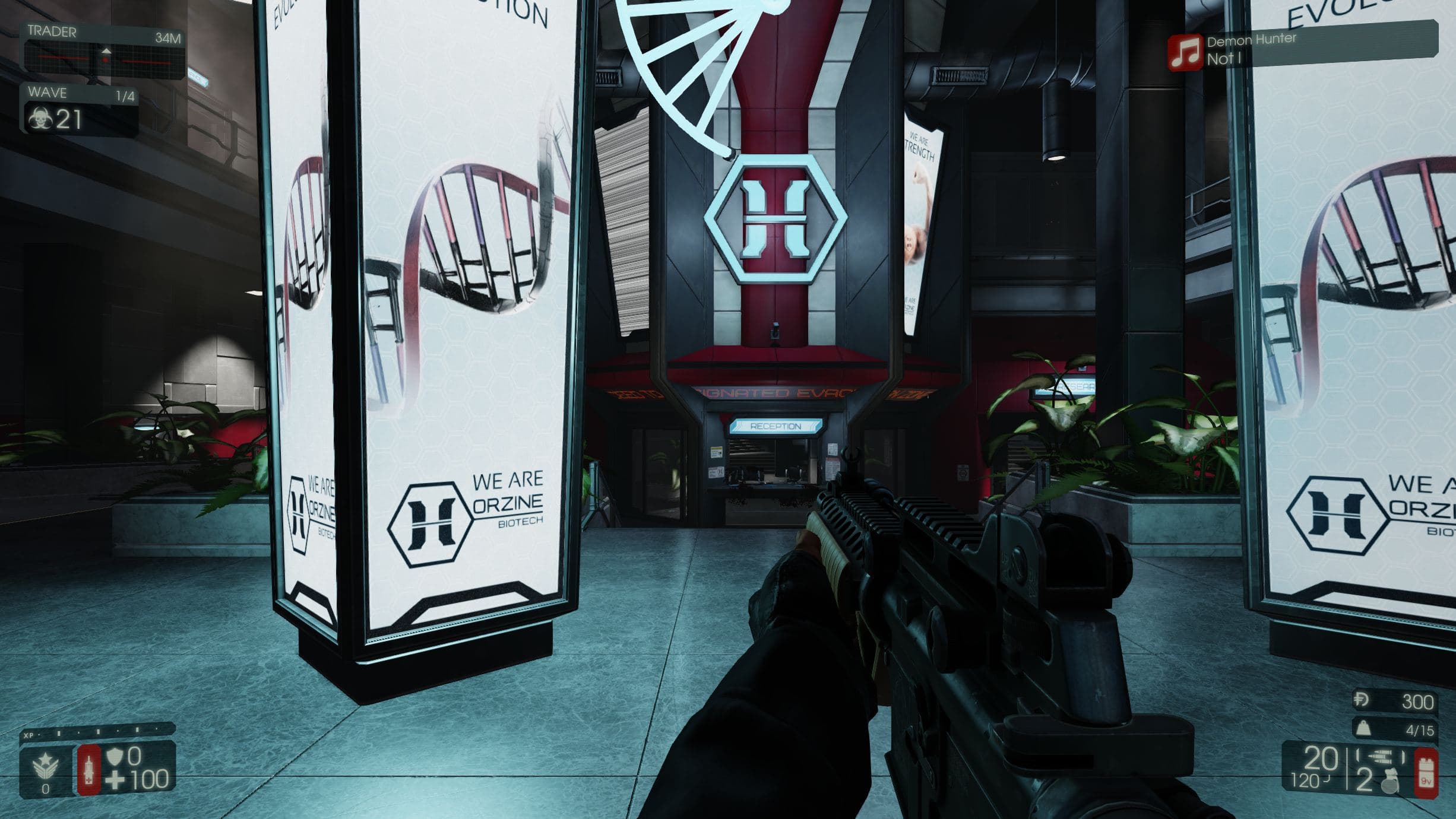
Killing Floor 2 is the gun-first pick: a wave shooter whose weapon animation, Zed Time and damage effects turn each firefight into a spectacle.
- Manual aim
- Fast-paced
- Co-op
- Permanent progress
- Platforms
- Windows PC, PlayStation 4 and Xbox One
- Price model
- Paid game with optional weapon and cosmetic DLC
If your ideal zombie game starts with choosing a gun and ends with surviving the wave, Killing Floor 2 is the clearest fit here. Its enemies are Horzine’s engineered Zeds, including monsters well beyond the ordinary shambling zombie. Solo play and up to six-player co-op put those targets in a combat-first structure. The attraction is immediate: the weapon stays central to the screen, the horde keeps testing your firing lane, and the fight revolves around how effectively your loadout handles what is coming.
A large part of the shooting feel comes from deliberately authored weapon detail. Tripwire describes extremely fine-grained weapon animations, built to remain expressive when Zed Time slows the action. That distinction matters: a carefully animated reload or moving gun part is a craft choice, not evidence that the firearm is a free physical object. Together with the slowed combat, it makes the weapon itself worth watching. Choose this for the rhythm of firing, recovering and firing again as much as for the bodies on the floor.
The damage side mixes separate systems too. M.E.A.T. combines gore effects, dismemberment and persistent blood, while death ragdolls respond to force. Tripwire’s Neon Nightmares notes give a concrete example by describing additional upward impulse on bodies killed with the Dragonsbreath shotgun. That is a specific physical response, distinct from a blood decal or a severed limb. The useful expectation is spectacular feedback from an arsenal of different weapons, rather than a promise that every wall, prop and body participates in an unrestricted destruction simulation.
Perk progression provides longer-term talent choices, and co-op lets you build a preference for particular combat roles. Keep that purpose in mind when buying: the base game supplies the core shooting loop, while optional weapon DLC expands the arsenal and cosmetic packs change presentation. You do not need a special graphics effect to understand the appeal. Pick it when repeated waves and refining a combat role sound more rewarding than following a long quest chain through an open-world campaign.
The verdict
Start with Killing Floor 2 when firing a satisfying arsenal is your priority and you want a full session built around it.
Dead Island 2
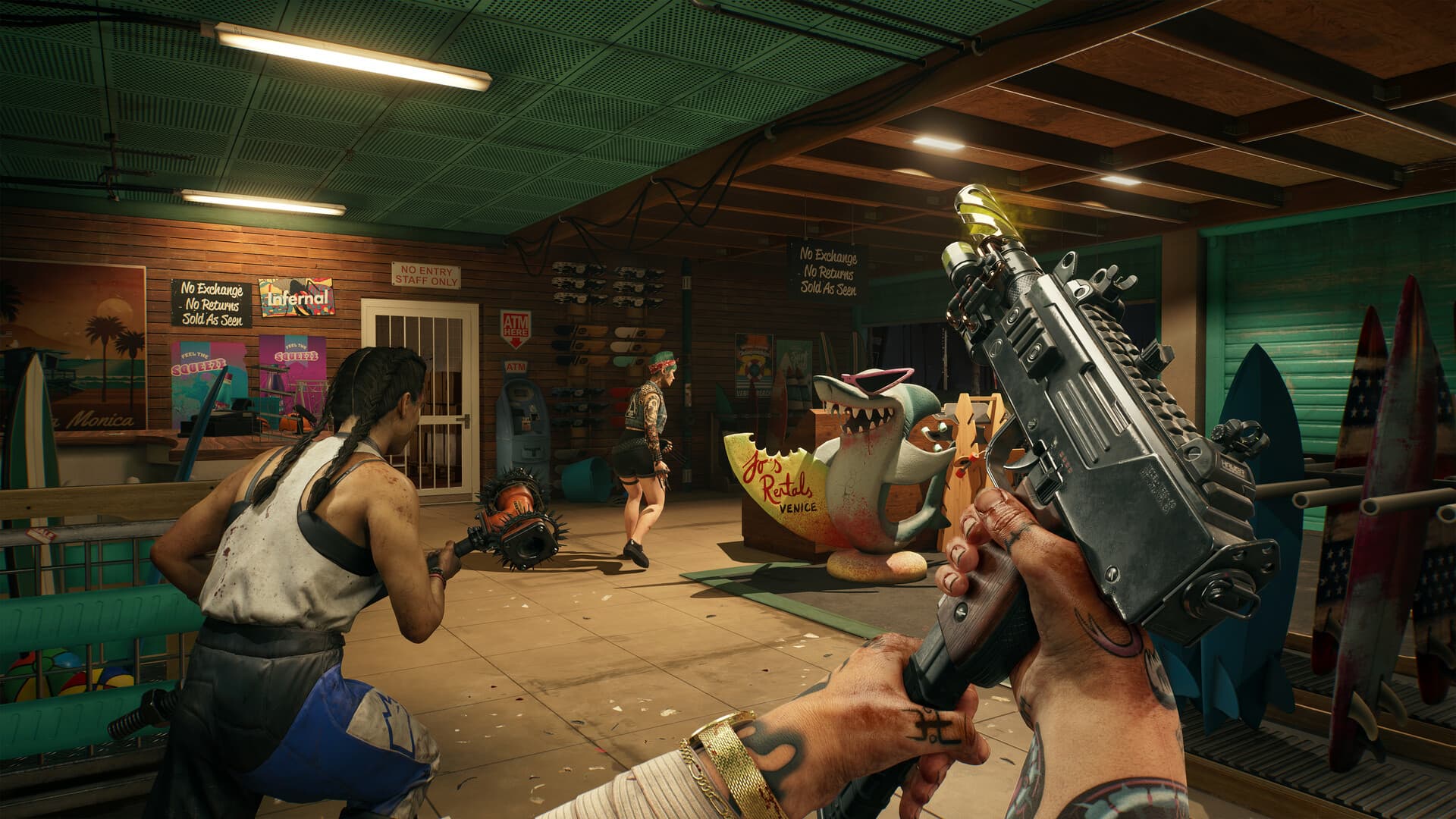
Dead Island 2 is the damage-detail specialist, pairing firearms with a melee-heavy action RPG and an unusually explicit procedural injury system.
- Manual aim
- Crafting
- Co-op
- Loot builds
- Platforms
- Windows PC, macOS, PlayStation 4/5 and Xbox One/Series X|S
- Price model
- Paid game; optional Haus and SoLA expansions plus weapon and character packs
Dead Island 2 is the pick when the result of a hit matters as much as the fall that follows it. Dambuster’s F.L.E.S.H. system creates procedural damage and dismemberment, so the appeal is the changing condition of the enemy’s body. Firearms belong in that picture: the developer specifically confirms that ranged weapons can shoot off limbs. This is a strong match for players who want visible local consequences from a shot, even though Dead Island 2’s overall combat identity remains heavily tied to melee.
That makes it worth separating two fantasies before buying. If you want to inspect how an attack damages a zombie, F.L.E.S.H. is a reason to put this near the top of your list. If you mainly want to launch intact bodies into elaborate collision chains, Dying Light 2 is the more directly documented match. Procedural damage does not mean that every hit reaction is physics-simulated. In Dead Island 2, the attraction is mixing handguns, shotguns, rifles and close-range weapons to explore different ways of dismantling the same threat.
The environment adds another layer of experimentation. A battery can electrify a pool, while an ignited fuel trail can set off a tank. Look for an opportunity to bring enemies into a hazard instead of pouring every available round into the nearest torso. These are useful interacting combat systems, not a promise that the whole city is destructible. The game also supports up to three-player co-op, making it a natural choice for a small group that enjoys setting up messy encounters as well as clearing them.
For a particularly focused ranged option, the SoLA expansion adds a Saw Blade Launcher with single shots and a charged multi-blade burst. It is an expansion weapon, so do not buy the base game expecting it in that package. There is also an important regional difference for this topic: in the German USK version, defeated zombie corpses cannot be damaged or dismembered further. Choose the edition with those boundaries in mind, and choose the game for its broader melee-and-guns adventure rather than expecting a shooting-only campaign.
The verdict
Choose Dead Island 2 for detailed damage and creative environmental kills, especially if you enjoy switching between guns and melee.
Dying Light 2 Stay Human: Reloaded Edition
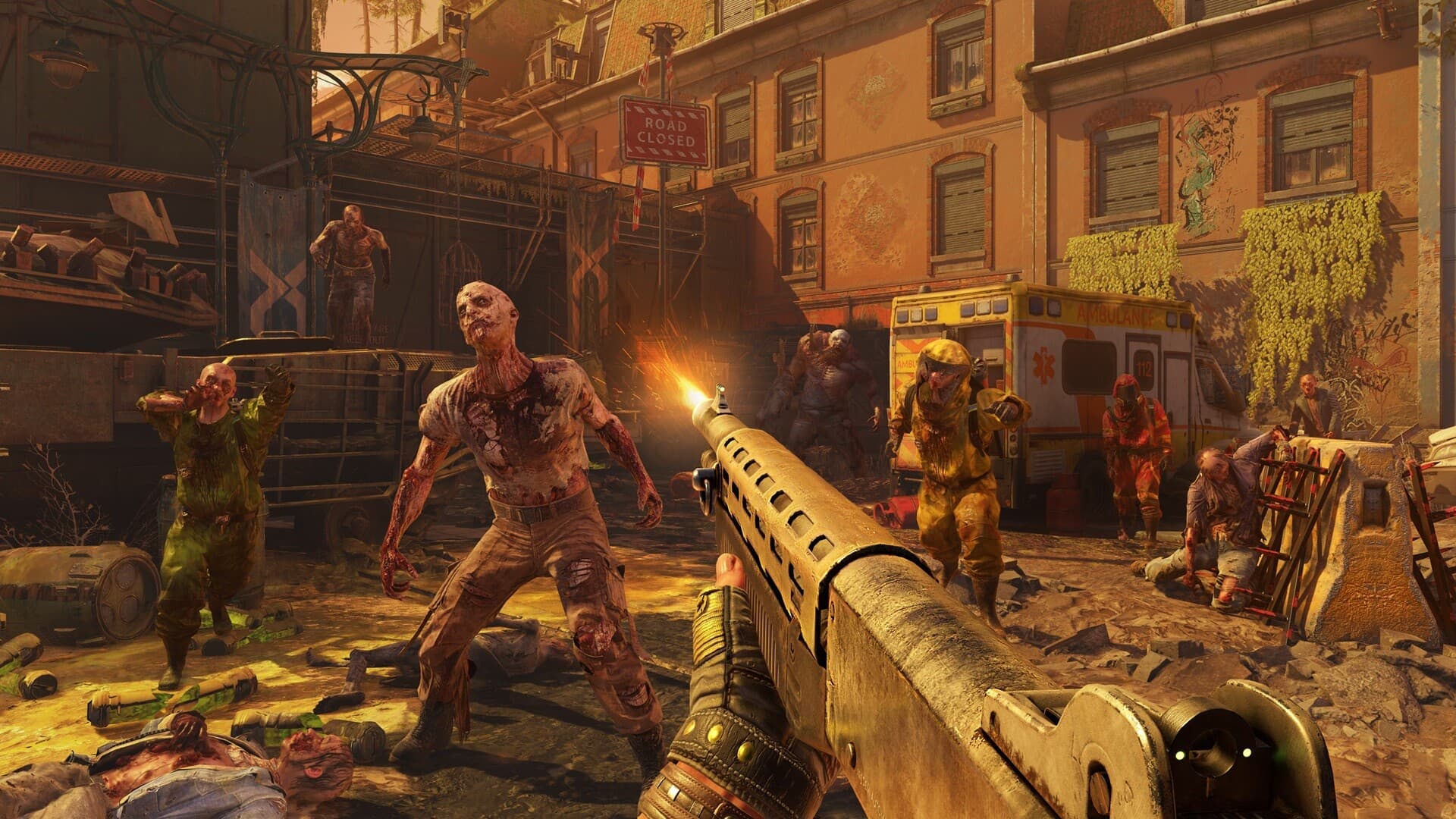
Dying Light 2 combines documented body-to-body ragdoll interactions and environmental collisions with parkour, melee and a later-unlocked firearm arsenal.
- Manual aim
- Exploration
- Co-op
- Crafting
- Platforms
- Windows PC, PlayStation 4/5 and Xbox One/Series X|S
- Price model
- Paid Reloaded Edition includes Bloody Ties; optional in-game purchases
Dying Light 2 is the most interesting choice here if a zombie losing its balance should become a small event in the surrounding space. Techland’s Gut Feeling update introduced “Domino Ragdoll,” allowing enemies falling onto one another to react to the incoming force and weight. The same update documented environmental-collision dismemberment and improved transitions when infected fall from rooftops. That is a more specific attraction than a general promise of heavy combat: where the body goes, what it hits and the height it falls from all belong in the picture.
The city gives you room to build that kind of encounter. Parkour puts rooftops, escape routes and changes of elevation into ordinary travel, while combat includes kicks, melee weapons and other movement-driven attacks. This makes the game a good fit for someone who wants to reposition first and cause a physical mess second. The body physics are one ingredient in a larger action system; Techland also added and refined authored hit reactions. Expect a blend designed for readable, dramatic encounters rather than a pure simulation of every joint during every movement.
Guns are present in the current game. The Firearms Update added pistols, SMGs, rifles and shotguns, with ammunition types attached to the different categories. Standard progression reaches the first pistol through the Lost Armory quest in the second region, then opens further firearm purchases through Jai. That progression boundary is the key buying advice: do not choose Dying Light 2 because you want to start a fresh campaign and immediately spend every encounter behind an assault rifle. The early identity is still traversal and close combat.
Once firearms are part of your kit, the interesting decision is when to spend ammunition and when to exploit positioning or melee instead. Techland explicitly describes ammunition as something to manage, and the broader campaign keeps exploration and quests between bursts of fighting. Reloaded Edition includes Bloody Ties, and the game supports solo play or up to four-player co-op. Pick it for a substantial movement-and-combat adventure with ragdoll interactions along the way; Killing Floor 2 is the more direct choice for uninterrupted gun-focused sessions.
The verdict
Choose Dying Light 2 when you want physics to sit inside a vertical action playground and are happy to earn your firearms along the way.
They Are Coming
They Are Coming offers a compact 2D alternative, with ragdoll shooting, defensive purchases and a Playground for experimenting with unlocked items.
- Base defense
- Roguelite
- Fast-paced
- Platforms
- Windows PC; OnHit Developments’ Steam edition
- Price model
- Paid Early Access game
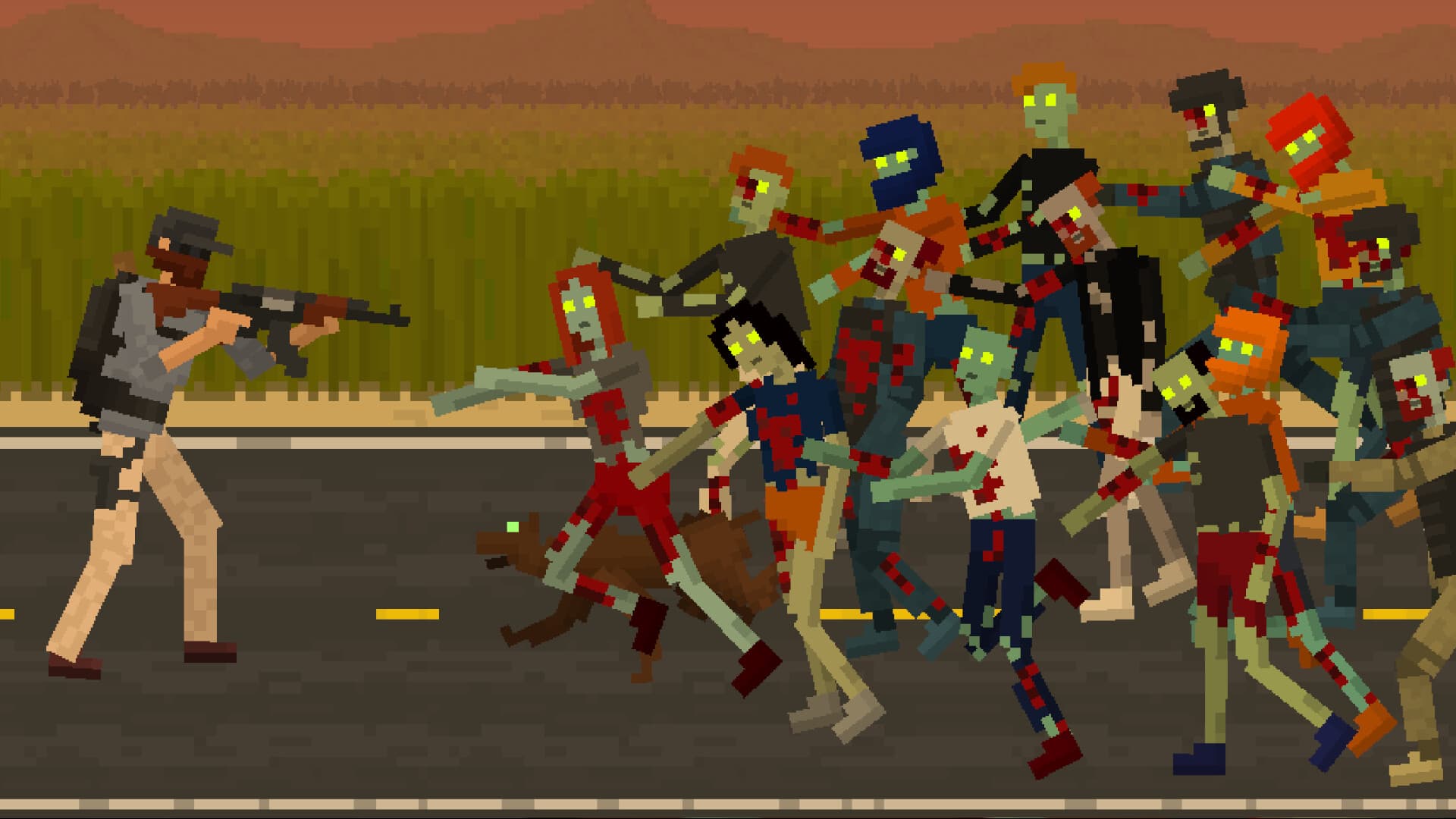
They Are Coming is the small-scale option with the most direct invitation to play around. OnHit’s side-scrolling shooter explicitly includes ragdoll physics, firearms and melee, presenting the fight in a flat, readable view. That changes the appeal: rather than chase cinematic camera work, you can concentrate on the relationship between your survivor, the approaching crowd and the space in front of the defense. It is a useful pick when you want the physical aftermath of shooting without making a large story campaign the price of admission.
Defense mode gives that play a survival structure. Successive days bring more pressure, and purchases determine the weapons and tools available for the next confrontation. Death resets the run, so spending is part of the tension. The practical question is whether the next purchase improves the firing line you already have or lets you approach the crowd differently. Players who enjoy trying a plan, discovering its weakness and beginning again are better matched to this loop than those seeking a permanently secure settlement.
The separate Playground is the important differentiator for a physics-focused reader. It lets you experiment with unlocked items without the threat of death. Use it to compare setups before committing another survival attempt: change one weapon or defensive choice, then decide whether you prefer the result. That is more useful for exploring a game’s combat behavior than judging a busy screenshot. The attraction is having a mode built around experimentation, even when you do not feel like chasing another day survived.
There is more to tinker with than a longer gun list. Defensive tools can be dismantled and recycled; the Claw Hammer provides full tool recovery. That gives you a reason to revisit a placement instead of treating every tool as disposable scenery. Try separating two questions: does this setup produce satisfying shooting feedback, and does it actually help you survive? Playground and Defense suit those different moods. The simplified side-view presentation is part of the appeal, while players looking for detailed first-person weapon handling should favor Killing Floor 2 instead.
The verdict
Choose They Are Coming for straightforward ragdoll shooting with room to tinker, especially when a full action RPG feels like too much overhead.
How we compare
A good recommendation explains who a game suits and where it falls short. Our editorial scores use the same five criteria, each rated out of ten.
- 01
Combat
Controls, aiming, enemy readability, and the decisions you make under pressure.
- 02
Progression
Build choices during a run and meaningful progress between attempts.
- 03
Usability
Control demands, platform access, interface options, and documented device requirements.
- 04
Value
What the asking price includes, optional purchases, and the scope of the free version.
- 05
Fit
How well the game answers the specific question in this article.
Which one should you try?
Choose the kind of impact you want to spend time with. Killing Floor 2 is the strongest gun-first recommendation; Dying Light 2 is the pick for vertical encounters and documented ragdoll collisions. Dead Island 2 rewards an interest in locational damage and environmental combinations, while They Are Coming makes experimentation accessible through its Playground. Zombie Defence offers a different reason to keep returning: directional impacts, ricochets and active crowd control are tied to weapon projects and a shelter that survives beyond the firefight. If that connection matters as much as the fall of the next zombie, it belongs on your shortlist.
Your questions, answered.
Want to see what we’re building?
Zombie Defence is in Alpha. Join the waitlist.
More games to explore
- 7 Best Zombie Games With Weapon Crafting
Compare seven zombie games by weapon recipes, materials, upgrades and lasting progression, from Zombie Defence’s gun assembly to Dead Rising 2’s combos.
- 7 Best Zombie Games With Endless Survival Modes
Find zombie games with endless modes that keep raising the stakes, from co-op horde shooters to lane defense and a persistent shelter project.
- 7 Best Zombie Games for Quick Action Sessions
Seven zombie games for quick action: compare single missions, arcade stages, short matches and Zombie Defence’s pausable combat with lasting shelter progress.