7 Best Zombie Games for Quick Action Sessions
Choose a fight that fits the break, with a clear idea of when to stop and what carries over.

For immediate arena action, start with Nation Red. For an obvious finish line, choose a Blood Race event in Zombie Driver HD or one story stage in Dead Island Retro Revenge. Zombie Defence offers another kind of payoff: a focused firefight or Scrap outing can advance the shelter project you want to come home to.
This list brings together six released games and Zombie Defence, our browser Alpha in development. Its waitlist covers Alpha news and playtest availability. The recommendations name the relevant edition and mode, because choosing the right slice of a game matters more than assuming its entire campaign is short.
A useful quick-session game gets you into the action and gives you a sensible place to stop. That might be a mission result, a chapter break, an ended score attempt or a paused solo battle. Those are different commitments. Pick by how reliably you need to leave, then by whether you want an improving score, better equipment or a stronger home base. Our five editorial scores compare combat, progression, usability, value and fit for this particular purpose.
The quick comparison
7 games, different reasons to give the next run a chance.
Choose a game to jump to its overview. Platform lists are summaries; check the linked official edition.
The games
Zombie Defence
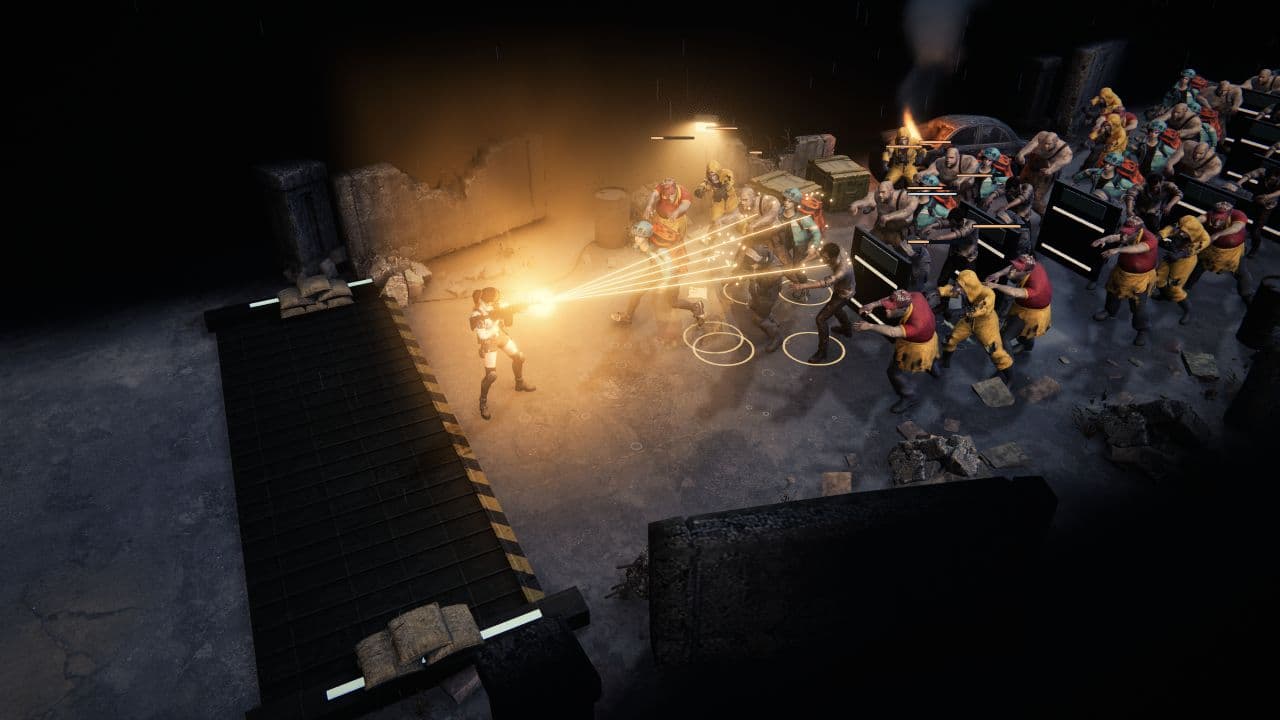
Zombie Defence gives a small combat outing a useful destination: home. Three-wave sectors offer a finite objective, while Scrap expeditions let you collect supplies and head back to an extraction pad when you have what you came for.
- Fast-paced
- Manual aim (desktop)
- Extraction
- Shelter building
- Permanent progress
- Platforms
- Browser Alpha in development; single-player PvE.
- Price model
- Public launch pricing and monetization terms are not confirmed.
Combat keeps you actively involved. On desktop, movement and cursor aim are independent: make space, turn the rifle toward the threat, fire and find a safe moment to reload. Split Shot widens the volley; ricochets make solid surfaces part of the firing plan. At campaign level-ups, immediate battle power competes with shelter investment. Even a single deployment asks an interesting question: improve this fight or bank a benefit for the next one?
Pick the outing around the time you have. A sector ends after three waves. A Scrap expedition has a different rhythm: search amber containers, keep a return route open and use E or EXTRACT at the green pad. Staying out increases enemy pressure, so heading home with a modest haul can be a satisfying decision. Endless Scavenge is the option to choose when you want to keep pushing rather than reach a final victory wave.
The current combat implementation supports the Pause/Resume controls and Escape, and losing window focus also pauses the fight. Closing the browser page is a separate action. An interrupted Scrap expedition is settled, with collected Scrap retained up to storage capacity; it is not a save of the exact firefight. Sector defeat has different stakes and can levy some stored supplies, while weapons, research and shelter upgrades remain.
The return visit is where this pick separates itself from a score-only shooter. Reserve the recovered Scrap for a weapon recipe, a station upgrade or a research choice, and the outing advances something specific. Production and crops can progress between visits within their limits. That gives short visits continuity, although deciding where resources should go adds management to the shooting. Choose one project before deploying and you will have a clear reason to stop once the outing has served it.
The verdict
The strongest connection here between a compact action outing and a home base that is meaningfully better on your next visit.
Nation Red
Nation Red is the cleanest choice when the fight itself is the whole plan. Pick an arena, build a pocket of breathing room and keep the horde from turning it into a trap. There is no shelter economy to check before the next attempt.
- Fast-paced
- Manual aim
- Co-op
- Platforms
- Windows and Linux via Steam; this comparison covers the PC edition.
- Price model
- Premium purchase; a free Steam demo is listed.
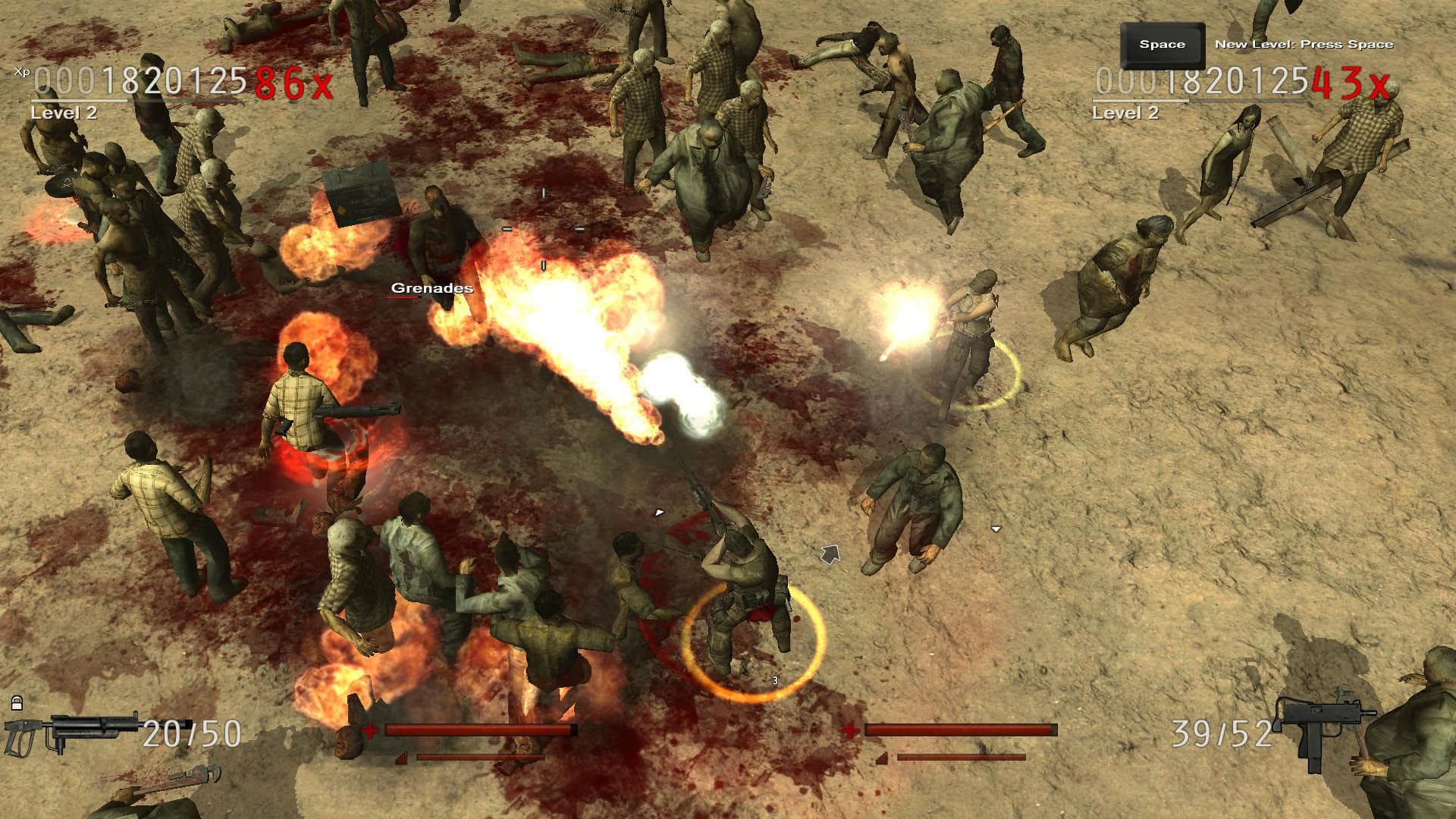
The compact arena puts the interesting decisions close together. A weapon pickup can change your range, reload rhythm or movement speed. You can carry two weapons and lock the one you want to keep, preventing an accidental pickup from spoiling the plan. Physical attacks and an evasive jump give you ways to escape a closing crowd instead of simply backing away and hoping the magazine lasts.
Mode choice matters more than the word survival on the box. The developer describes Survival as a time-based arena without perks; Free Play adds the weapons, bosses, power-ups and evolving perk combinations. Use Survival for a stripped-back attempt, or Free Play when choosing upgrades is part of the attraction. Random perk selection brings adaptation, while Auto Perk mode follows a saved preference list so the action does not repeatedly stop for a decision.
An attempt ending is the natural stopping point. Perks belong to the current game and reset when a new one starts, so your reason to return is a cleaner fight or higher score rather than a warehouse of permanent gear. In solo perk-based play, the manual documents pausing with Space to choose an earned perk. Online selection instead grants a temporary cloak; do not treat that protection as a paused multiplayer match.
This is a particularly good match for a break with a flexible end. One failed attempt can be enough, and restarting does not require rebuilding an elaborate loadout. A successful survival streak, however, can keep running. If you need a guaranteed finish rather than permission to end a score chase, one of the stage- or event-based picks below is a better match.
The verdict
Pick Nation Red for concentrated action and a fresh attempt whenever you want one, especially when a high score is enough of a goal.
DEAD TRIGGER 2
DEAD TRIGGER 2 puts a mobile-sized assignment around proper first-person shooting. Pick a mission, work through its objective and return to the Hideout with another equipment goal in mind. It is the natural choice here when your available gaming device is already in your pocket.
- Fast-paced
- Manual aim
- Crafting
- Permanent progress
- Platforms
- Android, iPhone and iPad; native mobile editions.
- Price model
- Free download with in-app purchases; Google Play also lists ads.
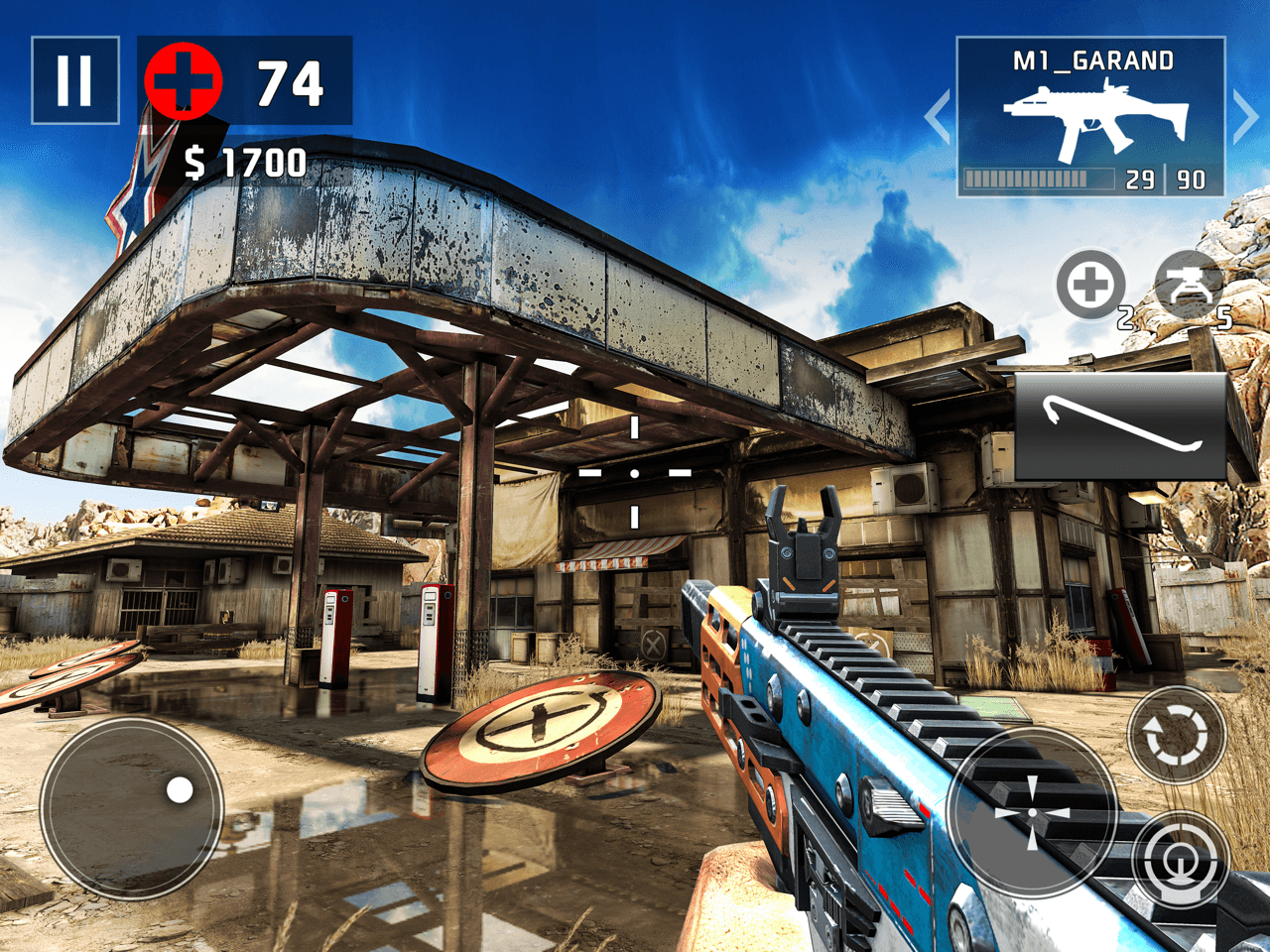
The attraction is the range of ways to deal with a bad situation. Pistols, rifles, shotguns and heavier weapons sit alongside melee choices and gadgets such as mines and turrets. The first-person view makes choosing a target and keeping room to move more immediate than watching a whole arena from above. Touch targeting and a virtual joystick provide mobile control options, with a busier screen than the single-input simplicity of many automatic survivor games.
Give yourself one assignment rather than an open-ended promise to clear the map. Complete the chosen mission and return to the Hideout before putting the app away. That provides an obvious break between the firefight and the next piece of preparation. Campaign missions are the useful unit here; treating every tournament or arena challenge as the same commitment would miss the point of the recommendation.
The Hideout is a compact reason to come back. The Gunsmith handles buying and building weapons, the Engineer supplies gadgets, and upgrading the Scientist raises the TECH rank that supports further development. A short visit can therefore end with a decision about the next tool you want, rather than only a tally of zombies killed.
The tradeoff is that this is a continuing free-to-play equipment game as well as a shooter. Ads and optional purchases are part of the Android offer, and the growing set of specialists and gear gives you more to consider between missions. It fits best when you enjoy that return-and-upgrade rhythm. If you want to close a finished attempt without thinking about equipment at all, Nation Red is more direct.
The verdict
A strong pocket-sized FPS choice: finish one mission, make one useful Hideout decision, and leave the next deployment for later.
Zombie Driver HD
Zombie Driver HD swaps the survivor’s boots for a heavily armed car. For a quick action session, go to Blood Race: its discrete events deliver the swerving, shooting and explosive collisions without asking you to complete a rescue mission across the story map.
- Fast-paced
- Platforms
- Windows PC via Steam; the HD edition is the version compared here.
- Price model
- Premium purchase with optional DLC; a Steam demo is listed.
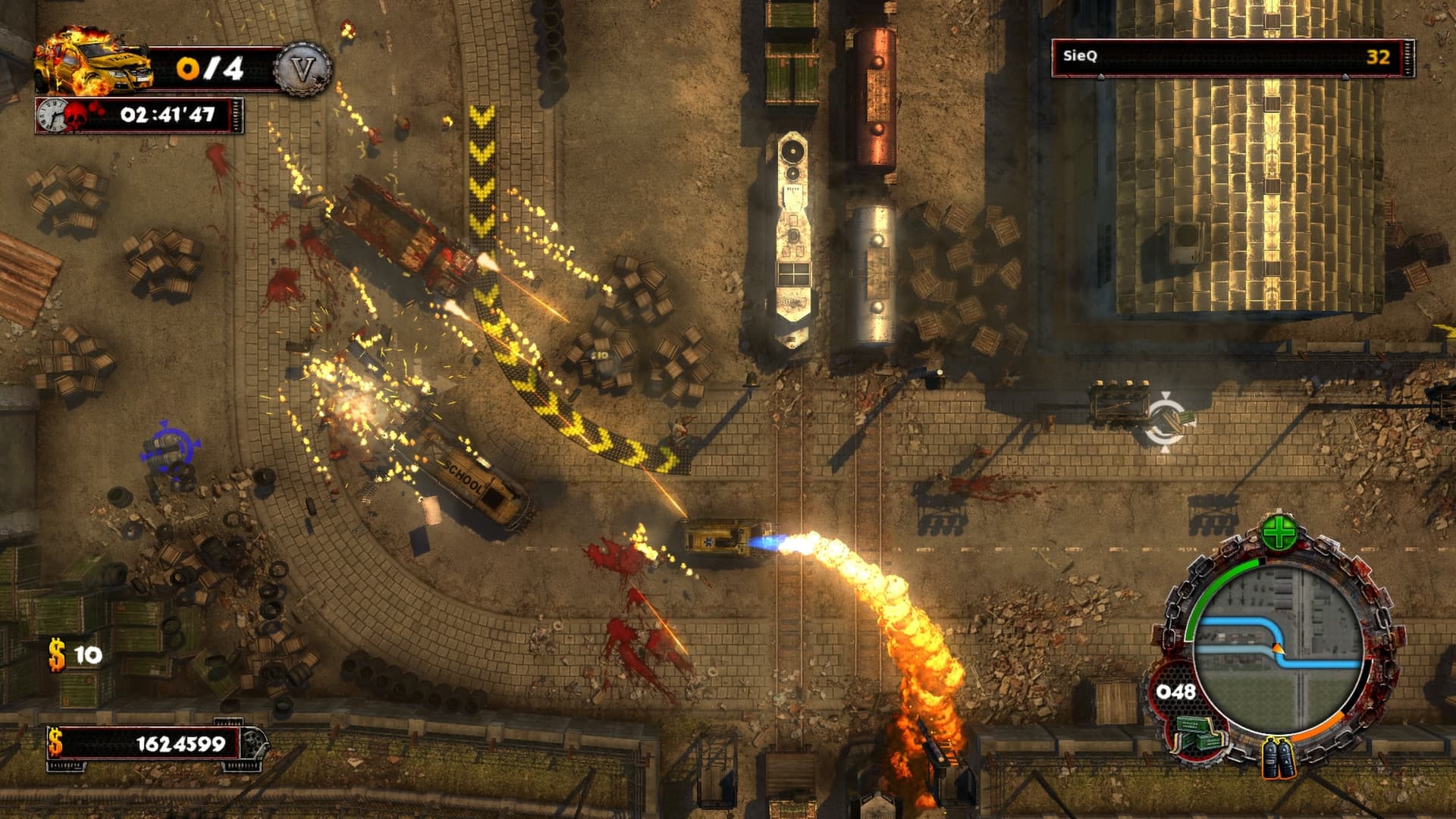
There are three useful flavors inside Blood Race. Race rewards getting across the finish line ahead of the other vehicles. Eliminator asks how many opponents you can destroy before its timer expires. Endurance bolts a bomb to the car and lets checkpoints extend the countdown. These are different demands on your attention: protect a racing line, pursue targets or keep the timer alive.
The vehicle is both a way through the crowd and part of your arsenal. Guns and flamethrowers let you attack while driving, and the track brings traffic, breakable scenery and zombies into the same space. A clean corner and a destructive detour can pull in opposite directions. That tension makes a single event worth replaying: the next attempt can be about a better route or better use of a weapon, not merely collecting a higher damage number.
For a tidy stopping point, finish a Race or Eliminator event and stop at its result. Endurance is less predictable because successful play extends the clock. Slaughter, meanwhile, is explicitly an endless-wave mode, so it answers a different mood. The game’s racing, survival and story modes give it breadth, but the quick-session recommendation is specifically for a completed event.
This is single-player car combat, despite the rival drivers and leaderboard competition. It works well when you want the chaos of a zombie game without managing a walking character, but the steering is the central skill. If aiming a firearm yourself is the reason you came, choose Nation Red or DEAD TRIGGER 2 instead.
The verdict
Choose a Race or Eliminator event when you want a clear finish line and plenty of destruction on the way there.
Dead Island Retro Revenge
Dead Island Retro Revenge turns the apocalypse into a loud, colorful sequence of timed attacks. Max is trying to recover his kidnapped cat, and your immediate job is to get through the next stage with cleaner hits, fewer mistakes and a stronger score.
- Fast-paced
- Platforms
- Windows PC via Steam; this comparison covers the standalone Retro Revenge game.
- Price model
- Premium standalone purchase; also offered in Dead Island collection bundles.
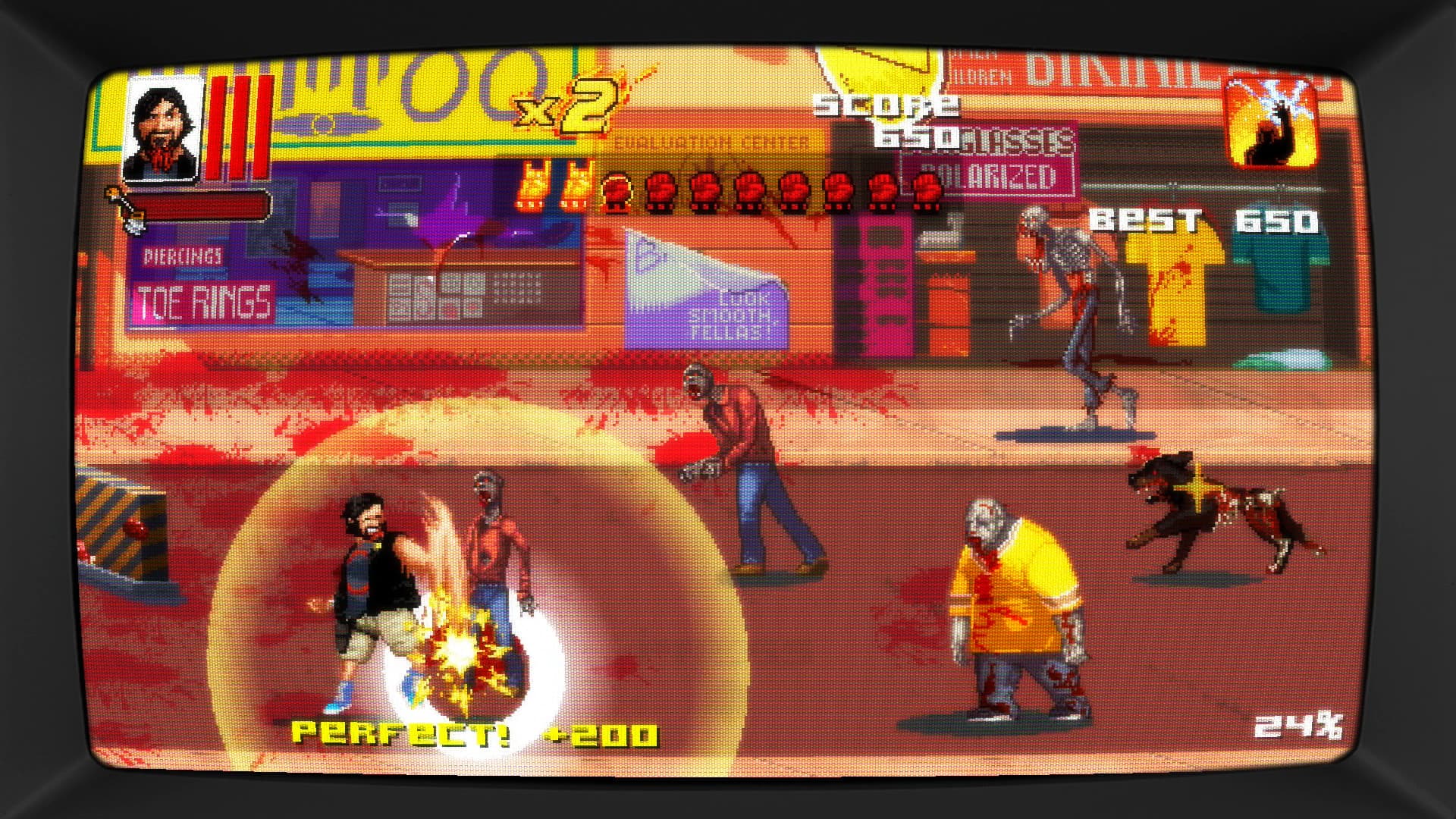
This is the arcade spin-off, with lane changes, attack combinations, power-ups and exaggerated special attacks driving the action. The side-on view makes the next encounter the center of attention. A well-timed hit earns a Perfect bonus, while different attacks and projectile opportunities give you more to pursue than pressing the same button as fast as possible.
The score challenges make a finished stage reusable. The official achievement list recognizes damage-free clears, projectile kills, long combos and five-star results across the story stages. That is a good structure for a small personal objective: improve one stage, finish it, and leave. You do not need to make finishing the whole story the condition for a satisfying session.
Use Story mode for the bounded version of that idea. Marathon and Survivor are separate modes with their own endurance-oriented achievements, so they are less useful choices when you want to stop after one piece of action. The sensible exit is after the stage result. The appeal comes from reaching that boundary and deciding whether another attempt would be fun.
Expect replay through execution rather than a deep equipment project. It is a useful change of pace if shooters have started to feel interchangeable, particularly when you enjoy learning a sequence and improving a score. Players looking for free exploration, loot sorting or a persistent shelter should spend their time elsewhere on this list.
The verdict
A good fit for the player who would rather perfect one lively stage than start another sprawling survival project.
The Typing of the Dead: Overkill
The Typing of the Dead: Overkill replaces aiming at mutants with typing the words attached to them. It is still about speed, target priority and holding your nerve; the joke is that an ordinary keyboard becomes the most dangerous weapon in the room.
- Fast-paced
- Platforms
- Windows PC via Steam; the Overkill package includes typing and conventional shooting modes.
- Price model
- Premium purchase with optional themed dictionary DLC.
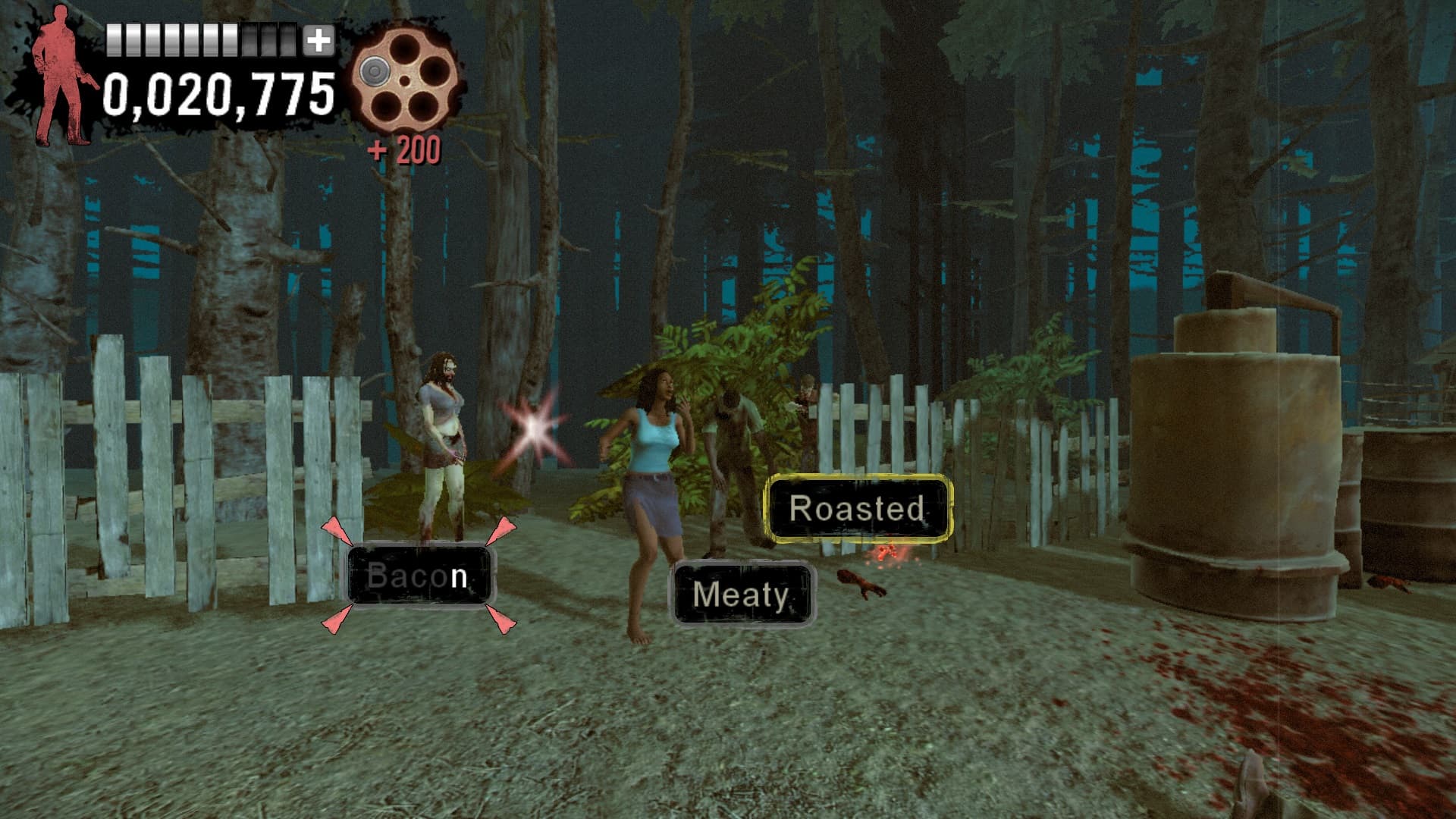
You begin a target’s word to lock onto it, then finish the word to bring the mutant down. When a different enemy becomes the bigger threat, Backspace cancels that lock so you can switch. Ordinary play forgives some typing errors and does not require spaces or punctuation. That keeps attention on reacting to the scene; Hardcore adds stricter typing rules for players who want every keystroke to count.
The chapter menu is what makes it practical to revisit. The game presents the next available chapter and lets you select previously completed ones, so a favorite section can become a self-contained score attempt. Pick one chapter rather than planning a complete campaign clear. The package also contains The House of the Dead: Overkill shooting mode, whose guns and upgrade shop are separate from the typing rules.
There is an in-game pause menu, and SEGA’s manual documents automatic saves at specific points. The clean stopping point is between chapters, after the save activity finishes. Treat pausing as a break within the current session and chapter selection as the way to organize return visits. That is more useful than assuming every part of a long arcade campaign must be finished in one sitting.
This pick works especially well when you want active play without another movement-and-aim control scheme. Its coarse grindhouse humor is a large part of the presentation, and the repeated stages reward better typing and scoring more than expansive character development. If you are already tired of looking at a keyboard, the novelty is unlikely to rescue the evening.
The verdict
Choose it when a single replayable chapter and an unusual control challenge sound more appealing than another gun-and-loot loop.
Killing Floor 2
Killing Floor 2 is the pick for a break large enough to contain a real match. Select Survival with the Short length: you still get the build-up through Zed waves, the between-wave shopping decisions and a boss finale, with fewer waves than the longer settings.
- Fast-paced
- Manual aim
- Co-op
- Permanent progress
- Platforms
- Windows PC via Steam; solo and up to six-player online co-op.
- Price model
- Premium base game; additional weapons, cosmetics and bundles are sold separately.
The action is built around reading different threats and choosing the right tool before they close the gap. Its arsenal ranges from conventional firearms to improvised and experimental weapons, while perk classes favor different jobs. A medic, a precision shooter and a close-range fighter approach the same crowd differently. The enemies are laboratory-created Zeds, and their role here is the same relentless horde pressure that makes zombie shooters satisfying.
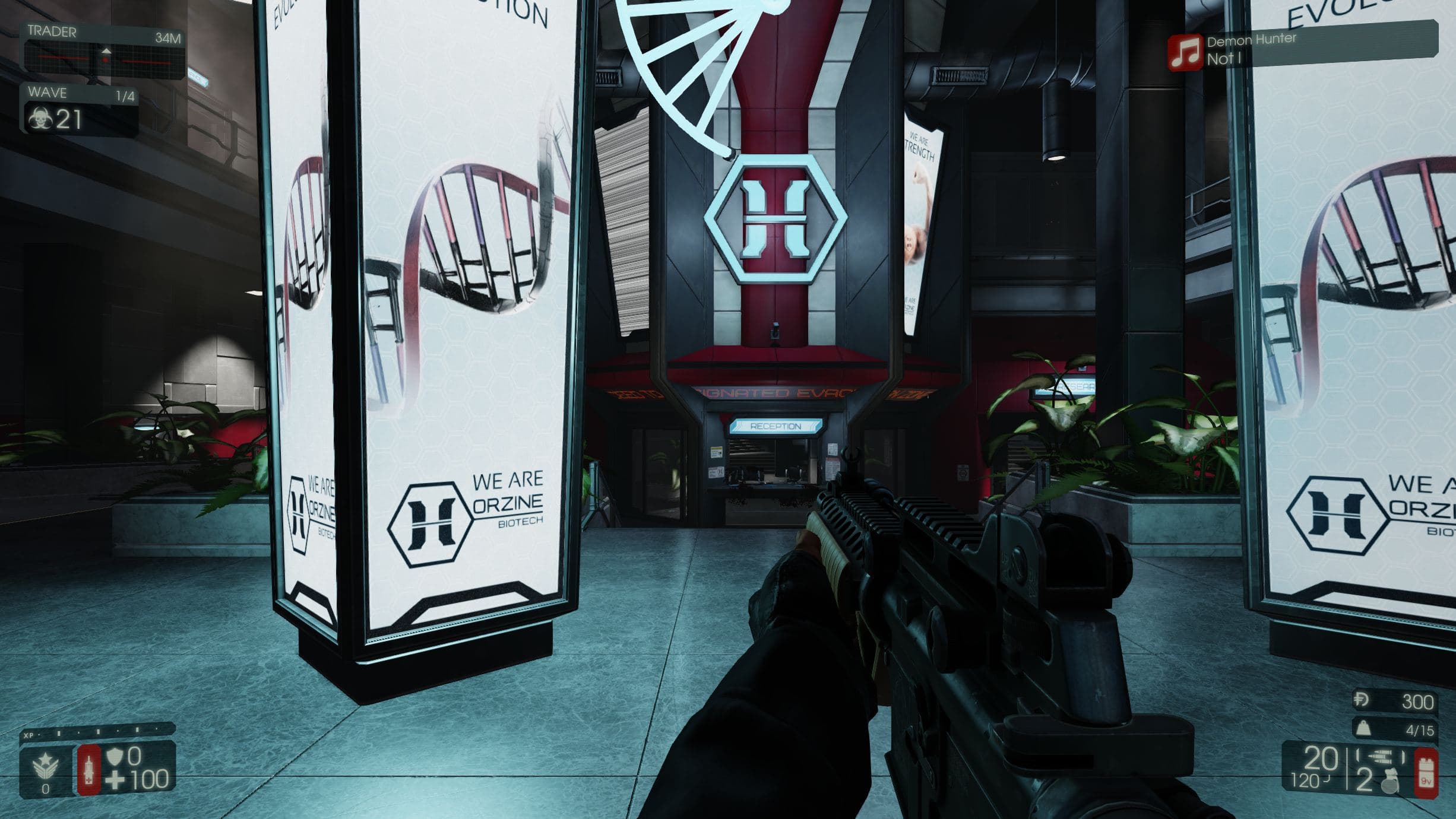
The Trader gives the match its rhythm. Survive a wave, decide how to spend Dosh on your loadout, then test the purchase against the next assault. Short Survival compresses that sequence into four regular waves followed by a boss. It has a defined finish, but wave clearing, shopping and the finale still need room in your schedule. Save it for a proper break rather than the last spare moment before you must leave.
Solo play can be paused. In an online Survival match, opening your own menu is not a personal stop switch for the server; plan to finish with the group. The separate Endless mode has an online vote-to-pause system during Trader time that requires everyone’s agreement. That distinction matters: a cooperative pause is not the same convenience as a solo pause, and Endless is not the short format recommended here.
Perk development continues between matches, while the Dosh-funded weapon loadout is built during the match itself. That is a useful compromise for repeat visits: the class grows, but each match still asks you to make fresh equipment decisions. Pick it for a contained FPS outing with a climax, especially when friends can commit to the same finish. Choose a single-stage arcade game when your available time is less predictable.
The verdict
The best fit here for a shorter complete co-op FPS match, provided the whole match fits the break you actually have.
How we compare
A good recommendation explains who a game suits and where it falls short. Our editorial scores use the same five criteria, each rated out of ten.
- 01
Combat
Controls, aiming, enemy readability, and the decisions you make under pressure.
- 02
Progression
Build choices during a run and meaningful progress between attempts.
- 03
Usability
Control demands, platform access, interface options, and documented device requirements.
- 04
Value
What the asking price includes, optional purchases, and the scope of the free version.
- 05
Fit
How well the game answers the specific question in this article.
Which one should you try?
Choose the shape of the break first. Nation Red is the direct arena recommendation; DEAD TRIGGER 2 puts a mission-based FPS in your pocket. Zombie Driver HD’s Blood Race and Retro Revenge’s story stages provide visible event or stage boundaries. Overkill offers replayable keyboard-driven chapters, while Killing Floor 2’s Short Survival is better when there is time for a whole wave-to-boss match. Zombie Defence connects the small outing to a larger reason to return: pause the fight when needed, bring Scrap home, and turn a little action into a lasting weapon or shelter improvement.
Your questions, answered.
Want to see what we’re building?
Zombie Defence is in Alpha. Join the waitlist.
More games to explore
- 7 Best Zombie Games With Endless Survival Modes
Find zombie games with endless modes that keep raising the stakes, from co-op horde shooters to lane defense and a persistent shelter project.
- 5 Best Zombie Games for iPhone in 2026, Plus Zombie Defence in Alpha
Compare five current iPhone App Store zombie games, from first-person shooting and one-handed horde runs to survival crafting and a paid road trip, plus Zombie Defence in Alpha.
- 9 Best Zombie Horde Shooters in 2026
Compare nine zombie horde shooters, from co-op campaigns and expanding survival arenas to mobile auto-shooters and persistent shelter runs.