Nation Red review: the zombies brought guns
A compact arena shooter where the next pickup can rescue your run, and the next armed corpse can ruin it.
Zombie Defence Editorial Team ·
Based on official documentation and gameplay imagery.
Nation Red gives the shambling horde an unfair advantage: some of it remembered to bring firearms. Your answer is a small arena, a growing pile of perks and the urgent realization that running in circles is a strategy only until someone shoots across the circle.
This is a score-chasing zombie shooter with almost no interest in making you gather timber or mourn civilization. Its appeal comes from turning limited space into a sequence of immediate decisions. Which enemy matters most? Is that pickup worth the detour? Why did you reload there?
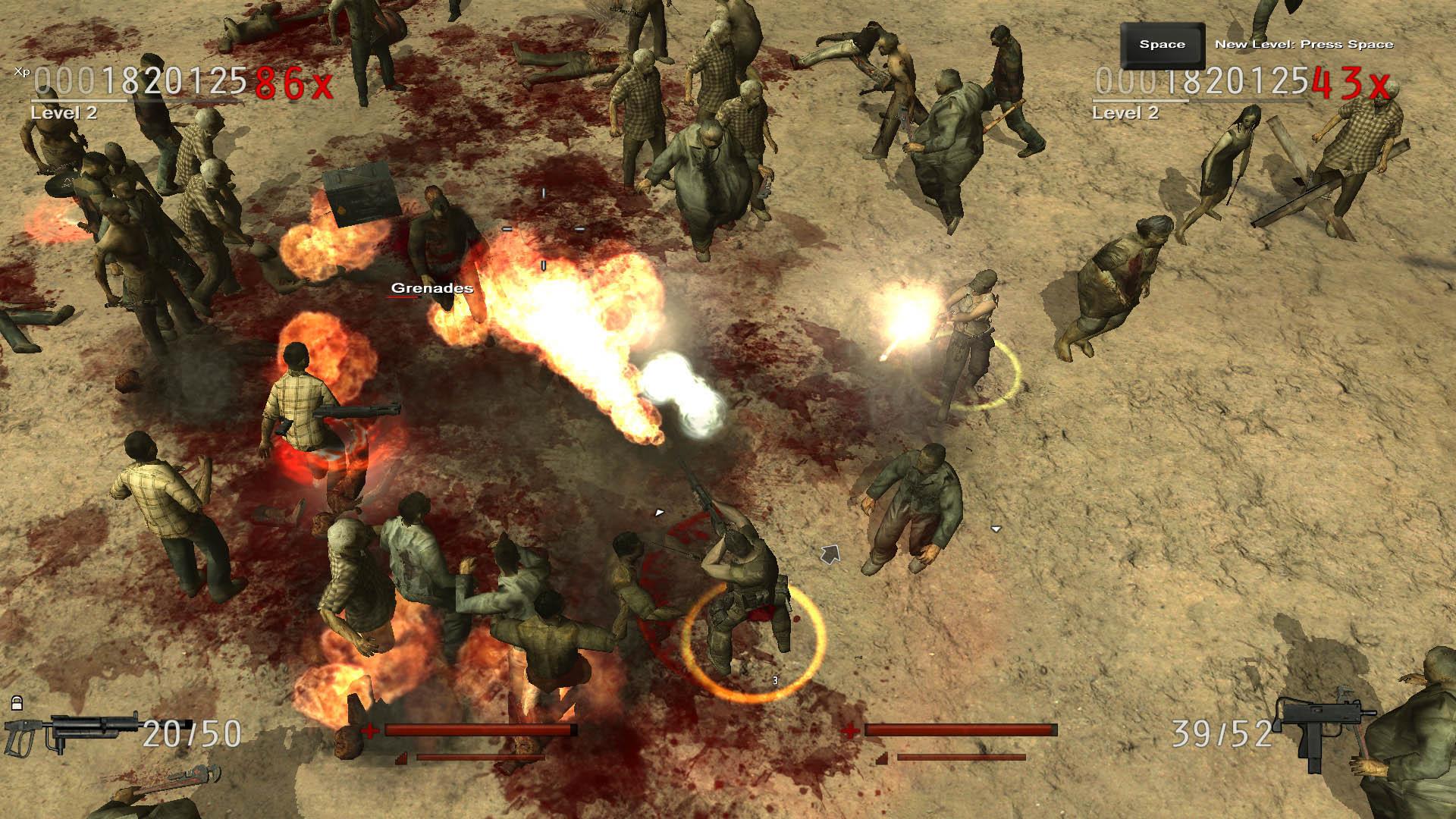
The nearest zombie is not always the problem
Basic crowd management means keeping movement lanes open while firing into the pack. Armed zombies complicate that tidy plan. A distant gunman can matter more than the handful closing in behind you, so target priority and escape direction need to work together.
The roster includes weapon-carrying enemies, explosive threats and bosses rather than one interchangeable procession of targets. Treating every encounter as a damage race wastes that distinction. First identify what can interrupt your route, then decide whether to eliminate it or move somewhere less crowded.
The result is a satisfyingly blunt tactical proposition: protect your breathing room. A large combo is flattering, but the screenshot-friendly wall of bodies is also a warning. The game becomes interesting when your preferred route stops working and you must make another one.
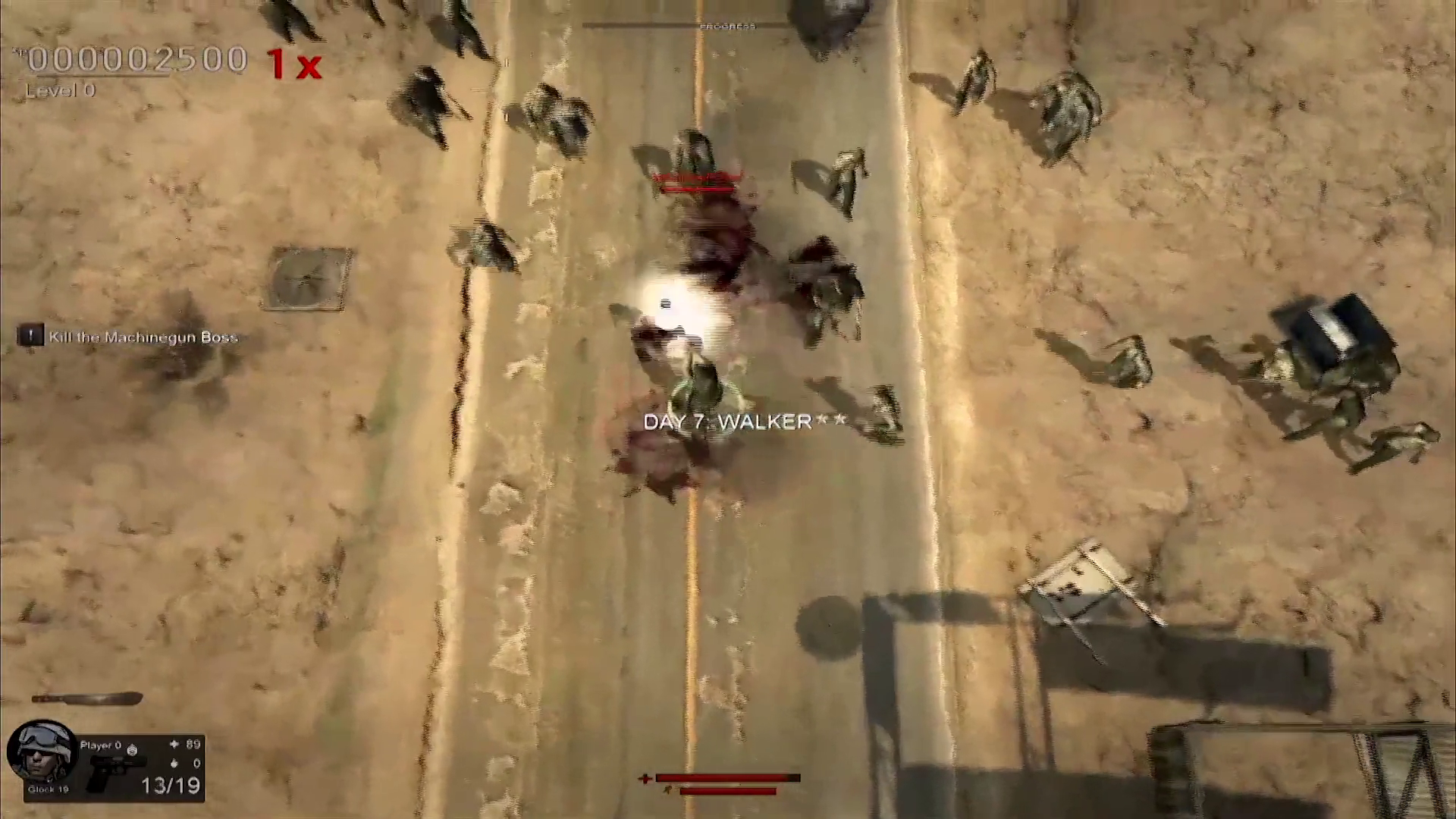
The biggest gun comes with a bill
You can carry two weapons, giving a loadout room for more than one answer. Firearms differ in range, reload time and weight; heavier equipment can slow movement. That makes a weapon pickup a decision about your next escape as well as your next kill.
A minigun is an attractive solution to a large crowd, but a slow reload is an awkward conversation with that crowd. Pair weapons around the gaps in your plan rather than collecting two versions of the same strength. Melee adds another risk: you must let trouble get close.
Weapon locking is an unusually valuable convenience. Lock a slot when you like its contents, rather than accidentally exchanging your plan for whatever lies underfoot. The arsenal is entertaining, but being able to decline its enthusiastic suggestions is part of making it useful.
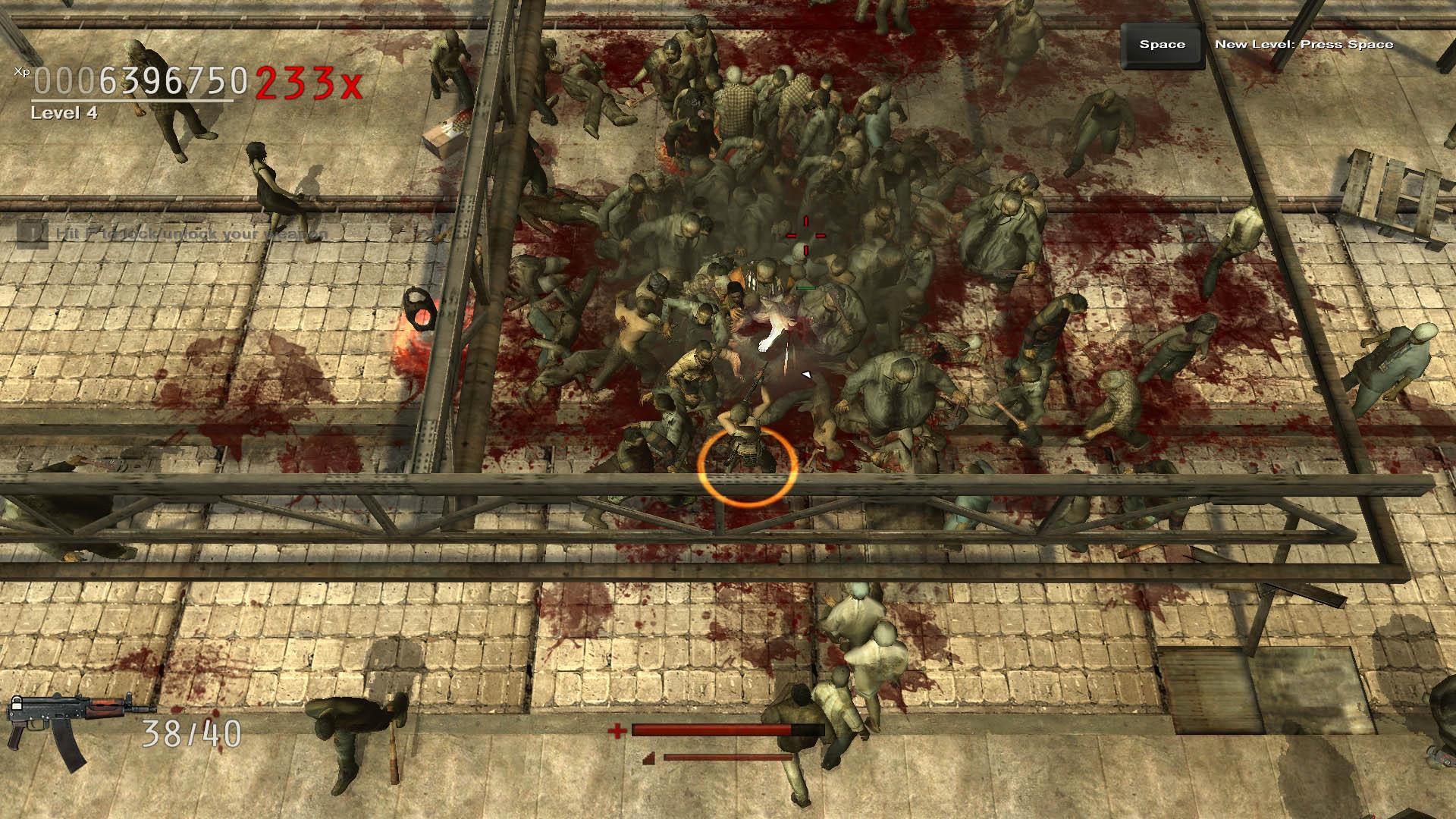
Build a run, not a pension fund
Perks last through the current game; they disappear when a new one begins. Pickups provide immediate or temporary effects. That distinction is the foundation of Nation Red: build a combination that makes the present run stronger, rather than banking permanent damage for tomorrow.
PowerUp Hook pulls pickups toward you, while PowerUp Extender keeps their temporary benefits running longer. That pairing expresses the appeal better than a huge perk count. One choice reduces a dangerous journey; another makes its reward more valuable. Your build changes what risks you need to take.
Random mode asks you to improvise from a limited selection at each level. Strategic mode offers deliberate selection with a total perk limit. Auto Perk uses a saved preference list to choose for you, keeping attention on the shooting once you know what you want.
These are different approaches to the same combat puzzle, not separate character campaigns. Mission unlocks and score records provide continuity, but perk power resets. That is refreshing if you want improvement to come from better decisions, and thinner if you need a permanent upgrade ladder.
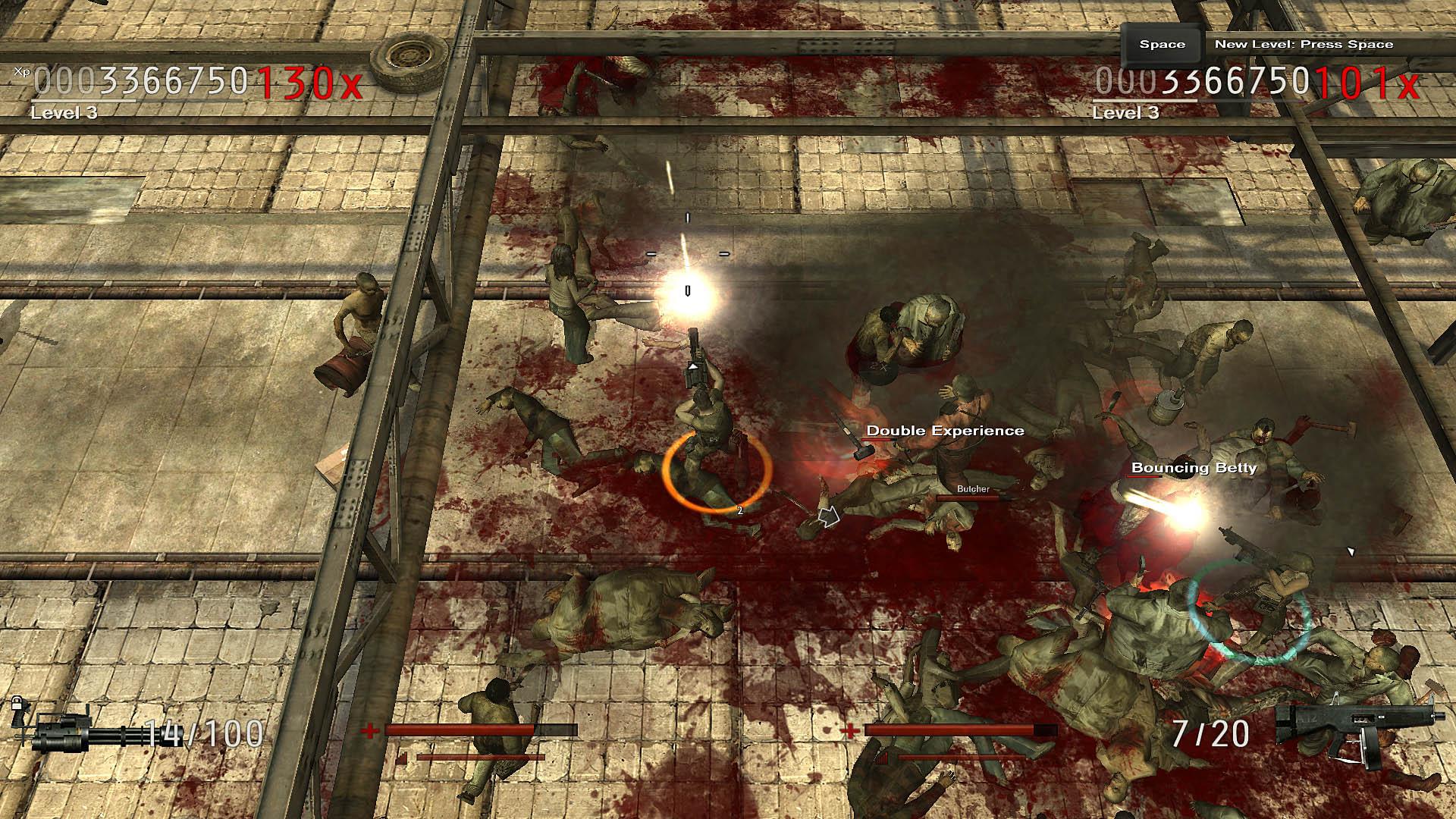
Give the shooting a different job
Free Play is the natural home for experimenting with perks, weapons and pickups while chasing a score. Survival strips perks out and makes staying alive the central measure. The distinction matters: pick Survival for a cleaner endurance test, Free Play for escalating combinations.
Barricade adds a place to defend. Barriers deteriorate under attack, and some arenas include people or objects to protect. A safe personal escape is no longer a complete answer. You have to decide when moving away solves a problem and when it simply abandons the objective.
Practice mode lets you adjust enemy behavior, speed and strength without writing a leaderboard score. It is a sensible place to compare a weapon pair or learn movement before treating every mistake as a ruined record.
The advertised 18 missions provide a more directed sequence alongside those replay modes. They are useful structure for someone who wants an immediate assignment, but the package is built around returning to combat. Expect variation in the challenge, not an expansive journey through a changing world.
Bring friends, then leave them room
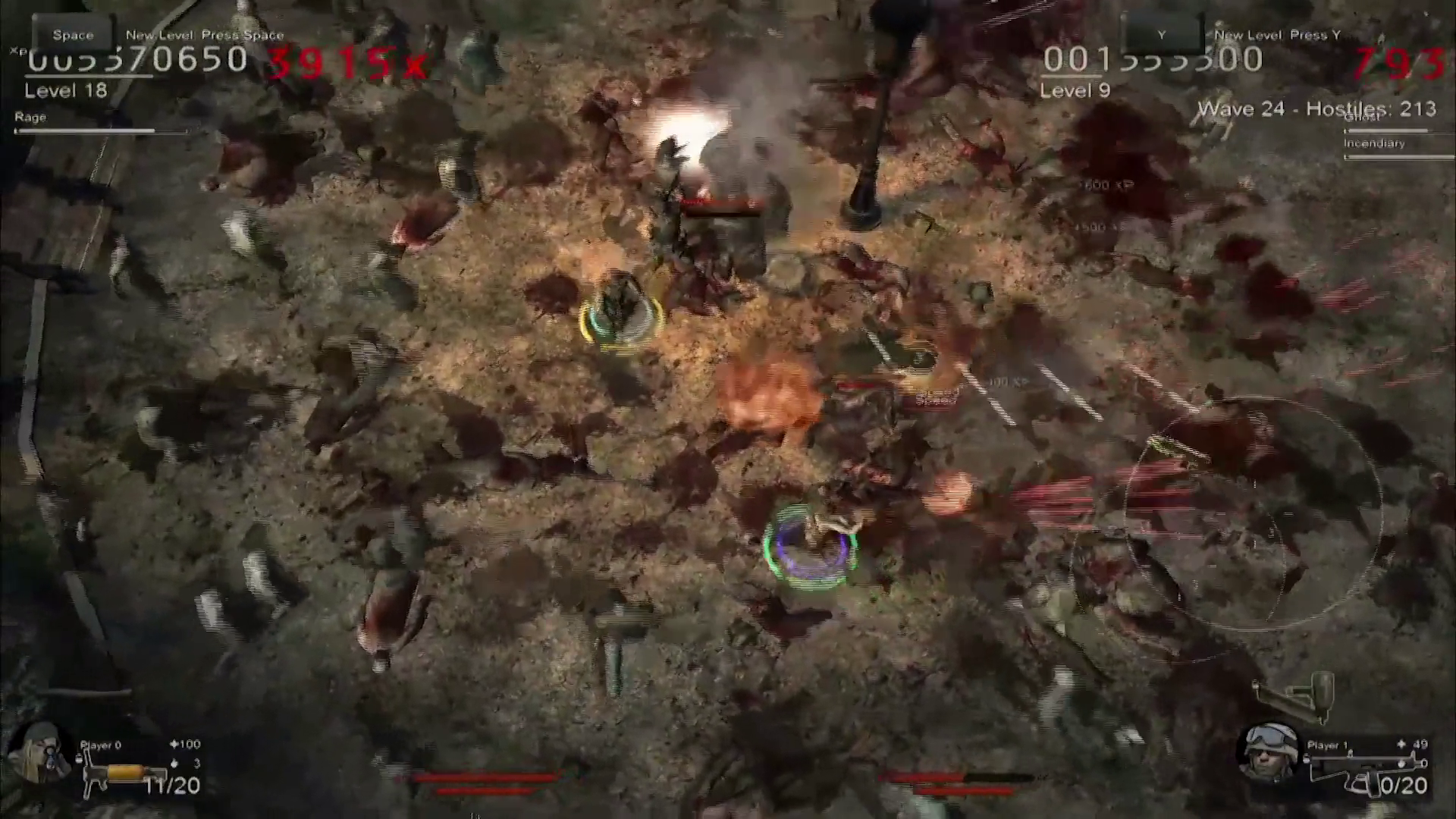
Up to four players can join online or local co-op. Online play is native, with Steam also listing Remote Play Together for streaming a local session. Local play uses one shared view; the manual specifies controllers for additional players after the first.
Co-op allows fallen partners to be revived by standing over them. That turns rescue into a positioning decision, not an automatic kindness. Clear enough space to attempt it. Friendly-fire and shared-experience options are worth discussing before a group discovers it has four different definitions of teamwork.
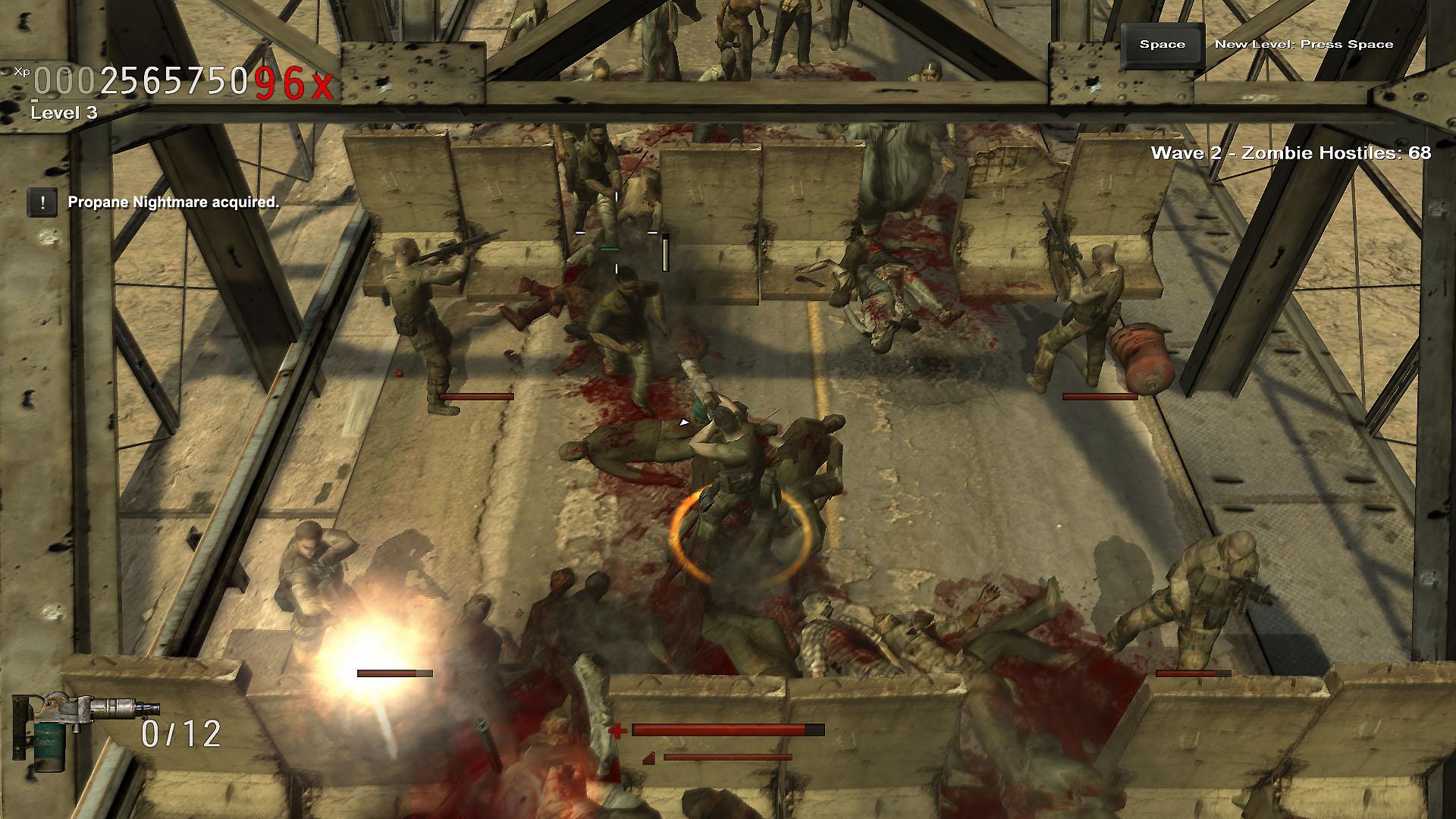
The visual price is congestion. Dusty ground, bodies, effects and interface numbers compete for attention in the official footage. Camera-height controls and an overhead option help frame the fight, but this remains an older, busy presentation rather than an exercise in pristine visual separation.
Buy the loop you will actually repeat
The Steam base game is listed for Windows, macOS and Linux/SteamOS, with controller support and a downloadable demo. Its system requirements are old, so check your current operating system before buying, especially on Mac. A platform label is not a fresh compatibility test.
Value comes from repeatable modes, different perk plans and cooperative sessions, rather than a promise of endless new content. The available four-pack is four copies of the same game. For a group, organize a session first; the purchase does not guarantee strangers waiting in matchmaking.
Strengths
- Armed enemies and bosses reward target priority as well as crowd clearing.
- Two weapon slots and weight/reload tradeoffs make pickups meaningful.
- Random, Strategic and Auto Perk modes support different approaches to builds.
- Native online and local co-op support groups of up to four.
Tradeoffs
- Perk strength resets between games; permanent power growth is not the main reward.
- The arenas and score-driven structure can become repetitive.
- Dense effects, bodies and older visuals compete with combat readability.
- Legacy platform requirements need checking against your current machine.
Who it suits
- Best for arcade-shooter players who enjoy improving a score or refining a build.
- A useful co-op choice for an organized group of up to four.
- Less suited to players seeking exploration, survival crafting or a long narrative campaign.
Verdict
Nation Red makes a convincing case for concentrated arcade design. Armed enemies, weapon compromises and flexible perk choices give its tiny battlefields more to think about than their dusty appearance suggests. Its progression is strongest inside a run, while its longevity depends on enjoying the attempt itself.
Choose it for score chasing, build experiments and co-op with people you already know. Skip it if your reward needs to be a sprawling campaign or a permanently stronger hero. Here, the valuable thing you take into the next disaster is a better plan.
PC base game
Review score: 8.2 / 10
- Combat
- 8.6 / 10
- Progression
- 7.9 / 10
- Usability
- 7.7 / 10
- Value
- 8.5 / 10
Steam app 39800 lists Windows, macOS and Linux/SteamOS. Current hardware compatibility was not tested.
Single-player plus native online and local shared-screen co-op for up to four; additional local players require controllers.
The four-pack contains four copies of the same game, not extra content.
The review score averages the applicable Combat, Progression, Usability and Value scores, rounded once to one decimal. Fit is specific to each comparison and is excluded.
Does Nation Red have online and local co-op?
Yes. The developer advertises up to four players online or locally. Local co-op shares a view and requires controllers for additional players. Steam also lists Remote Play Together; native online co-op is available separately from that streaming feature.
Do perks carry over between runs?
No. Perks apply during the current game and reset when you start a new one. A saved Auto Perk list preserves your selection preferences, not accumulated perk power. Mission unlocks and recorded scores provide longer-term goals.
Which mode should a new player choose?
Missions offer directed objectives, while Free Play introduces the broader perk-and-pickup loop. Choose Survival when you want an endurance challenge without perks. Barricade suits players who want defending a position to shape their movement and target choices.
Can I stop accidentally picking up unwanted weapons?
Yes. The weapon-lock function prevents unwanted replacements, and the two slots can be locked individually. On the documented keyboard layout, F locks the current weapon and Q switches slots. It is worth learning before committing to a favorite pair.
What platforms and editions does this review cover?
The Steam PC base game, app 39800, lists Windows, macOS and Linux/SteamOS. The four-pack contains four copies of that game. Check present-day compatibility rather than relying only on the legacy requirements; no console or mobile edition is assessed here.