5 Games Like The Riftbreaker to Keep the Guns Fed
Big guns. Hungry factories. Five ways to keep the ammunition arriving.

Your biggest gun has a secret weakness: the factory behind it has stopped working. The Riftbreaker makes that someone else’s problem for roughly half a second. Then you are the someone else, fighting a swarm while mentally redesigning the power grid.
Games like The Riftbreaker keep preparation connected to firepower. Lumencraft stays close to the shooting; Mindustry and Factorio deepen the logistics. Outpost brings a fortress into first-person combat, while Zombie Defence builds around a smaller shelter.
Another turret, or enough supplies to keep the existing ones firing?
The quick comparison
5 games, different reasons to give the next run a chance.
Choose a game to jump to its overview. Platform lists are summaries; check the linked official edition.
The games
Lumencraft
The reactor needs guns. The guns need you to go digging.
- Manual aim
- Base defense
- Crafting
- Permanent progress
- Platforms
- Windows, Linux and Apple Silicon macOS; solo, local co-op and Steam Remote Play Together
- Price model
- Paid game; optional soundtrack
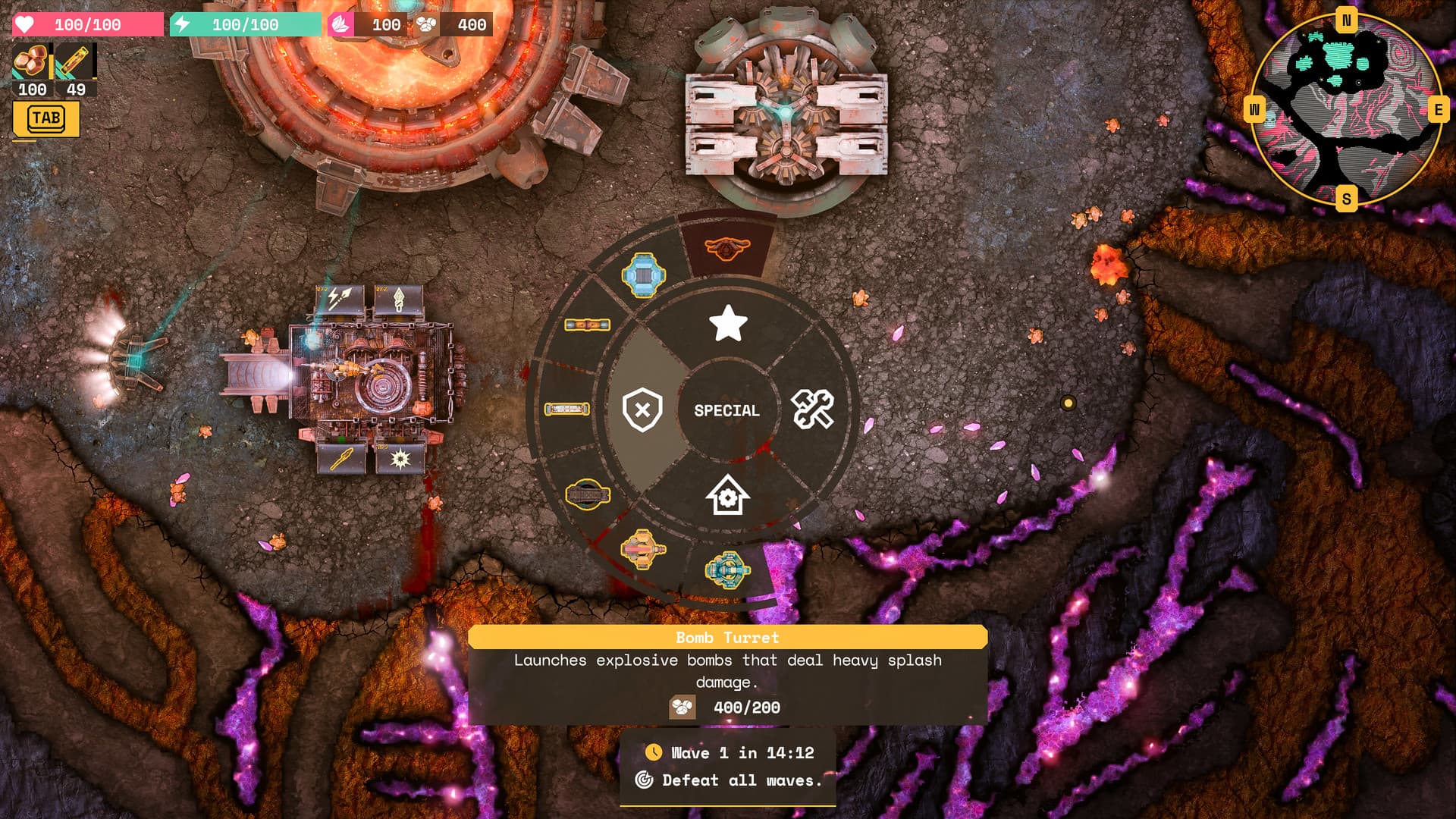
Lumencraft puts a reactor at the center of your underground ambitions. Drill through rock, gather resources and buy weapons, tools and turrets. That richer deposit can wait. Probably. The approaching wave has a less flexible schedule.
Drilling changes the cave itself, opening routes as you work. Each haul creates a choice between better personal equipment and stronger reactor defenses. Mining, building and fighting all compete for your time.
Independent movement and aim let you fight alongside the turrets wherever the line needs help. It captures the pleasure of rescuing a construction project with your own weapon.
The 27-mission campaign gives those outings a lasting purpose: Lumen brought home improves skills and technology at the hub. Random maps and custom scenarios offer other structures. Expect a mission-based underground struggle with less sprawling industry.
The verdict
For personally keeping the reactor alive.
Mindustry
Sometimes the best weapon is a conveyor belt that works.
- Base defense
- Crafting
- Tactical combat
- Co-op
- Platforms
- Windows, macOS and Linux; solo and cross-platform multiplayer, including co-op
- Price model
- Paid on Steam; name-your-own-price desktop version on itch.io
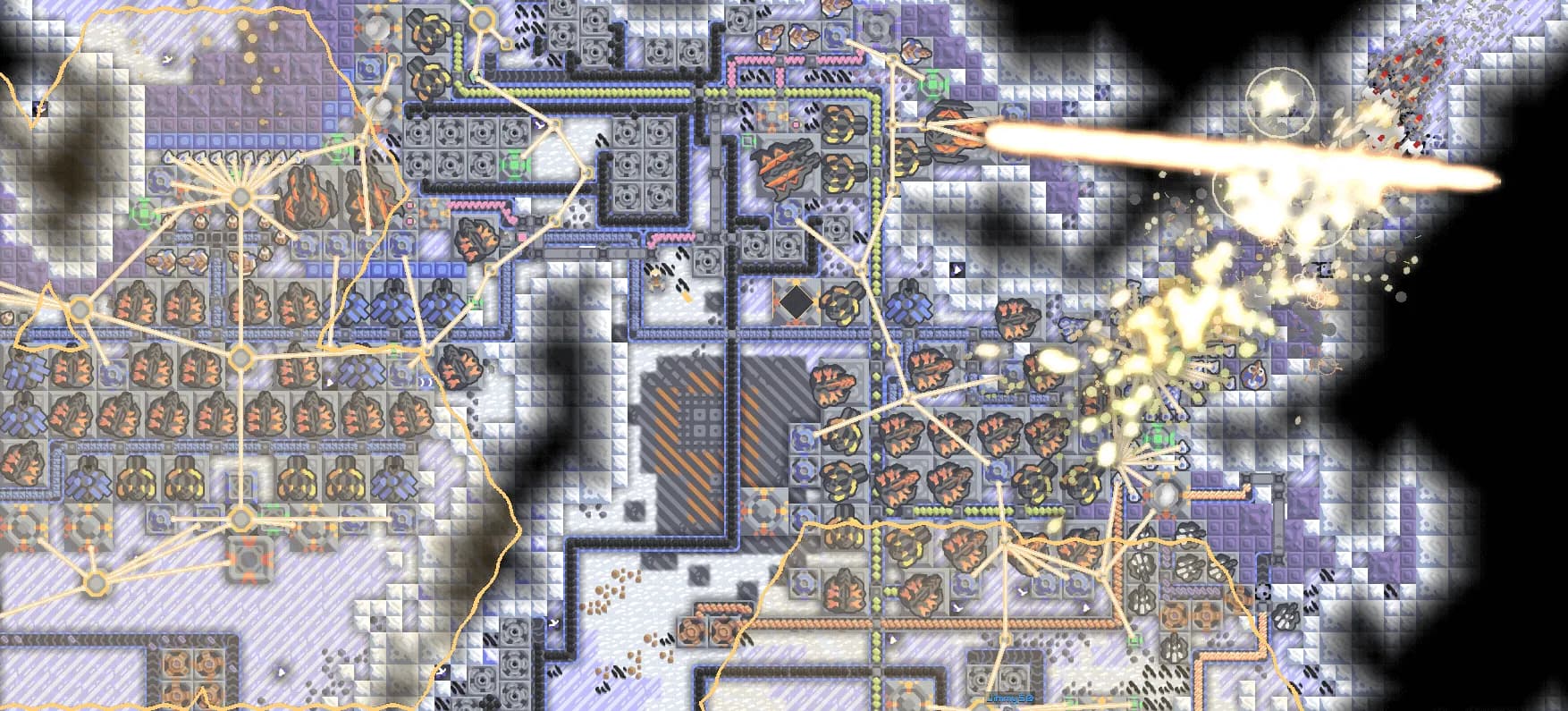
Mindustry makes a turret the final link in a much bigger argument. Conveyors deliver ammunition, production blocks process materials, and power or liquids support the equipment you picked. More guns will not fix an empty feed line.
Build another firing position, or improve the supply behind the current one? Shields and regeneration projectors offer other investments. Coolant boosts supported equipment. An alien invasion becomes an unusually aggressive audit of your plumbing.
Unit assembly lines turn resources into armies for attacking enemy bases. The Serpulo and Erekir campaigns give conquest and research room to develop, while co-op lets friends divide engineering and command work.
Flying enemies and fires complicate any supposedly safe production area. Expect to learn dense material, liquid and power routing. The reward is seeing an entire system hold together under pressure, with less emphasis on one heavily armed hero.
The verdict
Inspect the supply line before buying another gun.
Factorio
You came for the turrets. You stayed to fix the train network.
- Crafting
- Permanent progress
- Base defense
- Co-op
- Platforms
- Windows, macOS and Linux; solo and online multiplayer
- Price model
- Paid game with a free demo; Space Age sold separately
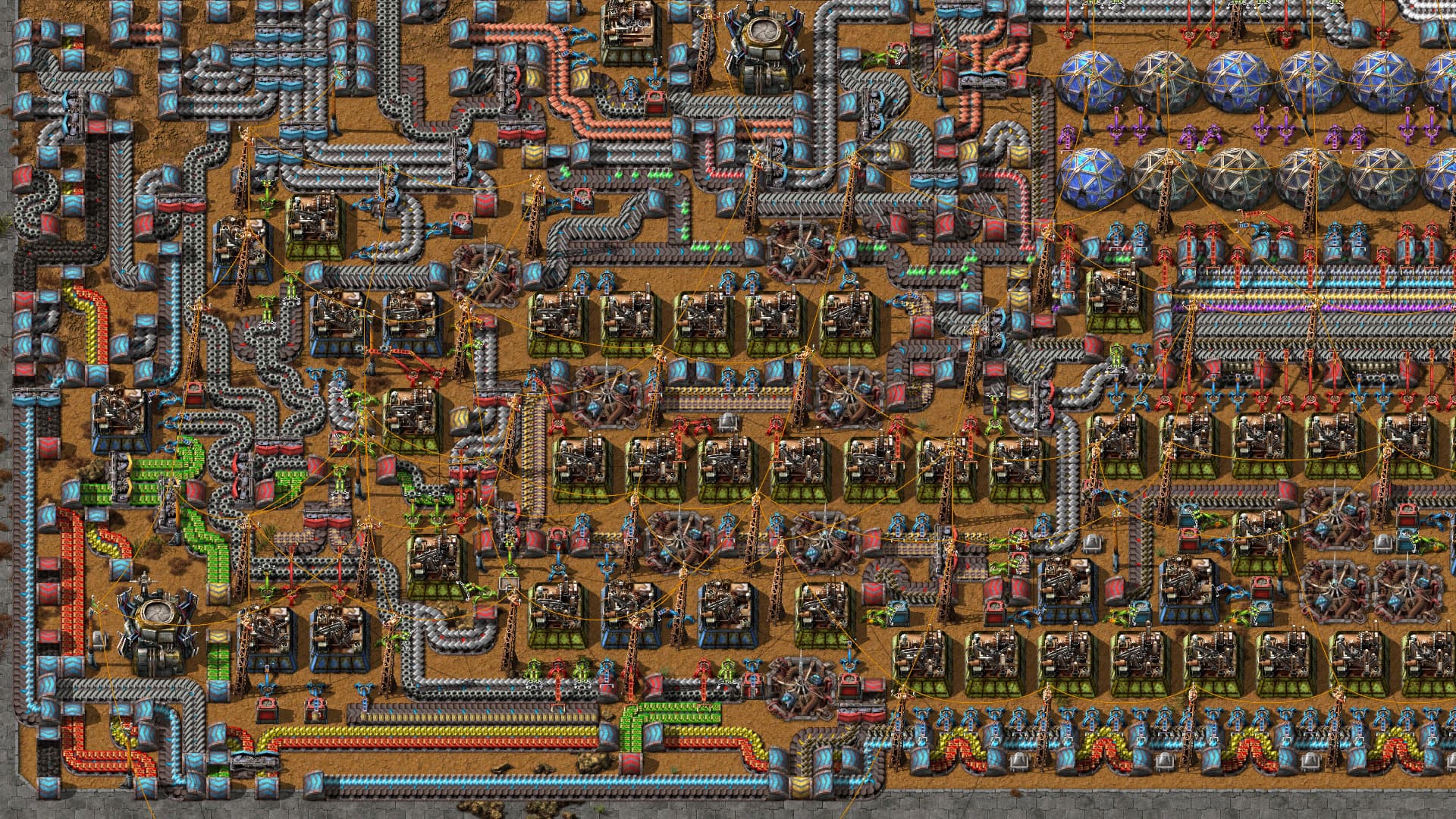
Factorio makes the factory the main event. Drills feed furnaces, assemblers make components, and belts, trains and logistic robots move the results. Research unlocks possibilities; building enough machinery to produce them is your job.
Defenses belong inside that plan. Gun turrets need ammunition, delivered by inserters; laser turrets need electricity. Changing weapons moves the demand elsewhere in the factory. A shiny new defensive row can expose a very old power problem.
On Nauvis, pollution reaching enemy nests can provoke attacks. Expansion brings pressure, so walls and weapons need to grow alongside production. Blueprints and construction robots eventually let you repeat good designs without rebuilding every solution by hand.
Personal combat exists, but diagnosing bottlenecks becomes a major part of the evening. Try the free demo. The base game supplies the one-planet factory; the separate Space Age expansion takes that project to other worlds.
The verdict
For factory layouts you keep improving in your head.
Outpost: Infinity Siege
Build a gun platform. Pack something for it to shoot.
- Manual aim
- Base defense
- Shelter building
- Co-op
- Platforms
- Windows; single-player and online co-op
- Price model
- Paid Standard or Vanguard edition; Standard cannot upgrade to Vanguard
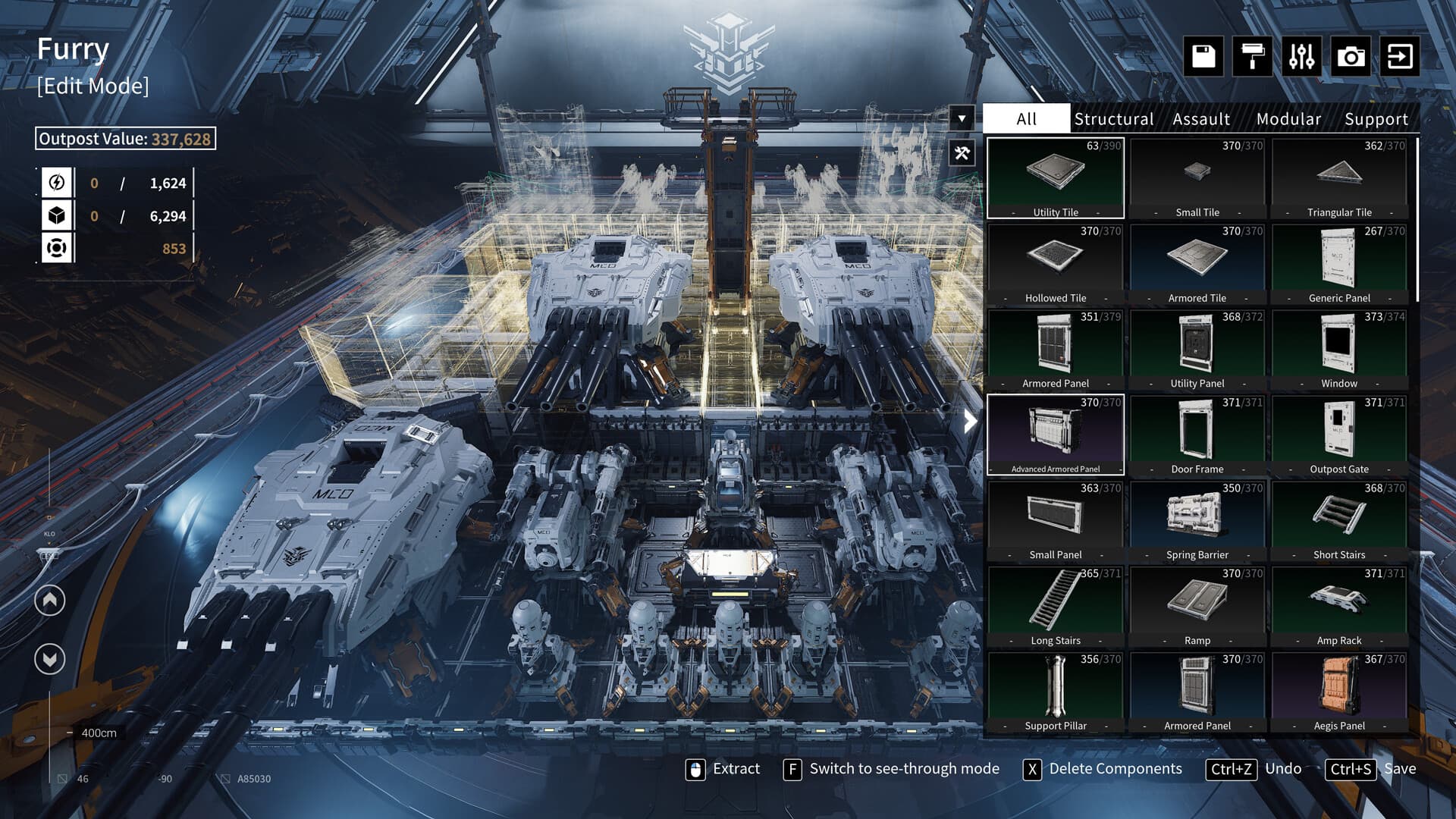
Outpost: Infinity Siege lets you assemble a mobile fortress from structural pieces, support equipment and weapons. Move and rotate groups in the editor, then take the result on deployment. Your rifle shares the battle with your engineering.
Ammunition conveyors and autoloaders make preparation practical. Fill loaders from the warehouse before a tour to keep that impressive arsenal useful. Loot and new components give the next redesign a purpose.
The configurable XEN firearm handles your first-person contribution. Command Mode manages the wider defense, and researched turret overloads trade power for a temporary boost. Recovery Day tests the preparation while you secure the haul.
Build the persistent layout at base between deployments; temporary facilities can go up in the field. Failed recovery can cost resources, equipment and operatives. Insurance and rescue beacons protect particular losses, so understand the safeguards before risking a valuable tour.
The verdict
For a first-person seat at your own siege.
Zombie Defence
A smaller factory. Familiar resource arguments.
- Manual aim (desktop)
- Crafting
- Shelter building
- Permanent progress
- Extraction
- Platforms
- Single-player browser; desktop and touch controls
- Price model
- Launch pricing unannounced
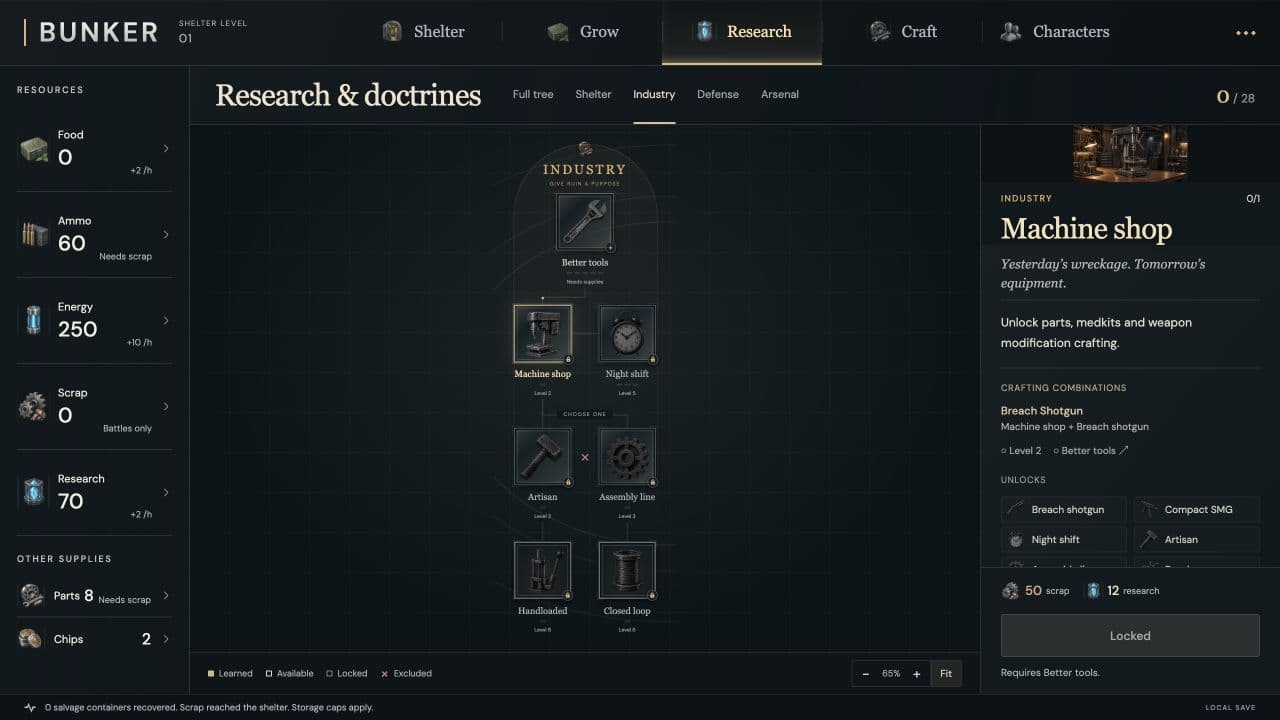
Zombie Defence starts with a compact question: what should this Scrap become? Ammunition, processed parts, a permanent weapon or a station upgrade all compete. Fixed shelter stations and worker assignments keep production focused around your next outing.
Industry research gives that economy a direction. Machine shop connects research to crafting; later doctrine pairs favor cheaper equipment or faster Scrap processing. Each pair is mutually exclusive within a save. Required inputs running out or output storage filling stops production.
Then you take the investment outside. Desktop play uses independent movement and cursor aim, with active firing and reloads; touch controls assist firing. Separate Scrap expeditions retain collected Scrap even after defeat, up to storage capacity.
The shelter supports separate fights, without a freely designed turret perimeter to defend. This lasting home improves your equipment through production decisions. Then you get to put that equipment to work.
The verdict
Production planning with room for the next fight.
How we compare
A good recommendation explains who a game suits and where it falls short. Our editorial scores use the same five criteria, each rated out of ten.
- 01
Combat
Controls, aiming, enemy readability, and the decisions you make under pressure.
- 02
Progression
Build choices during a run and meaningful progress between attempts.
- 03
Usability
Control demands, platform access, interface options, and documented device requirements.
- 04
Value
What the asking price includes, optional purchases, and the scope of the free version.
- 05
Fit
How well the game answers the specific question in this article.
Which one should you try?
Lumencraft offers hands-on reactor defense, Mindustry supplied firing lines and Factorio the grand industrial project. Outpost puts you inside a custom fortress; Zombie Defence keeps production closer to home. Pick the scale of problem you enjoy fixing.
Your questions, answered.
Want to see what we’re building?
Zombie Defence is in Alpha. Join the waitlist.
More games to explore
- 5 Games Like DYSMANTLE for Your Next Crafting Obsession
Five DYSMANTLE alternatives where gathering funds better equipment, stronger camps and new adventures.
- 4 Mobile 3D Horde Survival Games + One Alpha to Watch
Compare four mobile 3D horde survival games by aiming, movement, upgrades and price, plus Zombie Defence’s extraction-to-shelter Alpha.
- 7 Best 3D Alternatives to Vampire Survivors
Compare seven 3D Vampire Survivors alternatives by camera, aiming, scene clarity and builds, from Army of Ruin to Zombie Defence and Temtem: Swarm.