7 Best Single-Player Zombie Shooters
Choose by the solo experience you want, what carries forward, and how easily a session fits around real life.

Resident Evil 2 is our first pick for a focused single-player zombie campaign; Days Gone suits a longer open-world journey, and The Last Stand: Aftermath turns solo shooting into a tense scavenging run. Zombie Army Trilogy emphasizes rifle-led missions, Dead Effect 2 adds equipment builds, and DEAD TRIGGER 2 brings the choice to mobile. You can play all six without putting a human squad together.
Zombie Defence connects active solo shooting to a persistent shelter. Its Scrap expeditions turn battlefield gains into crafting, research and practical preparation for the next fight. It is an especially appealing choice if a home worth improving matters as much to you as the next gunfight.
Choose the kind of evening you want first: a tense story, a long road trip, a scavenging run or a string of shooting missions. Then check what happens when real life interrupts. A pause gives you a breather; a save lets you leave; offline access lets you play without a connection. A good solo recommendation should fit both your tastes and your schedule.
Our five scores are editorial judgments: Combat, Progression, Usability, Value and Fit. Fit reflects this solo-shooter search. Optional co-op is welcome; the important thing is having a worthwhile game when you want to play alone.
The quick comparison
7 games, different reasons to give the next run a chance.
Choose a game to jump to its overview. Platform lists are summaries; check the linked official edition.
The games
Resident Evil 2 (2019)
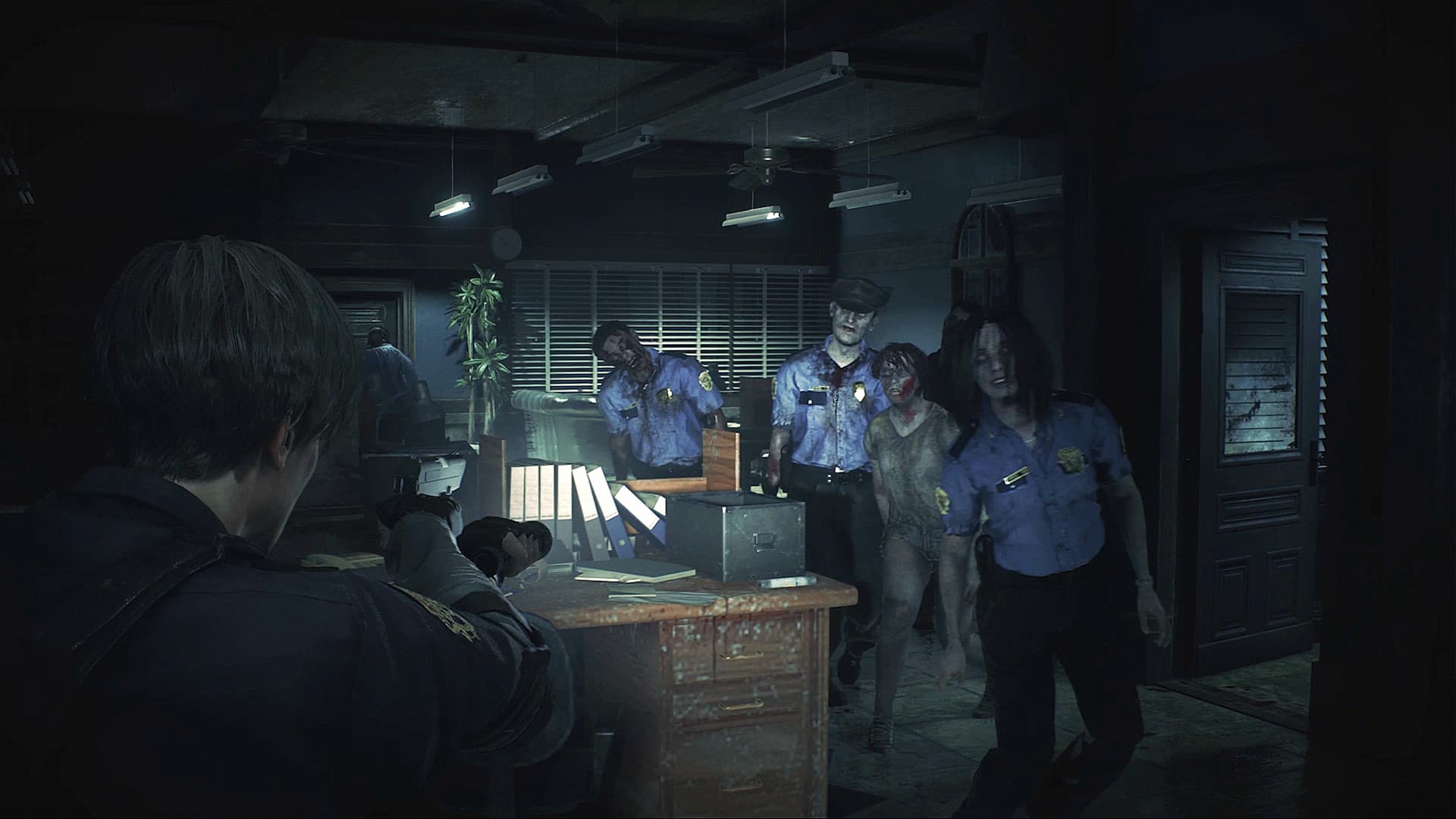
The strongest starting point here for a self-contained zombie campaign. Resident Evil 2 makes a handful of enemies dangerous through constrained supplies, close-range aiming and spaces you need to navigate more than once.
- Manual aim
- Exploration
- Tactical combat
- Platforms
- Windows PC, PlayStation 4 and PlayStation 5 editions considered here. This entry covers the 2019 remake.
- Price model
- Paid game; optional Deluxe content and separately sold extras.
A good solo shooter makes you care about the next shot without needing another person to create the stakes. Resident Evil 2 does that through ammunition conservation. You can spend bullets finishing a zombie, damage a limb to make passing it easier, or preserve your resources and find a way around. The useful question is often whether you need to clear a route, rather than whether every enemy can be killed. That gives its over-the-shoulder shooting a different purpose from a high-score arena.
Exploration and puzzles are integral to that decision. Rooms, locked routes and items form a space to understand, not simply a backdrop to the next firefight. Choosing what to carry affects what you can collect and how comfortably you can handle a surprise. For someone playing alone, this is the attraction: progress comes from your own knowledge and preparation as much as your aim. If you want uninterrupted gunfire, however, the return trips and puzzle-solving will be a substantial part of the evening.
Leon Kennedy and Claire Redfield have separate playable campaigns, giving the outbreak two perspectives without asking you to coordinate a co-op partner. Their presence in the same story should not be mistaken for a two-player campaign. The single-player structure makes this a particularly clear recommendation for readers who want a story built around their own progress instead of a team mission completed with computer-controlled substitutes.
Treat saving as a separate decision from briefly stepping away: typewriters are the manual-save points. Make a fresh save before ending a session rather than assuming that opening a menu preserves your exact position after quitting. For a first purchase, the standard edition supplies the central campaign experience. Deluxe extras include weapons as well as presentation items, so they are not all cosmetic, but a larger bundle is not necessary to understand why this is such a strong solo pick.
The verdict
Choose Resident Evil 2 for the most concentrated campaign recommendation in this list. It is especially compelling if you want the decision to fire to matter as much as landing the shot.
Zombie Defence
Zombie Defence connects the decisions you make under fire to the shelter you improve afterward. Choose it for direct shooting, forgiving Scrap retention and a productive home base in the same solo loop.
- Manual aim (desktop)
- Extraction
- Shelter building
- Crafting
- Permanent progress
- Platforms
- Browser Alpha in development; the homepage currently offers a waitlist.
- Price model
- Launch pricing and monetization have not been finalized.
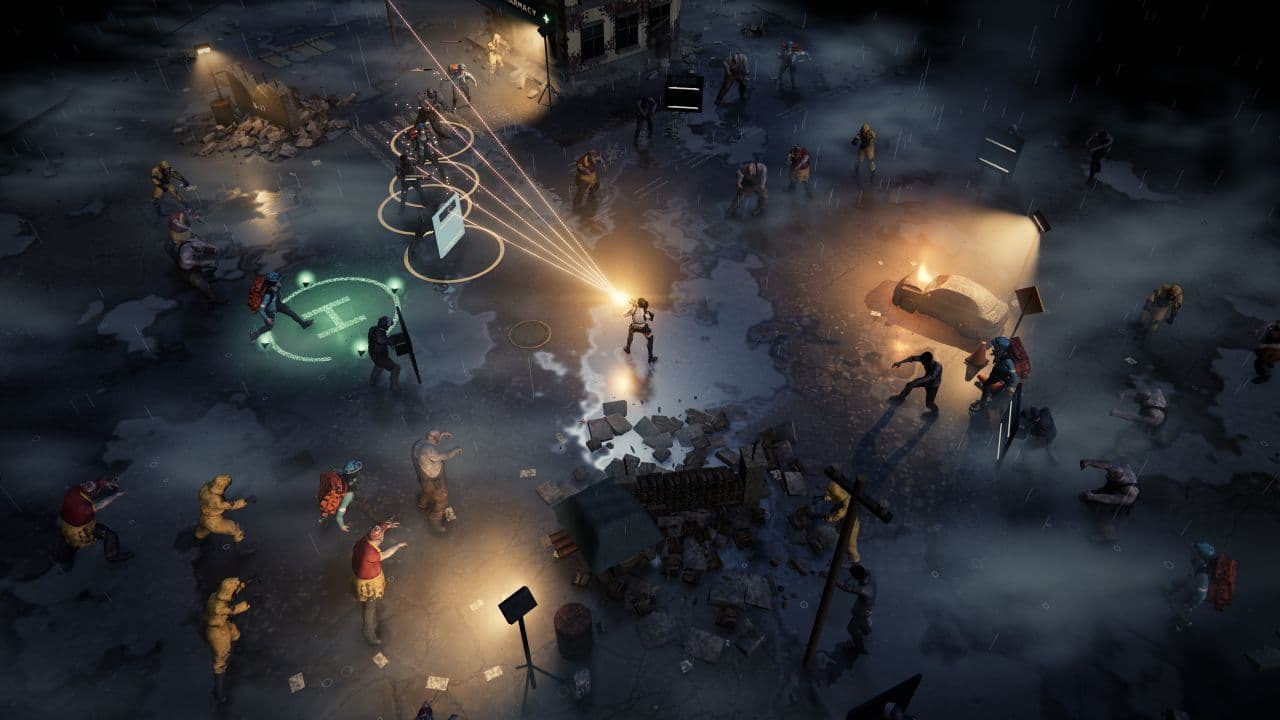
You handle the fight yourself: move through a top-down 3D battlefield, choose a firing direction, manage ammunition and make room to reload. Desktop controls use cursor aiming and held mouse fire; touch uses a movement joystick and a fire control that targets the nearest living enemy. This matters for the comparison because the action is an activity you perform, not a battle that runs unattended while you manage a settlement. A safe retreat line and a well-timed reload remain your responsibility.
The combat options give that responsibility different shapes. Three-wave sector battles offer a defined confrontation, endless scavenging keeps the pressure going, and separate Scrap expeditions send you through city areas toward extraction. In campaign combat, kill XP presents three-card upgrades that can strengthen the immediate fight or support permanent shelter investment. That creates a useful solo tension: an appealing choice can be about surviving the current encounter or improving the place you return to, rather than simply selecting the largest damage number.
The shelter makes collected resources consequential without erasing everything after a bad outing. Picked-up Scrap in Scrap expeditions is retained after extraction, defeat or an interrupted browser-page reload, up to storage capacity; shelter progress also survives defeat. Production stations turn stored resources into supplies, while crafting and research provide longer projects. Crops and prepared meals can support later deployments. The payoff is a practical chain from scavenging to preparation to combat, with room to make progress even when the fight goes wrong.
Need to step away mid-fight? Pause/Resume or Escape stops active combat, and losing window focus pauses the battle too. Shelter production has its own elapsed-time rules. Back at home, rooms and fixed stations keep attention on what to produce, craft and improve, rather than where to place every wall. Together with generous Scrap retention, that gives Zombie Defence a welcoming rhythm: handle a demanding fight, invest the gains, then prepare a little better for the next deployment.
The verdict
Choose Zombie Defence if your ideal solo shooter has a home worth improving after the gunfire stops. Its distinctive strength is the connection between active combat and shelter progress that a defeat does not wipe away.
Days Gone
Days Gone makes zombie shooting part of a larger journey. Its infected Freakers, human enemies and wilderness encounters give you reasons to plan supplies, improve your equipment and keep an escape vehicle ready.
- Manual aim
- Exploration
- Crafting
- Permanent progress
- Platforms
- Windows PC edition on Steam and Epic Games Store assessed here.
- Price model
- Paid base game; Broken Road DLC is sold separately or in a bundle.
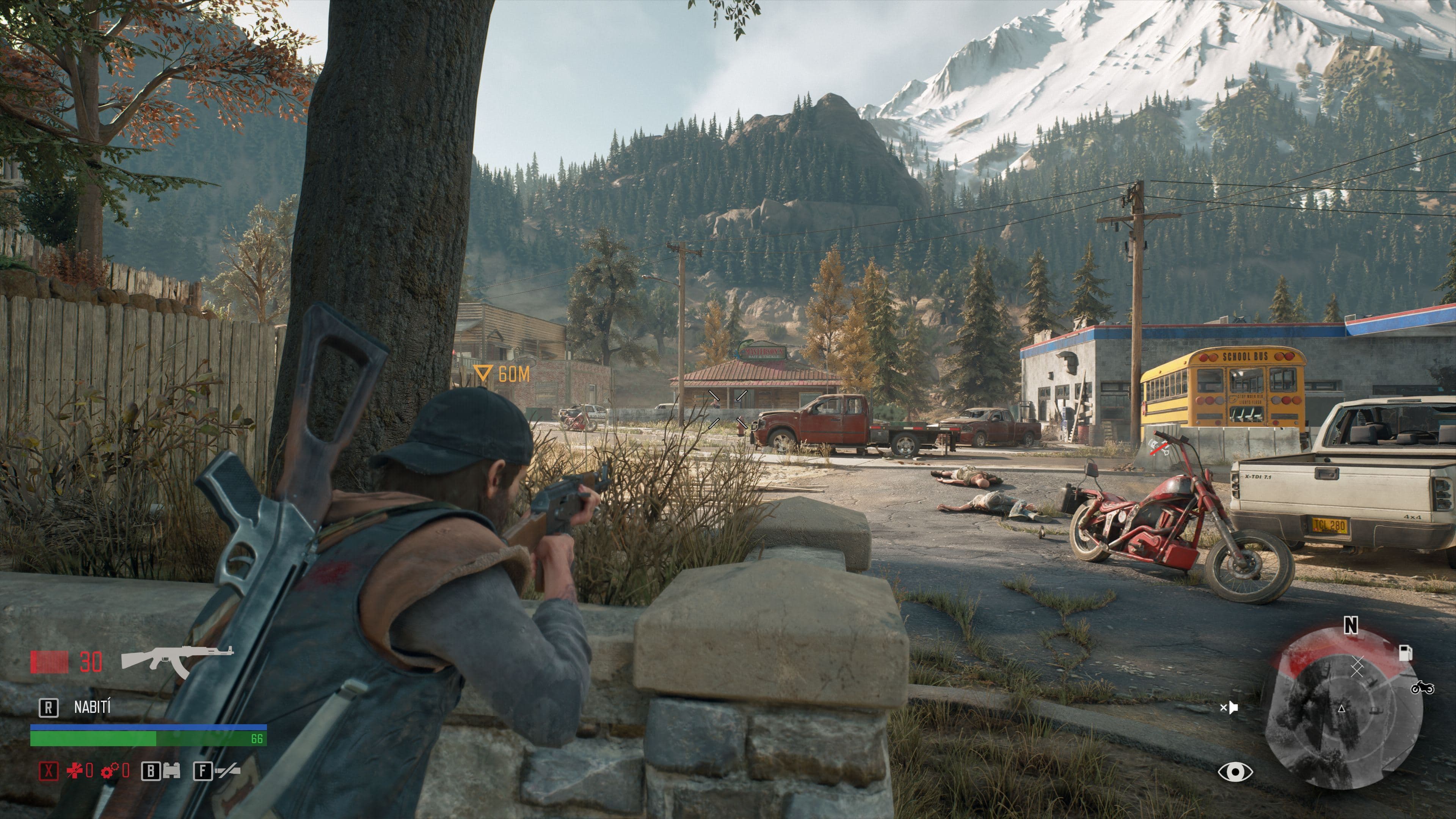
The important difference is ownership of the journey. You play Deacon St. John in a single-player open world, deciding how to approach danger while the story moves through the Pacific Northwest. A horde is one threat inside that world, alongside hostile survivors, wildlife and encounters on the road. The Freakers are living infected rather than resurrected corpses, but their numbers and relentless pursuit make Days Gone a natural fit for readers looking for solo zombie shooting.
The motorcycle is central to the combat fantasy because it affects what happens before and after a fight. Fuel, repairs and upgrades belong in your planning alongside ammunition and crafted supplies. Before taking on a crowd, consider where you will move if the opening attack fails, which obstacles can buy time and whether the bike is ready to carry you away. The appeal is being able to prepare the whole encounter yourself, then respond when the moving threat stops following your preferred plan.
Persistent improvement extends beyond buying a larger gun. Skills, weapons, crafting recipes, bike upgrades and encampment progress give the campaign a long development arc. New Game Plus carries a broad selection of those gains into another playthrough after the story is completed. For a player who likes settling into one game, that is an attractive alternative to rebuilding a new character every run. The tradeoff is that traveling, gathering supplies and following story objectives share the schedule with the shooting.
The PC base game already includes Survival and Challenge modes. Survival difficulties remove conveniences such as fast travel and the usual always-visible HUD, so they are a deliberate choice for greater friction rather than the obvious starting point. The separately sold Broken Road DLC adds its own modes; do not buy the base game assuming every later addition is included. Start with the campaign if the main attraction is a sustained solo adventure, and choose extra challenge content after you know whether its wider rhythm suits you.
The verdict
Pick Days Gone when you want a world to inhabit between firefights. Its strongest solo appeal is preparing for danger and choosing how to meet it, not simply facing the largest possible crowd.
The Last Stand: Aftermath
Aftermath is the choice for players who want shooting to sit inside a difficult resource problem. Your survivor is already infected, so progress means making the journey count rather than expecting one character to last forever.
- Manual aim
- Roguelite
- Crafting
- Permanent progress
- Platforms
- Windows PC; PlayStation 4 and 5; Xbox Series X|S.
- Price model
- Paid single-player game; a free Steam demo is listed.
The infection changes the meaning of a successful run. You are not simply trying to protect a permanent hero until the campaign ends. The current survivor will eventually die, and another takes over with perks and upgrades earned through earlier progress. That gives the game a distinctive solo motivation: each attempt is a contribution to something larger, even when the person making it does not survive. If becoming attached to one carefully developed character is your priority, this structure is an important mismatch to understand before buying.
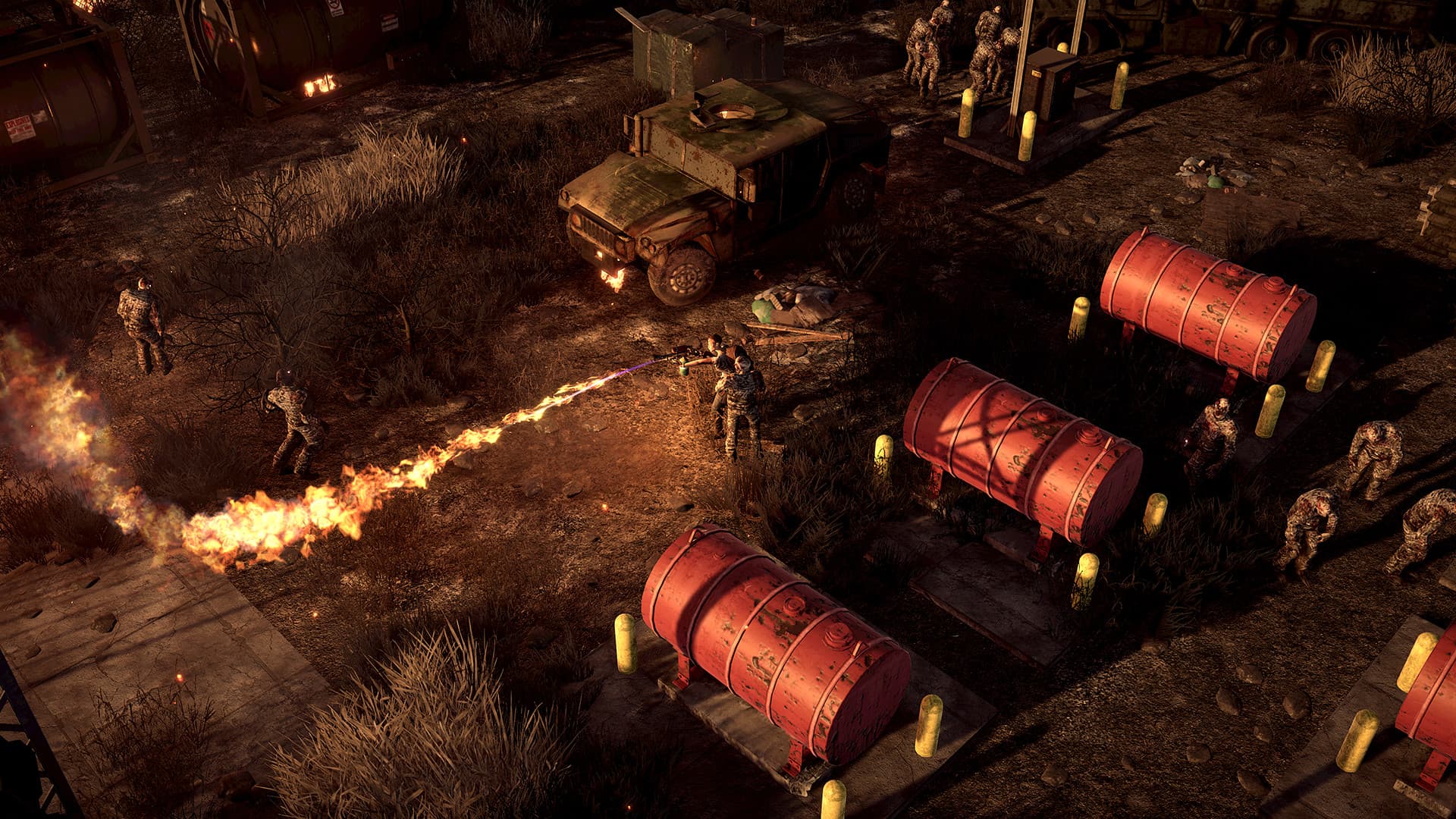
Travel and fighting draw on the same limited attention. Fuel lets you reach another location, while scavenged materials become weapons and supplies. You can fight infected or try to slip past them, making a loud confrontation a choice with a resource cost rather than the automatic answer to every encounter. A promising supply stop is therefore worth judging by more than its loot: ask what reaching it and leaving it will demand from the survivor you have now.
Gunplay remains direct, but preparation and restraint are part of being effective. The top-down viewpoint helps you read the surrounding space, while crafting and mutations offer ways to change the possibilities of an outing. Mutations can provide power within an infection-driven life; they do not turn the game into a carefree upgrade parade. Compared with a chapter shooter, the attraction is the uncomfortable question of how much more value you can get out of the current attempt.
Aftermath works best when you enjoy judging how far to push an imperfect situation. A stronger mutation, useful supplies or the next stretch of road can be tempting even when the survivor is running out of time. The Steam demo gives you a practical way to try that rhythm before buying. If the idea of handing progress to the next survivor sounds exciting, this is one of the most distinctive solo choices here; if you mainly want to keep one hero safe, choose a conventional campaign instead.
The verdict
Choose Aftermath for tense solo runs with consequences and continuity. The lasting reward is what the next survivor inherits, rather than a guarantee that your current survivor makes it home.
Zombie Army Trilogy
Zombie Army Trilogy lets you take its undead shooting campaign on alone, despite the co-op emphasis. Its strongest reason to choose it is the combination of rifle work, traps and configurable difficulty rather than an elaborate character build.
- Manual aim
- Tactical combat
- Co-op
- Platforms
- Windows PC and Xbox One editions considered here; co-op is optional.
- Price model
- Paid game containing three campaigns and a separate Horde mode.
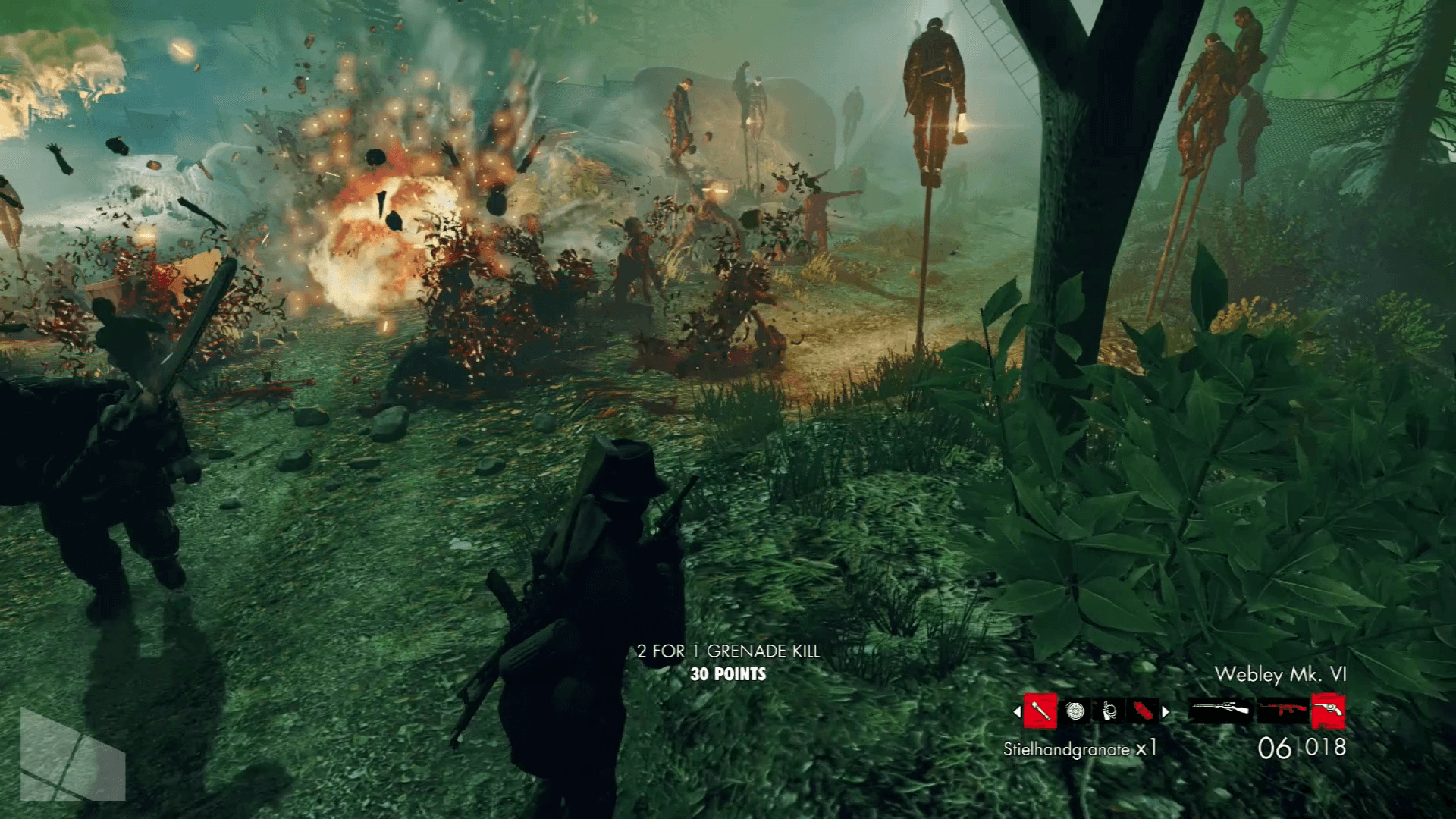
You do not have to assemble a squad to get through the collection: all three campaigns, covering fifteen missions, support solo play. That makes Trilogy a useful answer for someone who likes the spectacle of a group zombie shooter but wants to control the pace of a campaign themselves. The structure is mission-led, with a separate Horde mode for repeat defensive fights. It offers a more direct route into sustained shooting than a world full of errands or an infection-driven scavenging run.
Rifles make the individual shot important, while explosives help when several threats demand attention at once. The official manual explains how stance, heart rate, gravity and wind affect sniping at different difficulty levels. On your own, those mechanics are a reason to think about distance and escape space before committing to the scope. Traps can help protect an approach while your attention is elsewhere; they complement aiming rather than replacing it.
The settings are particularly useful for a solo newcomer. Cadet removes bullet ballistics, Marksman introduces gravity and stance considerations, and Sniper Elite adds wind and greater demands on steadiness. Enemy-population settings let you raise the crowd size beyond the default for your player count. Begin with the normal solo population and choose the shooting complexity you enjoy; increasing every setting at once is not necessary to get the intended rifle-and-trap experience.
A dedicated pause control gives solo play room for a quick breather. The larger reason to return is improving your approach: try a different rifle, prepare a better trap line or revisit a mission with tougher conditions. That is a clean, satisfying kind of replay if you enjoy mastering encounters. Choose Dead Effect 2 instead if discovering and upgrading equipment is what usually keeps you invested after the first campaign clear.
The verdict
Choose Zombie Army Trilogy for a mission-based solo shooting campaign you can tune to your preferred difficulty. Start with the ordinary solo enemy count and let the rifle mechanics, rather than maximum crowd settings, define the challenge.
Dead Effect 2
Dead Effect 2 is the equipment-focused FPS option. It puts zombies inside a science-fiction setting and gives the solo campaign a substantial layer of character abilities, body implants and upgradeable weapons.
- Manual aim
- Loot builds
- Permanent progress
- Co-op
- Platforms
- Windows PC edition on Steam assessed here; this is the standard game, not Dead Effect 2 VR or a mobile edition.
- Price model
- Paid PC game with separately sold Cybermagic and Escape from the ESS Meridian DLC.
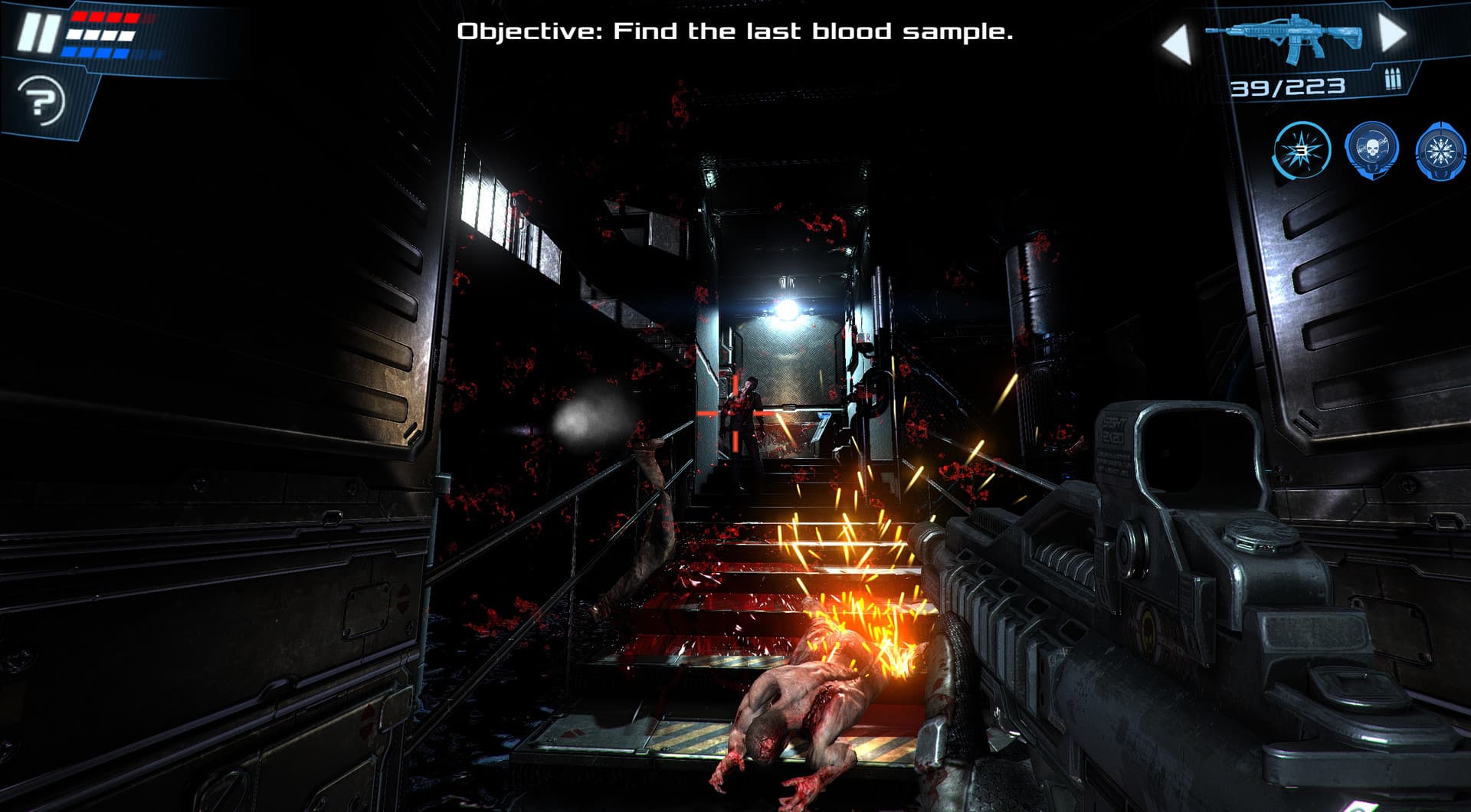
The attraction is the relationship between what you equip and how you fight. Weapon upgrades, gear, implants and active abilities let you change more than the firearm in your hands. Gear sets can grant extra abilities when completed, while options such as bullet time and a force field offer different responses to incoming pressure. For a solo player who enjoys planning a build before testing it, this creates decisions that continue between the shooting missions.
The campaign takes place aboard a monster-infested colony ship, with spaces ranging from maintenance areas to oxygen gardens. Zombies are part of a broader enemy roster that also includes soldiers, cyborgs and mechanical threats. That variety gives the science-fiction equipment a fitting context, but it also defines the recommendation: choose Dead Effect 2 for a zombie-inflected action RPG, rather than expecting every encounter to resemble a grounded urban outbreak.
Single-player missions are explicitly supported, while co-op is an optional way to play the campaign and special missions. Additional modes such as Biohazard, Survive, Lone Wolf and Infestation create reasons to reuse a developed character outside the main story path. That is a different form of persistence from building a shelter: the investment is concentrated in your combat loadout and the character carrying it. Someone who likes comparing equipment can get more from that structure than someone who wants a clean sequence of fights with little preparation.
Before each outing, decide what problem your build needs to solve. Do you want another way to create space, more protection when enemies close in or a stronger weapon setup? That preparation is a large part of the appeal. Start with the paid PC game and consider its separate DLC when you want more; the VR and mobile releases are separate editions. For a streamlined horror campaign, Resident Evil 2 is the better starting point. For tinkering with a personal arsenal, Dead Effect 2 has the more inviting toolbox.
The verdict
Pick Dead Effect 2 for a solo FPS you can keep configuring. Its main advantage is the equipment-and-ability layer around the shooting, so it works best when that preparation sounds like part of the fun.
DEAD TRIGGER 2
DEAD TRIGGER 2 is the accessible mobile entry point for solo first-person zombie missions. Its important qualification is connectivity: playing alone does not make it an offline game.
- Manual aim
- Permanent progress
- Platforms
- Android, iPhone and iPad; store and device eligibility vary by region.
- Price model
- Free download with ads and in-app purchases.
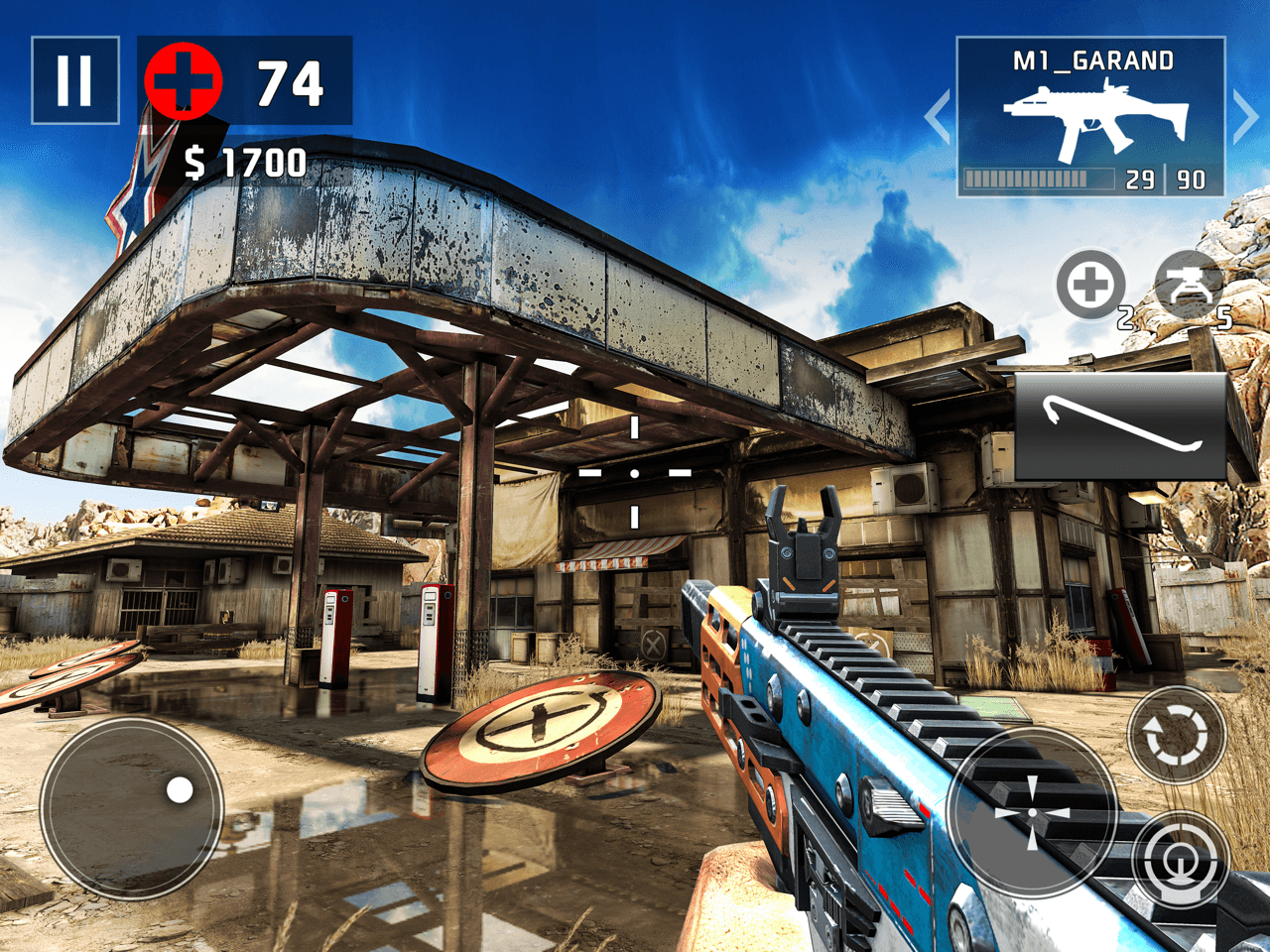
For a phone or tablet, the draw is a campaign built around individual shooting missions rather than arranging a team session. Regions and battlefields frame the objectives, while a broad arsenal and gadgets give you more ways to handle the infected. The supported touch-control and virtual-joystick options are worth trying early: first-person movement, aiming and action buttons occupy the same small screen, and finding a comfortable setup matters more than choosing the biggest advertised gun.
The Personal Hideout supplies the longer-term reason to come back. Specialists such as the Gunsmith, Scientist, Medic and Engineer connect missions to equipment and preparation. That makes the game a better choice for someone who wants a continuing collection of weapons and useful gadgets than for someone looking for a single, tightly edited horror story. Its hideout is a support layer around the missions; the immediate appeal remains fighting from behind the weapon.
Keep a connection available. The publisher says DEAD TRIGGER 2 uses continuous internet access and cloud saving, so it suits playing alone at home or anywhere with reliable service. It is not the download to rely on for a flight without Wi-Fi. For an easy stopping point, finish a mission and collect its result before starting the next one.
Free entry makes it easy to judge the controls before spending anything. Give the starting missions a chance to show whether you enjoy touch aiming, handling a small battlefield and working toward the next piece of equipment. Ads and purchases are part of the package, so set a spending limit if you decide to stay. Its strongest appeal is a familiar, ongoing mission loop that is ready when you want some solo shooting on your phone.
The verdict
Choose DEAD TRIGGER 2 for connected solo play on mobile, especially if weapons and mission-by-mission progress are the draw. If internet-free play is essential, this is not the right download.
How we compare
A good recommendation explains who a game suits and where it falls short. Our editorial scores use the same five criteria, each rated out of ten.
- 01
Combat
Controls, aiming, enemy readability, and the decisions you make under pressure.
- 02
Progression
Build choices during a run and meaningful progress between attempts.
- 03
Usability
Control demands, platform access, interface options, and documented device requirements.
- 04
Value
What the asking price includes, optional purchases, and the scope of the free version.
- 05
Fit
How well the game answers the specific question in this article.
Which one should you try?
Choose Resident Evil 2 if you want the strongest focused campaign recommendation, or Days Gone if the journey between firefights is part of the appeal. Aftermath makes each doomed survivor’s contribution matter; Zombie Army Trilogy is the mission-based rifle option; Dead Effect 2 suits equipment builders; and DEAD TRIGGER 2 works for connected mobile sessions. Zombie Defence brings active solo combat together with steady investment in a persistent shelter. Before committing to any pick, decide what you want to carry into the next session: story progress, a stronger character, inherited unlocks or a better-prepared home base. Then separate your need for a brief pause from your need to quit safely or play without internet.
Your questions, answered.
Want to see what we’re building?
Zombie Defence is in Alpha. Join the waitlist.
More games to explore
- 5 Best Zombie Games for iPhone in 2026, Plus Zombie Defence in Alpha
Compare five current iPhone App Store zombie games, from first-person shooting and one-handed horde runs to survival crafting and a paid road trip, plus Zombie Defence in Alpha.
- 6 Free Zombie Games, Plus Zombie Defence: Before You Pay
Compare six free zombie games by their actual gameplay, ads, paid packs and optional extras, plus Zombie Defence’s developing combat-and-shelter loop.
- 7 Best Roguelites With Crafting Systems
Compare seven roguelites and run-based hybrids with real crafting: lasting weapons, magical ammunition, alchemy, improvised gear and meals for your home base.